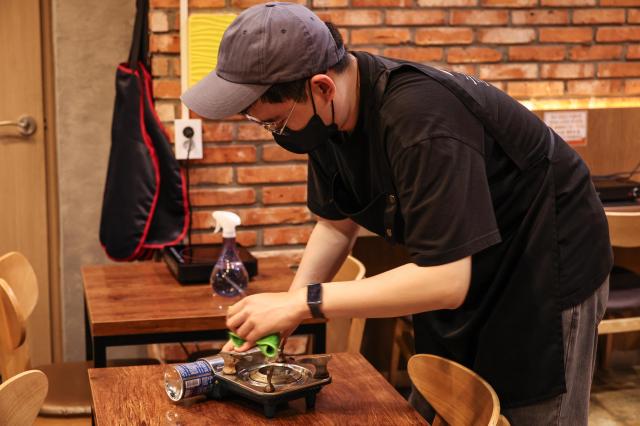
A young man moves from table to table, spraying sanitizer and wiping every corner with meticulous care.
"Customers sit here," Kim Ji-woo, 27, said sheepishly. "Wiping it perfectly clean puts my mind at ease."
He clears plates, relays orders to the kitchen and folds used aprons neatly onto a rack. Closing the dining room is his responsibility, and he follows the shop's step-by-step manual without missing a step.
In the kitchen, two other young men scrub dishes and sort ingredients at the stew house, where rice refills are free. The plates never stop coming, and neither do their hands.
At a glance, nothing seems unusual.
But all three are what South Korea calls people with "borderline intelligence."
One in seven, and uncounted
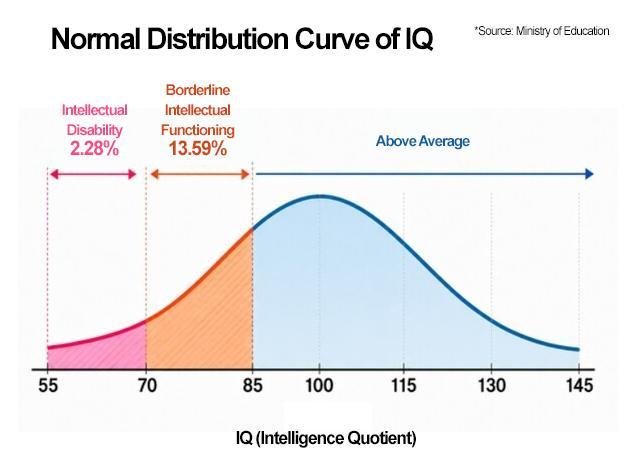
By the normal distribution of IQ scores, about 13.6 percent of the population falls within this range, according to a report by the National Assembly Research Service. That amounts to roughly 6.99 million people — about one in seven South Koreans — yet they remain absent from official national statistics.
Because they sit just above the legal threshold for disability, they qualify for almost none of the welfare support guaranteed by law while continuing to struggle in ways most people do not.
Kim first learned of his condition during a military physical examination, where a borderline result assigned him to alternative public service. After graduating from university, he worked 60-hour weeks at a family restaurant, where the head chef repeatedly scolded him for being "too slow" and nearly fired him.
Jang Min-gyu, 25, discovered it at home.
While washing dishes with his family, he noticed he always lagged behind.
"I was trying to go fast," he said. "But to others it looked slow."
A job that runs out when the program ends
Youth Mungan grew out of a low-cost stew restaurant that Catholic priest Lee Moon-su opened after seeing a 2015 news report about a young man who died of starvation alone in his tiny room. Today the chain operates several branches that double as workplaces for slow learners.
Lee Tae-gyun, the chain's team leader, points to one quality above all.
"They may be a little slower with their hands, but there's no real difference," he said. "They take responsibility for their own work. Across every branch, their diligence stands out."
Yet the limitations are just as evident.
"We run this workplace, but I wish the internship system could extend to other companies," Lee said. "There is no dedicated work-experience track for borderline youth, and that's the shame of it."
The shop is more than a restaurant.
The young employees receive one-on-one counseling and attend crime-prevention classes — a response to how easily slow learners can become victims of fraud or exploitation.
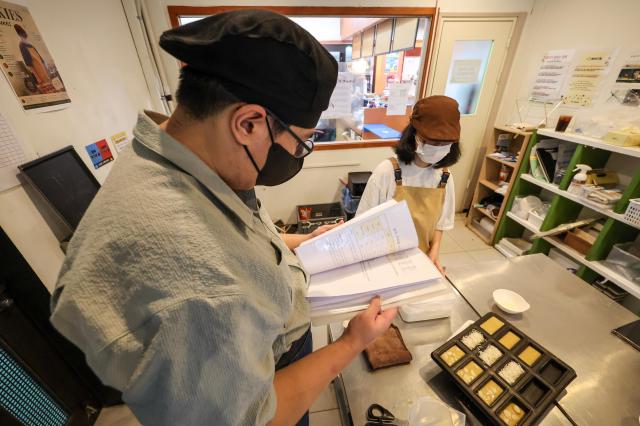
The same concern surfaced a day later at Friends of Star, a small bakery tucked inside a café.
One automatic oven, three whisks and shelves crowded with flour, sugar and nuts filled the room. On the steel counter, every measurement and every step was carefully written out.
Lee Seung-woo, 26, was the day's lead baker; Ahn Hyo-je, 29, his assistant.
The menu featured financiers and chocolate-almond cookies.
Seung-woo measured and mixed while Hyo-je washed each bowl and prepared the next batch. Despite the air conditioning, sweat beaded on Seung-woo's forehead as the oven, preheated to 230 degrees Celsius, radiated heat across the kitchen.
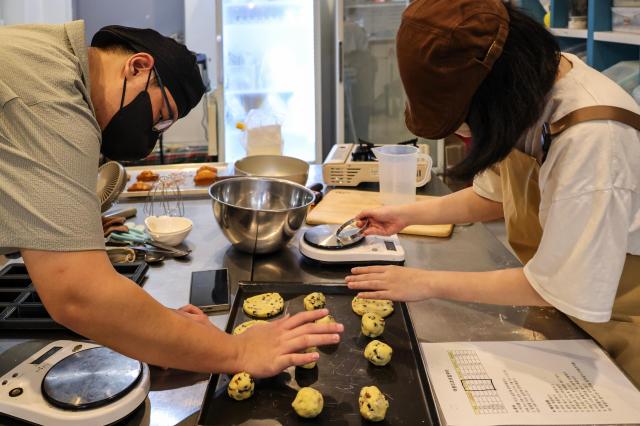
Today it serves a broader community of neurodiverse young people — some with disabilities, some with borderline intelligence, and others living with ADHD or depression.
Both bakers fall into the borderline range.
Seung-woo realized he was different when he could no longer keep pace with classmates in middle and high school. Hyo-je learned about her condition through her older sister but initially refused to accept it.
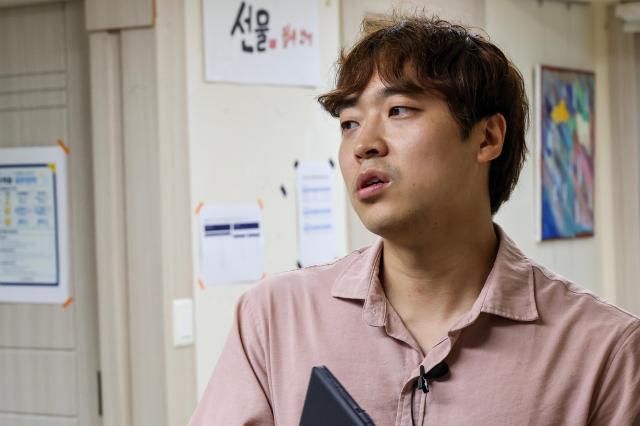
"Hyo-je didn't want to admit she was a slow learner," said team leader Yoon Tae-hyun.
"Then a city councilor visited, and she found the courage to speak up for slow learners. She struggled afterward because she felt nothing had changed. But here she is today, giving an interview in the middle of her shift."
Seung-woo dreams of opening his own dessert café.
"I bake financiers and tigrés at home too," he said. "Someday I want to open my own shop and sell them. The best moment is when people tell me they're delicious."
Still searching for her own future, Hyo-je carefully measured sugar for the cookies.
"It would be nice to become a music artist," she said.
What they ask for is modest.
"But if we were given enough time and a chance to work, that would be enough."
Yoon offered the harder truth.
"There isn't even a law with the words 'borderline intelligence' in it in Korea," he said.
"There are corporate placements and government programs, but once they end, nothing remains. There are almost no real jobs, and few workplaces that accommodate people who can work only three or four hours a day."
Oreum Café: a workplace without borders
The third day led to Oreum Café, tucked beside Yeonhui Forest Park behind Seodaemun District Office.
An early rain had eased into a drizzle before stopping altogether as the café prepared to open.
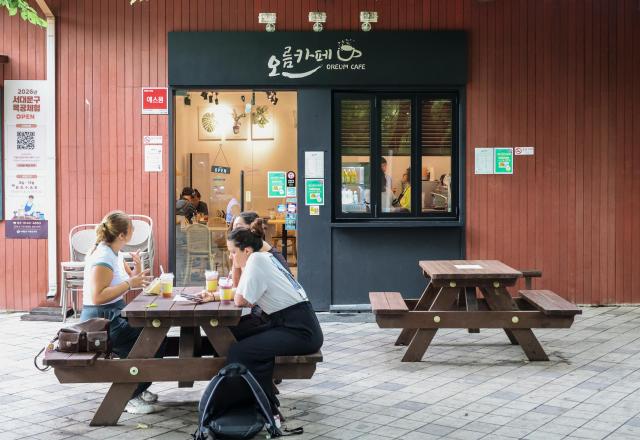
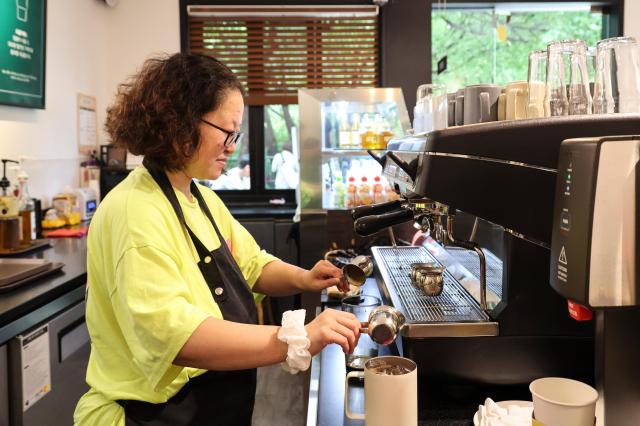
Before the 9:30 a.m. opening, Choi Yu-mi, 45, was already wiping down the outdoor benches.
She switched on the lights, checked the milk and sparkling water, and assembled sandwiches with practiced precision.
Yu-mi has worked here for a decade.
Five days a week she opens the café from 9 a.m. until 1:30 p.m.
That morning, as hikers and tourists streamed in, she handled every order by herself without another employee on the floor. She even took orders from foreign visitors in simple English.
"It used to be difficult working alongside other people," she said.
"But now it's just me and my supervisor, and the work is much easier."
Asked what she wished were different, she answered simply.
"I'd like more customers."
"The happiest moment is watching people enjoy the drinks and sandwiches."
Unlike the previous two workplaces, which focused primarily on learning, Oreum Café felt much closer to the realities of the competitive workplace.
Unless Yu-mi mentioned it herself, no customer would guess she had borderline intelligence.
Where the diligent lose out
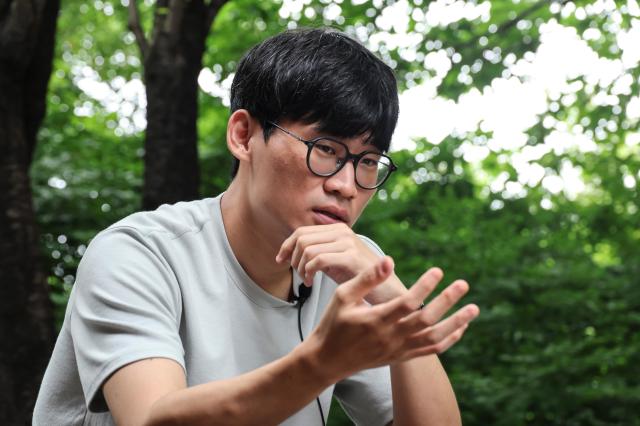
Lee Do-hyung, team leader of the My Job Developing & Training Center running the café, described a side of employment the previous workplaces could not show.
"At our sheltered workplace, people with disabilities who cannot compete in the open labor market receive vocational rehabilitation," he said.
"Those who can maintain the work are hired through Oreum Café, our packaging business or Haha Bakery."
The training begins with everyday skills — using a bank, avoiding phone scams — before participants sign employment contracts.
Lee said that, in practice, welfare agencies rarely distinguish between borderline intelligence and developmental disabilities.
"For the most part, borderline workers are more diligent and perform better on the job than workers with developmental disabilities," he said.
The problem, he said, lies in how publicly funded jobs are allocated.
Yet, Lee said, "people whose functioning is far below Ms. Yu-mi's can still earn more than she does every month."
"For someone who can practically run a café alone, seeing others who struggle with basic tasks earn more for less work can feel deeply unfair — both to borderline workers and to developmentally disabled workers who are trying their best."
"Giving those people opportunities is important too. But it's a painful reality that those opportunities don't always go to the people who could make the most of them."
Even so, Lee draws a firm line.
"It may sound harsh, but if someone here is late or careless, I don't overlook it," he said.
"Turning up late without notice would earn a written warning anywhere else. Some believe they should be excused because they're disabled, but treating them differently is its own form of discrimination."
"They're the same as us. Just a little slower."
Between a number and a person
For Jeong Ju-yeon, a social worker with more than a decade of experience, the problem begins with relying too heavily on a single IQ score.
"IQ can be an objective reference," she said.
"But it cannot explain a person's actual life or how much support that person needs."
Her experiences reveal how prejudice often works.
When she asked one participant himself, he answered immediately.
"Jjamppong."
"Assuming disabled people cannot choose for themselves is a distorted prejudice," she said.
She also remembers carrying a four-year-old up a mountain trail in a stroller.
"It wasn't that he couldn't walk," she said.
"He had simply never been given the chance."
Her conclusion is straightforward.
IQ should remain one reference point, but support should be based equally on adaptive skills and individual needs.
Japan through school, Germany through work — and South Korea?
Other countries have taken different approaches.
Japan supports slow learners mainly through education, offering specialized instruction while keeping students integrated into mainstream classrooms.

No country, the National Assembly report notes, provides cradle-to-grave support under a single law.
But each offers some form of institutional footing.
International research is moving in the same direction — away from defining borderline intelligence solely by IQ and toward assessing conceptual, social and practical functioning.
South Korea has yet to follow.
Local governments have introduced ordinances, but a national support bill remains stalled in the National Assembly. Meanwhile, the U.N. Committee on the Rights of Persons with Disabilities has warned that South Korea's IQ-centered medical model is falling behind international standards.
When the guardians are gone
Most of the young people encountered over three days were in their 20s and 30s.
Yu-mi, at 45, was the oldest.
No one working in the field had a clear answer about what happens afterward.
It was the question Lee Do-hyung raised most carefully.
"Those left alone fall outside the reach of help. There is almost no system for elderly people with disabilities, and beyond basic care they receive very little real support."
That is why the center teaches practical skills every day — using a bank, avoiding scams, managing money.
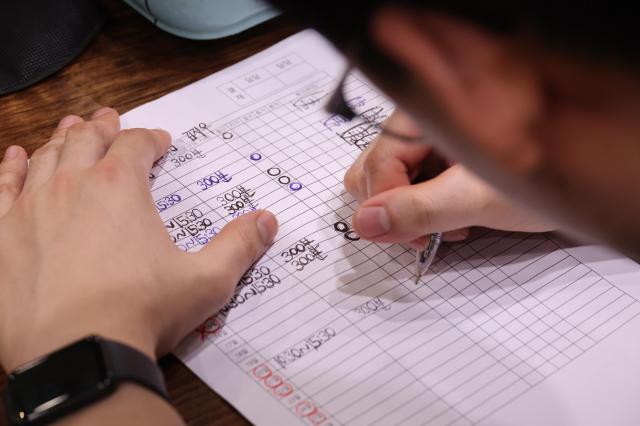
Ask workers how they would budget a monthly salary of 2 million won, and most cannot answer.
Only the highest-functioning can make a rough calculation.
Lee believes the attention society gives these young people should continue long after their youth has passed.
"I wonder whether we can build a system that supports borderline people when they grow old," he said.
"In the end, the most urgent issue is making a living. You need stable wages or income to survive. The reality is that even young borderline people rarely earn either."
It is a question South Korea has yet to answer.
Opening tomorrow's door
Back at the stew house, at 4 p.m., the three young men prepare to leave together.
Each folds the apron embroidered with his own name and carefully drapes it over a chair.
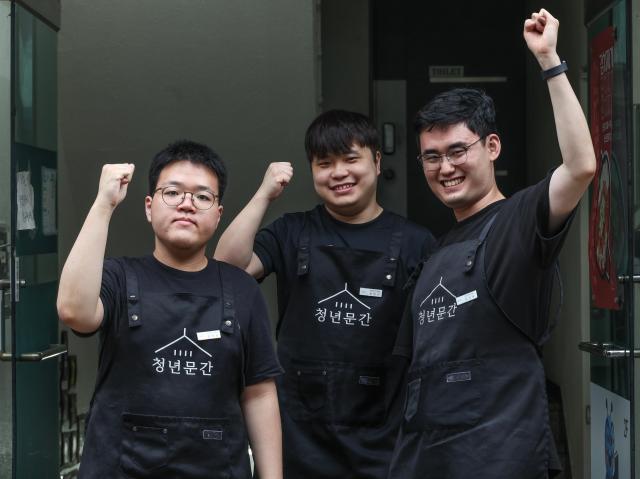
Tomorrow will bring another busy shift.
Yet showing no sign of the day's fatigue, they bow again and again, thanking everyone for the work.
Then the three walk out the door side by side.
Slow was never the same as less. What these young people lacked was never ability — only the chance to use it.
Copyright ⓒ Aju Press All rights reserved.