The special transport measures will run from Saturday through Aug. 10. The ministry expects about 50,000 passengers a day to use coastal passenger ferries during the period, with demand projected to peak on Aug. 1 at around 71,000 passengers.
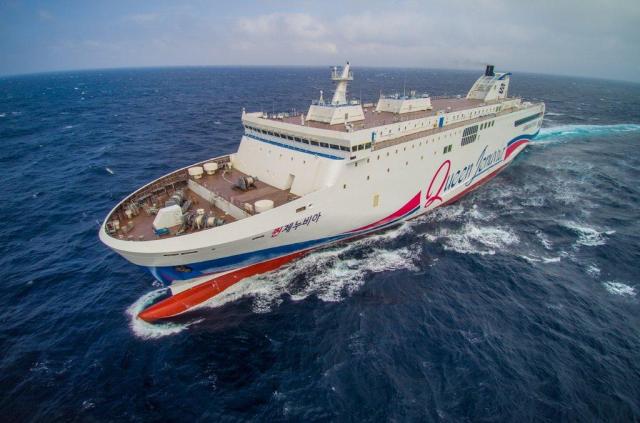
Coastal passenger ferries in Korea refer to domestic passenger ships that operate between Korean ports, often linking mainland terminals with island destinations such as Jeju, Ulleungdo and Baengnyeongdo. They serve both tourists and island residents, for whom ferries are often an essential form of public transportation.
To meet seasonal demand, the ministry will add seven reserve ferries and raise the number of sailings to 13,507, up 6.8 percent from regular levels.
The summer measures come as domestic ferry demand has stabilized after several years of decline. According to the Korea Maritime Transportation Safety Authority, 12.6 million passengers used domestic passenger ferries in 2025, nearly unchanged from 12.63 million a year earlier, marking the first slowdown in the decline that began after 2022.
Major tourist routes remain concentrated on Jeju and the western islands. In 2025, the Mokpo-Jeju route carried 677,000 passengers and the Jeju-Wando route 633,000, while the Incheon-Ijak and Incheon-Baengnyeong routes posted some of the largest year-on-year increases, with 279,000 and 277,000 passengers, respectively.
During last year’s summer holiday transport period, the most heavily used routes were Jeju-bound services from Mokpo, Wando and Samcheonpo, which carried about 146,000 passengers. The Jeju routes benefited from the relative stability of car-ferry services, which are less affected by weather disruptions than smaller vessels.
The ministry also plans to improve passenger convenience by adding Kakao Pay and an artificial intelligence chatbot to the ferry reservation website operated by the Korea Shipping Association. Ferry departure and arrival times, as well as information on whether vessels are expected to operate the following day, will be provided through the KOMSA website.

Copyright ⓒ Aju Press All rights reserved.