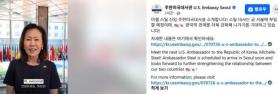
SEOUL, July 24 (AJP) - The new United States ambassador to South Korea will arrive in Seoul next week, ending a vacancy of about 18 months at the top of the American mission and putting a confirmed envoy on the ground just as the two governments try to turn a sweeping trade and investment deal into actual projects.
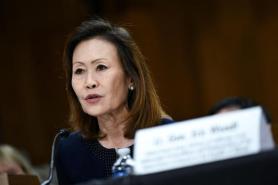
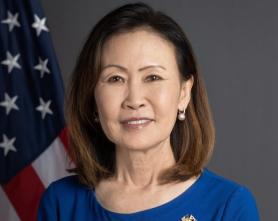
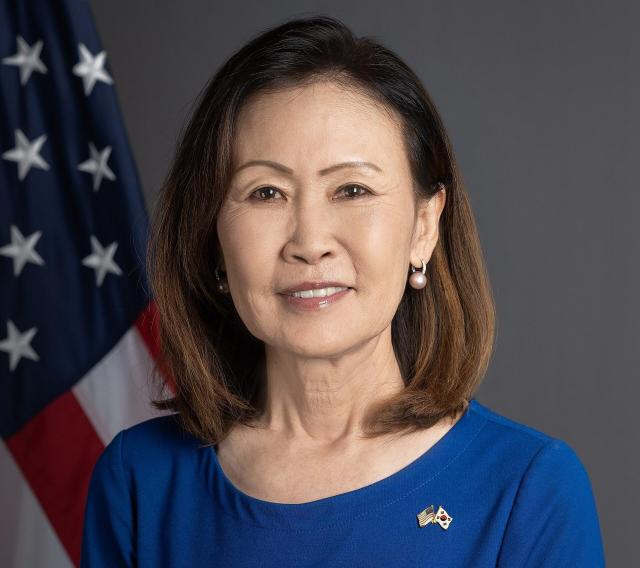
Michelle Steel gave the timing Thursday (local time) in response to a question from Yonhap News Agency at the opening of the Korea-U.S. Shipbuilding Partnership Center in Washington. "Next week," she said, referring other questions to the State Department. She called the work of strengthening the Seoul-Washington alliance her "top priority."
Yonhap reported that she is widely expected to fly out around Wednesday.
The post has had no confirmed occupant since Philip Goldberg left in January 2025, one of the longest gaps in the modern history of the embassy.
James Heller has run the mission as chargé d'affaires ad interim, the title given to the senior diplomat who holds an embassy together when no ambassador is in place. A chargé can manage the building and pass messages. What a chargé cannot do is speak with the authority of a presidential appointee, and that distinction has mattered over the past year and a half.
It has mattered because almost everything of consequence between the two countries has been decided somewhere else. The tariff and investment package that now defines the relationship was negotiated by cabinet ministers flying back and forth, instead of the embassy in Seoul.
U.S. President Donald Trump on Thursday signed a memorandum directing the U.S. Trade Representative to impose tariffs of 10 percent to 12.5 percent on imports from 60 trading partners, including South Korea, following Section 301 investigations into whether they failed to prohibit or effectively enforce bans on imports made with forced labor.
Rather than imposing a flat 12.5 percent tariff on Korean goods, however, the White House created a separate category for South Korea, Japan and Switzerland.
Under the presidential memorandum, products from South Korea whose existing most-favored-nation (MFN) tariff is below 12.5 percent will be subject to an additional Section 301 duty sufficient to raise the total tariff to 12.5 percent. Products already facing MFN duties of 12.5 percent or higher will pay no additional Section 301 tariff.
The White House said capping the total duty at 12.5 percent was "feasible, consistent with the terms of the Agreements on Reciprocal Trade or similar arrangements," and was intended to encourage Korea and the other economies to fulfill commitments on forced-labor import prohibitions.
Steel arrives into that. She is 70, born in Seoul in 1955, and moved to the U.S. with her family in 1975. She speaks Korean.
Her career before Congress was built on tax and local government in California, first on the California State Board of Equalization, which administers state taxes, and then on the Orange County Board of Supervisors, where she served as chair. She won a House seat in 2020, held it in 2022, and lost it narrowly to Democrat Derek Tran in 2024. Her husband, Shawn Steel, has been the Republican national committeeman for California since 2008 and led the state party from 2001 to 2003.
That background points in a clear direction. Steel is a Republican operator with a business and tax orientation and a long-standing personal network in the Korean-American community, not a career Foreign Service officer. Trump nominated her in April, and the Senate confirmed her on June 17 by 55 votes to 39, close to a party-line result.
During her time in the House, she pushed the Korean American Divided Families National Registry Act, which sought to help Korean Americans trace relatives separated in North Korea since the 1950~53 Korean War, and she served on Trump's advisory commission on Asian Americans and Pacific Islanders during his first term.
Her confirmation hearing on May 20 before the Senate Foreign Relations Committee showed what she is likely to press on. Senator Bill Hagerty of Tennessee told her American technology firms and the e-commerce company Coupang appeared to be treated unfairly in South Korea and asked her to make sure that stopped.
Senator Pete Ricketts of Nebraska raised trade barriers on American farm goods and cut quotas for American soybeans. Steel said she would take those cases to Seoul officials directly.
The venue for her remarks on Thursday fit the same pattern. The Korea-U.S. Shipbuilding Partnership Center (KUSPC) is funded and staffed by Seoul and sits in Washington as the working base for the shipbuilding side of the package, known in both capitals by the slogan MASGA, or Make American Shipbuilding Great Again.
It came out of a memorandum signed on May 8 between South Korea's Ministry of Trade, Industry and Resources and the U.S. Department of Commerce. Commerce Secretary Howard Lutnick attended Thursday's opening alongside Kim and executives from HD Korea Shipbuilding and Offshore Engineering, Samsung Heavy Industries and Hanwha Ocean, which bought the Philly Shipyard in Philadelphia in December 2024 and has committed $5 billion to expanding it.
Steel will be the second Korean American to hold the Seoul post, after Sung Kim, who served from 2011 to 2014, and the second woman, after Kathleen Stephens, who served from 2008 to 2011.
What she told the Senate in May was blunt. "American companies operating in Korea deserve the same market access that Korean companies enjoy in the U.S.," she said.
Copyright ⓒ Aju Press All rights reserved.