

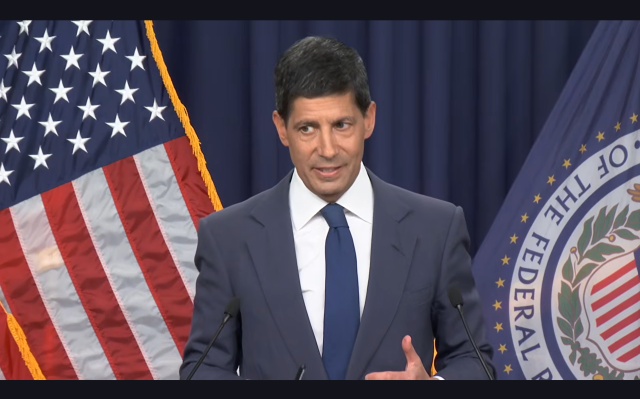
SEOUL, July 30 (AJP) - The Federal Reserve held interest rates steady against three calls for a quarter-point increase, but markets nevertheless interpreted the decision as broadly dovish as Chair Kevin Warsh offered no clear trigger or timetable for further tightening, according to reports from the Bank of Korea’s overseas offices.
The assessments were contained in the BOK Washington office’s review of the July Federal Open Market Committee meeting and the New York office’s report on financial-market reactions and views from major investment banks.
The FOMC voted 9-3 to maintain the federal funds target range at 3.50 percent to 3.75 percent, with Dallas Fed President Lorie Logan, Cleveland Fed President Beth Hammack and Minneapolis Fed President Neel Kashkari favoring a 25-basis-point increase.
The policy statement was virtually unchanged apart from a technical revision on the Fed’s policy of maintaining ample reserves, while the central bank said economic activity was expanding at a solid pace and inflation remained above its 2 percent target.
Warsh rejected perceptions that more than five years of above-target inflation had led the Fed to tolerate a higher unofficial target, stressing that there was no softer alternative to its 2 percent goal.
He said another rate increase could form part of the response if inflation remained elevated, but did not identify a specific threshold or timetable for further action.
The BOK’s Washington office assessed that the principal disagreement within the FOMC concerned the timing of additional tightening and said policymakers were likely to continue discussing when another increase might become necessary.
Warsh also defended the Fed’s reduced reliance on forward guidance, arguing that markets should form their own judgments from economic data rather than depend heavily on signals from policymakers.
Market participants cited by the BOK’s New York office nevertheless viewed the meeting as broadly dovish because rates were held, the statement contained no substantive policy shift and Warsh did not provide a clear framework for responding to persistent inflation.
Major investment banks cited in the report said the lack of a clearly identifiable reaction function, combined with reduced Fed communication, could increase uncertainty over the U.S. rate path and raise the term premium embedded in longer-dated Treasury yields.
Treasury yields initially trimmed their gains, equities rose and the dollar weakened after the press conference, before those moves reversed as doubts over the Fed’s inflation-fighting credibility pushed longer-term yields higher and stocks lower.
The 10-year break-even inflation rate rose 7 basis points and the two-year Treasury yield fell 1 basis point, while federal funds futures reduced the number of quarter-point increases priced in by September from one to 0.6 and by December from 1.7 to 1.3.
The policy debate comes as strong U.S. productivity and corporate investment continue to support growth, with AI-related equipment and software spending rising at a pace approaching 20 percent from a year earlier even as the boom complicates the Fed’s assessment of whether higher chip prices signal broader inflation.
Copyright ⓒ Aju Press All rights reserved.
