

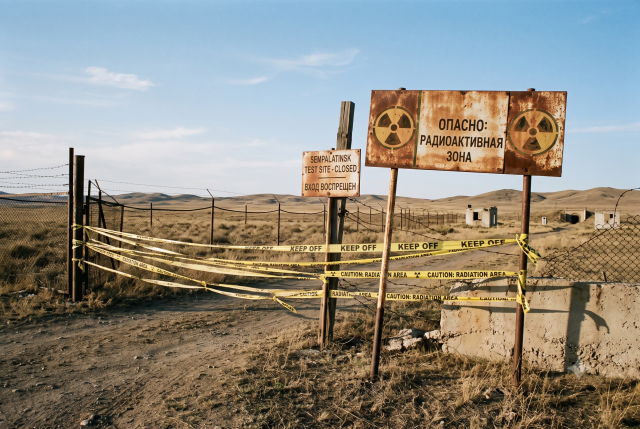
SEOUL, August 25 (AJP) - The Soviet Union detonated its first atomic bomb on the Kazakh steppe on Aug. 29, 1949. Kazakhstan shut the place down 42 years later, to the day.
Saturday marks 35 years since the closure of the Semipalatinsk Test Site. The anniversary is also the International Day against Nuclear Tests, a United Nations observance that exists because Kazakhstan asked for it.
The site absorbed 456 nuclear explosions over four decades, 340 of them underground and 116 in the open air. Eight countries have conducted 2,056 nuclear tests since 1945. More than a fifth of them happened here, on 18,000 square kilometers of steppe, an area about the size of Wales.
Soviet planners called the land uninhabited when they selected it in 1947. It was not. Villages stood within tens of kilometers of the detonation points, and prison camp labor built the first facilities.
Kazakh experts estimate about 1.5 million people were exposed to radioactive fallout over the life of the site. Health studies conducted since the closure identify roughly 200,000 residents whose health was directly affected, with elevated rates of several cancers and of thyroid disease.
The two figures do not contradict each other. One counts exposure across a vast area over 40 years. The other counts demonstrated harm in the populations nearest the blasts.
Neither number existed at the time. Soviet authorities concealed the effects for decades, and the scale of the damage emerged only after the site closed.
Glasnost and a protest movement broke the silence. The Kazakh poet Olzhas Suleimenov founded Nevada-Semipalatinsk in February 1989, naming it for his own country's test site and the American one. It pulled tens of thousands into the streets and became one of the first mass anti-nuclear movements in Soviet history. The last explosion at the site came on Oct. 19, 1989.
Former Kazakh President Nursultan Nazarbayev signed the closure decree on Aug. 29, 1991, four months before the Soviet Union dissolved. Kazakhstan then gave up the world's fourth-largest nuclear arsenal, inherited rather than built, and joined the Treaty on the Non-Proliferation of Nuclear Weapons.
What followed turned that history into a diplomatic position. Kazakhstan ratified the Comprehensive Nuclear-Test-Ban Treaty in May 2002. It hosted the signing of the treaty creating a nuclear-weapon-free zone across Central Asia at Semipalatinsk on Sept. 8, 2006, in the 15th anniversary year of the closure. The General Assembly adopted resolution 64/35 unanimously in December 2009, establishing the International Day against Nuclear Tests and fixing it to Aug. 29.
The ground took longer. Fissile material sat in the tunnels and boreholes of the Degelen mountain complex, effectively unguarded after the Soviet collapse and ranked among the most serious nuclear security risks of the period.
Kazakh, Russian and American scientists spent 17 years securing it, sealing tunnels and pouring specialized concrete to bind waste plutonium. The work cost about $150 million, ran largely in secret and finished in October 2012. Parts of the site have since reopened to mining, farming and tourism.
The old testing infrastructure now does the opposite job. Kazakhstan hosts five facilities in the International Monitoring System, the global sensor network that verifies compliance with the test ban treaty. They include a primary seismic array at Makanchi and an auxiliary station at Kurchatov, about 120 kilometers from the city of Semey.
Those sensors watch for the tests that still happen. When North Korea conducted its third nuclear test in February 2013, the Makanchi array was among the stations that recorded it and sent data to the treaty organization's international data center in Vienna. Kazakhstan also hosted the organization's large-scale on-site inspection exercise in 2008.
Seoul is party to the same treaty. Pyongyang has never signed it. North Korea has tested six times. Its detonation of Sept. 3, 2017 remains the most recent nuclear test conducted anywhere in the world.

Copyright ⓒ Aju Press All rights reserved.
