SEOUL, August 26 (AJP) - Nvidia is pushing its AI reach beyond data centers and deeper into South Korean manufacturing, expanding opportunities well beyond chipmakers as robots, factories and industrial systems increasingly adopt its computing platforms.
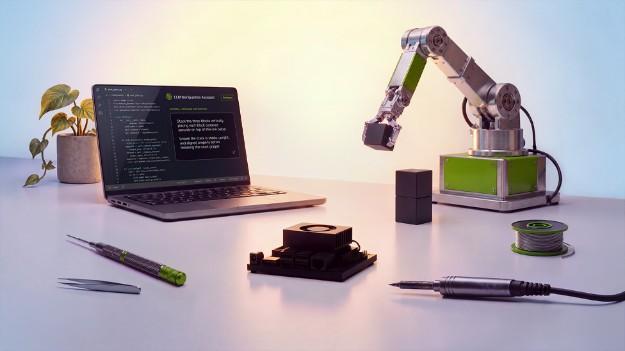
The U.S. chip giant unveiled the Jetson Orin Nano 2, a compact robotics computer designed to run generative and physical AI workloads directly on edge devices such as autonomous robots, drones and vision systems.
The new system delivers 78 trillion operations per second, or TOPS, of AI performance, with 8 gigabytes of memory and an eight-core Arm CPU. Nvidia said it offers twice the inference performance of the Jetson Orin Nano Super while retaining the same compact form factor.
At a 15-watt power setting, the system can deliver performance comparable to its predecessor while consuming 40 percent less power, according to the company.
Smaller and more efficient AI models are increasingly allowing workloads once confined to cloud servers to run directly inside machines operating in the physical world.
"Today's small and medium-sized frontier models are achieving accuracy comparable to the largest frontier models from last year, enabling real-time intelligence on edge devices," said Deepu Talla, vice president of robotics and edge AI at Nvidia.
The Jetson Orin Nano 2 is designed to run large language and vision-language models including Nvidia's Cosmos and Nemotron as well as open models such as Google's Gemma and Alibaba's Qwen.
More than 3 million developers currently build on Nvidia's robotics stack, the company said.
Cognex, South Korea's Doosan Bobcat, Matic and Alphabet-owned drone delivery company Wing are among companies either adopting or evaluating the system. Nvidia plans to make the Jetson Orin Nano 2 module and developer kit available in the first half of 2027.
Nvidia's push beyond the data center is not limited to machines that move.
Separately, the company said Perplexity's new Portable Computer AI agent can run locally on Nvidia's DGX Spark, bringing autonomous AI workloads onto a desktop-sized system.
Portable Computer can connect to applications including Gmail, Google Drive, Slack and GitHub and perform tasks using locally hosted AI models. Users can switch to more powerful cloud models for complex workloads while keeping routine tasks and data processing on their own hardware.
The system initially supports Qwen models optimized by Perplexity, with a version of Nvidia's Nemotron 3.5 Lightning expected to follow. Locally completed tasks do not consume cloud credits, while users are charged only for portions of a workflow routed to cloud models.
Nvidia describes DGX Spark as a compact AI system aimed at developers and enterprise teams building and running autonomous agents locally. The company has increasingly positioned its desktop systems as an extension of the same computing architecture used in much larger AI factories.
Taken together, the launches illustrate Nvidia's ambition to provide the computing layer for AI wherever it runs, from hyperscale data centers to desktop agents and autonomous machines at the edge.
For South Korea, the expansion is broadening Nvidia's importance well beyond the semiconductor industry.
An Aju Business Daily survey of the country's 30 largest business groups found that 14, or nearly half, now have direct or indirect business ties with Nvidia.
Seven of South Korea's 10 biggest groups — Samsung, SK, Hyundai Motor, LG, Lotte, POSCO and HD Hyundai — are already connected to Nvidia across semiconductors, AI infrastructure, manufacturing and physical AI.
The number rises to 12 among the top 20 groups with KT, LS, CJ, Kakao and Doosan, while Naver and Coupang bring the total to 14 among the top 30.
The relationships increasingly stretch beyond Nvidia's traditional ties with chip suppliers.
Samsung Electronics works with Nvidia across high-bandwidth memory and other AI semiconductor technologies, while SK Group is building an AI factory using Nvidia GPUs.
Hyundai Motor Group is working with Nvidia on autonomous driving, robotics and manufacturing, and LG Group has expanded its partnership into robotics and AI factories.
Lotte is pursuing cooperation in AI data centers, while POSCO is applying Nvidia technology to manufacturing operations. Other links span telecommunications, power infrastructure, logistics, cloud computing, shipbuilding, construction machinery and industrial automation.
The widening network gives Korean companies access to one of the world's fastest-growing technology ecosystems. It also leaves a growing share of the country's industrial investment tied to a single U.S. computing platform.
For Samsung Electronics and SK hynix, Nvidia's expansion into AI factories, robotics and edge computing could broaden demand for advanced memory and related components beyond conventional data centers.
But the same trend makes both chipmakers more exposed to Nvidia's product road maps and the pace of investment across its AI ecosystem.
The dependence is spreading further into manufacturing.
As Korean companies build AI factories, autonomous production systems and industrial robots around Nvidia hardware and software, changes in Nvidia-led investment could increasingly ripple through sectors that once had little direct exposure to the GPU cycle.
A slowdown in AI data-center or AI-factory spending could hit not only GPUs and memory but also power equipment, cooling, networking, industrial machinery and other infrastructure increasingly built around large-scale AI deployment.
Nvidia's investment cycle is therefore becoming more relevant to a wider section of Korean industry.
The strategy echoes comments Chief Executive Jensen Huang made during a visit to South Korea in June, when he identified robotics computing as one of Nvidia's next major areas of expansion.
"Korea is the perfect place to do that," Huang told AJP at the time, referring to robotics computers, which he described as "the future, the next generation of AI."

South Korea offers Nvidia an unusually broad industrial proving ground. The economy combines leading memory-chip makers with major automakers, machinery companies, electronics manufacturers and aggressive investment in robotics and factory automation.
Samsung Electronics is building an AI factory using more than 50,000 Nvidia GPUs, while SK Group is developing an AI factory of a similar scale for semiconductor research, manufacturing and physical AI.
Hyundai Motor Group is also working with Nvidia on a 50,000-Blackwell-GPU AI factory targeting manufacturing, autonomous driving and robotics.
LG Group has separately expanded cooperation with Nvidia into robotics and AI factories, while Nvidia and SK Group in June broadened their partnership across AI infrastructure and next-generation memory.
The Jetson launch pushes those relationships closer to machines themselves, with Doosan Bobcat among the companies evaluating the platform. Nvidia and Doosan have also been expanding cooperation across robotics, physical AI and AI-factory infrastructure.
Yet Nvidia's financial engine remains overwhelmingly tied to the massive data centers powering the global AI boom.
Its expansion into personal and physical AI is therefore a longer-term test of whether the computing ecosystem Nvidia established around GPUs can become the default platform for AI agents on desks and autonomous machines in factories, homes and cities.
For Korean companies, Nvidia's expansion brings a parallel trade-off.
The broader its platform spreads from AI factories into robots, vehicles and industrial machinery, the larger the potential market for Korean memory, equipment and manufacturing. The same expansion also ties more of Korean industry to Nvidia's technology, investment cycle and computing standards.
Investors will get their next look at Nvidia's near-term growth engine when the company reports fiscal second-quarter earnings after the U.S. market closes Wednesday, or early Thursday in South Korea.
Expectations for AI infrastructure spending remain high, keeping attention on whether demand for Nvidia's data-center platforms can sustain the investment boom even as the company builds its next growth markets beyond them.
AJP Takeaways
• Nvidia is extending AI computing beyond data centers into desktops, robots, drones and industrial systems, widening its reach across South Korean manufacturing.
• Nearly half of South Korea's 30 largest business groups now have direct or indirect ties with Nvidia across chips, autos, robotics, power, cloud and factory automation.
• Samsung Electronics and SK hynix stand to gain from broader AI demand, but their exposure to Nvidia's product road maps and investment cycle is also increasing

Copyright ⓒ Aju Press All rights reserved.