

SEOUL, September 23 (AJP) - The artificial intelligence boom is beginning to reshape not only how memory chips are used, but who buys them.
OpenAI and Anthropic are expected to begin purchasing memory directly from manufacturers in 2027 as leading AI developers take greater control over the chips and data centers that power their models, according to an industry report.
The shift could create a new class of direct customers for Samsung Electronics and SK hynix, which have traditionally supplied advanced memory largely through semiconductor companies, cloud providers and system makers.
For AI developers, going straight to memory manufacturers could give them greater control over supply, capacity and technical specifications as they build increasingly customized computing infrastructure. For memory makers, it would put them directly across the negotiating table from the companies driving some of the world's fastest-growing demand for computing power.
The transition is already taking shape.
OpenAI last year signed strategic partnerships with Samsung and SK Group under its Stargate infrastructure initiative, with Samsung Electronics and SK hynix agreeing to sharply expand production of advanced memory for OpenAI's AI infrastructure.
Under the partnership, the two Korean chipmakers plan to scale production toward as many as 900,000 DRAM wafer starts a month to support OpenAI's infrastructure requirements.
Anthropic has also moved closer to Korea's memory suppliers.
Chief Executive Dario Amodei said in July that Anthropic had signed investment and supply agreements with some of the world's largest memory providers, including Samsung and SK Group.
The Claude developer has also begun early-stage work on its own AI chip and held talks with Samsung over potentially using the Korean company's 2-nanometer foundry process and advanced packaging technology, according to The Information.
Together, those moves point to a broader restructuring of the AI semiconductor supply chain.
Much of the first phase of the generative AI boom revolved around Nvidia's graphics processing units. Memory makers supplied high-bandwidth memory, or HBM, alongside those accelerators, leaving Nvidia and other chip vendors as critical customers and intermediaries between memory manufacturers and the companies actually operating AI models.
That structure is becoming more complicated as OpenAI, Anthropic and major cloud companies seek greater control over their computing infrastructure.
OpenAI and Anthropic are expected to begin buying memory directly from manufacturers next year as model developers become more involved in chip and data-center design, DIGITIMES reported this week.
An industry official familiar with the memory market said direct engagement between AI developers and memory suppliers is emerging as a clear industry trend, although it remains uncertain whether that will translate into larger orders for individual manufacturers.
"It is difficult to say whether customers will ultimately allocate larger volumes to individual suppliers, but this is clearly the direction the industry is moving in," the official said. "We are likely to see more of it going forward."
That does not necessarily mean cutting Nvidia or other accelerator suppliers out of the chain.
AI developers remain heavily dependent on GPUs, while HBM is physically integrated with accelerators through advanced packaging. Unlike conventional server memory, it cannot simply be purchased separately and plugged into an existing AI system.
The more significant change may come earlier in the supply chain, with AI developers negotiating capacity, specifications and long-term supply directly with memory manufacturers while designing their own chips and data centers.
The distinction is becoming increasingly important as memory consumes a larger share of AI infrastructure spending.
TrendForce estimates DRAM and NAND flash will account for 47 percent of capital expenditure by major cloud service providers in 2026 and as much as 68 percent in 2027, driven by sharply higher memory prices and heavy procurement demand.
HBM and registered dual in-line memory modules, or RDIMMs, used in servers are expected to account for a combined 51 percent of global DRAM bit supply this year.
Supply remains tight.
TrendForce estimates the global DRAM sufficiency ratio at negative 1 percent to negative 2 percent in 2026 and expects the gap to widen in 2027 as demand growth continues to outpace new production.
The scarcity is strengthening the hand of the world's three dominant memory makers — Samsung Electronics, SK hynix and Micron — while encouraging customers to lock in supply years in advance.
SK hynix said in its second-quarter earnings announcement that it had finalized long-term agreements with around 10 customers, including key strategic partners, and was discussing additional multi-year contracts with major clients.
The company said requests for additional supply continue to mount as major technology companies expand spending on AI infrastructure.
Samsung is seeing a similar demand environment.
The company said in July that strong AI demand and constrained capacity had pushed its Memory Business to record quarterly revenue and operating profit. It expects demand for server DRAM, enterprise SSDs and HBM to accelerate in the second half of the year.
The rise of AI developers as direct memory customers could also change what memory makers are asked to build.
As AI companies move beyond standard GPUs toward customized accelerators, memory specifications can increasingly be determined alongside the processor rather than after its design is complete.
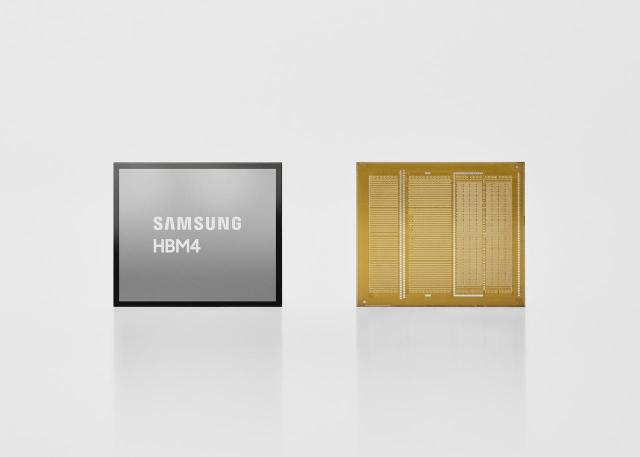
HBM4 marks an important step in that direction. Its logic base die offers greater scope for customization and tighter integration between memory and the accelerator it serves.
But AI infrastructure requires far more than HBM. Large AI servers also consume conventional server DRAM and enterprise SSDs, widening the range of products that could become part of negotiations between model developers and memory manufacturers.
TrendForce expects demand growth in 2027 to remain concentrated in HBM and server memory, with next-generation GPUs and customized AI ASICs increasing the amount of memory deployed in each system.
For Samsung and SK hynix, that creates an opportunity but also a different customer dynamic.
A broader group of large buyers could reduce their dependence on a handful of accelerator vendors and cloud companies. But OpenAI, Anthropic and other AI developers could themselves emerge as powerful customers capable of negotiating directly over capacity, price and product design.
How far the procurement model changes will ultimately depend on what "direct purchasing" comes to mean.
For HBM in particular, the important shift may be less about who physically takes delivery of the chips than who sits down with Samsung or SK hynix years beforehand to reserve production, determine specifications and decide how memory will be integrated into a future AI system.
OpenAI's existing partnerships with Samsung and SK hynix and Anthropic's supply agreements with the Korean groups suggest that process has already begun.
The next phase of the AI memory boom may therefore be defined not only by Samsung and SK hynix making more sophisticated chips, but by a new set of customers sitting directly across the negotiating table.
AJP Takeaways
- OpenAI and Anthropic are emerging as direct memory customers as AI developers take greater control over chip and data-center design.
- Direct procurement could give AI developers greater influence over memory capacity, specifications and long-term supply.
- The shift could give Samsung Electronics and SK hynix a new class of major customers beyond traditional chipmakers and cloud providers.

Copyright ⓒ Aju Press All rights reserved.
