The Bank of Korea (BOK) said the deposits rose $12.28 billion from $128.34 billion at the end of July, marking a fifth consecutive monthly increase.
An AJP analysis of the BOK's monthly series showed the August gain was the third largest since data began in June 2012, following increases of $15.88 billion in December 2025 and $15.01 billion in July.
The balance has now set records for two consecutive months and risen by $27.29 billion, or 24.1 percent, from $113.33 billion at the end of June, according to an AJP calculation.
Resident foreign-currency deposits cover holdings at domestic foreign-exchange banks by Korean individuals and companies, foreigners residing in the country for at least six months and foreign companies operating in Korea.
Dollar deposits drove most of the increase, climbing $10.99 billion to a record $119.91 billion.
The BOK attributed the increase to current-transaction receipts by large companies, inflows of investor deposits at securities firms and advance dollar purchases as the won strengthened.
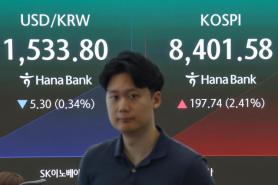
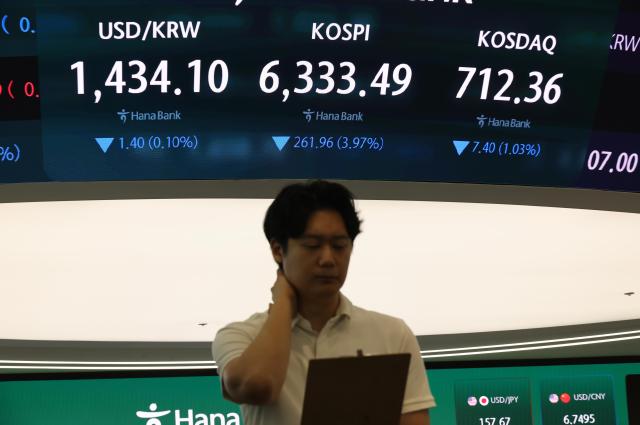
The won appreciated to 1,368.6 per dollar at the end of August from 1,424.0 a month earlier.
Corporate foreign-currency deposits rose $10.93 billion to $123.49 billion, accounting for 87.8 percent of the total, while individual deposits increased $1.35 billion to $17.12 billion.
Corporate dollar deposits alone climbed $9.96 billion to $105.64 billion, surpassing $100 billion for the first time since the series began.
Dollar deposits held by individuals rose $1.03 billion to $14.27 billion.
Euro deposits increased $1.10 billion to $9.16 billion, while yen deposits rose $320 million to $8.94 billion. Yuan deposits edged down $40 million to $1.24 billion.
Deposits at domestic banks increased $8.47 billion to $110.86 billion, while those held at Korean branches of foreign banks rose $3.81 billion to $29.76 billion.
Meanwhile, a separate BOK research paper released Thursday found that households with more experience of sharp won depreciation tended to show a smaller decline in consumption when exchange rates rose.
Generation X households showed stronger signs of such adaptation than the younger MZ cohort, a Korean term grouping millennials and Generation Z.
The pattern was also relatively pronounced among households with fewer assets and higher debt-service ratios, or DSRs, a measure of debt repayment burdens.
Repeated currency shocks may have allowed households to learn how to adjust their spending to losses in purchasing power, said Choi Young-jun, a research fellow at the BOK's Economic Research Institute who authored the paper.
Choi cautioned that past currency shocks often coincided with broader economic disruptions, making it difficult to fully isolate the impact of exchange-rate experience. The findings represent the author's views and not the BOK's official position.
AJP Takeaways
- Resident foreign-currency deposits rose $12.28 billion to a record $140.62 billion in August, the third-largest monthly increase since the series began in 2012.
- Deposits increased for a fifth straight month, while corporate dollar holdings surpassed $100 billion for the first time.
- A separate BOK research paper found that repeated won shocks may alter household spending responses, particularly among Generation X and financially constrained households.

Copyright ⓒ Aju Press All rights reserved.