
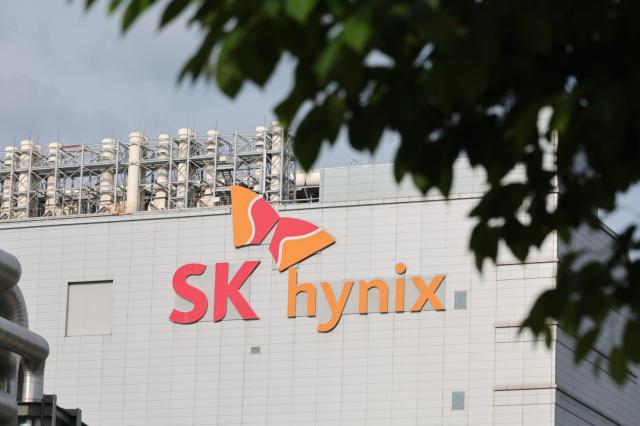
SEOUL, October 01 (AJP) - SK hynix said Thursday that no decision has been made on a potential U.S. listing of its NAND subsidiary Solidigm, amid concerns that an initial public offering could dilute the economic interests of existing shareholders.
"We are reviewing various options to strengthen Solidigm's competitiveness, but nothing has been decided," SK hynix said in a statement.
The chipmaker said Solidigm continues to assess investment needs to expand production capacity and strengthen its technological competitiveness, while potential funding options could include both internal resources and external capital.
SK hynix stressed that long-term shareholder value would be the key criterion in any decision, saying it would consider the financial impact of external fundraising on existing shareholders and review appropriate shareholder protection measures.
The statement follows a Reuters report that Solidigm has been meeting investment banks over a potential U.S. IPO that could take place as early as next year.
Solidigm was formed from Intel's former NAND and SSD business, which SK hynix acquired as part of a $9 billion deal announced in 2020.
AJP Takeaways
- SK hynix said no decision has been made on a potential U.S. IPO of Solidigm.
- The company is considering both internal funding and external capital to support Solidigm's investment needs.
- SK hynix said long-term shareholder value will guide any decision and pledged to consider measures to protect existing shareholders.

Candice Kim
Candice Kim is a dedicated business and technology reporter specializing in the intersection of high-tech innovation and fast-paced consumer trends. Her core beats span the semiconductor, IT, cosmetics, and retail sectors, where she provides in-depth coverage of industry titans including Samsung Electronics, SK hynix, and LG Electronics, alongside leading consumer brands like Olive Young and Musinsa. Whether analyzing complex silicon supply chains or tracking the latest shifts in beauty and fashion retail, Candice is committed to delivering sharp, accurate reporting that keeps readers informed on the forces shaping today's most dynamic markets.
Copyright ⓒ Aju Press All rights reserved.
Related News
-
 Micron signals longer AI bonanza for Samsung, SK hynix
Courtesy of Mircron Technology SEOUL, October 01 (AJP) - Micron Technology’s record earnings and unusually bullish outlook reinforced expectations that an AI chip windfall will extend the record earnings streak for the three memory majors, including Samsung Electronics and SK hynix, through 2027 and into 2028. The U.S. memory chipmaker reported fiscal fourth-quarter revenue of $54.23 billion, up 31 percent from the previous quarter and nearly fivefold from a year earlier. Non-GAAP operating income reached $44.64 billion, giving Micron an operating margin of 82.3 percent. For its bigger Korean counterparts, the more consequential numbers came from Micron’s outlook and its earnings call early Thursday Korea time. Micron forecast revenue of $61.5 billion, plus or minus $1.5 billion, for the current quarter, comfortably above Wall Street’s estimate of about $57 billion. It expects adjusted gross margin of about 86.25 percent and adjusted earnings of $38.15 per share, plus or minus $1. The bullish figures, however, offered little relief to Korean chip stocks as investors in Seoul fretted over the continued surge in U.S. Treasury yields. Both Samsung Electronics and SK hynix were mostly flat in early Thursday trading. Micron projected even more supply-side favorable conditions over the next two years. “We expect memory and storage supply-demand conditions to be much tighter in calendar 2027 and 2028 than they were in 2026,” Micron Chief Executive Sanjay Mehrotra said during the earnings call. Micron expects the DRAM industry to remain supply-constrained in both years, even as industry bit shipments grow at annual rates in the low-20 percent range. High-bandwidth memory (HBM) shipments are expected to grow faster than conventional DRAM through 2028, further tightening supply because HBM consumes considerably more wafer capacity. “We do not have line of sight to when supply and demand will return to balance,” Mehrotra said. The assessment matters directly to Samsung and SK hynix, which from an oligopoly with Micron in the global DRAM market and vie to supply the rapidly expanding market for HBM used in AI accelerators. In its Sept. 29 report, market tracker TrendForce raised its forecast for HBM’s blended average selling price in 2027 to a 121 percent year-on-year increase. The projection echoes persistent supply constraints voiced by the suppliers, a growing share of higher-priced HBM4 and a heated race toward next-generation HBM technology that is putting further pressure on limited production capacity. TrendForce said expanding AI server demand is keeping HBM and conventional DRAM in competition for limited advanced-process and wafer capacity. Improving yields and ramping up next-generation products will take time, keeping supply tight through 2027. Micron’s order book suggests customers are increasingly unwilling to wait for additional capacity. More than 75 percent of the company’s fiscal 2027 shipments have already been committed, allowing Micron to shift some customer allocation discussions into 2028, executives said. Financial commitments under its long-term Strategic Customer Agreements have climbed to $32 billion from $22 billion in June. Remaining performance obligations, representing contracted revenue yet to be recognized, have risen to about $150 billion from roughly $100 billion in the previous quarter. HBM is even tighter. Micron said it has completed agreements covering the vast majority of its calendar 2027 HBM bit supply at prices significantly higher than those negotiated for 2026. “For 2027, a large part of the volume is already sold out for 2027 for HBM, and the prices are much higher than 2026 prices,” Mehrotra said. The combination of committed volumes and higher pricing strengthens the earnings outlook for Samsung and SK hynix ahead of their own third-quarter results. Both Korean companies have been expanding long-term agreements with major AI and cloud customers seeking to secure memory capacity years in advance. SK hynix said in July that it had completed long-term agreements with around 10 key customers and was discussing additional multiyear contracts with other major clients. Samsung has also been increasing its use of long-term supply agreements. The two companies are already expected to report another exceptionally profitable quarter. Recent FnGuide estimates put Samsung Electronics’ third-quarter operating profit above 100 trillion won ($70 billion), while SK hynix is expected to generate roughly 70 trillion won or more. Samsung Electronics releases its earnings guidance next week. Micron’s outlook suggests the bigger question may no longer be whether the current quarter sets another record, but how far into 2027 and 2028 the favorable pricing environment can extend. As HBM absorbs more manufacturing capacity, less remains available for conventional server, PC and mobile memory. Mehrotra said the transition from HBM3E toward HBM4 and HBM4E would create additional “headwinds with respect to supply growth,” while future DRAM process transitions are providing smaller productivity gains per wafer. The shortage and rising costs are also beginning to influence AI chip designs. According to TrendForce, graphics processor and custom AI chip developers are considering HBM stacks with eight DRAM layers instead of the previously planned 12. Using fewer layers lowers memory capacity and cost per stack, allowing a given amount of HBM production to support more processors. The shift reflects supply and cost constraints rather than weakening end-market demand, the research firm said. But thinner stacks bring their own cost penalty. Each still requires a base die, whose cost is spread across less memory capacity. TrendForce expects eight-layer products to command a roughly 10–20 percent price premium per gigabit over 12-layer versions in 2027. Such changes could ease the total cost of individual AI processors, but are unlikely to reverse the broader rise in HBM prices. Building new fabs offers no quick fix either. Micron is expanding capacity across the United States, Japan, Taiwan and Singapore, but much of that production will take years to reach meaningful volumes. Its first Idaho expansion is expected to begin wafer output around mid-2027, with additional capacity in Japan and the United States arriving later. Even after new cleanrooms begin production, output increases only gradually, Mehrotra told analysts. Demand, meanwhile, continues to expand. Micron expects server unit shipments to grow in the high teens in both 2026 and 2027. Larger AI models, longer context windows, more simultaneous users and the spread of AI agents are also increasing memory requirements per system. The boom extends beyond HBM. Micron’s data-center solid-state drive revenue approached $10 billion in the latest quarter, more than 10 times its level a year earlier, as AI systems increasingly use NAND storage for tasks such as offloading cached data used during inference. For Samsung, that broadening demand could be particularly significant because its memory portfolio spans HBM, conventional DRAM and NAND. For SK hynix, Micron’s comments reinforce the value of its established HBM position as customers reserve next-generation capacity before it reaches mass production. A sharp slowdown in AI infrastructure spending could eventually weaken demand, while aggressive capacity expansion could loosen supply further out. For now, Micron expects the shortage to persist. “As we noted, in calendar 2027 as well as 2028, we see demand exceeding supply,” Mehrotra said. “Overall, supply-demand environment is only getting tighter.” For Samsung and SK hynix, the results suggest the shortage underpinning Korea’s record chip profits has years left to run. AJP Takeaways - Micron expects memory supply-demand conditions to tighten further through 2027 and 2028, with DRAM remaining supply-constrained as AI and HBM demand absorbs more production capacity. - More than 75 percent of Micron's fiscal 2027 shipments are already committed, while the vast majority of its 2027 HBM supply has been secured at significantly higher prices than in 2026. - The outlook strengthens expectations for an extended earnings boom at Samsung Electronics and SK hynix, with both Korean chipmakers already forecast to post record or near-record third-quarter profits.
-
 KOSPI Falls Below 6,790 Amid Foreign and Institutional Selling Despite Micron's Strong Earnings
The KOSPI is showing weakness below the 6,790 level due to simultaneous selling by foreign and institutional investors. Despite Micron's record earnings, the domestic market is pressured by rising interest rates following mixed signals from the U.S. stock market.As of 9:05 a.m. on October 1, the KOSPI has dropped 45.69 points (0.67%) to 6,792.35 compared to the previous trading day. The index started at 6,814.49, down 23.55 points (0.34%), and has since widened its losses.In the securities market, foreign and institutional investors have net sold 327.8 billion won and 120.3 billion won, respectively, while individual investors have net bought 437.1 billion won.Among the top market capitalization stocks, the performance is mixed. Samsung Electronics (-0.65%), SK Hynix (-0.28%), SK Square (-2.99%), Samsung Electro-Mechanics (-2.51%), LG Energy Solution (-0.28%), KB Financial Group (-0.24%), and Samsung C&T (-0.35%) are all down. In contrast, Hyundai Motor (0.72%) and Samsung Biologics (0.14%) are up.The KOSDAQ index is also showing weakness. At the same time, the KOSDAQ index has decreased by 0.09 points (0.01%) to 855.82. The index started at 853.96, down 1.95 points (0.23%), and has been fluctuating.In the KOSDAQ market, foreign and institutional investors have net sold 22.3 billion won and 20.5 billion won, respectively, while individual investors have net bought 63.9 billion won.Among the top market capitalization stocks, the performance is mixed. EcoPro (0.50%), Wonik IPS (3.88%), EO Technics (1.73%), Simtec (0.27%), Rino Technology (2.59%), and HPSP (3.61%) are all up, while Juseong Engineering (-0.86%), EcoPro BM (-0.18%), and Rainbow Robotics (-0.72%) are down.Overnight, the U.S. stock market closed mixed as the August Personal Consumption Expenditures (PCE) price index fell short of market expectations, but long-term Treasury yields surged. The Dow Jones Industrial Average fell 0.86%, and the S&P 500 dropped 0.25%. In contrast, the tech-heavy Nasdaq Composite rose 0.24%. The Philadelphia Semiconductor Index remained flat, while KOSPI 200 futures fell 0.46%.U.S. stocks initially rose on the back of slowing PCE inflation but gave up most of those gains as long-term Treasury yields increased. The August PCE price index rose 3.4% year-over-year, below the market expectation of 3.7%, and core PCE also fell short of expectations.However, the yield on the U.S. 10-year Treasury bond surpassed 5.3% during the day, and the 30-year bond yield exceeded 5.6%, putting pressure on the stock market. This is attributed to concerns over prolonged high interest rates despite easing inflation.In the semiconductor sector, Micron's strong performance is seen as a factor supporting investor sentiment. Micron reported a revenue of $54.23 billion for the fourth quarter of fiscal year 2026 (June to August), exceeding the market estimate of $51.07 billion, according to the London Stock Exchange Group (LSEG).Despite the pressure from rising long-term U.S. interest rates, some analysts predict a rebound in the domestic market. Han Ji-young, a researcher at Kiwoom Securities, stated, "The domestic market is expected to rebound due to the easing of concerns following the end of quarterly rebalancing, the positive impact of Micron's earnings surprise, and expectations for September exports from Korea, despite the news of the U.S. stock market giving back gains due to the surge in 10-year Treasury yields."* This article has been translated by AI.
-
 Seoul bourse mostly flat despite US deal and Micron earnings
Graphics by AJP Song Ji-yoon SEOUL, October 01 (AJP) - Korean investors turned to U.S.-linked energy and semiconductor themes Thursday morning after Seoul and Washington laid out $142 billion energy project plans including eight nuclear reactors under South Korea's U.S. investment package. The benchmark KOSPI stood at 6,821.60 as of 10:40 a.m., down 0.2 percent from the previous session after moving between a high of 6,854.21 and a low of 6,765.06. Retail investors bought 322.9 billion won ($237 million) worth of KOSPI listed shares, while foreign investors sold 645 billion won and institutions offloaded 130.1 billion won. Much of the market's attention was on Washington after U.S. President Donald Trump unveiled plans for up to $200 billion in South Korean investment in U.S. energy infrastructure. South Korea has moved onto executing its $200 billion strategic investment pledge to the United States with a $22.3 billion Texas power project, alongside a $120 billion nuclear cooperation framework and a conditional review of Alaska LNG to bolster U.S. energy supplies for its AI data center buildout. The distinction quickly translated into trading themes in Seoul. Steel shares surged in early trading on expectations that construction of the roughly 1,300-kilometer Alaska gas pipeline could generate demand for steel and pipe products if the project proceeds. Daehan Steel jumped 20.2 percent to 9,360 won as of 9:11 a.m., while Dongkuk Steel rose 13.8 percent and Korea Steel gained 6.1 percent. Doosan Enerbility, one of Korea's major nuclear power equipment suppliers, gained 0.7 percent to 82,200 won. Investors were also assessing another major overnight development for Korea's semiconductor sector. Micron Technology reported record fiscal fourth-quarter revenue of $54.23 billion, nearly five times the $11.32 billion posted a year earlier, as booming artificial intelligence investment drove demand for high-bandwidth memory and tightened broader DRAM supply. Micron projected revenue of about $61.5 billion for the following quarter, above market expectations, as demand for AI servers and memory chips remained strong. The results provided support to Korea's broader semiconductor supply chain, although the country's two largest memory manufacturers showed little movement. SK hynix edged up 0.1 percent to 1,778,000 won, while Samsung Electronics was flat at 268,500 won. Hanmi Semiconductor rose 1.9 percent to 261,250 won. High bandwidth memory related stocks gained about 4 percent as a group. Buying was stronger among semiconductor equipment and system-chip stocks. SemiFive surged 12.8 percent to 20,600 won and SFA Semicon climbed 8.2 percent to 11,660 won. HPSP gained 6 percent to 67,400 won, Wonik IPS rose 5.4 percent to 138,400 won and Jusung Engineering advanced 2.4 percent to 238,000 won. The tech-heavy KOSDAQ significantly outperformed the main board, rising 2.4 percent to 876.26. It reached a high of 876.94 after touching a low of 851.92. Foreign investors bought 120.3 billion won worth of KOSDAQ shares and institutions purchased 48.3 billion won. Retail investors sold 141.3 billion won. Pharmaceutical stocks gained 2.5 percent. Sam Chun Dang Pharm surged 9.7 percent to 189,500 won, Celltrion advanced 2.6 percent to 182,300 won and Samsung Biologics rose 2 percent to 1,419,000 won. Gaming stocks climbed 3.9 percent, led by NCSoft, which jumped 11.2 percent to 232,500 won. JoyCity gained 6.3 percent to 1,217 won, while Krafton rose 1.7 percent to 198,200 won. Auto parts shares gained 2.7 percent. Hyundai Mobis rose 4 percent to 381,500 won and Hanon Systems advanced 2.7 percent to 3,615 won. Still, higher U.S. borrowing costs continued to weigh on the broader market. The U.S. 10-year Treasury yield climbed above 5.3 percent overnight, reaching its highest level in more than two decades, as investors grappled with government debt, inflation risks and heavy borrowing tied in part to the AI investment boom. Oil prices remained elevated despite edging lower during Asian trading. Brent crude slipped 0.2 percent to $97.82 a barrel, while West Texas Intermediate fell 0.4 percent to around $90.10. Investors were weighing recovering Middle Eastern crude flows against continued uncertainty over U.S.-Iran negotiations. The Korean won weakened 0.3 percent to 1,361.6 won against the U.S. dollar. Throughout the Asian markets, Japan's Nikkei 225 jumped 1.8 percent to 67,941.40. Mainland Chinese and Hong Kong markets were closed for the National Day holiday.