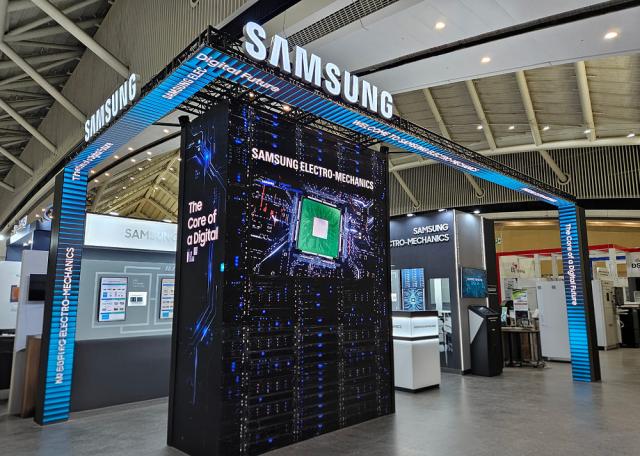
SEOUL, October 06 (AJP) -The AI boom is spilling beyond South Korea’s chipmakers, driving orders and investment in the components that stabilize power, connect processors and keep data centers from overheating.
Samsung Electro-Mechanics on Tuesday disclosed a $210.24 million AI-server capacitor contract, bringing its announced long-term supply agreements this year to about 3.9 trillion won. LG Electronics on the same day announced a deal to supply cooling systems for 5 gigawatts of AI data center capacity in North America.
The deals show how growing computing requirements are expanding demand across the infrastructure surrounding AI chips. More powerful processors need a stable electricity supply, increasingly sophisticated connections and cooling systems capable of removing concentrated heat.
Investors turned to the stocks while dumping bigger chipmakers. At 3:00 p.m. Seoul time, Samsung Electro-Mechanics was up 5.19 percent at 1,663,000 won, while LG Electronics gained 7.18 percent to 231,500 won, according to Korea Investment & Securities market data. Shares of SK hynix fell 3.5 percent and Samsung Electronics 1.5 percent.
Samsung Electro-Mechanics’ latest contract covers multilayer ceramic capacitors, or MLCCs, supplied to an unidentified global company throughout 2027.
The filing valued the agreement at 285.6 billion won, equivalent to 2.5 percent of the company’s 2025 consolidated revenue. It is the sixth long-term supply agreement the company has disclosed this year, following another contract worth about 285 billion won on Sept. 29.
MLCCs store and release electrical energy to stabilize power supplied to chips and suppress electrical noise. AI servers require high-capacity components that can withstand demanding temperatures, voltages and continuous operation.
Samsung Electro-Mechanics says AI servers can contain more than 10 times as many MLCCs as conventional servers. It estimates its share of the AI-server MLCC market at more than 40 percent.
The company cites a Goldman Sachs forecast that the market will grow from $1.4 billion in 2025 to $5.8 billion in 2030, an annual compound growth rate of about 33 percent.
“Customer requirements for high-performance MLCCs continue to rise alongside the growth of the AI market,” a Samsung Electro-Mechanics official said. “We will expand the share of AI-use MLCC products based on our technology and stable supply capabilities.”
The company is also committing 6.78 trillion won to expand production of advanced semiconductor packaging substrates in South Korea and Vietnam.
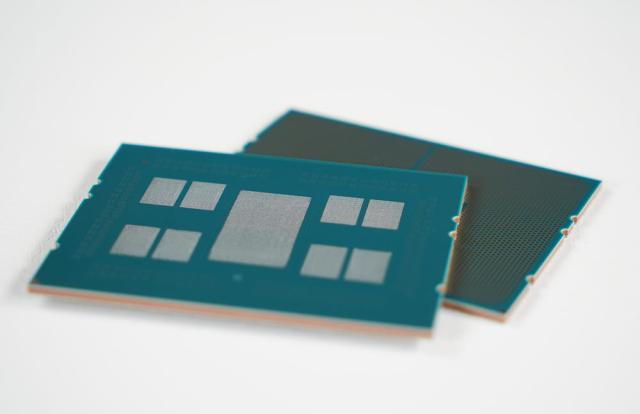
These substrates, known as flip-chip ball grid arrays, connect processors to circuit boards and carry electrical signals and power. As AI chips become more complex, the substrates must accommodate larger dimensions, more layers and denser connections.
Samsung Electro-Mechanics will invest 4.27 trillion won at its Sejong operation, with mass production scheduled to begin in September 2028. Another 2.51 trillion won will go toward equipment for its Vietnamese expansion, where completion and operation are targeted for June 2030.
The company said customer funding support and medium- to long-term volume commitments would help reduce the financial and utilization risks of the expansion.
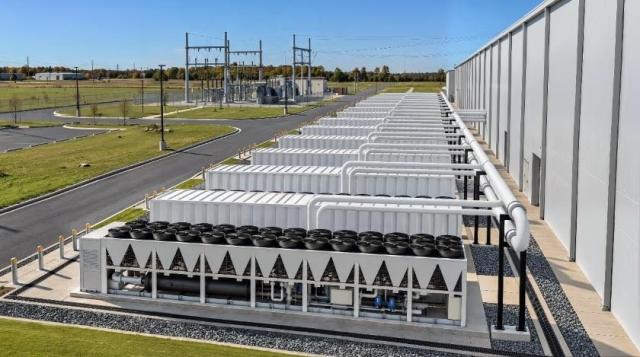
Its U.S. unit signed a long-term agreement with AIR Control Concepts to supply high-efficiency chillers and other cooling systems in phases for 5 gigawatts of North American AI data center capacity. Financial terms and a detailed delivery schedule were not disclosed.
The agreement follows LG’s Oct. 1 announcement of a 150 billion won investment in a new U.S. chiller factory and expanded production lines in South Korea.
The factory in Windsor, Virginia, is scheduled to begin production in the first half of 2027. It will manufacture air-cooled chillers for AI data centers, giving LG a local production base to serve the North American market.
LG is also adding air-cooled chiller production lines and upgrading equipment at its Pyeongtaek and Changwon plants, with the domestic expansion proceeding in stages through the end of 2026.
Chillers remove heat from water circulated through cooling systems. As AI processors become more powerful and densely packed, that heat-management infrastructure is essential to sustaining performance and preventing overheating.
LG is broadening its offering into what it calls “chip-to-chiller” cooling: cold plates that absorb heat directly from processors, coolant distribution units that circulate and manage cooling fluid, and chillers that remove the collected heat.
The company and AIR are discussing extending their partnership to coolant distribution units, linking the latest supply agreement to LG’s broader liquid-cooling business.
LG said orders for its AI data center cooling solutions exceeded 600 billion won in the first half of 2026 and are expected to reach several trillion won by year-end.
The company is also pursuing projects beyond North America. In Indonesia, it is supplying solutions for a large AI data center being developed by Sinar Mas Group in Jakarta, combining its cooling technology with LG Energy Solution’s batteries and LG CNS’s data center design, construction and operating capabilities.
“We will continue to strengthen our ability to supply cooling solutions reliably as core infrastructure for AI data centers, and actively respond to rapidly growing market demand,” said Lee Jae-sung, president of LG’s Eco Solution business.

Copyright ⓒ Aju Press All rights reserved.