The Bank of Korea (BOK) and IMF on Thursday jointly held a forum on “Scaling Tokenization: New Efficiencies, New Vulnerabilities,” a chapter of the fund’s October Global Financial Stability Report.
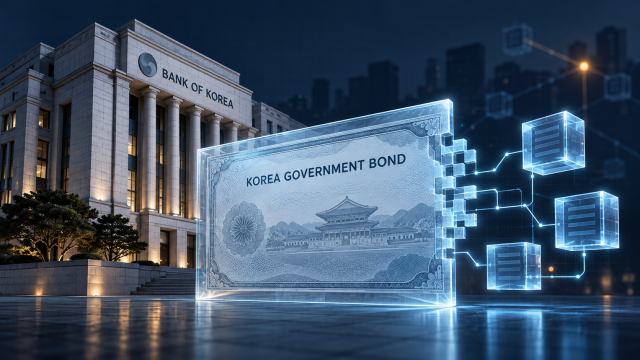
“The Bank of Korea and the government are collaborating to launch a pilot program for tokenizing government bonds next year,” Kwon Min-soo, the BOK’s senior deputy governor, said in prepared opening remarks.
He also said Korea plans to scale up the second phase of Project Hangang, its digital currency trial, in the fourth quarter of this year.
The IMF assessed current systemic risks from tokenization as limited but warned that wider adoption could create new channels for liquidity strains, leverage and financial contagion.
Tokenization represents financial assets and liabilities on programmable digital ledgers, bringing issuance, transfers, recordkeeping and settlement onto shared infrastructure that can reduce administrative costs, improve transparency and automate processes previously handled by separate intermediaries.
The global public market for tokenized real-world assets reached about $65 billion in July, excluding private tokenized markets, repurchase agreements and stablecoins, according to the report.
An IMF analysis of five liquid U.S. equity-linked tokens across 11 trading venues found that more than half of trading activity occurred outside regular U.S. market hours and about 80 percent of trades were for less than one share.
Those markets were less liquid than their conventional counterparts, with realized volatility roughly 1.5 times as high, although the IMF cautioned that findings from a small, developing market may not reflect conditions under broader adoption.
The report attributed part of the volatility gap to thinner liquidity and continuous trading, which captures overnight and weekend price movements excluded from conventional markets’ regular-hours measure.
For Asia, Kwon said faster settlement and lower intermediation costs could benefit supply chains and financial markets, while the region’s history of sudden capital outflows underscored the need to prepare safeguards before the infrastructure expands.
Limited trading hours, multiple intermediaries and settlement delays can impede efficiency, but “these frictions have served as buffers during times of market turmoil, allowing policy authorities to assess and respond,” he said.
The IMF identified a similar trade-off in immediate, simultaneous settlement, which can reduce the risk of one party failing to deliver but may require more funding up front and remove timing gaps that help participants absorb liquidity shocks.
The fund also warned that automated margin calls and liquidations could accelerate forced selling during periods of stress, adding to liquidity strains.
It recommended a technology-neutral approach that removes unnecessary barriers while maintaining financial safeguards, including clarifying the legal rights attached to tokens, applying regulation according to the underlying financial activity and supporting secure transfers of assets and money between platforms.
Tokenized securities should settle in central bank money where practical and available, the report said, while privately issued alternatives such as deposit tokens and stablecoins require controls addressing their issuers’ credit and liquidity risks.
The IMF also urged authorities to adapt circuit breakers and liquidity safeguards for continuous trading, strengthen oversight of technology providers and monitor links between tokenized and traditional financial markets.
AJP Takeaways
- Korea plans a government bond tokenization pilot next year and further development of Project Hangang’s second phase in the fourth quarter.
- The IMF’s equity-token sample showed demand for trading outside regular hours and fractional exposure, alongside lower liquidity and higher measured volatility.
- Current systemic risks from tokenization remain limited, but the IMF called for stronger settlement, liquidity and operational safeguards as adoption expands.

Copyright ⓒ Aju Press All rights reserved.