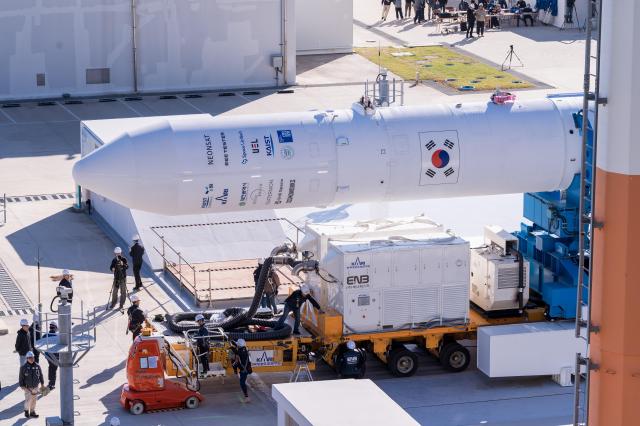
South Korea aims to develop the reusable rocket by 2032 as a separate project from its existing Nuri launch vehicle program.
“We have been selected as the system integrator for the reusable launch vehicle, but which company is responsible for which specific components is yet to be decided,” the Hanwha Aerospace official said.
The official stressed that Nuri’s upcoming sixth and seventh launches and the next-generation launch vehicle are separate projects, cautioning against assuming that Hanwha’s expanding role in Nuri would translate directly into the same division of work for the new rocket.
South Korea plans to invest about $1.7 billion in the next-generation launch vehicle program through 2032.
The Korea AeroSpace Administration, or KASA, revised the program late last year to develop a methane-powered reusable rocket, replacing an earlier expendable design.
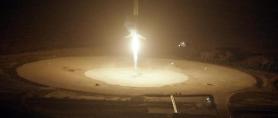
The new rocket will have nine 80-ton-class methane engines on its first stage and one 80-ton-class engine on its upper stage. The first stage is designed to return to Earth for reuse, while the upper-stage engine will be able to shut down and restart in space to deliver satellites to different orbits.
KASA said the project aims to establish a low-cost, high-frequency launch capability and develop South Korea’s main space transportation system for the 2030s.
Flight testing is scheduled to begin in 2031, ahead of two lunar missions planned for 2032.

Copyright ⓒ Aju Press All rights reserved.