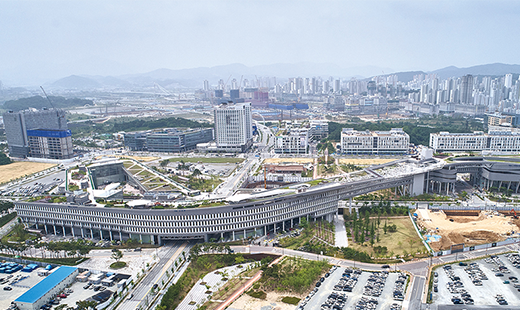
SEOUL, October 13 (AJP) -South Korea’s Financial Services Commission and its financial intelligence unit will move to Sejong in the second half of 2027 under a broader plan to relocate nearly 10,000 government officials and complete the administrative capital by 2031 - about a quarter of century after the decentralization initiative began in 2005.
The second administrative relocation roadmap, unveiled Tuesday by the Ministry of the Interior and Safety, covers 44 government bodies with a combined authorized workforce of 9,929. They include the ministries of foreign affairs, defense, unification, justice, and gender equality and family.
Sejong was created as an administrative city to reduce the concentration of government functions in the Seoul metropolitan area. A total of 43 government bodies have already moved to Sejong, accounting for 14,731 authorized positions at the time of their relocation, according to the ministry.
Under the new plan, 27 institutions with 2,995 officials are earmarked to move into rented offices in Sejong during 2027. Another 17 institutions with 6,934 officials will relocate in stages by 2031 after dedicated buildings are completed to accommodate security, investigative and other specialized functions.
Six bodies will move in the first half of 2027: the broadcasting and media communications regulator, the Personal Information Protection Commission, the Nuclear Safety and Security Commission, the National Human Rights Commission, the National Education Commission and the Overseas Koreans Agency.
The FSC, which sets financial policy, is scheduled to move in the second half along with other agencies and advisory bodies. The relocation list includes its Korea Financial Intelligence Unit, which analyzes suspicious financial transactions. The two bodies have authorized staffing of 340 and 80, respectively.
The justice and gender equality ministries are also included in the 2027 group, but their precise relocation dates will depend on amendments to the law governing Sejong’s development.
The law currently exempts those two ministries, along with the foreign affairs, unification and defense ministries, from relocation. The government plans to work with the National Assembly to remove the exemptions and secure the necessary funding.
The foreign affairs, unification and defense ministries are among the institutions scheduled to move into newly built premises by 2031. Together, they account for 2,106 positions.
The later phase also includes the Board of Audit and Inspection, the prosecution service, the serious crimes investigation agency, the National Police Agency and the Corruption Investigation Office for High-ranking Officials.
The timetable coincides with plans to complete a presidential office in Sejong in 2029 and a National Assembly complex there in 2033.
The ministry estimates that office leasing, fitting out and operating expenses, together with employee relocation support, will cost about 89.7 billion won in 2027.
Construction of new government buildings is projected to cost about 3.1 trillion won, including premises for institutions initially moving into rented offices. The government plans to allocate 28.6 billion won for initial design work in 2027. Final costs will depend on locations, building sizes and design decisions.
Support for relocating officials and their families will include moving expenses and initial settlement assistance. Temporary transport support is also under consideration for employees unable to move immediately because of housing arrangements or their children’s school terms.
“This relocation of central government institutions to Sejong is a core national strategy to overcome the concentration around the capital and use our national territory efficiently, enabling sustainable growth and a new leap forward,” Interior and Safety Minister Yun Ho-jung said.
The ministry said agencies would prepare continuity plans to prevent disruptions to public services, including permit processing and handling citizens’ requests, during the move.
Copyright ⓒ Aju Press All rights reserved.