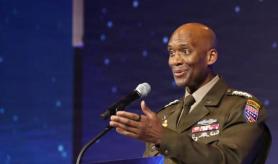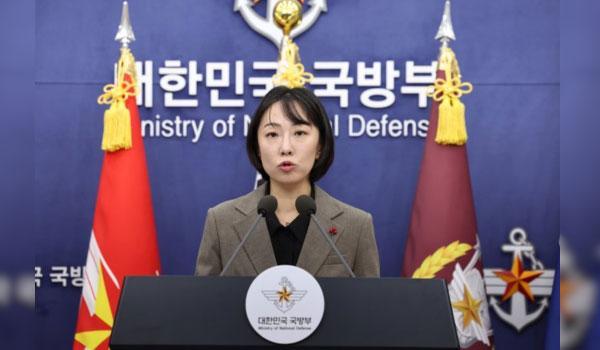
When asked by reporters about recent remarks by U.S. Forces Korea (USFK) commander Gen. Xavier Brunson that shifting security conditions on the Korean Peninsula require "new standards" for the transfer, Jeong said at a regular press briefing, "If the goalposts keep moving, I think the transfer can never happen."
Her comments came shortly after Brunson warned against rushing the transfer at a seminar hosted by the Gold Institute for International Strategy in Washington, D.C., earlier this week. Citing North Korea's growing nuclear arsenal along with recent missile launches and other provocations, the USFK chief stressed that the handover must not undermine the ability of South Korean and U.S. forces to defend their countries.
The remarks highlight stark differences between Seoul and Washington over the timing of the handover. South Korea aims to regain wartime control before President Lee Jae Myung's term ends in 2030, with some seeking to complete the process as early as next year.
Washington, however, has stressed that the transfer must meet criteria based on mutually agreed conditions including South Korean forces' ability to lead combined military operations.
But Jeong clarified that she was speaking in her personal capacity, not on behalf of the ministry, adding that it would be "inappropriate" for the ministry to comment publicly on remarks made by the USFK chief.
She also said that any remaining differences would be addressed through bilateral consultations and the upcoming annual Security Consultative Meeting (SCM), which is reportedly being postponed until December from its usual October or November schedule.
Copyright ⓒ Aju Press All rights reserved.