

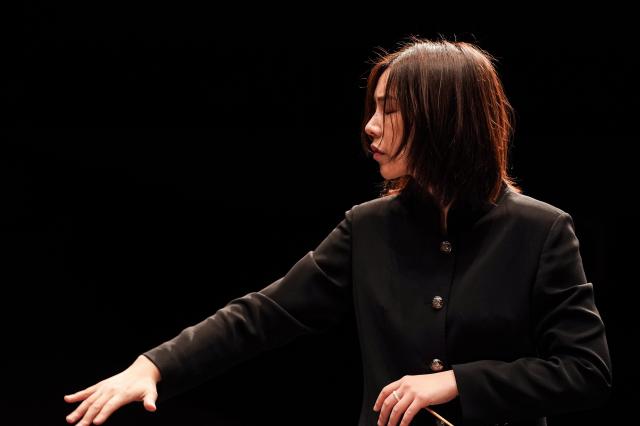
According to the conductor, she is the youngest woman to have completed a Mahler symphony cycle. Her achievement has also drawn attention from figures associated with the international Mahler community.
Morten Solvik, a board member of the International Gustav Mahler Society and vice chairman of the Mahler Foundation, attended the finale. Marina Mahler, the composer’s granddaughter, sent a message celebrating the decade-long undertaking.
Through Confucius, Buddhist reflections on life and death, and the spirituality of the Korean thinker Dasuk Yoo Youngmo, Sol Chin’s musical journey invites a larger question: What does artistic mastery mean in an age of artificial intelligence?
The performance at Lotte Concert Hall in Seoul on Oct. 9 was more than another performance of a celebrated composer’s symphony. It marked the fulfillment of a promise that a young artist had made to herself a decade earlier, the realization of a dream that had once seemed almost impossibly ambitious.
At the center of the stage stood the Korean conductor Sol Chin.
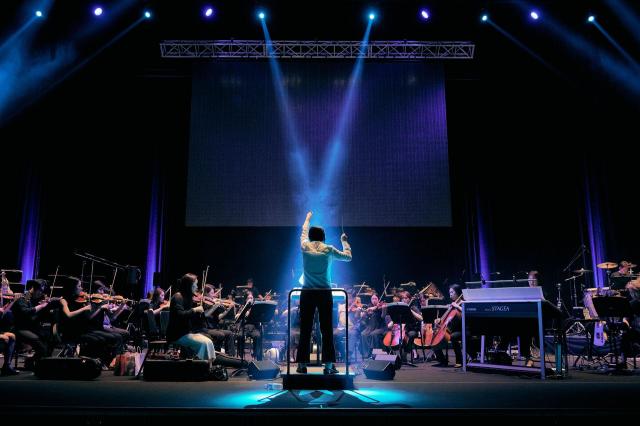
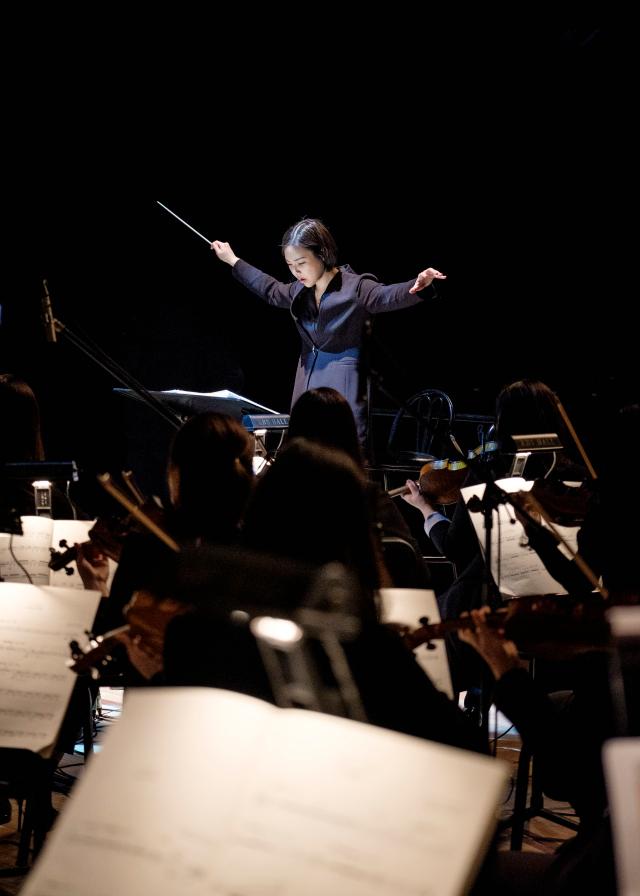
The work was Gustav Mahler’s Symphony No. 2, commonly known as the Resurrection Symphony. An orchestra of approximately one hundred musicians and a chorus of some 120 singers came together for the occasion.
According to contemporary press accounts, Chin conducted with extraordinary intensity, her body drenched in perspiration as the orchestra and human voices joined in the work’s overwhelming conclusion.
When the final sound faded, cheers and a standing ovation followed. It was the end of a ten-year odyssey.
To understand the significance of that moment, we must return to 2016. Chin was then twenty-nine. She was neither an internationally established conductor nor the artistic director of a major publicly funded orchestra.
In a classical music world where young women conductors still faced assumptions about authority, experience, and leadership, her determination to perform Mahler’s symphonic works across an entire cycle could easily have been dismissed as unrealistic.
She gathered young musicians who shared her devotion to Mahler and founded the Mahlerian Orchestra. The first performance in the cycle followed in 2017. Year after year, through the demands of rehearsal, financing, production, and artistic preparation, the undertaking continued. On October 9, 2026, the promise was fulfilled.
I would call such a person a quiet heroine of our time. Her name is Sol Chin.
The finale, presented under the title Mahlerian Series 10 FINALE, brought together the Mahlerian Orchestra, the Wonju City Choir, the Seoul Motet Choir, and the Winner Opera Chorus, with soprano Kang Hye-jung and alto Kim Se-rin as soloists. It took place on Hangul Day, a national holiday celebrating the Korean alphabet—a fitting coincidence for an evening on which music became another language of human expression.
Mahler’s Second Symphony is not merely a work of exceptional scale. It is a philosophical drama that asks what human beings confront in the presence of death, where meaning can be found in a finite life, and whether hope can emerge from suffering and despair.
Across its five movements, the symphony moves through mourning, memory, disillusionment, spiritual longing, and the possibility of renewal. The first movement opens in a world shadowed by death. The second recalls the tenderness of a life once lived. The third exposes the absurdity and confusion of human existence. In the fourth, Urlicht—“Primal Light”—the human voice enters with an intimate appeal for redemption. The final movement brings orchestra, soloists, and chorus toward an affirmation that seems to reach beyond mortality itself.
The conclusion is not simply a triumph of musical technique. It gives voice to the hope that death need not have the final word.
For Chin, the choice of Resurrection as the concluding work carried a personal resonance. Before the performance, she spoke of the cycle as an ending that was not truly an ending. The project would be complete, but her relationship with Mahler would continue.
A performance ends when the curtain falls; its deeper life may begin again in the memories of those who have heard it.
The evening therefore represented not only Mahler’s resurrection in sound but also a new beginning for the conductor. Ten years earlier, Chin had been a young musician moving toward Mahler’s world. She had now become an artist who had lived with that world through an important decade of her own life.
For an artist, ten years are more than a measurement of time. They are an accumulation of insight. Experience changes the meaning of a score. Failure deepens judgment. Notes that once existed primarily as symbols gradually become a language through which the artist understands life.
Nor was this achievement Chin’s alone. Every concert depended on the labor of instrumentalists, singers, organizers, producers, and supporters. Behind the visible authority of a conductor stand the less visible realities of rehearsal rooms, venue reservations, scores, budgets, publicity, and the countless decisions required to bring musicians together.
Sustaining such an undertaking for a decade is itself a cultural achievement.
The name Mahlerian describes someone profoundly devoted to Gustav Mahler and his musical universe. It also became the name of Chin’s orchestra and the series through which she pursued her ambition.
Founded in 2016 as an independent project ensemble, the Mahlerian Orchestra began its symphonic journey in 2017 with Mahler’s Tenth Symphony. The subsequent sequence comprised the Fifth, First, Sixth, Ninth, Third, Seventh, Fourth, and Eighth symphonies, before concluding with the Second in 2026.
Mahler’s symphonies vary enormously in orchestration, duration, expressive language, and technical complexity. The Eighth, often called the Symphony of a Thousand, requires immense vocal and instrumental forces, though not necessarily a thousand performers. The Third can extend well beyond ninety minutes. The Ninth demands sustained emotional concentration as it seems to contemplate the fragility of life itself.
The Tenth poses a different challenge: Mahler left it unfinished, and its performance requires decisions about editions and performing completions. Here musical interpretation becomes inseparable from musicological judgment.
To conduct Mahler seriously is to study not only notes and orchestration but also the composer’s life, intellectual environment, religious imagination, and understanding of human existence.
Chin’s ambition was therefore larger than a conventional concert project. She was not simply invited to conduct an established institution’s predetermined repertoire. She helped create the institution, gather its musicians, plan its programs, and sustain its artistic direction.
She was an artist and an organizer, a musical leader and a builder of community.
Leadership does not arise solely from office, rank, or institutional authority. It may grow from conviction, responsibility, and the trust that others place in a shared purpose. Chin’s achievement suggests that the greater challenge is not merely to bring people together but to keep a common aspiration alive over many years.
According to her introduction, she became the youngest woman to complete a cycle of Mahler’s symphonies. She also reported recognition and congratulations from figures and organizations in the international Mahler community. Such claims deserve careful attribution rather than presentation as independently certified world records.
Yet the larger significance of her accomplishment does not depend on a superlative. Its distinction lies in the fact that she built an ensemble around an artistic conviction and persevered for ten years. The result belongs as much to the participating musicians as to the conductor herself.
Why Mahler? Gustav Mahler was born in 1860 into a Jewish family in Bohemia, then part of the Austrian Empire and now within the Czech Republic. His life was marked by tensions of identity, belonging, and artistic ambition. Born Jewish, he later converted to Catholicism. He rose to prominence as one of the great conductors of his era, while his reputation as a composer expanded dramatically after his death in 1911.
The contradictions of his life are deeply embedded in his music.
Nature and civilization, innocence and violence, love and loss, earthly attachment and metaphysical yearning coexist within his symphonies. A childlike melody may suddenly give way to a military march. A folk tune may be interrupted by the shadow of mortality. The longing for heaven may collide with an almost unbearable attachment to the beauty of the world.
Mahler does not conceal the contradictions of existence. He makes them audible.
He lived at a moment when European modernity was approaching both an extraordinary height and a profound crisis. Science and industry advanced, while traditional religious certainties were increasingly questioned. Empires appeared powerful yet fragile. Human beings gained new confidence in their ability to master nature, even as their understanding of their own purpose became less secure.
For Mahler, the symphony was not merely an arrangement of beautiful sounds. It was a universe large enough to contain the world.
His music also enters into dialogue with literature, religion, and philosophy. Nietzsche’s words appear in the Third Symphony; the Eighth brings together the Latin hymn Veni, Creator Spiritus and the final scene of Goethe’s Faust, Part Two. Christian images of redemption coexist with a broader existential search.
This is where Mahler’s music invites comparison with the spiritual traditions of Asia. Buddhism begins with an unflinching recognition of suffering, impermanence, aging, sickness, and death. Daoism seeks an understanding of life within the transformations of nature and the Way. Confucianism emphasizes moral cultivation and harmony between the individual and society.
Mahler did not inherit these traditions as a direct philosophical lineage. Nor should their differences be erased. Yet the questions his music raises can enter into a profound conversation with them.
Where do human beings come from, and where do they go? Is death an absolute ending? Can beauty be discovered in suffering? How is a single life related to the larger universe? These are not questions belonging exclusively to Europe or Asia. They are among humanity’s enduring concerns.
Chin has spoken of her attraction to the intensely personal emotions and experiences that Mahler poured into his compositions. As she studied his music over the years, a composer she had once admired from a distance gradually became an intimate artistic presence.
This is one way an artist matures. Admiration leads to study; study, sustained over time, becomes a form of spiritual dialogue. The great figure who once seemed remote becomes a companion in thought.
Chin’s journey also carries significance because of the circumstances in which it began. Conducting has historically been a profession shaped by male authority. Although women conductors have become increasingly visible internationally, the image of the orchestral leader has long been associated with particular expectations of gender, age, and power.
When Chin announced her ambition, some questioned whether she could carry it through. Her youth and gender could become obstacles before her musical abilities had even been judged. She did not answer those doubts primarily through argument. She answered through performances.
After one concert came the preparation for another. After one year came another score. The work continued until the cycle was complete. Chin studied at the Korea National University of Arts and the Mannheim University of Music and
Performing Arts in Germany.
She subsequently developed a conducting career and took on roles in music education and cultural institutions. Yet the defining feature of her story is not a sequence of credentials. It is that she created a path of her own. A fine education and respected appointments matter. But the deepest measure of an artist is the question that guides a lifetime of work.
Her story is particularly relevant to young people in contemporary Korea. Society urges them to be adventurous yet often punishes failure. It praises originality while encouraging established routes to success. It celebrates creativity but frequently rewards security and predictability.
In East Asian thought, there is a useful concept for understanding such growth: naegong, an inner strength cultivated through long discipline. It is more than technical proficiency. It is the depth acquired through repetition, difficulty, reflection, and renewed effort.
A martial artist develops it through practice. A writer develops it through language, a painter through the brush, a journalist through the ability to distinguish truth from appearance. A musician develops it through an increasingly profound relationship with sound and human feeling.
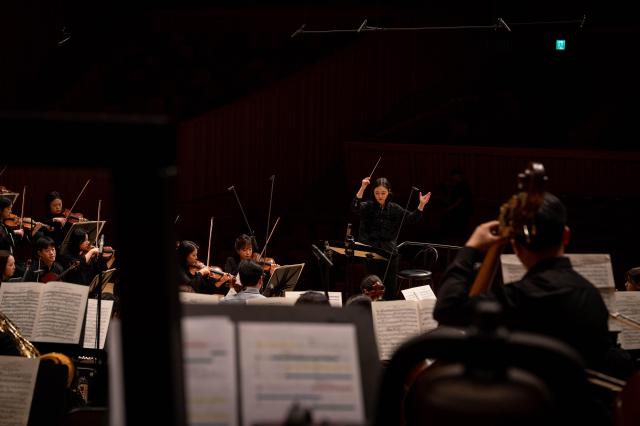
Conductors do not themselves play every instrument in the orchestra. Yet they must understand each instrument’s character, each player’s breathing, and the way contrasting timbres can become a coherent musical architecture. Reading a score is only the beginning. The conductor must ask why each note belongs where it does and how the composer’s intention can become a living experience.
Mahler intensifies these demands. Monumental eruptions coexist with passages of almost unbearable delicacy.
Contradictory emotions must be shaped into a single dramatic journey. This requires more than technical command. It requires an understanding of people.
Over ten years, Chin must have learned not only from Mahler’s scores but also from the musicians with whom she worked. Every performer brings a different temperament and imagination. Some respond to precise instruction; others flourish when granted expressive freedom. An orchestra becomes a community not merely through the movement of a baton but through trust.
Trust is accumulated through shared effort, difficulty, disappointment, and achievement.
Confucius in the Analects described the stages of his own life: at fifteen, he set his heart on learning; at thirty, he stood firm; at forty, he was no longer perplexed.
The familiar expressions san shi er li—“standing firm at thirty”—and si shi bu huo—“free from perplexity at forty”—offer a striking perspective on Chin’s journey.
At twenty-nine, she established her artistic purpose. Over the decade that followed, she gave it form. Now approaching forty, she stands at a threshold where conviction may be joined by greater clarity.
To be free from perplexity does not mean to possess every answer. It may mean knowing more clearly which questions matter.
Chin has not presented herself as an artist who has attained perfection. Following the cycle, she acknowledged her limitations and spoke of the need to continue growing. Such humility is not a weakness. It is a condition of artistic maturity.
Her dedication also drew the attention of Morten Solvik, a board member of the International Gustav Mahler Society and vice chairman of the Mahler Foundation, who traveled to Korea for the finale.
Solvik praised the care of her musical detail, her fidelity to the score, and the seriousness of her study. He reportedly recognized in the performance the depth of preparation that lay behind the visible act of conducting.
For an artist, recognition from someone who has spent a lifetime studying the same musical world can carry a significance different from public applause. It acknowledges not only the performance but the discipline that made it possible.
Mahler began work on the music that became the first movement of his Second Symphony in 1888 and completed the symphony in 1894. Its finale draws on verses by Friedrich Gottlieb Klopstock and additional words by Mahler himself.
The music confronts death rather than turning away from it. Yet beyond that confrontation it imagines renewal.
Resurrection may be understood here not only as a religious image but also as a metaphor for the human capacity to begin again.
Throughout our lives, we encounter smaller forms of death: a broken dream, the loss of someone we love, the collapse of a belief on which we have depended. Such experiences can leave us inwardly devastated. Yet human beings may endure, discover new meaning, and rise again.
Chin’s decade was surely not a succession of uninterrupted successes. She has spoken of the practical difficulties of securing venues, organizing large performing forces, and communicating with musicians—problems that could at times be more exhausting than rehearsal itself.
Nevertheless, she continued. If Mahler’s Resurrection travels from the shadow of death toward renewed life, Chin’s decade can be read as a passage from uncertainty toward conviction.
Buddhist reflections on the interdependence of existence, Daoist understandings of life and death within nature’s transformations, and the spirituality of the Korean thinker Dasuk Yoo Youngmo offer different ways of contemplating this passage. Yoo Youngmo’s search for the true self and its relation to heaven is not identical to Mahler’s musical theology. Nor are Buddhist, Daoist, and Christian visions interchangeable.
But all invite us to consider whether human life can be understood through physical survival alone.
What remains of a person after death? Can love, thought, and artistic creation outlive the individual who gave them form?
Mahler does not resolve these questions through philosophical argument. He responds through music: sometimes through silence, sometimes through an anguished cry, and finally through the collective power of the human voice.
Chin spent ten years bringing that musical response to life. Her greatest achievement may therefore be more than the completion of a repertoire cycle. It may be the formation of an artistic worldview through which she can continue to explore mortality, suffering, hope, and the human desire for transcendence.
Three broader lessons emerge from this undertaking.
The first is the democratization of artistic ambition. Great cultural projects need resources, professional institutions, and sustained cooperation. But they need not always begin with the authority of a powerful organization. Sometimes they begin with one person’s conviction and grow because others recognize a purpose worth sharing.
The second is the value of continuity. We live in an age obsessed with speed. Businesses measure quarterly performance, politics demands rapid results, and media platforms produce an endless succession of new subjects. Artificial intelligence has accelerated this rhythm still further.
Yet not everything of value can be measured by speed. Trees require time to deepen their roots. Craftspeople spend decades mastering their skills. Scholarship, wisdom, and artistic judgment mature slowly.
Chin’s achievement was not a miracle accomplished in a single evening. It was the cumulative result of many years of work.
The third is the value of community. An orchestra is a miniature society. A violin cannot become a cello; a trumpet cannot become a flute. Each instrument retains its distinct voice, yet all must listen to one another if a symphony is to emerge.
There is something deeply democratic in that ideal: freedom without isolation, difference without fragmentation, and cooperation without the erasure of individuality.
This spirit matters to Korea’s cultural future. K-pop, cinema, and television drama have already given the country extraordinary global visibility. But a mature cultural nation also needs classical music, literature, painting, theater, traditional arts, and the quiet labor of artists who may never become international celebrities.
Cultural strength is measured not only by spectacular successes but by the conditions that allow serious artistic lives to flourish.
The question becomes more urgent in the age of artificial intelligence.
AI systems can analyze Mahler’s scores, compare performances, generate melodies, and assist with composition, teaching, and concert production. Their capabilities will continue to reshape musical culture.
AI may analyze the Resurrection Symphony. It cannot live the ten years that Chin lived on her behalf. It cannot replace her uncertainty at twenty-nine, the responsibility of organizing musicians, the trust formed in rehearsal, or the emotional consequences of success and failure.
These experiences become part of artistic interpretation. When a conductor’s understanding of a score is inseparable from a life actually lived, performance becomes more than technical reproduction.
The point is not to reject technology. It is to remember why human beings create and listen to music in the first place: to understand life, share suffering, discover beauty, and find hope.
After the finale, Chin faced the inevitable question of what should come next. At an October 1 press conference, she indicated that she was not ready to part with Mahler. Rather than immediately launching another complete cycle, she hoped to follow the artistic questions that had emerged from the previous decade. She also spoke of continuing a requiem project begun after the release of a live recording of Mozart’s Requiem.
The direction is revealing. Mahler’s Resurrection asks whether life can rise beyond death. A requiem remembers the dead and gives form to the grief of those who remain. Both return us to the mystery of mortality and the human need for consolation.
Chin’s future cannot yet be predicted. What matters is that she has found questions substantial enough to sustain a lifetime of music-making.
I hope she will become an artist whose work speaks to audiences throughout the world. Yet international stature should not be measured only by prestigious appointments or fame. It should also mean possessing an artistic philosophy capable of crossing cultural and linguistic boundaries.
A moving symbol of such continuity came from Marina Mahler, the composer’s granddaughter and founder and chair of the Mahler Foundation. According to a video message conveyed by Chin, Marina Mahler offered congratulations on the completion of the Mahlerian project and described the Resurrection Symphony as music that brings hope, strength, and beauty at a time when the world urgently needs them.
The message connects generations across more than a century. Mahler, born in Bohemia in 1860, created music that was heard anew in Seoul in 2026. His granddaughter reached out to young Korean musicians who had devoted ten years to that inheritance.
Here lies one of culture’s most extraordinary powers. Human lives are finite, but works of genuine art can be renewed through the lives of those who encounter them.
Mahler died in 1911. His music continues to sound in concert halls around the world. Chin and her fellow musicians have added their own chapter to that continuing history. The evening also leaves a question for the rest of us.
What would each of us be willing to devote ten years to? A decade is no small part of a human life. Yet when given to something deeply loved, it can transform not only the person who makes that commitment but also the lives of others.
Chin began with a dream of her own. Its fulfillment required an orchestra, choirs, colleagues, organizers, supporters, and audiences. Her story is therefore not simply the triumph of an individual. It is a reminder that cultural achievement is created together.
A truly strong cultural society must make room for such endeavors. It must support artistic experimentation, allow failure without permanent exclusion, and honor long dedication as well as immediate acclaim.
On October 9, 2026, a young conductor completed a promise made ten years earlier. The deeper meaning of that evening was not the completion of a list of symphonies. It was the demonstration of how far a human being can travel by remaining faithful to a dream.
Great art is not completed by a single day of genius. It is born of the enduring faithfulness of those who refuse to betray their deepest aspirations.
Sol Chin has demonstrated that truth through ten years of her life. That is the tribute I offer to this quiet hero of our time.
Mahler dreamed of eternity through music. Sol Chin answered that dream with ten years of her life. And the song of eternity now awaits another beginning.
*The author is the chairman of Aju News Corporation and the publisher of Aju Business Daily and AJP.
Copyright ⓒ Aju Press All rights reserved.
