

Andamiro's Pump It Up, launched in 1999, packed Mexico's arcades in the early 2000s and spread across Latin America.
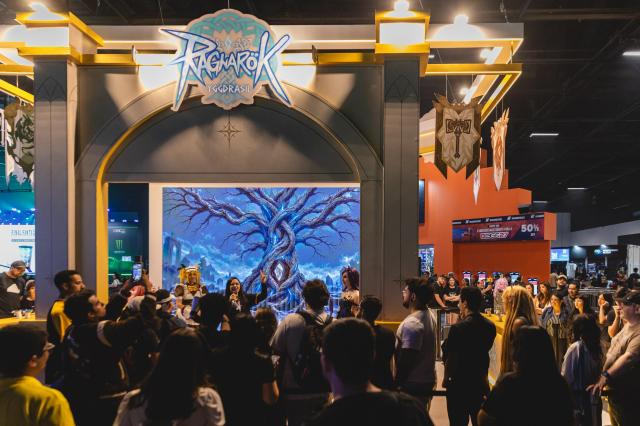
Korean PC games followed into Brazil’s internet cafes. Gravity's Ragnarok Online began commercial service there in 2005 through local publisher Level Up, which later brought in Nexon's Combat Arms in 2010 and Sudden Attack in 2011.
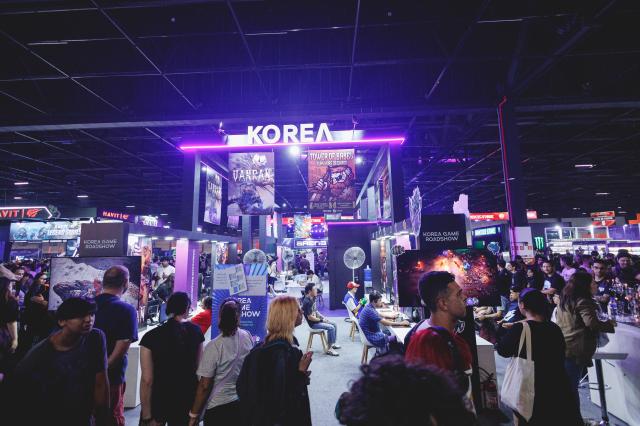
Two decades on, Korean game makers are heading south again, this time with local servers and Portuguese voice actors. The draw is a growing market abroad as gaming participation falls at home. The challenge is turning enthusiasm into spending.
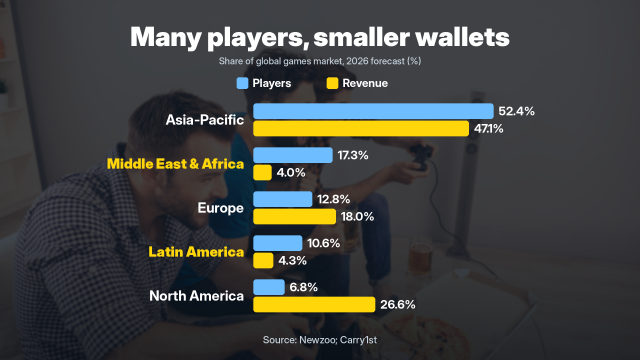
Latin America's games market is forecast to grow 7.9 percent to $9.3 billion this year, outpacing North America and Europe, according to Newzoo figures cited by Gamescom Latam.
In South Korea, gaming participation fell to 50.2 percent in KOCCA’s 2025 survey, down from 74.4 percent in 2022. The survey covers people aged 10 to 69.
"Latin Americans are very friendly toward Korean culture" said Kim Jung-tae, a professor at the School of Game at Dongyang University. "The region is not that different from the US cultural sphere, so what works in the Americas can travel there."
Kim said fighting over a limited domestic market would offer Korean companies few answers. But winning Brazilian players does not mean they will accept Korean pricing.
Some of its most-upvoted Brazilian Portuguese reviews, however, took aim at the price.
"This is the first game with reverse regional pricing," one player wrote on Steam on Sept. 30. Reviewers said the monthly membership needed to trade on the in-game market costs about 82 reais, roughly 5 percent of Brazil’s monthly minimum wage.
The response is far from uniformly negative. Of the game's 2,786 Brazilian Portuguese-language reviews, 69 percent are positive, compared with 52 percent of its English-language reviews.
Even criticism can come from committed players.
"The game is good in many ways: combat, graphics, soundtrack," wrote one player with more than 160 hours logged, before calling its monetization "extremely predatory."
Pearl Abyss' Crimson Desert has received a warmer reception, with 92 percent of its 2,463 Portuguese-language reviews positive. The company added full Brazilian Portuguese voice-over in an update unveiled in August.
"A perfect game for salaried workers, freelancers, family men and pet parents," one reviewer wrote.
Speculation about a Brazilian base for Krafton has followed, although the company has announced no decision.
"Krafton constantly reviews business opportunities in various regions to expand its global business," a company spokesperson said. "Nothing has been confirmed or officially decided regarding Brazil."
Brazil is strengthening support for its own games industry.
President Luiz Inacio Lula da Silva, who secured a fourth term in Sunday's runoff, signed an Oct. 14 decree implementing the country's 2024 games law.
It establishes the Brazilian games sector's eligibility for federal support in culture, technology, research and innovation, subject to each program's rules.
Beyond Latin America, Kim sees Africa as another potential growth market, although one requiring more time and adaptation.
Africa's games revenue is forecast to rise 11.9 percent to $1.98 billion this year, according to Carry1st and Newzoo — faster than Latin America's growth, but from a much smaller base.
"Much of Africa's working population is in its early 20s, which opens even more opportunities for us than Asia," Kim said. "But gaps in technology and culture still limit how far Korean games can go there, and it will take more time."
"Nationality doesn't matter," he said. "A game just has to be fun."
AJP Takeaways
- Korean game makers are expanding local servers and language support in Latin America as gaming participation declines at home.
- Latin America’s games market is forecast to grow 7.9 percent to $9.3 billion in 2026, but player enthusiasm does not guarantee acceptance of subscription fees and in-game charges.
- Krafton has made no decision on a Brazilian base. Africa offers another growth prospect, though infrastructure and cultural differences remain barriers.

Copyright ⓒ Aju Press All rights reserved.
