The BOK held a market monitoring meeting at 8 a.m., chaired by Deputy Gov. Kwon Min-soo, to assess the outcome of the Federal Open Market Committee meeting and its potential impact on South Korean markets.
The Fed kept the federal funds rate at 3.75 to 4.00 percent in a 10-2 vote. Fed Governor Lisa Cook and Cleveland Fed President Beth Hammack dissented in favor of a 25-basis-point increase.
The Fed also upgraded its assessment of the economy, saying activity was expanding at a "strong pace," compared with the "solid pace" cited after the previous meeting, while maintaining its assessment that inflation remained elevated.
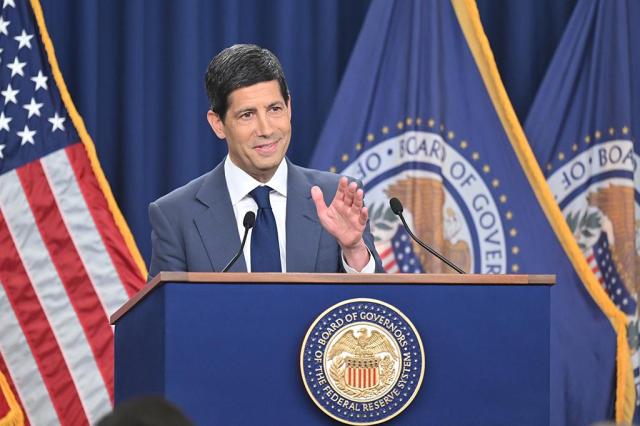
Fed Chair Kevin Warsh, however, declined to signal what policymakers would do at their next meeting.
"I don't believe in forward guidance absent exigent circumstances, absent a crisis," Warsh said at a press conference. :I also don't believe in prejudging meetings."
He said policymakers would have more information when they meet again in six weeks and would then be better placed to determine the appropriate policy decision and stance.
Financial markets viewed the meeting as less hawkish than expected despite the stronger economic assessment and the two votes for a rate increase, according to the BOK's New York office.
The two-year U.S. Treasury yield fell 4 basis points to 4.70 percent, while the 10-year yield rose 2 basis points to 5.02 percent, steepening the yield curve.
The dollar index slipped 0.2 percent to 102.13, while the S&P 500 gained 0.3 percent to 7,744. West Texas Intermediate crude futures rose 2.0 percent to $101.94 a barrel.
The BOK's New York office said investors had expected Warsh to emphasize inflation risks and the possibility of further tightening, but his press conference offered little additional guidance on the next policy move.
Expectations for additional Fed tightening also eased after the meeting.
Bank of America said the upgrade of economic activity to "strong" strengthened the case for keeping rates high, but Warsh provided little new guidance on the policy path.
Morgan Stanley said the Fed appeared to retain a bias toward further tightening, while viewing the pause as a move to wait for additional data and findings from internal task forces.
JPMorgan and Wells Fargo said the press conference raised doubts among investors over the Fed's commitment to returning inflation to its 2 percent target.
The BOK headquarters, meanwhile, focused on external risks that could continue to affect South Korean markets despite the relatively muted response to the Fed decision.
Kwon said tensions in the Middle East, concerns over fiscal sustainability in major economies and uncertainty surrounding artificial intelligence investment remained sources of risk.
He also pointed to upcoming monetary policy decisions by the European Central Bank and the Bank of Japan, as well as uncertainty over possible U.S. policy changes following the Nov. 3 midterm elections.
The BOK will continue to closely monitor domestic financial and foreign exchange markets, Kwon said.
Warsh also said financial and credit conditions had tightened for some companies and households, though he stopped short of describing overall conditions as restrictive.
He said interest rates were affecting technology investment as well, with investors becoming more selective and credit spreads widening in some parts of the market.
Capital expenditure nevertheless remained strong and was spreading beyond technology-related investment, according to the BOK's summary of his remarks.
The BOK's Washington office said the Fed was likely to continue discussing whether further rate adjustments were needed while monitoring geopolitical developments and incoming economic data.
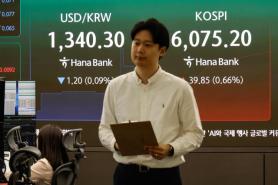
Meanwhile, the won strengthened against the U.S. dollar, trading at around 1,334 per dollar as of 10 a.m., compared with the previous session's close of 1,337.70.
Copyright ⓒ Aju Press All rights reserved.