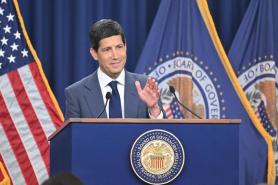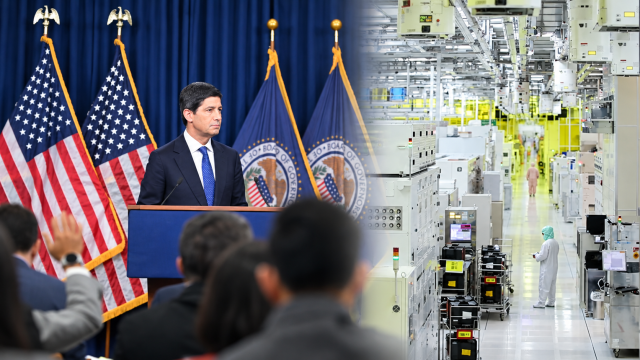
SEOUL, October 29 (AJP) - Federal Reserve chair Kevin Warsh said he closely watches South Korea for signs of the U.S. technology investment boom, highlighting the country's role as a supplier to rapidly expanding American capital spending.
"I pay probably more attention to the [South] Korean economy than you might think," Warsh said at a press conference following the Federal Open Market Committee meeting on Wednesday.
Warsh said many of the inputs feeding the latest surge in technology investment were coming from South Korea and Japan, with some also coming from Singapore.
He said developments in the South Korean economy help show "what's on planes and ships coming this way," referring to shipments headed to the U.S.
Recent trade data show a sharp increase in South Korean technology exports to the U.S.
South Korea's information and communications technology (ICT) exports to the U.S. reached $15.17 billion in September, up 420.1 percent from a year earlier, according to government data.
Semiconductor shipments surged 700.1 percent to $10.32 billion, while exports of computers and peripheral equipment jumped 654.7 percent to $3.59 billion.
The remarks came in response to a question from a South Korean reporter about the potential impact of further reductions in the Fed's balance sheet on foreign holders of U.S. Treasuries and overseas dollar funding markets.
The reporter asked how the Fed would avoid disrupting markets in countries such as South Korea and Japan if further balance-sheet reductions moved ahead.
Warsh did not outline a specific mechanism for limiting such spillovers.
He said the issue was being reviewed by the Fed's Balance Sheet Task Force, which is comparing potential approaches before submitting conclusions and recommendations to the FOMC.
Warsh said the recommendations could reach the FOMC early in the first quarter, while cautioning that the timing was not firm.
Any changes to the Fed's balance sheet would follow careful consideration of the task force's proposals and recommendations, he said.
Warsh said potential balance-sheet changes were unlikely to have a material effect on the current policy setting but said the issue still required further examination.
He also noted his long-standing relationship with Bank of Korea governor Shin Hyun-song, saying the two had known each other for about 20 years and had discussed the use of central bank balance sheets during the global financial crisis.
Copyright ⓒ Aju Press All rights reserved.