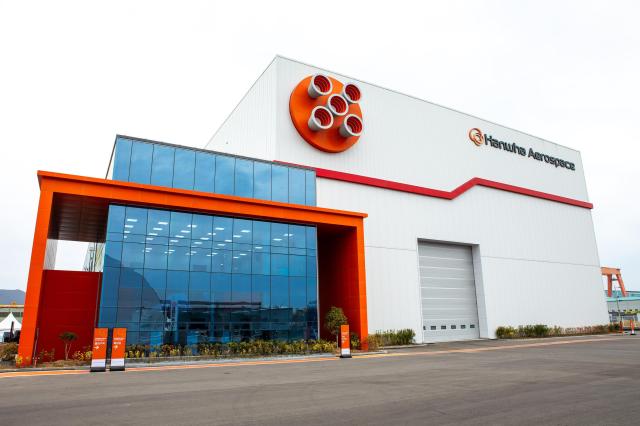
Located in the Yulchon Industrial Complex in Suncheon, South Jeolla Province, the new facility covers approximately 60,000 square meters and marks a major step in the company's push to expand its space business.
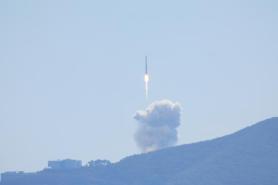
It will handle the assembly and testing of rocket engines and other key components including those for South Korea's homegrown Nuri space launch vehicle.
The facility's first major assignment will be preparing for the Nuri rocket's sixth launch, scheduled for next year, which will include a full test of all three stages of the rocket with its 75-ton engine.
It also plans to introduce its own launch vehicle to the global market in 2029 and begin offering commercial services in 2033.
To do this, it will invest approximately 23 trillion won (US$16.5 billion) in its space business, which is part of its parent company's broader plan to spend 55 trillion won by 2040 on defense, aerospace, satellite networks and artificial intelligence (AI)-related technologies, with ambitions of becoming a major player in the emerging industry.
"Together with domestic space companies, we will strengthen technological competitiveness and build a foundation for South Korea's space industry to compete in the global market," said Kim Seon, head of Hanwha Aerospace's space business, at the opening ceremony held in the southwestern city later in the day.
He added that the facility will serve as a hub for closer cooperation with local suppliers and manufacturers, as well as a production base for future launch vehicles.
South Korea has traditionally relied on government-led programs for its space development, but Hanwha Aerospace's new facility signals a transition toward private companies playing a bigger role.
Copyright ⓒ Aju Press All rights reserved.