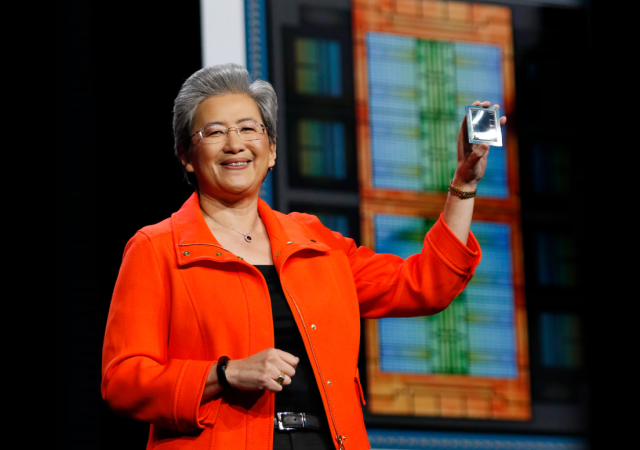
SEOUL, November 04 (AJP) - AMD’s stellar third-quarter earnings and ambitious AI growth outlook position the fabless chipmaker as a formidable challenger to Nvidia, but the U.S. midterm upset for Republicans could slow the so-called “Wild West” expansion and send shockwaves through South Korean chipmakers.
Decision Desk HQ projected Democrats would take control of both the House of Representatives and the Senate following Tuesday’s elections. In Texas, Democrat Gina Hinojosa defeated Republican Gov. Greg Abbott after campaigning for a moratorium on new data centers until lawmakers establish stronger protections for residents.
The results introduce a political constraint alongside the shortages of memory, advanced packaging and power already confronting the AI industry.
For Samsung Electronics and SK hynix, the question is how quickly strong demand can translate into completed data centers and sustained chip orders.
Advanced Micro Devices reported record revenue of $13.38 billion for the July-September quarter on Tuesday, up 45 percent from a year earlier, as demand for its AI accelerators and server processors surged.
Net income nearly doubled to $2.43 billion, while adjusted earnings per share rose 74 percent to $2.09. On a non-GAAP basis, operating income climbed 75 percent to $3.92 billion, reflecting stronger profitability as the company’s data center business expanded.
AMD shares closed 3.65 percent higher at $483.90 on Tuesday before climbing another 7.5 percent to around $520 in after-hours trading following the earnings announcement, as investors welcomed its stronger-than-expected results and growth outlook.
Data center revenue jumped 97 percent to a record $8.55 billion, accounting for roughly 64 percent of AMD’s total sales. The growth was driven by demand for its EPYC server processors and the initial revenue ramp of its Instinct MI450 series AI accelerators.
“We significantly exceeded our previous outlook for more than 80 percent growth,” AMD Chair and Chief Executive Lisa Su said during the company’s earnings conference call, referring to its data center performance.
The results come as AMD steps up efforts to challenge Nvidia’s dominance in AI computing, moving beyond individual chips toward complete rack-scale systems designed for large cloud providers and AI developers.
AMD began volume shipments of its MI455X accelerators during the quarter, with customers including Anthropic, Meta, Microsoft, OpenAI and Oracle deploying initial Helios systems, according to Su.
The company expects those deployments to expand substantially in the fourth quarter as production ramps and additional equipment manufacturers begin shipping systems.
AMD forecast fourth-quarter revenue of approximately $17 billion, plus or minus 3 percent, representing growth of about 66 percent from a year earlier and 27 percent from the preceding quarter.
Su also raised expectations for 2027, forecasting companywide revenue growth of more than 80 percent, with data center operations expected to account for more than four-fifths of total sales.
“We now expect server revenue to double year over year in 2027 and data center AI revenue to grow even faster than we projected 90 days ago,” Su said.
The expansion would mark a significant shift in AMD’s business mix, with AI accelerators increasingly becoming a larger revenue contributor than its traditional server CPU operations.
Chief Financial Officer Jean Hu said the company’s data center AI business was expected to surpass its server CPU business in revenue during the fourth quarter, driven by the sharp increase in MI450-series shipments.
Yet the scale of AMD’s ambitions is also exposing constraints in the semiconductor supply chain, particularly in advanced packaging and memory.
Asked by analysts whether the company had secured sufficient components to support its 2027 growth targets, Su acknowledged that demand was running ahead of available supply.
“It is true that demand is higher than supply,” she said.
Su said AMD had spent years coordinating with customers and suppliers to secure wafers, substrates, advanced packaging capacity, memory and other components needed for large-scale AI deployments.
“We continue to work with our supply chain partners to increase supply,” she said, adding that the company saw opportunities to expand capacity through existing relationships.

For Samsung Electronics and SK hynix, two of the world’s leading HBM producers, AMD’s expansion represents a potential source of additional demand as AI chipmakers race to secure memory supplies.
Lee Jong-hwan, a professor of semiconductor engineering at Sangmyung University, said the rapid expansion of HBM production was also tightening supplies of conventional DRAM, as manufacturers allocate substantial wafer capacity to producing stacked memory chips.
“HBM requires a large amount of DRAM, which is also creating shortages of conventional and high-performance server DRAM,” Lee told AJP.
He said memory producers were benefiting from the supply imbalance but had yet to expand production capacity aggressively, with output potentially increasing more rapidly from 2027 as planned investments come online.
Lee added that AMD’s reliance on external manufacturing and memory suppliers meant its expansion could create opportunities for Korean chipmakers, although the direct impact would depend on specific supply arrangements.
However, AMD did not disclose new HBM supply agreements with either company during the call, and the scale of any direct sales benefit remains unclear.
The memory market also emerged as a focus of the earnings call when an analyst asked how rising HBM prices could affect AMD’s economics as its Instinct accelerator business expands.
“As we ramp, we have had, let’s call it, long-term agreements with some of our suppliers as well as some of our customers,” Su said.
She added that inflation was affecting not only memory but also other components across the supply chain.
“We are also working with our customers to ensure that those costs are shared as we go forward,” Su said.
The comments suggest AMD is seeking to protect profitability as it expands AI accelerator shipments, rather than absorbing all the additional costs of increasingly expensive components.
The pressure is being felt across the technology industry.
Apple, which recently reported its quarterly results, warned that rising memory prices would weigh on its gross margins in the December quarter, highlighting how the AI infrastructure boom is tightening supplies for a broader range of electronics manufacturers.
For Korean memory producers, the simultaneous demand from AI accelerator developers, server operators and consumer electronics companies could strengthen pricing conditions, although the benefits will depend on production capacity, contract terms and the mix of memory products sold.
AMD’s growth outlook also comes with a contrasting warning for the conventional PC market.
Su said higher memory and component prices had weighed on PC demand late in the quarter, prompting AMD to plan for a double-digit percentage decline in industrywide PC unit shipments in 2027.
“Our view is this is one of those times when component prices go up, it affects overall system pricing,” she said.
The company reported client and gaming revenue of $3.72 billion, down 8 percent from a year earlier, as weaker gaming sales offset growth in its Ryzen processor business.
The divergence illustrates how AI investment is reshaping semiconductor demand, driving rapid expansion in data center infrastructure while increasing cost pressures on consumer devices.
The election results add another layer of uncertainty to that outlook.
Democratic control of Congress would give the party greater scope to investigate the AI industry and scrutinize the costs of its expansion. It would not, by itself, impose new restrictions, and President Donald Trump would retain the power to veto legislation.
The more immediate policy debate is taking place in states hosting the buildout, particularly Texas.
Hinojosa’s victory makes her the first Democrat elected Texas governor since Ann Richards in 1990. She campaigned for a halt to new data center development until the state legislature adopts protections giving communities more say over projects and their demands on local resources.
Her campaign also called for ending generous data center tax incentives and reviewing contracts that she said threatened local water supplies.
The scale of the investment makes the outcome consequential for the wider AI supply chain. Researchers at Rice University’s Baker Institute estimated annual Texas data center investment would reach $66.2 billion in 2026, up from about $3.4 billion in 2022.
Democrat Keisha Lance Bottoms also won the governorship in Georgia, another major data center market.
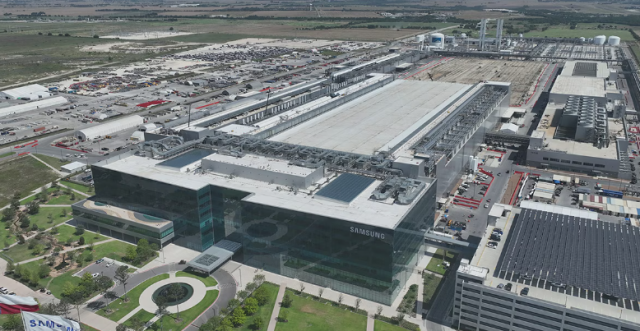
Texas has particular significance for Samsung, whose U.S. semiconductor manufacturing operations include its established Austin base and its advanced foundry project in Taylor. TSMC is also evaluating a possible manufacturing site in the state, with South Korean media reporting talks involving Sherman.
Restrictions on data centers would not automatically apply to semiconductor factories. Even so, delays to computing projects could affect the timing of demand for the processors and memory those factories and their suppliers produce.

Copyright ⓒ Aju Press All rights reserved.