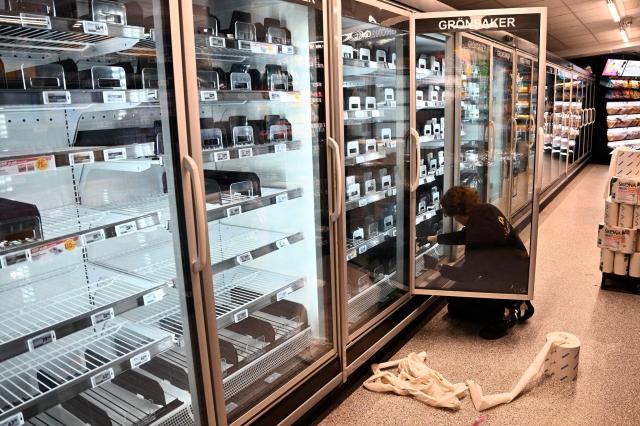
ZURICH, November 04 (AJP) -Hackers are switching off supermarket fridges and turning freezers into heaters across Europe, forcing stores to discard spoiled food in a wave of cyberattacks that has spread to at least 11 countries.
The European Commission warned that the attacks were “not isolated incidents” as Germany and Romania became the latest countries to report disruptions. No group has claimed responsibility, and the motive remains unknown.
Four supermarkets in Germany and six in Romania were affected on Tuesday, according to officials. A day earlier, stores in nine European Union countries — Belgium, Estonia, Finland, Ireland, Italy, Luxembourg, the Netherlands, Portugal and Sweden — reported problems with their cooling systems.
About 20 supermarkets were affected in Italy. Swedish retailer Coop said seven of its stores had been hit but had since returned to normal.
In Britain, hackers targeted small meat-processing companies, although the National Cyber Security Centre said the impact was minimal.
The attacks exploit an everyday feature of modern food retailing: internet-connected refrigeration systems that allow technicians to monitor temperatures and troubleshoot equipment remotely.
By taking over the small computers that control those systems, hackers can shut down cooling, activate defrost mode or raise temperature settings — in some cases to 50 degrees Celsius.
Many attacks take place at night, leaving the changes undetected for hours while stores are closed. By the time staff discover the problem, food may already be spoiled.
The European Commission, the EU’s executive body, said its agencies were coordinating a response with national governments. Spokesperson Thomas Regnier declined to identify a possible culprit.
The Commission also plans to review supermarkets’ ability to withstand cyberattacks, including the adequacy of their backup systems. EU Agriculture Commissioner Christophe Hansen described the attacks as “a deliberate attempt to disrupt our food supply chain.”
Romania’s cybersecurity chief, Dan Cimpean, offered a more restrained assessment of the incident in his country. He called it “semi-amateurish” and said Romania did not suspect a foreign government.
Belgian prosecutors have opened a criminal investigation into the attacks there.
The latest wave follows a similar attack on hundreds of French supermarkets on Oct. 12, about three weeks earlier. Some stores caught fire, and retailer Intermarché said losses could reach tens of millions of euros.
The vulnerability extends well beyond Europe. Cybersecurity firm Forescout has identified nearly 13,000 refrigeration control systems openly accessible on the internet across 99 countries, exposing a potential weak point in the infrastructure that keeps food fresh.
AJP Takeaways
- Cyberattacks on supermarket refrigeration systems have spread to at least 11 European countries, including Germany, Romania and Britain, forcing stores to throw away spoiled food.
- European Commission spokesperson Thomas Regnier said the supermarket attacks were “not isolated incidents” and EU agencies were preparing a joint response.
- No group has claimed responsibility for the European supermarket cyberattacks, which began with an Oct. 12 attack on hundreds of supermarkets in France.
- Tags: cyberattack, supermarkets, European Union, European Commission, Thomas Regnier, Christophe Hansen, Germany, Romania, United Kingdom, Italy, Belgium, Forescout, food security, cybersecurity
Copyright ⓒ Aju Press All rights reserved.