

Journalist

Joonha Yoo유준하
joonhayoo94@ajupress.com
ReporterCOEX Sejong Center for the Performing Arts & Music, Culture, Entertainment, Automotive
Joonha Yoo is a bilingual journalist at AJU Press (AJP), covering music, culture, entertainment and Korea’s automotive industry.
Raised in Fort Collins, Colorado, he often writes from the scene, bringing firsthand detail to stories ranging
from BTS comeback concerts to unique cultural events that catch the world's eye. "I write from the scene, not from the sidelines."
Raised in Fort Collins, Colorado, he often writes from the scene, bringing firsthand detail to stories ranging
from BTS comeback concerts to unique cultural events that catch the world's eye. "I write from the scene, not from the sidelines."
Latest by Joonha Yoo
-
 Forum in Seoul to discuss copyright rules for AI-generated music SEOUL, September 21 (AJP) - An open forum on copyright rules for artificial intelligence (AI)-generated music will be held in Seoul on Tuesday, the Ministry of Culture, Sports and Tourism said on Monday. The forum, the country's first of its kind, will be held at the National Assembly, with a focus on how copyright organizations should register, manage and distribute royalties for AI-assisted music. A key issue will be how to determine the level of human creative contribution required for a work involving AI. The Korea Copyright Commission will present current copyright registration guidelines and overseas cases, while legal experts will discuss possible revisions to rules used by music copyright management organizations. Music publishers, distribution platforms, AI detection specialists and academics will also take part in the discussion. The ministry said additional forums will follow including discussions on how royalties from AI-assisted music should be distributed. AJP Takeaways - South Korea will hold its first public forum on copyright management for AI-assisted music. - The discussion will focus on how to assess human creative contribution. - Copyright registration, trust management and royalty distribution will be among the key issues. 2026-09-21 14:36:48
 -
 Super Junior's Yesung to drop teaser ahead of 10th-anniversary album SEOUL, September 21 (AJP) - K-pop boy group Super Junior's member Yesung will unveil a teaser song next week ahead of his 10th-anniversary solo album, slated for early next month, his agency SM Entertainment said on Monday. "Winds of Time" will be unveiled next Monday to build excitement for his second full-length album, "Where We Are," due out on Oct. 6. Yesung took part in writing the lyrics for the song, an alternative pop track built around acoustic instrumentation and reflections on the passage of time. Meanwhile, the 12-track album will be centered on the theme of time including the lead single "Pedazos." Following the album's release, Yesung will begin an eight-city Asian tour marking a decade since his solo debut. The tour, titled "ABOUT THE THINGS WE CALLED ORDINARY," will include three concerts in Seoul from Oct. 16 to 18. AJP Takeaways - Yesung will unveil a song, "Winds of Time" on Sept. 28, ahead of the release of his solo album. - His second full-length album "Where We Are" arrives on Oct. 6. - The 12-track album marks the 10th anniversary of his solo debut. 2026-09-21 14:08:30
 -
 Rare appearance of shark draws onlookers in Busan SEOUL, September 21 (AJP) - A shark measuring 3 to 4 meters was spotted for a third straight day at a waterfront park in Busan over the weekend, drawing crowds of onlookers as authorities stepped up safety measures. The shark was first reported at about 8:57 a.m. last Friday in a waterway connected to the sea at North Port Waterfront Park in the southern port city's Dong district. The Korea Coast Guard initially tried to guide the shark toward open water but halted the effort after several hours. Fisheries authorities advised against forcing it out because the animal could become agitated or injured. The shark continued to appear in the waterway through Sunday, bringing large crowds to the promenade despite safety warnings from local authorities. It is believed to be a copper shark, known in Korean as mutaesangeo, according to fisheries authorities. The species, Carcharhinus brachyurus, is found in Korean waters and can grow to around 3 meters. Its appearance comes amid a broader increase in large sharks around South Korea's eastern waters. The National Institute of Fisheries Science recorded 46 large-shark appearances along the east coast between April and June, up from 12 during the same period last year. The institute attributed the increase partly to warmer waters and a growing presence of warm-water prey such as mackerel and bluefin tuna. The institute has advised people to leave the water immediately and alert local authorities or the Coast Guard if they encounter a shark. AJP Takeaways - A 3- to 4-meter shark was spotted at Busan's North Port Waterfront Park for three straight days. - The first report came Friday morning from a waterway beside a public promenade. - Authorities stopped attempts to force the shark out and are allowing it to return to open water on its own. 2026-09-21 11:21:23
 -
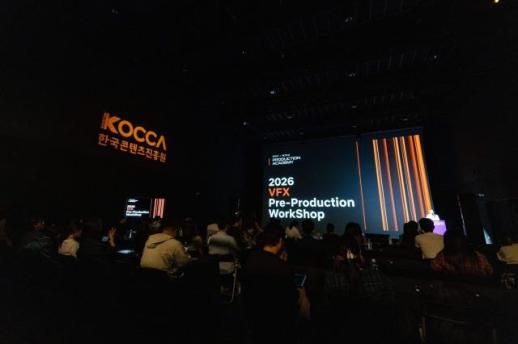 Hundreds industry professionals learn visual effects at Netflix's annual workshop SEOUL, September 21 (AJP) - About 300 professionals were trained in visual effects planning and pre-production at a workshop last week, Netflix said on Monday. The two-day workshop, in cooperation with the Korea Creative Content Agency (KOCCA) was held Sept. 17-18 at the CKL Business Support Center in central Seoul. Its sessions focused on involving VFX teams from the pre-production stage including decisions on shooting methods, budgets and schedules. Netflix's VFX Manager Kim Hye-jin said early planning can help reduce revisions and delays while keeping a director's creative vision consistent through production. "A pre-production checklist acts as a safety net that protects the director's creative intent through to the final image," Kim said. The workshop also covered coordination among VFX, art, cinematography and lighting teams, along with tools used to visualize storyboards, characters and camera setups ahead of shooting. Daniel Perez Ferreira, Netflix's GenAI technology integration manager, led a session on generative AI, stressing that such tools should support the production process while final creative decisions remain with directors and production teams. Netflix and KOCCA have run the workshop since 2024, offering training across planning, production and post-production. AJP Takeaways - Netflix and KOCCA trained about 130 Korean production professionals in VFX pre-production. - The workshop focused on early VFX planning, budgeting and coordination between production teams. - Sessions also covered GenAI and other visualization tools used before filming. 2026-09-21 10:28:27
 -
 A decade on, NCT 127 launches fifth world tour as five SEOUL, September 20 (AJP) - In the K-pop jungle, where reinvention can move almost as quickly as fast fashion, surviving a decade is something to celebrate. The latest to cross that threshold is NCT 127. Nearly every patch of shade around Seoul's KSPO Dome had been claimed three hours before NCT 127 was due onstage Sunday. Fans sat beneath trees and along concrete walls with photo cards, merchandise and lightsticks spread around them, trading collectibles and talking about favorite members while waiting for the doors to open. The scene stretched well beyond the dome. Olympic Park was hosting three major music events on the same day, with girl group izna performing at Olympic Hall and the KB Joyolpark Festival underway at the 88 Lawn Field. But around KSPO Dome, the green lightsticks and NCT merchandise made the destination unmistakable. For NCT 127, the final night of its three-day Seoul run was more than another concert. It opened the group's fifth world tour, "NEO CITY : THE REDLINE," in the year of its 10th anniversary, with five members carrying a stage built around a decade of songs, choreography and an increasingly elaborate live-show identity. A motorcycle engine roared through KSPO Dome before five figures appeared suspended above the main stage in a web of mechanical rigging. Taeyong, Johnny, Yuta, Jaehyun and Haechan descended toward the floor as the crowd erupted. Dressed largely in black and white, the five launched into an opening sequence driven by the hard-edged choreography and dense production that have become NCT 127 signatures over the past decade. Fireworks burst through the opening tracks. Confetti shot across the dome by the third song. A Y-shaped stage extension pushed the performance deep into the crowd, while moving platforms and mechanical structures repeatedly reshaped the arena. Across roughly two hours and 50 minutes, the group performed 24 songs spanning its decade-long catalog. Newer tracks including "Legacy" and "Step Up" from the group's seventh full-length album, "BLINGY," sat alongside older staples including "Lemonade," "Simon Says," "Cherry Bomb," "2 Baddies," "Punch" and "Ay-Yo." "Simon Says" triggered one of the loudest mass singalongs of the night, while the familiar opening of "2 Baddies" sent much of the standing section jumping. For Park Jung-bin, a 29-year-old fan who attended all three Seoul performances, that song carried particular significance. Park said she became a fan through NCT 127's fourth full-length album, "2 Baddies." "I think that album shows both NCT 127's own color and its popular appeal really well," she told AJP. She said the group's live performances were what continued to bring her back. "The powerful choreography, the lighting and the way the whole stage is built give you so much to look at that you lose track of time," Park said. "I never feel that an NCT 127 concert ticket is a waste of money." The group's 10th anniversary, however, arrived under circumstances markedly different from earlier tours. Doyoung and Jungwoo are serving their mandatory military duty, leaving five members to carry "THE REDLINE" onstage. Rather than try to disguise their absence, Sunday's concert folded it into the anniversary narrative. The two members appeared in prerecorded video segments, drawing immediate cheers whenever their faces returned to the giant screens. The members also told fans that Doyoung had sent a rice-cake cake to celebrate the anniversary, prompting jokes that the show had suddenly turned into a concert where rice cakes were being handed out. For Park, their absence gave the weekend a bittersweet edge. "It's sad that two members couldn't participate because of military service," she said. "But luckily they appeared through videos throughout the concert." That mixture of looking back and pressing ahead ran through the show. Older songs were not simply pulled from storage but reworked for the new tour. During "Cherry Bomb," Taeyong told fans that part of the performance had been rebuilt around a new bridge and rap section, recalling how he had pushed the other members to incorporate the revised choreography. "Punch," another older track, arrived beneath a large mechanical ring descending over the stage, prompting the members to joke that the song was finally receiving the production attention it deserved. For a group celebrating 10 years, nostalgia was present, but it rarely took over. Much of the evening was devoted instead to showing how familiar material could still be enlarged, rearranged and made to feel current. The scale extended beyond the performance itself. The three Seoul concerts drew about 31,500 fans in total, filling KSPO Dome across the weekend. Some had traveled considerably farther than Seoul. Juliana Parker, a 36-year-old teacher living in Tokyo, flew in from Japan for Sunday's finale and planned to return after the concert. "It is always extremely hard for me to get a ticket for an NCT 127 concert," Parker said. "When the tickets open, they just disappear in front of my eyes." When she finally managed to secure one, she booked the trip. "So I decided to fly from Japan," she said. "It's the weekend, and I'm finally living my dream of attending an NCT 127 concert." Parker, whose favorite member is Yuta, had brought her NCT lightstick from Japan. The group's international reach was just as visible inside KSPO Dome. Yuta addressed Japanese fans during the show and thanked them in Japanese, while Johnny repeatedly encouraged the crowd to stand and wave their lightsticks. Taeyong thanked fans for spending their weekend with the group and pointed toward the next stage of the tour. "We're starting the tour now," he said. "We'll come to see you in each country as soon as we can." The Seoul run will be followed by Jakarta on Oct. 3, Hong Kong on Oct. 10-11, Singapore on Oct. 18, Saitama on Oct. 24-25 and Bangkok on Oct. 31 and Nov. 1. The tour then moves to Manila on Dec. 12 before continuing to Taipei on Jan. 2, Kuala Lumpur on Jan. 9 and Macau on Jan. 16. For all the machinery, pyrotechnics and choreography, the night's most consequential number was a simple one: 10. K-pop careers are often measured in comeback cycles, contract periods and constantly shifting generations of acts. NCT 127's anniversary gave Sunday's show a different sense of scale — not merely the launch of another tour, but a chance to take stock of a group that has stayed on the road long enough for its early hits to become nostalgia. At one point, Taeyong asked fans to remember the occasion that way. "When you think about our 10th anniversary, I hope this is the concert you remember," he told the crowd. As the final Seoul night drew to a close, thousands of green lightsticks kept moving through the darkened dome a familiar sight for NCT 127, but after 10 years, one carrying a little more history than before. 2026-09-20 21:28:47
 -
 Icheon to bring Goryeo diplomat Seo Hui's legacy to life SEOUL, September 18 (AJP) - The city of Icheon will turn the legacy of Goryeo-era diplomat Seo Hui into a two-day history and culture festival next month, the city said Friday. The Jangwigong Seo Hui Diplomacy Culture Festival will run Oct. 3-4 at Seo Hui Theme Park in Icheon, about 60 kilometers southeast of Seoul. Held under the theme "Seo Hui Speaks K-Diplomacy," the event will mark the 1,028th anniversary of Seo's death. Programs include a memorial ceremony, a history concert hosted by broadcaster Seo Kyung-seok and a quiz competition for elementary school students. Visitors will also be able to take part in activities including a citywide search for Seo Hui statues, an art contest, a traditional-style writing test and a recreation of a Goryeo-era marketplace. Some programs require advance registration or will be offered on a first-come, first-served basis. Icheon said the festival is intended to introduce Seo Hui's diplomatic legacy through history, culture and hands-on activities. AJP Takeaways - Icheon will hold the Seo Hui Diplomacy Culture Festival on Oct. 3-4. - The festival will take place at Seo Hui Theme Park. - Programs include a memorial ceremony, history concert and children's quiz competition. 2026-09-18 17:02:34
 -
 Netflix puts viewer attention at center of ad strategy SEOUL, September 18 (AJP) - Global OTT service Netflix is putting viewer attention at the center of its advertising strategy, the company said Friday. The streaming platform is also expanding programmatic ad buying and plans to offer its ad-supported plan in 27 countries next year. Park Young-sun, Netflix's industry lead in Korea, outlined the strategy at The Trade Desk's "Open Forum: Omnichannel in the AI Era" in Seoul on Thursday. "In the past, reach and views were important. Now attention is becoming a meaningful metric," Park said. Netflix said it uses viewing data such as preferred genres, viewing times and engagement patterns to help advertisers design campaigns. Its ad formats include video, pause and interactive ads, as well as single-title sponsorships tied to specific shows or films. The company is also expanding programmatic advertising through demand-side platforms, including The Trade Desk. Netflix introduced its ad-supported plan in South Korea and 11 other countries in November 2022. It plans to add 15 markets, including Austria, Belgium, Thailand and Switzerland, next year. AJP Takeaways - Netflix is emphasizing viewer attention as a key advertising metric. - The company is expanding programmatic ad buying through partners including The Trade Desk. - Its ad formats include video, pause, interactive and single-title sponsorship ads. 2026-09-18 14:05:45
 -
 National Museum of Korea visitors top 5.25 million SEOUL, September 18 (AJP) - The National Museum of Korea drew more than 5.25 million visitors in the first eight months of 2026, crossing the 5-million mark about six weeks earlier than last year, when it set an annual attendance record. Attendance totaled 5,254,884 from January through August, up 21.4 percent from 4,328,979 in the same period a year earlier. Visitor traffic remained heavy through the summer. The museum surpassed 3 million visitors in May and 4 million in July, drawing 688,443 people in July and 771,045 in August. The surge prompted the museum to extend opening hours by one hour from July 27 to Aug. 17 during the peak summer vacation period. Foreign attendance rose even faster, nearly doubling to 291,460 from 147,643 a year earlier. That has already surpassed the 231,192 foreign visitors recorded for all of 2025. The museum drew more than 6.5 million visitors last year, placing third worldwide in an annual ranking by The Art Newspaper behind the Louvre and the Vatican Museums. If the current pace continues, the museum could surpass last year's attendance record. Upcoming exhibitions include a special display of Dunhuang Buddhist manuscripts in October, works from Kunsthaus Zurich in November and an exhibition on Marie Antoinette's style in December. AJP Takeaways - The National Museum of Korea drew 5.25 million visitors through August, up 21.4 percent from a year earlier. - It crossed the 5-million mark about six weeks earlier than in 2025. - Foreign attendance nearly doubled to 291,460 and has already surpassed last year's full-year total. 2026-09-18 14:05:02
 -
 KOSPI gains 1.8% as foreign buying lift market SEOUL, September 18 (AJP) - South Korean stocks rebounded Friday morning as falling U.S. Treasury yields and oil prices lifted technology shares, with foreign investors leading the chip buying spree. As of 10:30 a.m., the benchmark KOSPI stood at 6,835.12, up 1.8 percent. The index opened sharply higher and climbed as high as 6,885.70 before trimming gains. Foreign investors bought a net 151.5 billion won ($109 million) of KOSPI shares, reversing course after eight consecutive sessions of net selling through Thursday. Institutions bought 371.9 billion won, while retail investors sold 911.4 billion won. The U.S. 10-year Treasury yield fell back below 5 percent to around 4.93 percent overnight, easing some of the pressure that followed the Federal Reserve's rate increase earlier this week. Wall Street rallied, with the S&P 500 gaining 1.14 percent and the Nasdaq Composite climbing 1.69 percent. The Philadelphia Semiconductor Index surged 3.14 percent as Nvidia rose 2.54 percent, AMD gained 6.36 percent, Intel jumped 7.67 percent and Micron Technology advanced 5.50 percent. SK hynix rose 4.3 percent to 1,819,000 won, while Samsung Electronics gained 2.2 percent to 258,000 won. Samsung Electro-Mechanics climbed 4.8 percent to 1,394,000 won after KB Securities forecast record third-quarter earnings on strong demand for artificial intelligence server components. The brokerage expects operating profit of 660.1 billion won, about 11 percent above market expectations, citing higher utilization rates, price increases and a larger share of high-value multilayer ceramic capacitors and flip-chip ball grid array substrates. Computer and peripheral stocks gained 5.4 percent, telecommunications equipment rose 4.87 percent and electrical equipment advanced 4.6 percent. Cable stocks were particularly strong, jumping 11.04 percent as expectations grew that Korean suppliers could benefit from U.S. investment in power infrastructure. Gaon Cable surged 21.9 percent to 317,500 won. The company operates a production base in North Carolina and is expanding U.S. capacity as investment in artificial intelligence data centers and power grids drives demand for electricity infrastructure. Optical communications stocks also rallied, with Daehan Fiber Optics rising 12.7 percent and Wooriro jumping 19.1 percent. The secondary KOSDAQ gained 0.6 percent to 827.11 after touching 833.57 earlier in the session. Foreign investors bought 15.5 billion won and institutions followed with 8.5 billion won, while retail investors sold 23 billion won. Oil prices extended their decline for a third session as concerns over Middle East supply disruptions eased. West Texas Intermediate crude fell 0.7 percent to around $101.20 a barrel, while Brent crude declined 0.8 percent to about $104. Saudi Arabia is expected to restore about half the capacity of its East-West pipeline within days and return it to full operation within six weeks, easing concerns over crude flows that bypass the Strait of Hormuz. The Korean won weakened 0.2 percent to 1,384.1 against the dollar. Across Asia, Japan's Nikkei 225 gained 0.99 percent to 64,764.04 ahead of the Bank of Japan's policy decision. China's Shanghai Composite rose 0.4 percent to 3,892.27, while Hong Kong's Hang Seng Index gained 0.6 percent to 24,752.30. AJP Takeaways - KOSPI up 1.8% at 6,835.12 as lower U.S. Treasury yields and oil prices lifted risk appetite. - Foreigners turn buyers: Overseas investors bought a net 151.5 billion won of KOSPI shares after eight straight sessions of net selling. - Chip stocks lead: SK hynix gained 4.3% and Samsung Electronics rose 2.2% after a strong overnight rally in U.S. semiconductors. 2026-09-18 10:58:07
 -
 Super Junior Yesung to roll out second album SEOUL, September 18 (AJP) - K-pop boy group Super Junior's member Yesung will release his second full-length album "Where We Are" taking part in its overall creative direction and writing lyrics for nine of its tracks, SM Entertainment said Friday. Yesung contributed ideas to the album's music selection, visual concepts and styling, according to the agency. Built around the theme of time, "Where We Are" looks back on the singer's past decade through 12 tracks. The lead single, "Pedazos," is a modern rock track about the mixed emotions left after a breakup. Its title means "pieces" in Spanish. A concept film titled "PROOF" was released through Yesung's official social media accounts Thursday. The album will be released at 6 p.m. (0900 GMT) on Oct. 6 through major music streaming platforms. AJP Takeaways - Yesung will release his second full-length album "Where We Are" on Oct. 6. - He took part in the album's overall creative direction. - Yesung wrote lyrics for nine of the album's 12 tracks. 2026-09-18 10:45:27