

Journalist
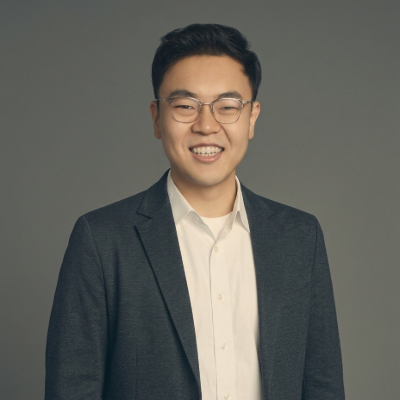
Joonha Yoo유준하
joonhayoo94@ajupress.com
ReporterCOEX Sejong Center for the Performing Arts & Music, Culture, Entertainment, Automotive
Joonha Yoo is a bilingual journalist at AJU Press (AJP), covering music, culture, entertainment and Korea’s automotive industry.
Raised in Fort Collins, Colorado, he often writes from the scene, bringing firsthand detail to stories ranging
from BTS comeback concerts to unique cultural events that catch the world's eye. "I write from the scene, not from the sidelines."
Raised in Fort Collins, Colorado, he often writes from the scene, bringing firsthand detail to stories ranging
from BTS comeback concerts to unique cultural events that catch the world's eye. "I write from the scene, not from the sidelines."
Latest by Joonha Yoo
-
 NCT 127 kicks off fifth tour in Seoul SEOUL, September 18 (AJP) - K-pop boy group NCT 127 will kick off its fifth concert tour with three shows in Seoul beginning Friday, SM Entertainment said. The group will perform at KSPO Dome in Olympic Park from Sept. 18 to 20 under the title "NEO CITY : SEOUL - THE REDLINE." The concerts will feature songs from NCT 127's seventh studio album "BLINGY" alongside tracks spanning the group's 10-year career. The Sept. 19 and 20 shows will also be streamed live through Beyond LIVE and Weverse. The final concert will be shown live at about 1,000 theaters across more than 40 regions, including Japan, the United States, Mexico, Britain, Germany, Thailand and Indonesia. The tour will then travel to nine Asian cities through Jan. 16, including Jakarta, Hong Kong, Singapore, Saitama, Bangkok, Manila, Taipei, Kuala Lumpur and Macau. AJP Takeaways - NCT 127 opens its fifth tour with three Seoul concerts from Sept. 18-20. - The shows will include songs from "BLINGY" and tracks from the group's decade-long career. - The final Seoul show will be screened live at about 1,000 theaters in more than 40 regions. 2026-09-18 10:45:14
 -
 Asia tests punishment, treatment to curb repeat drug use SEOUL, September 17 (AJP) - South Korea has abandoned its once-prized claim to being a drug-free country. Dramas, public campaigns and advertisements now warn teenagers away from drugs, reflecting how quickly illicit drug use has spread. Society — and the system meant to respond to it — has struggled to keep up. Rapper Kim Gam-jeon, 22, was back in the headlines after being arrested on suspicion of using liquid cannabis while still under a suspended sentence for an earlier marijuana conviction. The Indigo Music artist, who joined the label in 2022 and took part this year in a public diss battle involving Swings and BIG Naughty, had previously been sentenced to eight months in prison before an appeals court suspended the term for two years. He has not been convicted in the new case. Lee Seon-young, a 27-year-old office worker in Seoul's Mapo District, had a blunt answer when asked how authorities should respond to repeat drug use. "Prison is probably the answer," Lee said. She was equally skeptical about using public money for rehabilitation. "Most people don't use drugs," she said. "Why should taxpayers' money be used to treat drug offenders?" Park Jung-soo, a 38-year-old office worker in Seoul's Gangnam District, drew a different line. He said cannabis should not necessarily be treated in the same way as methamphetamine or cocaine, while supporting tougher punishment for repeat use of what he described as more dangerous drugs. "If someone completes treatment and actually gets back to a level where they can live a normal life in society, I think they should be given another opportunity," Park said. The split comes as governments across Asia test different combinations of punishment, supervision and treatment in an effort to reduce repeat drug use. South Korean authorities apprehended 23,403 drug offenders in 2025, including 8,798 classified as users. The country's drug-offender recidivism rate stood at 34.5 percent in 2024, according to prosecution data. South Korea has been expanding the rehabilitation side of its response. Its 2026 drug management plan includes measures to strengthen treatment and social rehabilitation, while prosecutors can already link some offenders to education, probation or treatment programs rather than relying on criminal punishment alone. Government data show the share of drug-use offenders participating in medical treatment rose from 5 percent to 18.7 percent, while participation in social rehabilitation programs increased from 9.6 percent to 24 percent. Combined participation reached 42.7 percent. The government is also testing whether those programs make a measurable difference. The National Center for Mental Health and the Seoul Probation Office began a treatment and rehabilitation program in July 2026 for people ordered by courts to attend drug education. The program runs through November in five groups of about 15 to 20 participants. They are assessed before and after the course and again three months later, while those seeking further help can be referred to an addiction clinic. Nam Yun-young, head of the National Center for Mental Health, said when the program was announced that drug addiction was difficult to address through punishment alone and required continued treatment and recovery support. A separate Korean Institute of Criminology and Justice study examining treatment and rehabilitation across prosecution, probation, imprisonment and release identified gaps between different stages of the criminal justice process. Japan, meanwhile, has moved in a tougher direction on cannabis law. Since Dec. 12, 2024, illegal cannabis use itself has been punishable. Previously, possession and distribution were prohibited, but use was not separately criminalized. The change came as cannabis cases were rising among younger Japanese. A record 7,120 people were apprehended for cannabis offenses in 2025, up 12.3 percent from the previous year. More than 70 percent were under 30, and cannabis cases exceeded methamphetamine cases for a third consecutive year. Japan nevertheless continues to operate drug-dependence programs within its correctional system. In fiscal 2024, 6,826 inmates began drug-dependence withdrawal guidance at 73 correctional facilities. Programs differ according to offenders' needs and include components aimed at preventing renewed drug use after release. Repeat involvement varies sharply by substance. Among adults apprehended for cannabis offenses in 2024, 29.5 percent had previously been apprehended for the same type of offense, according to Japan's latest White Paper on Crime. For methamphetamine offenses, the share was 67.6 percent. Those figures are not directly comparable with South Korea's recidivism rate because Japan measures the share of adults previously apprehended for the same offense rather than following the same population over a fixed period. Singapore has kept some of Asia's toughest drug laws while expanding community-based supervision for selected users. Since May 16, first-time users who meet eligibility requirements and voluntarily surrender at a Central Narcotics Bureau office or police station can be placed under community supervision and compulsory case management for up to five years instead of being sent directly to a Drug Rehabilitation Centre. Counseling can include goal-setting and family involvement alongside regular drug testing. Those who return to drug use can still be placed in institutional rehabilitation. Singapore has also changed how some former users are monitored. Under Supervision 2.0, fully implemented in May 2025, eligible supervisees are monitored primarily through hair testing. The longer detection window has allowed some people who previously had to report as often as twice a week or twice a month to report once every three months. Authorities say the change is intended to reduce disruption to work and daily life while maintaining supervision. The two-year recidivism rate for people released from Singapore's Drug Rehabilitation Centre in 2023 was 26.1 percent, down 4.7 percentage points from the previous release cohort. The figures from South Korea, Japan and Singapore are not directly comparable because the countries define repeat offending differently and follow different populations over different periods. The challenge extends well beyond the three countries. The United Nations Office on Drugs and Crime said cannabis and stimulant use increased globally in 2024, while treatment coverage for drug-use disorders remained low. Its latest estimate put treatment coverage at a minimum of 8.2 percent worldwide, with access particularly limited in Asia and Africa. Research has increasingly examined how treatment and punishment perform once drug users enter the criminal justice system. A 2023 systematic review by Vera Tomaz, Diana Moreira and Olga Souza Cruz, published in Frontiers in Psychiatry, examined 23 studies of adults who used drugs and were involved in criminal justice systems. The review found treatment-based interventions were more consistently associated with reductions in drug use, criminal recidivism or both, while the authors raised concerns about relying heavily on incarceration. They also cautioned that the available studies differed widely in their programs, methods and criminal justice settings, leaving gaps in how treatment outcomes are evaluated and monitored. The policy changes now under way in Asia are themselves relatively new. South Korea's latest court-linked program is still being evaluated, Singapore's revised surrender regime has been in force only since May, and Japan's criminalization of cannabis use took effect less than two years ago. The emerging test is not simply whether Asia punishes drug use more harshly, but whether its systems can prevent users from returning to drugs after punishment ends. AJP Takeaways - South Korea is shifting beyond punishment: Treatment and rehabilitation participation among drug-use offenders has risen to 42.7 percent, while a new court-linked program is being tested for measurable long-term effects. - Japan is tightening cannabis enforcement: Cannabis use became punishable in December 2024, and arrests hit a record 7,120 in 2025, even as correctional authorities continue drug-dependence programs. - Singapore is pairing strict laws with tailored supervision: Some first-time users who voluntarily surrender can now receive up to five years of community supervision and case management instead of immediate institutional rehabilitation. 2026-09-17 17:52:18
 -
 Korean dictionary data to join 600-language BabelNet network SEOUL, September 17 (AJP) - South Korea's National Institute of Korean Language is teaming up with Italian AI language technology company Babelscape to connect Korean-language resources with BabelNet, a multilingual network covering about 600 languages. The institute, under the Ministry of Culture, Sports and Tourism, said Wednesday it signed an agreement with Babelscape to expand the development and use of AI-based language resources. BabelNet is a large multilingual dictionary and semantic network that connects words and concepts across languages. It incorporates resources including WordNet, Wikipedia and Wikidata and is used in multilingual language processing and AI research. The two organizations will work to link Korean-language resources developed by the institute with BabelNet and explore further cooperation in AI-based language data. The institute has already begun a project this year to integrate entries from its Urimalsaem Korean dictionary into BabelNet. BabelNet was created by Roberto Navigli, a professor at Sapienza University of Rome and co-founder of Babelscape, who attended the signing alongside Babelscape CEO Francesco Maria Tucci. Institute President Lee Kwan-kyu said the partnership would help broaden the use of Korean-language resources in the global AI ecosystem. AJP Takeaways - Urimalsaem dictionary data will be linked with BabelNet. - BabelNet connects words and concepts across about 600 languages. - The integration project began this year. 2026-09-17 13:27:29
 -
 Korean Language Agency Partners with Babelscape for Global Language Resource Expansion The National Institute of the Korean Language (NIKL), led by Director Lee Kwan-kyu, is collaborating with the Italian artificial intelligence language technology company Babelscape to globalize Korean language resources.On September 16, NIKL announced that it has signed a memorandum of understanding with Babelscape to expand and utilize AI-based language resources. This agreement aims to connect the Korean language resources developed by NIKL with Babelscape's multilingual language resource, BabelNet, to promote the expansion and utilization of AI language resources.BabelNet is a large multilingual dictionary and semantic network that connects words and concepts in approximately 600 languages based on their meanings. It integrates various language and knowledge resources, including WordNet, Wikipedia, and Wikidata.Currently developed and managed by Babelscape, BabelNet can distinguish polysemy and link identical or related concepts across languages, making it useful for multilingual language processing and AI research.Through this agreement, both organizations will collaborate on expanding multilingual conceptual networks by linking NIKL's Korean language resources with BabelNet, as well as exploring mutual cooperation for the expansion and utilization of AI-based language resources.NIKL is already working on a project to integrate its Korean dictionary information, known as 'Uri Mal Saem,' with BabelNet, and this agreement is expected to lead to concrete outcomes in their collaboration.The signing ceremony was attended by Babelscape's CEO Francesco Maria Tucci and Chief Research Officer Professor Roberto Navigli, who visited NIKL in person.Professor Navigli, a specialist in AI language processing and a professor at Sapienza University of Rome, leads the Natural Language Processing research group and has conducted research on multilingual natural language understanding and lexical semantics, creating BabelNet.Director Lee Kwan-kyu stated, "This agreement marks a significant starting point for connecting NIKL's credible Korean language resources with a global multilingual language resource. We will work closely with Babelscape to ensure that the Korean language occupies a prominent place in the global AI language resource ecosystem as a central part of Hallyu culture."* This article has been translated by AI. 2026-09-17 13:20:00
 -
 Stray Kids take 'STRAYCITY' across Latin America SEOUL, September 17 (AJP) - K-pop boy band Stray Kids are taking a new music festival built around the group across Latin America, with "STRAYCITY" set to move to Mexico City later this month, JYP Entertainment said Thursday. The festival, jointly planned by JYP and Live Nation, opened in Bogota on Sept. 9 before staging two shows in Buenos Aires on Sept. 14 and 15. Stray Kids headlined the events with a set spanning tracks including "TOPLINE," "MANIAC," "S-Class," "God's Menu," "MIROH" and newer songs "This & That" and "After You." The performances featured a live band as well as large-scale outdoor production including fireworks and video screens. "STRAYCITY" will continue in Mexico City on Sept. 25 and 26, with additional locations expected to be announced. The festival follows a run of major international festival appearances by Stray Kids, including Lollapalooza Paris, British Summer Time Hyde Park, Lollapalooza Chicago and The Governors Ball. Earlier in September, the group also headlined Rock in Rio in Brazil, drawing about 100,000 people, according to JYP. AJP Takeaways - Stray Kids are headlining "STRAYCITY," a new festival built around the group. - The festival opened in Bogota and held two shows in Buenos Aires. - JYP Entertainment and Live Nation jointly planned the project. 2026-09-17 11:32:21
 -
 RIIZE lands second 100 million-stream Spotify hit SEOUL, September 17 (AJP) - "Love 119" by K-pop boy group RIIZE has surpassed 100 million streams on Spotify, becoming the group's second song to reach the milestone after "Get A Guitar," SM Entertainment said Thursday. The 2024 single had logged 100,026,078 streams as of Thursday, according to Spotify data cited by the agency. "Love 119" gave RIIZE its first music show win and peaked at No. 3 on Melon's Top 100 chart. The song previously surpassed 100 million streams on Melon in 2025 and has also crossed the mark on YouTube Music. RIIZE is scheduled to release a new single on Oct. 26. AJP Takeaways - "Love 119" became RIIZE's second song to surpass 100 million Spotify streams. - "Get A Guitar" was the group's first track to reach the milestone. - "Love 119" has also surpassed 100 million streams on Melon and YouTube Music. 2026-09-17 11:32:05
 -
 KOSPI climbs as market absorbs Fed hike SEOUL, September 17 (AJP) - South Korean stocks extended gains Thursday morning despite the U.S. Federal Reserve's first interest rate hike in more than three years, as easing oil prices and strength in defense and shipbuilding shares offset continued foreign selling. As of 10:30 a.m., the benchmark KOSPI stood at 6,756.11, up 0.6 percent. The index had climbed as high as 6,795.53 after opening sharply higher, before giving back part of the advance. It touched a session low of 6,710.58. Foreign investors remained firmly on the sell side, unloading 565.5 billion won ($410 million) of KOSPI shares. Institutions sold 59.6 billion won, while retail investors bought a 216.4 billion won. The continued foreign selling limited the market's upside after overseas investors had already sold Korean stocks for six consecutive sessions through Wednesday. The gains came after the Fed raised its benchmark interest rate by 25 basis points to a range of 3.75 percent to 4.00 percent overnight, its first tightening move since July 2023. Fed Chair Kevin Warsh struck a hawkish tone, saying inflation remained too high and had persisted for too long. U.S. Treasury yields remained elevated, with the benchmark 10-year yield around 5.02 percent. Wall Street finished lower following the decision. The Dow Jones Industrial Average fell 1.21 percent, while the S&P 500 lost 0.45 percent and the Nasdaq Composite edged down 0.01 percent. Technology stocks held up better than the broader market. Nvidia gained 0.82 percent and Intel jumped 4.03 percent, helping the Philadelphia Semiconductor Index rise 0.63 percent. Korea's two largest chipmakers, however, moved in opposite directions. Samsung Electronics gained 0.6 percent to 254,750 won, while SK hynix slipped 0.3 percent to 1,754,000 won. Doosan Enerbility rose 2.5 percent and Hanwha Ocean gained 3.2 percent, while Hyundai Motor fell 3.5 percent and Samsung Electro-Mechanics declined 1.4 percent. Defense, aerospace and shipbuilding stocks were leaders of the market. Aerospace and defense shares climbed 5.6 percent, while shipbuilding stocks rose 5.5 percent. SpaceX-related stocks gained 7.5 percent as a theme, while the broader aerospace theme advanced 6.6 percent. The moves followed news that SpaceX is preparing to send its Starship spacecraft into Earth orbit for the first time during an upcoming test flight. Sensorview surged 20.2 percent and Spear gained 9.8 percent. Earlier in the session, Kenkoa Aerospace, Contec and other aerospace-related names also posted sharp gains. Hyundai Pharmaceutical was another standout, rising 7.1 percent to 10,680 won after the government said it aims to introduce abortion medication in Korea by the first quarter of next year. The secondary KOSDAQ gained 0.7 percent to 821.63 after rising as high as 823.58. AJP Takeaways - KOSPI up 0.6% at 6,756.11 as the market absorbed the Fed’s 25-basis-point rate hike. - Foreign selling persists: Overseas investors sold a net 565.5 billion won of KOSPI shares, while retail investors remained net buyers. - Leadership shifts beyond chips: Samsung Electronics edged higher while SK hynix slipped, with defense, aerospace and shipbuilding stocks leading gains instead. Retail investors bought a net 32.9 billion won and institutions purchased 4.7 billion won, while foreign investors sold a net 38.6 billion won. Among actively traded KOSDAQ stocks, Seongho Electronics jumped 19.6 percent, Hana Micron gained 7.3 percent and Jusung Engineering rose 1.98 percent. Oil prices provided some relief after sharp gains earlier in the week. West Texas Intermediate crude fell 0.3 percent to around $102.20 a barrel, while Brent crude slipped 0.03 percent to $105.80. The decline followed reports that Saudi Arabia plans to restore about half the capacity of its East-West pipeline within days, easing concerns over supply routes that bypass the Strait of Hormuz. The Korean won weakened to around 1,379 per dollar as the Fed's hawkish stance supported the U.S. currency. Throughout Asia, Japan's Nikkei 225 gained 0.5 percent to 64,246.36 and China's Shanghai Composite edged up 0.13 percent to 3,896.51. Hong Kong moved in the opposite direction, with the Hang Seng Index falling 0.9 percent to 24,490.04. 2026-09-17 10:48:41
 -
 Yeouido trip exposes public-notice gap in Seoul summit security SEOUL, September 16 (AJP) - Traffic on Olympic-daero, the major artery running along the southern bank of the Han River, is rarely free-flowing. On Wednesday, the stretch near Yeouido Hangang Park appeared closer to a parking lot, with rows of police vans, ambulances and black limousines lining the area. Inside the park, police moved cyclists, joggers and pedestrians away from restricted paths as security tightened around a visit by Kazakh President Kassym-Jomart Tokayev. Many people caught in the restrictions had little idea why. “Who’s coming?” one resident muttered among a small crowd asking much the same question. “Police blocked the bike path and wouldn’t let people cross,” fumed Kim Seon-yeong, a 42-year-old office worker near Yeouido Station who commutes from Bundang. Kim said she had seen no advance notice that movement through the area could be restricted. “I didn’t see a single banner or notice anywhere,” she said. The security operation accompanied Tokayev’s appearance at a cultural heritage event in Yeouido during his state visit to South Korea. Tokayev had held a bilateral summit with President Lee Jae Myung on Tuesday and attended a Korea-Kazakhstan business roundtable before joining the inaugural Korea-Central Asia Summit on Wednesday. Kazakhstan was one of three Central Asian countries whose presidents were received on state visits ahead of the multilateral gathering. The Yeouido appearance stood apart from the more controlled settings of the bilateral summit, business meetings and Wednesday’s leaders’ gathering. Bringing a visiting president into one of Seoul’s busiest public parks meant presidential-level security had to coexist with cyclists, commuters, joggers and other park users going about their normal routines. The resulting contrast was conspicuous: extensive security was visible on the ground, while information explaining how that security would affect the public was not. South Korea’s Korea Heritage Service and Kazakhstan’s Culture Ministry jointly organized a “Nomadic Traditional Cultural Heritage Exchange” in Yeouido to introduce Kazakh traditions and promote cultural cooperation. The program included a digital exhibition space modeled on a traditional Kazakh yurt, displays of crafts, jewelry, clothing and musical instruments, performances and presentations on Korean and Kazakh archery traditions. It also highlighted the history and culture of Koryo-saram, ethnic Koreans in Central Asia. Kazakhstan’s embassy had also publicized separate cultural programs at Yeouido Park and Yeouido Hangang Park as part of Tokayev’s state visit. Its notices invited the public to attend and listed the venues and program times. What the notices did not spell out was that presidential security could temporarily cut or divert pedestrian and bicycle routes around the riverside area. That omission became more noticeable because the event itself was promoted as open to the public. Kim Min-su, a 24-year-old university student from Jamsil, encountered the restrictions while cycling along his usual Han River route. “My route normally takes me past Yeouido and back to Jamsil,” he said. “Suddenly the path was blocked and they told me there was an event and that I’d have to take a long detour.” The concentration of security personnel made him curious enough to stop. “There were six or seven police and security officers within about 10 meters,” Kim said. “Given how much manpower was deployed, out in the sun with hardly any shade, I decided to stick around and see who would show up.” Kang Sun-ja, a 68-year-old longtime Yeouido resident, was similarly unsure what was happening. “I’ve never seen this kind of commotion at Hangang Park before, with police lined up because someone important was coming,” Kang said. “I couldn’t tell whether it was for a foreign dignitary or some famous person from Korea.” The problem was not a lack of advance publicity for the cultural program itself. Both Korean and Kazakh organizers had announced the events. Rather, there was a gap between publicity for the event and notice of the restrictions required to secure it. The difference was particularly striking compared with preparations for the Korea-Central Asia Summit elsewhere in Seoul. The Presidential Security Service’s Security and Safety Control Team announced on Sept. 9 that Sowol-ro and parts of Euljiro 1-ga would face traffic restrictions on Sept. 16. Authorities specified that all lanes on Sowol-ro would be closed briefly six or seven times in line with the movements of visiting leaders rather than shut for an extended period. They also said information would be distributed through electronic displays at Gwanghwamun Square and Seoul City Hall, roadside signs, the security service’s YouTube channel and navigation services including T map, Kakao Map and Naver Map. The planning involved the presidential security team, the Foreign Ministry’s summit task force, the Seoul Metropolitan Government, Seoul police and the Korea Road Traffic Authority. No comparable public guidance on temporary pedestrian or bicycle restrictions around the Yeouido riverside programs was included in the notices reviewed by AJP. The episode does not suggest that public cultural diplomacy has no place in a state visit. Kazakhstan’s embassy openly promoted the Yeouido programs as opportunities for Seoul residents to experience Kazakh culture, with admission free and the public encouraged to attend. But an open venue also requires a different level of coordination from a closed summit hall. It was not immediately clear from public materials which side proposed Tokayev’s Yeouido appearance or when the security arrangements surrounding it were finalized. For Seoul, which had spent months preparing to host the first Korea-Central Asia summit at the leaders’ level, the relatively small episode offered a practical reminder that summit readiness extends beyond meeting rooms and motorcades. AJP Takeaways - Presidential-level security around Kazakh President Kassym-Jomart Tokayev’s Yeouido appearance temporarily disrupted pedestrian and bicycle routes, catching some park users by surprise. - Korean and Kazakh organizers had publicly promoted the cultural programs, but the notices reviewed by AJP did not specify possible access restrictions linked to presidential security. - The gap contrasted with summit-related road controls elsewhere in Seoul, where authorities provided advance closure schedules and distributed information through road signs, navigation apps and other channels. 2026-09-16 17:44:29
 -
 Kakao Entertainment, Disney Korea plan K-pop IP projects SEOUL, September 16 (AJP) -Kakao Entertainment and Walt Disney Company Korea have formed a strategic partnership to develop projects combining K-pop intellectual property with Disney stories and characters, Kakao Entertainment said Wednesday. The companies plan about 10 projects over the mid to long term, spanning music, content, commerce and live entertainment. Kakao Entertainment and Disney Korea will also explore other forms of cooperation, including the possible creation of a tentatively named "K-culture fund." The partnership will draw on Kakao Entertainment's music, drama and webtoon businesses as well as Disney's portfolio of characters and story properties. Kakao Entertainment said the projects are intended to expand K-pop IP into new formats and markets through collaboration with Disney. AJP Takeaways - Kakao Entertainment and Disney Korea formed a strategic partnership around K-pop IP. - About 10 joint projects are planned over the mid to long term. - The projects could span music, content, commerce and live entertainment. 2026-09-16 17:38:36
 -
 KOSPI recovers from four-session slide as chip stocks rally SEOUL, September 16 (AJP) - South Korean stocks rebounded on Wednesday, as gains in major semiconductor stocks offset continued foreign selling ahead of the U.S. Federal Reserve's key interest rate decision. The benchmark KOSPI rose 1.37 percent or 90.71 points to close at 6,717.97, snapping a four-session losing streak. The index opened 0.24 percent lower at 6,611.24 and fell as low as 6,598.87 before reversing course, eventually closing at its intraday high. Overseas investors sold a net 1.68 trillion won (US$1.26 billion) of KOSPI shares, extending their selling streak to six sessions and bringing cumulative net sales over the period to nearly 12 trillion won. Institutions bought a net 1.21 trillion won, while other corporations purchased a net 1.66 trillion won. Retail investors sold a net 1.19 trillion won. Foreign investors, however, bought a net 301.4 billion won in KOSPI 200 futures. Semiconductors led the advance. SK hynix jumped 4.08 percent to 1,759,000 won, while Samsung Electronics gained 2.01 percent to 253,500 won. SK hynix extended gains after reports that the memory chipmaker was discussing with Intel the possibility of producing memory chips in the U.S., which would mark its first memory production there. Samsung Electro-Mechanics rose 4.86 percent and SK Square gained 2 percent. The gains were less pronounced outside technology. Hyundai Motor fell 1.36 percent, Samsung Biologics slipped 0.21 percent and Hanwha Aerospace lost 0.75 percent. Information technology stocks climbed 4.78 percent and electrical and electronics shares gained 2.81 percent, while construction stocks fell 2.37 percent and utilities declined 1.60 percent. Telecommunications-related stocks also rallied. Telecommunications equipment shares rose 6.4 percent, while optical communications and LED equipment themes gained 6.42 percent and 4.95 percent, respectively. Daehan Fiber Optics surged 14.1 percent. The junior KOSDAQ rose 0.44 percent to 815.98 after falling as low as 801.12 earlier in the session. Retail investors and institutions were net buyers, while foreign investors remained net sellers. Semiconductor equipment shares gained, while battery and biotechnology stocks weakened. The won weakened 0.22 percent against the dollar to 1,336.7 won. Investors kept a close eye on the Fed's interest rate decision, due early Thursday, as U.S. Treasury yields remained elevated. Wall Street ended lower overnight, with the Dow Jones Industrial Average down 0.63 percent, the S&P 500 off 0.45 percent and the Nasdaq Composite 0.78 percent lower. Nvidia rose 0.57 percent and Micron Technology gained 0.39 percent, helping the Philadelphia Semiconductor Index edge 0.40 percent higher. Oil prices eased during Asian trading after surging in the previous session. West Texas Intermediate crude fell 1.7 percent to $104.05 a barrel, while Brent crude declined 1.04 percent to $107.60 amid continued supply concerns in the Middle East and Libya. Elsewhere in Asia, Japan's Nikkei 225 gained 0.69 percent to 63,923.00, while China's Shanghai Composite rose 0.70 percent to 3,891.60. Hong Kong's Hang Seng Index added 0.20 percent to 24,703.45. AJP Takeaways - KOSPI rebounds 1.37 percent to 6,717.97, snapping a four-session losing streak as Samsung Electronics and SK hynix led gains. - Foreign selling continues: Overseas investors dumped 1.68 trillion won of KOSPI shares for a sixth straight session, while institutions and other corporations absorbed the selling. - Chips lead the recovery: SK hynix jumped 4.08 percent and Samsung Electronics rose 2.01 percent, while semiconductor equipment shares also strengthened on the KOSDAQ. 2026-09-16 17:33:52