

Journalist

Joonha Yoo유준하
joonhayoo94@ajupress.com
ReporterCOEX Sejong Center for the Performing Arts & Music, Culture, Entertainment, Automotive
Joonha Yoo is a bilingual journalist at AJU Press (AJP), covering music, culture, entertainment and Korea’s automotive industry.
Raised in Fort Collins, Colorado, he often writes from the scene, bringing firsthand detail to stories ranging
from BTS comeback concerts to unique cultural events that catch the world's eye. "I write from the scene, not from the sidelines."
Raised in Fort Collins, Colorado, he often writes from the scene, bringing firsthand detail to stories ranging
from BTS comeback concerts to unique cultural events that catch the world's eye. "I write from the scene, not from the sidelines."
Latest by Joonha Yoo
-
 Chuseok scenes change, but fight for Eumma jeon remains hot SEOUL, September 25 (AJP) - In a city where groceries can arrive at the door within hours, holiday food can be ordered on a smartphone and warehouse stores promise nearly everything under one roof, there is still a corner of Seoul where preparing for Chuseok begins with a queue. On Thursday, traffic around Eunma Shopping Center in Seoul's affluent Daechi-dong had nearly ground to a halt. Cars trying to enter the parking lot became tangled with vehicles searching for somewhere else to stop. Parking attendants moved between them and police were on hand, but the cars kept coming. Some drivers left their vehicles along the outer edge of the sprawling Eunma Apartment complex and walked. Inside the parking area, shoppers moved between cars carrying bags of jeon, rice cakes and other holiday food. Underground, the crush was heavier. Fight for jeon, a Korean holiday staple The smell of oil from frying jeon filled the basement. Vendors called out orders while customers shouted that they were trying to get through. Behind the counters, workers flipped another batch of donggeurangttaeng, or stuffed meat pancakes, packed rice cakes and filled containers with seasoned vegetables without pause. A walk from one end of the basement to the other normally takes less than five minutes. On Thursday, it took about 20. Donggeurangttaeng, the small pan-fried meat patties common on Korean holiday tables, disappeared steadily from trays alongside osaek-jeon, shrimp jeon and stuffed perilla leaves. Lines at some shops spilled toward the entrances and up the stairways. Customers waiting for holiday food could be seen as high as the third floor. The shopping center opened in 1979. Kim Jin-sung had known its name for most of his life. The 46-year-old Jamsil resident arrived around 10:30 a.m. to buy jeon before heading to his parents' home for Chuseok. He spent more than an hour waiting to park. "I don't mind waiting, but the passageways are so narrow and there are so many people that I did think it could be dangerous," Kim said. He was relieved he had not brought his children. Yet the congestion was not enough to make him leave. "Eunma was famous even when I was young," Kim said. "My parents knew it, and the parents of people around me knew it too." For Kim, part of the appeal is what has not changed. "There is something nostalgic about having this almost traditional-market-like place still standing right in the middle of Gangnam," he said. "There is a lot to eat, and there are a lot of memories attached to it." Eunma Shopping Center dates to an earlier phase of Gangnam's development, opening alongside the massive apartment complex as southern Seoul was being transformed by large-scale housing construction. The center once served as an all-purpose neighborhood shopping hub. Oral histories collected by the Seoul Museum of History recall corridors crowded with shoppers in the 1980s and 1990s and shuttle buses operated for customers. Its role changed as department stores, supermarkets and online shopping reshaped how Seoul residents bought everyday goods. The basement food shops, however, remained a draw. For Kim, Eunma was a place his parents' generation already knew. For Sim Su-jin, it came through Instagram. Sim, 28, traveled from Uijeongbu with her boyfriend after repeatedly seeing posts featuring Eunma's jeon and other foods. She had never visited before but decided to come ahead of Chuseok to buy something for her parents. Her first reaction was disbelief. "I thought, 'Really? In a place like this?'" Sim said. Parking took longer than expected. By the time she reached the shops, the lines were winding around stairways and the basement was so crowded that, she said, it was difficult to see what some stores were selling. After about 30 minutes, she had barely moved. "I don't even know yet whether the jeon is really that good because I haven't tried it," Sim said with a laugh. "But it's famous, and I thought my parents would like it." Hungry, she and her boyfriend bought gimbap from another well-known shop in the complex and ate while they waited. She said she could imagine returning on an ordinary day for a date. On Thursday, however, the density of the crowd made her uneasy. "The basement feels like a maze, and the passages are really narrow," she said. "With this many people, I do worry about safety." The holiday rush comes as the formal ritual historically associated with Chuseok continues to decline. A Korea Rural Economic Institute survey of 1,000 consumers found that 27.3 percent planned to hold charye, the ancestral memorial rite traditionally performed during the holiday, down from 40.4 percent a year earlier. Shopping habits have shifted as well. A Rural Development Administration survey of 1,000 consumers in the Seoul metropolitan area found that the share buying holiday food online rose from 2 percent a decade ago to 21 percent. Online purchases of Chuseok gifts increased from 9 percent to 37.4 percent over the same period. At Eunma, however, one of the busiest categories was precisely the kind of food that saves families hours of preparation at home. Workers stood over hot griddles turning out batch after batch of jeon as customers carried the finished dishes away. From basement market to warehouse aisles At Costco, the Chuseok rush took a different form. The store was considerably busier than on an ordinary weekday, but wide aisles left shoppers room to move. Large carts passed one another loaded with meat, cooking ingredients, liquor and boxed gifts. Alcohol gift sets were prominent, along with the familiar boxes of Spam that remain a staple of Korean holiday gift-giving. Lee Chang-yong, a 56-year-old resident of Gangseo District, said his reason for shopping there was straightforward. "The portions are big," Lee said. "When the whole family gets together for a holiday, you need more food." For Lee, Chuseok meant seeing relatives he had not met for some time, sitting down together and talking over a meal. Costco also allowed him to handle much of the preparation in one place. "You can buy almost everything here," he said. "There are already-made foods too, so you can just pick some up and share them with the family." He also came for holiday gift sets, particularly liquor. "Giving someone just a bottle is one thing," Lee said. "When it comes as a gift set, it feels nicer to receive." Parking and space mattered too. "In the past, you went through markets bumping into people while trying to shop," he said. "Here, you park the car, shop comfortably and take everything straight home." A few aisles away, Won Mi-ok was filling her cart with a less predictable Chuseok menu. The 65-year-old Yangjae resident had bought pork for sanjeok, along with crab sticks, green onions and other ingredients for osaek-jeon. She had also picked up snacks for her grandchildren. Before leaving, she planned to buy a bulgogi bake and pizza. "These days, just because it's Chuseok, do we really have to put only the foods people used to put on the table?" Won said with a laugh. She pushed her cart toward the next aisle. "Times are changing." 2026-09-25 13:47:10
 -
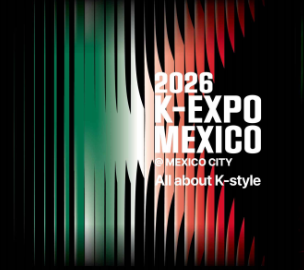 Korean culture to take spotlight at largest expo in Mexico this weekend SEOUL, September 23 (AJP) - South Korea will promote K-pop, food, beauty products and consumer brands at an expo in Mexico City this weekend. The country's largest expo in Latin America, organized in partnership with six government ministries and related agencies, is scheduled to run from Sept. 24 to 27. Export-related consultations during the expo will connect some 120 South Korean companies with more than 250 Mexican buyers. A separate consumer exhibition will also run at the World Trade Center Mexico City over the same period. The expo comes amid growing South Korean consumer exports to Latin America. Exports of five major consumer goods reached US$779 million in the first half of 2026, up 28.1 percent from a year earlier. Food exports rose 19.5 percent, while cosmetics exports by small and midsized companies jumped 131.9 percent. The expo will feature food products from companies including Nongshim, CJ CheilJedang and Binggrae, while Amorepacific and LG Household & Health Care will showcase beauty technologies such as artificial intelligence (AI)-based product recommendations and scalp analysis. Global streaming giant Netflix will offer Spanish-language voiceovers for South Korean dramas and other content, while a photo zone featuring K-pop boy band Stray Kids will draw visitors alongside displays from Samsung Electronics, Kia and LG Electronics. A K-pop concert featuring Alpha Drive One, Dayoung, Soyou, Touched and Winner will also be held at Pepsi Center on Saturday. AJP Takeaways - The 2026 K-EXPO MEXICO will run in Mexico City from Sept. 24 to 27. - The event will bring together 120 Korean K-culture companies and 258 Mexican buyers. - Korean consumer exports to Latin America rose 28.1 percent in the first half of 2026. 2026-09-23 14:42:42
 -
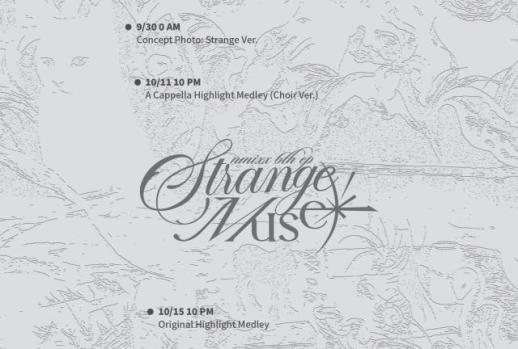 K-pop girl group NMIXX to drop new album next month SEOUL, September 23 (AJP) - K-pop girl group NMIXX will release their sixth mini album next month, their agency JYP Entertainment said on Wednesday. Strange Muse" is slated for release on Oct. 19, featuring six songs including the title track "Birthday Wish." The album will also feature the group's first unit songs since their debut, pairing Lily and Haewon on "Sing to the Moon," Sullyoon and Bae on "Hot 'n Unbothered," and Jiwoo and Kyujin on "WHIP." JYP said all six members took part in work on their respective unit tracks. Other songs on the album include "Kerosene" and "RudE TaLK." NMIXX will tease the upcoming release with song medleys, a music video and promotional photos. AJP Takeaways - NMIXX will release their sixth mini album "Strange Muse" on Oct. 19. - "Birthday Wish" will serve as the title track. - The album includes NMIXX's first unit songs since debut. 2026-09-23 14:17:33
 -
 K-pop quartet aespa's hit song gets remix from young producers SEOUL, September 23 (AJP) - A remix EP of K-pop girl band aespa's "Whiplash" featuring winning entries from a competition for emerging producers is set to be released on Wednesday, according to their agency SM Entertainment. The EP, titled "ScreaM Rookies 2 : Whiplash (Remixes)," was produced by ScreaM Records, SM Entertainment's dance music label. The tracks were selected from the second "ScreaM REMIX COMPETITION," which invited students from Seoul Institute of the Arts and Seoul Music High School to reinterpret the track. The project is aimed at giving young producers a platform to release their work through ScreaM Records. AJP Takeaways - aespa's "Whiplash" is set tp be released as a remix EP featuring emerging producers on Wednesday. - The tracks came from the second ScreaM remix competition. - Students from Seoul Institute of the Arts and Seoul Music High School took part. 2026-09-23 14:09:17
 -
 One-third of large South Korean companies reman profitable for past 5 years SEOUL, September 23 (AJP) - Seven of South Korea's largest companies have posted an operating profit in every quarter since 2000, according to a study released on Wednesday. KT&G, Handsome, Korea Zinc, S-1, Shinsegae, CJ ENM and Hyundai Mobis remained profitable through all 106 quarters from the first quarter of 2000 through the second quarter of this year, corporate data researcher CEO Score said. The study examined standalone financial statements from 351 companies among South Korea's 500 largest by sales that filed half-year reports. Long profit streaks were relatively common among the big businesses. A total of 117 companies or 33.3 percent remained profitable for at least 20 consecutive quarters, equivalent to five years. Seventy-one companies maintained operating profits for at least 40 quarters, while 11 stayed in the black for 100 quarters or more. Samsung Fire & Marine Insurance recorded a 105-quarter streak, followed by Kumho Petrochemical with 103. Kwang Dong Pharmaceutical and Korea Steel Pipe logged 102 quarters each. Other lengthy runs included LS Electric with 99 quarters and Naver, Kakao and POSCO International with 98 each. CEO Score also found 15 companies that had never posted an operating loss since their establishment. Hyundai Department Store had the longest such run at 95 quarters, followed by Youngone Corp. with 68 and Sunjin and KB Kookmin Card with 62 each. AJP Takeaways - Seven major Korean companies have posted operating profits in all 106 quarters since 2000. - One-third of the 351 companies surveyed stayed profitable for at least five consecutive years. - Seventy-one companies maintained operating profits for at least 10 years. 2026-09-23 11:04:28
 -
 Algorithms reshape how tourists discover Korea SEOUL, September 22 (AJP) — Not long ago, a Lonely Planet guidebook was a staple for travelers venturing abroad. Today, a guide is at their fingertips — sometimes recommending places before they even think to look. Tallia Romanez, a 46-year-old American visiting South Korea, did not find most of the places on her itinerary in a guidebook. Instagram found them for her. “All the places I want to go are on the Instagram,” Romanez said. “I see a lot of Reels because I’m interested in K-pop.” She follows all seven members of BTS as well as major entertainment companies, frequently liking their posts and short videos. Over time, restaurants and places to visit in Korea began appearing alongside the K-pop content. “I think that’s how my algorithm got mixed into all of this,” she said. Her husband’s feed took a different route. “My husband loves food, especially Asian food, so his Instagram suggestions tend to focus more on food,” Romanez said. “For our trip, my husband looked for places to eat, while I looked for places we could visit and things we could do.” The couple saves those discoveries on Google Maps and downloads maps to navigate offline while in Korea. Their itinerary takes shape through repeated encounters with food, music and everyday scenes on a screen. By the time they arrive, a neighborhood restaurant or convenience-store snack can feel as familiar — and worth seeking out — as a landmark. For some visitors, finding a place is also the beginning of another recommendation. Miko, a 23-year-old model from Thailand, sought out a restaurant specializing in chadol baegi, thinly sliced beef brisket, tucked into Seoul’s Seorae neighborhood. She had seen it in a social-media post before traveling to the city with friends. “I come to Korea twice a year, and I try to discover new places to share on my Instagram,” she said and beamed excitingly upon learning of a new place famous for gopchang, or grilled beef intestines from this reporter. Such discoveries are multiplying as South Korea welcomes more visitors and their spending spreads across a wider range of businesses. The country received 10.71 million foreign visitors in the first half of 2026, up 21 percent from a year earlier. Seoul received 8.23 million, up 21.3 percent. Foreign tourists made 5.62 trillion won ($4 billion) in card purchases in the capital during the period, a 56.8 percent increase. Average card spending per visitor rose 29.3 percent from about 530,000 won to 680,000 won. Shopping remained the largest category, accounting for 46.4 percent of spending. But restaurant purchases jumped 54.5 percent to 584.3 billion won. Payment data from WOWPASS, a prepaid payment service for foreign visitors, offers another indication that spending is becoming less concentrated. The service recorded 1.97 million users in 2025, up 33 percent, with 20.2 million payments worth 447.7 billion won. Yet the share of spending at its 100 largest merchants fell from 34 percent to 27 percent. Seoul’s share of WOWPASS spending slipped from 89 percent in 2023 to 83 percent in 2025, while the share outside the capital rose from 11 percent to 17 percent. Within Seoul, spending in Seongdong District, which includes Seongsu-dong, jumped 118 percent last year. Those figures do not establish that social media caused the shift, nor do they suggest visitors are abandoning established shopping destinations. Spending at large shopping malls in Seoul rose 73.2 percent in the first half of this year. But alongside those purchases, visitors are making room for smaller transactions and experiences drawn from everyday Korean life. For Jacob Hunt’s family, the interest began with his daughter, a BTS fan. “Our daughter is a big ARMY,” Hunt said with a laugh, using the name of the group’s fandom. “She went to a BTS concert recently and emptied out her bank account.” She also repeatedly watches older BTS livestreams in which the members eat and talk about their daily lives. “She learned a lot about Korean food and food hacks,” Hunt said. Two days after arriving in Korea, the family visited a nearby CU convenience store to try combinations they had seen online. “We tried a lot of interesting food combinations and we loved it,” Hunt said. “Especially the black coffee with banana milk. That was super awesome.” Hunt had also watched YouTube videos about Korean food before the trip. “Instagram and YouTube do most of the jobs when it comes to finding Korean food joints,” he said. The noodles and mandu, or Korean dumplings, he was eating that day were another discovery from a video. Across the tourism market, those seemingly modest purchases add up. A Korea Tourism Organization analysis of foreign credit-card transactions between 2018 and July 2025 found average annual spending growth of 35 percent for ice cream and 34 percent for convenience-store food. From January through July 2025, foreign visitors made 8.9 million payments at cafés, 3 million at bakeries and 2.3 million for hamburgers. The transaction counts rose 29.5 percent, 36.2 percent and 38.2 percent, respectively, from a year earlier. A KTO survey of potential visitors also found food tours were the most desired activity in Korea, cited by 15.7 percent of respondents. Researchers are examining how years of watching entertainment content can turn that interest into travel. A 2026 study in the Asia Pacific Journal of Tourism Research explored how BTS shaped perceptions of South Korea among Gen Z women. Based on two small focus groups, it found that placing BTS in tourism advertisements had limited additional impact. Among fans, the stronger influence came from sustained exposure to the members’ music, personalities and everyday content. The researchers linked the attachment to “parasocial relationships,” the one-sided sense of familiarity audiences develop with media figures. Hunt’s account illustrates how that familiarity can work. His daughter did not need BTS to recommend a particular convenience store. Watching the members eat had already given ordinary Korean food a personal connection. Recommendations from other travelers can then build on that interest. A separate 2024 experiment involving 700 Instagram users found that posts influenced intentions to visit destinations. Influencer posts about iconic locations generated stronger visit intentions than comparable posts by peers, although the effect varied with the destination and the viewer’s fear of missing out. For travelers, those streams of content increasingly lead to a saved location on a map. Naver said the number of people using Naver Map in foreign-language settings rose 16.4 percent between September 2025 and April this year. Its latest “BE LOCAL” campaign featured about 300 restaurants and other destinations in Seoul and Busan. Visitor data also points to growing interest beyond the traditional tourist circuit. The Seoul AI Foundation, using SK Telecom foot-traffic data and foreign-language Google Maps reviews, found that Myeong-dong remained the city’s largest foreign tourist destination, with about 100,910 visitors a day. Foreign foot traffic also rose 10.1 percent at Seoul Forest and Seongsu, 10.4 percent at Gwangjang Market, 11.8 percent at Achasan Mountain and 10 percent at Gwanaksan Mountain. The online routes to those destinations vary by country. In KTO research, social-media and video-platform searches were the most commonly cited initial source influencing a decision to visit Korea, at 16.9 percent, ahead of recommendations from acquaintances at 14.7 percent and online travel sites at 13.6 percent. Among potential U.S. visitors, YouTube ranked first at 21 percent, while Instagram and TikTok each accounted for 10.9 percent. Chinese travelers relied more heavily on platforms including Douyin, Xiaohongshu and Bilibili. A trip can now take shape across all those encounters: a livestream introduces a snack, a short video makes a restaurant worth saving, and a map supplies the final directions. The traveler may remember the discovery more clearly than the person who recommended it. “I don’t remember whose video it was,” Hunt said. “But it looked super good, so we are here to try them with some mandu.” AJP Takeaways - Social media is increasingly shaping foreign tourists’ itineraries in Korea, with Instagram, YouTube and other platforms steering visitors toward neighborhood restaurants, convenience stores and everyday local experiences. - Foreign tourist card spending in Seoul jumped 56.8 percent in the first half of 2026, far outpacing the 21.3 percent rise in visitor numbers, while restaurant spending surged 54.5 percent. - WOWPASS data shows spending is becoming less concentrated, with the share going to its 100 largest merchants falling from 34 percent to 27 percent as purchases spread to smaller businesses and areas beyond traditional tourist hubs. 2026-09-22 17:44:34
 -
 Kian84's flying B&B idea grounded by safety, legal hurdles SEOUL, September 22 (AJP) - Public personal Kian84 initially wanted the second season of Netflix's "Kian's Bizarre B&B" to feature a guesthouse floating in the sky, but safety and legal restrictions forced the production to bring the idea back to earth, the entertainer said Tuesday. Speaking at a press event in Seoul, Kian84 said expectations had risen after the first season featured an unconventional guesthouse off Ulleungdo Island. "I genuinely wanted to put the house in the sky, even if we could only take a few guests," he said of early discussions for the new season. Producer Kim Ji-hyun said Kian84 proposed around 10 ideas during the design process, including a flying house, a house that could roll across the ground and an insect-like structure suspended from a tree. The production team rejected several of them because they were difficult to build or raised legal issues. Kian84 said the team looked into making the flying concept work but found that unpredictable winds could create safety problems. A second idea was to put wheels on the house, inspired in part by "Howl's Moving Castle." That plan was also dropped after running into road traffic regulations, he said. The eventual second-season guesthouse was built in the mountains of Daegwallyeong, shifting the show from the summer setting of Ulleungdo to the depths of winter. Season 2 brings Kian84 together with former volleyball star Kim Yeon-koung, actor and singer Lee Jun-ho and LE SSERAFIM member Kazuha. The larger lodge also pushed the production to expand the core staff from three people to four. Producers said shorter winter days meant guests would return from outings earlier and spend more time together inside the guesthouse. For Kian84, turning the concept into an actual lodging brought a different kind of pressure. He said he spent the first several days worried about whether guests could get hurt, become sick from the food or leave dissatisfied — and whether the show itself would work. "I really wanted to cry," he said, adding that he began to relax only after about three or four days. The first four episodes of "Kian's Bizarre B&B" Season 2 were scheduled to be released at 5 p.m. Tuesday, with 10 episodes rolling out over three weeks. AJP Takeaways - Kian84 initially proposed a flying guesthouse for Season 2 of "Kian's Bizarre B&B." - Other concepts included a rolling house and an insect-like structure suspended from a tree. - Safety concerns and legal restrictions forced the production to abandon several designs. 2026-09-22 15:03:46
 -
 Former Korean coach Hong Myung-bo's case dropped SEOUL, September 22 (AJP) -Police dropped a breach-of-trust allegation concerning former South Korean national football coach Hong Myung-bo’s salary while referring former Korea Football Association chief Chung Mong-gyu to prosecutors over alleged interference in Hong’s appointment. The Seoul Metropolitan Police Agency said Tuesday it had referred Chung, former technical director Lee Lim-saeng and former full-time vice president Kim Jung-bae to the Seoul Central District Prosecutors’ Office without detention on suspicion of obstructing business through deception. The three are accused of improperly intervening in the work of the association’s national team committee, which has authority to recommend coaching candidates to the board, and falsifying briefing materials submitted to directors to conceal that interference. The materials stated that former committee chairman Chung Hae-sung had asked the association to take over the coaching appointment process when he resigned, according to police. Investigators found that Chung had merely stepped down and had neither delegated the remaining selection work to the association nor asked it to proceed. Police concluded that the board would not have approved Hong’s appointment had it been accurately informed of those circumstances. The false statements were intended to make the selection appear procedurally legitimate following public criticism of the fairness of an earlier coaching appointment, police said. “Because there had been public criticism over procedural fairness in the previous coaching appointment, Chung Mong-gyu and others included false information in the board’s briefing materials to create the appearance that Hong Myung-bo’s appointment had followed proper procedures,” police said. AJP Takeaways: - Former football chief referred to prosecutors: Police suspect Chung Mong-gyu and two former senior officials of interfering in Hong Myung-bo’s appointment and falsifying board briefing materials. - Board approval allegedly rested on false information: Police found the selection committee’s outgoing chairman had not authorized the association to take over the process, contrary to the materials. - Salary-related allegation dropped: Police found insufficient grounds to establish financial damage or intent to harm the association. That does not amount to clearing all irregularities surrounding Hong’s appointment. 2026-09-22 13:54:50
 -
 Giant hand to truck-boat, local projects raise questions on cultural spending SEOUL, September 21 (AJP) - Lee Ji-hye, a 33-year-old resident of Songdo in Incheon, took her young son to see a new sculpture that had appeared along the waterfront in their neighborhood. His immediate reaction was "Rock and roll," she said, copying the hand gesture. Her son also thought it looked like Spider-Man's hand. "There was a lot of discussion because we simply couldn't make it out," Lee told AJP. She could only laugh when she read the explanation at the base. The giant hand was meant to express "I love you" in sign language. Her amusement turned to disbelief when she learned the sculpture had cost 200 million won ($144,000) from the public budget. "I don't know art, but it can hardly be worth 200 million won," Lee said. The sculpture stands about 4 to 5 meters high and 3 meters wide at Long Beach Park on the northern edge of Songdo International City. The Incheon Free Economic Zone Authority, or IFEZ, developed the concept with a design firm and commissioned an outside company to produce it. Officials said the gesture was chosen partly because the waterfront park is popular with couples. The hand was envisioned as a photo spot overlooking the Incheon Bridge. Residents were hardly as warm. Complaints poured into IFEZ after some residents said the hand resembled an insulting gesture and others questioned why so much public money had been spent on it. The sculpture was subsequently covered while authorities prepared explanatory signage and considered other measures. Lee sees little point in removing it now. "They already spent 200 million won making it, and removing it would cost money again," she said. The controversy has at least given residents something to talk about, she added. "Maybe at night they could use digital art and make it look like Spider-Man, and then explain, 'Actually, this means I love you in sign language,'" Lee said. "I think finding a way to use it would be better." The Yeonsu branch of the Incheon Association of the Deaf has taken a similar position, urging authorities to preserve the sculpture and use clearer explanations to introduce visitors to the meaning of the gesture. The episode touches on a recurring problem in publicly funded cultural projects. The meaning intended by planners does not always survive contact with the people expected to live with the finished product. Research on public art in South Korea has documented similar gaps between a project's stated purpose and its local reception. A 2023 study of a public-art project in a former mining village in Boryeong found that longtime residents could regard its intentions favorably while remaining dissatisfied with the results. Their responses depended partly on whether they felt the project reflected the needs and circumstances of their community. The scale becomes dramatically larger about 300 kilometers south in Yeosu. The southern coastal city is hosting the 2026 World Island Fair, a 61-day international event that opened Sept. 5 and runs through Nov. 4 at sites including Dolsan, Gaedo and Geumodo. Organizers have set a target of 3 million visitors. The fair's direct project cost has risen to about 71.3 billion won, including 6.4 billion won in central government funding, according to the organizing committee and procurement data. The money covers exhibition facilities, content, performances, promotion and other programs. The ambition is far greater than Songdo's solitary hand. Organizers have promoted the fair as a showcase for the ecological and cultural value of islands and as a vehicle for tourism and regional development. Seo Ji-hoon, a 30-year-old office worker from Icheon, had already wanted to visit Yeosu. When he learned the island fair would be taking place, he and his girlfriend decided it was a good time to make the trip. "I saw the expo being advertised a lot, so I thought it would have some scale to it and be pretty well put together," Seo told AJP. One scene stayed with him. Performers reenacting the traditional Geomundo Boat Song rode on the back of a one-ton pickup truck wrapped in cloth and fitted with a sail to resemble a boat. Seo was caught off guard. "We came all the way down there, and what we saw was this Porter truck going around covered in cloth," he said, referring to Hyundai's light pickup truck. "I was honestly speechless. More than anything, I was confused." The performance drew on a traditional fishing song from Geomundo, an island district of Yeosu. The organizing committee later said it was a linked local-government project rather than an official centerpiece of the fair and acknowledged that its presentation had fallen short of visitors' expectations. Seo's disappointment was with the execution rather than the tradition itself. Afterward, he and his girlfriend headed to the food court. "We basically said, 'Let's just go eat,'" he said. The meal did little to improve his impression. "The food felt like something from a highway rest stop," Seo said. "I had been excited about eating in Yeosu, but it felt a bit like a military cafeteria. Everything seemed a little rough around the edges." Food and programming have become part of the wider criticism surrounding the event. Images of a 14,900-won soy-marinated crab meal and footage of the truck performance spread widely online, prompting questions over value and production quality. Seo represents only one visitor to a fair scheduled to run for two months, and his experience cannot establish how the broader audience views the event. Organizers themselves, however, acknowledged complaints soon after opening. Ten days into the fair, the organizing committee announced additional performances and content after visitors complained of insufficient attractions and activities. The measures were intended partly to give visitors more to do and encourage them to stay longer. The fair had drawn 35,668 visitors during its opening weekend, a small fraction of its eventual 3 million target, although the figure covered only the first two days of a 61-day event. Local governments across South Korea have increasingly turned to festivals, exhibitions and cultural projects as tools for tourism and regional development. A study published this year in The Korea Journal of Local Public Finance found significant positive relationships between local-government spending on events and festivals and expenditures in culture and tourism, industry and small businesses, and land and regional development. The research said such spending has become closely connected with strategies to attract visitors and stimulate local economies, while fiscal efficiency remains a subject of continuing debate. The Songdo sculpture and Yeosu fair are not directly comparable. One is a permanent public artwork costing 200 million won. The other is a sprawling international event costing more than 70 billion won across exhibitions, facilities, performances, marketing and related programs. Their controversies, however, converge on a simpler question facing local governments spending public money on culture. Grand ambitions and large budgets may be easy to put on paper. Residents and visitors ultimately judge what appears in front of them. In Songdo, it was a giant hand few people initially understood. In Yeosu, for Seo, it was a pickup truck pretending to be a boat. AJP Takeaways - A 200 million won public sculpture in Songdo sparked controversy after residents struggled to understand its intended meaning and questioned its cost. - Yeosu’s 71.3 billion won World Island Fair also faced criticism over the quality of some performances, food and visitor experiences, despite its goal of promoting island tourism and regional development. - The two cases highlight a broader gap between local governments’ cultural ambitions and how residents and visitors actually experience publicly funded projects. 2026-09-21 17:57:29
 -
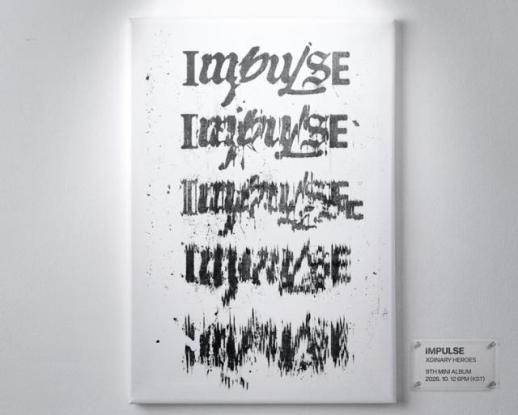 K-pop rock band Xdinary Heroes to return with 2nd mini album SEOUL, September 21 (AJP) - K-pop rock band Xdinary Heroes will release a new mini album next month, their agency JYP Entertainment said on Monday. The six-member band unveiled their plan for the album's release slated for Oct. 12 through a teaser video and promotional posters on social media. The teaser for "IMPULSE" centers on the keyword "desire," opening with the phrase, "Desire. That's what moves people." JYP said additional teasers would be released one by one. Members Jungsu, Gaon, O.de, Jun Han and Jooyeon have regularly taken part in writing and composing the band's music. "IMPULSE" will be available on major music-streaming sites at 6 p.m. on Oct. 12. AJP Takeaways - Xdinary Heroes will release new mini album "IMPULSE" on Oct. 12. - The album's promotional campaign centers on the theme of desire. - JYP plans to release track information, live samples and music video teasers ahead of the comeback. 2026-09-21 14:48:00