

Journalist

Joonha Yoo유준하
joonhayoo94@ajupress.com
ReporterCOEX Sejong Center for the Performing Arts & Music, Culture, Entertainment, Automotive
Joonha Yoo is a bilingual journalist at AJU Press (AJP), covering music, culture, entertainment and Korea’s automotive industry.
Raised in Fort Collins, Colorado, he often writes from the scene, bringing firsthand detail to stories ranging
from BTS comeback concerts to unique cultural events that catch the world's eye. "I write from the scene, not from the sidelines."
Raised in Fort Collins, Colorado, he often writes from the scene, bringing firsthand detail to stories ranging
from BTS comeback concerts to unique cultural events that catch the world's eye. "I write from the scene, not from the sidelines."
Latest by Joonha Yoo
-
 T.O.P, Nana confirm as latest K-couple SEOUL, October 02 (AJP) - Former BIGBANG member T.O.P and actress Nana have confirmed they are in a relationship, their agencies said Friday. T.O.P's agency Topspot Pictures said the two became acquainted during the shoot and developed a relationship around June. Nana's agency Sublime separately also confirmed their relationship status. Nana appeared alongside T.O.P in the music video for the title track of his first solo studio album "Top Spot", released in April. T.O.P debuted with BIGBANG in 2006 and later expanded into acting. He returned to acting in Netflix's "Squid Game" Season 2 after several years away from the spotlight. Nana debuted with girl group After School in 2009 and its subunit Orange Caramel before building a career as an actress. AJP Takeaways - T.O.P and Nana have confirmed they are dating. - The two met while filming T.O.P's music video. - Their agencies said the relationship began around June. 2026-10-02 15:50:29
 -
 Grammys moves ahead with Asian Pop award after BTS opts out SEOUL, October 02 (AJP) - The Recording Academy will go ahead with its new Best Asian Pop Music Performance category without changing its eligibility rules after weeks of consultations with Asian music industry figures. CEO Harvey Mason Jr. said the academy heard opposition as well as support during the consultations, but backing for keeping the category was stronger. The academy also said it received a "robust" number of submissions in the category's first year. The award covers contemporary Asian pop, including K-pop, J-pop and C-pop. Eligible songs must make meaningful use of at least one Asian language, while tracks performed entirely in English cannot compete in the category. They remain eligible for other Grammy categories. The decision follows criticism that intensified after BTS said in July it would not submit music for the 69th Grammy Awards. All seven members said they hoped music could be heard "for what it is" rather than divided by region or language. The Recording Academy had announced the Asian Pop award on June 16 as one of five new categories for the 2027 Grammys. Mason later said the academy would speak with artists and industry figures after concerns emerged over whether a separate regional category could sideline Asian acts from broader recognition. Artists entered in Asian Pop are still permitted to compete in the Grammys' general fields, including Album, Record and Song of the Year, if their recordings meet those categories' requirements. BTS will not be part of this year's nomination process because the Grammy submission window closed on Aug. 21. The 69th Grammy Awards will be held in Los Angeles on Feb. 7, 2027. AJP Takeaways - The Grammys will keep its new Asian Pop category for 2027. - Its controversial Asian-language requirement remains unchanged. - The Recording Academy said it received a strong number of first-year submissions 2026-10-02 10:44:27
 -
 Korea to celebrate 100 years of Hangeul Day with nationwide events SEOUL, October 02 (AJP) - South Korea will mark the 100th anniversary of Hangeul Day with nearly two weeks of performances, exhibitions and public programs across the country, the Culture Ministry said Friday. The annual Hangeul Week will run from Oct. 6 to 17, with its main events centered on Gwanghwamun Square in Seoul. A three day festival from Oct. 6 will feature musicals, concerts and more than 20 hands-on programs built around the Korean alphabet. An eve ceremony on Oct. 8 will begin with the lighting of 100 lights symbolizing the centenary. K-pop group AtHeart and indie band Broccoli, You Too will perform, while foreign students from King Sejong Institute programs will join citizens in readings about the meaning of Hangeul. A media facade titled "Twenty-four, Universe" will then illuminate Gwanghwamun from Oct. 8 to 11, transforming the alphabet's 24 consonants and vowels into images inspired by constellations, nature and traditional Korean architecture. The government will also stage a Hangeul cultural industry fair from Oct. 6 to 8, featuring products, media art and K-pop content based on the Korean script. A business center will connect participating companies with domestic and overseas buyers. A separate conference at the National Museum of Korea on Oct. 12 will examine the future of Hangeul and the Korean language amid the global spread of K-culture and advances in artificial intelligence. Events will also take place nationwide through museums, universities, local governments and 22 Korean language and culture institutes. AJP Takeaways Korea will mark the 100th anniversary of Hangeul Day with events from Oct. 6 to 17. The main festival will run for three days at Gwanghwamun Square. A 100 light ceremony and media facade will mark the centenary. 2026-10-02 10:44:14
 -
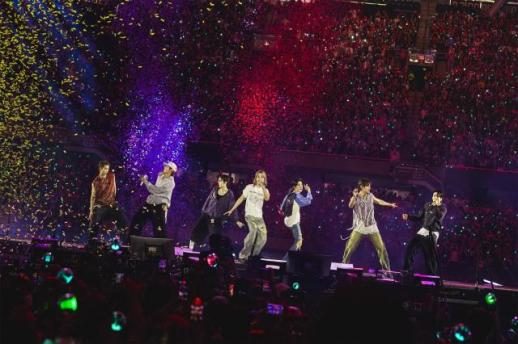 BTS tour tops $500 million in ticket sales SEOUL, October 02 (AJP) - BTS' "ARIRANG" world tour has topped $500 million in ticket sales, making the group the first pop act to reach the mark with a single tour, Billboard said Wednesday. BTS crossed the milestone after earning $171.7 million from 12 concerts in August, which drew about 801,000 fans. The August total was the second-highest monthly tour revenue ever recorded by Billboard, trailing only Beyoncé's $179.3 million in August 2023. Two shows at MetLife Stadium in New Jersey alone brought in $32.7 million from about 158,000 concertgoers. BTS is only the seventh group to surpass $500 million from one tour. The six groups to do so before them were all rock bands. The "ARIRANG" tour began in Goyang, South Korea, on April 9. About 40 shows remain through March 2027. Billboard said the tour could eventually approach $1 billion in total ticket sales. AJP Takeaways - "ARIRANG" has surpassed $500 million in ticket sales. - BTS is the first pop group to reach that mark with a single tour. - August alone generated $171.7 million from 801,000 tickets. 2026-10-02 09:11:56
 -
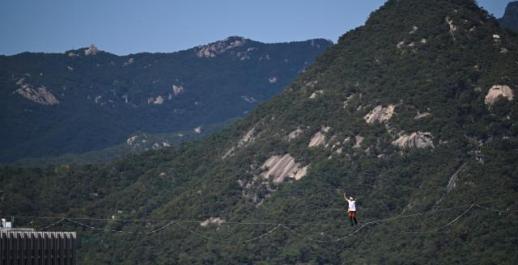 "Look! Up in the sky! It's a bird! It's a plane! It's…" SEOUL, October 01 (AJP) - The sky above Gwanghwamun can be entrancing on deep-blue autumn days, with mountains rising beyond the broad avenue in downtown Seoul. But on Thursday, there was another reason to look up. Eyes and phones tilted upward as a man somersaulted 120 meters above the ground. Beneath him lay modern high-rises, an ancient palace, the statue of Admiral Yi Sun-sin and hundreds of spectators. Jaan Roose, a 34-year-old Estonian slackliner and three-time world champion, crossed a 160-meter line connecting the Koreana Hotel and the Dong-A Media Center. The route descended slightly from about 120 meters to 116 meters above the ground in what the Seoul Metropolitan Government described as Korea’s first urban highline performance. Two performances were held, at 1 p.m. and 4 p.m. Kwon Sun-nam, 65, arrived from the Achasan area around 11 a.m. and settled in front of the Korea Press Center with a tripod and camera. “I heard they were doing this today, so I’ve been sitting here since 11,” Kwon said. “It’s fascinating that someone is going to walk a line that high. I brought my tripod too, so I’m hoping to get some good pictures.” Kwon had looked up the sport before coming. “I saw that they use safety equipment, so I guess he’ll be all right,” he said. “He’s a professional. But it’s a little windy today, so I hope everything finishes safely.” Seoul city said all rigging equipment met international standards and had undergone safety inspections. The event was to be halted if average wind speeds reached 10 meters per second or gusts reached 15 meters per second. Roose wore a harness connected to the line by a safety leash, a standard highlining precaution. From the pavement, however, the equipment did little to make the height look less intimidating. Sim Seon-woo, a 39-year-old office worker from Gangnam, delayed lunch to watch the 1 p.m. performance. “I knew there was going to be slacklining today, so I’m having lunch late because I wanted to see this,” he said. Sim, who regularly watches videos of Red Bull-backed athletes, brought his colleagues along. “They do so many extreme sports that I get a rush whenever I watch them,” he said. “Seeing a Red Bull athlete actually do something in front of me is exciting.” Asked what would frighten him most in Roose’s position, Sim did not mention the narrow line. “Before I even tried to walk, I think just standing up there and seeing the ground below would scare me the most.” Then Roose began to move. Against the blue sky, the webbing was difficult to see. At moments, the figure between the buildings was easier to make out than the line beneath his feet. Wearing a white Red Bull T-shirt and a headband, Roose did more than walk. During the roughly 15-minute performance, he sat on the line and hung beneath it, drawing gasps from the crowd below. Seong Sun-ja, 75, came from Dongnimmun with friends after hearing that “something unusual” was happening in Gwanghwamun. “I knew it was going to be high, but when I actually got here, it was much higher than I imagined,” Seong said. “When he first went up there, I was so scared. It felt almost like I was the one standing on it.” She laughed as she recalled her friends’ reactions. “We kept saying, ‘Oh my, oh my,’ the whole time.” For Seong, the spectacle also had something familiar about it. “It looked a lot like our traditional Korean tightrope walking,” she said. “That was fascinating.” The connection was not entirely coincidental. Seoul officials said Roose became interested in jultagi, Korea’s traditional tightrope performance, after encountering it during a visit in 2022. Seen from below, the two disciplines share an obvious resemblance: a performer balancing on a narrow line. The similarities become less straightforward up close. A slackline is a flat strip of synthetic webbing, generally about 2 to 5 centimeters wide, that stretches and moves under the athlete’s weight. Its elasticity allows athletes to bounce, jump and perform tricks. Modern slacklining traces its roots to California’s Yosemite Valley in the early 1980s, when climbers began balancing on climbing webbing during rest days. It developed into disciplines ranging from low park lines to highlines suspended hundreds of meters above the ground. Jultagi belongs to a much older performing tradition in which balance and acrobatics are part of a larger theatrical exchange. The rope walker sings, dances and trades jokes with a clown on the ground while musicians accompany the performance. UNESCO inscribed it on its Representative List of the Intangible Cultural Heritage of Humanity in 2011. At Cheonggye Plaza, visitors needed little explanation of how difficult balancing on a line could be. They could try it themselves. Two practice lines were installed just 30 and 50 centimeters above the pavement. Participants stepped onto the webbing with their arms stretched outward as staff stood nearby to steady them. Lee Hye-jeong, a 41-year-old office worker from northern Seoul, tried one before watching Roose. “I thought I had pretty good balance,” Lee said. “But it was much harder than I expected. It shakes so much.” The experience changed how she saw the performance overhead. “After trying it myself and then seeing him, I realized how good he really is,” she said. “My heart dropped every time he did something up there.” Roose has built a career taking that unstable footing to greater heights and distances. He began slacklining at 18. Red Bull lists him as a three-time world champion and the first and only athlete to land a double backflip on a slackline. His career has also included stunt work in the film Assassin’s Creed and Madonna’s MDNA World Tour. He performed about 100 meters above Sarajevo in 2021 and crossed a 500-meter line between mountains in Kazakhstan the following year. In 2023, he completed a 150-meter crossing in Doha that set a world record for the longest slackline on a single building. His 2024 attempt over the Strait of Messina was on another scale. Roose walked roughly 3.6 kilometers on a line just 1.9 centimeters wide from mainland Italy to Sicily. About 80 meters from the finish, he fell, climbed back onto the line and completed the crossing. The fall cost him the world record he had been pursuing. On Sept. 18, he set a world record by covering 14.7 kilometers over 12 hours on a line above Bratislava, Slovakia. In Gwanghwamun, his performance was part of a broader introduction to the sports associated with Red Bull. Breaking crews battled before tightly packed spectators, a temporary skateboard area operated nearby and beginners continued testing their balance on the practice lines. For Lee, Red Bull had mostly meant an energy drink and a name she recognized from motor racing. “I didn’t really know much about them,” she said. “But today I saw people breaking too. I think I’ll look them up more after this.” The Austrian company’s sporting ties go back almost to its beginning. A year after launching its energy drink in 1987, it sponsored the Dolomitenmann, an extreme relay combining mountain running, paragliding, mountain biking and whitewater kayaking. Formula One driver Gerhard Berger became its first sponsored athlete in 1989. Over the following decades, its reach extended across motorsport, climbing, surfing, skateboarding, breaking and air sports — pursuits that have helped make the brand as recognizable for its athletes as for the drink itself. On Thursday, that association played out at every level: breakers on the pavement, beginners wobbling a few centimeters above it and Roose moving between buildings overhead. At a practice line, an instructor held out both arms toward a first-time participant. The participant stepped onto the webbing, raised both arms and began to sway. More than 100 meters above, Roose faced the same basic challenge. Only the drop was different. 2026-10-01 17:58:02
 -
 Seoul bourse mostly flat despite US deal and Micron earnings SEOUL, October 01 (AJP) - Korean investors turned to U.S.-linked energy and semiconductor themes Thursday morning after Seoul and Washington laid out $142 billion energy project plans including eight nuclear reactors under South Korea's U.S. investment package. The benchmark KOSPI stood at 6,821.60 as of 10:40 a.m., down 0.2 percent from the previous session after moving between a high of 6,854.21 and a low of 6,765.06. Retail investors bought 322.9 billion won ($237 million) worth of KOSPI listed shares, while foreign investors sold 645 billion won and institutions offloaded 130.1 billion won. Much of the market's attention was on Washington after U.S. President Donald Trump unveiled plans for up to $200 billion in South Korean investment in U.S. energy infrastructure. South Korea has moved onto executing its $200 billion strategic investment pledge to the United States with a $22.3 billion Texas power project, alongside a $120 billion nuclear cooperation framework and a conditional review of Alaska LNG to bolster U.S. energy supplies for its AI data center buildout. The distinction quickly translated into trading themes in Seoul. Steel shares surged in early trading on expectations that construction of the roughly 1,300-kilometer Alaska gas pipeline could generate demand for steel and pipe products if the project proceeds. Daehan Steel jumped 20.2 percent to 9,360 won as of 9:11 a.m., while Dongkuk Steel rose 13.8 percent and Korea Steel gained 6.1 percent. Doosan Enerbility, one of Korea's major nuclear power equipment suppliers, gained 0.7 percent to 82,200 won. Investors were also assessing another major overnight development for Korea's semiconductor sector. Micron Technology reported record fiscal fourth-quarter revenue of $54.23 billion, nearly five times the $11.32 billion posted a year earlier, as booming artificial intelligence investment drove demand for high-bandwidth memory and tightened broader DRAM supply. Micron projected revenue of about $61.5 billion for the following quarter, above market expectations, as demand for AI servers and memory chips remained strong. The results provided support to Korea's broader semiconductor supply chain, although the country's two largest memory manufacturers showed little movement. SK hynix edged up 0.1 percent to 1,778,000 won, while Samsung Electronics was flat at 268,500 won. Hanmi Semiconductor rose 1.9 percent to 261,250 won. High bandwidth memory related stocks gained about 4 percent as a group. Buying was stronger among semiconductor equipment and system-chip stocks. SemiFive surged 12.8 percent to 20,600 won and SFA Semicon climbed 8.2 percent to 11,660 won. HPSP gained 6 percent to 67,400 won, Wonik IPS rose 5.4 percent to 138,400 won and Jusung Engineering advanced 2.4 percent to 238,000 won. The tech-heavy KOSDAQ significantly outperformed the main board, rising 2.4 percent to 876.26. It reached a high of 876.94 after touching a low of 851.92. Foreign investors bought 120.3 billion won worth of KOSDAQ shares and institutions purchased 48.3 billion won. Retail investors sold 141.3 billion won. Pharmaceutical stocks gained 2.5 percent. Sam Chun Dang Pharm surged 9.7 percent to 189,500 won, Celltrion advanced 2.6 percent to 182,300 won and Samsung Biologics rose 2 percent to 1,419,000 won. Gaming stocks climbed 3.9 percent, led by NCSoft, which jumped 11.2 percent to 232,500 won. JoyCity gained 6.3 percent to 1,217 won, while Krafton rose 1.7 percent to 198,200 won. Auto parts shares gained 2.7 percent. Hyundai Mobis rose 4 percent to 381,500 won and Hanon Systems advanced 2.7 percent to 3,615 won. Still, higher U.S. borrowing costs continued to weigh on the broader market. The U.S. 10-year Treasury yield climbed above 5.3 percent overnight, reaching its highest level in more than two decades, as investors grappled with government debt, inflation risks and heavy borrowing tied in part to the AI investment boom. Oil prices remained elevated despite edging lower during Asian trading. Brent crude slipped 0.2 percent to $97.82 a barrel, while West Texas Intermediate fell 0.4 percent to around $90.10. Investors were weighing recovering Middle Eastern crude flows against continued uncertainty over U.S.-Iran negotiations. The Korean won weakened 0.3 percent to 1,361.6 won against the U.S. dollar. Throughout the Asian markets, Japan's Nikkei 225 jumped 1.8 percent to 67,941.40. Mainland Chinese and Hong Kong markets were closed for the National Day holiday. 2026-10-01 11:08:41
 -
 EXO's Chanyeol to roll out second Japanese EP SEOUL, October 01 (AJP) - K-pop boy group, EXO member Chanyeol will release his second Japanese EP "Tabi" on Friday ahead of a four-city tour across Japan, SM Entertainment said Wednesday. The six-track album arrives about a year after his first Japanese EP "Hibi," released in October 2025. Upcoming album's title track, "Song For You," is a modern rock song built around electric guitar. All six tracks were released digitally in advance on Sept. 28. Chanyeol participated in composing and arranging "Reburning" and took part in writing, composing and arranging "Madoromi," which features Mia of Sangatsu no Phantasia. The singer will begin his "CHANYEOL JAPAN TOUR 2026 -The Route-" in Kanagawa on Oct. 14, followed by Aichi on Oct. 29, Osaka on Nov. 2 and Tokyo on Nov. 11. Before the tour begins, Chanyeol is scheduled to perform at Japanese music festival a-nation 2026 in Tokyo's Odaiba area on Oct. 3. AJP Takeaways - Chanyeol's second Japanese EP "Tabi" arrives Oct. 2. - The six-track release follows his first Japanese EP by about a year. - Chanyeol contributed to the songwriting and production of multiple tracks. 2026-10-01 10:05:48
 -
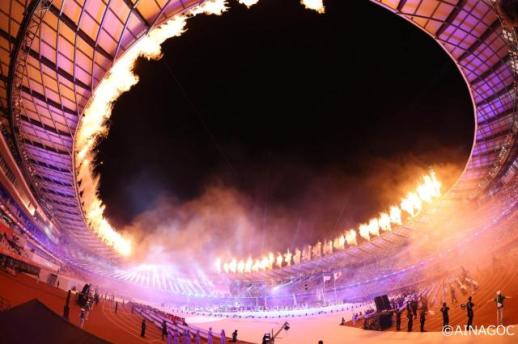 Big on scale, Asian Games competes for divided attention SEOUL, September 30 (AJP) - Takuya Enomoto knows the Asian Games are taking place in his country. He checks the results every day. Watching them is another matter. “I don't really have the time,” said Enomoto, a 33-year-old pharmacist in Japan. “It's not like the Olympics, where there's a lot of hype.” Busy with work, he rarely goes out of his way to watch an event live. Instead, he opens Yahoo once a day to check the scores. “That doesn't take that much time,” he said. His routine illustrates a challenge facing the Aichi-Nagoya Asian Games: an enormous sporting program competing for audiences who can follow the results without sitting through the competition. More than 11,000 athletes from 45 countries and regions are competing across 43 sports and 469 medal events. That exceeds the 32 sports and 329 events at the 2024 Paris Olympics, which brought together 10,813 athletes, although the Olympics had a much broader geographic reach, with more than 200 national Olympic committees represented. The Asian Games has no shortage of scale. Whether that translates into sustained attention is a different question. In South Korea, a Korea Broadcast Advertising Corp. survey of 2,000 adults aged 20 to 64 conducted before the Games found that 73.4 percent intended to watch. Their viewing plans suggested several ways of keeping up. Among prospective viewers, 71.6 percent selected live broadcasts, while 45.4 percent chose highlights and 22 percent short-form content. Respondents could select more than one option. Interest can also be confined to particular sports. Kim Ji-young, a 29-year-old Daegu resident who studied physical education and works at the Daegu Sports Association for the Disabled, said she rarely watches the Games despite working in sports. “Even though I majored in physical education, I don't really watch it,” she said. She did seek out table tennis and weightlifting. “If it's not a sport I'm interested in, I don't really go looking for it,” Kim said. She sees similar habits among colleagues. “They look up the Asian Games when it involves their own sport,” she said. “But they don't seem particularly interested in the rest.” South Korea's medal haul has provided plenty to follow. As of 1:20 p.m. Wednesday, the country ranked third with 24 gold, 28 silver and 45 bronze medals, for a total of 97. China led with 143 gold medals, followed by host Japan with 45. South Korea entered the Games targeting roughly 45 gold medals and third place overall. Some contests still attract a substantial television audience. South Korea's women's basketball final against Japan drew a 10.0 percent household rating on KBS1 in the Seoul metropolitan area, according to Nielsen Korea. It was the second-most-watched terrestrial television program of the week. The match combined a national team, a familiar rival and a gold medal at stake. Its audience showed the drawing power of a major final, though that interest does not necessarily extend across the wider program. The Asian Games also occupies a different place from the Olympics in South Korea's sporting establishment — a distinction reflected in the country's financial rewards for elite athletes. Under the performance-based reward scheme commonly described as an athlete's “pension,” competitors accumulate points from designated international events. An Asian Games gold medal earns 10 points, compared with 90 for an Olympic gold. Silver and bronze medals earn two and one points at the Asian Games, against 70 and 40 at the Olympics. Monthly payments generally begin at 300,000 won once an athlete accumulates 20 points and rise to a maximum of 1 million won. Olympic champions receive the maximum under a special provision. A first-time Asian Games champion with no previous points therefore does not qualify for monthly payments on the strength of one gold medal alone. A champion who remains below the threshold can instead receive a special one-time payment of 4.5 million won, while continuing to accumulate points toward future monthly benefits. The system does not measure a medal's meaning to an athlete or its appeal to viewers. It does, however, show the different institutional weight assigned to the two competitions. For some spectators, more immediate concerns have discouraged them from watching. Yoo Hee-sun, a 28-year-old nurse living in Gangwon Province, said organizational problems surrounding this year's Games had dampened her interest. “There were problems in so many areas that I just didn't feel like watching,” she said. Yoo cited the mistaken playing of North Korea's national anthem before South Korea's men's hockey match against Bangladesh, along with reports of accommodation and transportation problems affecting Korean athletes. Organizers faced pressure after about 17,000 athletes and officials arrived, roughly 2,000 more than initially projected. Accommodation was spread across hotels, a cruise ship and temporary lodging rather than concentrated in a traditional athletes' village. Athletes complained about cramped rooms, beds and transportation, while South Korea moved its men's basketball team to a regular hotel. The anthem error before the Sept. 18 hockey match prompted a formal protest and an apology. “I was really disappointed by all of that,” Yoo said. “People are busy trying to make a living,” she said. “And if it's not entertaining, you end up not watching.” Those individual experiences do not establish a broad decline in interest. Ticket sales suggest substantial demand, even if it is unevenly distributed. More than 1 million tickets had been sold by Sept. 28. Sales exceeded 60 percent of available tickets for the opening ceremony and 35 of the 41 ticketed sports. The ceremony and 17 sports had sold more than 90 percent. Empty seats still were visible at events including badminton, gymnastics and aquatics, underscoring the difference between strong aggregate sales and attendance at individual sessions. The Asian Games can still draw a crowd for a compelling final. Sustaining that interest across hundreds of events is harder when viewers can follow their favorite sports and leave the rest to the highlights. AJP Takeaways - The Aichi-Nagoya Asian Games has more sports and medal events than the Paris Olympics, but scale alone does not guarantee sustained viewing. - A South Korean survey found strong interest in watching, with audiences planning to combine live coverage, highlights and short-form content. - Major finals can still attract large audiences, while interviews suggest some viewers follow only their preferred sports. - Ticket sales exceeded 1 million by Sept. 28, although attendance varied across events. 2026-09-30 17:49:33
 -
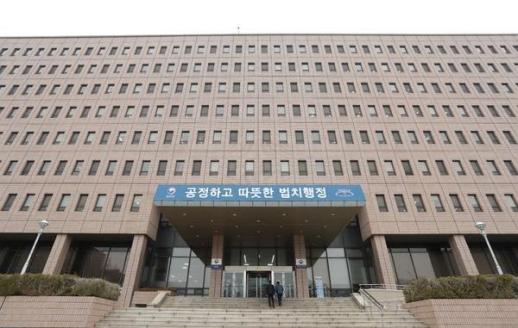 Korea beats Dayyani family's 770 billion won claim SEOUL, September 30 (AJP) - An international arbitration tribunal has thrown out a 770 billion won ($545.7 million) claim that an Iranian family brought against South Korea over late payment of an earlier award, the Ministry of Justice said Wednesday, adding to a string of government wins in high-stakes investment disputes. The case grew out of a collapsed takeover. In 2010, the Dayyani family, which controls Iranian appliance and petrochemical group Entekhab, agreed to buy struggling South Korean appliance maker Daewoo Electronics and paid a 57.8 billion won deposit. Creditors canceled the deal the following year and kept the deposit. The family challenged the forfeiture through investor-state dispute settlement, an arbitration process that lets foreign investors sue host governments for alleged treaty breaches, and won in 2018. South Korea was ordered to pay about 73 billion won plus interest, but U.S. sanctions on Iran held up the payment. In October 2021, the family filed a second claim arguing that the delay violated the bilateral investment treaty between the two countries. The tribunal unanimously rejected that claim on Sept. 28. It ordered the family to pay about 4 billion won, or 75 percent of South Korea's legal costs, along with about 800 million won in arbitration expenses. The claim initially sought about 1.26 trillion won before the family reduced it to roughly 770 billion won. The tribunal found the delay justified. Under U.S. sanctions, the payment first needed approval from the U.S. Treasury Department's Office of Foreign Assets Control, which enforces those sanctions. The tribunal also rejected the family's argument that the process discriminated against Iranian investors. South Korea eventually paid about 62.2 billion won of the 85.8 billion won it owed and deposited the remaining 23.6 billion won under a domestic court order. The ruling is the latest in a run of investor-state dispute settlement (ISDS) victories for South Korea. In November 2025, the government won an annulment proceeding against U.S. private equity firm Lone Star Funds, erasing about 400 billion won in liability tied to its sale of Korea Exchange Bank. In February, a British court sided with South Korea in its challenge to a roughly 160 billion won award won by U.S. hedge fund Elliott Management and sent the case back to arbitration. In March, South Korea defeated a 325 billion won claim from Swiss elevator maker Schindler and recovered about 9.6 billion won in legal costs. That award became final this week after Schindler let the deadline pass without seeking to set it aside in a Paris court. Earlier this month, South Korea also won an annulment proceeding brought by Chinese investor Min Fengzhen, upholding a 2024 ruling that rejected his claim of about 264.1 billion won. The Entekhab link, the 57.8 billion won deposit, the 2011 cancellation and the October 2021 filing were not in the junior's copy. They come from Korean media coverage of the ministry briefing, so check them against the release before publishing. AJP Takeaways - Korea defeated the Dayyani family's 770 billion won second ISDS claim. - The tribunal ordered the claimants to pay about 4.8 billion won in legal and arbitration costs. - The ruling follows favorable outcomes involving Lone Star, Elliott, Schindler and Fengzhen Min. 2026-09-30 14:49:56
 -
 Melon Music Awards expands to two days for first time SEOUL, September 30 (AJP) - Melon Music Awards will expand to a two-day event for the first time in its 18 year history, Kakao Entertainment said Wednesday. The upcoming award will be held at Gocheok Sky Dome on Nov. 14 and 15 under the theme "K-POP CONNECT: The New Pulse." The expanded format will bring together acts including NCT 127, NCT DREAM, ATEEZ, TWS, ILLIT, Hearts2Hearts, 82MAJOR, AND2BLE, YENA and RESCENE. Kakao Entertainment will also introduce a new "Global TOP 10" award linked to Melon's recently launched Global-K Chart, which incorporates listening data from Korea, China and Japan. The move adds an international component to an awards system traditionally centered on Melon streaming data and fan voting. Among the announced performers, NCT 127 is marking its 10th anniversary this year, while ATEEZ reached No. 1 on the Billboard 200 with its latest album. TWS recorded its first million-selling release this year, according to Kakao Entertainment. Japanese streaming platform U-NEXT will livestream both days of MMA2026 in Japan. AJP Takeaways - MMA will run for two days for the first time in its 18-year history. - The ceremony will take place Nov. 14-15 at Gocheok Sky Dome in Seoul. - A new "Global TOP 10" award will reflect Melon's Global-K Chart. 2026-09-30 11:09:54