

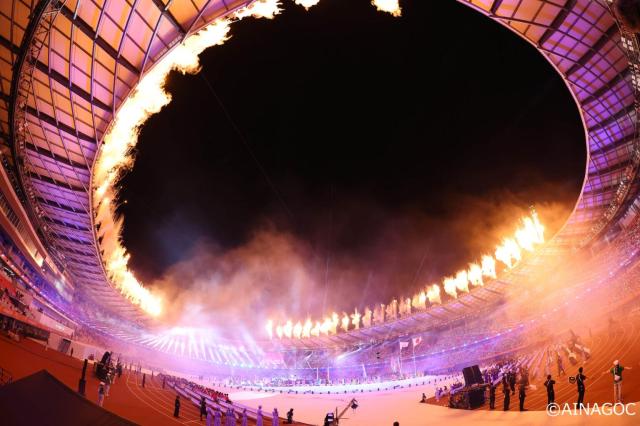
SEOUL, September 30 (AJP) - Takuya Enomoto knows the Asian Games are taking place in his country. He checks the results every day.
Watching them is another matter.
“I don't really have the time,” said Enomoto, a 33-year-old pharmacist in Japan. “It's not like the Olympics, where there's a lot of hype.”
Busy with work, he rarely goes out of his way to watch an event live. Instead, he opens Yahoo once a day to check the scores.
“That doesn't take that much time,” he said.
His routine illustrates a challenge facing the Aichi-Nagoya Asian Games: an enormous sporting program competing for audiences who can follow the results without sitting through the competition.
More than 11,000 athletes from 45 countries and regions are competing across 43 sports and 469 medal events. That exceeds the 32 sports and 329 events at the 2024 Paris Olympics, which brought together 10,813 athletes, although the Olympics had a much broader geographic reach, with more than 200 national Olympic committees represented.
The Asian Games has no shortage of scale. Whether that translates into sustained attention is a different question.
In South Korea, a Korea Broadcast Advertising Corp. survey of 2,000 adults aged 20 to 64 conducted before the Games found that 73.4 percent intended to watch.
Their viewing plans suggested several ways of keeping up. Among prospective viewers, 71.6 percent selected live broadcasts, while 45.4 percent chose highlights and 22 percent short-form content. Respondents could select more than one option.
Interest can also be confined to particular sports.
Kim Ji-young, a 29-year-old Daegu resident who studied physical education and works at the Daegu Sports Association for the Disabled, said she rarely watches the Games despite working in sports.
“Even though I majored in physical education, I don't really watch it,” she said.
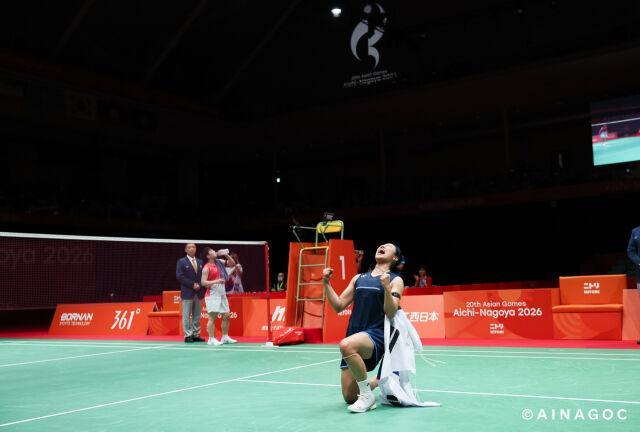
She did seek out table tennis and weightlifting.
“If it's not a sport I'm interested in, I don't really go looking for it,” Kim said.
She sees similar habits among colleagues.
“They look up the Asian Games when it involves their own sport,” she said. “But they don't seem particularly interested in the rest.”
South Korea's medal haul has provided plenty to follow. As of 1:20 p.m. Wednesday, the country ranked third with 24 gold, 28 silver and 45 bronze medals, for a total of 97. China led with 143 gold medals, followed by host Japan with 45.
South Korea entered the Games targeting roughly 45 gold medals and third place overall.
Some contests still attract a substantial television audience.
South Korea's women's basketball final against Japan drew a 10.0 percent household rating on KBS1 in the Seoul metropolitan area, according to Nielsen Korea. It was the second-most-watched terrestrial television program of the week.
The match combined a national team, a familiar rival and a gold medal at stake. Its audience showed the drawing power of a major final, though that interest does not necessarily extend across the wider program.
The Asian Games also occupies a different place from the Olympics in South Korea's sporting establishment — a distinction reflected in the country's financial rewards for elite athletes.
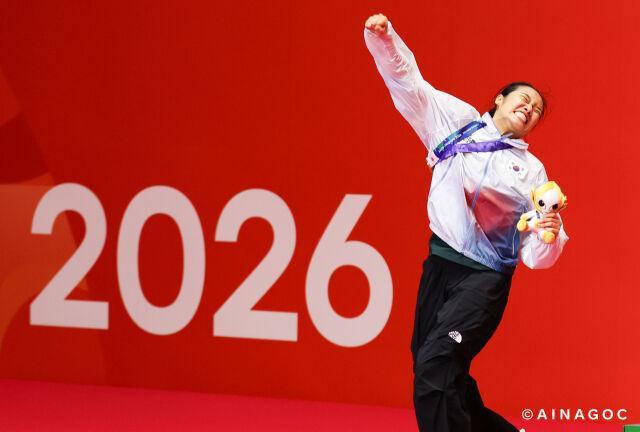
Under the performance-based reward scheme commonly described as an athlete's “pension,” competitors accumulate points from designated international events. An Asian Games gold medal earns 10 points, compared with 90 for an Olympic gold. Silver and bronze medals earn two and one points at the Asian Games, against 70 and 40 at the Olympics.
Monthly payments generally begin at 300,000 won once an athlete accumulates 20 points and rise to a maximum of 1 million won.
Olympic champions receive the maximum under a special provision.
A first-time Asian Games champion with no previous points therefore does not qualify for monthly payments on the strength of one gold medal alone. A champion who remains below the threshold can instead receive a special one-time payment of 4.5 million won, while continuing to accumulate points toward future monthly benefits.
The system does not measure a medal's meaning to an athlete or its appeal to viewers. It does, however, show the different institutional weight assigned to the two competitions.
For some spectators, more immediate concerns have discouraged them from watching.
Yoo Hee-sun, a 28-year-old nurse living in Gangwon Province, said organizational problems surrounding this year's Games had dampened her interest.
“There were problems in so many areas that I just didn't feel like watching,” she said.
Yoo cited the mistaken playing of North Korea's national anthem before South Korea's men's hockey match against Bangladesh, along with reports of accommodation and transportation problems affecting Korean athletes.
Organizers faced pressure after about 17,000 athletes and officials arrived, roughly 2,000 more than initially projected. Accommodation was spread across hotels, a cruise ship and temporary lodging rather than concentrated in a traditional athletes' village.
Athletes complained about cramped rooms, beds and transportation, while South Korea moved its men's basketball team to a regular hotel.
The anthem error before the Sept. 18 hockey match prompted a formal protest and an apology.
“I was really disappointed by all of that,” Yoo said.
“People are busy trying to make a living,” she said. “And if it's not entertaining, you end up not watching.”
Those individual experiences do not establish a broad decline in interest. Ticket sales suggest substantial demand, even if it is unevenly distributed.
More than 1 million tickets had been sold by Sept. 28.
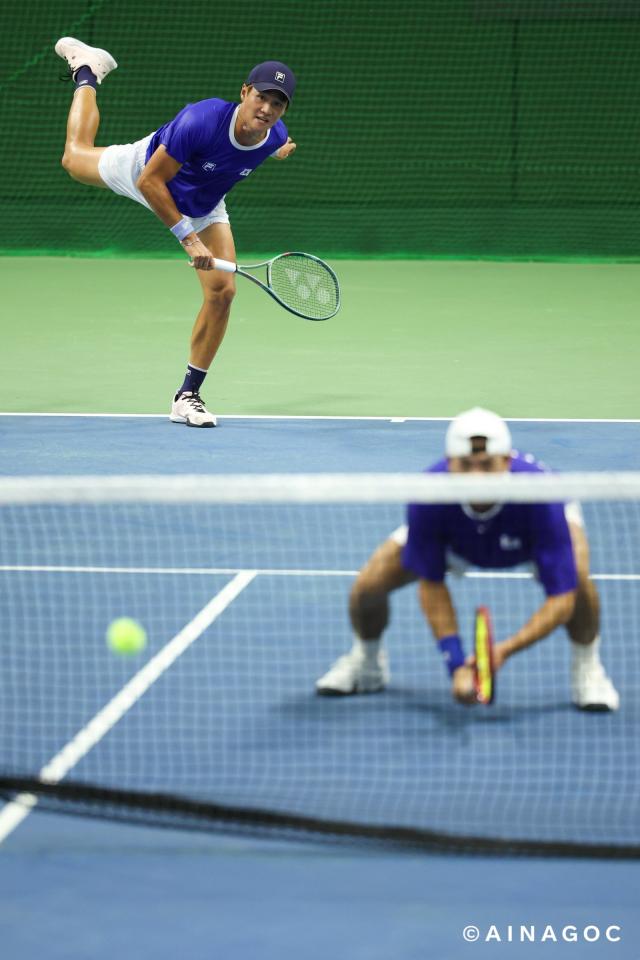
Sales exceeded 60 percent of available tickets for the opening ceremony and 35 of the 41 ticketed sports. The ceremony and 17 sports had sold more than 90 percent.
Empty seats still were visible at events including badminton, gymnastics and aquatics, underscoring the difference between strong aggregate sales and attendance at individual sessions.
The Asian Games can still draw a crowd for a compelling final. Sustaining that interest across hundreds of events is harder when viewers can follow their favorite sports and leave the rest to the highlights.
AJP Takeaways
- The Aichi-Nagoya Asian Games has more sports and medal events than the Paris Olympics, but scale alone does not guarantee sustained viewing.
- A South Korean survey found strong interest in watching, with audiences planning to combine live coverage, highlights and short-form content.
- Major finals can still attract large audiences, while interviews suggest some viewers follow only their preferred sports.
- Ticket sales exceeded 1 million by Sept. 28, although attendance varied across events.

Copyright ⓒ Aju Press All rights reserved.
