

Journalist

Joonha Yoo유준하
joonhayoo94@ajupress.com
ReporterCOEX Sejong Center for the Performing Arts & Music, Culture, Entertainment, Automotive
Joonha Yoo is a bilingual journalist at AJU Press (AJP), covering music, culture, entertainment and Korea’s automotive industry.
Raised in Fort Collins, Colorado, he often writes from the scene, bringing firsthand detail to stories ranging
from BTS comeback concerts to unique cultural events that catch the world's eye. "I write from the scene, not from the sidelines."
Raised in Fort Collins, Colorado, he often writes from the scene, bringing firsthand detail to stories ranging
from BTS comeback concerts to unique cultural events that catch the world's eye. "I write from the scene, not from the sidelines."
Latest by Joonha Yoo
-
 Super Junior's Yesung marks 10 solo years with new album SEOUL, October 06 (AJP) - Super Junior member Yesung will release his second full-length album "Where We Are" at 6 p.m. Tuesday, marking the 10th anniversary of his solo career, SM Entertainment said. "Where We Are" includes lead single "Pedazos," a modern rock track whose title means "pieces" in Spanish. Yesung wrote lyrics for nine of the album's songs and co-composed one track. The album marks his first full-length Korean release since his solo debut in 2016 and follows his sixth EP "It's Complicated," released in November 2024. Yesung will follow the album with an eight-city Asian tour, beginning with three concerts at KBS Arena in Seoul from Oct. 16 to 18. Reflecting on the milestone, the singer said he hopes to continue making music rather than define his solo career around a single sound. AJP Takeaways - Yesung released his second studio album on his 10th solo anniversary year. - The album contains 12 tracks. - He wrote lyrics for nine songs and co-composed one. 2026-10-06 15:35:44
-
 WayV's Xiaojun to make solo debut with 'Hey, Somebody' SEOUL, October 06 (AJP) - K-pop boy group WayV member Xiaojun will make his solo debut later this month with his first EP "Hey, Somebody," SM Entertainment said Tuesday. The five-track album will be released at noon on Oct. 26 and will include both Mandarin and English versions of its title track. Xiaojun has previously released collaborations, featured on other artists' music and recorded drama soundtracks, but "Hey, Somebody" will mark his first solo album. The release comes as WayV carries out its third concert tour, "BORN THIS Way." The group performed in Hangzhou on Monday and is scheduled to play Chengdu on Wednesday. The physical edition of the EP will also be released Oct. 26. AJP Takeaways - Xiaojun will make his solo debut on Oct. 26. - "Hey, Somebody" contains five tracks. - The title song will be released in Mand 2026-10-06 15:35:36
-
 Hearts2Hearts joins Primavera Sound 2027 as only K-pop act SEOUL, October 06 (AJP) - K-pop girl group Hearts2Hearts will perform at Spain's Primavera Sound next year as the only K-pop act on the festival's announced 2027 lineup, SM Entertainment said Tuesday. The girl group will appear during the Barcelona festival's main program from June 3 to 5 at Parc del Fòrum. Primavera Sound, launched in 2001, has grown into one of Europe's major multi-genre music festivals. The appearance adds another overseas festival to Hearts2Hearts' schedule after performances at iHeartRadio Wango Tango in Los Angeles and Indonesia's Lalala Festival in 2025. Hearts2Hearts also released a Korean-language version of its Japanese debut single "ICONIC HEART" on Monday. AJP Takeaways - Hearts2Hearts will perform at Primavera Sound Barcelona in June 2027. - The group is the only K-pop act in the lineup announced so far. - The booking follows festival appearances in the United States and Indonesia. 2026-10-06 13:03:17
-
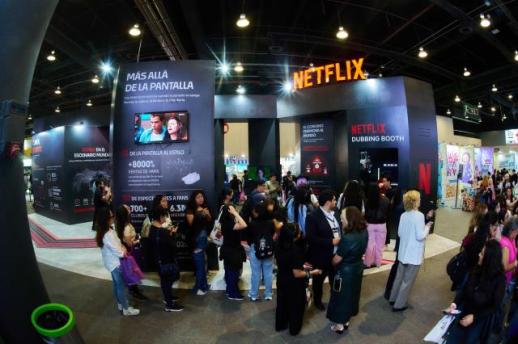 Three in 4 K-content viewers want to visit Korea SEOUL, October 06 (AJP) - Nearly three in four K-content viewers surveyed across eight countries said they wanted to visit South Korea, suggesting interest in Korean shows is extending beyond the screen into travel and cultural experiences, Netflix said Tuesday. The survey, commissioned by Netflix from research firm 2CV, covered more than 11,500 people. Netflix presented the findings at the 2026 K-Expo Mexico in Mexico City, where it also said dubbed versions accounted for more than 40 percent of global viewing of its Korean original unscripted shows. Netflix used the event to highlight what it calls the "Netflix Effect," or the spillover of Korean content into areas such as language learning, food, fashion and tourism. The company also focused on localization, including subtitles, dubbing, audio description and captions for deaf and hard-of-hearing viewers, as a way of carrying Korean stories into overseas markets. Localization is particularly important in Latin America, where dubbing is widely preferred over subtitles. Netflix said it treats dubbing as a "second production" aimed at preserving the tone, humor and cultural context of the original work. The Mexico event, held from Sept. 24 to 27, was the third and final K-Expo program Netflix joined this year with the Culture Ministry and Korea Creative Content Agency, following events in Los Angeles and Paris. Netflix and KOCCA have also jointly operated the "KOCCA x Netflix Production Academy" since 2024 to share production expertise and train local industry professionals. AJP Takeaways - Netflix survey shows 72% of K-content viewers wishing to visit Korea. - The Netflix-commissioned survey covered more than 11,500 people in eight countries. - Dubbed versions accounted for over 40% of global viewing of Korean original unscripted shows. 2026-10-06 11:21:38
-
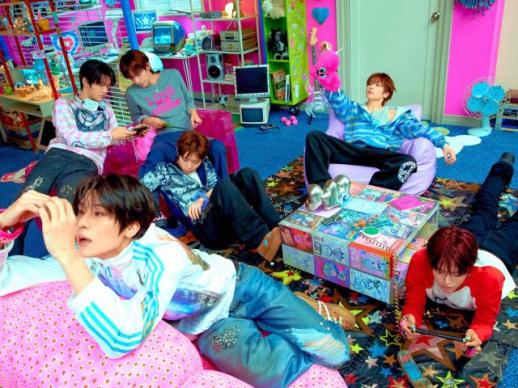 NCT WISH previews three tracks from upcoming EP 'I SPY' SEOUL, October 06 (AJP) - NCT WISH unveiled details of three tracks from its upcoming fourth EP "I SPY," expanding the six-track release across alternative pop, electronic and dance-pop sounds, SM Entertainment said Tuesday. The EP is scheduled for release on Oct. 12 and includes the title track "I SPY" alongside "We Own This Street," "UPGRADE" and "Super Major." "We Own This Street" is a hip-hop-based alternative pop track built around a heavy beat, while "UPGRADE" is an electronic uptempo song that continues the game-world concept introduced in "Videohood" from the group's third EP. "Super Major," meanwhile, is a pop dance track driven by bright synths and a fast tempo, with lyrics centered on pushing forward despite an uncertain future. The six-track EP will be released digitally at 6 p.m. on Oct. 12, with the physical album arriving the same day. AJP Takeaways - NCT WISH's fourth EP "I SPY" arrives Oct. 12. - The six-track album spans alternative pop, electronic and dance-pop. - "UPGRADE" continues the game-world theme from earlier track "Videohood." 2026-10-06 11:20:10
-
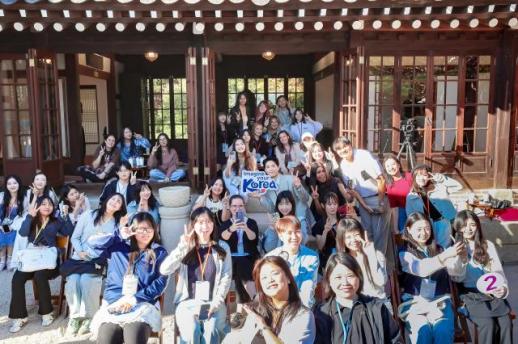 Discover Seoul takes a new dimension with sound journey with Park Bo-gum SEOUL, October 06 (AJP) -Discovering Seoul took on a new dimension as 100 foreign visitors from more than 20 countries explored the city through its everyday sounds alongside actor Park Bo-gum, the Korea Tourism Organization said Tuesday. The “Korea Sound Journey” took place Friday at Changgyeonggung Palace and Hwigyeomjae, a nearby traditional Korean house, where participants recorded and listened to the sounds surrounding the historic sites. The event expanded on "Begin to Hear Korea," the country's 2026 overseas tourism campaign released in July. The promotional video follows Park, who is serving his second year as an honorary tourism ambassador, as he travels across Korea in search of distinctive local sounds. Participants who were selected from over 2,300 people were required to take part in an online sound quiz hosted through the tourism organization's VISITKOREA YouTube channel. During the first program, visitors were divided into eight groups and walked through Changgyeonggung with professional sound guides, recording sounds they encountered along the way. Ten overseas influencers also joined the program and are expected to share their experiences on social media. Park later met participants at Hwigyeomjae, where they listened to the recordings and took part in a sound quiz and a discussion about traveling in Korea. He also shared stories from the filming of this year's tourism campaign. The tourism organization said the project is part of an effort to promote experiences built around Korea's atmosphere and everyday life, rather than sightseeing alone. AJP Takeaways - About 100 foreigners from more than 20 countries joined the Seoul event. - Participants were selected from over 2,300 applicants. - The program expands based on the Korea's 2026 tourism campaign "Begin to Hear Korea." 2026-10-06 11:19:42
-
 Foreign spending in Seoul jumps 60% as experience tourism grows SEOUL, October 06 (AJP) - Foreign tourists’ credit-card spending in Seoul jumped 60 percent against a 22 percent gain in visitor numbers in the first eight months of the year as K-beauty and experience-based tourism gained traction, the city government said Tuesday. Spending rose 59.9 percent to 7.78 trillion won from 4.87 trillion won a year earlier, while the estimated number of foreign visitors increased 21.6 percent to 11.56 million. Tourist spending thus grew at about 2.8 times the pace of visitor numbers. The eight-month total was already equivalent to about 98 percent of the 7.94 trillion won spent throughout 2025. August alone drew a record 1.72 million foreign visitors to the capital, up 23.3 percent from a year earlier. Their card spending climbed 58.1 percent to 1.03 trillion won, exceeding 1 trillion won for a fifth consecutive month. Shopping accounted for 46.6 percent of foreign card spending from January through August, followed by medical and wellness services at 23.8 percent, food and beverages at 13.2 percent and accommodation at 10.4 percent. Spending at major shopping malls jumped 77.5 percent, while medical tourism spending rose 64.2 percent and restaurant spending increased 59.5 percent. The gains extended beyond Seoul’s traditional tourist districts. Foreign card spending more than doubled in Seongsu and rose 74.7 percent in Myeong-dong. Spending around Dosan Park surged 240.1 percent, while Gwangjang Market recorded a 127.4 percent increase. Chinese visitors were the largest group in August at 636,000, followed by 322,000 from Japan and 188,000 from Taiwan. The three markets accounted for 66.4 percent of foreign visitors to Seoul that month. Seoul plans to expand nighttime tourism around Dongdaemun Design Plaza, Namsan, Gwanghwamun and the Han River to encourage longer stays and spread tourist spending to more local commercial districts. AJP Takeaways - Foreign tourist card spending in Seoul jumped 59.9% to 7.78 trillion won through August. - Visitor numbers rose a much smaller 21.6% to an estimated 11.56 million. - Eight-month spending already equaled about 98% of the entire 2025 total. 2026-10-06 10:21:37
-
 Chipflation hastens Korea's decline as a gaming powerhouse SEOUL, October 02 (AJP) - South Korea is on course to become the fourth country to reach $1 trillion in annual exports, powered by chips that accounted for nearly half its $121 billion in overseas shipments last month alone. But the boom comes with a cost for consumers. As memory makers devote more production capacity to the giant cloud operators and advanced processors driving the AI buildout, supplies for everyday electronics are tightening. The resulting price pressure has acquired a name: “chipflation.” Its effects are becoming visible at Yongsan Electronics Market in central Seoul, where vendors barely glance up at the occasional customer. “Window shopping is all we have these days,” one vendor said. Once Korea’s undisputed mecca for electronics shopping, Yongsan helped nurture the market for the graphics chips that made Nvidia a household name. Jensen Huang visited its merchants to pitch the company’s early products long before becoming one of the most powerful figures in technology. Today, much of the market’s old bustle survives only in memory. “Business is slow,” said the owner of a game shop. “Game consoles themselves have become so expensive. How can you expect people to keep coming?” “Even the customers who do come mostly just look around and leave.” The pressure on those shop counters begins far beyond Yongsan. The rapid expansion of AI infrastructure has sent demand soaring for high-bandwidth memory and other data-center products. Manufacturers are directing more advanced production capacity toward those markets, leaving consumer electronics makers competing for a tighter supply of memory. Research firm TrendForce expects conventional DRAM contract prices to rise another 10 to 15 percent quarter-on-quarter in the fourth quarter, while NAND flash prices are forecast to increase 15 to 20 percent. Suppliers continue to favor high-performance server products as AI demand keeps the broader memory market undersupplied. Morgan Stanley warned in June that this inflationary pressure was spreading beyond data centers into the wider economy. Electronics manufacturers face a familiar but increasingly difficult choice: absorb higher component costs or pass them on to customers who may decide to postpone a purchase. For gamers, one of the most visible examples sits on Yongsan’s store shelves. Sony’s standard PlayStation 5 now carries a recommended Korean retail price of 948,000 won, or about $700, compared with 628,000 won at its November 2020 launch. The digital edition costs 858,000 won, up from 498,000 won. The latest prices took effect May 1. That puts the standard console’s price about 51 percent above its launch level and the digital edition more than 72 percent higher. Sony attributed its latest increase to persistent pressure across the global economic environment. The company did not assign the increase solely to memory costs, but the price tags illustrate the growing expense of a hobby long associated with falling hardware costs and improving performance. For Han Sang-il, a 31-year-old office worker who lives in Itaewon, the calculation has become personal. Han regularly visits Yongsan during his lunch break to check game prices and consider whether to upgrade his PC. Increasingly, however, he comes to browse. “Graphics cards have become so expensive, and consoles are expensive as well,” he said. “AI has made some parts of life more convenient, but for someone like me whose hobby is gaming, it almost feels like bad news. Technology is advancing so quickly, but it also feels like everything has become more expensive.” Han increasingly buys used games, although even the secondhand market no longer feels particularly cheap. He hopes to replace his console ahead of a game’s release in November, but a PlayStation approaching 1 million won gives him pause. “A PlayStation being around 1 million won is a burden,” he said. “So I end up mostly just looking.” Merchants say that hesitation persists even when cheaper alternatives are available. “We still bring in the new products even if there aren’t many people,” the game-shop owner said. “But even used products are something people hesitate to buy now.” The rising cost of hardware comes as South Korea’s gaming industry is already losing some of its earlier momentum. Industry revenue grew 3.9 percent to 23.85 trillion won in 2024, according to the Korea Creative Content Agency, or KOCCA. That was well below the 21.3 percent surge recorded in 2020. Overseas sales accounted for nearly half the total, at $8.5 billion. At home, the gaming audience has also narrowed. A KOCCA survey found that 50.2 percent of South Koreans aged 10 to 69 played games last year, down from 74.4 percent in 2022. For foreign visitors drawn by Yongsan’s reputation, the quiet can be as surprising as the prices. Dominica Romaz, a 55-year-old homemaker from Mexico, came looking for a birthday present for her son, who had asked for a game console. She had heard Seoul had a huge electronics market and wanted to see it for herself. A merchant typed prices into a calculator to bridge the language gap. Romaz said communication was manageable and she did not feel sellers were deliberately charging her more because she was a foreigner. The prices themselves were another matter. “I don’t think I’ll buy it in Korea,” she said. Used game discs seemed more reasonable, with some selling for around $20 depending on the title. But an original Game Boy carrying a 180,000 won price tag surprised her. So did the lack of shoppers. “I expected there to be a lot of people,” Romaz said. “It was surprisingly clean and comfortable, but I was surprised that a place selling so many things had so few people.” Outside the gaming shops, merchants described much the same pattern. “Everything is difficult these days,” said the owner of a store selling cameras, lenses and audio equipment. “People come, look, touch things and say they are interesting, and then leave.” Weekends bring more foreign visitors, the merchant said, though their presence does not necessarily translate into sales. “There are actually quite a lot of foreigners on weekends,” the owner said. “But rather than buying something, it feels like they come because Yongsan Electronics Market is big and famous. It feels more like sightseeing.” “On weekdays, as you can see, it can be really empty. There are days when not even one person comes in.” Yongsan’s troubles long predate the latest surge in memory prices. Online shopping steadily eroded its advantage as a place where customers could compare prices from store to store and assemble a computer component by component. Aging buildings and redevelopment have further unsettled the district. Chipflation adds another obstacle to persuading visitors to become buyers. There is a further irony in the market’s predicament: AI is also central to the plans for its revival. In June, Yongsan district announced that Seoul had approved a development promotion plan covering 290,325 square meters around the electronics market. Approved in late May, the plan aims to cultivate AI and information and communications technology businesses through startup spaces, corporate support facilities and industry programs. A separate project at the Najin Shopping Center’s buildings 17 and 18 aims to begin construction in 2027 and complete an AI and ICT business complex in 2030. The district that once helped put graphics cards into Korean homes is preparing for a new role in the AI economy. For the merchants still behind its counters, the more immediate concern is whether the next visitor will buy anything. 2026-10-02 15:52:02
-
 TWICE's Nayeon teams up with Brazilian DJ Alok SEOUL, October 02 (AJP) - TWICE member Nayeon teamed up with Brazilian DJ Alok for a new dance-pop single released Friday, JYP Entertainment said. "Bye Bye Inhibitions" combines Alok's electronic production with Nayeon's vocals and was released worldwide at midnight in each market. The track was first previewed during Alok's set at Brazil's Rock in Rio festival in September, where he played the song featuring Nayeon's recorded vocals. The collaboration adds another overseas project to Nayeon's solo activities outside TWICE. She recently opened her own YouTube channel following the release of the group's 10th-anniversary album. TWICE will hold three fan events on Oct. 17 to mark the group's 11th anniversary. AJP Takeaways - Nayeon and Brazilian DJ Alok released "Bye Bye Inhibitions" on Oct. 2. - The track was previewed at Rock in Rio in September. - TWICE will mark its 11th anniversary with fan events on Oct. 17. 2026-10-02 15:51:42
-
 Hyundai, Kia set U.S. sales record SEOUL, October 02 (AJP) - Hyundai Motor and Kia posted record U.S. sales in the third quarter as hybrid deliveries jumped more than 50 percent. Hyundai, Genesis and Kia sold a combined 506,200 vehicles from July through September, up 5.4 percent from a year earlier. Hyundai and Genesis together sold 269,541 vehicles, while Kia delivered 236,659. Hybrid models were the main growth engine. Combined hybrid sales rose 53.4 percent to a record 138,112 units, while electric vehicle sales fell 51 percent to 22,311. Electrified models, including hybrids and EVs, accounted for 31.6 percent of the group's U.S. sales during the quarter. The results could also lift Hyundai Motor Group above Ford in quarterly U.S. sales. Cox Automotive had forecast Hyundai Motor Group to finish the quarter ahead of Ford, while General Motors and Toyota were expected to remain the two largest sellers. Ford had yet to report its final September sales. Cox Automotive Inc. The record quarter came as Hyundai unveiled the next-generation Tucson in New York on Wednesday, placing one of its best-selling SUVs at the center of a broader North American expansion. Tucson was Hyundai's top-selling model in the U.S. during the third quarter with 64,075 units. Since its 2004 debut, the nameplate has sold more than 11.1 million vehicles worldwide, with the U.S. accounting for about one-fifth of the total, according to Hyundai. Hyundai Motor Group Hyundai plans to launch or refresh more than 100 vehicles globally by 2030, including 58 in North America, more than in any other region. The lineup will include the new Tucson and Tucson Hybrid. Hyundai The redesigned Tucson is larger than its predecessor and will offer Hyundai's next-generation hybrid system. It will also become the company's first SUV to use Pleos Connect, an Android Automotive-based infotainment system that includes its Gleo AI voice agent. Hyundai Hyundai will launch the new Tucson in Korea later this year, followed by North America and Europe in 2027. A separate sport-oriented version will be unveiled at the Paris Motor Show on Oct. 12. Hyundai Motor Group AJP Takeaways - Hyundai, Genesis and Kia sold a record 506,200 vehicles in the U.S. in the third quarter. - Hybrid sales jumped 53.4 percent to 138,112 units, while EV sales fell 51 percent. - Cox Automotive expects Hyundai Motor Group to finish the quarter ahead of Ford. 2026-10-02 15:51:32