
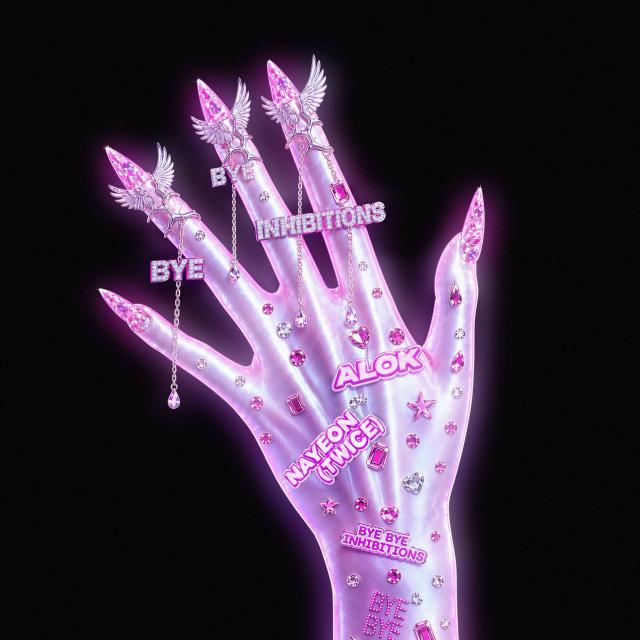
SEOUL, October 02 (AJP) - TWICE member Nayeon teamed up with Brazilian DJ Alok for a new dance-pop single released Friday, JYP Entertainment said.
"Bye Bye Inhibitions" combines Alok's electronic production with Nayeon's vocals and was released worldwide at midnight in each market.
The track was first previewed during Alok's set at Brazil's Rock in Rio festival in September, where he played the song featuring Nayeon's recorded vocals.
The collaboration adds another overseas project to Nayeon's solo activities outside TWICE. She recently opened her own YouTube channel following the release of the group's 10th-anniversary album.
TWICE will hold three fan events on Oct. 17 to mark the group's 11th anniversary.
AJP Takeaways
- Nayeon and Brazilian DJ Alok released "Bye Bye Inhibitions" on Oct. 2.
- The track was previewed at Rock in Rio in September.
- TWICE will mark its 11th anniversary with fan events on Oct. 17.

Joonha Yoo
Joonha Yoo is a bilingual journalist at AJU Press (AJP), covering music, culture, entertainment and Korea’s automotive industry.
Raised in Fort Collins, Colorado, he often writes from the scene, bringing firsthand detail to stories ranging
from BTS comeback concerts to unique cultural events that catch the world's eye.
Copyright ⓒ Aju Press All rights reserved.
Related News
-
 TWICE's Nayeon reveals tracklist for solo comeback
The tracklist for TWICE member Nayeon's upcoming solo single "NA-sty" features three songs, including the title track "BABY ANGEL" and "SHiVER," which she helped write and compose. The single is scheduled for release on Nov. 20, 2026. Courtesy of JYP Entertainment. SEOUL, November 09 (AJP) - K-pop girl group TWICE's Nayeon has unveiled the three-track lineup for her upcoming solo single "NA-sty," JYP Entertainment said Monday. The single, scheduled for release on Nov. 20, features the title track "BABY ANGEL" alongside "SHiVER" and "BOY." "BABY ANGEL" was created with contributions from Shim Eun-jee, previously known for works such as TWICE's "YES or YES," "KNOCK KNOCK" and "I CAN'T STOP ME," and Trey Campbell, known for his work with American R&B singer GIVĒON. Nayeon took part in writing and composing "SHiVER" alongside producer JULiA LEWiS, whose credits include work with Grammy-winning artist Bad Bunny. Rapper Lil Cherry also contributed to the project. The upcoming release marks Nayeon's first solo music in two years and five months, following her second mini-album "NA" in June 2024, which featured the title track "ABCD." She made her solo debut in 2022 with "POP!" Ahead of the release, JYP has rolled out teaser content, including an introductory film featuring a mysterious figure appearing on digital screens and concept images with feathers, monitors and other objects. "NA-sty," a title combining references to Nayeon's name and personal style, is set for release at 2 p.m. on Nov. 20.
-
 Proposal to Suspend Operations for Companies Engaging in Collusion Twice in Five Years
Measures are being proposed to suspend operations or revoke registrations for businesses that engage in collusion more than twice within five years. The statute of limitations for collusion will be extended to a maximum of 15 years, and the legal basis for price re-determination orders will be strengthened to correct market prices distorted by collusion.On September 28, the government and the Democratic Party of Korea held a meeting at the National Assembly to announce a legislative initiative aimed at eradicating repeated collusion. The initiative includes five legislative tasks grouped into three areas: strengthening deterrence against collusion, increasing detection rates, and enhancing the effectiveness of corrective measures.The government emphasizes the need for significant reforms, stating that repeated collusion not only increases the burden on the public but also undermines incentives for innovation and economic growth. At the meeting, Fair Trade Commission Chairman Joo Byeong-ki remarked, "Collusion is a serious unfair practice that undermines the foundations of a market economy and exploits other economic entities for unjust gains," adding that it distorts prices in sectors closely related to the public, exacerbating the burden on citizens.He further noted, "If companies are only looking for opportunities to exploit and cheat rather than striving for success through technological development, innovation, and new business ventures, it could harm the health and growth potential of the national economy."In response, the government and the ruling party decided to introduce a system for suspending operations and revoking registrations for businesses involved in repeated collusion. Companies that have colluded more than twice in the past five years will be subject to sanctions that expand beyond fines to include restrictions on business activities and qualifications. The Fair Trade Commission will identify repeat offenders and request relevant ministries to impose registration cancellations or operational suspensions, which will be carried out according to individual laws.The targeted sectors include 17 industries closely related to public life, such as safety and health, energy, environment, and transportation. For four specific sectors—fire safety, electrical construction, power technology, and spatial information—legal grounds for registration cancellation and operational suspension will be established. The operational suspension system will be introduced for 13 sectors, including petroleum refining and sales, pharmaceutical manufacturing and import, passenger and freight transportation, waste management, and high-pressure gas manufacturing.The statute of limitations for collusion will also be extended. The limitation period for cases not yet investigated will increase from the current seven years to ten years from the end of the collusion act. The existing five-year limitation period from the start of an investigation will remain, extending the maximum period for possible sanctions from 12 years to 15 years.Monitoring of collusion in education sector bidding will be strengthened. Education offices will be designated as mandatory providers of bidding information to the Fair Trade Commission's Bid Rigging Indicator Analysis System (BRIAS). Since April of this year, bidding information for education office projects registered on the government procurement site has been linked with the cooperation of the Public Procurement Service, but legal grounds will be established for stable data acquisition.Additionally, the price re-determination order aimed at correcting prices distorted by collusion will be codified in the Fair Trade Act. Currently, the Fair Trade Commission issues price re-determination orders based on the provision for "other necessary corrective measures." This will be explicitly stated in the law to allow for price adjustments that restore competition to pre-collusion levels.The leniency program for self-reporting offenders will also be revised. While the core benefits of reduced fines and prosecution will be maintained, corrective measures, including price re-determination orders, will be excluded from the leniency benefits. This decision is based on the belief that measures to restore market order damaged by collusion should apply to all participants.The government and ruling party plan to promptly introduce amendments to the Fair Trade Act and 17 individual laws reflecting these measures. Chairman Joo emphasized, "We must pursue not only strict law enforcement but also significant institutional improvements," explaining that five legislative tasks, including the introduction of registration cancellation and operational suspension systems, have been prepared through close consultations with relevant ministries.He added, "If the direction of institutional improvement leads to swift legislation, it will contribute to the recognition that collusion is a risk factor threatening the survival of companies and help create a market where healthy competition operates."* This article has been translated by AI.
-
 Korean singles spend $83 per date, with men paying nearly twice as much
Image generated by AI SEOUL, September 12 (AJP) - A typical date costs unmarried South Koreans 115,000 won ($83), with men spending nearly twice as much as women, a survey showed Saturday, highlighting persistent differences between the sexes over who should pick up the bill. Men aged 25 to 39 reported spending an average 145,800 won per date, compared with 84,000 won for women, according to a survey of 506 unmarried adults conducted by matchmaking agency Gayeon. The gap amounted to 61,800 won per date. The survey also found that respondents did not consider an even split necessary. When asked what they considered an appropriate division of dating expenses on a 10-point scale, respondents put men's share at 5.96 and women's at 4.04 — roughly a 60-40 split. Money was not a source of friction for most respondents, with 55.7 percent saying they had never experienced conflict over dating expenses. Some 17.8 percent said they had, including 19.7 percent of men and 15.9 percent of women. Among those who reported conflicts, 37.8 percent cited one partner paying too little or nothing as the biggest source of disagreement. Differences in spending habits and preferences over dating activities followed at 34.4 percent, while 18.9 percent pointed to demands for an equal 50-50 split despite differences in income. Disagreements over the use of joint dating accounts accounted for 7.8 percent. Men and women, however, differed over what caused the most friction. Among male respondents who had experienced conflicts, 48 percent cited differences in spending habits or preferred dating activities as the biggest issue, followed by one partner contributing too little at 36 percent. Women were more concerned about how the bill itself was divided. Forty percent cited one partner paying too little or nothing as the main source of conflict, while 30 percent pointed to demands for an equal split despite differences in income. The findings suggest that disagreements over dating expenses extend beyond the amount each partner pays, reflecting differing expectations over spending, income and what constitutes a fair financial contribution in a relationship. "Men tended to express dissatisfaction over differences in preferences and values, such as spending habits and choices of dating activities, while women were more concerned with fairness in the actual division of expenses," a Gayeon official said. "Openly discussing spending habits and how expenses will be divided early in a relationship can help prevent conflicts," the official added. AJP Takeaways - Unmarried South Koreans aged 25 to 39 spend an average 115,000 won ($83) per date, according to a survey of 506 people by matchmaking agency Gayeon. - Men reported spending 145,800 won per date, compared with 84,000 won for women, while respondents viewed a roughly 60-40 split between men and women as an appropriate way to divide dating expenses. - Men who experienced money-related conflicts were most likely to cite differences in spending habits and dating preferences, while women were more likely to point to one partner contributing too little or demands for an equal split despite income differences.