

SEOUL, August 04 (AJP) - Cheap currencies, short flights and a growing fascination with each other's culture are bringing South Koreans and Japanese closer than at any time in decades, quietly reshaping one of Asia's most complicated relationships one weekend trip at a time.
For 23-year-old South Korean college student Kim Yi-hyun, the favorite destination over the past year has been Japan.
"As a student, I don't have much money," Kim said. "Japan is close, affordable and has so many things I like."
Across the Korea Strait, 33-year-old Tokyo resident Takuya Emonato has been making the journey in the opposite direction.
He has visited Seoul, Busan and Jeju and frequently travels to South Korea with his girlfriend for its nightlife, cosmetics and food. They are already planning another trip this winter for a ski holiday.
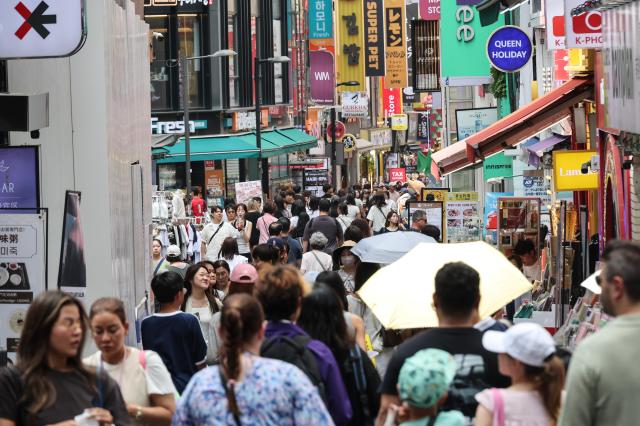
"Korea is fun, joyful and very lively," Emonato said. "A lot of places stay open late, and the cosmetics scene is crazy. My girlfriend goes wild."
Historical grievances have long defined relations between South Korea and Japan. Colonial-era disputes, wartime history and competing claims over the Dokdo islets still periodically inflame politics, while sporting contests often rekindle old rivalries.
Yet those tensions are increasingly absent from the travel experiences of younger generations, who are crossing the Korea Strait in record numbers.
Several forces have converged this year. Weak exchange rates have made travel more affordable on both sides, while higher fuel costs have pushed up long-haul airfares.
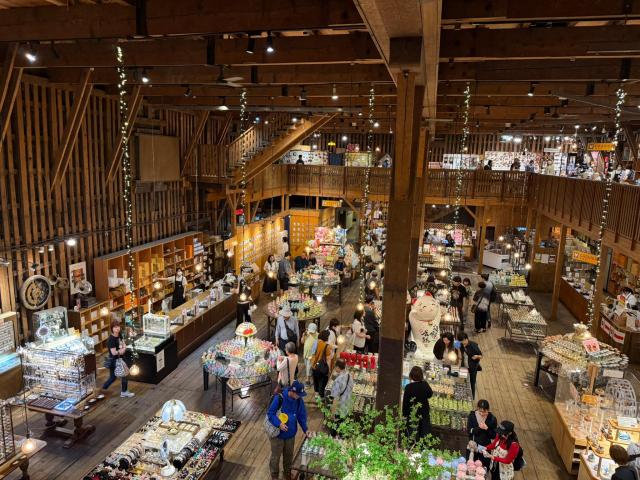
At the same time, Japan's shopping, food and anime culture and South Korea's K-pop, beauty products and nightlife have given young travelers more reasons than ever to cross the narrow stretch of sea separating the two countries.
To a growing share of younger people, the neighboring country is becoming less defined by politics and history than by restaurants, concerts, cosmetics, character stores and weekend getaways.

A Korea-Japan public opinion survey released Aug. 3 by the East Asia Institute and the International House of Japan found that 54.3 percent of South Koreans held a favorable view of Japan, the highest level since the survey began in 2013 and up from 52.4 percent a year earlier.
Japanese favorability toward South Korea remained lower but rose much more sharply, climbing 10.5 percentage points from 24.8 percent to 35.3 percent. The survey covered 3,099 adults in the two countries between July 17 and 21.
The figures do not show equal levels of affection. Only about one in three Japanese respondents viewed South Korea favorably. What stands out is that sentiment improved simultaneously on both sides.
A separate survey by Hankook Ilbo and Japan's Yomiuri Shimbun found that respondents aged 18 to 29 held the most favorable views of the other country in both nations, suggesting younger generations are driving much of the change.
The same poll also found relatively unfavorable views of South Korea among supporters of Japan's emerging right-wing parties, underscoring that the improvement is neither universal nor immune to political tensions.
The shift in sentiment has coincided with a tourism boom.
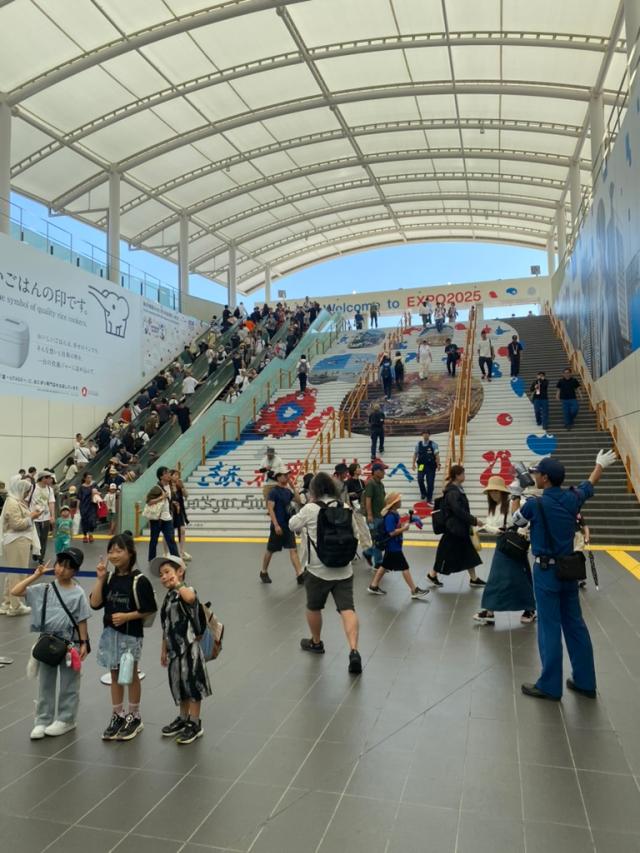
South Koreans made 5.68 million visits to Japan in the first half of 2026, up 18.6 percent from a year earlier and the largest number among all foreign visitors, according to the Japan National Tourism Organization.
Travel in the opposite direction is also rising. South Korea welcomed about 940,000 Japanese visitors in the first quarter, up 20.2 percent from a year earlier, according to the Ministry of Culture, Sports and Tourism.
Currency has helped fuel the trend, particularly for South Koreans. The cost of 100 yen briefly fell below 890 won in late July, reinforcing Japan's appeal as an inexpensive destination just a short flight away.
But exchange rates alone cannot explain why travelers keep returning.
Lee Hoon, a professor at Hanyang University's Graduate School of International Tourism, said travelers generally choose destinations in two stages.
Affordability, safety and cleanliness determine whether a country is considered a realistic destination, while food, culture, entertainment and distinctive neighborhoods determine whether people actually want to visit.
"Exchange rates and travel costs create the basis for choosing a country people can afford to visit," Lee said. "But a destination needs cultural content and tourism appeal to become somewhere people genuinely want to go."
Geography reinforces both factors. Neighboring countries naturally generate large tourism flows because they are easier and cheaper to reach, Lee said, pointing to travel among the United States, Canada and Mexico.
The recent acceleration between South Korea and Japan, however, is also being driven by younger travelers and growing Japanese interest in Korean culture.
BTS is one part of that attraction, Lee said, but only one element of a broader ecosystem that includes Korean music, food, cosmetics, television dramas and digital entertainment.
Both countries' reputations for safety, efficient public transportation and digital convenience have also made travel easier and more appealing for young visitors.
Kim initially chose Japan because it was close and affordable, but she kept returning for its character stores, food and sense of safety.
Although she had heard reports of Korean tourists facing hostility, she said she had never experienced it herself. Restaurant staff often handed her Korean-language menus after realizing where she was from, making her feel welcome.
Emonato recalled a similar experience in South Korea.
During one visit, his phone battery died while he was trying to find a railway station. A stranger walking in the opposite direction stopped, walked him to the station and recommended other places to visit along the way.
"I don't think he helped me because I spoke English," Emonato said. "I think he was just genuinely kind."
He also said he felt comfortable walking around Seoul late at night with his girlfriend because of the city's busy streets and visible police presence.

For Japanese consumers, South Korea has become synonymous with beauty products and digital entertainment.
Korean cosmetics accounted for 30.8 percent of Japan's imported cosmetics market in 2025, keeping South Korea in first place for a fourth consecutive year after overtaking France in 2022, according to the Japan Cosmetic Importers' Association. Korean brands captured 43.3 percent of Japan's imported skincare market.
Japan is also South Korea's largest overseas market for webtoons, accounting for 49.5 percent of exports, ahead of North America at 21 percent and Greater China at 13 percent, according to the Korea Creative Content Agency.
The numbers do not prove that tourism alone has improved public sentiment, nor do warmer opinion polls erase historical and territorial disputes that can quickly return to the center of bilateral relations.
But they do point to a quieter transformation beneath official diplomacy. Increasingly, young South Koreans and Japanese are discovering each other not through history textbooks or political rhetoric, but through weekend flights, cosmetics counters, anime shops, K-pop concerts, neighborhood restaurants and ordinary acts of kindness.
Sometimes the shortest distance between two countries is not measured in kilometers, but in curiosity.

Copyright ⓒ Aju Press All rights reserved.
