

Journalist

Candice Kim김혜준
candicekim1121@ajupress.com
ReporterSamsung Electronics, SK hynix, LG Electronics, Olive Young, Musinsa & Semiconductor, K-Beauty
Candice Kim is a dedicated business and technology reporter specializing in the intersection of high-tech innovation and fast-paced consumer trends. Her core beats span the semiconductor, IT, cosmetics, and retail sectors, where she provides in-depth coverage of industry titans including Samsung Electronics, SK hynix, and LG Electronics, alongside leading consumer brands like Olive Young and Musinsa. Whether analyzing complex silicon supply chains or tracking the latest shifts in beauty and fashion retail, Candice is committed to delivering sharp, accurate reporting that keeps readers informed on the forces shaping today's most dynamic markets.
"Connecting the dots from silicon chips to consumer shifts."
Latest by Candice Kim
-
 Foldables flip the script in Apple VS Samsung Round 2 SEOUL, September 10 (AJP) - Nineteen years ago, Apple's iPhone rewrote the rules of the mobile phone industry, forcing Samsung Electronics and other handset makers into a frantic race to catch up. Round two is unfolding with the roles reversed. Apple has unveiled the iPhone Duo, its first foldable smartphone, entering a form factor Samsung helped bring into the mainstream with the original Galaxy Fold in 2019. This time, Samsung is the incumbent and Apple the latecomer. The reversal sets up a new chapter in one of the technology industry's longest-running rivalries, with Apple challenging Samsung not in the conventional smartphone format it created but in a category the Korean company has spent years refining. At first glance, the resemblance is striking. The book-style iPhone Duo opens to a 7.6-inch inner display and has a 5.4-inch outer screen. Apple's device starts at $1,999. Samsung's Galaxy Z Fold8, unveiled in July and released in the United States in August, also has a 7.6-inch main display and a roughly 5.5-inch cover screen. It weighs 201 grams and starts at $1,899.99 in the United States. But Apple is unlikely to remain a minor newcomer for long. Counterpoint Research expects Apple to capture about 25 percent of global foldable smartphone shipments in 2026 despite entering the market late in the year, placing it second behind Samsung at 38 percent and ahead of Huawei at 22 percent. The projected jump is particularly notable because initial supply of the iPhone Duo is expected to be constrained, with Apple gradually increasing availability as production ramps up. For Samsung, the more immediate threat may be North America, one of its most important premium smartphone markets and Apple's home turf. Counterpoint earlier forecast Apple's share of North American foldables could reach 46 percent this year, while Samsung's share could fall to 29 percent from 51 percent in 2025. The region's overall foldable market is projected to expand 48 percent. Those numbers illustrate Apple's biggest weapon. Samsung has spent years improving foldable hinges, flexible OLED panels, durability and software built around larger screens. Apple, however, enters the category with an enormous installed base of premium iPhone users who previously had to leave the Apple ecosystem if they wanted a foldable phone. Counterpoint expects that ecosystem advantage to help Apple unlock pent-up demand among high-end iPhone users and take share from premium Android foldable makers. Samsung is hardly entering the battle from a position of weakness. Its global smartphone sales rose 9 percent from a year earlier during the week of Aug. 9-15, even as the overall smartphone market contracted 10 percent, helped by strong early demand for the Galaxy Z8 series. Sales of the Galaxy Z8 series during its first two weeks were 8 percent higher than those of the previous-generation Z7 lineup during the comparable launch period, according to Counterpoint. Samsung also has something Apple does not: seven years of commercial experience in a product category where early failures can be costly. The first Galaxy Fold encountered durability problems, but successive generations allowed Samsung to refine flexible displays, hinges, water resistance, multitasking and software interfaces long before Apple put a folding iPhone on sale. The question is whether that head start can outweigh Apple's ability to rapidly bring millions of existing iPhone users into the category. There is another possibility. Apple's arrival could make the market much bigger. Foldables remain a relatively small part of global smartphone sales despite years of development. Counterpoint expects cumulative foldable shipments to pass 100 million units by the end of this year, eight generations after the category emerged in 2019. Growth is expected to accelerate sharply next year. Counterpoint forecasts global foldable smartphone shipments will rise 37 percent in 2027, the fastest growth since 2022, helped by Apple's expansion, Samsung's latest Galaxy Z Fold devices and new models from other manufacturers. That makes Apple's entry a double-edged development for Samsung. The iPhone maker could strip Samsung of customers at the premium end, particularly in markets where consumers are already deeply tied to Apple's ecosystem. But Apple could also do what Samsung has so far struggled to accomplish on its own: turn folding phones from a specialist category into a mainstream premium device. Samsung could benefit from that expansion even when consumers buy an iPhone. Samsung Display, an affiliate of Samsung Electronics, is one of the world's leading makers of foldable OLED panels and stands to gain as Apple drives demand for premium folding displays. Counterpoint expects global foldable smartphone panel shipments to reach about 27.5 million units this year, up around 24 percent from 2025, while revenue is projected to surge about 48 percent to $4.4 billion. Apple's procurement ramp is one of the main drivers. Earlier Counterpoint research identified Samsung Display as a major beneficiary of Apple's entry and projected its share of foldable panel shipments would rise above 50 percent. The result is an unusual competitive dynamic. Apple is becoming Samsung Electronics' most formidable new competitor in finished foldable phones while simultaneously helping enlarge a display market in which another Samsung company is positioned to benefit. The next phase of competition is also moving beyond hinges and thinness. Counterpoint expects wider book-style foldables to become increasingly important as larger screens make AI-assisted multitasking easier, allowing users to keep source material, AI output and other applications visible simultaneously. Ecosystem integration and software experience are therefore expected to play a larger role in differentiating foldables. That brings the rivalry back onto terrain Apple knows well. Samsung had the first-mover advantage in folding hardware. Apple brings an integrated software and services ecosystem and a large base of premium users. In the first smartphone round, Apple changed the format and Samsung proved it could catch up fast. In round two, Samsung created the head start. Now it is Apple's turn to chase. AJP Takeaways - Apple presents a two-sided impact for Samsung: tougher competition for Samsung Electronics, but potentially stronger demand for the foldable display ecosystem in which Samsung Display is a major player. - Apple is forecast to capture 25 percent of the global foldable market in its first year, while Samsung remains No. 1 with 38 percent, according to Counterpoint Research's latest forecast. - Foldables still account for only about 2 percent of global smartphone sales, but shipments are projected to accelerate 37 percent in 2027 following Apple's entry. 2026-09-10 13:19:50
 -
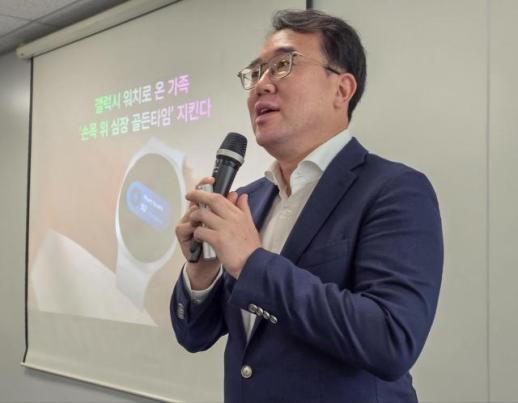 Samsung deepens Galaxy Watch heart-health push SEOUL, September 09 (AJP) - The smartwatch is no longer merely a supplement to a smartphone. Samsung Electronics is pushing its latest Galaxy Watch deeper into preventive health care, seeking to turn a device once used mainly for checking messages and counting steps into an always-on health monitor capable of spotting changes before users themselves notice them. The effort also puts Samsung in a more direct contest with Apple, which has steadily transformed the Apple Watch into a health platform with electrocardiograms, irregular heart rhythm alerts, sleep apnea detection and, more recently, notifications for signs of chronic hypertension. Samsung on Wednesday held a press briefing in Seoul to highlight a suite of heart and health-monitoring functions built around its Galaxy Watch9 and Galaxy Watch Ultra2, unveiled in July. At the center of the latest upgrade is Heart Health Score, a Samsung Health feature that combines sleep, physical activity, body composition and vascular stress trends into a single assessment of factors affecting cardiovascular health. Rather than simply displaying individual measurements, the feature is designed to tell users how their everyday habits may be influencing their long-term heart health and provide personalized guidance on what they could change. Another new feature, Vitals, continuously looks for deviations from an individual's normal physiological patterns. After a user wears the Galaxy Watch during sleep for at least seven nights, it establishes a personal baseline using five biometric signals — heart rate, heart rate variability, respiratory rate, skin temperature and blood oxygen saturation. The watch can then flag measurements that move outside the user's normal range. The concept illustrates the direction in which the wearable industry is moving. The competition is increasingly less about how many physiological measurements a watch can collect and more about whether software can convert those measurements into information that a user can understand and act upon. Apple has been pursuing much the same approach. Its Vitals app, introduced with watchOS 11 in 2024, also establishes a user's typical overnight ranges and can issue a notification when multiple metrics fall outside them. Apple monitors heart rate, respiratory rate, wrist temperature, blood oxygen where available and sleep duration. Samsung's Vitals therefore represents less an entirely new category than an attempt to build a more comprehensive Samsung Health alternative around the same emerging idea of personalized baseline monitoring. Where Samsung is trying to put more distance between itself and Apple is in what it can measure — and how those measurements are combined. Galaxy Watch9's Heart Health Score incorporates factors including body composition, an area where Samsung has had a hardware advantage for several generations. Galaxy Watches equipped with bioelectrical impedance analysis, or BIA, can estimate body fat, skeletal muscle, body water, body mass index and other body-composition indicators directly from the wrist. The measurements are intended for general wellness rather than medical diagnosis. The information also feeds into Samsung's Fitness Index, which combines body composition, exercise records and other indicators to assess a user's fitness level and recommend goals. Blood pressure provides an even clearer point of distinction. Samsung's Galaxy Watch can estimate blood pressure after being calibrated against a conventional upper-arm cuff, with recalibration required every 28 days. The capability, previously limited by regulatory approval in some markets, became available to eligible U.S. Galaxy users in March this year. The Galaxy Watch9 goes a step further with a blood-pressure trend feature that can provide an estimate of morning blood pressure after users wear the calibrated watch overnight. Apple has taken a different route. Apple Watch Series 9 and later models and Apple Watch Ultra 2 and later can analyze cardiovascular patterns over a 30-day period and warn users when the data suggest possible chronic hypertension. The Apple feature does not provide a conventional systolic-and-diastolic blood-pressure reading. Users who receive a hypertension notification are instead advised to measure their blood pressure with a separate cuff for seven days and take the results to a medical professional. Apple introduced the hypertension notification feature in South Korea in January this year. The difference highlights two competing approaches to turning consumer electronics into health devices. Samsung is placing more measurement tools directly on the wrist, while Apple has often focused on detecting longer-term patterns that may warrant further medical examination. Neither approach turns a smartwatch into a doctor. Samsung and Apple repeatedly caution that their watches are not substitutes for professional diagnosis or treatment, an increasingly important distinction as consumer devices move closer to areas traditionally occupied by medical equipment. Choi Jong-min, vice president of Samsung Electronics' Digital Health Team, said continuous monitoring is one of the biggest advantages wearable devices can bring to preventive health care. Samsung has been developing heart-monitoring technology for its wearable devices for more than a decade. Its Gear 2 and Gear Fit, released in 2014, included optical photoplethysmography, or PPG, sensors for measuring heart rates. The company later added electrocardiogram measurement, blood-pressure monitoring and irregular heart rhythm notifications. Its irregular heart rhythm notification, designed to identify rhythms suggestive of atrial fibrillation, has received clearance from both South Korea's Ministry of Food and Drug Safety and the U.S. Food and Drug Administration. Sleep has become another area where the two companies have steadily converged. Samsung received the first FDA De Novo authorization for a smartwatch sleep apnea feature in 2024 and has upgraded the latest version to analyze breathing disruptions during sleep using artificial intelligence. Apple introduced its own sleep apnea notifications later in 2024. Its system uses the accelerometer to detect small wrist movements associated with breathing disturbances and evaluates the pattern over 30 days before alerting users to possible moderate-to-severe sleep apnea. Apple's sleep apnea notification became available in South Korea in September 2025, meaning both companies now compete over many of the same medically sensitive functions in Samsung's home market. For Samsung, however, the objective is increasingly to connect those individual functions into something closer to an early-warning system. The company cited cases in which alerts from Galaxy Watches prompted users to seek medical help. One user in Jordan received repeated irregular heart rhythm notifications and later sought medical attention, leading to the discovery of atrial fibrillation, according to Choi. Another user in Brazil recorded an electrocardiogram after noticing an abnormal heartbeat and shared the result with a doctor before receiving treatment. "The most important thing is that these people were able to detect the signs before reaching a critical moment and receive treatment in time," Choi said. Samsung is also trying to extend that monitoring beyond the person wearing the device. Samsung Health allows users to share information such as heart rate, stress, blood oxygen, sleep and body composition with family members, allowing relatives to follow changes remotely. Samsung said the capability could be particularly useful for families monitoring elderly parents who live alone or apart. Samsung views the Galaxy Ring and Galaxy Watch as complementary rather than competing form factors, with the lighter ring suited to continuous and overnight monitoring and the watch offering a display, exercise functions and broader interaction. When both are used, health information is brought together through Samsung Health. Users can also alternate between the devices while charging them, reducing gaps in monitoring, while Samsung says wearing both can extend the Ring's battery life by up to 30 percent by allowing the Watch to take over some overlapping measurements. When asked how Galaxy Watch differentiates itself from smart rings such as Oura Ring in markets including the United States, Choi said the two form factors serve somewhat different purposes. He characterized rings as more lifestyle-oriented devices, while watches offer broader functionality, particularly for sports and exercise, on top of health monitoring. The strategy gives Samsung something Apple does not yet have — a first-party ring feeding data into the same health ecosystem as its smartphone and watch. But Samsung still has considerable ground to defend in the smartwatch market. Apple, despite slipping behind Huawei globally in the second quarter, still accounted for 20 percent of worldwide smartwatch shipments and recorded the fastest year-on-year growth among the five largest brands, according to Counterpoint Research. The pressure is particularly visible in North America, an important premium market. Apple smartwatch shipments there rose 13 percent from a year earlier in the second quarter, while Samsung's fell 13 percent. AJP Takeaways - Samsung is expanding Galaxy Watch beyond fitness tracking with Heart Health Score and continuous monitoring features aimed at preventive health management. - The company's wearable health push builds on more than a decade of heart-monitoring technology, ranging from PPG sensors to ECG and irregular heart rhythm notifications. - Samsung sees Galaxy Watch and Galaxy Ring as complementary devices as it seeks to strengthen its health ecosystem and compete across different wearable form factors overseas. 2026-09-09 15:47:59
 -
 Samsung partners with Mistral AI to develop semiconductor-specific AI SEOUL, September 09 (AJP) - Samsung Electronics has formed a strategic partnership with French artificial intelligence startup Mistral AI to jointly develop AI models tailored to semiconductor design and manufacturing, according to the company on Wednesday. The partnership, reached around the time of a South Korea-France summit, will combine Samsung's semiconductor technology and manufacturing data with Mistral AI's AI models to improve productivity and precision across chip operations. Samsung plans to use Mistral AI's large language models, including Mistral Large, to develop proprietary AI models optimized for data generated by its Device Solutions division, which oversees the company's semiconductor business. The models will be gradually deployed for tasks including data analysis, defect prediction and process optimization, with Samsung aiming to shorten development cycles while improving manufacturing efficiency and product quality. The two companies will also jointly develop an AI platform and operating system optimized for semiconductor operations. Samsung said the AI models will operate on its own infrastructure through an on-premises system, allowing sensitive semiconductor data to be processed without being transferred to external cloud infrastructure. The partnership is expected to expand across Samsung's memory, foundry and logic businesses, with plans to eventually connect customers and partners to a broader AI-based semiconductor ecosystem. "As the complexity of semiconductor design and manufacturing increases rapidly, the ability to securely and precisely utilize vast amounts of data is emerging as a key competitive advantage," said Jun Young-hyun, head of Samsung Electronics' Device Solutions division. "Together with Mistral AI, we will build AI models and platforms specialized for the semiconductor industry and set a new standard for AI-driven semiconductor innovation," Jun said. Samsung has also made a large-scale equity investment in Mistral AI to strengthen the strategic partnership and establish a foundation for long-term technology cooperation and joint business projects. The company did not disclose the size of the investment. AJP Takeaways - Samsung and Mistral AI will jointly develop proprietary AI models specialized for semiconductor design and manufacturing. - The models will be deployed for data analysis, defect prediction and process optimization while operating on Samsung's internal infrastructure to protect sensitive chip data. - Samsung has also invested in Mistral AI as the companies seek to expand their partnership across memory, foundry and logic businesses. 2026-09-09 14:59:41
 -
 Samsung leans on ASML alliance as AI chip race heats up SEOUL, September 08 (AJP) - Samsung Electronics fighting on two fronts — SK hynix in advanced memory and Chinese rivals in legacy chips — is leaning on ASML's near-monopoly in cutting-edge lithography to keep its manufacturing edge in the AI race. The strategy goes beyond buying the industry's most advanced lithography machines. Samsung plans to bring High-NA EUV into advanced DRAM mass production by 2028 while joining an ASML-led effort to develop a new 12-inch photomask platform that could eventually replace the 6-inch format the semiconductor industry has relied on for decades. Together, the initiatives offer a glimpse into how Samsung is preparing its manufacturing technology for the next phase of semiconductor scaling across both memory and foundry operations. Samsung said Tuesday it is expanding its strategic partnership with Dutch chipmaking equipment giant ASML on High-NA extreme ultraviolet lithography and other next-generation semiconductor manufacturing technologies. Taking High-NA into DRAM High-NA EUV is the successor to the EUV lithography systems currently used to manufacture the world's most advanced chips. Lithography is one of the most critical steps in semiconductor manufacturing, using light to transfer microscopic circuit patterns from a photomask onto a silicon wafer. High-NA, short for high numerical aperture, improves EUV resolution, allowing chipmakers to print finer features as transistor and memory-cell dimensions continue to shrink. Samsung plans to introduce High-NA EUV into high-volume manufacturing of advanced DRAM by 2028, which the company says would be the industry's first such application in memory production. The technology could extend the DRAM scaling roadmap by enabling finer patterning while reducing reliance on increasingly complicated multi-patterning processes. Fewer process steps could simplify manufacturing and improve efficiency, although the economics will ultimately depend on yields, equipment productivity and production costs. High-NA carries particular significance for Samsung because it operates both major memory and foundry businesses. Unlike memory-focused manufacturers, Samsung could eventually deploy the technology across advanced DRAM as well as logic chips produced by its foundry division, giving it a broader manufacturing base on which to develop and validate the process. The push comes as competition over next-generation DRAM intensifies. Samsung has moved aggressively to introduce newer manufacturing processes into high-value memory, including sixth-generation 10-nanometer-class, or 1c, DRAM for its HBM4 products. As DRAM scaling becomes increasingly difficult beyond current generations, lithography is becoming another battleground in determining how far chipmakers can shrink memory cells while improving performance and power efficiency. SK hynix is moving on a similar timetable. The Samsung rival has also said it is targeting 2028 to apply High-NA EUV processes to DRAM mass production, underscoring how closely the next stage of the Korean memory race could be fought not only over HBM design and packaging but also over the manufacturing processes behind the chips. Beyond the machine Samsung and ASML are simultaneously looking further ahead at a less visible but potentially consequential component of semiconductor manufacturing: the photomask. Samsung will join ASML's Large Size Mask Consortium, an industry initiative developing a 12-inch photomask platform for High-NA EUV. Photomasks act as highly precise templates containing the circuit patterns that lithography systems transfer onto wafers. The semiconductor industry has relied on the 6-inch photomask format for decades. High-NA EUV, however, introduces a new constraint. While the technology can print finer features than conventional EUV, its current configuration has a smaller exposure field. Large and complex chips can therefore require patterns to be exposed separately and then connected through a process known as stitching. A larger mask platform is designed to ease that limitation. Samsung said moving to 12-inch masks could reduce stitching constraints, improve fab productivity and lower chipmaking costs, allowing manufacturers to capture more of the resolution advantage offered by High-NA EUV. ASML is working with major semiconductor companies including Samsung, TSMC, Intel and Nvidia on the larger-mask initiative as the industry prepares High-NA EUV for broader use in advanced manufacturing. SK hynix has also said it is evaluating participation in the consortium. The project highlights a broader shift in the semiconductor race. As scaling becomes harder and more expensive, simply owning the newest lithography machine may no longer be enough. The surrounding infrastructure — masks, process technology, productivity, yields and the ability to integrate them into mass production — increasingly determines whether an advanced manufacturing technology is economically viable. ASML expects larger masks eventually to allow High-NA systems to manufacture chips comparable in size to those made with today's EUV equipment while improving system productivity. The Dutch company plans to demonstrate a pilot line using the larger masks around 2031, with the technology targeted to be ready for high-volume manufacturing by 2033. The longer timeline separates the 12-inch mask project from Samsung's nearer-term plan to introduce High-NA EUV into DRAM production in 2028. Yet the two efforts point in the same direction: building the manufacturing infrastructure needed to keep semiconductor scaling moving as conventional approaches become increasingly complex and costly. "The AI era is transforming the semiconductor industry and increasing the importance of technological innovation across the entire value chain," Samsung Electronics Vice Chairman and CEO Jun Young-hyun said. "By further strengthening our collaboration with ASML, we are helping lay the foundation for the next generation of AI and semiconductor innovation," he added. ASML CEO Christophe Fouquet described Samsung as one of the Dutch company's most important long-standing innovation partners. "As the industry enters a new era driven by artificial intelligence, close collaboration with our customers becomes even more important," Fouquet said. For Samsung, the High-NA roadmap represents more than the adoption of another expensive piece of equipment. The semiconductor race is increasingly shifting from who can design the fastest chip to who can assemble the manufacturing ecosystem capable of producing ever-smaller and more complex chips economically and at scale. Samsung's bet is that High-NA EUV — first in advanced DRAM and eventually supported by a new generation of larger photomasks — can help anchor that next manufacturing era. Samsung Electronics shares closed 2.96 percent higher at 278,000 won on Tuesday after gaining 5.68 percent in the previous session. AJP Takeaways - Samsung Electronics plans to introduce High-NA EUV into advanced DRAM mass production by 2028, a move it says would mark the industry's first such application in memory manufacturing. - Samsung is also joining an ASML-led initiative to develop 12-inch photomasks, aimed at overcoming stitching constraints and improving productivity as chipmakers push High-NA EUV into more advanced production. - The two initiatives highlight Samsung's broader strategy of using its presence in both memory and foundry to build a manufacturing ecosystem around next-generation lithography, as competition with SK hynix and Chinese chipmakers intensifies. 2026-09-08 16:18:12
 -
 Samsung board faces breach-of-trust complaint SEOUL, September 08 (AJP) - A shareholder group said it will file an additional criminal complaint against Samsung Electronics' entire board and executives of a company labor union over performance bonuses, widening a legal dispute over the chipmaker's profit-linked compensation scheme. The Korea Shareholders Alliance said it plans to submit the complaint to the National Office of Investigation on Wednesday at 10 a.m. outside the agency's headquarters in Seoul. The group plans to accuse all Samsung Electronics board members and executives of the Samsung Group Super Enterprise Union's Samsung Electronics branch of complicity in breach of trust under the Act on the Aggravated Punishment of Specific Economic Crimes. The latest action expands an earlier complaint filed against Samsung co-CEOs Jun Young-hyun and Roh Tae-moon over a wage agreement reached in May. That case has been assigned to the Gyeonggi Nambu Provincial Police Agency. The shareholder group argues that linking employee bonuses to a fixed percentage of operating profit amounts to a distribution of corporate profits that should require shareholder approval, rather than being determined through collective bargaining. It also claims union officials who helped design and implement the agreement should share responsibility with board members involved in subsequent decisions to use treasury shares for employee compensation. No court or investigative authority has determined that the wage agreement or Samsung's use of treasury shares violated the law. The dispute traces back to wage negotiations earlier this year involving several Samsung labor unions. Donghaeng Union, whose membership is concentrated in Samsung's Device eXperience (DX) division, withdrew from a joint bargaining group before a tentative agreement was reached, saying the interests of DX employees were not being adequately represented. Samsung and the remaining unions reached a tentative agreement on May 20, a day before a planned strike. Under the deal, employees in the Device Solutions (DS) division, which oversees Samsung's semiconductor business, became eligible for a new special performance bonus funded with 10.5 percent of the division's operating profit and paid entirely in Samsung shares after taxes. Employees in DX and other eligible divisions were instead offered Samsung shares worth 6 million won ($4,300) per person. The agreement was formally approved on May 27 following votes by members of the participating unions. The differing compensation schemes fueled discontent among DX employees and intensified divisions among Samsung's labor groups. Donghaeng held rallies at Samsung's Suwon campus in July and near its Seocho headquarters in Seoul in August, demanding additional compensation for DX employees and a company-wide performance bonus pool. Samsung, meanwhile, began implementing the May agreement. In July, the company approved the disposal of 1.08 million treasury shares to provide stock compensation to 49,345 employees in the DX division and its CSS business team. Samsung followed in August with a decision to acquire about 15 trillion won ($10.8 billion) worth of its own shares for employee stock compensation, including special performance bonuses for DS employees. The shareholder group argues that the May agreement and subsequent share transactions harmed Samsung and its shareholders, and is seeking to have the latest complaint investigated together with its earlier case. The group has also filed a separate complaint against Labor Minister Kim Young-hoon over his role in brokering the May wage agreement, arguing that performance bonuses should not have been treated as a subject of collective bargaining. It plans to call on investigative authorities on Wednesday to accelerate that investigation and to urge the Major Crimes Investigation Agency, scheduled to launch in October, to pursue alleged corporate breach-of-trust cases without political or external interference. The group also opposes moves to abolish or narrow the scope of the criminal breach-of-trust offense, arguing that it serves as an important safeguard for shareholders. 2026-09-08 11:07:09
 -
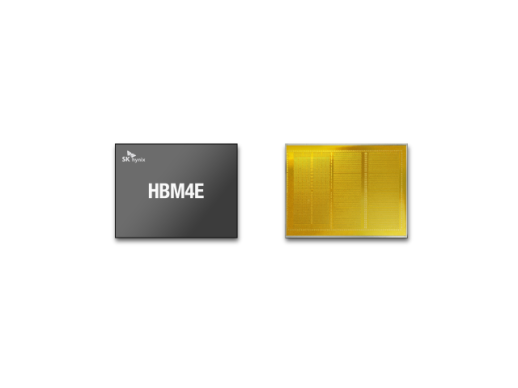 Astra ups heat in Samsung-SK hynix HBM4E 1c showdown SEOUL, September 07 (AJP) - "AGI has arrived,” Nvidia CEO Jensen Huang declared as he congratulated OpenAI on the release of GPT-6 Astra, which the ChatGPT creator calls its most intelligent and aligned model yet. AGI stands for artificial general intelligence, a loosely defined concept generally referring to AI capable of performing intellectual tasks across a broad range of domains at or beyond human levels. Whether Astra has actually crossed that threshold remains disputed, but the race toward it among frontier AI developers including OpenAI, Anthropic, Meta and Google is intensifying. Huang said Astra was trained using more than 100,000 Nvidia Grace Blackwell GPUs across NVL72 systems, with another 400,000 GPUs coming online. Whether or not the AGI label sticks, the economic implication for the semiconductor industry is clearer. More capable AI models, increasingly autonomous agents and heavier competition for users and enterprise workloads mean greater demand for computing power. Greater computing power means more GPUs — and more high-bandwidth memory, or HBM, feeding data into them. South Korea's two memory giants and their investors cheered the prospect Monday. Samsung Electronics shares jumped 5.68 percent to close at 270,000 won, while SK hynix surged 8.26 percent to 1,783,000 won. The next battlefield for HBM supremacy is taking shape in Gyeonggi Province, home to the advanced chipmaking complexes of Samsung and SK hynix. Samsung Electronics and SK hynix are preparing to go head-to-head using sixth-generation 10-nanometer-class, or 1c, DRAM in HBM4E after taking sharply different process strategies for HBM4. The confrontation is becoming more consequential as Samsung closes the gap with the longtime HBM leader. Samsung's share of global HBM revenue jumped to 33 percent in the second quarter from 21 percent three months earlier, while SK hynix's share fell to 50 percent from 58 percent, according to Counterpoint Research. The gap between the two Korean memory makers narrowed to 17 percentage points from 37 points in just three months. A year earlier, SK hynix held 64 percent of the market against Samsung's 15 percent, leaving a 49-point gap. Micron ranked third with an 18 percent share in the second quarter, down from 21 percent in the first. The figures do not yet represent the balance of power in HBM4. Most HBM revenue still comes from HBM3E, while HBM4 shipments are expected to become increasingly visible in market revenue during the second half of this year. The narrowing gap nevertheless comes as Samsung and SK hynix pursue markedly different manufacturing strategies for the new generation. Samsung took the more aggressive route in DRAM process technology. The company began mass-producing and commercially shipping HBM4 in February using 1c DRAM, breaking with the industry's conventional practice of applying a more mature process to HBM products. Samsung's HBM4 combines 1c DRAM with a 4-nanometer logic base die and delivers a sustained data-transfer speed of 11.7 gigabits per second per pin, with speeds of up to 13 Gbps. A Samsung Electronics official said yields for its 1c-based HBM4 have stabilized and that the product has been supplied smoothly to customers since mass production began in February. SK hynix took the opposite approach. Rather than immediately adopting 1c for HBM4, the company retained its proven fifth-generation 10-nanometer-class, or 1b, process while initially applying 1c to conventional DRAM products. An SK hynix official said the company took the reverse approach to Samsung, which deployed 1c first in higher-value HBM products while retaining an older process for conventional DRAM. Using the already proven 1b process for HBM4 also offered an advantage in securing stable yields, the official said, describing the decision as part of the company's broader process strategy rather than the result of a single technical factor. The distinction matters because a more advanced DRAM process alone does not determine HBM performance. Lee Jong-hwan, professor of system semiconductor engineering at Sangmyung University, said 1c has a performance advantage over 1b, but the difference between the two processes is only one component of the overall HBM architecture. "DRAM performance is important, but the connection technology that links each DRAM die is also critical," Lee said. "The DRAM itself and packaging technologies all have to perform well together to achieve strong overall HBM performance." Lee said the difference between 1b and 1c alone is not large enough to determine the competitiveness of the finished HBM product because both are successive refinements within the same 10-nanometer-class generation. The two companies' strategies are now set to converge with HBM4E. SK hynix is moving its broader DRAM production toward 1c as it prepares to use the newer process in HBM4E, bringing its core DRAM process in line with Samsung's. SK hynix has confirmed that shipments of products based on its 1c process began in earnest in the second quarter. Moving to the newer process gives chipmakers room to improve performance and power efficiency. The economic payoff, however, depends heavily on whether they can stabilize yields as manufacturing complexity increases. "Better performance makes it harder to secure yields," Lee said. "In semiconductors, yield directly translates into money. If yields are poor, you cannot supply the volume customers want." "Performance and yield have to improve together. That is what creates real competitiveness," he added. The trade-off is particularly important for HBM because the product stacks multiple DRAM dies and requires sophisticated bonding, packaging and thermal-management technologies in addition to the underlying memory process. HBM4E will put those capabilities to a tougher test. Samsung shipped samples of its 12-layer HBM4E to major global customers in May. The product combines 1c DRAM with a 4-nanometer logic base die and supports data-transfer speeds of up to 16 Gbps per pin. The company argues that experience mass-producing HBM4 with the same 1c DRAM and 4-nanometer base-die combination could give it an advantage as HBM4E moves toward commercial production. "Because we have already mass-produced HBM4 based on 1c and 4-nanometer technology, we expect to provide HBM4E with more stable performance and quality," a Samsung Electronics official said. Samsung said the key advantage lies less in headline specifications than in having already validated the underlying manufacturing combination through HBM4 mass production. SK hynix supplied samples of its own 12-layer HBM4E to major customers in June. The product also supports speeds of up to 16 Gbps per pin and offers more than 20 percent higher power efficiency than the preceding generation, according to the company. HBM4E remains at the sample-supply stage for SK hynix, with mass production dependent on customer schedules. The company is seeking to move forward within this year, although precise timing has not been fixed. SK hynix said the biggest improvement expected from moving to the newer DRAM node is performance, particularly data-transfer speed. The convergence on 1c changes the nature of the rivalry. The HBM4E contest is unlikely to be decided simply by which company uses the more advanced DRAM process. Both must prove they can combine high-performance 1c DRAM with stable yields, advanced packaging and bonding, efficient thermal management and large-volume production aligned with customers' schedules. The two companies therefore enter the HBM4E era from different positions. SK hynix brings the larger HBM market share and customer and manufacturing experience accumulated during its HBM3E leadership. Samsung brings experience mass-producing 1c-based HBM one generation earlier and a sharply rising HBM revenue share. Investor expectations are rising alongside the technological competition. Consensus estimates for Samsung Electronics' third-quarter operating profit stood at 114.2 trillion won ($84.8 billion) as of Sept. 4, up 12 percent from three months earlier, according to FnGuide. SK hynix's third-quarter operating-profit estimate rose 4 percent over the same period to 78.8 trillion won. AJP Takeaways - Samsung's global HBM revenue share jumped to 33% in Q2, narrowing SK hynix's lead to 17 percentage points. - Samsung adopted advanced 1c DRAM for HBM4, while SK hynix prioritized yield stability with proven 1b technology. - HBM4E resets the race: Both companies are moving to 1c for HBM4E, shifting competition toward yield, packaging, performance and volume production. - AI demand raises the stakes: More powerful AI models and agents are driving demand for GPUs and HBM, lifting expectations for both Korean memory giants. SK hynix said the HBM market remains in an absolute supply shortage even as more suppliers enter a business that had previously been centered more heavily on the company. 2026-09-07 16:47:39
 -
 Samsung's non-chip union takes wage-gap protest to Times Square SEOUL, September 05 (AJP) -“Great products begin with people,” read a message splashed across a Times Square billboard in New York on Saturday, as a Samsung Electronics non-chip labor union took its protest over widening compensation disparities and treatment of its consumer-electronics workforce to a global stage. Donghaeng Union, which mainly represents employees in Samsung Electronics’ Device eXperience (DX) division, ran a 15-second video on a Times Square electronic billboard from midnight local time, with the clip appearing at 35 minutes past every hour. The campaign comes amid growing dissatisfaction among DX employees over what the union says is an excessive compensation gap with workers in the Device Solutions (DS) division, which oversees Samsung’s semiconductor business. Donghaeng Union has argued that DX employees were sidelined in the company’s latest wage negotiations and that differences in rewards between the two divisions have become too large. Samsung’s semiconductor business has enjoyed a powerful earnings rebound on booming artificial intelligence demand, particularly for high-bandwidth memory and other advanced chips, while profitability in parts of the DX business has remained under pressure. The union argues that weaker earnings at DX should not be blamed primarily on employees. At a rally on Aug. 21, it said deteriorating profitability in the division stemmed from management failures and called for greater communication with senior executives. The Times Square advertisement also raised concerns about Samsung’s artificial intelligence transformation, or AX, program. The union said the company has been dividing work into individual functions, measuring efficiency and calculating required staffing levels under the AX initiative. “If workforce efficiency under the banner of AX means reducing people, it must stop,” the union said. The concern is part of the union’s broader argument that employees should not bear the cost of restructuring and weaker profitability while compensation increasingly diverges between Samsung’s major business divisions. Donghaeng Union also called for an investigation into whether personal information involving its members had been leaked. The request follows controversy involving the Samsung Electronics branch of the Samsung Group Super-Enterprise Union, which was accused of compiling a list containing information on the union membership status of roughly 100,000 employees. Donghaeng Union asked Samsung to determine whether information involving its own members was included. The union plans to intensify its campaign later this month. Beginning Sept. 18, members plan to hold rallies and one-person demonstrations near the residence of Samsung Electronics Chairman Lee Jae-yong in Seoul’s Yongsan district. AJP Takeaways - A Samsung Electronics union representing mainly DX employees took its protest over widening compensation disparities to New York’s Times Square. - The union says DX workers have been sidelined in recent wage talks and face an excessive pay gap with employees in the more profitable semiconductor-focused DS division. - Further protests are planned near Samsung Electronics Chairman Lee Jae-yong’s Seoul residence from Sept. 18. 2026-09-05 17:41:11
 -
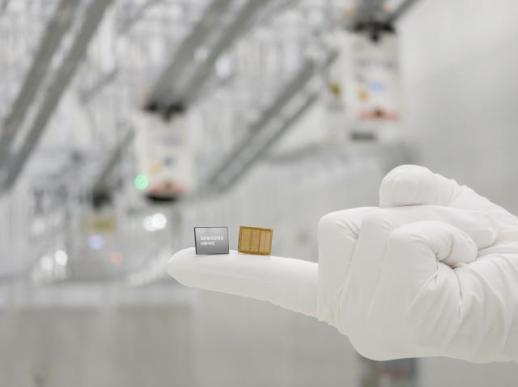 Samsung's aggressive HBM4 bet narrows gap with SK hynix SEOUL, September 04 (AJP) - Samsung Electronics, making up for its passivity and late start in high-bandwidth memory, has ushered in the next generation with an aggressive bet on HBM4 that is paying off by sharply narrowing the gap with frontrunner SK hynix. The world's largest memory maker saw its share of the global HBM market jump to 33 percent in the April-June period from 21 percent three months earlier, according to Counterpoint Research. SK hynix remained comfortably on top with 50 percent, but its share fell from 58 percent. The gap between the HBM pioneer and its late-charging rival narrowed to 17 percentage points from 37 points in the first quarter and 49 points a year earlier, when SK hynix controlled 64 percent of the market against Samsung's 15 percent. Micron Technology ranked third with an 18 percent share. SK hynix still holds the upper hand, backed by accumulated production experience and long-term relationships with Nvidia and other major AI processor customers built during its dominance of the HBM3E cycle. Most HBM revenue also continues to come from HBM3E, while HBM4 shipments are expected to become increasingly visible in market revenue during the second half of this year. Samsung's recent gain is therefore notable because much of its recovery has come before the HBM4 transition is fully reflected in industry sales. Rather than continue chasing SK hynix on the technological path where its rival had already established a commanding lead, Samsung placed a more aggressive bet on moving early into HBM4 and HBM4E. The company has also sought to broaden its customer base beyond Nvidia toward other AI chip designers as customized processors take a growing role in the AI infrastructure market. Lee Jong-hwan, professor of system semiconductor engineering at Sangmyung University, said Samsung made a strategic push into HBM4 and HBM4E after falling behind SK hynix in previous generations, creating an opportunity to expand shipments as the market transitions to newer products. "Samsung has a good chance of narrowing the gap further," Lee said. Samsung began commercial shipments of HBM4 in February, becoming the first in the industry to do so. Its HBM4 combines sixth-generation 10-nanometer-class, or 1c, DRAM with a logic base die manufactured using Samsung's 4-nanometer foundry process. The company followed in May by shipping samples of 12-layer HBM4E, seeking to carry its early HBM4 momentum into the next stage of the memory race. SK hynix, meanwhile, has been expanding HBM4 production while defending the customer relationships it built during the HBM3E cycle. It shipped samples of 12-layer HBM4E to major customers in June. The contest is therefore becoming less about catching up in HBM3E and more about which company can turn next-generation technology into high-volume customer orders first. Lee said Samsung's early HBM4 push reflects a broader strategy of trying to move ahead technologically rather than merely matching a competitor's existing product. Its rollout indicates the company had been preparing for the generational transition in advance and intended to use HBM4 to close the gap created during HBM3E, he said. The strategy could carry greater weight in HBM4 than in previous generations because the architecture increases the importance of capabilities extending beyond DRAM itself. HBM stacks multiple DRAM dies vertically to provide significantly greater bandwidth while keeping memory close to an AI processor. In HBM4, the logic base die beneath the memory stack becomes more sophisticated and increasingly customized for the processor it serves. Samsung has an unusual advantage in such an environment. The company is the only major HBM supplier combining large-scale memory manufacturing, advanced logic foundry production and semiconductor packaging within the same corporate structure. Its HBM4 pairs Samsung's own 1c DRAM with a logic base die produced through its 4-nanometer foundry process, allowing it to offer customers an integrated approach spanning memory, logic and advanced packaging. Closer coordination among those technologies could become increasingly important as HBM products are customized for individual AI processors. Vertical integration, however, only becomes an advantage if Samsung can execute consistently and translate its technology into volume orders. SK hynix retains years of accumulated HBM production experience and the industry's strongest customer relationships. Its partnership with Nvidia in particular gives it a formidable head start. Developing increasingly customized HBM requires memory suppliers to work closely with processor designers well before commercial production begins, making established supplier relationships difficult to displace. A customer already accustomed to jointly developing products with SK hynix has less incentive to switch suppliers solely because a rival reaches a technology milestone first. Winning an early technology race also does not automatically guarantee large-volume orders. Lee cautioned against treating Samsung's strategy as evidence that it will inevitably overtake SK hynix. "That is the strategy and direction, but of course not everything necessarily works out that way," Lee said. The decisive test will come as HBM4 production ramps up and customer qualification translates into actual shipments. If SK hynix leverages its existing customer base and HBM3E leadership to retain those clients through the transition, Samsung's early HBM4 push may prove less disruptive than the latest market-share numbers suggest. But the pace of Samsung's catch-up is beginning to put pressure on the frontrunner. In the second quarter of 2025, SK hynix controlled 64 percent of global HBM revenue compared with Samsung's 15 percent — a 49-percentage-point gulf. Four quarters later, the gap has narrowed to 17 points. The stakes are rising alongside the market itself as AI infrastructure investment drives demand for increasingly powerful and customized memory. SK hynix, Samsung and Micron are pouring enormous sums into fabs, advanced manufacturing equipment and research and development to secure their positions as HBM moves through successive generations. SK hynix enters the HBM4 era with the strongest customer relationships and production track record. Samsung enters with something it lacked during much of the previous cycle: momentum from an aggressive move into the next generation. The next six months should show whether the narrowing gap can turn what had been a lopsided contest into a genuine horse race. AJP Takeaways - Samsung's global HBM revenue share jumps to 33% from 21% in one quarter - Gap with market leader SK hynix narrows to 17 percentage points from 49 a year earlier - Samsung seeks to bypass its HBM3E setback with an early push into HBM4 and HBM4E - SK hynix retains an edge in production experience, Nvidia ties and long-term customer relationships 2026-09-04 15:01:15
 -
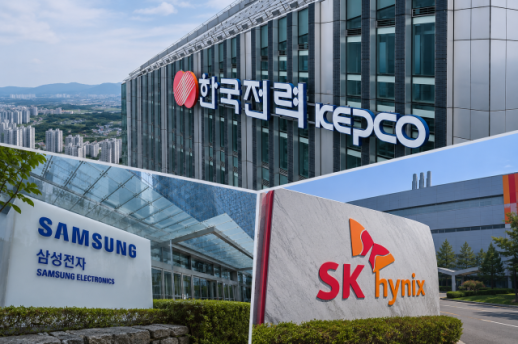 Korea weighs asking chipmakers to prepay power for AI build-out SEOUL, September 03 (AJP) - South Korean memory makers envisioning an expansive build-out under government's ambitious push to turn the country into a chip republic involves more than billions of dollars for construction and purchases of land and equipment as chip facilities rely on seamless power and water supplies to keep the fab running 24/7. Under unprecedented government eagerness to the chip expansion to add chip facilities in Yongin as well as Honam region, southern part of the country, the country's state utility monopoly is proposing an unusual arrangement – a lump-sum power deal that can possibly save Samsung Electronics and SK hynix unpredictable disturbances and the state utility an one-off windfall to erase its deficit. Korea Electric Power Corp. (KEPCO) has proposed an advance-payment scheme to major electricity consumers including Samsung Electronics and SK hynix as the state-run utility searches for new ways to finance transmission infrastructure needed for rapidly expanding chip production and AI data centers. The logic appears straightforward. KEPCO gets money upfront to build the grid, while semiconductor companies gain greater certainty that the enormous amounts of electricity required by their future fabs will be available when production begins. But whether that bargain works for both sides is more complicated. KEPCO confirmed that discussions with large electricity consumers are underway but stressed that the proposal remains at an early stage. "Discussions are underway, but details including the amount and period have not been decided," a KEPCO official told AJP. The utility also pushed back against reports that Samsung Electronics and SK hynix had been asked to prepay a combined 25 trillion won ($18 billion), saying no such figure had been set. Participation, interest rates, payment amounts and payment periods have yet to be finalized. A 72.8 trillion won grid bill Behind the proposal is the sheer scale of investment required to connect South Korea's next generation of semiconductor factories and other power-intensive industries to the grid. KEPCO's latest long-term transmission and substation plan calls for 72.8 trillion won in grid investment through 2038, up 16.3 trillion won from its previous plan. The Yongin semiconductor cluster alone is eventually expected to require more than 10 gigawatts of electricity, underscoring the infrastructure demands behind South Korea's attempt to build one of the world's largest semiconductor manufacturing hubs. The issue carries wider significance as Samsung and SK hynix expand capacity to meet surging global demand for memory used in artificial intelligence. Unlike ordinary industrial facilities, semiconductor fabs require huge volumes of stable electricity around the clock. Building the fab itself therefore solves only part of the problem. Transmission lines, substations and other infrastructure must also be ready when production starts. Such project creates a timing mismatch for KEPCO as enormous sums must be invested in the grid before the factories consuming the electricity are fully operational and paying their bills. The proposed advance-payment system seeks to close part of that gap by bringing future electricity revenue forward. Large consumers would prepay a portion of their future electricity charges, with KEPCO using the funds to finance grid infrastructure. KEPCO said the scheme could provide an alternative to bond issuance while offering participating companies returns above government bond yields. Why KEPCO wants cash upfront The proposal also reflects the financing constraints facing the utility as its investment burden rises. KEPCO has traditionally relied heavily on bond issuance alongside electricity revenue to finance investment. But heavy issuance by the highly rated state utility can reverberate across South Korea's credit market. In 2022, KEPCO issued 31.8 trillion won worth of bonds as soaring energy costs strained its finances, raising concerns that utility debt was soaking up investor demand that might otherwise have gone into corporate bonds. KEPCO argues advance payments could reduce its dependence on such borrowing. The utility said securing investment funds through a channel other than bonds could leave more capital available in the domestic bond market for private companies, including small and midsized businesses. For KEPCO, the math is simple. Revenue that would normally arrive years later becomes available today to finance infrastructure that must be built before demand materializes. For Samsung Electronics and SK hynix, however, the calculation is different. What's in it for Samsung and SK hynix? Paying electricity bills before consuming the power means tying up capital that could otherwise be deployed elsewhere. Two memory giants are pouring enormous sums into fabs, advanced manufacturing equipment and research and development to compete in the global AI chip race – partly on and against their will. KEPCO is considering returns above government bond yields to make participation financially attractive. Those returns could potentially be provided through deductions from future electricity bills rather than cash payments. But a return above government bonds does not by itself establish that prepaying electricity is the best use of corporate capital. Yang Jun-mo, an economics professor at Yonsei University, questioned whether private companies should be asked to bring forward future electricity payments to help finance infrastructure investment by a financially constrained public utility. "If a public corporation is facing financial difficulties, the government should provide support where those difficulties stem from government policy, or it should raise funds by issuing bonds," Yang said. He also questioned the economic rationale for requiring companies to pay electricity charges before consuming the power, saying corporate capital should ultimately remain available for productive investment. The issue comes down partly to opportunity cost. Money committed to advance electricity payments cannot simultaneously be invested in semiconductor production capacity, equipment or technology. The return offered by KEPCO therefore represents only one part of the calculation for chipmakers. The other — and potentially more important — consideration is whether paying upfront can help ensure that power infrastructure is ready when their new factories need it. A semiconductor fab represents an enormous capital investment, but it cannot generate returns if sufficient electricity is unavailable when production is scheduled to begin. For chipmakers competing globally to bring new capacity online as quickly as possible, a grid delay can become a manufacturing delay. If advance payments materially accelerate construction of transmission lines and substations, the value of avoiding delays at multibillion-dollar fabs could outweigh the opportunity cost of committing cash early. But financing is only one obstacle to expanding the grid. Large transmission projects can also face lengthy permitting procedures, land acquisition difficulties and opposition from communities along proposed routes. More money does not automatically mean electricity can be delivered sooner. If capital is the principal bottleneck, bringing future electricity revenue forward could help KEPCO build infrastructure faster while giving semiconductor companies a tangible reason to participate. If the larger obstacles are permitting, transmission routes and local acceptance, the case for tying up billions of dollars in advance becomes harder to make. Who should pay for Korea's chip-era grid? The debate ultimately goes beyond how KEPCO raises money. South Korea's semiconductor and AI ambitions are creating electricity demand on a scale that requires enormous infrastructure investment, raising a broader question over how the cost should be divided among the state, the utility and the companies driving that demand. There is an economic argument for asking major beneficiaries of new infrastructure to shoulder some of the cost. Semiconductor companies require vast amounts of new transmission capacity, and delays in delivering electricity could directly constrain their expansion at a time when Korea is competing with the United States, Taiwan, Japan and China to secure the next wave of semiconductor investment. At the same time, the national power grid is public infrastructure serving far more than individual companies or industries. For now, the arrangement remains a proposal. KEPCO said no decision has been made on how much companies would prepay, for how long, what return they would receive or whether individual companies would participate. Those details will determine whether advance electricity payments become a new way to finance South Korea's chip-era power grid. For Samsung Electronics and SK hynix, the more fundamental question is what they receive for committing capital years early: whether doing so can actually deliver electricity where and when their next generation of fabs needs it. AJP Takeaways • Korea's chip build-out is running into a grid challenge — New semiconductor fabs require not only billions in factories and equipment but massive transmission and substation investment, with the Yongin cluster eventually expected to demand more than 10 gigawatts. • KEPCO wants future power revenue upfront — The utility is considering advance electricity payments from major users including Samsung Electronics and SK hynix as it faces 72.8 trillion won in grid investment through 2038. • Chipmakers face a capital-allocation trade-off — Prepaying power bills could improve certainty over future electricity supply but tie up money otherwise available for fabs, equipment and R&D in the global AI chip race. • The real test is whether prepayment speeds delivery — The proposal becomes more compelling if upfront cash accelerates grid construction, but permitting, land acquisition and local opposition could remain bottlenecks regardless of financing. 2026-09-03 17:43:39
 -
 "Build in America or pay," Lutnick warns chipmakers again SEOUL, September 03 (AJP) -U.S. Commerce Secretary Howard Lutnick reiterated that the Trump administration is preparing a new round of semiconductor tariffs designed to push foreign chipmakers to expand production in the United States. “I think what you're going to see is targeted, thoughtful tariff policy that basically says if you build here, you don't pay, but if you don't build here, expect to pay to enter the greatest market in the world,” Lutnick told CNBC's Squawk Box on Wednesday. “All of the companies know they're coming,” he added. The remarks were a repeated warning of a broader semiconductor tariff plan that had been under discussion inside the administration. Washington is said to be considering extending tariffs beyond imported chips to products containing them, including laptops, gaming consoles and data-center servers. Trump has already imposed a 25 percent Section 232 tariff on certain advanced computing chips since Jan. 15, while exempting imports used in U.S. data centers and other applications deemed to support the domestic technology supply chain. The latest proposal would potentially expand that approach across a much wider range of semiconductor imports. The policy could carry particular implications for South Korea's Samsung Electronics and SK hynix, which are expanding heavily in the United States but have so far stopped short of establishing dedicated advanced memory wafer production there. SK hynix last week broke ground on a more than $4 billion high-bandwidth memory facility in Indiana, where advanced HBM packaging and research will be conducted. The underlying memory wafers will continue to be produced in South Korea before being shipped to the U.S. plant for packaging. Samsung is meanwhile preparing its Taylor, Texas semiconductor complex around leading-edge logic foundry production rather than a dedicated DRAM or NAND memory fab. The distinction could become important if Washington ties tariff exemptions to the type and volume of chips actually manufactured on U.S. soil rather than companies' overall American investment. South Korea secured a provision in its trade agreement with Washington stating that any future U.S. Section 232 semiconductor tariffs should give Korean products treatment “no less favorable” than that offered under a future agreement covering a comparable volume of semiconductor trade. The tariff push also raises a potential conflict with Washington's effort to accelerate its AI industry, which remains heavily dependent on advanced chips and memory manufactured in Asia. Samsung and SK hynix are behind nearly eight out of 10 high-bandwidth memory powering AI processors in data centers. AJP Takeaways · "Build in America or pay” — Lutnick again signaled that Washington is preparing broader semiconductor tariffs, with exemptions likely tied to U.S. production commitments. · Samsung, SK hynix still face a memory gap — Both are investing heavily in the U.S., but neither currently produces advanced DRAM or HBM wafers there, leaving them exposed if tariff relief depends on where the chips themselves are fabricated. · Korea has protection, but the details matter — Seoul secured “no less favorable” treatment under its trade deal with Washington, but the impact will depend on how the U.S. defines qualifying investment and domestic production. 2026-09-03 09:17:30