

Journalist

Candice Kim김혜준
candicekim1121@ajupress.com
ReporterSamsung Electronics, SK hynix, LG Electronics, Olive Young, Musinsa & Semiconductor, K-Beauty
Candice Kim is a dedicated business and technology reporter specializing in the intersection of high-tech innovation and fast-paced consumer trends. Her core beats span the semiconductor, IT, cosmetics, and retail sectors, where she provides in-depth coverage of industry titans including Samsung Electronics, SK hynix, and LG Electronics, alongside leading consumer brands like Olive Young and Musinsa. Whether analyzing complex silicon supply chains or tracking the latest shifts in beauty and fashion retail, Candice is committed to delivering sharp, accurate reporting that keeps readers informed on the forces shaping today's most dynamic markets.
"Connecting the dots from silicon chips to consumer shifts."
Latest by Candice Kim
-
 China's memory ascent turns heads as CXMT races up DRAM ladder SEOUL, September 21 (AJP) - The AI chip boom has made unexpected winners, and China is one of them — despite all the U.S. efforts and sanctions to cap China's rise in the chip sector. ChangXin Memory Technologies, or CXMT, on Sunday announced mass production of its fifth-generation DRAM manufacturing platform, known as G5, along with two new 24-gigabit LPDDR5X products based on the process. The advance pushes China's top memory chipmaker further into the heavily guarded realm of advanced DRAM technology despite U.S. restrictions on China's access to cutting-edge semiconductor manufacturing equipment. But what is increasingly turning heads in the industry is not any single breakthrough. It is the speed of China's ascent. "What is frightening about CXMT is the speed — it is moving extremely fast," said Lee Jong-hwan, a professor of system semiconductor engineering at Sangmyung University. CXMT shares were up about 2.4 percent at 56.88 yuan in late Monday trade on Shanghai's STAR Market. Investors in Seoul showed little immediate alarm. Samsung Electronics was 4.41 percent higher, while SK hynix ended the regular session 0.5 percent up. CXMT has moved rapidly from building scale in conventional DRAM into more advanced mobile memory, while steadily increasing its share of the global market. It is also laying the groundwork for the next and far more lucrative frontier: high-bandwidth memory, or HBM, the critical memory used in artificial-intelligence accelerators. CXMT said the new G5 platform reduced the active-area half-pitch of its memory arrays to 11.95 nanometers using quadruple patterning technology, allowing it to pack memory structures more densely. The company said the number of dies produced from each wafer increased by at least 50 percent compared with its previous-generation process, based on an 8Gb-equivalent comparison. Both LPDDR5X products are already in mass production and are aimed primarily at smartphones and other portable electronics, according to the company. The announcement adds to a string of advances by CXMT as China seeks to reduce its dependence on foreign semiconductor technology. Earlier this month, CXMT announced mass production of LPDDR6, the next generation of low-power mobile DRAM, with the chip making its commercial debut in Xiaomi's 18 Fold smartphone. The product supports data rates of up to 12.8 gigabits per second and complies with the JEDEC LPDDR6 standard. CXMT's technological ambitions are being accompanied by a rapid increase in market share at a time when frontier memory makers Samsung Electronics, SK hynix and Micron Technology are devoting more of their production and investment to the high-value chips powering AI accelerators and hyperscale data centers. The Chinese chipmaker's share of global DRAM revenue rose to 9.5 percent in the second quarter from 7.6 percent in the previous three months, according to TrendForce. CXMT has secured a formidable fourth place behind Samsung at 39.4 percent, SK hynix at 24.9 percent and U.S.-based Micron at 23.3 percent. The gains are particularly notable as the world's three dominant memory makers increasingly direct capital and production toward HBM and advanced server DRAM. The shift is opening room in parts of the conventional memory market just as CXMT is expanding capacity and improving its technology. The immediate concern for Korean chipmakers is not that CXMT is about to displace them at the premium end of the market. It is how rapidly the Chinese company is accumulating the manufacturing experience, scale and market power needed to move further up the memory value chain. Lee said Chinese memory makers are pursuing a deliberate strategy of securing a stronger position in lower-end products before advancing into higher-value chips. "Chinese companies' strategy is to increase their market dominance with lower-end products while preparing for higher-end products," Lee said. HBM is the natural destination because of its higher value and central role in AI computing, he said. "Once they improve their capabilities in conventional DRAM, they can also build up their HBM capabilities more quickly," Lee said. "Chinese companies are gaining experience in conventional memory while preparing HBM and trying to narrow the gap." Moving into HBM, however, requires much more than simply producing a more advanced DRAM die. HBM stacks multiple DRAM dies vertically and requires sophisticated packaging and interconnection technologies to maintain high performance, power efficiency and reliability. Those requirements create another major technological hurdle for newcomers. That also makes it difficult to determine how closely CXMT's latest G5 process actually matches those of Samsung and SK hynix based solely on measurements such as half-pitch. CXMT described G5 as having process capabilities that rival the industry's most advanced mass-production nodes. But the assessment comes from the company itself, and developing a process does not necessarily mean it can be manufactured economically at the yields and volumes required by major customers. Lee said yield — the proportion of usable chips produced from a wafer — remains one of the most important measures of a chipmaker's actual manufacturing capability. "More than anything, it is yield," Lee said. "Development itself is something most companies can do to some extent. But achieving a good yield can take another one or two years." Higher yields reduce manufacturing costs and allow chipmakers to deliver the volumes customers require, he said. "That, in effect, is the technology," Lee said. "For semiconductors, mass-production capability and yield are extremely important." CXMT therefore still has considerable ground to cover before it can challenge the Korean leaders in advanced HBM. But its progress is becoming increasingly difficult to dismiss. The Chinese company has continued advancing despite U.S. restrictions imposed since 2022 on China's access to some advanced semiconductor manufacturing equipment. CXMT said G5 was developed using computer simulations and joint work with Chinese equipment makers on critical production steps. Chinese chipmakers also have strong incentives to prevent the technology gap from widening as HBM becomes increasingly important to AI computing, Lee said. For Samsung and SK hynix, that means their current lead offers little room for complacency. The immediate competitive pressure from CXMT remains concentrated in conventional and mobile DRAM rather than the most advanced HBM products. But every step up the conventional memory ladder gives the Chinese company more manufacturing experience, scale and know-how that could eventually be applied further up the market. CXMT's progression from conventional DRAM through LPDDR5X and LPDDR6, combined with its rising market share and latest G5 manufacturing advance, is therefore changing the question facing the established memory leaders. It is becoming less about whether China's memory industry can climb the technology ladder than how quickly it can reach the next rung. AJP Takeaways - China's CXMT is rapidly advancing up the DRAM technology ladder, launching its G5 process and LPDDR6 as its global market share rises. - CXMT's global DRAM revenue share climbed to 9.5 percent in the second quarter, securing fourth place behind Samsung Electronics, SK hynix and Micron. - Korean chipmakers retain a significant lead in advanced HBM, but CXMT's growing scale and manufacturing expertise in conventional DRAM could help it narrow the gap over time. 2026-09-21 16:41:41
 -
 Samsung breaks ground on HVAC plant in Gwangju SEOUL, September 21 (AJP) - Samsung Electronics on Monday broke ground on a new manufacturing line in Gwangju as it expands production of cooling equipment for artificial intelligence (AI) data centers and other large facilities. The chip giant is investing 240 billion won (US$173 million) in the manufacturing complex, which will be operated by its HVAC subsidiary FläktGroup. The facility will cover 21,800 square meters and is scheduled to begin operations in early 2028. The plant will become FläktGroup's 15th global production base and primarily serve projects in South Korea and other East Asian markets including AI data centers, semiconductor and battery plants and large commercial buildings. The line will produce coolant distribution units or CDUs, fan wall units, computer room air handlers and air handling units used in data centers and other large facilities. Samsung has been expanding its HVAC business as soaring AI computing demand drives investment in power- and cooling-intensive data centers. The company plans to integrate product development, manufacturing, installation and maintenance as part of its broader HVAC operations. "The groundbreaking of FläktGroup's new production line marks another milestone in expanding HVAC as one of our key growth engines," said Roh Tae-moon, head of Samsung Electronics' Device eXperience division. Samsung plans to develop its Gwangju complex into a manufacturing base for both AI-powered home appliances and next-generation HVAC systems, Roh added. AJP Takeaways - Samsung is investing 240 billion won in a new FläktGroup HVAC production line in Gwangju. - The 21,800-square-meter facility is scheduled to begin operations in early 2028, targeting demand from AI data centers and advanced manufacturing facilities. - The plant will produce data center cooling equipment including CDUs, fan wall units and computer room air handlers. 2026-09-21 10:57:45
 -
 Samsung's wage protest arrives at the chairman's doorstep SEOUL, September 18 (AJP) - Samsung Electronics employees in its non-chip businesses took their protest over a widening compensation gap with semiconductor workers to Chairman Lee Jae-yong's doorstep Friday, seeking direct dialogue with the company while signaling room for compromise on their demand for 1,000 company shares per employee. The Donghaeng union, whose membership is concentrated in Samsung's Device eXperience (DX) division covering consumer electronics and mobile devices, launched a sit-in near Lee's residence in Hannam-dong, central Seoul, after earlier rallies in Suwon and near Samsung's headquarters in Seocho, southern Seoul. About 40 union members attended Friday's rally, a modest turnout than at its previous demonstrations. The move to Hannam-dong appeared intended to carry more symbolic weight than demonstrate numbers. The residential neighborhood offered far less room for protesters than the sites of the union's earlier rallies in Suwon in Gyeonggi Province and the Seoul headquarters in Seocheo. Lee was not at home at the time, according to a person familiar with the matter. His presence, however, was not central to the protest. The union's aim was to bring its months-long campaign directly to the chairman's doorstep after what it described as repeated failures to get management's attention. "We came all the way here because our voices are no longer being heard inside the company," Lee Yong-hoon, the union's welfare director, told a press conference after the rally. The union said it had already pressed its case through a July rally in Suwon, an August demonstration in Seocho and an advertisement in New York's Times Square, but had yet to receive what it considered a meaningful response from management. Its demands Friday centered on three issues: establishing a direct dialogue channel between Lee and employees, creating a framework allowing DX workers to participate in joint wage bargaining and ending what the union calls an "intentionally created loss-making narrative" surrounding the DX division. "Please create a dialogue table where the chairman and workers on the ground can speak directly," Lee said. "We will remain here until we get an answer." Mindful of the risk of alienating residents and the wider public, the union kept the rally restrained in the affluent Hannam-dong neighborhood. "This is a residential area, so we have to keep our voices below 60 decibels," Park Hyuk-jun, Donghaeng's public relations director, told participants before speaking. Park repeatedly invoked Lee's late father, former Chairman Lee Kun-hee, chanting, "Chairman Lee Kun-hee, we miss you," in a pointed reference to what the union described as the current management's continued silence. "We cried out together in Suwon and Seocho, and today we have gathered here in Hannam," Park said. "The management remains silent." Other speakers directed their appeals explicitly at Lee Jae-yong. One union member questioned why employees had been forced to come to the chairman's private neighborhood rather than resolve the dispute through the company. "This isn't the company gate or headquarters," he said. "Why did we have to come all the way here? Because the door to dialogue has been closed." The union said it plans to maintain the protest site until a meaningful and sustained channel for dialogue is established with Lee or senior management. "If a dialogue table is established and we can continue communicating, we believe that could mark the point at which we end the sit-in," Lee Yong-hoon said. The conciliatory language suggested some room for compromise in a dispute that has increasingly centered on the gulf between Samsung's booming semiconductor business and workers in its consumer electronics operations. The union has demanded 1,000 Samsung Electronics shares for each DX employee, but Lee said Friday that the figure itself was not necessarily the only basis for negotiation, putting greater emphasis on recognition of the compensation disparity and a channel for employees to participate in discussions. The protest also comes during Donghaeng's leadership election, adding uncertainty over how long the action will continue under the next executive team. The current leadership plans to maintain a presence at the Hannam-dong site at least through the end of September, according to a union official. Members will rotate through the site, while some officials are expected to remain for extended periods. The current leadership's term expires at the end of September, with a new executive team taking office Oct. 1. Candidates in the union election also attended Friday's demonstration, which means the protest would carry over into the next leadership, said Lee Yong-hoon."Whoever heads the union, the fight goes on," he said. 1,000-share demand open to negotiation The protest marks the latest escalation of a dispute that intensified after Samsung reached a wage agreement in May that introduced an additional performance-based compensation scheme for its Device Solutions (DS) division, which houses its semiconductor operations. DX workers have argued that the arrangement widened the compensation gap within Samsung Electronics despite decades of earnings from the company's smartphones, televisions and home appliances having helped finance investments across the company, including in semiconductors. Donghaeng has previously demanded that each employee receive 1,000 Samsung Electronics shares as compensation for what it sees as DX's historical contribution to the company's growth. On Friday, however, the union clarified that the figure should not be viewed as a fixed negotiating threshold. Lee said the union had arrived at the 1,000-share figure by attempting to estimate the value of past excess profits generated by DX that it believes were subsequently invested in DS. "The 1,000 shares themselves are not what's important," he said. "If the company presents a reasonable calculation and explains to us in a way we can accept that our contribution amounts to this much, we are willing to accept that." The remarks suggest room for negotiations over the size and form of compensation if Samsung management agrees to recognize DX's historical contribution and establish a formula the union considers credible. Donghaeng seeks joint bargaining despite union split The union also renewed its demand for joint bargaining between Samsung's DX and DS workforces despite an increasingly visible split between their respective unions. Samsung Group's Super Enterprise Union's Samsung Electronics branch, the company's largest union and one dominated by DS workers, has said it plans to negotiate separately from DX beginning with the 2027 wage talks. Donghaeng rejected the idea that the two sides are headed for a complete break. "Our goal is One Samsung — to negotiate with the company with one voice," Lee said. "We are not seeking conflict or mutual criticism with the Super Enterprise Union." The union also disputed criticism that it voluntarily abandoned this year's joint bargaining group. Lee acknowledged that Donghaeng left the group but said the decision came after repeated clashes with Super Enterprise Union Chairman Choi Seung-ho, who, according to Donghaeng, repeatedly dismissed DX's demands and told the union to leave if it continued raising them. "We did leave, but it was not a choice we made voluntarily," Lee said. He said Donghaeng would continue seeking a joint bargaining framework ahead of the next round of wage negotiations. Another flashpoint is how Samsung calculates the performance of individual business divisions. Donghaeng alleged Friday that Samsung's management accounting gives management discretion over how profits and costs are allocated among businesses, arguing that DX has consequently been portrayed as a drag on profitability and denied adequate compensation. The union described this as an "intentionally created loss-making narrative." 2026-09-18 19:29:59
 -
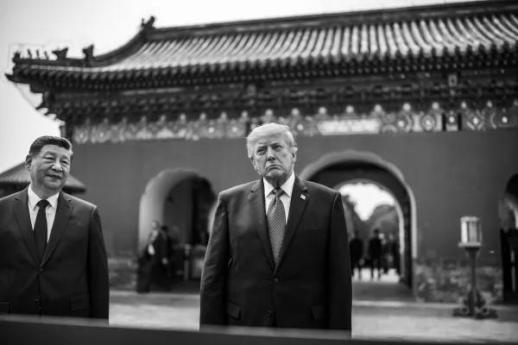 Trump-Xi chip bargaining puts Korean memory makers on alert SEOUL, September 18 (AJP) -From tariffs and rare earths to Iran and artificial intelligence, the U.S.-China summit on Sept. 24 has a crowded agenda. For South Korean chipmakers, the business issue to watch would be whether semiconductors become bargaining currency in a broader trade deal between the world's two largest economies. Chinese President Xi Jinping is said to be assembling an unusually large business delegation, possibly to match the high-profile entourage U.S. President Donald Trump brought to Beijing in May, which included 18 American business leaders such as Nvidia Chief Executive Jensen Huang and Elon Musk. China wants relief from U.S. restrictions on technology and greater access to advanced semiconductors. Washington, meanwhile, has been pressing Beijing over critical-mineral supplies and trade barriers while seeking commitments on purchases of American goods. An existing tariff truce expires Nov. 10. Semiconductors sit at the center of that bargaining because Washington controls access to much of the technology China still needs to move deeper into advanced chipmaking, while Beijing controls a vast technology market and important parts of the raw-material supply chain. The United States has restricted exports of advanced AI chips and chipmaking equipment to China since 2022, although the Trump administration has selectively eased some curbs. The Commerce Department in January shifted Nvidia's H200 and comparable processors to case-by-case licensing for approved Chinese customers, while keeping tighter controls on the most advanced products. Whether chipmaking equipment itself could become part of a summit bargain is less clear. There has been no public indication that Washington is prepared to dismantle its broader controls on advanced manufacturing technology. But for Beijing, equipment is increasingly the missing piece. China has made much faster strides in memory chips than it had only a few years ago. ChangXin Memory Technologies, or CXMT, has emerged as the world's fourth-largest DRAM maker. Its global DRAM revenue share climbed to 9.5 percent in the second quarter from 7.6 percent in the first, according to TrendForce, behind Samsung Electronics at 39.4 percent, SK hynix at 24.9 percent and Micron at 23.3 percent. CXMT this month announced mass production of LPDDR6, next-generation low-power memory used in mobile devices, after making substantial gains in DDR5. Its chips are increasingly being adopted across Chinese computing platforms. The Chinese company is now preparing to move beyond DRAM and mulling a NAND facility. Its Chinese peer YMTC is doing the opposite, testing low-power DRAM products as it looks beyond its traditional NAND business. The crossing of product lines by China's two major memory producers suggests Beijing's semiconductor drive is moving from simply filling domestic supply gaps toward building companies capable of competing across the memory spectrum. AI data-center construction has created severe shortages of both DRAM and NAND, giving even smaller suppliers greater bargaining power. Chinese memory makers have in some cases been able to charge domestic customers more than Samsung and SK hynix during the shortage, an unusual reversal for companies long dependent on price discounts to compensate for their technological lag. CXMT is gaining share among Chinese cloud-service providers, while domestic demand and government support give it a large captive market from which to improve yields and scale production. TrendForce said the company is expanding server DRAM output even as restrictions on foreign equipment continue to hamper progress at more advanced nodes High-bandwidth memory, or HBM, remains a much steeper barrier. Samsung and SK hynix retain a wide lead in HBM, the stacked high-speed memory used alongside Nvidia and other AI accelerators. Chinese producers are developing HBM products, but CXMT and other Chinese suppliers remain in early development and qualification stages, with limited near-term impact on the global market, according to TrendForce. China has built increasingly capable domestic suppliers of etching, deposition and other semiconductor equipment. Chinese equipment suppliers could capture as much as 40 percent of China's chip-tool market this year, excluding high-end technologies such as lithography. The largest gap remains at the cutting edge of lithography. ASML of the Netherlands holds an effective monopoly on extreme ultraviolet, or EUV, systems needed for the most advanced semiconductor processes. The company has never shipped an EUV machine to China. Its newest High-NA EUV systems cost about $400 million apiece and are being adopted by Samsung, SK hynix, TSMC and Intel for future generations of chips. China is developing its own immersion deep-ultraviolet equipment, but output remains tiny compared with ASML. Shanghai Aishengna Electronic Technology Group has targeted production of five domestic DUV systems this year and 20 next year, compared with 131 systems shipped by ASML in 2025. The equipment gap gives Washington leverage in negotiations with Beijing — and effectively gives Korean memory makers more time. Any meaningful loosening of restrictions that improves Chinese access to advanced lithography and other high-end manufacturing equipment could accelerate CXMT's migration to finer processes, improve yields and eventually shorten the technology gap with Samsung and SK hynix. The impact would probably appear first in mainstream DRAM and NAND rather than HBM. China's domestic producers already have scale and customers in those markets and better equipment would make it easier to raise yields, lower costs and push into products now dominated by the Korean and U.S. suppliers. Continued restrictions, on the other hand, preserve part of the technological moat enjoyed by Samsung and SK hynix but create a different problem for the Korean companies. Both have substantial manufacturing interests tied to China and must operate under an increasingly complicated U.S. export-control regime. Samsung and SK hynix have begun testing Chinese equipment partly because access to U.S.-made tools for their Chinese operations has become less certain. SK hynix's Solidigm is also considering building a NAND plant in the United States that could reduce its dependence on its Dalian manufacturing base in China. SK hynix separately has held exploratory discussions with Intel over possible memory production in Ohio. The pressure comes as Washington is simultaneously asking Korean chipmakers to manufacture more on American soil. Semiconductor investment has become part of Seoul's own negotiations with Washington, with President Lee Jae Myung saying Friday that the extent of additional U.S. production by Samsung and SK hynix would have to reflect both corporate decisions and South Korea's industrial strategy. The two countries are still negotiating details of South Korea's $350 billion U.S. investment commitment, including $200 billion of projects not earmarked for shipbuilding. Lee said questions over commercial viability, profit distribution and treatment of losses remain sticking points. A Washington-Beijing compromise that gives China greater access to advanced semiconductor technology could speed the emergence of a fourth major global memory supplier. A harder technology line would slow that challenge but increase pressure on Samsung and SK hynix to shift investment and production toward the United States and away from China. China has not caught South Korea at the top end of memory. In HBM and the manufacturing processes needed to make the most advanced chips efficiently, the gap remains substantial. But the distance below that top tier is narrowing fast. For Samsung and SK hynix, the question surrounding the Sept. 24 summit therefore is not simply whether Trump and Xi talk about chips. It is whether access to the equipment China still lacks becomes part of the price of a broader U.S.-China bargain — and how much time that bargain leaves Korea's memory giants before their Chinese rivals move further up the ladder. 2026-09-18 16:10:59
 -
 Samsung's people-first creed under test as chip bonanza deepens divisions Editors Note: This is the first of a two-part AJP series examining the side effects of the chip bonanza, starting with the widening fault lines inside Samsung Electronics. SEOUL, September 17 (AJP) - A few decades ago, every Samsung office had corporate slogans from founder Lee Byung-chull hanging on the wall. One read: "Men make business." Lee prided himself on having devoted 80 percent of his life to finding and cultivating talent. The creed ran through the spine of Samsung across three generations. Samsung has never been richer or more powerful, yet its people have rarely been so divided under the watch of Lee's grandson, Lee Jae-yong. Samsung Electronics Labor Union Donghaeng, representing workers in the company's once-hallmark home appliance and smartphone businesses, will launch an open-ended protest Friday near Lee's residence in Hannam-dong, central Seoul, over what it sees as pay injustice during the chip heyday. The relay of one-person protests will continue until its demands are met, the union says. Donghaeng wants 1,000 Samsung Electronics shares for each employee in the Device eXperience (DX) division, the creation of a companywide pool funded by a portion of corporate performance and a uniform base-pay increase rate across divisions. The dispute has grown beyond a disagreement over this year's compensation. It is increasingly reshaping Samsung's union landscape along the fault line between its semiconductor and consumer businesses. At the center of the divide is a wage agreement reached in May. Under the agreement, Samsung introduced a special performance bonus for its Device Solutions (DS) division, which houses its semiconductor operations, funded by 10.5 percent of the division's business performance. Employees in DX, which oversees smartphones, televisions and home appliances, were offered company shares worth about 6 million won ($4,300) each on top of the existing compensation system. The disparity triggered a backlash among some DX employees and raised a broader question over Samsung's practice of tying compensation closely to the performance of individual businesses when employees ultimately work for the same company. The tension has become particularly pronounced as Samsung's semiconductor earnings have surged to unprecedented levels with the AI boom, leaving its non-chip businesses relatively behind. A former Samsung Electronics employee, who requested anonymity, said differences in performance bonuses between business units were nothing new. In the past, employees largely accepted them because bonuses reflected the performance of their respective businesses and payouts were capped at 50 percent of annual salary, the former employee said. "When one business did well, people generally accepted that employees there would receive more," the person said. What has changed is the sheer scale of the money now at stake. "As the amounts have become much larger, the structure itself makes conflict difficult to avoid," the person said. The problem is particularly acute inside Samsung's semiconductor operations, where employees can be assigned or transferred among businesses including memory, System LSI and foundry. "Imagine how uncomfortable it can be in the elevator of a chip building when compensation can differ by hundreds of millions of won per person depending on which floor they work on," said another former Samsung Electronics employee. Employees may perform broadly similar work but receive substantially different compensation depending on the fortunes of the business unit to which they happen to belong. "If these were completely separate companies from the beginning, it might be different," the first former employee said. "But employees can move from memory to System LSI and between different organizations. When the difference becomes this large simply because of where someone happens to be at a particular point in time, there will inevitably be people who feel unfairly treated." The growing stakes are now visible in Samsung's union membership. Donghaeng had only about 2,600 members around the time the wage agreement was reached in May. Its membership has since surged, with recent reports putting the figure at around 30,000, making it Samsung Electronics' second-largest union. Samsung's largest union, the Samsung Group Super Enterprise Union's Samsung Electronics branch, has moved in the opposite direction. The union briefly exceeded 76,000 members and secured majority-union status earlier this year, but its membership has since declined. Its composition has changed even more dramatically. According to internal union data reported by local media, DX employees accounted for 28.1 percent of its membership at the end of March. By the end of August, their share had fallen to around 1 percent. The union is now pursuing a restructuring centered on Samsung's DS division and is considering limiting future membership to semiconductor employees. The shift shows how differences in business performance and compensation are increasingly shaping the way Samsung employees organize themselves. The split has also spilled outside the company. About 7,000 people attended a Donghaeng rally outside Samsung's Suwon campus on July 16, according to organizers, demanding that management address the compensation disparity. The union staged another protest near Samsung's Seocho headquarters in August. Friday's demonstration takes the campaign a step further, moving the dispute from Samsung workplaces to the vicinity of Lee's private residence. But Samsung's labor divisions are becoming more complicated than a simple DS-versus-DX split. Within the semiconductor division itself, employees in the foundry and System LSI businesses have raised concerns about compensation gaps with the highly profitable memory business. Samsung's largest union has signaled that improving performance-pay rules for employees in loss-making semiconductor operations will be among the issues it pursues in future negotiations. The former Samsung employee said this intra-division gap could be particularly difficult to accept because placement in a particular semiconductor business is not always entirely an employee's choice. New hires, for example, may be assigned to memory, System LSI or foundry while doing broadly comparable engineering work. That was less contentious when the potential difference in compensation was smaller. "In the past, even if there was a difference, people tended to think, 'That business did well, so they received more,'" the former employee said. "The situation changes when the absolute amount becomes much larger." The changing compensation landscape is also affecting the competition for engineering talent. The former Samsung employee recalled that Samsung itself had used compensation aggressively to attract overseas engineers during an earlier period of semiconductor expansion in the 2000s, offering competitive packages to lure experienced workers to Korea. "Compensation is probably the strongest advertisement when it comes to recruiting good people," the person said. The observation comes as Samsung competes with SK hynix for semiconductor engineers during an unprecedented AI-driven memory boom. Meanwhile, tensions within Samsung's largest union have intensified. Members are voting on a proposed DS-focused restructuring alongside no-confidence motions targeting two union officials. Union Chairman Choi Seung-ho has separately faced scrutiny over purchases of rally supplies from a company operated by his father-in-law. Choi has acknowledged the family relationship but said the supplier was selected after considering price, quality and delivery schedules. He denied providing improper financial benefits to himself or relatives. A separate criminal case has further strained relations among Samsung's unions. Police earlier this month referred Choi and another union official to prosecutors on suspicion of violating the Personal Information Protection Act in connection with personal information involving more than 100,000 Samsung employees. The case has prompted competing petition campaigns. Donghaeng has collected more than 15,000 signatures seeking strict punishment, while Samsung's largest union this week began seeking up to 30,000 signatures asking authorities for leniency for Choi and another official. The latter has budgeted about 20 million won ($14,000) in union funds for the electronic petition campaign, prompting internal questions over the use of membership dues. The developments mark a sharp turn from earlier this year, when Samsung's major unions joined forces in wage negotiations with management. The dispute is now unfolding on several fronts — between labor and management, between unions representing employees with different compensation interests and, increasingly, within the unions themselves. Donghaeng Union has borrowed Samsung's founding creed in an ad it has been running on a Times Square billboard since early this month. It is not just a protest, but a reminder of what the company was built on — and what it risks losing if widening divisions among its own people are left unattended. AJP Takeaways - Samsung's chip boom is widening compensation gaps between its semiconductor and consumer electronics employees. - The divide is reshaping Samsung's labor landscape, with unions increasingly organizing around different business and compensation interests. - The dispute is spreading within the chip division itself, raising questions over whether Samsung's performance-based pay system remains sustainable as payouts surge. 2026-09-17 16:51:20
 -
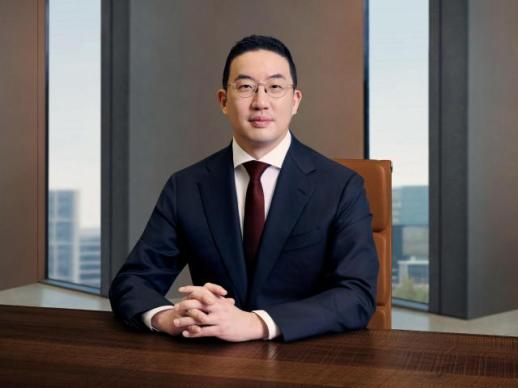 LG chiefs gather to sharpen AI strategy SEOUL, September 17 (AJP) - LG Group Chairman Koo Kwang-mo and executives from major affiliates gathered to review the conglomerate's investment strategy as artificial intelligence reshapes industries and technology, the group said Thursday. About 40 executives from LG Electronics, LG Display, LG Innotek, LG Chem, LG Energy Solution and LG Uplus attended the eight-hour meeting held Wednesday at the LG Academy in Icheon, south of Seoul. Executives reviewed existing investments and future strategies in areas including AI factories, physical AI, semiconductor materials and substrates, and AI transformation, or AX. "AI is no longer an area we can address selectively, but a key pillar that will determine our future competitiveness," Koo said, calling on executives to move quickly in areas the group sees as critical to its AI strategy. LG has been holding quarterly executive meetings focused on different strategic themes this year, including AX in March, research and development in June and investment strategy this month. AJP Takeaways - Koo Kwang-mo and about 40 LG executives held an eight-hour strategy meeting. - AI factories, physical AI, semiconductors and AX were among the key investment areas reviewed. - Koo described AI as a key pillar of LG's future competitiveness. 2026-09-17 13:29:36
 -
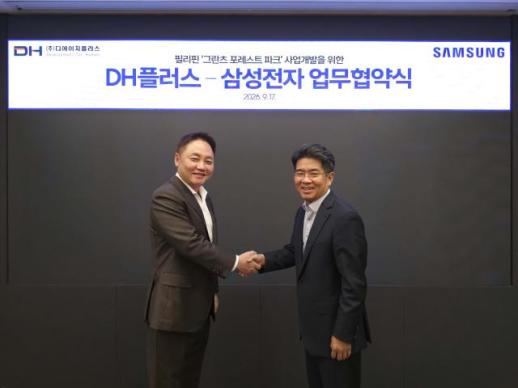 Samsung to power Cebu development with AI systems SEOUL, September 17 (AJP) - Samsung Electronics will supply AI-powered home appliances and building management systems to a mixed-use development in Cebu, the Philippines, as the company expands its business-to-business solutions in Southeast Asia. Samsung said Thursday it signed a memorandum of understanding with South Korean property developer DH Plus to provide AI appliances, SmartThings Pro and its b.IoT building management platform for the Glanz Forest Park project. Scheduled for completion in 2030, the development will span about 66,000 square meters and include three residential buildings, a hotel, private villas, commercial facilities and an international school. Samsung plans to install TVs, air conditioners, refrigerators and washing machines in the residential and hotel facilities and connect them through its SmartThings platform. SmartThings Pro will allow building managers to remotely monitor equipment and manage facilities. The company's b.IoT platform will be used to manage heating, cooling, lighting and power systems across common areas and other facilities. The system can also analyze electricity consumption and costs when linked with SmartThings Pro. Samsung also plans to deploy b.IoT at the project's hotel, commercial facilities and international school, using digital twin technology to monitor equipment and predict maintenance needs. An AI agent will be used to manage systems including air conditioning, lighting, electricity and security. Samsung said the project will serve as a model for expanding its integrated B2B building solutions across Southeast Asia. AJP Takeaways - Samsung will supply AI appliances and building management systems to the Glanz Forest Park mixed-use development in Cebu, the Philippines. - The roughly 66,000-square-meter project is scheduled for completion in 2030 and will include residences, a hotel, villas and an international school. - Samsung will deploy SmartThings Pro, b.IoT and digital twin technology to remotely monitor and manage appliances, energy use and building infrastructure. 2026-09-17 11:26:32
 -
 SK hynix plays down speculation of Intel fab tie-up SEOUL, September 16 (AJP) -Shares of SK hynix shot up nearly 4 percent Wednesday on a report that the South Korea-based memory giant was considering producing memory chips in the United States at an Intel facility, a scenario the chipmaker later played down. "We are intent on adding an overseas fab, and reviewing multiple countries and sites," a company spokesman said, declining to name the countries under consideration or confirm whether Intel was among the potential partners. Reuters reported that SK hynix was in talks with U.S. chipmaker Intel, citing three people familiar with the discussions. SK hynix's American depositary receipts have traded on Nasdaq since July. Options under discussion include leasing part of Intel's long-planned chipmaking complex in Ohio or forming a venture with Intel and major cloud companies seeking to secure long-term memory supplies, according to the report. "The report went way ahead with scenario. We're still in the review stage," the spokesman said, declining to confirm whether talks with Intel were under way. SK hynix has increasingly become a target for governments and global technology companies seeking to secure memory supplies as artificial intelligence drives explosive demand for high-bandwidth memory, or HBM. The company commanded 50 percent of the global HBM market by revenue in the second quarter, ahead of Samsung Electronics at 33 percent and Micron Technology at 18 percent, according to Counterpoint Research. HBM stacks multiple DRAM chips to sharply increase data-transfer capacity and has become a critical component of graphics processors and other AI accelerators. Its HBM gambit, which put SK hynix at the heart of Nvidia's AI chip supply chain, has translated into a massive cash windfall and given the chipmaker greater financial capacity to expand overseas. The company's operating profit surged nearly sixfold to 98.2 trillion won ($72 billion) in the first half from 16.7 trillion won a year earlier, driven by booming AI-memory demand and sharply higher chip prices. Cash and cash equivalents increased by 33.6 trillion won during the second quarter to 88 trillion won, while total debt fell to 18.6 trillion won, leaving SK hynix with a net cash position of 69.4 trillion won. Its chip muscle invited both pressure and courting. U.S. Commerce Secretary Howard Lutnick said earlier this month that the Trump administration was preparing a semiconductor tariff policy aimed at encouraging chipmakers to manufacture in the U.S. "What you're going to see is targeted, thoughtful tariff policy that basically says if you build here, you don't pay," Lutnick told CNBC's Squawk Box. "But if you don't build here, expect to pay to enter the greatest market in the world." SK Group Chairman Chey Tae-won acknowledged the pressure in July, saying SK hynix was facing heavy lobbying from customers and governments seeking additional chip supplies and that the company may need to build a U.S. factory. SK hynix has already committed more than $4 billion to an advanced HBM packaging and research facility in West Lafayette, Indiana, where it broke ground last month. The facility, scheduled to begin mass production in 2029, will package and test next-generation HBM but will not serve as a front-end wafer fabrication plant. A deal involving Intel's Ohio site could therefore mark a substantially deeper move into U.S. manufacturing by bringing memory-chip fabrication itself onto American soil. Such a move could be politically sensitive in Seoul. Semiconductor technologies are designated as "national core technologies" in South Korea, meaning overseas transfers involving protected technologies are subject to government review under the Industrial Technology Protection Act. SK hynix runs a DRAM manufacturing base in Wuxi, China, but its most advanced HBM investments remain concentrated at home. Speculation over another overseas production base surfaced when Chey visited Japan on Aug. 31 for a Korea-Japan business meeting in Sendai. Local media reported that SK hynix could establish a semiconductor manufacturing joint venture in Japan after Chey, asked about investment plans, said, "We are in the process of studying." AJP Takeaways - SK hynix played down a Reuters report that it was discussing a U.S. memory fab tie-up with Intel, saying it is still reviewing multiple countries and sites for an overseas plant. - HBM gambit has made SK hynix the global market leader with about a 50 percent share, while first-half operating profit surged nearly sixfold to 98.2 trillion won. - Washington is intensifying pressure on Asian chipmakers to manufacture in the U.S., raising the strategic importance of SK hynix's next overseas fab decision. 2026-09-16 16:49:26
 -
 SK hynix workers approve revised wage deal SEOUL, September 16 (AJP) -SK hynix workers approved a revised wage and collective bargaining agreement Wednesday after the company and its production union adjusted the mix of cash and stock in profit-sharing bonuses, ending a dispute that forced the two sides back to the bargaining table after an initial deal was narrowly rejected. The revised agreement won support from 57.08 percent of union members who voted, or 8,731 workers, in a two-day ballot held Monday and Tuesday, SK hynix said Wednesday. The vote clears the way for the chipmaker and the union to complete this year's wage negotiations about three weeks after workers rejected the first tentative agreement on Aug. 25 by just 25 votes. SK hynix said the two sides held about two weeks of intensive negotiations after the rejection and reached the revised agreement on Sept. 9. The central change was the treatment of the company's profit-sharing bonus, known as PS. The revised agreement raises the cash portion of PS to 50 percent from 40 percent and lowers the stock portion to 50 percent from 60 percent. It also gives employees greater choice over how they receive the bonus. Workers can convert part or all of the cash portion into SK hynix shares in increments of 10 percentage points, allowing those who choose to receive as much as 100 percent of their PS in stock. The arrangement represents a compromise between employees seeking greater cash payments and management's effort to increase stock-based compensation. Profit-sharing has become an increasingly important part of compensation at SK hynix as booming demand for high-bandwidth memory, or HBM, used in artificial intelligence accelerators has sharply increased the chipmaker's earnings. Under a framework agreed last year, SK hynix removed the previous ceiling on PS and set aside 10 percent of annual operating profit for the bonus pool for 10 years. The revised labor agreement also formally introduces a provision allowing wages to be deferred when the company posts a loss. SK hynix described the provision as a commitment by workers and management to share responsibility not only when profits are strong but also when the company faces financial difficulties. The company said it held about 60 employee briefing sessions during the renewed voting process to explain the purpose and expected effects of the revised compensation system. SK hynix said those sessions helped employees better understand the changes, although that assessment came from the company. The agreement comes as labor organization at SK hynix is also changing. A newly established integrated union spanning production, technical and office workers has been seeking to expand its membership and has made preservation of cash-based PS payments one of its priorities. SK hynix has at the same time been stepping up returns to shareholders alongside sharply higher earnings from the AI memory boom. The company last month announced a record 40 trillion won ($28.6 billion) share buyback and cancellation program and said it would return more than 50 percent of cumulative free cash flow generated from 2025 through 2027 through dividends, buybacks and share cancellations. “We thank the labor union and our employees for working through a difficult process,” SK hynix said. “We will continue to address future challenges together through cooperation between the company and its employees.” Shares of SK hynix were 1.66 percent higher at 1,717,500 won, outperforming its peer Samsung Electronics and the main KOSPI that mostly stayed flat during early Wednesday session. The company plans to hold a signing ceremony before the Chuseok autumn harvest holiday to formally conclude this year's wage and collective bargaining process. AJP Takeaways - SK hynix workers approved a revised 2026 wage deal with 57.08 percent support, three weeks after the first agreement was rejected by just 25 votes. - The compromise raises the cash portion of profit-sharing bonuses to 50 percent from 40 percent, while allowing workers to voluntarily convert cash into shares and receive as much as 100 percent in stock. - The deal ends a closely watched dispute over sharing SK hynix’s AI-driven earnings, as the chipmaker balances employee compensation with record shareholder returns and heavy HBM investment. 2026-09-16 10:24:10
 -
 LG Electronics to test heat pump system at occupied residence in Jeju SEOUL, September 15 (AJP) - LG Electronics will test a heat pump-based heating and hot water system at an occupied apartment complex on Jeju Island, marking the first such demonstration at a residential apartment building in South Korea, the company said Tuesday. LG signed a memorandum of understanding with the Jeju provincial government, Jeju Development Corp. and the Korea Institute of Industrial Technology on Tuesday to carry out the project. The system will be installed at Sinhyo Apartment in Seogwipo, a seven-story building with 12 occupied households. Design work is scheduled to be completed in October, with construction due to finish in December before testing begins. The project will replace conventional boilers and gas piping with electric heat pumps. Individual households will use heat pumps for both direct cooling and floor heating, while a central air-source heat pump and large hot-water storage tank will supply hot water to the building. The central system can also use surplus electricity generated from renewable sources such as solar power to produce and store heat for later use, potentially reducing electricity demand when the grid is under pressure. LG will be responsible for system design, equipment supply, maintenance and performance evaluation, while the Jeju government will handle policy coordination. Jeju Development Corp. will provide the building and operate the system, with the Korea Institute of Industrial Technology overseeing system design and data analysis. LG plans to use operating data from the project to develop heat pump systems for other types of multifamily housing, including public rental apartments, renovated buildings and new residential complexes. AJP Takeaways - LG Electronics will test a heat pump-based heating and hot water system at an occupied apartment complex on Jeju Island, a first in South Korea. - The system will replace conventional boilers and gas piping, combining household heat pumps with a central hot-water system. - Testing is scheduled to begin after construction is completed in December, with LG seeking to expand the model to other multifamily housing. 2026-09-15 16:44:01