

Journalist

Candice Kim김혜준
candicekim1121@ajupress.com
ReporterSamsung Electronics, SK hynix, LG Electronics, Olive Young, Musinsa & Semiconductor, K-Beauty
Candice Kim is a dedicated business and technology reporter specializing in the intersection of high-tech innovation and fast-paced consumer trends. Her core beats span the semiconductor, IT, cosmetics, and retail sectors, where she provides in-depth coverage of industry titans including Samsung Electronics, SK hynix, and LG Electronics, alongside leading consumer brands like Olive Young and Musinsa. Whether analyzing complex silicon supply chains or tracking the latest shifts in beauty and fashion retail, Candice is committed to delivering sharp, accurate reporting that keeps readers informed on the forces shaping today's most dynamic markets.
"Connecting the dots from silicon chips to consumer shifts."
Latest by Candice Kim
-
 LG Electronics lands 5-GW AI data center cooling deal in America SEOUL, October 06 (AJP) -LG Electronics is expanding its cooling business on the back of the AI data center boom, securing a long-term deal to supply systems for 5 gigawatts of capacity in North America as cooling becomes critical to keeping increasingly powerful AI processors from overheating and sustaining their performance under heavy computing loads. LG's U.S. unit signed a long-term supply agreement with AIR Control Concept, a North American data center infrastructure company, to provide high-efficiency chillers and other cooling systems in phases, the company said Tuesday. The financial terms and supply period were not disclosed. The 5-GW capacity represents a sizable order as demand for electricity and cooling infrastructure rises alongside AI computing. Global data center power capacity is expected to increase by 108 GW to 334 GW in 2027 from 226 GW this year, according to Omdia figures cited by LG. LG and AIR are also discussing expanding the partnership to coolant distribution units, or CDUs, used in liquid-cooling systems as increasingly powerful AI processors generate more heat. LG said orders for its AI data center cooling solutions exceeded 600 billion won ($447 million) in the first half of this year and are expected to reach several trillion won by year-end. The company has been expanding the business in North America as well as the Middle East and Southeast Asia. 2026-10-06 10:48:49
 -
 Hackers find weak links outside Korean banks' core systems SEOUL, October 05 (AJP) - A wave of cyberattacks on South Korean banks has exposed a weak point outside their heavily protected core banking networks, with hackers targeting employee and sales-support systems that still contain sensitive customer data. Recent breaches at Shinhan Bank, KB Kookmin Bank and Hana Bank did not penetrate their main internet or mobile banking systems. Instead, attackers accessed peripheral services used by loan recruiters, employees and sales staff. At Shinhan, attackers bypassed authentication on a simplified inquiry service for loan recruiters, exposing information belonging to about 25,000 customers. The breach is notable because Shinhan had already reviewed authentication-bypass vulnerabilities in 2024 following a request from the Financial Supervisory Service and reported taking corrective measures, according to its information-security disclosure. Similar weaknesses appeared elsewhere. KB Kookmin was breached through an employee mobile support system, while attackers accessed Hana through an outside sales support system. Neither involved the banks' core transaction networks. The incidents are raising questions over whether banks' cybersecurity defenses extend consistently beyond their most heavily protected systems. South Korea's major banks spend tens of billions of won annually on information security. Last year, KB Kookmin spent 43.3 billion won ($30 million), followed by Hana with 37.2 billion won, Shinhan with 36.9 billion won and Woori with 36.4 billion won. Financial authorities have identified insufficient authentication, access controls and unaddressed vulnerabilities among the weaknesses exposed by the recent attacks. Financial Services Commission Chairman Lee Eog-weon warned that even a single unmanaged gap could undermine an otherwise robust security system. The attacks suggest that protecting core banking networks alone may no longer be enough, as hackers increasingly search for weaker systems connected to financial institutions. 2026-10-05 17:17:26
 -
 S. Korea concludes North Korean mine injured troops south of border SEOUL, October 05 (AJP) - South Korea's military said Monday it has concluded that landmines planted by North Korea south of the Military Demarcation Line injured three South Korean troops in the Demilitarized Zone last month, and said it would begin removing the North Korean minefield later in the day. The Sept. 21 explosions occurred during an operation in the western section of the DMZ to prepare a search route for an investigation into suspected North Korean mine-laying activity. Two troops were seriously injured and one suffered minor injuries. The military had previously said North Korean mines were the highly likely cause after investigators found evidence inconsistent with South Korean mines and discovered an unexploded plastic anti-personnel mine of a type used by North Korea near the site. 2026-10-05 16:29:57
 -
 Samsung earnings kick off key October for chip industry SEOUL, October 05 (AJP) - The global semiconductor industry is heading into a busy stretch of October, with Samsung Electronics set to report preliminary earnings this week before a series of major chip events and earnings releases put the strength of the AI-driven boom to another test. Samsung is scheduled to release its preliminary third-quarter results on Thursday, Oct. 8, providing the first major earnings signal from South Korea's semiconductor industry after Micron Technology delivered record results and a bullish outlook last week. Micron forecast even tighter memory supply conditions in 2027 and 2028, driven by continued demand for high-bandwidth memory and other chips used in AI infrastructure. Its outlook helped reinforce expectations that the current memory upcycle could extend well beyond this year. Attention will then shift to a series of industry events and earnings releases next week. Samsung Semiconductor will participate in the OCP Global Summit in San Jose from Oct. 12 to 15, where it plans to showcase memory and storage technologies designed for expanding AI infrastructure, including CXL-based memory pooling and technologies for AI inference. In Seoul, SEDEX 2026, South Korea's largest semiconductor exhibition, will run from Oct. 14 to 16 at COEX, bringing together Samsung Electronics, SK hynix and companies across the chip equipment, materials and component supply chain. The event will include sessions on advanced semiconductor packaging and other next-generation technologies. The focus will also turn to global semiconductor bellwethers, with ASML and TSMC expected to report third-quarter results in mid-October. Their results will provide further clues on whether strong AI-related spending is continuing to translate into demand for advanced chipmaking equipment and leading-edge semiconductor production. The busy calendar follows Micron's stronger-than-expected outlook and South Korea's record semiconductor exports in September, which more than tripled from a year earlier amid surging AI demand. For investors and the chip industry, Samsung's preliminary results this week will mark the next major checkpoint in determining how much momentum the AI-driven memory boom carries into the final quarter of the year. 2026-10-05 14:33:46
 -
 Korea financial cyberattacks spread to online lenders as security gaps emerge SEOUL, October 05 (AJP) - Cyberattacks targeting South Korea's financial industry have spread to online investment firms, while regulators say differences in basic security controls appear to have determined how much damage individual companies suffered. PFC Technologies and Mouda, both online investment-linked finance companies, have disclosed security breaches, expanding the list of affected institutions beyond commercial banks, savings banks and financing companies. At least seven banks and other traditional financial institutions have reported breaches, including Shinhan Bank, KB Kookmin Bank, Hana Bank, BNK Busan Bank, Yegaram Savings Bank, Welcome Savings Bank and Hyundai Capital. Updated figures showed stark differences in the scale of exposure. Shinhan reported 25,727 compromised records, compared with 153 at KB Kookmin and information involving 89 customers at Hana. Yegaram reported about 40,000 exposed records, while Welcome identified roughly 2,200. Financial authorities found the same attacker IP address in incidents involving commercial banks, although IP addresses identified in attacks on savings banks and financing companies were different. Authorities said the attack methods appeared similar and are examining whether the incidents are connected. Woori Bank and NH NongHyup Bank were also targeted but successfully blocked the attacks. Securities, insurance and credit card companies have so far reported no confirmed breaches despite facing attempted intrusions. Regulators and cybersecurity experts said differences in multi-factor authentication, access controls, encryption and management of externally exposed systems appear to have contributed to the wide disparity in damage. Financial Services Commission Chairman Lee Eog-weon ordered institutions to review externally exposed IT assets and services, authentication and access controls and intrusion-detection systems. Banks and credit card companies have been instructed to complete emergency security inspections by Oct. 6, while securities firms, insurers, savings banks and electronic financial service providers face an Oct. 8 deadline. Authorities are also watching for secondary damage, including voice phishing and malicious text-message scams using stolen personal information. 2026-10-05 10:20:26
 -
 Zelensky says Seoul requested transfer of North Korean POWs SEOUL, October 05 (AJP) - Ukrainian President Volodymyr Zelensky said South Korea had requested the transfer of two captured North Korean soldiers to Seoul, while claiming Russia has shared jet-powered drone technology with Pyongyang. "South Korea asked us to give them North Korean soldiers," Zelensky told reporters Sunday. "By the way, according to their constitution, they are their citizens … so we gave them these two guys." The remarks came amid a diplomatic dispute between Seoul and Kyiv over Zelensky's disclosure at the United Nations General Assembly last month that Ukraine had transferred the two North Korean prisoners of war to South Korea. South Korea says the two sides had agreed to keep the transfer confidential, partly because of concerns over the soldiers' safety and their families in North Korea. Seoul's National Intelligence Service said last week that Ukraine had initially requested strict confidentiality during discussions over the transfer. President Lee Jae Myung has demanded that Kyiv acknowledge the confidentiality agreement and apologize for breaching it. Zelensky did not directly address the dispute over the agreement in his latest remarks. Zelensky also said he believed Moscow had transferred technology behind its latest jet-powered drones to North Korea as military cooperation between the two countries deepens. Asked whether Russia had shared the technology with Pyongyang, Zelensky said, "Yes, of course." "They are sharing with North Korea all the technologies," he said. "I don't know about the ballistic and etc, but I think, yes, because North Korea helped them with missiles." North Korea has supplied Russia with artillery shells and ballistic missiles during the war, while thousands of North Korean troops have been deployed to Russia and gained battlefield experience, according to Ukraine and South Korean and Western officials. Zelensky said captured North Korean troops indicated that the soldiers had received training and accumulated experience in drone operations and countering electronic warfare, warning that such battlefield knowledge could eventually spread through the North Korean military. South Korea and Western countries have repeatedly raised concerns that Moscow could provide Pyongyang with advanced military technology in return for North Korea's support for Russia's war in Ukraine. 2026-10-05 09:50:05
 -
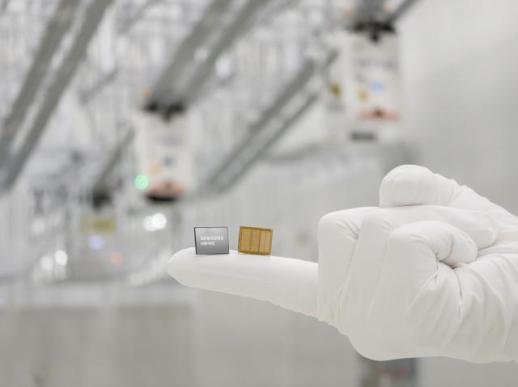 HBM heyday to continue - albeit at consumers' expense SEOUL, October 02 (AJP) - Regardless of AI doomsayers and the industry’s own rhetoric about policing itself, big tech companies and frontier AI developers show little sign of slowing their race to build more powerful models, pushing an already strained memory supply chain harder. South Korea’s preliminary trade data put chip exports at $340.3 billion in the first nine months of this year. September shipments alone reached $60.3 billion — nearly matching Japan’s entire goods exports of $64.5 billion in August and equivalent to about 30 percent of U.S. goods exports that month. The boom appears to have further to run. TrendForce expects the blended average selling price of high-bandwidth memory, or HBM, used in AI accelerators to jump 121 percent in 2027. The forecast reflects both persistent shortages and a growing share of more expensive HBM4 products in the sales mix. For Samsung Electronics and SK hynix, that points to another year of strong pricing power as customers compete for production capacity that cannot expand fast enough. The HBM oligopoly — SK hynix, Samsung and Micron — faces an increasingly difficult allocation problem. HBM and conventional DRAM draw on overlapping manufacturing capacity, meaning more production devoted to advanced AI memory leaves less available for other uses. The squeeze is already extending well beyond HBM. TrendForce expects conventional DRAM contract prices to rise another 10 to 15 percent quarter-on-quarter in the fourth quarter of 2026, with NAND flash prices increasing 15 to 20 percent. Enterprise solid-state drives, used in data centers, are forecast to rise even faster at 23 to 28 percent as cloud companies expand storage for AI inference and agentic AI workloads. Korea’s export figures show how sharply the cycle has turned. Memory shipments alone reached $54.07 billion in September, up 358.6 percent from a year earlier. Benchmark prices have continued to climb. The contract price of 16-gigabit DDR5 rose to $48 in September from $45 in July and $46.50 in August. The price of 128-gigabit NAND increased to $30.61 from $30.05 and $30.48 over the same period, according to ministry data. Samsung and SK hynix are positioning themselves to capture more of that spending. SK hynix began mass shipments of HBM4 in the second quarter and outlined plans to expand production in the second half. It has also concluded negotiations on long-term supply agreements with around 10 customers seeking greater certainty over future memory supplies. Samsung posted record quarterly earnings in the second quarter and is expanding its focus on HBM4, high-capacity DDR5 and enterprise SSDs as AI infrastructure investment drives demand for more advanced memory products. Yet the next stage of the HBM boom may involve a retreat from the industry’s recent race to stack more memory dies. GPU and custom AI chip developers are increasingly evaluating eight-layer HBM instead of 12-layer configurations to contain costs and stretch scarce supplies, according to TrendForce. Fewer dies per stack would allow the same memory output to support more accelerators. The saving comes with a catch: a cheaper stack can still mean more expensive memory per unit of capacity. Each stack requires a base die whose cost does not fall proportionately with the number of memory layers. Spread across fewer layers, that cost raises the price per gigabit. TrendForce expects eight-layer HBM to command a premium of roughly 10 to 20 percent per gigabit over comparable 12-layer products in 2027. Customers may therefore spend less on memory in each accelerator while paying more for the capacity they receive. Storage demand is adding another source of pressure. As AI moves from model training into everyday deployment, systems need to store and retrieve growing volumes of data. TrendForce expects enterprise SSD demand measured in bits to increase more than 80 percent this year, with much of the additional supply already committed to customers. Consumer electronics makers are feeling the other side of the boom. Higher component costs are weighing on notebook and smartphone demand. Some PC brands are reducing SSD capacity in mainstream models to contain costs, while smartphone manufacturers are drawing on existing inventories and limiting new purchases. Such resistance is restraining price increases in consumer-oriented memory even as AI-related demand remains strong. In South Korea, electronics prices are climbing against a backdrop of weak spending on durable goods. August industrial activity data showed sales of durable goods, a category that includes cars, computers and household appliances, fell 5.6 percent from a year earlier. September consumer price data released Friday showed mobile phone prices rose 8.3 percent on year and computer prices up 27.4 percent, far outpacing headline inflation of 2.9 percent. For Samsung and SK hynix, sustaining the earnings run increasingly depends on their product mix. HBM, server DRAM and enterprise SSDs are drawing the strongest demand and a growing share of production resources. The HBM heyday looks set to extend into 2027. But as consumers face higher prices or reduced memory and storage in their next phone or PC, its reach will also depend on how much they are willing to pay. AJP Takeaways - HBM prices are set to more than double in 2027, with TrendForce forecasting a 121 percent rise in blended average selling prices as HBM4 adoption grows and supply remains tight. - The AI squeeze is spreading across memory, with fourth-quarter DRAM prices forecast to rise 10–15 percent, NAND 15–20 percent and enterprise SSDs 23–28 percent. - Samsung and SK hynix stand to benefit from stronger pricing, but consumers may face the other side of the boom through higher electronics prices or lower memory and storage specifications. 2026-10-02 14:36:25
 -
 SK hynix says no decision made on Solidigm U.S. IPO SEOUL, October 01 (AJP) - SK hynix said Thursday that no decision has been made on a potential U.S. listing of its NAND subsidiary Solidigm, amid concerns that an initial public offering could dilute the economic interests of existing shareholders. "We are reviewing various options to strengthen Solidigm's competitiveness, but nothing has been decided," SK hynix said in a statement. The chipmaker said Solidigm continues to assess investment needs to expand production capacity and strengthen its technological competitiveness, while potential funding options could include both internal resources and external capital. SK hynix stressed that long-term shareholder value would be the key criterion in any decision, saying it would consider the financial impact of external fundraising on existing shareholders and review appropriate shareholder protection measures. The statement follows a Reuters report that Solidigm has been meeting investment banks over a potential U.S. IPO that could take place as early as next year. Solidigm was formed from Intel's former NAND and SSD business, which SK hynix acquired as part of a $9 billion deal announced in 2020. AJP Takeaways - SK hynix said no decision has been made on a potential U.S. IPO of Solidigm. - The company is considering both internal funding and external capital to support Solidigm's investment needs. - SK hynix said long-term shareholder value will guide any decision and pledged to consider measures to protect existing shareholders. 2026-10-01 11:29:23
 -
 Micron signals longer AI bonanza for Samsung, SK hynix SEOUL, October 01 (AJP) - Micron Technology’s record earnings and unusually bullish outlook reinforced expectations that an AI chip windfall will extend the record earnings streak for the three memory majors, including Samsung Electronics and SK hynix, through 2027 and into 2028. The U.S. memory chipmaker reported fiscal fourth-quarter revenue of $54.23 billion, up 31 percent from the previous quarter and nearly fivefold from a year earlier. Non-GAAP operating income reached $44.64 billion, giving Micron an operating margin of 82.3 percent. For its bigger Korean counterparts, the more consequential numbers came from Micron’s outlook and its earnings call early Thursday Korea time. Micron forecast revenue of $61.5 billion, plus or minus $1.5 billion, for the current quarter, comfortably above Wall Street’s estimate of about $57 billion. It expects adjusted gross margin of about 86.25 percent and adjusted earnings of $38.15 per share, plus or minus $1. The bullish figures, however, offered little relief to Korean chip stocks as investors in Seoul fretted over the continued surge in U.S. Treasury yields. Both Samsung Electronics and SK hynix were mostly flat in early Thursday trading. Micron projected even more supply-side favorable conditions over the next two years. “We expect memory and storage supply-demand conditions to be much tighter in calendar 2027 and 2028 than they were in 2026,” Micron Chief Executive Sanjay Mehrotra said during the earnings call. Micron expects the DRAM industry to remain supply-constrained in both years, even as industry bit shipments grow at annual rates in the low-20 percent range. High-bandwidth memory (HBM) shipments are expected to grow faster than conventional DRAM through 2028, further tightening supply because HBM consumes considerably more wafer capacity. “We do not have line of sight to when supply and demand will return to balance,” Mehrotra said. The assessment matters directly to Samsung and SK hynix, which from an oligopoly with Micron in the global DRAM market and vie to supply the rapidly expanding market for HBM used in AI accelerators. In its Sept. 29 report, market tracker TrendForce raised its forecast for HBM’s blended average selling price in 2027 to a 121 percent year-on-year increase. The projection echoes persistent supply constraints voiced by the suppliers, a growing share of higher-priced HBM4 and a heated race toward next-generation HBM technology that is putting further pressure on limited production capacity. TrendForce said expanding AI server demand is keeping HBM and conventional DRAM in competition for limited advanced-process and wafer capacity. Improving yields and ramping up next-generation products will take time, keeping supply tight through 2027. Micron’s order book suggests customers are increasingly unwilling to wait for additional capacity. More than 75 percent of the company’s fiscal 2027 shipments have already been committed, allowing Micron to shift some customer allocation discussions into 2028, executives said. Financial commitments under its long-term Strategic Customer Agreements have climbed to $32 billion from $22 billion in June. Remaining performance obligations, representing contracted revenue yet to be recognized, have risen to about $150 billion from roughly $100 billion in the previous quarter. HBM is even tighter. Micron said it has completed agreements covering the vast majority of its calendar 2027 HBM bit supply at prices significantly higher than those negotiated for 2026. “For 2027, a large part of the volume is already sold out for 2027 for HBM, and the prices are much higher than 2026 prices,” Mehrotra said. The combination of committed volumes and higher pricing strengthens the earnings outlook for Samsung and SK hynix ahead of their own third-quarter results. Both Korean companies have been expanding long-term agreements with major AI and cloud customers seeking to secure memory capacity years in advance. SK hynix said in July that it had completed long-term agreements with around 10 key customers and was discussing additional multiyear contracts with other major clients. Samsung has also been increasing its use of long-term supply agreements. The two companies are already expected to report another exceptionally profitable quarter. Recent FnGuide estimates put Samsung Electronics’ third-quarter operating profit above 100 trillion won ($70 billion), while SK hynix is expected to generate roughly 70 trillion won or more. Samsung Electronics releases its earnings guidance next week. Micron’s outlook suggests the bigger question may no longer be whether the current quarter sets another record, but how far into 2027 and 2028 the favorable pricing environment can extend. As HBM absorbs more manufacturing capacity, less remains available for conventional server, PC and mobile memory. Mehrotra said the transition from HBM3E toward HBM4 and HBM4E would create additional “headwinds with respect to supply growth,” while future DRAM process transitions are providing smaller productivity gains per wafer. The shortage and rising costs are also beginning to influence AI chip designs. According to TrendForce, graphics processor and custom AI chip developers are considering HBM stacks with eight DRAM layers instead of the previously planned 12. Using fewer layers lowers memory capacity and cost per stack, allowing a given amount of HBM production to support more processors. The shift reflects supply and cost constraints rather than weakening end-market demand, the research firm said. But thinner stacks bring their own cost penalty. Each still requires a base die, whose cost is spread across less memory capacity. TrendForce expects eight-layer products to command a roughly 10–20 percent price premium per gigabit over 12-layer versions in 2027. Such changes could ease the total cost of individual AI processors, but are unlikely to reverse the broader rise in HBM prices. Building new fabs offers no quick fix either. Micron is expanding capacity across the United States, Japan, Taiwan and Singapore, but much of that production will take years to reach meaningful volumes. Its first Idaho expansion is expected to begin wafer output around mid-2027, with additional capacity in Japan and the United States arriving later. Even after new cleanrooms begin production, output increases only gradually, Mehrotra told analysts. Demand, meanwhile, continues to expand. Micron expects server unit shipments to grow in the high teens in both 2026 and 2027. Larger AI models, longer context windows, more simultaneous users and the spread of AI agents are also increasing memory requirements per system. The boom extends beyond HBM. Micron’s data-center solid-state drive revenue approached $10 billion in the latest quarter, more than 10 times its level a year earlier, as AI systems increasingly use NAND storage for tasks such as offloading cached data used during inference. For Samsung, that broadening demand could be particularly significant because its memory portfolio spans HBM, conventional DRAM and NAND. For SK hynix, Micron’s comments reinforce the value of its established HBM position as customers reserve next-generation capacity before it reaches mass production. A sharp slowdown in AI infrastructure spending could eventually weaken demand, while aggressive capacity expansion could loosen supply further out. For now, Micron expects the shortage to persist. “As we noted, in calendar 2027 as well as 2028, we see demand exceeding supply,” Mehrotra said. “Overall, supply-demand environment is only getting tighter.” For Samsung and SK hynix, the results suggest the shortage underpinning Korea’s record chip profits has years left to run. AJP Takeaways - Micron expects memory supply-demand conditions to tighten further through 2027 and 2028, with DRAM remaining supply-constrained as AI and HBM demand absorbs more production capacity. - More than 75 percent of Micron's fiscal 2027 shipments are already committed, while the vast majority of its 2027 HBM supply has been secured at significantly higher prices than in 2026. - The outlook strengthens expectations for an extended earnings boom at Samsung Electronics and SK hynix, with both Korean chipmakers already forecast to post record or near-record third-quarter profits. 2026-10-01 11:15:15
 -
 Lee Kun-hee Collection lands in London for first European showcase SEOUL, October 01 (AJP) - A selection from the late Samsung Chairman Lee Kun-hee's vast art collection has gone on display at the British Museum, marking the collection's first European exhibition following shows in Washington and Chicago. The exhibition, titled "Korea," opened Wednesday in London and runs through Jan. 31, bringing together 100 works spanning more than 2,000 years of Korean art. It is the British Museum's first major special presentation of Korean art in more than four decades. The exhibition draws from more than 23,000 works donated by Lee's family to South Korean institutions in 2021 following his death. It is jointly organized by the British Museum, the National Museum of Korea and the National Museum of Modern and Contemporary Art, Korea. Samsung Electronics Executive Chairman Jay Y. Lee attended a gala marking the opening Tuesday alongside members of the Samsung family, including Hong Ra-hee, director emerita of the Leeum Museum of Art; Hotel Shilla President Lee Boo-jin; and Samsung C&T President Lee Seo-hyun. "For generations, my family has held a guiding principle that art and culture should be preserved and shared," Lee said. "I hope this exhibition offers a gateway into Korean culture, spanning two thousand years of creativity and heritage, and that it will let everyone see Korea a little differently — for its beauty, its depth and its resilience." Britain's Princess Anne also attended a reception ahead of the gala. The event brought together about 240 guests from government, business, academia and the arts, including executives from major European semiconductor companies such as ASML, Merck, ZEISS and imec. The London exhibition features 10 National Treasures and 13 Treasures of Korea, with more than 20 works being shown internationally for the first time. They include ancient Korean artifacts as well as modern works by artists including Nam June Paik and Lee Jung-seop. The collection's international tour began at the Smithsonian's National Museum of Asian Art in Washington in November 2025, where Samsung said it attracted about 80,000 visitors. Its subsequent exhibition at the Art Institute of Chicago drew about 115,000 visitors. AJP Takeaways - The Lee Kun-hee Collection opened its first European exhibition at the British Museum, following shows in Washington and Chicago. - The London show features 100 works, including 10 National Treasures and 13 Treasures, and runs through Jan. 31. - Samsung Chairman Jay Y. Lee and other members of the Lee family attended the opening gala, along with Princess Anne and European business and cultural leaders. 2026-10-01 10:23:04