

Journalist

Candice Kim김혜준
candicekim1121@ajupress.com
ReporterSamsung Electronics, SK hynix, LG Electronics, Olive Young, Musinsa & Semiconductor, K-Beauty
Candice Kim is a dedicated business and technology reporter specializing in the intersection of high-tech innovation and fast-paced consumer trends. Her core beats span the semiconductor, IT, cosmetics, and retail sectors, where she provides in-depth coverage of industry titans including Samsung Electronics, SK hynix, and LG Electronics, alongside leading consumer brands like Olive Young and Musinsa. Whether analyzing complex silicon supply chains or tracking the latest shifts in beauty and fashion retail, Candice is committed to delivering sharp, accurate reporting that keeps readers informed on the forces shaping today's most dynamic markets.
"Connecting the dots from silicon chips to consumer shifts."
Latest by Candice Kim
-
 SK joins Samsung's Sejong investment drive SEOUL, October 16 (AJP) - SK Trichem, a semiconductor materials maker under SK Group, is seeking to expand its operations in Sejong, where Samsung Electro-Mechanics is also pursuing a multibillion-dollar factory expansion, according to the city government Friday. SK Trichem, which produces precursors used in semiconductor manufacturing, submitted its expansion plans to Sejong officials last month. The company is seeking additional land and infrastructure near its existing facility in the Myeonghak Industrial Complex. With no vacant land remaining inside the complex, the company is considering acquiring adjacent property to the north, which could subsequently be designated as industrial land. The investment amount and expansion scale have yet to be disclosed. Meanwhile, Samsung Electro-Mechanics is moving ahead with its own expansion in the same industrial complex after announcing plans to invest more than 8 trillion won ($5.6 billion) in its Sejong operations. The company disclosed an initial investment of 4.27 trillion won last month and is exploring additional land purchases for a second phase of expansion. Sejong has also approved an increase in industrial water supply to Samsung Electro-Mechanics' plant, from about 13,272 tons to 25,272 tons per day, to support the planned expansion. The parallel investment plans could strengthen Sejong's position as a semiconductor manufacturing and materials hub, although SK Trichem's project remains in the early planning stage. 2026-10-16 09:14:31
 -
 TSMC and ASML earnings suggest chip binge is far from over SEOUL, October 15 (AJP) - Contrary to the panicky selloff in chip stocks over fears of an overhyped AI boom, stellar earnings and bullish guidance from Taiwan’s TSMC and Dutch equipment maker ASML suggest the chip binge is far from over. Samsung Electronics dropped 9.91 percent to 209,000 won Thursday, while SK hynix plunged 11.56 percent to 1,255,000 won. Yet results from the world’s largest contract chipmaker and the sole supplier of extreme ultraviolet lithography systems pointed to demand stretching years into the future. The back-to-back results carry mixed implications for South Korean chipmakers. Expanding AI processor production could sustain demand for high-bandwidth memory, or HBM, supplied by Samsung and SK hynix. But TSMC’s growing strength in advanced manufacturing and packaging raises the stakes for Samsung’s foundry ambitions. ASML reported third-quarter revenue of 11.66 billion euros ($13.1 billion), up 55.2 percent from a year earlier and 25 percent from the previous quarter. Net profit more than doubled year-on-year to 4.96 billion euros, jumping 70 percent from the second quarter. The company raised its full-year revenue guidance to between 44 billion and 45 billion euros. Chief Executive Christophe Fouquet said customers were already discussing equipment orders for 2029 and 2030, indicating that chipmakers are planning capacity well beyond the current wave of AI spending. TSMC delivered a similarly strong outlook Thursday. Its third-quarter revenue reached NT$1.49 trillion ($46.7 billion), up 50.9 percent year-on-year and 17.6 percent from the previous quarter. Net profit rose 68.7 percent from a year earlier and 8 percent quarter-on-quarter to a record NT$763.06 billion ($23.6 billion), beating an LSEG SmartEstimate of NT$746.3 billion. High-performance computing, which includes AI-related chips, accounted for 68 percent of revenue. TSMC forecast fourth-quarter sales of $52.3 billion to $54.3 billion and raised its full-year revenue growth outlook to around 44 percent. “The demand is extremely robust, and we did not see any sign of slowdown,” Chairman and CEO C.C. Wei said during the earnings call. The gap between demand and available manufacturing capacity remained substantial, he added. TSMC maintained its 2026 capital expenditure budget at $60 billion to $64 billion. Chief Financial Officer Wendell Huang said investment from 2026 through 2028 would be significantly higher than in the preceding three years. For Samsung and SK hynix, the outlook supports expectations of sustained HBM demand as Nvidia, AMD and other chip designers expand AI accelerator production. ASML’s equipment outlook also points to continued investment in EUV technology for advanced DRAM manufacturing. The implications are more challenging for Samsung’s foundry business, which competes directly with TSMC for advanced chipmaking contracts. TSMC said processes of 7 nanometers and below accounted for 79 percent of third-quarter wafer revenue, including 33 percent from 3-nanometer chips and 8 percent from its newer 2-nanometer technology. It expects 2-nanometer capacity to more than double in 2027. Its advanced packaging capabilities add another competitive hurdle. TSMC’s CoWoS technology integrates AI processors with HBM, making packaging an increasingly important part of its offering to chip designers. Samsung is seeking to compete through its combined memory, foundry and packaging operations. Wei, however, emphasized TSMC’s lead in producing increasingly large chip packages. “We are in the real-world production of five-times reticle size. I don’t believe that anybody can do that today except TSMC,” he said. Expansion carries costs. TSMC’s gross margin slipped 1.3 percentage points from the previous quarter to 66.4 percent, partly reflecting the initial ramp-up of 2-nanometer production. 2026-10-15 17:30:26
 -
 Samsung takes AI push from Silicon Valley to Vietnam SEOUL, October 15 (AJP) - Samsung Electronics held separate events in the United States and Vietnam this week, showcasing AI-powered telecom technologies in Silicon Valley and smart appliances and cooling systems in Hanoi. The events targeted two different markets: telecom operators developing next-generation networks and Southeast Asian customers seeking connected home and commercial appliances. In Mountain View, California, Samsung hosted a Partner Day on Wednesday ahead of its Silicon Valley Future Wireless Summit 2026 on Thursday, bringing together around 100 representatives from telecom operators, manufacturers, government agencies and academia. The discussions focused on how artificial intelligence and software-based networks could reshape telecommunications as the industry prepares for sixth-generation, or 6G, wireless technology. Samsung said it would demonstrate technologies developed and tested with partners, including AI-powered radio access networks, advanced antenna systems and integrated sensing and communications, which allows wireless infrastructure to detect objects and movement as well as transmit data. The company also plans to present validation results involving transmission performance in the 7-gigahertz band, a candidate frequency range for 6G. Samsung has been working with telecom operators including Verizon, SoftBank, NTT Docomo, KT and SK Telecom on next-generation network research. It also began collaborating with LG Uplus this year on integrated sensing and communications technology. Separately, Samsung held an appliance technology seminar in Hanoi on Wednesday, showcasing AI-enabled home appliances and commercial air-conditioning solutions tailored to Southeast Asian markets. The event, dubbed "The Brief," took place at Samsung's Business Experience Studio in Hanoi, which opened in August, and drew media representatives and influencers from Vietnam, Thailand and Singapore. Samsung demonstrated refrigerator features that track stored ingredients, suggest recipes and identify items that may need replenishing, alongside remote appliance diagnostics and software support services. For commercial customers, the company showcased air-conditioning systems for hotels and offices and SmartThings Pro, a platform designed to monitor connected devices and energy consumption across multiple business locations. The two events illustrate Samsung's different approaches to overseas markets, combining technology partnerships in the United States with consumer and business-to-business product demonstrations in Southeast Asia. 2026-10-15 13:56:32
 -
 Samsung shows full AI chip stack as CXMT rattles memory stocks SEOUL, October 14 (AJP) - Shares of the world’s leading memory makers have nosedived this week on heavy selling after China’s ChangXin Memory Technologies (CXMT) stepped up its catch-up push by targeting the server memory market. Samsung Electronics, the leader of the three-way memory oligopoly it has long shared with SK hynix and Micron, put a sweeping lineup on display at SEDEX 2026 in Seoul, from HBM4E to advanced packaging, as if to show it is still pulling ahead. Under the theme “Architecting AI Systems,” the South Korean tech giant unveiled a broad range of AI semiconductor solutions at SEDEX 2026, which runs at COEX in southern Seoul from Oct. 14 to 16. The exhibition highlighted Samsung’s ability to combine memory, logic design, foundry manufacturing and advanced packaging. Those capabilities could become more important as AI processors grow more complex and demand faster, more energy-efficient data transfer. Song Jae-hyuk, chief technology officer of Samsung’s chip division, led a VIP tour of the exhibition. He was joined by lawmaker Lee Jun-seok and Ahn Hyun, president and chief development officer of rival SK hynix. At the center of Samsung’s display was HBM4E, the next generation of high-bandwidth memory designed for increasingly demanding AI workloads. The company also showcased emerging memory architectures aimed at overcoming the limits of conventional chip designs. Among them was zHBM, a three-dimensional memory architecture that shortens the physical distance between processors and memory, potentially improving data-transfer efficiency. Samsung displayed a mock-up of the technology alongside zNAND-O, a 3D NAND solution for edge AI applications. Another exhibit featured LPDDR-PIM, which builds processing capability directly into memory to reduce the need to shuttle data between processors and memory chips. Samsung’s foundry business demonstrated its role in the AI supply chain with a 4-nanometer HBM4E base die. It also showed advanced packaging technologies that connect multiple chips within a single system. These included 2.3D Cube-E, a high-density packaging solution based on silicon bridges, and 3D Cube-H, which uses three-dimensional integration. The company also displayed a 2-nanometer gate-all-around wafer and a model of a co-packaged optics (CPO) interconnect, which converts electrical signals into optical signals for high-speed data transmission. Together, the technologies underscored Samsung’s strategy of offering customers an integrated semiconductor platform rather than competing solely on the performance of individual memory chips. Its System LSI division presented a DIMM solution for server memory modules, the 200-megapixel ISOCELL HPC image sensor and the Exynos 2600 mobile processor. Those products extended the showcase beyond data centers to smartphones and other AI-enabled devices. Separately, Song confirmed to reporters that Samsung is researching 4F² DRAM. The next-generation architecture drew fresh market attention after CXMT said it would launch server memory modules built on the technology by the end of the year. The technology increases memory density by shrinking the area each DRAM cell occupies, though the economics of mass production remain a key hurdle. Song did not disclose the progress of Samsung’s research, a rare instance of a Korean chipmaker responding to, rather than leading, a next-generation memory announcement. Beyond its technology roadmap, Samsung used the exhibition to outline plans for expanding South Korea’s chipmaking base. The company said it plans to invest about 360 trillion won ($250 billion) in its planned semiconductor complex in Yongin, south of Seoul. Site preparation and construction are scheduled to begin in 2027. Samsung aims to bring the complex’s first production line online in October 2029. The complex is expected to house around 70 suppliers of semiconductor materials, components and equipment, as well as fabless chip designers. Together they would form an ecosystem linking manufacturing with research and development. Samsung also highlighted its supplier support programs. It noted that it received the top rating in South Korea’s 2025 shared growth evaluation for the 14th consecutive year. SEDEX 2026, organized by the Korea Semiconductor Industry Association, brings together about 300 companies across the semiconductor supply chain, including memory and logic chipmakers, equipment makers and materials suppliers. 2026-10-14 17:25:55
 -
 HBM alone won't secure a top-tier memory rank in AI era: SK hynix SEOUL, October 14 (AJP) - Staying at the forefront of the AI memory race will require more than delivering faster high-bandwidth memory chips at scale, SK hynix’s chief development officer said Wednesday. The dominant HBM supplier is developing a new generation of technologies to tackle bottlenecks that bandwidth alone cannot resolve as increasingly sophisticated AI agents push data traffic to new extremes, Ahn Hyun, president and chief development officer of SK hynix, told SEDEX 2026 in Seoul. Ahn outlined a strategy to improve the entire memory hierarchy, from three-dimensional stacked DRAM and high-bandwidth flash to shared memory systems and next-generation storage. The shift comes as AI moves beyond generating answers to performing complex tasks through autonomous agents, driving a surge in computing and memory demand. Ahn said AI inference — the process of running trained models — is expanding along three dimensions: task complexity, context length and the volume of requests. “These three factors multiply rather than add up,” he said, describing their combined impact on consumption of tokens, the units of data AI models process. He projected that AI infrastructure could expand nearly 20-fold by 2030 from 2026 as adoption accelerates, and the staggering expansion will likely shift the bottlenecks. Traditionally, the “memory wall” referred largely to the speed gap between processors and memory. As AI models handle longer conversations and more complex tasks, moving data between HBM, conventional DRAM and storage is becoming a major constraint. “The bottleneck ultimately comes down to data movement,” Ahn said. Longer context windows — the amount of information a model can consider at once — require larger caches of previously computed data, known as key-value or KV caches, to avoid repeating calculations. As those caches outgrow the fastest memory, data must move across different memory and storage layers, adding delays and consuming more power. SK hynix is developing several technologies to bridge those gaps. One is 3D stacked DRAM, which places memory directly above logic chips such as graphics processing units and neural processing units. Bringing memory closer to the processors aims to accelerate data transfers and reduce energy consumption. Another is high-bandwidth flash, or HBF, which applies stacking and high-speed data-transfer technologies used in HBM to NAND flash memory. SK hynix aims to achieve roughly 10 times the capacity of a comparable generation of HBM at about half its bandwidth, potentially allowing AI systems to keep larger datasets close to their processors. Ahn said HBF could be particularly suited to inference, which repeatedly reads large volumes of data while writing relatively little. The company is also developing memory pooling based on Compute Express Link, or CXL, a connection technology that would allow servers to share memory resources. Alongside it is Storage-Next, a high-performance architecture for enterprise solid-state drives. Together, the technologies would add layers between existing memory and storage products, giving AI systems more options to balance speed, capacity and energy use. The strategy does not signal a retreat from HBM, the high-margin product that has cemented SK hynix’s position in AI memory. The company plans to advance its lineup through HBM4E and custom HBM, incorporating customer-specific logic and memory controllers into the base die — the bottom layer of the stack — to better match individual AI processor designs. It is also working with partners on standards and commercialization. Its HBF efforts include collaboration with SanDisk and engagement with cloud service providers, processor developers and the Open Compute Project ecosystem. Other SEDEX keynote speakers echoed the need to rethink semiconductor design as AI workloads become more demanding. Seung-bae Park, a professor at Binghamton University, highlighted advanced packaging and the integration of different types of chips as ways to overcome hardware limitations. Shin Dong-joo, chief executive of South Korean AI chip startup Mobilint, emphasized energy-efficient neural processing units capable of handling real-time inference as AI moves into robotics and other physical applications. 2026-10-14 14:50:21
 -
 Samsung chief Lee to receive $1.9 billion in shares from mother SEOUL, October 13 (AJP) - Samsung Electronics Chairman Lee Jae-yong is set to receive 2.6 trillion won ($1.86 billion) worth of shares in the South Korean tech giant from his mother, Hong Ra-hee, further increasing his direct stake in the company. Hong, honorary director of the Leeum Museum of Art, agreed on Monday to transfer 11.16 million common shares, equivalent to about 0.17 percent of Samsung Electronics, to her son, according to a regulatory filing Tuesday. The transfer is scheduled for Nov. 12. Once completed, Lee's stake in Samsung Electronics will rise to 1.75 percent from 1.58 percent, while Hong's holding will decline. The planned gift follows an off-market transaction on Monday in which Lee purchased about 7.67 million Samsung Electronics shares from his mother for approximately 1.92 trillion won ($1.37 billion). Together, the two transactions would transfer about 18.83 million shares from Hong to Lee, consolidating more of the family's Samsung Electronics holdings under the chairman's direct ownership. The transactions will not change the Samsung founding family's combined stake in the company, as the shares are being transferred between family members. 2026-10-13 18:42:50
 -
 Samsung stock crash shatter employees' dreams of new homes SEOUL, October 13 (AJP) - Samsung Electronics shares fell more than 7 percent Tuesday to 232,000 won ($173) — nearly 40 percent below their June peak of 374,500 won ($279). The continued slide despite a staggering $80 billion in third-quarter operating profit is unsettling not just shareholders but also chip division employees daydreaming of bigger homes, new cars and early retirement as they await bonuses that could rival the nest egg an ordinary Korean salaried worker spends 30 years building in company stock for this year's chip bonanza. But one chip division employee said workers dare not complain out loud, reflecting the awkward atmosphere inside South Korea’s tech giant as this year’s spectacular AI riches fall unevenly across businesses spanning semiconductors, smartphones and household appliances. For some chip workers, the windfall has raised the possibility of early retirement. For colleagues making Samsung’s finished products, it has sharpened demands for a fairer share. One Samsung employee, identifying himself as a memory chip worker in his early 30s, recently wrote on the anonymous workplace platform Blind that he and his wife, who also works in the company’s memory division, could receive a combined 3 billion won ($2 million) or more in performance bonuses. The couple, who met at Samsung, had already bought a home and were preparing to move into a more expensive property. If their calculations prove accurate, the employee wrote, they might be able to leave the company within five years. For employees in Samsung’s Device eXperience division, which makes Galaxy smartphones, televisions and household appliances, such figures have produced a markedly different reaction. “Everyone is completely deflated,” a DX worker said. The worker said frustration had deepened as estimates for semiconductor bonuses continued to rise, with some employees speculating that payouts could climb further if chip profits keep improving. Samsung’s semiconductor-focused Device Solutions division has introduced a special bonus program allocating 10.5 percent of its operating profit to employee rewards, on top of existing incentives. Under estimates circulated by the company’s largest union, a memory business employee earning an annual salary in the low 80 million won range could receive about 750 million won in total performance-related compensation before tax, assuming projected earnings materialize. Corresponding estimates stand at about 530 million won for employees in shared support units and 240 million won for those in the foundry and System LSI businesses, which manufacture chips for outside customers and design non-memory chips, respectively. The figures highlight substantial disparities even within the semiconductor division. Actual payouts have yet to be finalized. The special bonuses are expected to be delivered in company shares next year, subject to shareholder approval, with restrictions on when recipients can sell portions of their holdings. The prospect of receiving such large awards in stock has made Samsung’s share price a source of anxiety as well as anticipation. Employees may be looking at life-changing sums on paper, but the value they ultimately realize will depend on the award terms and the share price when they are able to sell. The widening gap comes as demand for memory chips used in AI infrastructure drives an unprecedented earnings surge. Samsung projected third-quarter operating profit of 107.4 trillion won, its fourth consecutive quarterly record. Higher component costs, meanwhile, have weighed on the consumer-device businesses on the other side of the company. That imbalance is increasingly becoming a workplace issue. According to a representative of Samsung’s Donghaeng union, the union and management held an initial meeting on Oct. 10, with further discussions scheduled for later this month. The representative said the talks would explore additional measures for DX employees. The precise agenda and any potential compensation proposals have not been independently confirmed. The union is also facing growing pressure from employees seeking a more assertive approach, including renewed collective action, the representative said. Some DX workers have discussed organizing demonstrations independently of the union, although the scale and timing of any such action remain unclear. Behind the disagreement over individual bonuses lies a broader question about how Samsung should distribute gains across businesses that share a name but face sharply different fortunes. The Donghaeng representative argued that Samsung’s consumer electronics operations had helped build the company and should not be left behind during the semiconductor boom. Yet the argument over how to divide the riches could prove fleeting if the AI bubble bursts and the promised windfall dissolves into a midsummer night’s dream — a fear driving some investors out of the Seoul stock market. For now, chip workers are glued to stock quotes, recalculating fortunes they have yet to collect. Among colleagues still waiting for a share of the bonanza, their anxiety may find little sympathy. 2026-10-13 16:49:57
 -
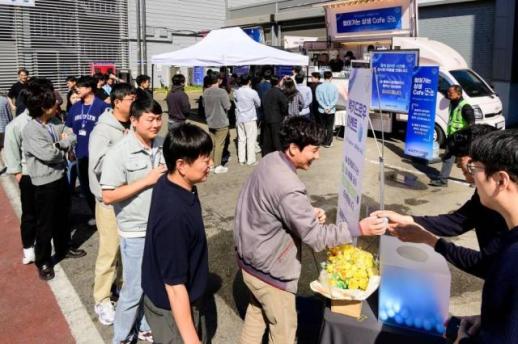 Samsung Electronics extends chip windfall to local suppliers SEOUL, October 13 (AJP) - Samsung Electronics, fresh from projecting a quarterly operating profit milestone of $80 billion for the July–September period, is moving to share its windfall with local suppliers through financial assistance and workplace and welfare support programs. The chipmaker said it is rolling out its “DS Together” initiative for some 58,000 employees at semiconductor partner companies, offering coffee trucks, refreshments and family movie screenings through the end of the year. The program comes as Samsung rides surging demand for artificial intelligence memory chips. The company projected a record 107.4 trillion won ($80.2 billion) in preliminary third-quarter operating profit, and its windfall is spreading beyond Samsung’s balance sheet to various stakeholders supporting its growth. The company has rolled out a record shareholder return program and recently finalized an employee reward package, allowing investors and staff to share in its earnings surge. Consumer discount campaigns extend some of the benefits to customers, while financing, incentives and welfare programs reach deeper into its supplier network. Samsung’s semiconductor-focused Device Solutions division began visiting supplier facilities on Oct. 6, including Daeduck Electronics, Saesol Diamond, TLB and PSK. The company plans to operate mobile coffee stations at 67 suppliers’ workplaces, reaching approximately 27,000 employees over two months. Another 30,000 supplier employees and their family members are expected to attend movie screenings scheduled for Dec. 21–23 near Samsung’s Giheung, Hwaseong, Pyeongtaek and Cheonan operations. “Samsung’s unwavering competitiveness in the global semiconductor market is thanks to the dedication of our partner companies’ employees,” said Woo Hyung-dong, an executive at Samsung Electronics’ DS division. The initiative comes as the semiconductor boom brings heavier workloads to suppliers. “Our workload has increased significantly amid the semiconductor boom, but I hope this positive momentum continues,” an employee at semiconductor equipment maker PSK said. Beyond the appreciation events, Samsung has expanded financial assistance and workplace support for suppliers, including low-interest loans, safety incentives and technical training. The company provides about 393.9 billion won in loans to 159 semiconductor suppliers through its Shared Growth Fund, alongside approximately 18.56 billion won in interest-free loans to 15 partner companies for environmental, social and governance initiatives. Samsung also paid 47.8 billion won in safety incentives to eligible suppliers in the first half of this year and distributed about 2.55 billion won in Chuseok holiday support payments to 68 suppliers handling general affairs and security operations. Additional safety incentives and productivity bonuses are planned for February next year. Samsung operates environmental and safety training centers at three semiconductor sites and provides free technical and sustainability seminars. About 35,000 people from 983 supplier companies have participated in its education programs this year. The company has also expanded rest areas and shower facilities for on-site contractors. In May, it provided leisure benefits, including theme park admission and gifts, to about 6,400 people from 172 partner companies. The support programs are intended to strengthen the supplier network underpinning Samsung’s semiconductor expansion, as record earnings bring both greater rewards and rising production demands. 2026-10-13 11:20:17
 -
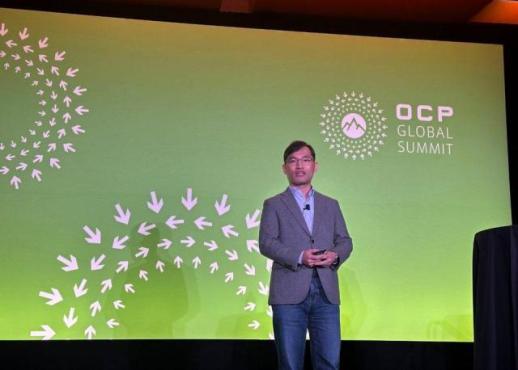 Samsung teams up with AMD to ease AI memory bottlenecks SEOUL, October 13 (AJP) - Samsung Electronics unveiled a joint AI memory expansion solution with U.S. chipmaker AMD to address growing bottlenecks in AI inference, building on a longstanding alliance highlighted by AMD chief executive Lisa Su’s visit to Seoul last week. At this year’s Open Compute Project (OCP) Global Summit, Samsung demonstrated a solution based on Compute Express Link (CXL), an interconnect technology that allows processors to access additional memory beyond a server’s conventional capacity. The collaboration targets rising memory requirements as AI agents take on more complex tasks. Inference — the process through which trained AI models generate responses or perform tasks — requires systems to retain and retrieve increasing amounts of information. Samsung and AMD tested CXL memory as a way to expand capacity and bandwidth, reducing delays caused when processors must wait for data. Samsung also showcased memory pooling using its CMM-D memory modules, allowing resources to be allocated where needed rather than remaining tied to individual systems. Its MD310 platform enables multiple servers to share a pool of memory, improving utilization as workloads change. The demonstrations reflect a broader industry shift toward improving how processors, memory and storage work together, alongside advances in individual chip performance. Samsung organized its OCP exhibition around two areas — “Tokenization Solutions” and “KV-Cache Solutions” — covering memory and storage technologies for AI processing and inference. The first section featured next-generation high-bandwidth memory, including HBM4E, an HBM5 concept model and custom HBM concepts. Samsung also displayed LPDDR5X memory with processing-in-memory capabilities, which move some computation into the memory itself to reduce data transfers. Other exhibits included 2-nanometer gate-all-around wafers, Groq language processing unit wafers and Nvidia Groq 3 LPX systems, illustrating partnerships spanning advanced chip manufacturing and AI computing. The KV-cache section focused on managing information that AI models retain during inference. A key-value cache stores results from earlier processing steps so a model can reuse them instead of repeating calculations. Samsung presented CXL memory, enterprise solid-state drives and software designed to store and retrieve that data more efficiently. Demonstrations included memory pooling based on MD310, AI Memory Node, vector database and direct-storage technologies, alongside liquid cooling. The company also outlined plans to expand joint development through its Memory Application eXperience Lab, or MAX Lab, where customers and partners can evaluate emerging memory and storage technologies under real-world workloads. The lab supports testing and system design involving processing-in-memory, CXL memory expansion and next-generation solid-state drives, allowing customers to assess technologies before deployment and incorporate their requirements earlier in development. Samsung is also expanding open-source software development and standardization through its Global Open-ecoSystem Team, or GOST, with work on KV-cache optimization and direct storage. Together, the initiatives point to a broader role for Samsung in AI infrastructure: supplying memory chips while helping customers integrate them into systems capable of handling increasingly demanding inference workloads. 2026-10-13 11:01:31
 -
 Samsung's staggering profit windfall masks deepening business imbalance SEOUL, October 08 (AJP) - It all began humbly in 1975, with women in protective head coverings bent over workstations assembling integrated circuits for LED wristwatches. More than half a century later, Samsung Electronics has become the world’s largest vendor of memory chips powering everything from smartphones to sprawling AI data centers and turning factory output into profits on a scale unprecedented among the world's technology companies. The scale of that transformation is captured in its latest quarterly estimates. Samsung expects to have earned 107.4 trillion won ($80.2 billion) in operating profit on revenue of 195 trillion won in the three months ended September, with semiconductors accounting for virtually all its earnings. Samsung’s quarterly global revenue of about $145.6 billion would be equivalent to nearly half of the country’s $318.4 billion in third-quarter exports and almost matched its $148 billion in semiconductor shipments. Operating profit alone exceeded half the value of those chip exports. The comparison illustrates the scale of Samsung’s business rather than its direct share of Korean exports, since its consolidated revenue includes domestic sales and production overseas. The memory boom nevertheless came with a trade-off, eroding the hardware businesses that made Samsung a household name. Soaring chip prices have enriched its semiconductor operations while raising production costs for Galaxy smartphones, televisions and home appliances. Within the same company, a component supplier’s windfall has become a finished-goods manufacturer’s burden. The breakdown by business is due with the full earnings release on Oct. 29, but analysts’ estimates suggest the headline feat conceals a widening divide. The semiconductor-focused Device Solutions, or DS, division is estimated to have generated roughly 108 trillion won to 110 trillion won in operating profit during the quarter, potentially exceeding Samsung’s consolidated earnings. That would mean its chip operations earned enough to absorb net losses across the rest of the company and still deliver a record result. The Device eXperience, or DX, division, which oversees smartphones, televisions and home appliances, is estimated to have suffered an operating loss of around 1.5 trillion won. IBK Investment & Securities projected a 1.1 trillion won operating loss for the mobile and networks businesses. Yuanta Securities separately estimated losses of 900 billion won for mobile and networks and 200 billion won for televisions and home appliances. The imbalance was already pronounced in the second quarter, when DS contributed 89.2 trillion won of Samsung’s 89.5 trillion won in consolidated operating profit, or about 99.7 percent. Mobile and networks lost 700 billion won, while televisions and home appliances also slipped into the red. The latest estimates suggest that Samsung’s dependence on memory has deepened even as its overall earnings continue to climb. At the heart of the divergence is the position of its businesses on opposite sides of the memory supply chain. For Samsung’s chip operations, demand for high-bandwidth memory used in AI processors, conventional DRAM and NAND flash storage has lifted selling prices and margins. AI data centers are absorbing growing volumes of memory, while the shift toward advanced AI products is constraining production capacity available for conventional chips used in phones and computers. For the smartphone business, those same chips represent an increasingly expensive input. Rising DRAM and NAND prices push up the cost of making Galaxy devices, leaving the business to raise retail prices, find savings elsewhere or sell a greater proportion of premium models. Each option has limits. Consumers may resist further price increases, while strong sales of flagship and foldable phones do not necessarily translate into stronger earnings when component costs rise faster than selling prices. Televisions and home appliances face similar pressure from higher costs, compounded by subdued consumer demand and intense competition. Even within semiconductors, the gains are uneven. Samsung’s non-memory operations, including its foundry business making chips for outside customers and its System LSI chip-design unit, are estimated to have remained in the red. Industry estimates put their combined operating loss at around 1 trillion won, despite signs of improving foundry utilization. Memory is therefore carrying more than Samsung’s consumer electronics businesses. It is also absorbing losses within the semiconductor division itself. The result is a company with a vast product portfolio but an increasingly concentrated source of profit. Businesses that once helped Samsung withstand swings in the memory cycle are now relying on that cycle’s exceptional strength. The full results later this month will reveal how much the memory boom earned Samsung, and how much of that windfall was needed to cover losses elsewhere in the company. 2026-10-08 16:38:49