

Journalist

Candice Kim김혜준
candicekim1121@ajupress.com
ReporterSamsung Electronics, SK hynix, LG Electronics, Olive Young, Musinsa & Semiconductor, K-Beauty
Candice Kim is a dedicated business and technology reporter specializing in the intersection of high-tech innovation and fast-paced consumer trends. Her core beats span the semiconductor, IT, cosmetics, and retail sectors, where she provides in-depth coverage of industry titans including Samsung Electronics, SK hynix, and LG Electronics, alongside leading consumer brands like Olive Young and Musinsa. Whether analyzing complex silicon supply chains or tracking the latest shifts in beauty and fashion retail, Candice is committed to delivering sharp, accurate reporting that keeps readers informed on the forces shaping today's most dynamic markets.
"Connecting the dots from silicon chips to consumer shifts."
Latest by Candice Kim
-
 AJP Factbox: Samsung Elec ranks No.1 tech earner as of Q3 2026 Samsung Electronics on Oct. 9 posted in its earnings guidance its largest-yet three-month operating profit of 107.4 trillion won ($80.2 billion) for quarter ended September, up 782.5 percent from a year earlier, driven by soaring memory chip prices and AI-related demand. Revenue rose 126.6 percent to 195 trillion won. The result marked Samsung's fourth consecutive quarter of record earnings, surpassing the quarterly operating profits of major global tech companies, including Apple and Nvidia. Saudi Aramco recorded a higher quarterly operating profit of $86.5 billion in the second quarter of 2022. 2026-10-08 11:56:40
 -
 Samsung Elec shatters earnings record, OP at $80 billion SEOUL, October 08 (AJP) - An unprecedentedly long crop year for memory makers under the AI windfall has fueled the red-hot earnings streak to new heights, pushing Samsung Electronics’ three-month operating profit above the 100 trillion won ($80.2 billion) milestone in the quarter ended September, according to the chipmaker’s earnings guidance Thursday. The world’s largest memory chipmaker estimated operating profit at 107.4 trillion won, up 20.01 percent on quarter and nearly nine times the 12.17 trillion won recorded a year earlier. Preliminary revenue came to 195 trillion won, up 13.70 percent on quarter and 126.59 percent on year. The result extended Samsung's record earnings streak to four consecutive quarters. Shares opened nearly flat on a tug of war between institutional selling and retail buying. At 9:20 a.m. in Seoul, the stock was at 268,000 won (down 0.19 percent.) The figure slightly beat market expectations, although revenue fell short. Financial data provider FnGuide’s latest consensus had put third-quarter revenue at 200.64 trillion won and operating profit at 106.64 trillion won. An LSEG SmartEstimate based on 21 analysts stood at 106.1 trillion won for operating profit. Samsung, whose operations span from chips and display components to smartphones and home appliances, will provide a full business breakdown when it releases finalized results later this month. Samsung’s semiconductor business, known as the Device Solutions, or DS, division, is broadly expected to have led the surge, benefiting from higher DRAM and NAND prices as strong AI infrastructure investment continued to strain global memory supply. The DS division accounted for nearly all - or 99.7 percent - of Samsung's total operating profit in the second quarter, underscoring how heavily the company's earnings have swung back toward semiconductors. AI data centers have boosted demand beyond high-bandwidth memory, or HBM, to conventional server DRAM and enterprise solid-state drives. At the same time, memory makers have shifted more production capacity toward advanced AI products, further tightening supplies of conventional chips. Samsung’s expanding HBM business is also expected to have played a greater role. The company said during its second-quarter earnings call that HBM4 revenue was expected to more than triple sequentially in the third quarter as volume shipments expanded. The gains came despite headwinds from a stronger Korean won and rising component costs in Samsung’s consumer businesses. The won strengthened sharply during the quarter, reducing the value of overseas earnings, while soaring memory prices that benefited its semiconductor division also raised costs for its smartphone and home appliance businesses. Those pressures prompted analysts to lower their forecasts ahead of the results. Citi cut its third-quarter operating profit estimate to 104.1 trillion won from 115.5 trillion won, citing an estimated 5 trillion won impact from currency movements and another 5 trillion won from additional employee incentive provisions. Kiwoom Securities projected operating profit of 107 trillion won, down from an earlier 122 trillion won estimate. Still, memory remained overwhelmingly the biggest earnings driver. Conventional DRAM prices were expected to rise 10 percent to 15 percent quarter-on-quarter in the third quarter, supported by persistent supply constraints, although the pace slowed sharply from the previous quarter. 2026-10-08 07:53:06
 -
 Lisa Su gets a head start on Nvidia as AMD brings AI rivalry to Seoul SEOUL, October 07 (AJP) - AMD Chair and CEO Lisa Su had her own Jensen Huang moment in Korea on Wednesday, hosting a day for gamers and rubbing shoulders with the country’s science minister and business tycoons. Su appeared alongside Jack Huynh, AMD’s senior vice president and general manager of its Computing and Graphics Group, at AMD Gamer Day in Seoul’s Yongsan district, meeting Korean gamers and outlining the company’s vision for gaming and artificial intelligence. Her second visit this year, following a March trip, came a month before Nvidia brings AI Day Seoul 2026 to COEX in southern Seoul on Nov. 9 and 10 — putting the two U.S. chip giants’ rivalry on Korean soil. Nvidia’s two-day event is expected to draw around 2,000 developers, startup representatives, researchers and industry officials, with Samsung Electronics and SK hynix among the participating partners. Nvidia CEO Jensen Huang, however, is not expected to attend, according to an industry official familiar with the matter. The back-to-back events underscore South Korea’s growing importance to a contest that extends beyond AI accelerators to the memory chips, supply chains and technology partnerships needed to support them. Asked by AJP whether competition between AMD and Nvidia was increasingly becoming a race to secure high-bandwidth memory, or HBM, from South Korean suppliers, Su pointed to surging AI demand across the industry. “The main thing that we see in the market today is that the demand for AI compute continues to go up,” Su said. “When I speak to all of our partners across the supply chain and across the industry, everyone is racing to satisfy that demand.” “As the demand continues to increase, we’re continuing to work all kinds of avenues to increase our overall supply,” she added. South Korea sits at the center of that race as home to Samsung Electronics and SK hynix, two of the world’s dominant suppliers of HBM, the advanced memory used in AI accelerators. Su repeatedly emphasized the importance of both chipmakers during Wednesday’s media session. “We very much rely on the Korean supply chain,” she said. “Samsung, SK hynix are great partners of ours and very key for us to accomplish our broad ambition in data center.” She also described Samsung as one of AMD’s “most strategic partners” across memory technologies, including DDR4, DDR5 and HBM. Close coordination with suppliers has become increasingly important as demand rises across AI, gaming and consumer computing, she said. AMD is seeking to expand its AI accelerator business and challenge Nvidia’s market dominance, making access to HBM increasingly important. Su described a “very tight supply environment” and said AMD was encouraging its memory partners to expand capacity “as fast as possible.” AMD is already ramping up systems based on its next-generation MI455 accelerator and HBM4, she said. “We have gotten great support from both Samsung and SK hynix, and we view the partnerships on HBM not just one generation but really multiple generations,” Su said. “We’re very happy with HBM4. I think HBM4 is doing extremely well, and we’re ramping it up right now.” The Korean contest extends beyond memory. Su said she met Korean AI startups earlier Wednesday and reaffirmed AMD’s plan to establish an AI “center of excellence” in the country while expanding ties with startups and universities. She named Upstage, MangoBoost and Moreh among Korean companies already working closely with AMD and said she had met additional startups interested in joining its open AI ecosystem. “We are very much committed to expanding our startup engagements and expanding our university engagements because we think that Korea is really an excellent place for AI development,” Su said. Asked why she had returned to South Korea after just seven months, Su said the country’s importance to AMD went beyond securing near-term chip supplies. “The Korean ecosystem is extremely important for both from a supply standpoint as well as from a partnership standpoint,” she said, adding that AMD was planning with partners over the next three to five years. Su also confirmed that she had met SK hynix during the trip and planned to meet Samsung, saying close communication had become essential as the AI industry moved at an unprecedented pace. “Semiconductors is a team sport,” she said. “The more we communicate with our partners, the better we are going to be to service the overall market.” For AMD and Nvidia, that team increasingly includes the same Korean players. Su has put AMD’s gaming ambitions, AI plans and chip partnerships on display in Seoul this week. Next month, Nvidia gets its turn — with Korea’s technology companies courted by both sides. 2026-10-07 17:56:22
 -
 LG Electronics Q3 profit up 13.5% on year, down 50.5% on quarter SEOUL, October 07 (AJP) - LG Electronics kept up double-digit annual growth in the third quarter, although halved from from the April-June period, as the South Korean premium household appliance maker pushed its B2B business in vehicle electronics and coolants to ride on the AI boom, according to its disclosure Wednesday. In its earnings guidance, the company estimated an operating profit of 781.8 billion won ($584 million) for the July-September period, up 13.5 percent from a year earlier but down 50.5 percent from the previous quarter amid slowed external demand and less favorable exchange rate. Revenue rose 8.9 percent on year to 23.83 trillion won ($17.8 billion), while remaining virtually unchanged from the second quarter. LG attributed the revenue growth to resilient demand for its core products, continued expansion in business-to-business operations and sales growth in emerging markets, including the Global South, despite an unfavorable business environment stemming from the war in the Middle East. Profitability also improved as the company's home appliance and vehicle component businesses maintained solid margins, while its television business posted a sharp improvement from a year earlier. Companywide cost reductions and operating leverage from higher sales helped offset increases in logistics, material and fixed costs, LG said. For the first nine months of the year, LG reported cumulative revenue of 71.38 trillion won, up 9.2 percent from a year earlier, while operating profit jumped 55.9 percent to 4.03 trillion won. It marked the first time the company's nine-month revenue surpassed 70 trillion won and operating profit exceeded 4 trillion won. By business, LG said its Home Appliance Solution division continued to grow on increased sales of premium and mass-market products, alongside expansion in subscription services, online sales and B2B operations. Its Media Entertainment Solution business recorded year-on-year sales growth, helped by stronger sales of premium televisions, including OLED models, and expansion in emerging markets. The division remained profitable as LG increased the share of premium products and streamlined marketing spending. The Vehicle Solution business maintained steady growth as its order backlog translated into sales, while a higher proportion of premium automotive infotainment products helped strengthen profitability. The Eco Solution business, which includes heating, ventilation and air conditioning products, maintained revenue at roughly the previous year's level as overseas sales increased. Profitability edged down, however, as LG continued investing in new production capacity and hiring for new businesses. LG is also expanding investment in artificial intelligence-related growth areas, including cooling systems for AI data centers and robotics. The company is expanding cooling-system production capacity at home and abroad while investing in a robotics data factory in Seoul and actuator production infrastructure in Changwon, about 300 kilometers southeast of Seoul. The figures are preliminary and were compiled under Korean International Financial Reporting Standards. LG Electronics is scheduled to release its finalized third-quarter results, including net income and detailed performance by business division, later this month. 2026-10-07 11:57:02
 -
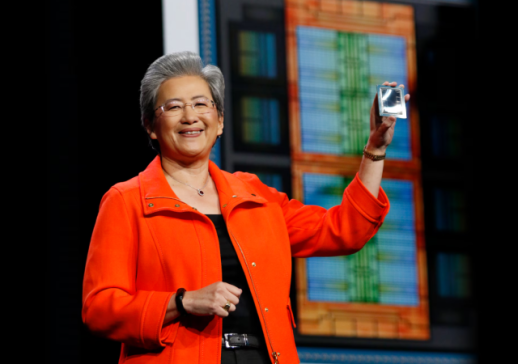 AMD links up with Korean AI chipmakers SEOUL, October 07 (AJP) - AMD will work with 14 South Korean AI chip and technology companies to build computing infrastructure combining its CPUs and GPUs with Korean-made AI processors, as the U.S. chipmaker expands its AI partnership with Korea. The initiative follows an agreement signed between AMD and South Korea's Ministry of Science and ICT in July. The partners plan to test the heterogeneous computing infrastructure in Korea and develop it into a reference model that could be deployed in global markets, the ministry said Wednesday. AMD also plans to establish an AI Center of Excellence in South Korea and hire several hundred AI researchers, AMD Chair and CEO Lisa Su said during a meeting with Vice Science Minister Ryu Je-myung in Seoul on Wednesday. Su said AMD is also expanding AI computing capacity in Korea, including through its first cloud infrastructure project with Korean startup MangoBoost, and plans to broaden cooperation with local universities and startups. AMD recently signed a memorandum of understanding with Seoul National University's AI Institute. The 14 companies include Rebellions, FuriosaAI, HyperAccel, DEEPX, Mobilint, MangoBoost, Panmnesia, Nota AI, FADU and Upstage, spanning AI processors, software, memory, networking, cloud services and AI models. The companies will also explore participation in AMD's open-source ROCm software ecosystem and ways to connect their technologies with AMD's global AI network. 2026-10-07 09:59:27
 -
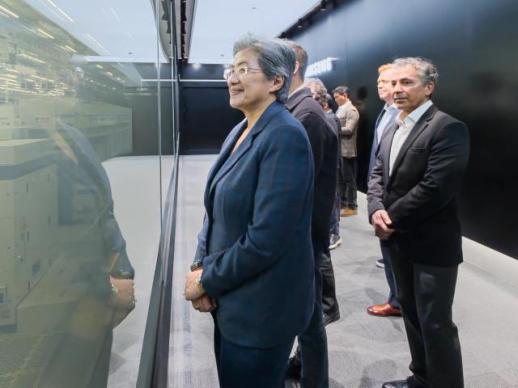 Once the buyer, now the suitor: AMD's Lisa Su due back in Korea SEOUL, October 06 (AJP) - For decades, the semiconductor industry’s pecking order was relatively straightforward: chip designers and system companies called the shots, while memory makers competed to supply them. The artificial intelligence boom is starting to turn that relationship on its head. AMD Chair and CEO Lisa Su is due in South Korea this week, seven months after her previous visit in March, as the U.S. chipmaker seeks the advanced memory and manufacturing partnerships needed to challenge Nvidia in AI computing. Su will attend AMD Gamer Day 2026 in Seoul on Wednesday alongside Jack Huynh, senior vice president and general manager of AMD’s Computing and Graphics Group. A media Q&A is scheduled for the same day, while meetings with Korean AI chip companies and government officials are expected during the trip. Behind the gaming event lies a much bigger semiconductor story. As AI accelerators become more powerful, access to high-bandwidth memory, or HBM, increasingly determines how quickly chip designers can turn their ambitions into products. Samsung Electronics and SK hynix together accounted for more than 80 percent of global HBM revenue in the second quarter, according to Counterpoint Research figures. That concentration gives the Korean suppliers considerable leverage over the companies competing to build the next generation of AI systems. “The relationship between the buyer and supplier has changed significantly,” said Kim Deok-kee, a professor of electronic engineering at Sejong University. “In the past, memory companies were largely in the weaker position,” Kim said. “Now memory has become so critical that you could almost say the memory companies have become the ones holding the upper hand.” For AMD, the stakes are particularly high. Its Instinct graphics processors are central to its effort to narrow Nvidia’s commanding lead in AI accelerators. But that requires more than designing faster chips. The processors need increasingly large amounts of advanced memory to deliver data to their computing cores at high speed. Securing HBM has consequently become a strategic priority. “The first priority is securing memory,” Kim said. “More than future technology itself, securing allocations of the highest-performance and most expensive HBM is likely the immediate priority.” There is an irony to AMD’s position: it helped pioneer the technology it now needs to secure. SK hynix announced the development of its first HBM product using through-silicon vias — vertical connections between stacked memory chips — in December 2013, following joint development with AMD. AMD brought first-generation HBM to its Fiji-based graphics products in 2015, well before the generative AI boom made the technology indispensable to advanced accelerators. What began as an architectural innovation has become a scarce component sought by the world’s leading AI chipmakers. Samsung is emerging as an especially important partner in AMD’s response. During Su’s March visit, she traveled to Samsung’s semiconductor complex in Pyeongtaek and signed a memorandum of understanding with Vice Chairman and CEO Jun Young-hyun to expand cooperation in AI memory and computing. The agreement covers primary HBM4 supply for AMD’s next-generation Instinct MI455X accelerator, alongside advanced DDR5 memory for sixth-generation EPYC server processors and systems built around AMD’s Helios rack-scale platform. It builds on Samsung’s existing role as AMD’s primary HBM3E partner for the MI350X and MI355X accelerators. The relationship could extend beyond memory. Samsung and AMD also agreed to discuss a potential foundry partnership under which Samsung would manufacture future AMD products. Such an arrangement could broaden their cooperation across memory, chip production and advanced packaging, although a manufacturing agreement has not been announced. For Su, those discussions draw on relationships that predate her AMD career. She spent more than a decade at IBM, holding senior positions in semiconductor technology development and manufacturing. “Su had experience working with Samsung Foundry around 2005 while she was at IBM, so she likely still knows people within Samsung’s foundry business,” said an industry source who worked with her at the time. Su became vice president of IBM’s Semiconductor Research and Development Center in 2005. By 2006, she was heading a joint development alliance involving IBM, Samsung, Chartered Semiconductor and Infineon that worked on advanced manufacturing processes. “Su understands not only software and system architecture but semiconductor devices and manufacturing as well,” the source said. “She understands how foundries operate.” That background could become increasingly relevant as AMD explores cooperation extending from memory supply to manufacturing and packaging. Su’s return does not establish that another supply deal is imminent. It does, however, come as AMD’s competitive ambitions depend increasingly on technologies concentrated in South Korea. The country’s role in that strategy has evolved. AMD’s work with SK hynix helped establish HBM’s first generation; its expanding Samsung partnership now reaches into HBM4 and potentially contract chipmaking. For Korean memory makers, the change is significant. Their products are becoming a constraint around which even the most powerful chip designers must plan. Nvidia and AMD still wield enormous influence over the AI industry. But without sufficient advanced memory, neither can deliver its fastest processors at the scale customers demand. That gives Korean suppliers greater bargaining power — and Su a compelling reason to keep returning. “Securing memory comes first,” Kim said. “After that, there is the question of jointly developing the next technologies — memory, foundry and the overall architecture.” For AMD, both increasingly lead to South Korea. 2026-10-06 16:44:06
 -
 Samsung, SK hynix lost 27 engineers to CXMT — most left within 3 years SEOUL, October 06 (AJP) - At least 27 veteran engineers from Samsung Electronics and SK hynix moved to Chinese memory chipmaker CXMT, but 26 have since left after staying an average of just 2.9 years, according to an analysis by a South Korean lawmaker. The engineers had spent an average of 15.4 years at the Korean chipmakers, including six with more than two decades of experience, according to Rep. Choi Soo-jin of the ruling People Power Party. Her office analyzed publicly available career records, including LinkedIn profiles. Their expertise spanned circuit design, process integration, equipment, yield analysis and advanced packaging, with some having experience in high-bandwidth memory and other advanced memory technologies. Choi's office said recruiters offered some Korean engineers salary increases ranging from 60 percent to twice their previous pay, along with housing, education support and employment guarantees of three to five years. "Semiconductor technology is not just about blueprints, but the experience and know-how accumulated by people over 20 or 30 years," Choi said, calling for stronger measures to track and retain key semiconductor personnel. 2026-10-06 16:25:11
 -
 AI boom spreads beyond Korean chipmakers to components and cooling SEOUL, October 06 (AJP) -The AI boom is spilling beyond South Korea’s chipmakers, driving orders and investment in the components that stabilize power, connect processors and keep data centers from overheating. Samsung Electro-Mechanics on Tuesday disclosed a $210.24 million AI-server capacitor contract, bringing its announced long-term supply agreements this year to about 3.9 trillion won. LG Electronics on the same day announced a deal to supply cooling systems for 5 gigawatts of AI data center capacity in North America. The deals show how growing computing requirements are expanding demand across the infrastructure surrounding AI chips. More powerful processors need a stable electricity supply, increasingly sophisticated connections and cooling systems capable of removing concentrated heat. Investors turned to the stocks while dumping bigger chipmakers. At 3:00 p.m. Seoul time, Samsung Electro-Mechanics was up 5.19 percent at 1,663,000 won, while LG Electronics gained 7.18 percent to 231,500 won, according to Korea Investment & Securities market data. Shares of SK hynix fell 3.5 percent and Samsung Electronics 1.5 percent. Samsung Electro-Mechanics’ latest contract covers multilayer ceramic capacitors, or MLCCs, supplied to an unidentified global company throughout 2027. The filing valued the agreement at 285.6 billion won, equivalent to 2.5 percent of the company’s 2025 consolidated revenue. It is the sixth long-term supply agreement the company has disclosed this year, following another contract worth about 285 billion won on Sept. 29. Since May, its announced agreements have expanded across silicon capacitors, AI-server MLCCs and inductors, bringing the cumulative value to approximately 3.9 trillion won. The company is discussing further contracts with global customers. MLCCs store and release electrical energy to stabilize power supplied to chips and suppress electrical noise. AI servers require high-capacity components that can withstand demanding temperatures, voltages and continuous operation. Samsung Electro-Mechanics says AI servers can contain more than 10 times as many MLCCs as conventional servers. It estimates its share of the AI-server MLCC market at more than 40 percent. The company cites a Goldman Sachs forecast that the market will grow from $1.4 billion in 2025 to $5.8 billion in 2030, an annual compound growth rate of about 33 percent. “Customer requirements for high-performance MLCCs continue to rise alongside the growth of the AI market,” a Samsung Electro-Mechanics official said. “We will expand the share of AI-use MLCC products based on our technology and stable supply capabilities.” The company is also committing 6.78 trillion won to expand production of advanced semiconductor packaging substrates in South Korea and Vietnam. These substrates, known as flip-chip ball grid arrays, connect processors to circuit boards and carry electrical signals and power. As AI chips become more complex, the substrates must accommodate larger dimensions, more layers and denser connections. Samsung Electro-Mechanics will invest 4.27 trillion won at its Sejong operation, with mass production scheduled to begin in September 2028. Another 2.51 trillion won will go toward equipment for its Vietnamese expansion, where completion and operation are targeted for June 2030. The company said customer funding support and medium- to long-term volume commitments would help reduce the financial and utilization risks of the expansion. LG Electronics is pursuing the same AI investment cycle through heat management, expanding both its order book and manufacturing capacity. Its U.S. unit signed a long-term agreement with AIR Control Concepts to supply high-efficiency chillers and other cooling systems in phases for 5 gigawatts of North American AI data center capacity. Financial terms and a detailed delivery schedule were not disclosed. The agreement follows LG’s Oct. 1 announcement of a 150 billion won investment in a new U.S. chiller factory and expanded production lines in South Korea. The factory in Windsor, Virginia, is scheduled to begin production in the first half of 2027. It will manufacture air-cooled chillers for AI data centers, giving LG a local production base to serve the North American market. LG is also adding air-cooled chiller production lines and upgrading equipment at its Pyeongtaek and Changwon plants, with the domestic expansion proceeding in stages through the end of 2026. Chillers remove heat from water circulated through cooling systems. As AI processors become more powerful and densely packed, that heat-management infrastructure is essential to sustaining performance and preventing overheating. LG is broadening its offering into what it calls “chip-to-chiller” cooling: cold plates that absorb heat directly from processors, coolant distribution units that circulate and manage cooling fluid, and chillers that remove the collected heat. The company and AIR are discussing extending their partnership to coolant distribution units, linking the latest supply agreement to LG’s broader liquid-cooling business. LG said orders for its AI data center cooling solutions exceeded 600 billion won in the first half of 2026 and are expected to reach several trillion won by year-end. The company is also pursuing projects beyond North America. In Indonesia, it is supplying solutions for a large AI data center being developed by Sinar Mas Group in Jakarta, combining its cooling technology with LG Energy Solution’s batteries and LG CNS’s data center design, construction and operating capabilities. “We will continue to strengthen our ability to supply cooling solutions reliably as core infrastructure for AI data centers, and actively respond to rapidly growing market demand,” said Lee Jae-sung, president of LG’s Eco Solution business. 2026-10-06 15:35:16
 -
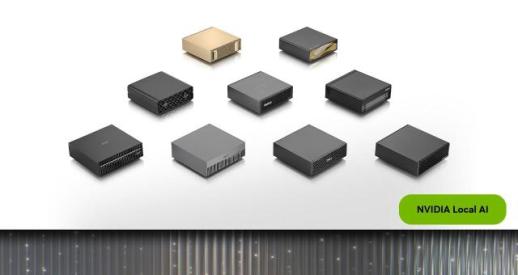 Nvidia expands personal AI push with 64GB DGX Spark SEOUL, October 06 (AJP) - Nvidia has introduced a 64GB version of its DGX Spark personal AI supercomputer, expanding its push to let developers run large AI models and agents locally without relying on cloud computing. The new model will be available starting Oct. 23 through Acer, ASUS, Dell, Gigabyte, HP and MSI, with prices starting at $4,999, Nvidia said Tuesday. It uses the same GB10 Grace Blackwell Superchip and Nvidia AI software stack as the existing 128GB version. Nvidia said the 64GB system can run models with up to 100 billion parameters entirely on-device, targeting developers working on AI agents, inference, fine-tuning and other local AI workloads. Two 64GB DGX Spark systems can also be connected into a cluster, combining 128GB of memory and supporting models with up to 200 billion parameters. Nvidia said its internal testing using Qwen 3.8 27B showed performance gains of up to 1.7 times compared with a single system. 2026-10-06 11:30:30
 -
 LG Electronics supplies cockpit for Renault's first SDV SEOUL, October 06 (AJP) - LG Electronics will supply an integrated cockpit system for Renault Group's New Traffic E-Tech Electric, the automaker's first commercial software-defined vehicle in Europe, according to the company on Tuesday. The system combines the vehicle's instrument cluster and infotainment functions under a unified interface, allowing driving information, navigation and media functions to be managed together. LG said the integrated architecture can also simplify components and reduce production costs. Software-defined vehicles, or SDVs, rely on centralized computing and software rather than numerous electronic control units dedicated to individual functions, allowing features to be upgraded through over-the-air software updates. LG has worked with Renault on automotive electronics for more than a decade, including the joint development of an Android-based infotainment system in 2021. "We will continue to advance the core technologies and solutions needed for the mobility industry's transition to SDVs through close cooperation with Renault Group and other global automakers," said Eun Seok-hyun, president of LG's Vehicle Solution business. 2026-10-06 10:56:01