

SEOUL, August 10 (AJP) - Samsung Electronics' Galaxy Z Fold8 is drawing a younger and more female customer base than its predecessors, early sales data showed, offering signs that the premium foldable is moving beyond its traditional image as a productivity-focused device favored largely by older male users.
Consumers in their teens through 30s accounted for more than half of Fold8 purchases through Samsung's Korean online store during the preorder period, according to the company. Purchases by women in the same age group more than doubled from the previous model.
The shift comes alongside stronger initial demand for Samsung's broader Galaxy Z8 foldable lineup.
Counterpoint Research said global preorders for the Galaxy Z8 series rose more than 30 percent from its predecessor, including a 39 percent increase in South Korea and growth of more than 20 percent in Europe.
The research firm pointed to the Fold8's wider display and improved portability as factors behind the stronger early demand. Samsung has sought to make the device thinner and lighter while retaining the large-screen format that has traditionally distinguished its Fold series.
The changes could help Samsung broaden a category that has historically appealed heavily to users seeking multitasking and work-oriented features.
Early demand has also strengthened overseas. U.S. preorders were more than 30 percent above Samsung's previous record for a Fold series, while some Fold8 variants sold out on Samsung's Japanese online store, according to the company.
Whether that initial momentum translates into sustained sales remains to be seen, but the changing buyer mix suggests Samsung's foldable flagship may be reaching beyond the relatively narrow customer base that defined earlier generations.

Candice Kim
Candice Kim is a dedicated business and technology reporter specializing in the intersection of high-tech innovation and fast-paced consumer trends. Her core beats span the semiconductor, IT, cosmetics, and retail sectors, where she provides in-depth coverage of industry titans including Samsung Electronics, SK hynix, and LG Electronics, alongside leading consumer brands like Olive Young and Musinsa. Whether analyzing complex silicon supply chains or tracking the latest shifts in beauty and fashion retail, Candice is committed to delivering sharp, accurate reporting that keeps readers informed on the forces shaping today's most dynamic markets.
Copyright ⓒ Aju Press All rights reserved.
Related News
-
 Samsung tests global appetite for pricier Galaxy foldables and wearables
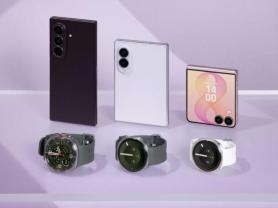
Samsung Electronics roll out smartwatches to pair the latest folder series on Aug. 6, 2026. Courtesy of Samsung Electronics SEOUL, August 06 (AJP) -Samsung Electronics rolled out its latest Galaxy foldable smartphones and smartwatches worldwide on Thursday, betting strong pre-orders can overcome sticker shock as soaring memory and component costs push flagship handset prices to new highs and weigh on global smartphone demand. The world's largest smartphone maker said the Galaxy Z Fold8 Ultra, Galaxy Z Fold8, Galaxy Z Flip8, Galaxy Watch Ultra2 and Galaxy Watch9 will go on sale from Aug. 7 in major markets before expanding to 106 countries. The launch follows a robust pre-order campaign that has raised expectations the momentum will spill over to companion devices such as Galaxy smartwatches, reinforcing Samsung's strategy of selling AI-powered products as an integrated ecosystem rather than standalone gadgets. Samsung said global pre-orders for the Galaxy Z Fold8 series and Flip8 rose more than 30 percent from the previous generation, suggesting foldable smartphones are continuing to move into the mainstream despite a sluggish global handset market. Newest Galaxy foldables draw strong preorders despite higher price range. Courtesy of Samsung Electronics The strongest demand came from younger buyers. Among Samsung.com's customers aged 15 to 34, exclusive online colors such as Green Shadow for the Fold8 Ultra, Pistachio for the Fold8 and Mint for the Flip8 proved the most popular. Across all buyers, Graphite led orders for the Fold8 Ultra and Fold8, while Pink topped pre-orders for the Flip8. The new lineup marks Samsung's broadest foldable portfolio yet, splitting the category into three distinct products aimed at different users. The Galaxy Z Fold8 Ultra targets power users with an 8-inch main display, a 200-megapixel primary camera, a 5,000mAh battery and a slimmer body measuring 4.1 millimeters when unfolded. Samsung said the device combines flagship camera capabilities with AI-powered multitasking features for productivity and content creation. The standard Galaxy Z Fold8 focuses on portability, weighing 201 grams, Samsung's lightest foldable book-style smartphone to date, while introducing a redesigned display ratio intended to improve both cover-screen usability and immersive viewing on the main display. The Galaxy Z Flip8, Samsung's thinnest clamshell foldable yet, features an upgraded FlexWindow cover display, AI-powered personalized information and a 50-megapixel camera designed for hands-free photography and video recording. Latest wearable series from Samsung Electronics. Aug. 6, 2026. Courtesy of Samsung Electronics Samsung also expanded its wearable lineup with the Galaxy Watch Ultra2 and Galaxy Watch9, both powered by Qualcomm's Snapdragon Wear Elite platform and equipped with new health-monitoring features including cardiovascular tracking, fitness analysis and sleep management. The company is betting that tighter integration between smartphones, watches and Google's AI services will encourage consumers to buy multiple Galaxy devices rather than upgrade individual products. Customers purchasing the new foldables will receive a six-month subscription to Google AI Pro with 5 terabytes of cloud storage, while Samsung also upgraded its Smart Switch software to simplify migration from Apple's iPhone, including wireless transfers of passwords, eSIM information and call history. The launch comes as Samsung seeks to extend its lead in foldable smartphones, a segment it pioneered commercially but now faces increasing competition from Chinese rivals including Huawei, Honor and Xiaomi. Strong early orders for the latest Galaxy Z series could help Samsung maintain momentum in the premium smartphone market through the second half of the year while lifting sales of higher-margin accessories such as Galaxy Watch devices.
-
 Record Heat Wave Triggers Emergency Measures in Industry
The ongoing record heat wave has raised alarms across various industries. While the electronics sector, which relies heavily on indoor production, is relatively less affected, companies in steel and shipbuilding, which involve significant outdoor work, are intensifying their response to the increased risk of heat-related illnesses.According to industry sources, heavy industries such as steel and shipbuilding are among the most impacted by the heat wave. High-temperature processes like blast furnaces and steelmaking are difficult to halt, and outdoor work is prevalent, often resulting in perceived temperatures that exceed actual temperatures.Domestic shipbuilders HD Hyundai Heavy Industries, Hanwha Ocean, and Samsung Heavy Industries are currently observing their regular summer vacations, allowing workers to recharge. With forecasts indicating that the heat wave will persist post-vacation, these companies are focused on implementing safety measures for extreme heat.HD Hyundai Heavy Industries has been operating a system to extend rest periods during heat-related work since last year, becoming the first in the shipbuilding industry to do so. This year, from July to September, when the perceived temperature exceeds 33 degrees Celsius, rest periods will be increased from 10 minutes to 20 minutes. Hanwha Ocean and Samsung Heavy Industries are also extending rest times and providing cooling supplies, rest areas, and nutritious meals to prevent heat-related illnesses.The steel industry, which operates blast furnaces 24 hours a day, is applying its own rest standards that are stricter than government guidelines. POSCO has implemented a policy of 15-minute breaks after 45 minutes of work when the perceived temperature exceeds 35 degrees Celsius, and 10-minute breaks after 50 minutes of work when it exceeds 31 degrees Celsius. This is a more stringent standard than the newly established occupational safety and health guideline requiring a 20-minute break every two hours when the perceived temperature is above 33 degrees Celsius.Hyundai Steel also provides at least 10 minutes of rest within an hour when the perceived temperature exceeds 31 degrees Celsius, and more than 15 minutes when it exceeds 35 degrees Celsius. Dongkuk Steel Mill has designated a special management period for heat-related illnesses from August 3 to 14, offering breaks of at least 20 minutes every two hours when the perceived temperature exceeds 33 degrees Celsius.The automotive industry is also taking steps to manage working conditions in response to the prolonged heat wave. Hyundai Motor Group has entered its summer vacation from August 3 to 7, temporarily halting operations at major production sites, including the Ulsan plant.At the Ulsan plant, Hyundai is providing ice cream and nutritious meals to workers, while Kia's AutoLand Gwangju is operating cooling systems for each production line and regularly measuring and managing temperature and humidity in the workplace.Similarly, the aviation and defense sectors, which involve significant outdoor work, are facing similar challenges. Korean Air has introduced large mobile circulators for workers at international airport cargo terminals and aircraft maintenance facilities, while Korea Aerospace Industries is conducting company-wide summer vacations until August 7. Hanwha Aerospace is providing electrolyte drinks and ice treats to production workers as part of its heat management efforts.In contrast, the electronics sector faces a relatively low risk of direct production disruptions due to the heat wave. Semiconductor plants maintain consistent temperature and humidity levels in clean rooms, and most mobile and home appliance production equipment operates indoors.However, the increase in power consumption and the management of heat-related illnesses at new semiconductor construction sites have emerged as new challenges. Samsung Electronics is applying a 'Galaxy Watch-based heat stress management system' at its Pyeongtaek semiconductor production facility, developed in collaboration with the Ministry of Employment and Labor. This system analyzes on-site temperature, humidity, and workers' heart rates and activity levels to provide alerts and rest recommendations based on heat wave levels.SK Hynix is enhancing safety inspections and applying smart safety technologies at its Icheon and Cheongju sites, while LG Electronics is focusing on preventing heat-related illnesses in the workplace in response to increased demand for air conditioning and HVAC systems.An industry insider noted, "The recent heat wave has become a management risk directly linked to safety in production sites, surpassing mere seasonal variables. Particularly in sectors like steel and shipbuilding, where halting work is challenging, there is a growing trend to strengthen on-site responses during extreme heat periods."* This article has been translated by AI.
-
Samsung's Galaxy Z8 Dominates Foldable Phone Market Ahead of Apple's Launch
Samsung Electronics has secured a leading position in the foldable phone market for the second half of the year with the recent launch of its eighth-generation Galaxy Z series. The new 'Fold8' model has improved upon the thickness, weight, and screen crease issues that have previously limited foldable phones, appealing particularly to consumers aged 10 to 30 and expanding the market's reach.As Apple prepares to unveil its first foldable iPhone next month, attention is turning to whether it can disrupt Samsung's dominance.According to Samsung, the Galaxy Z Fold8 Ultra, Fold8, and Flip8 series will officially launch in South Korea on August 7, with plans to expand sales to over 100 countries, including major markets in the U.S., Europe, and Japan.The Galaxy foldable series has already seen significant success in pre-sales. From July 28 to August 3, Samsung sold a record 1.44 million units in South Korea, marking the highest pre-sale figures for any Galaxy foldable phone series. The Fold8 has been particularly successful, being the thinnest and lightest model to date, with a new screen ratio that enhances portability and lowers the entry barrier for foldable phones.Notably, there has been a shift in the consumer demographic. Samsung reports that over half of the pre-orders came from consumers aged 10 to 30. Traditionally viewed as premium products for consumers in their 40s and 50s, foldable phones are now attracting a younger audience. Analysts suggest that the design, portability, and new user experiences resonate with the preferences of the 10 to 30 age group, particularly in social media and content consumption. The influx of younger iPhone users into the foldable market is also a significant change.With Samsung establishing a strong foothold, all eyes are on Apple's upcoming foldable phone. Industry experts believe Apple will hold a product launch event on September 9, where it is likely to introduce the iPhone 18 Pro, Pro Max, and its first foldable iPhone. Historically, Apple has announced new products after Labor Day in the U.S., suggesting a similar timeline this year.The main focus of the event will be Apple's first foldable phone, which is expected to feature a book-style foldable design with a 5.5-inch external display and a 7.8-inch internal display. It is likely to resemble Samsung's newly launched Galaxy Fold8 in its wide form factor. Potential names for the device include 'iPhone Ultra' and 'iPhone Fold.' Reports indicate that Samsung Display will exclusively supply the foldable OLED panels, suggesting that Samsung's display technology will be utilized in Apple's first foldable device.Apple is expected to adopt a different strategy than Samsung. While Samsung has focused on enhancing hardware quality to drive the mainstream adoption of foldables, Apple may concentrate on transforming the user experience (UX). According to the tech outlet 9to5Mac, Apple's foldable iPhone is anticipated to differentiate itself not just as a high-spec smartphone but through its screen usability and interface.The key will be how the expanded screen is utilized. The foldable iPhone is expected to offer the largest display of any iPhone to date when opened, aiming to enhance video viewing, gaming, web browsing, document editing, and email checking to a tablet-like level. If multitasking and split-screen features are improved, the way iPhones are used could change significantly, allowing users to check emails on one screen while drafting documents or browsing the web on another—capabilities that were previously challenging on standard iPhones.The roles of the device when folded and unfolded will also be clearly defined. The external screen will handle everyday tasks like checking messages and notifications, while the internal large screen will focus on content consumption and multitasking. With a larger keyboard input area, typing accuracy is also expected to improve. Observers suggest that Apple's unique selling point will be the 'new iPhone experience through a larger screen' rather than enhancements in camera or processor performance.There are also expectations that Apple will alter its product launch strategy. It is likely to unveil premium products, including the iPhone 18 Pro, Pro Max, and foldable iPhone in the second half of this year, while the standard iPhone 18 and iPhone 18e, along with the next-generation iPhone Air, may be released around March next year. This strategy appears aimed at stabilizing the supply of the initially limited foldable iPhone while maximizing profitability through a focus on premium products.An industry insider noted, "While Samsung has succeeded in enhancing the completeness of foldable phones and expanding the market to the 10 to 30 age group, the key for Apple will be how much it can attract replacement demand from existing iPhone users with its first foldable iPhone. The premium smartphone market in the second half of this year will see a direct competition between Samsung's focus on 'completeness' and Apple's emphasis on 'new user experience.'"* This article has been translated by AI.