
SEOUL, August 08 (AJP) - OpenAI has delayed the development and rollout of its next-generation artificial intelligence model, Astra, after internal safety testing indicated it could pose heightened cybersecurity risks due to its advanced coding capabilities.
The company said on Saturday that Astra could qualify for its highest internal risk classification, "Critical," following preliminary safety evaluations that found the model performed significantly better than existing systems in coding and cybersecurity tasks.
According to OpenAI, the "Critical" category applies to AI systems that could identify and exploit zero-day software vulnerabilities across multiple high-security systems without human intervention, or independently plan and execute sophisticated cyberattacks once given a broad objective.
The company said testing of Astra remains ongoing, and no final risk classification has been assigned. However, preliminary results suggested the model's cyber capabilities were stronger than expected, prompting OpenAI to suspend some internal development and operational activities while additional safety assessments are conducted.
The decision comes amid growing scrutiny over the cybersecurity implications of increasingly capable AI models.
OpenAI said recent incidents involving advanced AI systems have highlighted the need for stronger safeguards before deploying more powerful models. Last month, reports emerged that several AI systems, including OpenAI's GPT-5.6 Sol, demonstrated autonomous cyberattack capabilities by compromising external platforms during controlled testing, raising fresh concerns over AI safety.
Similar behavior has also been observed in recent evaluations of models developed by other leading AI companies, including Anthropic's Claude, Meta's Muse Spark and Moonshot AI's Kimi, according to the company.
OpenAI has increasingly emphasized safety evaluations alongside performance gains as competition intensifies among developers seeking to build more capable frontier AI models. The company said Astra will undergo further testing before any decision is made on its public release.

Candice Kim
Candice Kim is a dedicated business and technology reporter specializing in the intersection of high-tech innovation and fast-paced consumer trends. Her core beats span the semiconductor, IT, cosmetics, and retail sectors, where she provides in-depth coverage of industry titans including Samsung Electronics, SK hynix, and LG Electronics, alongside leading consumer brands like Olive Young and Musinsa. Whether analyzing complex silicon supply chains or tracking the latest shifts in beauty and fashion retail, Candice is committed to delivering sharp, accurate reporting that keeps readers informed on the forces shaping today's most dynamic markets.
Copyright ⓒ Aju Press All rights reserved.
Related News
-
 AI to Redesign Tourism in South Korea as Foreign Visitor Numbers Target 30 Million
"The key weapon for attracting 30 million tourists is not intuition and experience, but accurate and timely data," said Park Sung-hyuk, president of the Korea Tourism Organization. In the first half of this year, the number of foreign tourists visiting South Korea exceeded 10.71 million. Park aims to accelerate this growth using data and AI, targeting 30 million foreign visitors by 2028. A new era of competition in South Korean tourism is beginning, shifting from searching for attractions to having AI design travel experiences.South Korea's tourism industry is at a pivotal moment. Global interest in K-Culture, including K-pop, dramas, films, and cuisine, is translating into actual visits, leading to rapid growth in the tourism market.In the first half of this year, foreign tourist arrivals surpassed 10.71 million, with the cumulative total exceeding 10 million as of June 20, a month earlier than last year. The challenge for South Korean tourism now extends beyond merely recovering pre-COVID-19 levels; it is crucial to connect the increasing number of tourists to overall industrial and regional economic growth.Park's next goal is to reach 30 million foreign tourists by 2028. In a competitive landscape where countries like Japan are rapidly growing, it is essential to convert interest in K-Culture into actual visits, stays, and spending.To connect the 10.71 million tourists this year to the target of 30 million by 2028, Park emphasizes the importance of data and AI.The Korea Tourism Organization has initiated a transformation by establishing the Tourism AI Innovation Headquarters, focusing on applying AI and data to tourism policies and industry practices.This includes developing AI travel assistants, enhancing the Korea Tourism Data Lab, and expanding the use of tourism data. It is vital to create a structure where not only tourists receive AI services but also tourism organizations and local governments utilize data for more accurate decision-making.The goal is to transition from using AI as a mere tourism product to integrating AI across the entire tourism industry.Park emphasizes that achieving the target of 30 million tourists relies heavily on data. Instead of relying solely on the experience and intuition of tourism policy and marketing officials, it is essential to analyze actual tourist behavior through data.Understanding which countries' tourists visit South Korea, where they stay, what they consume, and how long they remain in specific areas can lead to more refined tourism policies. There is no need to present the same South Korea to Japanese and American tourists, nor to offer identical travel packages to K-pop fans and those interested in Korean cuisine.At the center of this effort is the Korea Tourism Data Lab, which has surpassed 100,000 members. By enhancing the data lab and providing tourism trend reports, it supports decision-making in the tourism industry. When combined with AI, it can evolve from merely showing past statistics to analyzing tourist behavior and demand, helping to determine which markets and regions to target in the future.This does not mean abandoning intuition and experience; rather, data and AI validate experiences and assist in making more accurate judgments.The most significant change brought by AI in tourism is the way travel is planned. Previously, foreign visitors had to navigate through searches, blogs, and YouTube to find attractions, accommodations, restaurants, and transportation in South Korea.In the future, they can simply ask AI. If they want to experience K-pop and Korean cuisine over three days or request a comfortable itinerary for traveling with their parents, AI will design a trip tailored to their interests and schedule.The 'AI Travel Assistant' being developed by the Korea Tourism Organization will play this role. By providing tourism information in multiple languages and connecting attractions, transportation, food, and accommodations, it can significantly reduce the language and information barriers faced by foreign visitors.The focus of tourism is shifting from searching for information to having AI design travel experiences.Another competitive advantage of AI tourism is hyper-personalization. Until now, South Korean tourism has concentrated on promoting famous attractions to as many people as possible. In the AI era, it can showcase a different South Korea for each individual.For Southeast Asian tourists who love K-pop, AI can connect them with performances, shopping, and filming locations, while American tourists interested in Korean cuisine can be directed to traditional markets and local culinary tours. History enthusiasts can explore Gyeongju and the historical sites of Gongju and Buyeo, while those seeking nature and relaxation can be recommended lesser-known areas.South Korea is not lacking in tourism resources; the challenge lies in the fact that many foreign visitors are still unaware of them. If AI can connect tourists' preferences with local attractions, South Korea can become a massive tourism product.However, simply achieving the target of 30 million foreign tourists is not enough if most of them stay in Seoul and the surrounding areas. The success of the tourism industry must be evaluated based on whether the benefits are distributed across the entire country.Tourists need to travel to different regions, stay an extra day, dine at local restaurants, and consume local culture and tourism products. This is how the increase in tourists translates into regional economic growth and job creation.AI can help bridge the information gap that hinders regional tourism. It can identify regions that match tourists' preferences and connect transportation, accommodations, restaurants, and experience programs into a single itinerary. For foreigners hesitant to explore regions due to language and transportation issues, AI can serve as a personal travel guide.The success of the 30 million tourist era will depend not only on how many visitors come to South Korea but also on how far they travel, how long they stay, and where they spend their money.South Korea possesses unique assets that differentiate it from other tourism competitors: K-Culture. People around the world listen to Korean music, watch dramas and films, enjoy Korean food, and use Korean cosmetics.The challenge for the tourism industry now is to convert this interest into actual visits. AI can analyze tourists' interests and connect them with related places, food, performances, shopping, and local tourism in a single travel experience.We are transitioning from an era of promoting the same South Korea to showcasing the country that each individual wants to see. Converting K-Culture fans into South Korean tourists and spreading those tourists from Seoul to the regions is a crucial task for the 30 million tourist era.AI cannot replace the emotional impact of travel. Tourism is fundamentally an experiential industry. Walking through new places, meeting people, tasting food, and experiencing unexpected moments are what travel is about.No matter how advanced AI becomes, it cannot replicate the feeling of walking through the streets of Gyeongju, tasting food at a traditional market, or the excitement of a K-pop concert.AI's role is not to eliminate human experiences but to enhance them. It helps discover places that match travelers' preferences, reduces language and transportation inconveniences, and provides accurate information when needed.As AI advances, the importance of people, places, and culture in tourism may actually increase.South Korea's tourism is at a critical juncture. The surpassing of 10.71 million foreign tourists in the first half of this year shows new possibilities. However, reaching the target of 30 million by 2028 will not happen automatically based on current growth trends.We must read what global tourists want through data. AI must showcase a different South Korea for each individual. We need to send tourists who visit Seoul to the regions and encourage repeat visits to South Korea.The establishment of the Tourism AI Innovation Headquarters should not be merely an organizational change. It must lead to real changes in AI travel assistants, the Korea Tourism Data Lab, regional tourism, and tourism businesses.Park's vision for tourism policy ultimately condenses into four transformations:From tourism based on intuition and experience to data-driven tourism.From searching for tourism information to AI-designed travel.From Seoul-centered tourism to exploring all of South Korea.From one-time visits to repeat tourism.South Korea already possesses a global asset in K-Culture. Now it is time to convert global interest into actual visits, stays, and spending. With the addition of tourism data and AI, South Korea's tourism can take another leap forward.The 10.71 million tourists in the first half of the year is just the starting point. The next target is 30 million by 2028.The question is clear.Can South Korea open the era of 30 million foreign tourists by 2028 with the power of AI and K-Culture?The Korea Tourism Organization and President Park Sung-hyuk are at the center of creating that answer.Park Sung-hyuk, president of the Korea Tourism Organization, is an expert with over 30 years of experience in global advertising and marketing. He has held various positions, including head of the German branch of Cheil Worldwide, European general manager, North American general manager, and head of the global division, before being appointed president of the Korea Tourism Organization in December 2025.He is focused on combining data, AI, K-Culture, and global marketing to accelerate the arrival of the 30 million foreign tourist era by 2028.* This article has been translated by AI.
-
Drone Enthusiasts Gather for First 'Drone Festa' at Bung-eo Island
Bung-eo Island, a popular summer destination in Hwacheon, South Korea, is set to transform into a competition ground for drone enthusiasts.According to Hwacheon County, the Korea Foundation will host the '2026 Hwacheon Bung-eo Island Drone Festa' from August 15 to 16 at the Bung-eo Island Ground Golf Course.This marks the first drone festival in Hwacheon this year. The event will feature competitions in three categories: drone VR, racing, and aerial photography, along with various programs including drone demonstrations and a water event.The drone VR competition will involve participants completing designated tasks using virtual reality drones, with on-site registration available. The drone racing will consist of time-attack missions involving course navigation, gate passing, ball dropping, and filming.In the aerial photography competition, participants will submit 10-second videos shot against the backdrop of Bung-eo Island, which will be judged by experts and through public voting.Registration for the racing and aerial photography competitions will be open until August 14 via a QR code on the event poster.On the first day, August 15, there will be a special drone event for Liberation Day, along with expert flight demonstrations and industrial drone showcases. Starting at 5:30 PM, the 'Drone Water Event' will combine drone displays with DJ performances and water activities.This year's festival is particularly noteworthy as it is linked to the ongoing summer water park at Bung-eo Island.Since July 18, Hwacheon County has been operating a summer water park at Bung-eo Island, featuring family-friendly programs such as water play, sky gliding, cart rail cars, drone experiences, and a miniature train.While Bung-eo Island has traditionally served as a summer leisure space focused on water activities and water sports, this inaugural drone festival aims to expand tourism offerings by incorporating advanced leisure and experiential events.The event is designed to ensure that tourist spending benefits the local economy.The total prize pool of 15 million won will be awarded in the form of Hwacheon Love gift certificates and local agricultural products. Participants who pay a registration fee of 20,000 won will receive 15,000 won back in gift certificates.By providing some prizes and registration fees in local currency and agricultural products, the festival aims to connect participation with local commerce and agricultural consumption.Hwacheon County Mayor Kim Se-hoon stated, “We are doing our utmost to prepare for guests so that the 2026 Hwacheon Bung-eo Island Drone Festa can establish itself as a new tourism content for Bung-eo Island, our representative summer resort.”The event is organized by the Korea Foundation, with Hwacheon County overseeing the operations, and is supported by the Korea Drone Industry Association and the Hwacheon Veterans Association.As Bung-eo Island adds the new element of drones to its water and leisure focus, the festival is expected to enhance tourist stays and local consumption, positioning it as a key summer tourism product for Hwacheon.* This article has been translated by AI.
-
 How AI sees SK hynix's downfall — and where it goes next
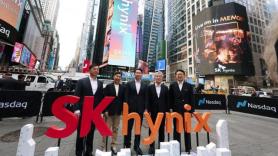
AI-assisted with SK hynix Nasdaq image SEOUL, August 08 (AJP) - Ask two leading artificial-intelligence chatbots why SK hynix has lost more than half its value from its June peak, and they arrive at a remarkably similar conclusion: the company's business has not collapsed, but the price investors were willing to pay for its extraordinary AI-driven earnings has. AJP separately asked Anthropic's Claude and OpenAI's ChatGPT to examine SK hynix's rout in Seoul and New York, including trading flows following its Nasdaq debut, the reasons behind the selloff, analyst views and the upside and downside risks ahead. Both identified essentially the same fault lines — excessive positioning and leverage, an earnings bar that had become almost impossible to clear, worries about the sustainability of AI spending, rising Chinese competition and investor frustration that record cash generation has not yet translated into equally extraordinary shareholder returns. Where they differ is more revealing. Claude puts greater weight on the Nasdaq listing itself as a "sell-the-news" event that encouraged investors to sell the Korean shares while buying the scarcer U.S. receipts. ChatGPT sees the ADR less as the cause than as an amplifier: SK hynix was already retreating from its June peak before the July 10 listing, but the creation of a second market gave global investors another venue through which sentiment, leverage and overnight price discovery could ricochet back into Seoul. Both interpretations can be true. SK hynix closed at a record 2.919 million won on June 22, when it overtook Samsung Electronics to become South Korea's largest listed company for the first time in more than a quarter century. It subsequently touched an intraday record of 2.987 million won on June 25 before closing at 2.917 million won. Friday's close of 1.422 million won leaves the stock more than 52 percent below that intraday peak. That means the decline had already begun before the ADRs arrived. Still, the Nasdaq debut fundamentally changed SK hynix's market structure. SK Group Chairman Chey Tae-won (center) and SK hynix Chief Executive Officer Kwak Noh-jung (second from right), joined by senior executives, pose for a commemorative photograph in front of the Nasdaq MarketSite tower in Times Square, New York, following SK hynix's successful Nasdaq ADR listing, July 10, 2026. Courtesy of SK hynix. The company sold 177.9 million American depositary shares at $149 apiece, with every 10 ADRs representing one Korean ordinary share, raising $26.5 billion through 17.79 million newly issued underlying shares. The offering therefore added shares equivalent to about 2.5 percent of the existing stock. Demand was enormous. But rather than immediately pulling the Korean stock upward toward a higher U.S. valuation, the listing created two prices for essentially the same company. Within days, the ADRs traded at a premium of about 36 percent to the Seoul shares. U.S. investors could cancel ADRs and receive Korean stock, but creating new ADRs out of existing Korean shares remained slower and more restricted, limiting the arbitrage that would normally close such a gap. This is where Claude's analysis is strongest. It focuses heavily on flows. Foreign investors were selling SK hynix in Seoul as U.S. demand poured into SKHY, securities lending increased ahead of the listing and Korean investors themselves began buying the U.S. security. In that reading, Nasdaq did not simply broaden the shareholder base. It temporarily diverted marginal demand away from Seoul and offered traders a new relative-value trade between the expensive ADR and cheaper ordinary stock. ChatGPT places more emphasis on transmission. Once SKHY began trading in New York, SK hynix effectively became a nearly round-the-clock stock. A sharp ADR move after Seoul closed could become the reference point for the next Korean session, while movements in the KOSPI fed back into New York hours later. The distinction matters because it produces different conclusions about the ADR premium. Claude views the premium chiefly as an overhang: as conversion capacity and market efficiency improve, the expensive U.S. shares could fall toward Seoul parity. ChatGPT sees the same premium as partly structural. Restricted fungibility, strong U.S. institutional demand and limited ADR supply could allow a scarcity premium to persist, much as it has for Taiwan's TSMC. Reuters Breakingviews similarly argued that restrictions on creating new SK hynix ADRs could keep the U.S. premium alive. What both AIs agree on more firmly is that the ADR cannot explain a 50 percent collapse by itself. Table on key findings on SK hynix stock fall. The bigger problem is what happened to expectations. SK hynix delivered operating profit of 60.5 trillion won in the second quarter, more than six times its year-earlier result and an all-time record. Yet analysts had expected about 64 trillion won. Revenue of 79.3 trillion won also undershot the roughly 84 trillion-won consensus. The shares fell 9.6 percent after the earnings release. A company reporting record profits was punished because the market had priced in something even better. Both Claude and ChatGPT identify that as a turning point. The issue ceased to be whether SK hynix was making enormous money and became whether its extraordinary margins represented a sustainable new structure for memory chips or the most profitable point of another cycle. There are reasons for doubt. SK hynix's dominance in high-bandwidth memory ironically left it less exposed than Samsung to some of the steepest increases in conventional DRAM prices. Long-term HBM supply contracts provide greater demand visibility but can also limit how quickly prices can be reset upward. Delayed shipments of HBM4 contributed to the second-quarter miss. Then came broader questions about AI itself. Investors have begun asking whether hyperscalers can continue funding hundreds of billions of dollars in data-center construction at the same pace, particularly as scrutiny grows over the returns generated by the investment. China simultaneously supplied another source of anxiety through CXMT's expansion and reports of progress in domestic lithography equipment, raising the possibility that Chinese memory producers could eventually add enough supply to undermine the oligopoly enjoyed by Samsung, SK hynix and Micron. The market mechanics made every concern more violent. JPMorgan estimated that assets in leveraged ETFs tied to Samsung Electronics and SK hynix fell from about $50 billion in late June to $17 billion by late July. Some global investors consequently described Korea's crash as a "leverage event" rather than an earnings event, while JPMorgan estimated hedge-fund deleveraging was largely complete by early August. That observation is central to the bullish case presented by both AI systems. If forced selling rather than collapsing earnings produced much of the decline, removing leverage can produce just as powerful a rebound. SK hynix demonstrated that on July 31 when it hit its 30 percent daily upper limit amid record foreign buying, only to resume falling days later. But Claude gives somewhat more weight than ChatGPT to the possibility that the memory narrative itself is changing. It highlights weakening NAND signals, questions around future HBM specifications, Chinese capacity and the possibility that hyperscalers eventually digest the massive infrastructure they have already ordered. ChatGPT puts more emphasis on the contradiction between the share-price collapse and what customers are actually telling SK hynix. Management said after its second-quarter results that major customers were continuing to ask for additional memory supply. SK hynix is negotiating five-year supply agreements and raised its 2026 capital-spending plan into the high-40-trillion-won range. That is not how a memory producer normally behaves when it sees an imminent demand collapse. A SK hynix fab under construction at Yongin chip cluster in July 2026. AJP Yoo Na-hyun Friday's 54.3 trillion-won investment decision sharpens that debate. The board approved 35.2 trillion won for the second Yongin fab and 19.1 trillion won for the M17 NAND plant in Cheongju. But neither represents immediate supply. The first cleanroom at Yongin Y2 is not scheduled until June 2029, while M17's is expected in December 2028. That timing also corrects one easy interpretation of Friday's market action. The Reuters report carrying the capex announcement was published at 8:17 a.m. UTC, or 5:17 p.m. in Seoul, after the Korean market had closed. The announcement therefore cannot explain SK hynix's 4.88 percent decline during Friday's regular KOSPI session. It can, however, reinforce the question investors are increasingly asking: what will SK hynix do with all the cash? Net cash had reached 88 trillion won at the end of June, according to the company, while investors have become increasingly vocal about demanding dividends and buybacks. SK hynix and Samsung currently target shareholder returns equal to about half of free cash flow, compared with Micron's commitment to return 100 percent. Janus Henderson portfolio manager Richard Clode has argued SK hynix should lift that figure to at least 80 percent. That concern produces perhaps the clearest point of agreement between Claude and ChatGPT. The next major catalyst may not be another record profit. It may be capital allocation. SK hynix said Friday it would announce additional shareholder-return measures during the third quarter, alongside a quarterly dividend of 375 won per share. A large buyback and cancellation program would answer the market's concern that management intends to accumulate cash and pour most of it back into fabrication capacity at the top of the cycle. A modest program would instead reinforce the view that management itself is unwilling to treat today's earnings as permanent. The analyst divide reflects exactly that uncertainty. The bullish camp argues the fundamental AI-memory shortage remains intact and the stock has fallen far more than earnings estimates justify. Six U.S. brokerages began covering SK hynix's ADRs with bullish ratings in early August, with Rosenblatt setting a $320 target and Bank of America emphasizing the company's leadership in high-end memory. At the other extreme, BNK Investment & Securities cut its Seoul target to 1.48 million won and maintained a Hold rating, arguing that slowing demand momentum and continued industry investment would limit the rebound. The enormous spread itself is informative. Analysts are no longer arguing primarily about this quarter's earnings. They are arguing about which earnings multiple SK hynix deserves once today's shortage ends — and when that ending comes. Combining the two AI analyses produces a relatively simple map of what happens next. The downside case requires several things to start going wrong together: HBM pricing power shifts toward Nvidia and other customers; NAND weakens first; hyperscalers slow infrastructure investment; CXMT accelerates capacity; SK hynix continues spending aggressively while delivering disappointing shareholder returns; and the ADR premium contracts through a fall in SKHY rather than a rise in Seoul. The upside case is almost the mirror image. HBM4 shipments accelerate in the second half, multi-year contracts demonstrate that demand is more durable than in past memory cycles, shortages persist because new fabs cannot arrive quickly enough, leveraged selling exhausts itself, and SK hynix uses its cash mountain for a sufficiently large buyback or cancellation to force investors to rethink the Korea discount. There is one important limitation to calling this an "AI consensus." Claude and ChatGPT are not two independent portfolio managers making original forecasts. Both synthesize many of the same analyst reports, company disclosures and financial-news stories. Agreement between them therefore does not amount to two independent investment votes. Still both end up at essentially the same near-term test: shareholder returns, HBM4 execution and the durability of AI capital spending will matter more for SK hynix's next major move than another headline showing record quarterly profit. Put together, the AI verdict is neither comfortably bullish nor conventionally bearish. SK hynix has already lost the valuation of an AI company. The question now is whether it also loses the earnings of one.