

Journalist

Candice Kim김혜준
candicekim1121@ajupress.com
ReporterSamsung Electronics, SK hynix, LG Electronics, Olive Young, Musinsa & Semiconductor, K-Beauty
Candice Kim is a dedicated business and technology reporter specializing in the intersection of high-tech innovation and fast-paced consumer trends. Her core beats span the semiconductor, IT, cosmetics, and retail sectors, where she provides in-depth coverage of industry titans including Samsung Electronics, SK hynix, and LG Electronics, alongside leading consumer brands like Olive Young and Musinsa. Whether analyzing complex silicon supply chains or tracking the latest shifts in beauty and fashion retail, Candice is committed to delivering sharp, accurate reporting that keeps readers informed on the forces shaping today's most dynamic markets.
"Connecting the dots from silicon chips to consumer shifts."
Latest by Candice Kim
-
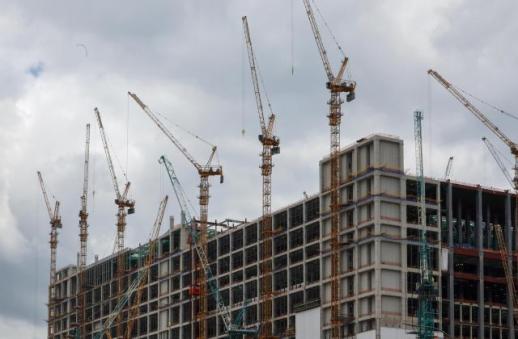 Will AI contracts shield Korean chipmakers from boom-and-bust cycle? SEOUL, September 02 (AJP) - Investment banks and market trackers are betting South Korea's memory giants can extend their red-hot earnings streak into a third year in 2027 and possibly beyond, as AI pushes the business away from the spot-price-driven boom-and-bust cycles that have long defined memory chips. Before the rise of AI, earnings at Samsung Electronics and SK hynix were heavily exposed to prices for mass-market DRAM and NAND flash, commodities notorious for swinging between shortage and glut. Today, at least in advanced memory, the business is beginning to look different. Samsung Electronics and SK hynix are increasingly locking in multi-year supply arrangements with major customers, giving them greater visibility into future demand while allowing AI chipmakers and hyperscalers to secure supplies of increasingly critical high-bandwidth memory, or HBM. In that respect, part of the memory business is moving closer to the long-term customer relationships seen at Taiwan's TSMC, the world's dominant pure-play foundry, rather than relying as heavily on short-term commodity pricing. The shift could make the memory cycle more predictable — and potentially less violent — than in the past. Industry experts, however, caution that long-term agreements, or LTAs, cannot eliminate one of memory's defining characteristics: the risk that supply eventually outruns demand. What exactly is an LTA? A long-term agreement is essentially an arrangement under which a supplier and customer commit to a business relationship covering future chip supplies. The terms vary widely by supplier and customer, including the length of the contract, volume commitments, pricing mechanisms and penalties. What makes LTAs particularly important in the AI boom is the enormous amount of money and time required to produce advanced memory. Semiconductor manufacturers cannot quickly respond to a sudden jump in demand. New fabrication capacity and production equipment must often be planned months or years before the resulting chips reach customers. That creates a problem for both sides. Memory makers need confidence that customers will still want their chips by the time new capacity comes online. AI chipmakers and hyperscalers need confidence that enough memory will be available for the accelerators and servers they plan to deploy. LTAs help bridge that gap. "It is essentially a case where the interests of both sides align," said Lee Jong-hwan, professor of system semiconductor engineering at Sangmyung University. For Samsung Electronics and SK hynix, knowing expected volumes in advance gives them a clearer basis for deciding how much capacity to build and when to invest, Lee said. Customers face the opposite problem. Many leading AI semiconductor companies are fabless and cannot manufacture the memory they need themselves. U.S. big tech companies therefore want to secure supplies in advance because a shortage of memory could constrain deployment of their AI chips and data-center infrastructure, Lee said. The amount of memory covered by long-term agreements is consequently becoming an increasingly important indicator of future demand, he added. Why both sides benefit For memory manufacturers, the biggest advantage is visibility. Building or expanding a semiconductor fabrication facility requires billions of dollars, while production equipment often must be ordered well before actual demand materializes. Long-term commitments give manufacturers greater confidence about how much capacity they may need several years ahead, reducing some of the uncertainty surrounding those investment decisions. Lee said some agreements can extend as far as five years, giving manufacturers a basis for estimating future production volumes and determining when additional production-line investment will be necessary. For customers, the principal benefit is supply security. AI accelerators cannot function without advanced memory. Securing GPUs or other processors has limited value if sufficient HBM cannot be obtained alongside them. By committing earlier, customers reduce the risk of memory becoming the bottleneck that prevents them from deploying AI infrastructure. The arrangement effectively divides the risk: suppliers gain greater confidence that future production will find buyers, while customers gain greater confidence that capacity will be available when they need it. A stabilizer, not a cure The bigger question is whether those arrangements can make the notoriously volatile memory cycle less severe. Kim Deok-kee, professor of electrical engineering at Sejong University, said LTAs should have a stabilizing effect because they reduce some of the mismatch between supply and demand that has historically driven extreme cycles. Memory has traditionally been highly cyclical precisely because supply and demand frequently fail to match, Kim said. Locking in part of future demand should therefore make the market more stable than before. But that stability has limits. A contract does not necessarily guarantee that every committed chip will ultimately be purchased. Depending on individual terms, customers could choose to absorb contractual penalties if abandoning or modifying an agreement becomes economically preferable, Kim said. Details of individual LTAs are generally not made public, making it difficult to know how binding each arrangement ultimately is. More importantly, contracts cannot eliminate the underlying economics of memory. "LTAs can reduce those fluctuations, but I don't think they can completely solve them," Kim said. Even with long-term agreements, supply and demand cannot match perfectly, leaving open the possibility of another oversupply cycle. That risk would become more important if today's AI infrastructure boom slows unexpectedly. Demand is exceptionally strong as hyperscalers race to build data centers and deploy AI infrastructure. But if that investment cycle cools after memory manufacturers have expanded production, excess capacity could once again push prices sharply lower. The emergence of Chinese memory manufacturers adds another source of uncertainty if additional capacity eventually intensifies price competition, Kim said. That helps explain why manufacturers remain cautious about aggressive capacity expansion despite today's extraordinary demand. Existing infrastructure can be repurposed to increase output rather than relying exclusively on large-scale greenfield expansion, Kim said, suggesting producers remain conscious of the danger of building too much capacity. A boom big enough to move an economy The stakes extend well beyond the balance sheets of Samsung Electronics and SK hynix. South Korea's semiconductor exports reached a record $46.65 billion in August, accounting for 47.5 percent of the country's total exports of $98.25 billion, according to the Ministry of Trade, Industry and Energy. Overall exports surged 68.7 percent from a year earlier to an all-time monthly high, bringing the country within striking distance of the $100 billion mark for the first time. The trade surplus reached $34.75 billion. The figures show just how heavily South Korea's export boom has come to depend on semiconductors, fueled by surging demand for HBM and other advanced memory used in AI infrastructure. Yet the chip boom has not spread evenly through the domestic economy. Retail sales fell 2.4 percent in July from the previous month, while overall industrial production was unchanged, according to government data. Sales of durable goods, including passenger vehicles, dropped 7.7 percent, while sales of semi-durable and non-durable goods also declined. Semiconductor earnings and exports can therefore soar without producing an equally dramatic improvement in household consumption or other parts of the economy. That makes the durability of the memory upcycle increasingly consequential not only for Samsung Electronics and SK hynix but for South Korea's broader economic outlook. During previous booms, memory manufacturers had to make enormous investment decisions largely on forecasts of future demand. When those forecasts proved too optimistic, new capacity sometimes arrived just as demand weakened, exacerbating oversupply and sending prices tumbling. LTAs give manufacturers something they lacked in those cycles: a clearer view of at least part of future demand. They do not guarantee that the view will prove correct. For an industry accustomed to swinging from shortage to glut and back again, however, greater visibility alone could make today's AI-driven memory boom different from those that came before. LTAs may not kill the memory cycle. But they could make its swings less violent. AJP Takeaways ● Long-term agreements are giving Samsung Electronics and SK hynix greater visibility into future AI memory demand, potentially reducing the severity of traditional memory cycles. ● LTAs benefit both sides: memory makers gain greater confidence for capacity investment, while AI chipmakers and hyperscalers secure critical HBM supplies in advance. ● Contracts cannot eliminate the cycle altogether, as weaker AI investment, excess capacity or rising Chinese competition could still push the memory market back into oversupply. 2026-09-02 17:27:52
 -
 Samsung showcases AI-powered TVs, appliances at IFA 2026 SEOUL, September 02 (AJP) - Samsung Electronics is showcasing its latest AI-powered TVs, home appliances and mobile devices at IFA 2026 in Berlin, as the South Korean tech giant expands artificial intelligence across its consumer electronics lineup. Samsung said Wednesday it will operate a standalone exhibition at Humboldt Carré in central Berlin from Sept. 2 to 6 under the theme "Your companion to AI Living." The exhibition is divided into entertainment, home and self-care sections. The entertainment section features Samsung's Micro RGB display technology, which uses microscopic red, green and blue LEDs to improve color, contrast and image clarity. Its 2026 TV lineup also incorporates Vision AI Companion, a conversational AI system designed to provide personalized content recommendations and contextual information while users watch TV. Samsung is also displaying two new Odyssey gaming monitors. The 42-inch curved OLED Odyssey G7 features a 4K display, while the 27-inch Odyssey G6 supports a refresh rate of up to 1,100 hertz, which Samsung describes as an industry first. In home appliances, Samsung is focusing on energy efficiency and connected-device management. Its Bespoke AI Family Hub refrigerator uses camera-based AI Vision technology to recognize food ingredients and suggest recipes, while its touchscreen can monitor and control electricity consumption across connected appliances. The company is also exhibiting an induction cooktop with an integrated ventilation system and a built-in dishwasher that consumes 20 percent less energy than Europe's highest A-grade efficiency standard. The dishwasher uses an AI-powered wash cycle to detect the level of contamination on dishes and adjust water and energy consumption accordingly. Samsung's new Bespoke AI washing machine, meanwhile, consumes 70 percent less energy than the European A-grade threshold, according to the company. The model uses a high-efficiency inverter motor and automatically adjusts operation based on the laundry load. The exhibition also includes Samsung's latest Galaxy devices, including the Galaxy S26 FE, Galaxy Z Fold8 Ultra, Galaxy Z Fold8, Galaxy Watch Ultra2 and Galaxy Watch9. The S26 FE, scheduled for release on Sept. 4, runs One UI 9 and includes new camera and editing features. Samsung will separately operate a Creator Hub at Messe Berlin's IFA Palais during the trade show, offering demonstrations of its AI ecosystem. AJP Takeaways Samsung is showcasing AI-enabled TVs, appliances and Galaxy devices at IFA 2026 in Berlin. New products include a 1,100Hz Odyssey G6 gaming monitor and appliances designed to cut energy consumption. Samsung is expanding AI functions across TVs, connected homes and mobile devices rather than limiting them to individual products. 2026-09-02 16:24:14
 -
 Samsung unveils "CUBE" strategy for HBM traction SEOUL, September 01 (AJP) -Samsung Electronics is betting on denser, faster and cooler memory to strengthen its position in the HBM race as artificial intelligence drives a fundamental shift in the global memory market. Its new “CUBE” strategy is designed to pack more memory into the same space while shortening the physical distance data must travel — a combination Samsung says can increase bandwidth while reducing power consumption and heat. The strategy comes as Samsung seeks to challenge SK hynix's commanding lead in high-bandwidth memory, the premium stacked memory used alongside AI accelerators. SK hynix controlled 58 percent of the global HBM market by revenue in the first quarter of 2026, compared with 21 percent for Samsung and 21 percent for Micron, according to Counterpoint Research. Choi Jang-seok, vice president and head of memory product planning at Samsung Electronics' Device Solutions division, laid out the strategy Tuesday at the Memory Executive Summit in Taipei, held ahead of SEMICON Taiwan 2026. CUBE stands for Capacity, Utilization, Bandwidth and Efficiency, four areas Samsung sees as increasingly interconnected as AI systems require larger amounts of memory to feed data to increasingly powerful processors. At its core, the strategy is about building upward and shortening the journey data has to make. Under Capacity, Samsung wants to increase memory vertically rather than consuming more circuit-board space. “Memory capacity will no longer be constrained by PCB area,” Choi said, saying vertical expansion would allow more memory without enlarging the board footprint. Utilization addresses what happens inside those taller memory structures. Samsung is optimizing the placement of logic and memory so data does not have to travel unnecessarily far before it is processed. “3D is not simply about stacking,” Choi said. “What matters is how each floor is utilized.” By drastically shortening the distance between dies, Samsung aims to create what Choi called a “vertical highway” that allows much larger volumes of data to move through the memory stack at higher speed. The fourth component, Efficiency, tackles the cost of moving that data. “The ultimate goal of 3D is to reduce the energy required to move a single bit of data,” Choi said. Reducing that distance matters increasingly in HBM because adding more layers and moving more data generates both greater power consumption and heat. Samsung's strategy is therefore not simply to stack more memory, but to make the entire vertical structure more efficient. HBM5 raises the stakes Samsung is applying the same approach to its next generations of HBM as it seeks to improve its competitive position in AI memory. The company is developing HBM5 with a target of delivering twice the performance of HBM4E, while improving performance per watt by 20 percent and cutting thermal resistance by 20 percent. Further out, Samsung is developing zHBM, targeting eight times HBM4E's performance, three times its performance per watt and a 75 percent to 90 percent reduction in thermal resistance. Samsung is also working on zNAND-O, a product intended to bridge some of the traditional gap between DRAM's speed and NAND's capacity. The company says zNAND-O will offer 10 times the bit density of DRAM while delivering seven times the read bandwidth and power efficiency of conventional NAND. Sampling is planned for 2028. The push comes as AI changes the economics of the memory industry. Samsung still commands greater scale across the broader memory market. Counterpoint Research put its share of global DRAM revenue at 39 percent in the second quarter of 2026, ahead of SK hynix at 26 percent and Micron at 25 percent. But HBM presents a different competitive picture. SK hynix's early lead in supplying advanced HBM for AI accelerators has given it a much larger share of the premium segment. Samsung's challenge is to leverage its broader DRAM technology and massive manufacturing footprint to capture more of a market becoming increasingly central to memory makers' growth and profitability. SEMICON Taiwan, organized by semiconductor industry association SEMI, runs from Sept. 2 through Sept. 4. The Memory Executive Summit was held Tuesday ahead of the main exhibition. AJP Takeaways Samsung Electronics unveiled its CUBE strategy — Capacity, Utilization, Bandwidth and Efficiency — to make next-generation HBM denser, faster and more power-efficient. Samsung is developing HBM5 and zHBM with major improvements in performance, power efficiency and thermal resistance as AI accelerators demand increasingly advanced memory. Samsung's strategy centers on vertical scaling and shorter data paths, rather than simply adding more memory layers, to tackle the bandwidth, power and heat constraints of AI computing. 2026-09-01 14:14:41
 -
 Japan beckons as SK hynix weighs next memory-chip hub SEOUL, August 31 (AJP) - SK hynix, fresh from breaking ground on a more than $4 billion HBM packaging plant in the United States, is weighing Japan as a possible next overseas production base as surging AI demand pushes the South Korean memory giant to widen its manufacturing footprint. "We are in the process of studying. As soon as we finish, I'll let you know," SK Group Chairman Chey Tae-won told reporters in Japan on Monday when asked about potential investment in a Japanese semiconductor plant. Chey, who doubles as the head of the Korea Chamber of Commerce and Industry, has been in Japan to attend the 15th Korea-Japan Chambers of Commerce and Industry Chairmen’s Meeting in Sendai, where business leaders discussed cooperation in supply chains, energy security and future industries. His remarks followed growing speculation that SK hynix was considering memory-chip production in Japan, including reports pointing to Miyagi Prefecture in northeastern Japan as a possible candidate. An SK hynix official told AJP that Chey's remarks were a general reference to the company's review of potential production locations and should not be taken as confirmation of a specific joint venture or investment project in Japan. Japan nevertheless presents a compelling backdrop for the search. The country accounted for around half of the global semiconductor market around 1990 before losing ground to South Korea, Taiwan and the United States. Its share has since fallen to around 10 percent, according to Japan's Ministry of Economy, Trade and Industry. Tokyo is spending heavily to reverse that decline, seeking to rebuild domestic manufacturing capacity and strengthen semiconductor supply chains increasingly regarded as critical to economic security. Kumamoto has become the most visible symbol of that push. Taiwan Semiconductor Manufacturing Co. established Japan Advanced Semiconductor Manufacturing, or JASM, in the southwestern prefecture, restoring advanced logic-chip production capacity that Japan had largely lost. The Japanese government has already budgeted up to 732 billion yen in support for TSMC's second Kumamoto fab. Taiwanese authorities in March approved a revision of the project toward production of advanced 3-nanometer chips. Tokyo has said the specific investment amount, timetable and any additional government support remain under discussion. Japan is also rebuilding its position in memory, an area that provides a more direct connection to SK hynix. Kioxia, one of Japan's largest remaining semiconductor manufacturers, produces NAND flash memory from plants including Yokkaichi in Mie Prefecture. Tokyo has supported capacity expansion there as part of its drive to secure domestic semiconductor production. The company also provides an existing financial link between Japan and SK hynix. The Korean memory giant participated in the Bain Capital-led acquisition of the former Toshiba Memory business and retains an indirect connection to Kioxia through Bain-linked investment vehicles and convertible rights. That relationship has gained renewed attention as SK hynix expands beyond conventional memory to capture the AI infrastructure boom. The company has become the dominant supplier of high-bandwidth memory, or HBM, stacked memory used alongside AI accelerators, while also seeking additional capacity to meet demand that executives expect to remain tight for years. Japan offers another attraction. Even after losing much of its global chipmaking share, the country retains formidable positions in semiconductor materials, components and manufacturing equipment. METI itself has identified equipment, parts and materials as areas where Japanese companies continue to hold a competitive edge. That combination of suppliers, government incentives and an aggressive push to restore advanced semiconductor manufacturing puts Japan among the plausible candidates as SK hynix studies the next stage of its overseas expansion. Tokyo has increasingly relied on both domestic and foreign chipmakers to rebuild the ecosystem. Alongside TSMC and Kioxia, the government has backed projects spanning advanced logic, memory and image sensors. In April, METI approved subsidies of up to 60 billion yen for a new Sony Semiconductor Manufacturing image-sensor plant under construction in Kumamoto. Any Japanese investment by SK hynix would follow a major expansion in the United States. The company last week broke ground on an advanced HBM packaging facility in West Lafayette, Indiana, with investment expected to exceed $4 billion. The plant is scheduled to begin mass production of next-generation HBM in the second half of 2029, using wafers produced in South Korea for packaging and testing in the United States. Japan would represent a different proposition: a potential memory-chip production base in a country that was once the center of global semiconductor manufacturing and is now spending heavily to reclaim part of that position. For now, SK hynix is keeping its options open. The company stressed that no specific Japanese joint venture or investment has been decided and that Chey's comments referred to its broader study of potential production locations. AJP Takeaways • SK hynix is studying additional overseas production locations after breaking ground on its $4 billion-plus HBM packaging plant in Indiana, with Japan emerging as a potential candidate. • Japan's global semiconductor share has fallen from around 50 percent around 1990 to roughly 10 percent, prompting Tokyo to pour resources into rebuilding domestic chip production. • TSMC's Kumamoto fabs, Kioxia's memory operations and Japan's strength in semiconductor materials and equipment provide an established ecosystem as SK hynix considers its next manufacturing move. 2026-08-31 17:52:15
 -
 Bonuses lift discretionary spending up to 4% in Korea's chip hubs SEOUL, August 31 (AJP) - Discretionary spending on cars, furniture and other high-end goods in South Korea’s semiconductor-heavy communities rose by as much as 4 percent relative to areas with little chip exposure after Samsung Electronics and SK hynix began paying outsized bonuses from the industry boom, a Bank of Korea study showed Monday. The latest edition of BOK Issue Note estimated that bonuses at the two chipmakers generated about 1.1 trillion won ($790 million) in additional consumption between February 2025 and June 2026. The cumulative increase could reach about 1.7 trillion won by the end of this year if recent spending patterns persist, or an annual average of roughly 800 billion won in 2025 and 2026, equivalent to about 2 percent of last year’s increase in total private consumption. The findings offer some of the clearest evidence yet that Korea’s AI-driven semiconductor windfall is beginning to spill into household demand, the reasoning for the back-to-back increase in the benchmark rate to contain the spread of demand-side inflationary pressure. But the study also highlighted that the trickle-down remains concentrated in a relatively narrow group of high-priced discretionary purchases rather than spreading evenly across the domestic economy. The study analyzed regional card spending in areas where Samsung and SK hynix employees are concentrated, including Icheon, Hwaseong, Pyeongtaek, Cheongju and Giheung in Yongin. The card data, drawn from NH NongHyup Card and Hana Card, are based on cardholders’ billing addresses rather than the locations where purchases were made. In the three areas with the highest semiconductor exposure — Icheon, Hwaseong and Cheongju’s Heungdeok District — monthly consumption rose as much as 1.6 percent relative to areas with little semiconductor exposure after bonus payments began in 2025. The gap narrowed later that year before widening again as bonus payouts increased in 2026, reaching 3.7 percent in June. Across high-exposure regions more broadly, the estimated spending boost reached as much as about 4 percent. The BOK researchers defined semiconductor exposure as the share of adult residents estimated to work for Samsung Electronics or SK hynix. Icheon ranked highest at 6.8 percent, followed by Hwaseong at 4.6 percent and Cheongju’s Heungdeok District at 3.6 percent. The spending response was heavily skewed toward goods that tend to react strongly to changes in income. Cars, department stores, appliances, furniture and other expensive discretionary purchases accounted for much of the increase, while everyday spending at supermarkets and convenience stores and outlays on medical care and education showed little noticeable change. Tesla deliveries provide one of the clearest examples. Average monthly deliveries in major semiconductor-beneficiary areas jumped 105.6 percent from their 2025 average in the first half of this year, compared with a 77.2 percent increase nationwide, according to Korea Automobile Importers & Distributors Association data cited in the study. The pattern is consistent with other indicators of high-end consumption in semiconductor hubs. Lotte Department Store’s Dongtan branch posted a 25 percent year-on-year increase in first-half sales, while sales of luxury goods and foreign-brand watches and jewelry rose roughly 40 percent to 45 percent, according to Lotte Department Store. Imported vehicle registrations in Hwaseong, home to Samsung Electronics’ major semiconductor operations and the Dongtan residential district, increased 42.5 percent to 4,273 vehicles in the first half from 2,998 a year earlier, according to the Korea Automobile Importers & Distributors Association. Nationwide registrations rose 33.2 percent over the same period. The BOK study, however, suggests that some of the semiconductor windfall is flowing into property rather than consumption, limiting its immediate spillover into the broader economy. Property registration data showed that Icheon residents sharply increased purchases of homes elsewhere in the Seoul metropolitan area after bonus payments. Purchases were concentrated in Dongtan, Yongin and Suwon in southern Gyeonggi Province as well as Seongnam and Hanam. The average monthly number of purchases in Dongtan roughly doubled from a year earlier. Cheongju showed a contrasting pattern. Residents there largely continued buying homes locally, while consumer spending responded more strongly than in Icheon despite the area’s lower semiconductor-worker exposure. The researchers said the comparison suggests that bonuses have a greater impact on consumption when less of the additional income is absorbed by property purchases. So far, the additional spending is estimated to have lifted the level of gross domestic product by 0.01 percent in 2025 and 0.03 percent in 2026. The potential impact becomes much larger next year. Samsung’s semiconductor division and SK hynix are estimated to pay a combined 62 trillion won in performance bonuses for 2027, based partly on brokerage earnings forecasts. Of that, about 21.9 trillion won could be immediately available after tax, roughly five times this year’s 4.4 trillion won. Under the researchers’ scenarios, the resulting consumption could lift the level of GDP by 0.08 percent to 0.12 percent in 2027, translating into an increase of 0.06 to 0.09 percentage point in annual economic growth. The ultimate effect will depend on how much of the windfall reaches more households and more parts of the economy. The researchers said the spillover could strengthen if semiconductor companies expand employment as well as wages, if additional income flows into consumption rather than property and other assets, and if spending eventually broadens from cars and luxury goods into services and everyday consumption. That distinction matters because the study found that spending on cars, online purchases and high-end discretionary goods generates relatively less domestic labor income and more imports than spending on many services and everyday goods. Past manufacturing booms suggest that broader spillovers can take time. During earlier upswings in Korea’s automobile and chemical industries, wage gains came first, while employment and service-sector consumption strengthened later. The researchers said a similar pattern could emerge in semiconductors as Samsung and SK hynix accelerate capacity expansion and hiring to meet chip demand. AJP Takeaways • Samsung Electronics and SK hynix bonuses lifted consumption in Korea’s most semiconductor-exposed communities by as much as about 4 percent relative to low-exposure areas, according to a BOK study. • Chip bonuses generated an estimated 1.1 trillion won in additional consumption through June 2026, with the cumulative amount projected to reach about 1.7 trillion won by year-end. • The windfall remains concentrated in cars, department stores, appliances and other high-end discretionary goods, while some additional income is flowing into property purchases. • Much larger 2027 bonuses could add 0.06 to 0.09 percentage point to South Korea’s economic growth, depending on how much income is spent rather than saved or invested in assets. 2026-08-31 14:08:21
 -
 Samsung, SK hynix tax payments nearly triple on chip boom SEOUL, August 31 (AJP) - Samsung Electronics and SK hynix paid a combined 11.2 trillion won ($8 billion) in corporate taxes in the first half of 2026, nearly triple the amount a year earlier, company filings showed. Samsung paid 3.99 trillion won in corporate taxes during the January-June period, up from 1.12 trillion won a year earlier, according to the company's separate financial statements filed with the Financial Supervisory Service. SK hynix paid 7.22 trillion won, more than double the 3.07 trillion won paid during the same period last year. Together, the two chipmakers paid 11.21 trillion won, up 167.5 percent from 4.19 trillion won a year earlier. The figure was the second-highest first-half total on record, behind 12.66 trillion won in 2019 during the previous memory-chip boom. The surge is particularly notable because much of the tax paid in the first half reflects earnings generated before the full impact of this year's extraordinary semiconductor rally. Korean companies with fiscal years ending in December generally settle corporate taxes on the previous year's earnings in March, while making interim payments in August. Large corporate groups can calculate the August payment based on provisional first-half results. That means the sharp earnings expansion recorded by Samsung and SK hynix this year could translate into substantially larger tax payments later this year and next. Samsung reported a record 146.73 trillion won in operating profit in the first half, compared with 11.36 trillion won a year earlier, according to its consolidated financial statements. SK hynix's first-half operating profit surged to 98.15 trillion won from 16.65 trillion won a year earlier, driven by booming demand for high-bandwidth memory and other AI-related memory products. The two companies generated a combined 244.88 trillion won in operating profit in just six months, highlighting the scale of the earnings windfall created by the global artificial intelligence investment boom. Their previous combined annual corporate tax payment record was 15.64 trillion won in 2019. With first-half payments already exceeding 11 trillion won and earnings accelerating sharply, their tax contributions are widely expected to set a new record. Some estimates have suggested the companies' eventual tax burden could approach 100 trillion won if their combined standalone operating profit reaches 500 trillion to 600 trillion won and a simple effective tax rate of around 20 percent is applied. Such estimates, however, remain highly preliminary. Actual tax payments could be substantially lower after deductions and tax credits for research and development and domestic facility investment are taken into account. AJP Takeaways: Samsung and SK hynix paid a combined 11.21 trillion won in corporate taxes in H1, up 167.5 percent from a year earlier. Samsung's payment jumped to 3.99 trillion won, while SK hynix paid a record 7.22 trillion won on a standalone basis. The bigger fiscal impact may still be ahead as the companies' combined H1 operating profit surged to nearly 245 trillion won. 2026-08-31 13:35:25
 -
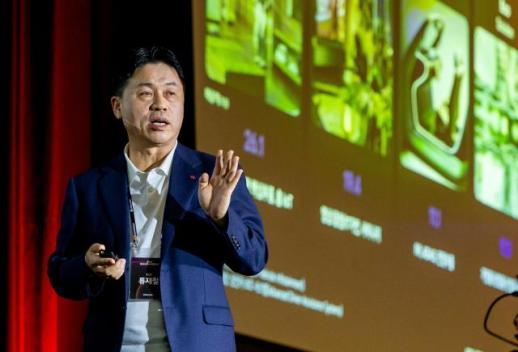 LG Electronics hunts for U.S. talent for AI push SEOUL, August 31 (AJP) - LG Electronics is stepping up its hunt for U.S.-based engineering talent in robotics, AI data-center cooling and mobility as the Korean electronics giant builds up new businesses beyond its traditional home appliance operations. The recruiting push comes just weeks after LG Group laid out an ambitious technology roadmap with Nvidia spanning humanoid robots, AI factories and autonomous driving, giving the company a series of concrete projects that will require deeper expertise in artificial intelligence, robotics and next-generation infrastructure. The company said Monday it held its North America Tech Conference in San Francisco on Aug. 29, bringing together about 100 researchers, doctoral-level specialists and experienced engineers from major U.S. universities, technology companies and startups. Participants included researchers from Stanford, Harvard, Massachusetts Institute of Technology and the University of California, Berkeley. LG CEO Lyu Jae-cheol attended alongside the company's chief technology officer and senior executives overseeing robotics, artificial intelligence, mobility and data infrastructure. Lyu outlined LG's strategy to build robotics, AI data-center cooling and mobility into future growth engines, areas the company increasingly groups under its broader physical AI push. LG plans to unveil a next-generation bipedal humanoid robot powered by Nvidia technology in the first quarter of 2027 and build an Nvidia Vera Rubin-based AI factory reference site later that year. The partnership will expand into an 80-megawatt AI factory in Cheonan, South Chungcheong Province, in the first half of 2028, while the two companies are also developing a high-performance computing platform for AI-defined vehicles based on Nvidia's Drive Hyperion architecture. The humanoid project will use Nvidia's Isaac GR00T open foundation model, Jetson Thor computing platform and Halos for Robotics safety system, while LG affiliates will provide components including actuators, sensors and batteries. LG Electronics is also preparing to deploy its wheeled CLOiD robot on a washing machine production line at its Tennessee factory by the end of this year for proof-of-concept testing. Against that backdrop, the latest recruiting campaign suggests LG is seeking talent not only for research but also for the commercialization and deployment of those technologies. LG is seeking to combine robotics platforms and AI with decades of manufacturing data, while leveraging its existing strengths in HVAC and automotive components. The company said data generated from hundreds of millions of connected products and experience manufacturing more than 1 billion core components could also support its physical AI expansion. "LG Electronics is a company where people with deep technical expertise can grow into key leaders who shape its future," Lyu said. The company will continue its U.S. recruiting push from Sept. 9, visiting universities including MIT, Carnegie Mellon, Michigan, Purdue, Illinois Urbana-Champaign and Wisconsin-Madison for recruitment sessions. AJP Takeaways ○ LG Electronics is recruiting U.S. engineers in robotics, AI data-center cooling and mobility as it expands beyond its traditional home appliance businesses. ○ The talent push follows LG Group's Nvidia partnership covering a humanoid robot, AI factories and AI-defined vehicles, with major projects scheduled from 2027. ○ LG will recruit at leading U.S. universities including MIT, Carnegie Mellon, Michigan and Purdue as it builds expertise for physical AI and next-generation infrastructure. 2026-08-31 10:42:10
 -
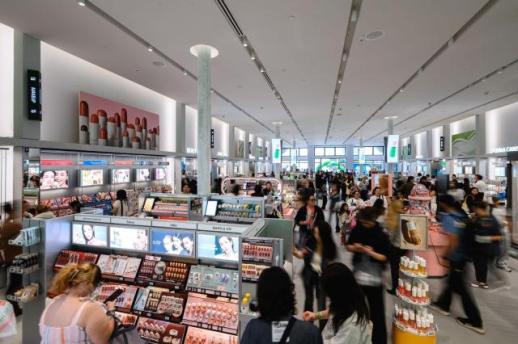 Foreign shopping at Olive Young tops $720 million SEOUL, August 31 (AJP) - CJ Olive Young's sales to foreign shoppers surpassed 1 trillion won ($720 million) by August, reaching the milestone three months earlier than last year as South Korea's K-beauty boom draws overseas visitors beyond Seoul into regional cities. Foreign customers made 11.01 million purchases at Olive Young's domestic stores between January and August, equivalent to roughly one transaction every 0.9 seconds during store operating hours, the health and beauty retailer said Monday. Foreign shoppers now account for 33 percent of the retailer's offline sales, up sharply from just 2 percent in 2022. Customers from 192 countries made purchases this year, with the United States, Singapore, Japan, China and Thailand among its five largest foreign markets. The growth is increasingly spreading outside South Korea's traditional tourism hubs. Foreign sales across Olive Young stores rose 47 percent from a year earlier through August, while sales in Gangwon Province more than doubled, climbing 105 percent. Gyeongju posted an 88 percent increase, followed by Daejeon at 80 percent and Jeonju at 62 percent. Olive Young has been expanding large-format and locally tailored stores outside the Seoul metropolitan area as foreign visitors broaden their travel itineraries. A company survey found foreign shoppers visited an average of 2.8 Olive Young stores during their trips. The retailer currently operates 151 stores designated as "global tourism" locations, accounting for more than 10 percent of its nationwide network. Those stores prioritize multilingual staff and services aimed at overseas visitors. Skincare remained the most popular category, while demand for more specialized products is growing. Foreign sales of dermo skincare jumped about 78 percent from a year earlier through August, while inner-beauty products rose 64 percent. Olive Young said it plans to continue expanding large and specialized stores in regional destinations including Busan and Jeju while improving services for international shoppers. "We will strengthen our role as infrastructure for Korea's tourism industry by utilizing large-format and locally specialized stores not only in Seoul but also across regional areas," an Olive Young official said. AJP Takeaways: Foreign sales at Olive Young surpassed 1 trillion won ($720 million) by August, three months earlier than last year. Foreign shoppers now account for 33 percent of offline sales, up from just 2 percent in 2022. Foreign sales rose 47 percent year-on-year, with growth accelerating outside Seoul, including a 105 percent surge in Gangwon Province. 2026-08-31 10:17:47
 -
 In Dongtan, Semiconductor Boom Fails to Benefit Local Businesses "My husband made a lot of money this time, so why not buy this?"At the Lotte Department Store in Dongtan, a sales associate made this unsolicited pitch to a customer. The associate did not mention that the customer had a husband or that he worked for Samsung Electronics. Yet, the phrase "husband who made a lot of money this time" seemed to need no explanation. This is Dongtan.Dongtan is a prominent "semiconductor city" in South Korea, located near Samsung Electronics' Hwaseong and Giheung semiconductor plants and connected by shuttle bus to SK Hynix's Icheon facility. With an unprecedented boom in AI-driven memory production, Samsung and SK Hynix have reported record earnings, significantly increasing the disposable income of local employees. SK Hynix workers are expected to receive bonuses totaling around 700 million won, while Samsung semiconductor employees are projected to receive bonuses of about 600 million won.Evidence of this financial influx is visible in various sectors. Sales at Lotte Department Store in Dongtan increased by 25% in the first half of the year, with luxury goods, overseas watches, and jewelry seeing a rise of 40-45%. New registrations of imported cars in Hwaseong surged by 42.5%. Apartment prices in Dongtan have risen by 16.3% this year, marking the highest increase in the country.However, stepping out of the department store and into the alleyways reveals a stark contrast. A café owner remarked, "We haven't seen an increase in customers." An optical shop reported a decline in sales, and a travel agency stated, "We don't feel the effects of the bonuses." Despite the semiconductor industry experiencing its largest boom, why are local businesses in Dongtan not sharing in the prosperity?The answer lies in the sheer scale of the bonuses received by semiconductor employees. If bonuses are in the hundreds of thousands of won, they can be spent on dining out and shopping. However, when bonuses reach tens of millions, the narrative changes. The money begins to function as "capital" rather than just a "bonus."Even with a 600 million won bonus... "Dongtan is out of reach"The first signs of this financial shift are evident in the real estate market. According to the Korea Real Estate Agency, apartment prices in Dongtan have surged by 16.3% this year, with jeonse (long-term rental) prices also rising by 10.9%. Ham Young-jin, head of the real estate research lab at Woori Bank, analyzed actual transaction prices from the Ministry of Land, Infrastructure and Transport and found that from June to August 25, 64.6% of the 494 apartment types traded in Dongtan reached record highs during this period, the highest ratio in Gyeonggi Province.A 97-square-meter unit in Cheonggye-dong The Sharp Central City sold for 2.16 billion won, exceeding the previous record by 500 million won. A 128-square-meter unit in Dongtan Station Hanwha Dream Green Prestige also changed hands for 2.4 billion won, up 420 million won from the previous record.The pace of rising home prices has outstripped the bonuses received by some employees.A Samsung Electronics employee, who wished to remain anonymous, said, "I was looking to move to Dongtan after receiving my bonus, but prices have risen so much that now I can't even dream of it."Even within Dongtan, the flow of money varies. A real estate agent in Dongtan 1 New Town noted, "There are many Samsung Electronics employees nearby, but we don't feel a significant impact here. Prices have risen, but Dongtan 2 has seen much larger increases."Professor Seo Jeong-ryeol from Yeongsan University explained that just because semiconductor employees receive large bonuses, it does not mean they indiscriminately buy nearby homes.He stated that funds tend to concentrate in areas where proximity to work, living conditions, and investment value converge."If conditions are similar, people will naturally prefer areas with better living conditions or higher investment value," he said. "Just because large companies like Samsung or SK Hynix are making money, it doesn't mean employees will buy homes anywhere. Apartments that are close to work and have investment potential take priority."Additionally, a new financial opportunity will arise next month. Starting September 1, Samsung Electronics will offer housing loans of up to 500 million won at an interest rate of 1.5% per year to eligible employees without homes. This will apply to properties valued at 2.5 billion won or less and with a floor area of 85 square meters or less in the metropolitan area.As expectations for price increases grow, some existing contracts are being canceled. A Dongtan resident, Mr. Kim, reported that he received an unexpected notice of contract termination from the landlord of an apartment he was set to move into. "The landlord deposited double the deposit without any explanation. I think they believe prices will rise further." Professor Seo explained that a landlord canceling a contract while offering double the deposit indicates a belief that the future increase in home prices will outweigh the cost.Stepping outside the apartment complex, the 'semiconductor boom' disappearsHowever, just a few blocks away from the apartment complexes, the atmosphere changes. An optical shop employee stated, "When asked if the local economy has improved, I would say no. They say bonuses have been issued, but sales have not increased; in fact, they have decreased." He observed that young professionals seem more interested in other investments. "It seems like they are investing a lot in stocks and are also very interested in real estate."A café owner had high hopes when Samsung's performance began to soar. "Honestly, we thought we would benefit. When Samsung issues bonuses, we thought money would circulate in the area." However, customer numbers did not increase as expected. In previous boom periods, corporate orders for snacks and meals would flow into local businesses, but this time, many local merchants are reporting that "business is tough."The café owner reflected on his own spending habits to explain the situation. "If I suddenly came into a lot of money, I would probably move or pay off debts first. Shopping doesn't leave anything behind, does it?"Local shops are quiet, yet luxury goods have surged over 40%Shopping patterns have also changed with the size of expenditures. Sales at Lotte Department Store in Dongtan increased by 25% in the first half of the year, surpassing the overall growth rate of about 20% for all Lotte stores. Notably, sales of luxury goods and overseas brand watches and jewelry surged by 40-45%.The automotive sector has seen similar trends. According to the Korea Automobile Importers and Distributors Association (KAIDA), new registrations of imported cars in Hwaseong, where Dongtan and Samsung Electronics' Hwaseong plant are located, increased by 42.5% in the first half of the year, rising to 4,273 from 2,998 in the same period last year. The national increase rate during the same period was 33.2%. While it cannot be definitively stated that Samsung's bonuses directly caused the increase in imported cars, employees' spending plans do include vehicles. A Samsung employee, Mr. Lee, said, "I have wanted to change my car for a while, and I am considering doing it now."Travel increased, but local travel agencies saw no benefitTracking the flow of money in travel is more challenging. A travel agency in Dongtan reported that despite the semiconductor bonuses, there has not been a noticeable increase in bookings. "Corporate employees often use travel agencies affiliated with their companies. Even for the same products, they tend to use those agencies to receive employee discounts." Young employees also book flights and accommodations directly through applications. Money may be flowing overseas, but it is simply not passing through local travel agencies.In fact, an educator in Dongtan noted a significant increase in students missing classes due to travel this summer. "In the past, a family would typically take a 3-4 day trip abroad during vacation. This time, however, families are going on multiple trips, such as visiting Vietnam and then returning to Japan during the same break." However, these families have not doubled their education expenses.Lee Eun-hee, an emeritus professor of consumer studies at Inha University, explained that large sums like bonuses are spent differently than regular salaries. High-priority expenses, such as education, do not suddenly increase just because unexpected money comes in. Instead, unanticipated funds are often used to expand living spaces, accumulate assets, or enable purchases that are typically difficult to make with regular salaries. She noted that money may flow toward travel, luxury goods, and imported cars—things people want but find hard to afford normally."You don't eat two meals, do you?"Professor Yang Jun-mo from Yonsei University simplified this concept further. "You don't eat two meals, and a child already attending an academy isn't going to pay double the tuition." The moment bonuses reach tens of millions of won, the nature of the money itself changes.Professor Yang explained, "For example, if you suddenly receive 600 million won, you will start to consider whether to buy a home in Dongtan or add more money to move to Gangnam. At that point, the logic of money changes completely." He noted that during past export booms, money earned in prosperous regions did not all get spent locally; instead, it often shifted toward higher-value real estate or financial assets. "When a large sum of money suddenly appears, it transitions into the concept of asset investment."The semiconductor factories are thriving, and employees are enjoying increased financial security. Apartment prices in Dongtan are reaching new highs, and luxury sales and imported car registrations are soaring. Yet, the cash registers in the alleyways outside the apartment complexes remain quiet.The money generated by the semiconductor industry that sustains Dongtan has not been distributed evenly throughout the community. Rather, it has flowed in different directions. 2026-08-28 13:48:00
 -
 ANALYSIS: US tariff push tests Korea's memory red line SEOUL, August 28 (AJP) -SK hynix has broken ground on a more than $4 billion HBM facility in Indiana and Samsung Electronics is preparing to bring its long-delayed Taylor, Texas fab online. Both investments deepen South Korea's semiconductor footprint in the United States. They nevertheless stop at the fault line Washington is increasingly pressing Korean chipmakers to cross — producing advanced memory wafers on American soil. SK hynix's Indiana plant illustrates the distinction clearly. Cutting-edge wafers will continue to be made at the company's Korean fabs and shipped to West Lafayette, where they will undergo advanced packaging and testing before emerging as what SK hynix calls its first "Made in USA" next-generation HBM products from the second half of 2029. Samsung's Texas strategy has drawn a similar boundary. Its Taylor complex is centered on leading-edge logic foundry production and research and development rather than a dedicated DRAM or NAND wafer fab. The U.S. Commerce Department awarded Samsung up to $4.745 billion under the CHIPS Act to support more than $37 billion of planned investment in a broader Central Texas semiconductor ecosystem. The Taylor project's first fab is moving toward operational readiness around year-end, although full-scale mass production could slip into early 2027, according to materials compiled on the project. Samsung's existing Austin operation itself once made DRAM and NAND before exiting flash memory production in 2012 and becoming a foundry operation in 2017. The division of labor has served an obvious purpose. Samsung and SK hynix can put factories, jobs, packaging, R&D and customer-facing operations closer to the world's biggest AI market while keeping their most valuable memory manufacturing base — the dense combination of process technology, engineers, suppliers and production know-how built over decades — concentrated in Korea. But Washington wants more. The Trump administration is considering broader semiconductor tariffs that could cover not only imported chips but products containing them, including servers, laptops and gaming consoles. Commerce Secretary Howard Lutnick favors linking tariff relief to how much semiconductor production foreign companies commit to the United States, according to people familiar with the discussions cited by POLITICO and Reuters. Country-specific quotas and a phase-in period are among the ideas under consideration, although no final framework has been adopted. The proposal would turn tariffs into something much larger than a border tax. It would use access to the world's biggest technology market to dictate where part of the semiconductor supply chain is built. The stakes are particularly high in memory. Nvidia, AMD and Broadcom are among the biggest users of high-bandwidth memory for AI accelerators and servers, while Samsung and SK hynix together dominate global HBM supply. The chips have become indispensable to the enormous computing clusters being built by American hyperscalers. Lutnick already spelled out the objective in January after a groundbreaking ceremony for Micron Technology's new plant in New York. "Everyone who wants to build memory has two choices: They can pay a 100 percent tariff, or they can build in America," he said. "That's industrial policy." For Samsung and SK hynix, the important word is memory. A tariff offset based simply on overall U.S. semiconductor investment could leave both Korean companies in relatively strong positions. Samsung already has a massive front-end manufacturing presence in Texas, while SK hynix is putting advanced HBM packaging and R&D in Indiana. A system that specifically rewards memory wafer production, however, would change the equation. SK hynix's Indiana plant could produce finished HBM in the United States while still failing Washington's test if Commerce decides that the underlying DRAM wafers must also be fabricated domestically. Samsung could face the same problem. Taylor demonstrates substantial U.S. manufacturing commitment, but a logic foundry does not solve Washington's dependence on imported DRAM, NAND and HBM. The stakes for Korea extend beyond where Samsung and SK hynix spend their next few trillion won. Advanced memory technology is formally treated as an economic-security asset under Korean law. Korea's designated national advanced strategic technologies include design, process and device technologies for advanced DRAM and 3D NAND, together with related stacking, assembly and testing technologies. Transfers of designated strategic technologies abroad require government approval. The rules do not prohibit Samsung or SK hynix from building an overseas memory fab. But moving leading-edge memory production abroad cannot be viewed purely as a corporate capital-allocation decision. Seoul has its own national-security interest in where those fabs sit, fueled and accelerated by the AI boom. SK hynix this month approved another 54 trillion won of investment in new fabs in Yongin and Cheongju, while its broader long-term strategy calls for hundreds of trillions of won in additional Korean capacity. The government is simultaneously building semiconductor clusters, power networks, water infrastructure and talent programs around an industry that has become one of Korea's largest sources of exports, tax revenue and economic growth. Diverting a meaningful share of future memory wafer investment to the United States would therefore carry a domestic cost even if Samsung and SK hynix retained ownership. Factories create ecosystems. Equipment suppliers follow them. Engineers accumulate around them. Process knowledge deepens through repeated production. Future investment tends to flow toward places where previous capacity already exists. A memory fab in America would consequently represent something considerably larger than another overseas plant. It could begin shifting the gravitational center of an industry Korea has spent decades building at home. Korea's first line of defense is the semiconductor provision already secured in its trade agreement with Washington. The November joint fact sheet says any U.S. Section 232 semiconductor tariffs on Korea should receive terms "no less favorable" than those offered under a future agreement covering a comparable volume of semiconductor trade. Taiwan has since negotiated a deal linking preferential treatment and tariff-free semiconductor import allowances to enormous U.S. investment commitments, including at least $250 billion of direct investment by Taiwanese technology companies. TSMC is predominantly a contract manufacturer producing logic chips designed by customers including Nvidia and Apple. Samsung and SK hynix own the memory designs, manufacturing processes and much of the production know-how behind the chips they sell. Moving memory wafer fabrication therefore means relocating part of the technological core of their businesses, not simply adding another contract-manufacturing site. Seoul can argue that Korean companies deserve equivalent tariff treatment based on the total economic value of their U.S. semiconductor investments rather than whether every stage of memory manufacturing has been transplanted. The Trump administration's own January proclamation leaves room for such an argument. It contemplated a tariff-offset program for companies investing not only in U.S. semiconductor production but also in "certain parts" of the American semiconductor supply chain. Korea's negotiating objective should be to make that definition as broad as possible. Samsung's foundry fabs, SK hynix's advanced packaging plant, R&D centers, local sourcing, supplier investments and any future U.S. capacity should all count toward tariff-free quotas. The formula would effectively be: more Korean investment in America without requiring Korea to surrender the center of gravity of its memory industry. Seoul has another bargaining chip in the $200 billion strategic investment commitment negotiated with Washington. Semiconductor projects could eventually be financed through project-specific special purpose vehicles involving Korean companies and government-linked investment structures. Korean officials have so far said chips are not the first target, but semiconductor investment remains a possible part of the arrangement if U.S. pressure intensifies. Government-backed capital could make a U.S. expansion easier for Samsung or SK hynix. Seoul, however, would have reason to demand something substantial in return: U.S. financing, long-term customer commitments, infrastructure support and durable tariff guarantees rather than concessions that could disappear with another policy shift. Samsung and SK hynix also have leverage that governments cannot easily reproduce — their customers. American technology companies are already warning Washington that broad chip tariffs could undermine the AI infrastructure boom the administration is trying to promote. U.S. data centers remain dependent on enormous volumes of imported advanced semiconductors. Industry representatives argue that American manufacturing capacity simply cannot replace Asian supply quickly enough and that removing exemptions for data centers could raise costs or delay projects. The contradiction is difficult for Washington to escape. The United States wants to dominate artificial intelligence while simultaneously threatening tariffs on many of the chips needed to build the computing infrastructure behind it. Memory is especially difficult to replace during the present AI boom. SK hynix expects tight supply conditions to persist as demand for HBM and other advanced memory continues to rise. Samsung and SK hynix therefore have every incentive to negotiate alongside American hyperscalers, server makers, AI-chip designers and automakers rather than confront Washington alone. Long-term supply agreements could be paired with tariff exemptions or quotas. Data-center exemptions could be preserved until meaningful U.S. memory capacity actually exists. A multi-year phase-in could give companies time to determine whether additional American manufacturing makes commercial sense. Tariffs imposed immediately would raise U.S. costs long before they create a meaningful amount of additional domestic wafer capacity. President Lee Jae Myung made essentially that argument when the 100 percent threat first surfaced in January, warning that duties imposed on Korean and Taiwanese semiconductor makers with dominant global market shares would eventually feed into higher chip prices in the United States. Washington still may decide packaging, foundry investment and promises are no longer enough. Samsung would then have an advantage over SK hynix because Taylor already provides a large manufacturing campus and semiconductor infrastructure that could potentially be expanded. Samsung could try to satisfy additional U.S. demands through another production line or future fab without starting entirely from scratch. SK hynix faces a more difficult choice. Indiana is deliberately built around advanced packaging rather than front-end wafer fabrication. A Commerce Department formula based specifically on U.S.-made memory wafers could force the company to consider a second and far more expensive American project. One possible fallback for both companies would be a limited, customer-backed U.S. memory fab, financed partly through U.S. incentives and Korea-U.S. investment vehicles, while next-generation process development, the bulk of advanced DRAM production and the principal HBM wafer base remain in Korea. Another option would be to move mature or selected memory production to the United States while keeping the newest generations and their associated process technology at home. Either course would amount to a significant concession. SK hynix presented Thursday's groundbreaking as evidence that Korea and the United States can build an AI supply chain together. Washington's emerging tariff policy will determine whether allied specialization remains acceptable or whether America intends to reproduce virtually the entire semiconductor value chain inside its borders. For Korea, the question is no longer whether Samsung and SK hynix will invest more in America. The harder question is how much of the memory value chain Korea can afford to move before investment in an ally begins hollowing out the strategic asset it is trying to protect. AJP Takeaways A U.S. tariff-offset system tied specifically to domestic memory production could force Samsung and SK hynix to consider American memory fabs despite their already substantial U.S. investments. Seoul's preferred response is likely to be broader recognition of foundry, packaging, R&D and supplier investment, backed by U.S. customer pressure for exemptions and a lengthy phase-in. If Washington ultimately insists on front-end memory production, Korea's strategic red line will be preserving next-generation process technology and the main memory manufacturing ecosystem at home. 2026-08-28 10:04:25