

Journalist
Lee Jung-woo이정우
cannes2030@ajupress.com
ReporterMinistry of Unification & North Korea, Politics, Foreign Affairs
I studied philosophy in college, and sociology and journalism in graduate school. I cover North Korea, South Korean politics, foreign affairs and films. I enjoy Nordic cinema, Indian cuisine and Japanese detective novels. I have a cat and like bright, acidic coffee.
"Were it left to me to decide whether we should have a government without newspapers, or newspapers without a government, I should not hesitate a moment to prefer the latter."
"Were it left to me to decide whether we should have a government without newspapers, or newspapers without a government, I should not hesitate a moment to prefer the latter."
Latest by Lee Jung-woo
-
 Korea's powerful prosecution loses core powers SEOUL, July 31 (AJP) -South Korea's once-powerful prosecution, long regarded as one of the country's most influential institutions, will effectively cease to exist in its current form after parliament approved legislation stripping prosecutors of all investigative authority and replacing the century-old model with separate agencies for investigation and prosecution. The ruling-majority National Assembly on Friday passed amendments to the Criminal Procedure Act that complete the separation of investigation and prosecution — the centerpiece of President Lee Jae Myung's long-promised judicial reform agenda. The legislation marks the most sweeping overhaul of South Korea's criminal justice system since the Criminal Procedure Act was enacted in 1954. Once the law takes effect, prosecutors will no longer investigate crimes directly. All criminal investigations — from crimes detected by authorities to complaints and accusations filed by citizens — will be handled exclusively by the police. Prosecutors will retain only the authority to review cases, file indictments and request supplementary investigations by judicial police. The move ends decades in which Korean prosecutors exercised both investigative and prosecutorial powers. Under separate legislation already approved by parliament, the Supreme Prosecutors' Office and regional prosecutors' offices will be abolished on Oct. 2, nearly 78 years after the prosecution service was established in 1948. They will be replaced by two new agencies: the Public Prosecution Service, responsible solely for indictments and courtroom prosecutions, and the Serious Crimes Investigation Office, which will investigate six categories of major crimes, including corruption, economic offenses, defense procurement fraud, narcotics, insurrection and foreign-exchange crimes, and cybercrime. The Criminal Procedure Act revision passed in a 175-2 vote, with one abstention, after the ruling party ended a filibuster mounted by the main opposition People Power Party. Acting Prosecutor General Koo Ja-hyeon resigned shortly after the vote, saying he accepted responsibility for the dismantling of the prosecution's investigative authority. "I have just submitted my resignation to take responsibility for the revision of the Criminal Procedure Act," Koo told reporters outside the Supreme Prosecutors' Office. The opposition denounced the legislation as politically motivated, urging President Lee to veto the bill. People Power Party floor leader Jeong Jeom-sig argued that provisions easing requirements for dismissing indictments could benefit Lee, whose criminal trials remain suspended while in office. The presidential office, however, said it respected parliament's decision and pledged to ensure the reforms are implemented smoothly. The legislation represents the culmination of years of political conflict over prosecutorial reform. Successive progressive governments have argued that separating investigation from prosecution would strengthen checks and balances and reduce prosecutorial abuse of power. The transition, however, remains fraught with uncertainty. The new Serious Crimes Investigation Office has yet to finalize its organizational structure, staffing rules or operational framework before its scheduled October launch. The government plans to establish detailed regulations next month and begin recruiting investigators in September, with the agency expected to employ between 2,000 and 3,000 personnel. 2026-07-31 20:15:51
 -
 Japan quake puts Korea's AI ambitions on seismic alert SEOUL, July 30 (AJP) - Every powerful earthquake beneath the East Sea sends more than tremors across South Korea. As the country races to build the world's next artificial intelligence manufacturing hub — from semiconductor fabs to hyperscale data centers — seismic resilience is becoming an industrial necessity rather than simply a matter of public safety. The urgency was underscored this week after a powerful earthquake struck southwestern Japan, temporarily disrupting semiconductor production despite causing little direct damage to manufacturing facilities. The July 28 earthquake measured magnitude 7.1 on the Japan Meteorological Agency's scale and Mw 6.8 on the moment-magnitude scale. It reached Japan's highest seismic intensity of 7, leaving at least 17 people dead as of Thursday, while authorities continued examining whether another 28 deaths were linked to the disaster. The quake temporarily halted operations at Japan Advanced Semiconductor Manufacturing (JASM), Taiwan Semiconductor Manufacturing Co.'s manufacturing arm in Kumamoto. Employees were evacuated and later confirmed safe while the company inspected buildings and precision equipment before beginning a phased restart. Construction work at a second fabrication plant was also suspended because of continuing aftershocks. The disruption illustrated a growing reality for the semiconductor industry: modern chip production depends not only on intact buildings but also on ultra-sensitive manufacturing equipment that can be interrupted by even moderate ground vibrations. That lesson carries particular significance for South Korea. The government is accelerating plans to establish a new semiconductor manufacturing belt in the Honam region as part of its broader AI industrial strategy. In July, it selected the site of the Gwangju military air base as the preferred location for a national semiconductor cluster, citing its expansive publicly owned land and established transport and urban infrastructure. About 8.3 million square meters has since been designated as a candidate site for a national high-tech semiconductor industrial complex. The project is expected to attract hundreds of trillions of won in private investment over the coming decades as semiconductor manufacturing expands beyond the country's traditional southeastern production base. Together with new AI data centers and related power infrastructure, the region is poised to become one of South Korea's most important high-tech manufacturing corridors. The Japanese earthquake also reverberated across the Korean Peninsula. A magnitude-5.8 tremor was detected Wednesday night in parts of southern South Korea, including Gwangju, Yeosu and parts of South Gyeongsang Province. Instrumental intensity reached only Level II, meaning the shaking was felt by some people indoors but was too weak to cause damage. Scientists say the two events were not directly connected. Michael Manga, distinguished professor of Earth and Planetary Science at the University of California, Berkeley, said large earthquakes can trigger distant geological responses ranging from landslides to volcanic eruptions, but the Kumamoto earthquake was extremely unlikely to alter stresses beneath the Korean Peninsula. "Earthquakes do trigger distant responses, ranging from landslides to volcanic eruptions," Manga told AJP. "But given the distance and magnitude of the earthquake, the odds of any effects in Korea are very, very low." Even so, South Korea's own seismic history shows that the peninsula is not immune to damaging earthquakes. The magnitude-5.8 Gyeongju earthquake in September 2016 remains the strongest instrumentally recorded earthquake since nationwide observations began. A year later, a magnitude-5.4 earthquake struck Pohang, causing greater damage despite its smaller magnitude because it occurred beneath a densely populated city. Government investigations later concluded that fluid injection associated with an enhanced geothermal energy project had likely triggered the earthquake, demonstrating that human activity can also influence seismic hazards. The Honam region has also experienced notable seismic activity. A magnitude-4.8 earthquake struck Buan County in North Jeolla Province in June 2024, the largest instrumentally recorded earthquake in the province since nationwide monitoring began in 1978. Kim Seong-ryong, professor of Earth and Environmental Sciences at Korea University, said a magnitude-7 earthquake comparable to this week's Japanese event is not considered a realistic scenario for Honam. A magnitude-5.5 to 5.8 earthquake near Gwangju cannot be ruled out entirely, he said, but such events would likely occur only once every several thousand to tens of thousands of years, if at all. The seismic risk around Gwangju remains "far lower" than in southeastern regions such as Gyeongju and Busan's Gijang County, where several of South Korea's nuclear power plants are concentrated, Kim said. Lower hazard, however, does not mean zero risk. Unlike conventional manufacturing, semiconductor fabrication requires nanometer-scale precision. Even vibrations too small to damage factory buildings can interrupt lithography systems, halt production lines and require lengthy recalibration of equipment, as the temporary shutdown in Kumamoto demonstrated. Kim pointed to Samsung Electronics' semiconductor campus in Pyeongtaek, another region with relatively low seismic activity. The facility's ability to continue operating through minor tremors suggests that critical manufacturing equipment has been properly anchored and isolated from ground vibrations, he said. For future semiconductor clusters, that engineering approach will become increasingly important. Experts say earthquake resilience begins long before construction, with detailed geological surveys to identify hidden faults and assess local soil conditions. That must be followed by seismic structural design, vibration isolation for precision equipment, secure anchoring of manufacturing systems, and redundant electricity and water infrastructure capable of supporting continuous operations during emergencies. The scientific conclusion is therefore not that Honam is earthquake-proof. Rather, it appears to face lower seismic hazards than southeastern South Korea while still requiring rigorous engineering and site-specific risk assessment. As South Korea builds an AI economy increasingly dependent on uninterrupted semiconductor production and massive data centers, resilience is becoming a competitive advantage as much as a safety requirement. The lesson from Kumamoto is not that South Korea should hesitate to expand its semiconductor industry. It is that the next generation of AI factories will compete not only on cutting-edge technology and abundant electricity, but also on their ability to withstand increasingly complex natural risks. For a country investing hundreds of trillions of won in its AI future, earthquake preparedness is no longer merely an engineering consideration. It has become part of industrial strategy. 2026-07-30 17:31:58
 -
 South Korea mulls protection measures for platform workers under ILO convention SEOUL, July 30 (AJP) - South Korea is considering requiring delivery apps and other digital labor platforms to explain how their algorithms distribute work, as the government prepares legal changes needed to ratify a international convention protecting platform workers, the Ministry of Employment and Labor said on Thursday. It is also considering extending the right to refuse dangerous work to delivery riders, drivers and other platform workers who are not formally classified as employees. The move follows the International Labour Organization (ILO)'s newly adopted convention, "the Decent Work in the Platform Economy Convention," last month, also known as "Convention No. 193." It is the first international labor standard specifically dedicated to work arranged through digital platforms. "We are reviewing whether any provisions of the convention conflict with existing domestic laws before the National Assembly considers its ratification," a ministry official said. "Relevant provisions could also be reflected in the process." The convention applies to both location-based services such as food delivery and ride-hailing, and work carried out online including freelance and remote assignments. It does not require all platform workers to be classified as employees. Instead, governments that ratify the convention must ensure that employment status is determined by the actual circumstances of the work including how it is performed and compensated, rather than solely by the terms of a contract. Its protections apply to both employees and self-employed platform workers, although some rights including minimum-wage protections depend on employment status. A central part of the convention deals with "algorithmic management," in which computer systems allocate assignments, evaluate performance, determine payments or restrict workers' access to jobs. Under the convention, platforms must inform workers before they are hired or engaged about the use of automated systems to monitor or evaluate their work or make work-related decisions. They must also explain how such systems could affect working conditions or access to assignments. Workers affected by significant adverse automated decisions must be able to request a written explanation. Decisions involving unpaid compensation, account suspension, deactivation or termination must also be subject to review with appropriate human involvement. The government is considering using the country's so-called "AI Basic Act" as the legal basis for requiring labor platforms to disclose information about their algorithms and work-allocation systems. The act, which took effect on Jan. 22, establishes the principle that people affected by an AI system should be able to receive a clear and meaningful explanation of the major criteria and principles used to produce its final result, within technically and reasonably feasible limits. Officials are examining whether that provision can be applied to algorithms that determine which delivery rider receives an order or how workers are ranked. The proposed legal framework would provide broader protections for workers who fall outside conventional employer-employee relationships including freelancers, independent contractors and people working through digital platforms. The Labor Ministry said in its policy plan for this year that about 1.44 million people working under special employment arrangements or through digital platforms remain outside significant parts of the country's labor protection system. The proposed legislation would establish rights such as fair contracts and safe and healthy working conditions, while allowing the government to mediate disputes over those rights. The ILO convention also requires countries to protect a platform worker who withdraws from a work situation that the worker reasonably believes presents an imminent and serious danger to life or health. Under South Korea's existing workplace-related laws, employees already have the right to stop work when they face an imminent risk of a serious industrial accident. That right, however, generally applies only where an employment relationship exists with a business owner. The government is examining ways to extend it to delivery riders and other platform workers classified as independent contractors. Other provisions of the convention cover timely payment, transparent deductions, social security, data privacy, protection from violence and harassment and safeguards against discriminatory or otherwise unlawful account deactivation. The convention also requires platforms to provide workers with written explanations for significant decisions generated by automated systems and calls for accessible dispute-resolution mechanisms. The proposed changes are likely to face resistance from platform companies and small-business groups. Business groups have argued that expanding protections for independent workers could impose additional labor and insurance costs on small businesses. Platform operators have also maintained that details of job-allocation and ranking algorithms are commercially sensitive information. The ILO convention acknowledges those concerns. It requires governments to protect commercially sensitive platform information when introducing the convention into domestic law, suggesting that transparency rules would not necessarily compel companies to disclose complete source code or every technical detail of their systems. South Korea would not be the first jurisdiction to regulate algorithmic management in platform work. The European Union adopted its "Platform Work Directive" in 2024, requiring greater transparency, human supervision of automated systems and a right to challenge automated decisions. It also requires decisions to suspend or terminate a worker's account to be made by a human being. EU member states were given two years to incorporate the rules into national law. Convention No. 193 is binding only on ILO members that formally ratify it. As of Thursday, no country had completed ratification. The convention will enter into force 12 months after the ILO registers ratifications from two member states. 2026-07-30 16:40:03
 -
 Climate Change Creates 'Brutal Summer'; Experts Warn Heat Waves Are Just the Beginning South Korea's summers increasingly resemble those of Southeast Asia, characterized by high humidity, scorching sunlight, and sudden downpours. The landscape of midsummer is no longer the familiar temperate climate. The troubling aspect of this change is that it does not affect everyone equally.Disasters always strike unevenly. For farmers, construction workers, delivery drivers, and elderly individuals living alone, heat waves are not just uncomfortable weather; they pose a life-threatening disaster.According to the Korea Meteorological Administration, from June 1 to July 27, the average number of tropical nights across the country was 7.8 days, the highest since nationwide observations began in 1973. The average temperature was also 24.2 degrees Celsius, the second highest on record. The overlapping of the North Pacific High and the Tibetan High has trapped hot, humid air over the Korean Peninsula, with daytime highs expected to reach between 33 and 39 degrees Celsius from August 1 to 7. In Yangsan, South Gyeongsang Province, nighttime temperatures did not drop below 29.1 degrees Celsius.The damage is already evident in the numbers. On July 27, the government raised the heat wave warning to the highest level, 'serious,' and activated the Central Disaster and Safety Countermeasures Headquarters.As of that date, there were 1,399 reported cases of heat-related illnesses, with an estimated eight fatalities. More than 80% of patients collapsed outdoors, with the majority of incidents occurring at workplaces. While heat waves may be a painful commute for office workers, they are a matter of life and death for outdoor laborers and the elderly.'Human Refrigerators' EmergeIn neighboring Japan, days with temperatures exceeding 40 degrees Celsius are referred to as 'gokushobi' (酷暑日), literally meaning 'brutally hot days.' Climate change is not only creating new weather patterns but also new terminology.On July 21, temperatures in Kihoku and Toyota, Aichi Prefecture, surpassed 40 degrees Celsius, with five consecutive days of temperatures above 40 degrees recorded. Between July 13 and 19, approximately 11,000 people were transported to emergency care for heat-related illnesses, with 14 already deceased upon arrival at hospitals.In Japanese industrial settings, cooling booths called 'Dohiemon boxes' have emerged, allowing one adult to enter and cool down. These 'human refrigerators' maintain an internal temperature of about 15 degrees Celsius and blow cool air at around 5 degrees Celsius onto the head, neck, shoulders, and back. High school baseball games have been rescheduled to avoid the hottest times of the day, and farmers are testing subtropical crops like heat-resistant rice and avocados. This is a survival manual for the era of global warming.In Europe, disasters continue even after heat waves pass. In France, an estimated 5,764 excess deaths occurred during the heat wave from June 17 to July 2. High temperatures rapidly depleted moisture from soil, rivers, lakes, and plants. As the ground dries, much of the solar energy is used to heat the surface and atmosphere rather than evaporating moisture. This creates a vicious cycle where heat causes drought, and drought exacerbates heat.European grain production is expected to decrease by about 9 million tons this year, and the lowering water levels in the Rhine, Loire, and Danube rivers threaten logistics and hydropower generation. Researchers from the World Meteorological Organization have analyzed that extreme evaporation conditions have become about 80 times more likely in Western Europe and about 40 times more likely in Eastern Europe due to climate change.Scholars do not view this heat wave as a mere anomaly or natural phenomenon. While natural atmospheric flows may be a direct cause, the underlying factor is human-induced climate change.James Renwick, a climate scientist and professor at Victoria University of Wellington in New Zealand, stated in an interview with Aju Business Daily, 'The extreme heat waves occurring around the world, including in Korea, are difficult to explain without climate change.'He explained that while heat waves have occurred in the past, the current situation is different. Even a slight increase in the Earth's average temperature leads to more frequent, longer-lasting, and more intense heat waves. He noted that a rise of just 1 to 1.5 degrees Celsius significantly increases the likelihood of extreme heat events.Ashish Sharma, a professor at the University of Illinois, likened this to 'changing the dice.' While heat waves existed before, climate change has altered the dice itself. Now, even when rolling the same dice, the probability of extreme heat outcomes has significantly increased.While atmospheric phenomena like high pressure or blocking are direct triggers for heat waves, global warming amplifies their intensity and duration.Shang-Ping Xie, a professor at the University of California, San Diego, described this heat wave as a typical example of a blocking phenomenon. When a strong high-pressure system lingers over an area, the air continues to descend, compressing and heating up. Simultaneously, reduced cloud cover and rainfall allow strong sunlight to continuously heat the surface. Without rain, the parched ground cannot cool down and instead releases more heat into the atmosphere. Additionally, warmer-than-average waters in the Yellow Sea and East Sea provide extra heat and moisture, resulting in tropical nights where temperatures do not drop.Professor Xie stated, 'The foundation of all these phenomena is the slow but relentless warming created by greenhouse gases.'Of course, science is cautious. To determine exactly how many times more frequently or intensely this heat wave occurred due to climate change, 'climate attribution' studies are necessary. This involves comparing a hypothetical Earth where humans have emitted little to no greenhouse gases with the actual Earth to calculate how much human activity has influenced specific heat waves.However, the scientific consensus is that the lack of completed attribution studies does not negate the connection between human activity and heat waves.Dargan Frierson, an atmospheric scientist at the University of Washington, remarked, 'The Earth has already changed significantly due to fossil fuel emissions,' adding, 'It is virtually impossible to find weather phenomena that are completely unrelated to pre-industrial climate.'He further noted, 'The immense heat energy generated by fossil fuels is accumulating in the atmosphere and oceans, causing heat waves to occur more frequently, last longer, and be more extreme.'Natural climate variability also plays a role. Francina Dominguez, a professor at the University of Illinois, explained that strong El Niño events and global warming can interact to alter global atmospheric circulation.However, experts agree that while El Niño may influence when and where heat waves occur, greenhouse gases continue to raise the baseline for when these heat waves happen.Ultimately, even the same high-pressure systems result in hotter summers now than in the past.Experts predict that as long as greenhouse gas emissions continue, heat waves will become more frequent, more intense, and last longer.Professor Frierson warned, 'The more fossil fuels we burn, the more extreme heat waves will occur.'Professor Renwick cited an analysis from the UK Met Office, suggesting that disasters on the scale of the 2003 European heat wave, which claimed over 70,000 lives, could recur approximately every two years by 2050, stating, 'As greenhouse gas emissions increase, both the changes and the damage will also grow.'Professor Xie added, 'Climate models have been warning of futures like this for decades,' noting that the recurring heat waves and large wildfires worldwide demonstrate that these predictions are becoming reality.Experts unanimously agree that heat waves are no longer exceptional weather anomalies but are becoming the new normal due to human-induced climate change. While the timing and location of heat waves may be determined by natural atmospheric flows, their intensity and frequency will increase as greenhouse gases accumulate. Ultimately, the current heat wave is not a temporary anomaly but a preview of a future that will repeat itself.* This article has been translated by AI. 2026-07-30 14:16:10
 -
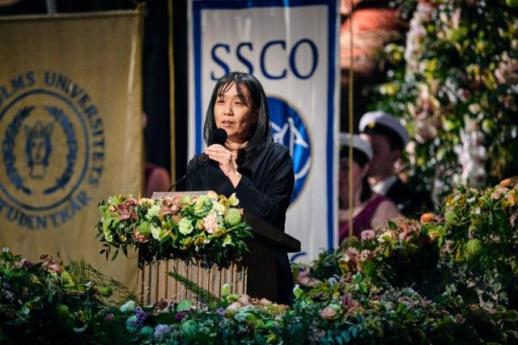 Han Kang's old neighborhood turns Nobel victory into cultural landmark SEOUL, July 30 (AJP) - A northern Seoul district has given an honorary name to a stretch of road near the childhood home of Nobel laureate Han Kang, seeking to turn growing international interest in Korean literature into a local cultural asset. Gangbuk-gu said Thursday that the 463-meter section in Ui-dong has been designated “Nobel Literature Road.” The route comprises 307 meters of Samyang-ro 165-gil and a 156-meter section of Samyang-ro 169-gil. The streets surround an old house where Han spent part of her childhood and school years. District officials said the area helped nurture the literary sensibility that would later shape her work. The honorary name was selected after a survey of local residents. Honorary road names are symbolic designations used to highlight historical figures, cultural landmarks or tourism resources associated with an area. They are assigned separately from existing street names and do not change residents’ official legal addresses. The district said the project was intended to connect heightened interest in Korean literature following Han’s Nobel Prize victory with the neighborhood’s cultural heritage. It also aims to create a symbolic space where visitors can reflect on the author’s life and body of work. “We will do our utmost to make Nobel Literature Road a place where people can remember Han’s literary world and share the value of Korean literature,” Gangbuk-gu Mayor Jeong Chang-su said. Han, born in the southwestern city of Gwangju in 1970, moved to Seoul with her family when she was nine. She began her literary career as a poet in 1993 before turning primarily to novels and short stories. She became the first South Korean writer to receive the Nobel Prize in Literature in 2024. The Swedish Academy honored her for her “intense poetic prose” exploring historical trauma and the fragility of human life. Han gained international prominence through The Vegetarian, which won the International Booker Prize in 2016. Her other major works include Human Acts, The White Book, Greek Lessons and We Do Not Part. Ui-dong is a relatively quiet neighborhood on Seoul’s northern outskirts, situated between Bukhansan and Dobongsan mountains. Known for its wooded valley, the area is a popular retreat for residents and serves as one of the main gateways to Bukhansan National Park and its hiking trails. 2026-07-30 13:11:07
 -
 South Korea rules out Lee reelection as constitutional debate flares SEOUL, July 29 (AJP) - President Lee Jae Myung is only in the second year of his five-year term, but speculation over whether a constitutional amendment could allow him to seek reelection briefly emerged as a political flashpoint before senior ruling-party figures moved quickly to rule out the possibility. The controversy erupted Tuesday after National Assembly Speaker Cho Jeong-sik said whether an incumbent president could run again under a revised Constitution was ultimately a matter of political agreement and "the choice of the sovereign people." His remarks were widely interpreted as leaving open the possibility of Lee seeking another term if South Korea replaces its current single five-year presidency with a four-year term allowing one reelection. The ruling Democratic Party has proposed such a change as part of broader constitutional reform. Cho later sought to end the speculation, saying the Constitution explicitly prevents a sitting president from benefiting from such an amendment. "Article 128, Paragraph 2 of our Constitution stipulates that even if the Constitution is amended to extend the presidential term or permit successive terms, the change does not apply to the president in office at the time of the amendment," Cho wrote on Facebook. "The provision must be respected, and the reelection of the incumbent president is not a subject for future constitutional discussions," he said. "I regret that my answer, which was intended to explain the basic procedures necessary for constitutional revision, caused misunderstanding and controversy contrary to my intention." Presidential Chief of Staff Kang Hoon-sik also distanced the presidential office from the controversy, calling Article 128, Paragraph 2 a "historic consensus" that should not be undermined. Kang said Lee had already stated during his presidential campaign that an incumbent president could not benefit from such a constitutional revision and that the public would be unlikely to accept any attempt to do so. Democratic Party lawmakers echoed that interpretation. "The current Constitution clearly states that provisions allowing reelection do not apply to the president in office when the amendment is proposed," Rep. Cho In-chul told AJP. "In theory, someone could try to amend Article 128 next year, install an interim president and then have President Lee run again, but that would be impossible in South Korea," he said. Cho added that incorporating the spirit of the May 18 Democratic Uprising into the Constitution's preamble should take priority in any constitutional revision. Rep. Kim Won-i was even more direct. "It is constitutionally impossible for the incumbent president to seek reelection," Kim said. "As far as I know, no one in the Democratic Party would violate the Constitution." Opposition lawmakers nevertheless warned against piecemeal constitutional revisions that they said could weaken existing safeguards. "A proper constitutional revision is needed to overcome the political system established in 1987, and electoral reform is particularly urgent," People Power Party Rep. Ahn Sang-hoon said. "However, the Democratic Party's plan appears designed to make constitutional amendments easier through incremental revisions," he said. "It looks like a ploy to delete Article 128, Paragraph 2 first and then allow the incumbent president to seek reelection. Such an amendment would face public resistance." Rep. Kim Gunn said the single five-year presidential term was established to prevent a return to authoritarian rule. "The single presidential term was a promise born from the firm determination of the Korean people, who overthrew military dictatorship and won democracy, never to allow dictatorship to take root again," Kim said. "That is why the Constitution states that an amendment cannot apply to the president in office at the time. President Lee's reelection, therefore, cannot happen." South Korea adopted its first Constitution in 1948 and has amended it nine times. The current Constitution, enacted after the 1987 pro-democracy movement, introduced direct presidential elections and a single five-year term. It took effect on Feb. 25, 1988. Article 128, Paragraph 2 stipulates that any constitutional amendment extending a president's term or changing the rules on successive terms cannot apply to the president in office when the amendment is proposed. The provision reflects South Korea's experience of constitutional revisions that were previously used to prolong presidential rule. The controversy could nevertheless complicate negotiations over broader constitutional reforms, including electoral reform, stronger legislative oversight of martial law and adding the spirit of the May 18 Democratic Uprising to the Constitution's preamble. 2026-07-29 17:42:59
 -
 Heatwave in South Korea isn't bad luck, but a loaded die SEOUL, July 29 (AJP) - South Korea feels more and more like Southeast Asia — tropical humidity, scorching heat, and sudden squalls of rain. The country recorded an average of 7.8 tropical nights between June 1 and July 27, the highest number for the period since nationwide records began in 1973. Its average temperature over the same stretch reached 24.2 degrees Celsius, the second-highest on record. With the Tibetan high-pressure system now settling in above the North Pacific high, the heatwave will continue throughout the week, trapping hot, humid air over the peninsula. Tropical nights were reported nationwide overnight. In Yangsan, South Gyeongsang Province — under an extreme heatwave warning — the temperature never dropped below 29.1 degrees Celsius overnight, narrowly missing the threshold for a "super tropical night," defined as a night that never cools below 30 degrees. The Korea Meteorological Administration expects daytime highs of 33 to 39 degrees Celsius from Aug. 1 to 7, with Daegu forecast to hit 39 degrees every day of that stretch. A loaded die, not a single cause Climate scientists do not generally argue that global warming independently creates every high-pressure system or blocking pattern behind an individual heatwave. Instead, they say, it raises the baseline temperature those natural systems operate from — so a heat dome that once produced exceptionally hot conditions now starts from a warmer floor and can push temperatures even higher. "The severity of heatwaves in South Korea and globally can be put down to climate change," said James Renwick, a professor of climate science and physical geography at Victoria University of Wellington. Weather extremes have always occurred, he said, but hot extremes now happen more easily and often more intensely in a warmer climate — even a 1 to 1.5 degree Celsius rise in average temperature can produce a disproportionately large jump in extreme heat. Ashish Sharma, of the Discovery Partners Institute at the University of Illinois Urbana-Champaign, compared it to a loaded die: weather still determines the outcome of any single roll, he said, but climate change has weighted the die so that extremely hot outcomes turn up far more often. Natural atmospheric patterns still trigger heatwaves, he added — global warming simply raises how much heat those patterns can generate. Persistent high-pressure systems — heat domes — are the most direct cause of major heatwaves. Air sinks beneath them, compressing and warming as it descends, while the same sinking air suppresses cloud cover and rainfall, letting sunlight bake the surface more intensely. How long such a system lingers matters: a short-lived high may bring a few hot days, while a blocking pattern can lock a heat dome in place for a week or more. Dry soil compounds the effect. Moist ground uses some of the sun's energy to evaporate water; dry ground sends nearly all of that energy straight into heating the surface and the air above it. Unusually warm oceans add further heat and humidity, limit nighttime cooling along coastlines, and can shift where large-scale pressure systems sit. Shang-Ping Xie, a distinguished professor of climate science at the University of California San Diego, said blocking patterns are typically the direct meteorological trigger, with dry soil worsening the surface warming on top of it. The broader rise in heatwave frequency and severity, he said, comes from the "slow but relentless background warming" driven by greenhouse gases. For South Korea specifically, warming seas on both the western and eastern coasts add extra heat during summer. What attribution science can — and can't — say Scientists draw a line between this general mechanism and the attribution of any one event. Pinning down exactly how much climate change increased the odds or intensity of South Korea's current heatwave would require a formal event-attribution study, which compares today's climate against a hypothetical one without the buildup of human-caused greenhouse gases. Absent that analysis, Sharma cautioned, scientists shouldn't claim climate change made this particular heatwave precisely five or ten times more likely. That doesn't mean the underlying relationship is in doubt. "The Earth has been heated so much by fossil fuel emissions, there is no weather phenomenon — warm, cold, rainy or dry — that isn't influenced by industrial activity," said Dargan Frierson, a professor of atmospheric sciences at the University of Washington. "Heat waves are much more likely to occur, and are made more extreme by the huge amount of energy that's been trapped in the climate system by fossil fuel emissions." Natural variability, including El Niño, shapes the timing and location of heat but can't explain the decades-long rise in temperatures. Francina Dominguez, also of the University of Illinois Urbana-Champaign, said climate change and a strong El Niño can amplify each other's effects on atmospheric patterns worldwide; separating how much of a given event owes to each requires dedicated attribution research. Natural variability, in short, governs how climate swings year to year — greenhouse gases steadily raise the level those swings occur around. The scientists interviewed broadly agreed heatwaves will grow more frequent, intense, or prolonged as greenhouse gases keep accumulating. "They are predicted to get worse," Frierson said. "More fossil fuel burning leads to more extreme heat waves." How much worse depends on emissions. Lower emissions would cap the added warming and limit the rise in extreme-heat frequency; under a high-emissions path, today's exceptional temperatures could become an ordinary summer in many places. Renwick pointed to projections made after the 2003 European heatwave, which killed more than 70,000 people: U.K. Met Office simulations suggested conditions comparable to that event could recur roughly every other year by 2050. "The more greenhouse gas emitted, the more change and the more damage," he said. Xie said climate models have flagged this for years. "Climate models have been sounding the alarms for a long time," he said. "The observed widespread increase in heatwaves and wildfires is confirming this prediction." Gan Zhang, also of the University of Illinois Urbana-Champaign, said the gap between lower- and higher-emissions scenarios may not look dramatic over the next 10 to 30 years, simply because of how much greenhouse gas has already been released — the system will keep warming for a while before it can stabilize. That makes decisions made now especially consequential for the second half of the century. "We are moving into new territories, and ongoing emissions will push the system farther before the shift stops," Zhang said. "The choices we make right now will dictate whether the climate stabilizes in the second half of the century. They matter tremendously for future generations." Some further extreme heat is already locked in; how much worse it gets is still up to how fast emissions come down. These assessments sit in stark contrast to U.S. President Donald Trump's repeated dismissal of climate change. In a September 2025 address to the United Nations, Trump called climate change a "con job" and described the carbon footprint as "a hoax." Scientists who addressed the remarks rejected them as inconsistent with established science. "They are complete rubbish," Renwick said. "Donald Trump understands nothing about climate science, or at least gives that impression." Michael B. Gerrard, a leading U.S. environmental lawyer, called Trump's claims "complete nonsense": "There is a scientific consensus — both in the United States and around the world — that climate change is happening, that it is mostly caused by the combustion of fossil fuels, and that it is already having serious negative effects that are growing worse." Zhang said political rhetoric doesn't change physical reality. "I'll leave the politics to the politicians, but as a scientist, I can tell you that the physical reality doesn't bend to rhetoric," he said. "Calling it a hoax or a consensus doesn't lower the thermometer." The stakes of that rhetoric are practical, scientists said. Whether city planners get funding to plant trees, whether emergency authorities set up cooling centers, and whether residents can heat-proof their homes are all political decisions, Zhang said — and "by the time the heatwave hits, many are caught off guard." Jennifer Marlon, executive director of the Yale Center for Geospatial Solutions, said dismissing climate concerns is dangerous because it can confuse the public and lead people to underestimate the threat to health, infrastructure, and economies. Extreme heat itself doesn't wait for political leaders to accept the science behind it. South Korea's current temperatures trace to identifiable weather systems — the North Pacific and Tibetan highs — but those systems are now operating in a climate already warmed by human activity. Weather still decides where and when a heatwave forms. Climate change has loaded the die underneath it, raising the odds that when the conditions align, the heat that follows will be more extreme than it once was. 2026-07-29 10:14:24
 -
 Korea must become an AI ecosystem power, not just chip power: CSIS SEOUL, July 28 (AJP) - South Korea risks squandering its AI-driven manufacturing advantage unless it evolves from one of the world's biggest exporters into an "ecosystem power" that shapes the technologies, standards and alliances underpinning the global artificial intelligence economy, a leading Washington think tank said. The assessment by the Center for Strategic and International Studies (CSIS) came under spotlight as President Lee Jae Myung seeks to reposition South Korea from a manufacturing powerhouse to a central player in the global AI supply chain. During a visit to Silicon Valley over last weekend, Lee met Nvidia Chief Executive Jensen Huang, OpenAI Chief Executive Sam Altman, Anthropic Chief Executive Dario Amodei and Broadcom Chief Executive Hock Tan, while overseeing new AI partnerships between Korean and U.S. technology companies. Those meetings echoed the central thesis of a CSIS report published earlier this month, Export Nation or Ecosystem Power: South Korea's Choice in the AI Industrial Age. Written by Navin Girishankar, president of the think tank's Economic Security and Technology Department, the report argues that South Korea's next economic leap will depend not on exporting more semiconductors, batteries, ships and automobiles, but on controlling what it calls the "architectural control points" of future industries — standards, platforms, financing mechanisms and industrial partnerships. The report contends that South Korea stands at a strategic crossroads. Its export-led model continues to produce impressive results, with goods exports reaching a record $709.7 billion in 2025 and semiconductor exports climbing 22 percent to an all-time high of $173.4 billion amid booming demand for AI memory chips. Yet those headline figures conceal mounting structural risks, it says. China, once South Korea's largest source of trade surpluses, has rapidly narrowed the technology gap in sectors ranging from electronics and batteries to electric vehicles and petrochemicals. Meanwhile, the United States is increasingly using tariffs and investment incentives to encourage manufacturing on American soil. Combined with demographic decline and intensifying technological competition, those forces mean South Korea can no longer rely solely on export growth or market diversification, according to the report. From supplier to architect CSIS argues that future industrial leadership will belong not to countries producing the most components, but to those controlling the ecosystems in which those components operate. An ecosystem power occupies what the report calls the "architectural control points" of an industry — technical standards, certification systems, software platforms, financing structures and supply-chain relationships that other companies and governments must adopt. South Korea already possesses many of the building blocks. The report identifies four strategic technology pillars: AI, semiconductors and communications; batteries and advanced manufacturing; industrial robotics and machine tools; and energy and critical minerals. The opportunity, it argues, lies not in dominating individual sectors but in integrating them into complete industrial ecosystems. SK hynix's leadership in high-bandwidth memory illustrates the concept. HBM has become indispensable for AI accelerators powering advanced computing systems. Because replacing HBM would require redesigning processors, software, chip packaging and data-center architecture, South Korea's strength extends well beyond selling memory chips, giving it influence over the broader AI ecosystem. Samsung Electronics' foundry business, LG's battery technologies and Hanwha's naval engineering could play similar strategic roles in their respective industries. That importance was echoed during Lee's Silicon Valley meetings. Huang said Nvidia's AI supercomputers would not have been possible without Korean-developed HBM. Altman said today's AI revolution could not have emerged without South Korea's contributions, while Amodei highlighted the country's strengths in semiconductors, AI infrastructure and engineering talent. Yet the report cautions that being indispensable today does not guarantee remaining indispensable tomorrow. Unless South Korea evolves from supporting individual industries to orchestrating complete ecosystems, its competitive advantage could gradually erode. A deeper alliance with the United States CSIS places the United States at the center of South Korea's next stage of industrial development. The report argues that Korean companies need access to frontier research, deep capital markets, large-scale demand and trusted geopolitical partners — advantages that Washington can provide more reliably than Beijing. In return, the United States increasingly depends on South Korea's capabilities in advanced memory, semiconductors, batteries, energy infrastructure and shipbuilding to sustain its own AI ambitions. Rather than focusing narrowly on trade deficits, tariffs or defense burden-sharing, the alliance should evolve toward jointly building trusted AI and advanced-manufacturing ecosystems that reduce dependence on China, the report says. South Korea's growing industrial footprint across Southeast Asia could further strengthen that strategy by creating alternative supply chains spanning Indonesia, Malaysia and the Philippines. The report stresses that international partnerships alone will not be enough. It calls for more predictable regulation, stronger cybersecurity protections and a broader ecosystem of innovative mid-sized companies capable of complementing South Korea's conglomerates. Regulatory certainty is particularly important for long-term AI investment, while cybersecurity has become an alliance issue as attacks on Korean semiconductor facilities could disrupt AI computing worldwide. CSIS also highlights capital as a strategic tool. With public investment institutions such as the National Pension Service and Korea Investment Corporation managing roughly $1.5 trillion, South Korea has the financial capacity to establish co-investment vehicles with the United States supporting semiconductors, AI infrastructure, advanced manufacturing and critical minerals. The report concludes that South Korea's next "Miracle on the Han River" will depend less on exporting more products than on embedding Korean companies into the architecture of allied technology systems. If the first miracle was built by becoming one of the world's leading manufacturers, the second, it argues, will come from becoming one of the architects of the global AI economy. 2026-07-28 11:07:53
 -
 The East joins the West in the survival game against extreme heat SEOUL, July 27 (AJP) - South Korea joined the global survival game against extreme heat on Monday as temperatures neared 40 degrees Celsius after the monsoon fizzled out, emptying streets and farm fields alike. Children and office workers, farmers and foreign tourists alike searched for clever ways to stay cool, crowding shopping malls, subway stations and other air-conditioned spaces. By 3 p.m., the government raised the national heat crisis alert to "grave," its highest level, and activated the Central Disaster and Safety Countermeasures Headquarters. Behind the familiar summer scenes — umbrellas, handheld fans and iced drinks sweating in plastic cups — was a rapidly growing human toll. As of Sunday, 1,399 people had been treated for heat-related illnesses in South Korea this summer, with eight presumed deaths. Emergency rooms admitted 72 patients on Sunday alone, including two women in their 80s and 90s who later died in Hadong and Gimje. Daily emergency cases have risen sharply, from fewer than 20 on July 20 to 80 on July 25. The figures also reveal that extreme heat is anything but socially equal. More than 81 percent of patients became ill outdoors, with workplaces accounting for the largest share of cases. Manual laborers were the occupational group most frequently affected, while people aged 65 or older accounted for nearly one-third of all patients. For office workers, a heat wave can mean an uncomfortable commute. For farmers, construction workers, delivery drivers and elderly people living alone, it can become a matter of survival. Forecasters warned that the end of the rainy season allowed the North Pacific High and the Tibetan High to overlap above the Korean Peninsula, trapping hot air beneath a persistent dome of high pressure. The climate pardons none. Across the sea, Japan has been experiencing weather so severe that it has had to invent a new word for it. Japan's vocabulary for summer heat now resembles a meteorological staircase. A day above 25 C is a natsubi, or "summer day." Above 30 C comes a manatsubi, or "true summer day," followed by a moshobi, or "extremely hot day," once temperatures exceed 35 C. This year, the Japan Meteorological Agency effectively added another step: kokushobi, commonly translated as a "cruelly hot" or "brutally hot" day, for temperatures of 40 C or higher. Japan recorded its first official kokushobi on July 21. Gujo and Tajimi in Gifu Prefecture and Toyota in Aichi Prefecture all reached at least 40 C, with Toyota recording a local record of 40.1 C. Of Japan's 914 weather stations, 278 reported temperatures above 35 C that day. By July 25, Japan had endured five consecutive days above 40 C, the longest such streak since comparable records began in 2010. Nearly 11,000 people sought emergency medical care for heat-related illnesses between July 13 and 19, and 14 were pronounced dead on arrival. In Tokyo alone, 453 people were hospitalized on July 23, the city's highest daily total since records began more than a decade ago. Japan, famous for putting almost anything into a vending machine, has now built one for overheated humans. The Do Hiemon Box, nicknamed the "human refrigerator," is a stainless-steel personal cooling booth tall enough for an adult to enter. The booth is maintained at about 15 C, while air chilled to 5 C is directed at the user's head, neck, shoulders and back. Its manufacturer says spending about 10 minutes inside can help relieve symptoms of heat exhaustion. Standing 2.13 meters tall and mounted on wheels, the booth can be moved around factories and construction sites. It automatically shuts off after 20 minutes to prevent excessive cooling. Since its launch in April, more than 130 companies have reportedly installed the booths. At roughly 1.5 million yen ($9,200) each, they are an expensive refuge, though operating costs are relatively low. Elsewhere, construction workers are finding frozen drinks, ice cream and air-conditioned rest booths every few floors. In farming communities, signs urge people to work for 30 minutes and rest for the next 30. Japan's adaptation extends well beyond cooling booths. Tokyo officials have encouraged office workers to wear shorts, T-shirts and trainers under an expanded Cool Biz campaign. The national high school baseball championship has split games into morning and evening sessions to avoid the hottest hours, while farmers are planting heat-tolerant rice varieties and experimenting with subtropical crops such as avocados. The measures would once have sounded eccentric. They now read like a survival manual for a warming world. Europe, meanwhile, is discovering that a heat wave does not end when temperatures fall. It lingers in depleted reservoirs, damaged crops, shrinking rivers and hardened soil. France recorded 5,764 excess deaths during its severe heat wave between June 17 and July 2, according to provisional public health data. The Paris region alone accounted for nearly 2,000 of those deaths, with elderly people suffering the greatest impact. Scientists say Europe's drought is no longer simply a story of missing rainfall. Western Europe emerged from a relatively wet winter, but exceptionally high temperatures allowed the atmosphere to pull far more moisture from rivers, lakes, vegetation and soil. A World Weather Attribution analysis found that the extreme evaporative conditions were made about 80 times more likely by climate change in western Europe and 40 times more likely in eastern Europe. Soil dryness was made five times more likely in the west and 11 times more likely in the east. Europe's 2026 drought arrived roughly two months earlier than the severe drought of 2022. The Copernicus Climate Change Service said conditions remained critical across much of the continent in late June and had deteriorated further in central-western Europe following an extensive and prolonged heat wave. The economic consequences are already mounting. Europe is expected to lose about 9 million metric tons of grain this year. France faces its worst corn harvest in half a century, while Romanian farmers have lost crops across more than 1 million hectares. Water levels along Europe's major rivers have also fallen sharply. The Rhine at Lobith in the Netherlands dropped below the minimum recorded during the famously hot summer of 1976, restricting cargo traffic and reducing hydropower generation. Parts of the Loire have shrunk into narrow streams, while seasonal lows have also been reported along the Danube. The hotter atmosphere is creating a vicious cycle. Heat draws moisture from the ground. Dry soil loses its ability to cool the air through evaporation. Temperatures rise further, vegetation becomes more combustible and wildfires spread more easily. That same physical process is unfolding in different forms from Seoul to Tokyo and across Europe. The world has entered a survival game against extreme heat. Every country is now learning its own way to play it. 2026-07-27 17:27:06
 -
 Ex-President Yoon's 2022 campaign statements ruled false SEOUL, July 27 (AJP) - A South Korean court on Monday sentenced former President Yoon Suk Yeol to 18 months in prison, suspended for three years, after finding him guilty of making false statements during the campaign that carried him to the presidency in 2022. The first-instance verdict could also deliver a heavy financial blow to the conservative People Power Party. If the sentence survives the appeals process, the party would be required to return 39.7 billion won, or about $27 million, in election expenses and related funds reimbursed by the National Election Commission. The Seoul Central District Court’s Criminal Division 21, led by presiding Judge Cho Soon-pyo, ruled that Yoon violated the Public Official Election Act through statements concerning a former tax official and a controversial spiritual adviser with links to his wife, former first lady Kim Keon Hee. The first charge involved remarks Yoon made at a nationally televised Kwanhun Club debate on Dec. 14, 2021, when he was the PPP’s presidential candidate. Yoon denied having introduced a lawyer, identified only by the surname Lee, to Yoon Woo-jin, a former chief of the Yongsan Tax Office. The court, however, concluded that the former president had made the introduction, accepting the findings of a special counsel investigation launched into corruption and influence-peddling allegations surrounding Kim. The second charge stemmed from an interview at a Buddhist leaders’ forum on Jan. 17, 2022. Yoon said that a party official had introduced him to Jeon Seong-bae, a self-styled spiritual adviser widely known as Geonjin Beopsa, and denied that he and Kim had met Jeon together. The court found that Yoon had first met Jeon through Kim and that the couple maintained ties with him for more than a decade. Jeon later emerged as a central figure in investigations into allegations that individuals and organizations sought access to the presidential couple through unofficial intermediaries. Special counsel Min Joong-ki’s team had requested a two-year prison sentence for Yoon at the final hearing in June. Yoon was indicted in December 2025 after the special counsel investigated a broad range of allegations involving the former first lady, including election interference, stock manipulation and the acceptance of valuables. Under South Korea’s election law, candidates who are elected or receive at least 15 percent of the vote are generally entitled to full reimbursement of authorized campaign expenses. But when an election-invalidating sentence — a fine of at least 1 million won — becomes final, the reimbursed money must be returned. For presidential candidates nominated by political parties, that financial obligation falls on the party that endorsed the candidate. The PPP received nearly 40 billion won after Yoon’s election, making the case potentially one of the most expensive election-law convictions in South Korean political history. Yoon won the March 2022 presidential election with 48.56 percent of the vote, defeating liberal rival Lee Jae Myung, who received 47.83 percent. The gap of 0.73 percentage points was the narrowest in the country’s presidential election history. The verdict carries no practical consequence for Yoon’s former presidential tenure because he was removed from office by the Constitutional Court in April 2025 over his short-lived declaration of martial law in December 2024. Lee, Yoon’s opponent in the 2022 election, subsequently won the snap election held in June 2025 and began a five-year term as president. The PPP has since returned to the opposition and struggled to distance itself from Yoon’s martial-law legacy. Monday’s suspended term also does not mean Yoon will be released. The Supreme Court earlier this month finalized a separate seven-year prison sentence against him for obstructing investigators’ attempts to detain him following the martial-law crisis. He has faced multiple criminal proceedings since his removal, including cases involving martial law, opinion polls and alleged interference in government and party affairs. The PPP will not be required to return the 39.7 billion won unless the election-law conviction becomes final. The first-instance judgment remains subject to appeal. People Power Party lawmakers raised questions with AJP about whether the judiciary had applied its standards fairly. Four-term lawmaker Rep. Han Ki-ho argued that “there is a problem with fairness.” “President Lee Jae Myung’s trial over the publication of false information was delayed for as long as four years, and it is wrong that the proceedings have now been suspended,” Han said. “President Lee’s trial should also proceed and be brought to a conclusion.” “I believe the ruling is excessively harsh compared with the handling of President Lee Jae Myung’s trial,” said Rep. Park Soo-young, a two-term lawmaker. “It is too harsh to impose a prison sentence merely over whether Yoon met Jeon,” Park said. “President Lee said that he had never forcibly committed his older brother to a psychiatric hospital, but he was acquitted because former Supreme Court Justice Kwon Soon Il went easy on him.” 2026-07-27 16:17:27