

Journalist
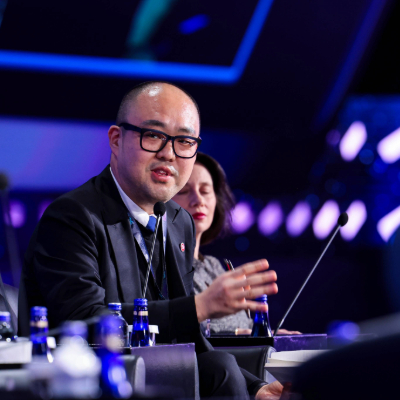
Park Sae-jin박세진
swatchsjp@ajupress.com
Assistant EditorForeign embassies in Seoul & Geopolitics, Diplomacy, Policy
Experienced journalist and editor at AJU PRESS specializing in multilingual news. I cover international diplomacy, geolpolitics, and policy, consistently delivering highly accurate, compelling reporting for a worldwide audience.
"Reporting the facts. Shaping the narrative. Every second counts."
Latest by Park Sae-jin
-
 Belgium marks King's Day in Seoul with focus on deepening ties SEOUL, November 14 (AJP) - The Embassy of the Kingdom of Belgium hosted a King's Day reception in Seoul on November 13, 2025, bringing together about 200 diplomats, business figures, academics, and media representatives at the Four Seasons Hotel. The evening combined national-day tradition with a look ahead to the 125th anniversary of Belgium–South Korea diplomatic relations next year. Opening his remarks, Ambassador Bruno Jans greeted the audience by saying, "Good evening, friends of Belgium," before reflecting on the roots of King's Day and the Belgian monarchy. He noted that the occasion pays tribute to Belgium's first king, Leopold I, and added, "This year marks the 12th anniversary of His Majesty King Philippe's accession to the throne." The ambassador emphasized that 2026 will be a significant year for both countries. "2026 will mark 125 years of diplomatic relations between Korea and Belgium, established in 1901," he said, recalling the history that links the two nations. He also pointed to another milestone next year, noting, "It will also mark 75 years since Belgian troops arrived during the Korean War." The embassy held a design competition for the 125th anniversary emblem, which drew 58 submissions from Belgium and South Korea. "Good things come in pairs," the ambassador said as he explained that the anniversary of bilateral relations and the wartime commemoration would frame next year's program of events. Reflecting on recent exchanges, the ambassador said Belgium had seen a year of "high-level visits," and highlighted the growing number of cultural and educational links. He also welcomed progress toward establishing a Belgian chamber of commerce in South Korea to support business cooperation. The reception featured performances by cellist Kang Seung-min, a laureate of the Queen Elisabeth Competition in Brussels, along with the saxophone quartet S.with. Guests continued conversations over the reception that followed, sharing views on the busy year of commemorative events planned for 2026. 2025-11-14 16:34:56
 -
 Indian Film Festival opens in Seoul with focus on storytelling and cultural ties SEOUL, November 14 (AJP) - The 13th Indian Film Festival opened this week at the Korean Film Archive in Seoul, bringing a lineup of award-winning and widely acclaimed films to audiences in South Korea. The festival, organized by the Embassy of India together with local partners, began on November 12 with an evening ceremony attended by diplomats, cultural officials and film enthusiasts. Deputy Chief of Mission Nishi Kant Singh welcomed guests by noting how the festival has become a meeting point for shared cinematic appreciation. "Each year, the Indian Film Festival unites us in a powerful celebration of storytelling, deepening our collective cinematic bond and honoring the boundless creativity, diversity, and spirit of Indian cinema," he said. Singh highlighted the broader context of the event, pointing to the cultural dimension of India–South Korea relations. He said the two countries share more than trade and technology ties, adding that films remain one of the clearest ways to strengthen people-to-people understanding. "Films hold a unique power in strengthening people-to-people connections — transcending language and geography to touch hearts and inspire understanding," he said. This year's program includes titles such as 12th Fail, Manjummel Boys, English Vinglish, Zindagi Na Milegi Dobara, Hellaro and Anur (Eyes on the Sunshine). Screenings will continue through November across several cities, including Busan, Incheon, Yangsan, Miryang, Suncheon and Gwangju. The festival is running in partnership with the Korean Film Archives, Busan Cinema Centre, India Centre, Busan University of Foreign Studies, Mirim Theatre and the Asian Culture Centre. Singh also noted how Korean content has gained strong traction globally, including in India. He referenced films and series that have drawn international attention in recent years, describing them as examples of how locally rooted stories can reach audiences far beyond their home market. The Seoul leg of the festival continues at KOFA through November 15, with online reservations available via the Korean Film Archive website and on-site ticketing offered when seats remain available. 2025-11-14 14:53:25
 -
 Study finds crypto prediction markets drew global attention to S. Korea's impeachment SEOUL, November 14 (AJP) - A research paper published on November 12, 2025, in the MDPI-published journal Information examines how cryptocurrency users around the world reacted to and financially engaged with South Korea's 2024 impeachment crisis. The article, titled "From E-Democracy to C-Democracy: Analyzing Transnational Political Discourse During South Korea's 2024 Presidential Impeachment on Polymarket," analyzes real-time activity on a blockchain prediction platform during the constitutional showdown. The study was conducted by Park Han-woo, Kim Jae-hun, and Norhayatun Syamilah Osman of YeungNam University's Digital Convergence Business program, Cyber Emotions Research Center and Big Local Big Pulse Lab. Park, who has examined digital political behavior for many years, shared the publication to highlight how online engagement is changing as financial tools and Web3 platforms become more common. The paper focuses on Polymarket, a blockchain-based prediction site where users place bets on political outcomes using cryptocurrency. On December 14, 2024, as the National Assembly passed the impeachment bill, more than 15.8 million dollars had already been wagered on whether the president would leave office before the end of the year. Users overseas adjusted their positions in real time as events unfolded in Seoul. The authors describe this emerging pattern as "cryptocurrency-enabled democracy," or c-democracy. In this model, political conversation and financial speculation take place in the same space. Users debate, share links, or post casual remarks while expressing their expectations through money staked on the result. The study analyzed 582 comments from 83 users shortly after the vote. Although Polymarket does not release demographic information, many commenters identified themselves as posting from the United States, Europe or Asia. The authors argue that this shows how prediction markets can create transnational communities around domestic political events. Distinct user groups appeared in the data. Some posted detailed political analysis and outside sources, while others reacted with short comments or memes. A smaller group placed large wagers while saying very little. One of the study's key observations is that expressive participation and financial participation did not always align. The authors acknowledge the limits of studying a single event and a crypto-literate user base, but they note that the impeachment crisis offered a clear view of how online political participation is evolving as digital communities and financial tools overlap. The study was submitted on September 30, revised on November 6, accepted on November 8 and published on November 12 by MDPI. The publisher operates a large network of open-access journals and is recognized for its rapid publication. 2025-11-14 13:55:58
 -
 Survey shows Deepfake crimes seen as growing threat to young people in South Korea SEOUL, November 12 (AJP) - Nine out of ten South Koreans believe deepfake crimes pose a serious threat to society, a recent survey showed, underscoring escalated alarm over the abuse of artificial intelligence to generate sexually explicit or manipulated content. Deepfake refers to synthetic media generated using artificial intelligence to alter or replace a person's likeness in photos or videos. The technology is increasingly being abused to produce non-consensual sexual material, often targeting women and public figures by inserting their faces into pornographic videos or images shared online. A nationwide survey of 1,007 adults conducted by pollster Realmeter on November 4 and 5 found that 90.2 percent of respondents consider deepfake crimes to have a serious impact on society. Among them, 65.2 percent said the threat was "very serious," while 25.0 percent described it as "somewhat serious." Concern was high across all age groups, reaching 95.3 percent among those in their 50s. The poll results coincide with data from the Ministry of Education showing that deepfake exploitation is spreading rapidly in schools. Between January and October 27 last year, 799 students and 31 teachers were identified as victims of deepfake-related crimes. Reports were more frequent at higher grade levels, but even elementary schools recorded 16 cases. Of 504 cases reported to the ministry, 417 were referred to police for investigation, while 218 videos were deleted with government assistance. The ministry said it has established a task force to monitor such cases and work closely with investigators. Deepfake abuse first drew national attention last year, when 45 related school violence cases were reported in Seoul—double the number from the previous year. Since then, incidents have continued to rise as artificial intelligence tools become easier to access and misuse. The Korea Communications Standards Commission held talks with Telegram in September 2024, one of the platforms frequently used to share manipulated content. Telegram agreed to comply immediately with deletion requests from South Korean authorities. 2025-11-12 17:18:01
 -
 KAIST develops flexible ultrasound sensor that can diagnose and treat without surgery SEOUL, November 12 (AJP) - KAIST researchers have developed a new flexible ultrasound sensor that can both capture medical images and deliver noninvasive therapy without the need for surgery or external beamforming. The breakthrough could open new possibilities for wearable medical devices and home-based treatment systems. The team led by Professor Hyunjoo Lee of the KAIST School of Electrical Engineering announced on November 12 that it has created a flex-to-rigid (FTR) capacitive micromachined ultrasonic transducer (CMUT) using a semiconductor-based MEMS process. The device can freely adjust its curvature to match the contours of the human body while maintaining high output performance, making it suitable for both diagnosis and treatment. At the core of the design is a low-melting-point alloy (LMPA) inserted inside the sensor. When an electrical current is applied, the alloy melts, allowing the transducer to reshape; once cooled, it solidifies and retains the desired curvature. This mechanism enables the device to form precise ultrasonic focus points without any electronic beam steering, ensuring stable imaging and stimulation even under repeated bending. Unlike conventional polymer-based CMUTs, which often produce weak acoustic output and lose focus due to low stiffness, KAIST’s FTR structure combines a rigid silicon base with flexible elastomer bridges. The result is a highly durable, adaptable sensor that retains its electrical and acoustic stability even after multiple deformations. In laboratory tests, the output power reached levels equivalent to or higher than low-intensity focused ultrasound (LIFU), a therapeutic ultrasound used to stimulate nerves and organs without damaging tissue. When applied to animal models, the sensor successfully delivered noninvasive stimulation to the spleen, reducing inflammation and improving movement in arthritic mice. Professor Lee said the technology could play a key role in future wearable and home medical systems, enabling real-time diagnosis and treatment without surgical intervention. “By integrating the flexibility of wearable devices with the precision of high-performance ultrasound, we’re moving closer to truly personalized, hands-free healthcare,” she said. The research, co-led by Dr. Sangmok Lee and Ph.D. candidate Xiaojia Liang as first authors, was published online in npj Flexible Electronics on October 23 under the title “Flexible ultrasound transducer array with statically adjustable curvature for anti-inflammatory treatment.” 2025-11-12 14:52:47
 -
 Sookmyung Women's University Technology Holdings invests in livestock distribution startup Pink Packer SEOUL, November 11 (AJP) - Sookmyung Women's University Technology Holdings has completed a seed investment in Pink Packer Co., a global livestock distribution tech startup. The investment was made through the "Seoul Campus Town University Startup Private Investment Association," jointly established by Sookmyung Women's University, Kookmin University, and Sogang University. Sookmyung Women's University Technology Holdings is the entity that manages the university's startup investment and commercialization programs. It supports university-based ventures and represents Sookmyung Women's University in collaborative initiatives such as the Seoul Campus Town project, bridging academic research with entrepreneurial growth. Pink Packer specializes in connecting meat supply and demand between countries using AI-based matching technology. By analyzing data on lesser-preferred livestock parts by region, the company helps optimize logistics and reduce food waste, transforming undervalued resources into high-value products in line with ESG principles. In 2025, Pink Packer was selected by the UN Food and Agriculture Organization (FAO) as one of the global top 10 startups, earning international recognition. The company, which joined the Sookmyung University Campus Town earlier this year, has built a foundation for growth through technical collaboration with Sookmyung Women's University Technology Holdings. Through this partnership, Pink Packer plans to enhance its platform and use the new investment to expand into overseas markets and validate its business model globally. Jung Jin, CEO of Pink Packer, said, "This investment marks the beginning of our full-scale effort to innovate data-driven livestock distribution and build a global model that combines sustainability with profitability." Shin Ji-young, CEO of Sookmyung Women's University Technology Holdings and professor at the Department of Mechanical Systems Engineering, noted, "Discovering and nurturing companies with innovation and global scalability is a key task for the startup ecosystem. Sookmyung Women's University Technology Holdings plays a unique role by connecting corporate discovery, technology collaboration, and investment attraction, and Pink Packer is a strong example of this effort." 2025-11-11 14:57:21
 -
 KAIST–Johns Hopkins team uncovers how cancer cells choose their own moving path SEOUL, November 10 (AJP) - KAIST researchers, working with Johns Hopkins University, have discovered how cells determine their direction of movement without any external signals, a finding that reveals the internal logic of cancer metastasis, immune responses, and tissue development. The study, led by Professor Won Do Heo from the KAIST Department of Biological Sciences and Professor Kwang-Hyun Cho from the Department of Bio and Brain Engineering, together with Professor Gabsang Lee of Johns Hopkins University, identified an intrinsic "self-driving mechanism" that enables cells to decide which way to move. The results were published in Nature Communications on October 31. To achieve this, the team developed a new imaging method called INSPECT (INtracellular Separation of Protein Engineered Condensation Technique) — a system that visualizes protein interactions inside living cells. Using INSPECT, they uncovered how specific combinations of signaling proteins dictate whether a cell moves straight ahead or turns in a new direction. Their work focused on Rho GTPases — the Rac1, Cdc42, and RhoA proteins that control cell polarity and motility. The researchers found that these proteins do far more than divide a cell into front and rear sections. Instead, they form dynamic partnerships that act like a built-in navigation system. For instance, the Cdc42–FMNL complex drives linear motion, while the Rac1–ROCK pairing governs turning behavior. INSPECT recreates a process known as phase separation, allowing scientists to see how proteins cluster and interact. By tagging proteins with ferritin and fluorescent DsRed, the team visualized condensate droplets forming as proteins bound to one another. Among 285 tested pairs, 139 were confirmed to interact in living cells. When the team slightly altered one amino acid in Rac1 — preventing it from binding properly to its "steering handle" protein ROCK — cells lost their ability to turn and moved only in straight lines. Normal cells, by contrast, formed curved "arc stress fibers" that allowed them to pivot sharply when changing direction. Additional experiments showed that while normal cells adjusted their speed in response to environmental cues, the modified Rac1F37W cells moved at a constant rate regardless of surroundings. This demonstrated that the Rac–ROCK axis finely tunes how cells sense and adapt to external environments. Professor Heo said, "Our findings show that cell movement is not random but governed by an intrinsic program coordinated by Rho signaling proteins and their partners. INSPECT provides a powerful new tool for visualizing protein interactions in real time and will accelerate research on cancer metastasis, neural migration, and immune cell movement." The paper's authors include Heeyoung Lee, Sangkyu Lee, Yeji Seo, Dongsan Kim, Yohan Oh, Juae Jin, Bobae Hyeon, Younghyun Han, Hyunjun Kim, Yong Jin Lee, Ho Min Kim, Gabsang Lee, Kwang-Hyun Cho, and Won Do Heo. 2025-11-10 11:21:13
 -
 Azerbaijani ambassador calls for lasting peace at Victory Day reception in Seoul SEOUL, November 07 (AJP) - The Embassy of the Republic of Azerbaijan in Seoul hosted a Victory Day reception on Thursday to commemorate the country's 2020 Patriotic War. The event, held at the Grand Hyatt Seoul, brought together around 100 guests, including foreign diplomats, South Korean government officials, business representatives, scholars, and members of the media. Azerbaijani Ambassador to South Korea Ramin Hasanov said the day marked the end of long-standing injustice and the restoration of Azerbaijan's territorial integrity. He noted that the victory liberated about 20 percent of the country's territory that had been under occupation for decades and reaffirmed its sovereignty in line with international law. The 2020 conflict, known in Azerbaijan as the Patriotic War, was a six-week confrontation between Azerbaijan and Armenia over the Nagorno-Karabakh region and nearby areas. The fighting ended in November 2020 under a Russia-brokered ceasefire, with Azerbaijan regaining control of much of the territory it lost in the early 1990s. Since then, the two countries have been engaged in talks aimed at reaching a comprehensive peace treaty and finalizing their border. In August 2025, they announced a framework peace agreement during negotiations in Washington, pledging mutual recognition of territorial integrity and regional cooperation. Although tensions remain, both sides have publicly expressed their intention to pursue peace through diplomacy. Ambassador Hasanov said 2025 has been declared Azerbaijan's "Year of Constitution and Sovereignty" and described the Washington peace agreement as a turning point for the region. He added that Azerbaijan and Armenia had jointly appealed for the closure of the OSCE Minsk Group, which had long mediated negotiations, saying the decision reflected both countries' readiness to handle talks directly. He also spoke about reconstruction in the liberated areas under Azerbaijan's Great Return Program, noting that more than 50,000 people have already resettled in newly rebuilt towns and villages. He said the development plan includes green energy infrastructure to create sustainable living conditions for returning residents. Addressing humanitarian issues, Ambassador Hasanov called for cooperation in providing accurate landmine maps and determining the fate of thousands of Azerbaijanis who went missing during earlier conflicts. He said reconciliation and coexistence would require continued goodwill and mutual confidence-building efforts. "Achieving lasting peace is not merely an act of goodwill but a duty toward all people in the region," he said, emphasizing Azerbaijan's commitment to stability and security through peaceful means. Ambassador Hasanov ended his speech on a cultural note, describing music as "a universal language that connects hearts and souls." He introduced a joint performance by Azerbaijani and Korean musicians featuring works by Uzeyir Hajibeyli, the Azerbaijani composer born in Shusha, calling the performance symbolic of peace and national revival. Guests later viewed a short film reflecting on the meaning of Victory Day, followed by the musical performance. The evening continued in a cordial atmosphere. 2025-11-07 15:30:09
 -
 South Korea, U.S. reaffirm support for nuclear submarine plan SEOUL, November 04 (AJP) - Defense Minister Ahn Kyu-baek and U.S. Defense Secretary Pete Hegseth reaffirmed plans to move ahead with South Korea's nuclear-powered submarine program and other key alliance issues during the 57th Security Consultative Meeting held Tuesday at the Ministry of National Defense in Yongsan. The two discussed follow-up measures from last month's summit between President Lee Jae Myung and U.S. President Donald Trump in Gyeongju, where Trump approved South Korea's plan to develop a nuclear-powered submarine. At a joint press conference after the meeting, Hegseth said that Washington "fully supports" the initiative and confirmed that Trump's authorization remains valid. "President Trump wants America's allies to strengthen their own defense capabilities," he said. "South Korea represents a model ally in that regard, and we will actively support this effort while coordinating closely with related agencies such as the State Department and the Department of Energy." He added that both sides would continue to discuss the program in good faith and expressed confidence that it would lead to a positive outcome. Hegseth also noted South Korea's "world-class shipbuilding capabilities," saying the U.S. government hopes to expand cooperation beyond submarines to surface and combat vessels as well. Asked whether South Korea plans to pursue nuclear weapons, Ahn replied, "There will never be nuclear weapons development in the Republic of Korea." He emphasized that South Korea, as a party to the Nuclear Non-Proliferation Treaty, "cannot and will not possess nuclear arms," calling denuclearization of the Korean Peninsula an "unshakable commitment." The ministers also reviewed progress on the transfer of wartime operational control, a long-standing alliance issue. South Korea has completed its Full Operational Capability assessment, and verification procedures are underway. Both sides exchanged views on the timeline for completing the transition. Ahn briefed Hegseth on Seoul's plan to raise defense spending, and Hegseth welcomed the move, saying he was encouraged by South Korea's decision to invest more in missile and cybersecurity capabilities. The two also discussed the strategic flexibility of U.S. Forces Korea. When asked whether U.S. troops could be deployed in the event of a Taiwan Strait crisis, Hegseth stressed that Washington remains committed to maintaining stability on the Korean Peninsula while ensuring regional readiness. He added that South Korea would take the lead in conventional defense against North Korea while continuing close coordination with the United States. The Security Consultative Meeting, the highest-level defense coordination forum between the two countries, is held alternately in Seoul and Washington each year. Officials said this year's joint statement will be released after both governments finalize the fact sheet on security and trade issues from the Lee-Trump summit. 2025-11-04 17:52:01
 -
 POST-APEC: Seoul plays wise and practical in balancing role among global powers SEOUL, November 03 (AJP) -South Korea emerged from the Asia-Pacific Economic Cooperation summit with more than ceremonial optics, securing substantive outcomes from both Washington and Beijing while helping revive multilateral cooperation on shared challenges ranging from artificial intelligence to demographic headwinds. The two-day summit of 21 economies adopted the Gyeongju Declaration, reaffirming APEC’s pillars of trade and investment liberalization, business facilitation, and economic and technical cooperation. The statement also reflected Seoul’s priorities as host, highlighting artificial intelligence, demographic transition, and cultural industries as areas for expanded regional collaboration. President Lee Jae Myung, in his first major test as host of a multinational gathering, moved swiftly to lock in key gains from the United States. During U.S. President Donald Trump’s brief stop in Gyeongju ahead of the formal APEC agenda, the two leaders reached a long-sought settlement on a $350 billion investment and trade package that will lower U.S. tariffs on Korean automobiles from 25 percent to 15 percent. The framework consists of $200 billion in cash investments and $150 billion in shipbuilding projects linked to the Make America Shipbuilding Great Again initiative. Unlike Japan’s agreement signed a day earlier in Tokyo, which front-loads government-led financing, Seoul’s package spreads out spending over several years with a cap of $20 billion annually to prevent currency-market volatility. According to a presidential aide, the structure ensures “commercial rationality” through an equal sharing of returns until the principal is fully recovered, with adjustments possible if the investment is not recouped within 20 years. In one of the most unexpected gestures of the week, Trump endorsed Seoul’s ambition to develop a nuclear-powered submarine, calling it a symbol of “stronger-than-ever” ties. The vessel is slated to be built at Philly Shipyard, acquired last year by South Korea’s Hanwha Group. The U.S. has previously shared nuclear submarine technology only with Britain and Australia, making the concession particularly significant. The concessions came with their share of political theatre. Trump received a replica of an ancient Silla gold crown and the Grand Order of Mugunghwa, South Korea’s highest honor—gestures some U.S. media mocked as ill-timed amid domestic criticism of “king-like” symbolism surrounding Trump. Still, the pageantry helped secure tangible gains for Seoul and a comparatively more flexible deal than Japan’s $550 billion agreement. With Trump’s departure, Seoul shifted quickly to its other high-stakes guest: Chinese President Xi Jinping, making his first visit to South Korea in 11 years. President Lee pressed Xi to play a more active role in urging North Korea back to dialogue, arguing that stability on the peninsula is foundational for regional prosperity. Xi said China would continue efforts to “promote peace and stability,” though Pyongyang dismissed Seoul’s appeal as a “daydream,” according to Vice Foreign Minister Pak Myong Ho. The two countries signed agreements to expand their free trade pact, cooperate on combating online scams, and renew a 70-trillion-won ($49 billion) currency swap that had recently lapsed. Xi also reiterated China’s call for “genuine multilateralism” and proposed establishing a World Artificial Intelligence Cooperation Organization to coordinate global AI governance. On the sidelines, Lee held his first meeting with Japan’s new Prime Minister Takaichi Sanae. The leaders agreed to strengthen cooperation in trade, supply-chain resilience, and emerging technologies, while expanding dialogue on artificial intelligence and demographic challenges—core themes of this year’s APEC agenda. Both reaffirmed the importance of trilateral coordination with the United States in maintaining regional stability, even as Seoul and Tokyo pursue separate investment frameworks with Washington. The Gyeongju Declaration reaffirmed member economies’ commitment to the Putrajaya Vision 2040, a roadmap for open, predictable, and rules-based trade. While acknowledging “significant challenges” to the global system, the statement omitted the phrase “free and open trade” at Washington’s request. Leaders agreed to deepen cooperation on demographic risks and responsible AI development, noting the technology’s potential as both a growth engine and a source of social disruption. 2025-11-03 16:08:29