

Journalist

Ryu Yuna류윤아
Julia37@ajupress.com
ReporterFinancial Supervisory Service (FSS) & finance, capital markets, Southeast Asian affairs
Yuna Ryu covers finance, capital markets and Southeast Asian affairs.
She is drawn to the questions that numbers raise and the stories that data alone cannot answer.
Prior to journalism, she worked at Hyundai Motor Company and the Singapore Chamber of Commerce, focusing on business strategy and international affairs. She has also hosted diplomatic receptions and international conferences as an MC.
Ryu holds a master's degree in Media and Communication from Korea University, where her research focused on neuroscience-based studies of media effects. "Beyond every statistic is a human story waiting to be heard."
Latest by Ryu Yuna
-
 INTERVIEW: Malaysia has a key role in Korea's post-Gulf energy redesign: envoy SEOUL, April 23 (AJP) - The Global South is moving to the center of South Korea’s strategic calculus, underscored by this week’s presidential visits to India and Vietnam, as Malaysia seeks to harness the momentum to leverage complementary strengths — not just to mitigate Gulf-driven disruptions, but also to redesign energy security, its top envoy to Seoul said. Energy security will serve as the starting point for deeper alignment, with Malaysia’s LNG exports and South Korea’s downstream industrial capacity forming “mutual dependability,” Malaysia’s ambassador to South Korea, Dato’ Mohd Zamruni Khalid, told AJP in an interview on Wednesday. “The carbon dioxide can be transported to Malaysia and injected into depleted reservoirs for long-term storage,” he said, pointing to cross-border carbon management as one of the most tangible new pillars of bilateral cooperation. The push comes as Seoul steps up engagement with emerging economies across Asia, with President Lee Jae Myung’s visits underscoring a strategic pivot toward Global South partners as geopolitical shocks reshape trade and energy flows. The urgency has intensified since the Feb. 28 outbreak of war and disruptions around the Strait of Hormuz, a chokepoint through which more than 20 percent of global oil and LNG shipments pass. According to the United Nations Conference on Trade and Development, vessel traffic plunged roughly 95 percent, from an average of 129 ships a day in February to about six in March. The shock has sharpened concerns over South Korea’s supply concentration risks while elevating Malaysia’s strategic relevance. Australia accounted for 31.4 percent of South Korea’s LNG imports last year, followed by Malaysia at 16.1 percent and Qatar at 14.9 percent, underscoring Kuala Lumpur’s position as a key energy supplier. Trade patterns suggest diversification is already underway. According to Korea International Trade Association data, South Korea’s imports of Malaysian crude surged 140 percent in March from a year earlier, while imports from seven Middle Eastern countries fell 18.3 percent, lowering their share to 62.9 percent from 73 percent a year earlier. Malaysia’s estimated 2.7 billion barrels of proven oil reserves, ranking around 29th globally, reinforce its positioning not only as an LNG supplier but as part of a broader hedging strategy against geopolitical concentration risk. Khalid said the relationship is already anchored on a broad foundation. Bilateral ties are “very strong, increasingly strategic,” extending beyond politics into economic, technological and defense cooperation, with supply chains, semiconductors and energy security at the core. Bilateral trade reached about $27.4 billion in 2025, remaining well above the $20 billion mark for several years — a level he said underscores the scale of progress already achieved. “At the first level of partnership, we had already achieved over US$20 billion more than five years ago. This is quite significant,” he said. That vision is increasingly reflected in policy and industrial strategy. Malaysia’s New Industrial Master Plan 2030 — aimed at shifting the economy toward high-value manufacturing — places advanced manufacturing, digitalization, Industry 4.0 and the green transition at the core of its growth agenda. The government’s semiconductor push further highlights its role in global packaging and testing. According to Malaysia’s Ministry of Investment, Trade and Industry and the Malaysian Investment Development Authority, the country accounts for about 13 percent of the global semiconductor assembly, testing and packaging market and ranks as the world’s sixth-largest semiconductor exporter, offering Korean chipmakers a base for supply chain diversification in Southeast Asia. Khalid said these priorities align closely with Korea’s industrial strengths. He pointed to high-end semiconductor manufacturing, digital transformation, Industry 4.0 and the green energy transition, while also naming EV batteries, green hydrogen, CCUS, medical devices, machinery, automation, e-commerce, fintech and artificial intelligence as promising areas for collaboration. These sectors reflect both countries’ push to move up the value chain while responding to demand for resilient supply chains and low-carbon technologies. “Effectively aligning Korea's technology maturity and also Malaysia's aggressive net zero targets and resource availability,” he said. The envoy stressed Malaysia’s carbon capture initiatives under its broader CCUS framework. While South Korea primarily focuses on carbon capture and storage (CCS), Malaysia adopts a wider approach. “We use ‘CCUS’ — because we, after capturing the carbon, we want to reutilize, and then also to be used in the storage. So that’s why ‘U’ is quite important for us,” he said. CCUS — carbon capture, utilization and storage — incorporates reuse before permanent storage, reflecting Malaysia’s push to maximize economic value from decarbonization. Khalid said Malaysia’s regulatory framework has strengthened the case for cooperation. “When the Malaysian Parliament approved the CCUS Act, this landmark legislation, along with the establishment of the Malaysia CCUS Agency, provided a comprehensive framework covering capture, transportation and permanent storage,” he said. He added the legal clarity provides Korean investors with a clearer pathway to participate in cross-border CO₂ transport, allowing emitters in South Korea to capture carbon domestically and ship it to Malaysia for offshore storage. As of 2026, the primary gateway is Petronas. Khalid noted Petronas is already working with several South Korean firms, including Samsung Engineering and the Korea National Oil Corporation, on cross-border CCUS value chains. “These partnerships offer a unique opportunity to act both as technology providers and as end users of low-carbon molecules, securing long-term energy supplies for Korea’s domestic hydrogen economy goals,” he said. He added that last year’s legislation would enable further cooperation, noting South Korea’s strong interest in participating in the CCUS platform. Malaysia’s CCUS Act 2025 took effect on Oct. 1, 2025, providing the basis for the country’s first offshore assessment permit, with authorities positioning it as a key pillar of the low-carbon transition. Beyond energy, Malaysia is also seeking to combine Korea’s consumer strengths with its halal ecosystem. Anchored by the Department of Islamic Development Malaysia (JAKIM), which oversees halal certification, the country offers a “complete halal value chain,” positioning Malaysia as an ideal base for Korean companies seeking halal-certified production and regional distribution. He noted strong potential in halal beauty and derma products, combining Korea’s innovation with Malaysia’s certification credibility and market access. Malaysia has developed comprehensive infrastructure — including halal-certified restaurants, prayer facilities and accommodation — making it one of the top destinations for Muslim travelers and an ideal production and distribution base. With Malaysian visitor numbers to South Korea exceeding 300,000 in 2025, Khalid said both countries could deepen cooperation in catering to Muslim tourists. Improving Muslim-friendly infrastructure in South Korea — including better access to prayer facilities and halal food — would support further growth, he said. “Malaysia can help the ROK in this in the tourism sector, catering for Muslim tourists.” He added that “both Malaysia and South Korea can work together in the halal industry across food, cosmetics and tourism sector.” The tourism argument runs both ways. Malaysia is pushing its Visit Malaysia 2026 campaign after welcoming more than 25 million international visitors in 2024, leveraging food, culture and education-linked travel. Khalid said Korean visitors are particularly drawn to Malaysia’s culinary diversity, tied to its long-running “Malaysia Truly Asia” branding. He also pointed to strong cultural pull factors, with more Malaysians learning Korean through K-pop, dramas and food. According to the Korea Foundation for International Cultural Exchange’s 2025 survey, about 70.2 percent of Malaysian respondents said their perception of Korea improved after consuming Korean cultural content, underscoring the strong influence of Korean media, particularly among younger audiences. 2026-04-23 08:49:30
-
 Malaysia Envoy Proposes Korea Energy Security Partnership Beyond Gulf Risks As President Lee Jae-myung’s trip to India and Vietnam helps accelerate South Korea’s “Global South” diplomacy, Malaysia has proposed energy security cooperation with South Korea as a new strategic pillar. Citing supply shocks tied to the Middle East, the idea is to redesign energy supply chains by combining the two countries’ strengths. Mohamed Zamruni bin Khalid, Malaysia’s ambassador to South Korea, said in an interview Tuesday with Ajou Economy and AJP that “energy security is the starting point for strategic cooperation between our two countries.” He said Malaysia’s liquefied natural gas supply capacity, paired with South Korea’s industrial competitiveness in energy use, could create “an interdependent but complementary structure.” He pointed to carbon capture, utilization and storage, or CCUS, as the most practical area for near-term cooperation. “A representative model we can pursue immediately is storing carbon dioxide captured in Korea in Malaysia’s depleted reservoirs,” he said, adding that a cross-border carbon value chain could be built. The proposal comes as Asia’s energy vulnerability has been exposed after the Strait of Hormuz was effectively blocked following a war in the Middle East. With the strait — through which more than 20% of global oil and LNG cargo volumes pass — shut, the need to diversify regional sourcing has surged. Shifts are also being seen in South Korea’s import mix. Last year, Australia accounted for the largest share of South Korea’s LNG imports at 31.4%, followed by Malaysia at 16.1% and Qatar at 14.9%. For crude oil, imports from Malaysia jumped 140% in March from a year earlier, while imports from seven Middle Eastern countries fell 18.3%, according to the Korea International Trade Association. As a result, the Middle East share declined to 62.9% from 73%. Malaysia, which has proven reserves of about 2.7 billion barrels, is emerging as an alternative energy supplier that could help spread geopolitical risk, beyond its role as an LNG provider. Khalid said bilateral ties already rest on a broad base centered on supply chains, semiconductors and energy security, and could evolve into a more strategic relationship if cooperation expands into the economy, technology and defense industries. Two-way trade totaled about $27.4 billion in 2025, staying above $20 billion for several years. “It is a meaningful achievement that it has already exceeded $20 billion in the early stage of the partnership,” he said. Malaysia’s industrial strategy is also widening points of contact with South Korea. Through the New Industrial Master Plan 2030, the government has set advanced manufacturing, digital transformation, smart factories and a transition to cleaner energy as key growth pillars. In semiconductors, Malaysia is increasing its presence in global supply chains. The Ministry of Investment, Trade and Industry and the Malaysian Investment Development Authority said Malaysia accounts for about 13% of the global market for semiconductor assembly, testing and packaging, and ranks sixth in exports. Khalid said the strategy aligns with South Korea’s strengths, naming advanced semiconductor manufacturing, digital transformation, smart manufacturing and clean energy as core areas for cooperation. He also cited electric vehicle batteries, green hydrogen, CCUS, medical devices, automation, e-commerce, fintech and artificial intelligence as promising fields. He said the approach combines South Korea’s technological maturity with Malaysia’s net-zero goals and resource availability, creating momentum for both countries to move into higher value-added industries. On CCUS, he said Malaysia emphasizes “utilization,” distinguishing it from South Korea’s focus on carbon capture and storage, or CCS. “Because we link utilization with storage, the ‘U’ is important,” he said. Malaysia has also moved quickly to build a policy framework, recently passing a CCUS law and establishing a dedicated agency to set regulations covering capture, transport and permanent storage. The steps are expected to expand opportunities for South Korean companies. Petronas, Malaysia’s state energy company, is the main channel for cooperation, with South Korean firms including Samsung Engineering and the Korea National Oil Corp. participating. Khalid said the cooperation offers South Korean companies a chance to take part both as technology suppliers and as demanders of low-carbon fuels, and could contribute over the long term to securing energy supply chains linked to South Korea’s hydrogen economy. He also said there is room to expand cooperation in tourism and the halal industry. More than 300,000 Malaysian tourists visited South Korea last year. He said access should be improved not only to prayer rooms but also to washing facilities for wudu, the ritual cleansing performed before prayer, and that cooperation is possible in halal industries spanning food, cosmetics and tourism. Malaysia attracted more than 25 million foreign tourists last year and is promoting its “Visit Malaysia 2026” campaign. Khalid said the multicultural appeal highlighted by the “Malaysia Truly Asia” slogan could also be competitive in drawing South Korean visitors. Cultural exchanges linked to the Korean Wave are also expanding. According to a 2025 survey by the Korea Foundation for International Cultural Exchange, 70.2% of respondents in Malaysia said their perception of South Korea improved after exposure to Korean cultural content. Khalid, a career diplomat who previously served as ambassador to France, took up his post in South Korea in 2024. “The past two years in Seoul have been a very enjoyable experience,” he said, expressing expectations for broader cooperation. 2026-04-23 08:48:23
-
 KOSPI, Nikkei hit fresh record highs despite US-Iran talks on hold SEOUL, April 22 (AJP) - Asian markets mostly closed higher on Wednesday, with South Korea's benchmark KOSPI closing above the 6,400 mark for the first time, despite fresh uncertainties over the prolonged conflict in the Middle East after another round of talks between the U.S. and Iran was postponed indefinitely. The KOSPI rose 0.46 percent to close at a record 6,417.93 points, while the junior KOSDAQ gained 0.18 percent to finish at 1,181.12. Among large-cap tech shares, Samsung Electronics slipped 0.68 percent to 217,500 won and SK hynix also edged down 0.08 percent to 1,223,000 won. Battery makers traded mixed, with LG Energy Solution rising 1.36 percent to 484,500 won and Samsung SDI gaining 2.17 percent to 659,000 won. Automakers were subdued, with Hyundai Motor falling 0.92 percent to 541,000 won, while Kia was flat at 160,000 won. Defense and industrial shares advanced, led by Hanwha Aerospace, up 1.80 percent to 1,416,000 won, while HD Hyundai Heavy Industries surged 11.28 percent to 641,000 won. Samsung Electro-Mechanics jumped 5.18 percent to 812,000 won, while Samsung Biologics fell 1.70 percent to 1,561,000 won. Despite the index extending its rally overall, up 52 percent since the start of this year, the entertainment sector has moved in the opposite direction, with shares of the four major entertainment companies falling more than 20 percent on average. SM Entertainment posted the steepest decline. Its shares fell 31.33 percent over the past four months, from around 130,000 won at the start of the year to 92,700 won on Wednesday. Over the same period, shares of HYBE dropped 24.24 percent, while YG Entertainment fell 21.47 percent and JYP Entertainment declined 12.67 percent, leaving the sector largely sidelined from the broader equity rally. The South Korean won remained stable, trading at 1,478 won against the dollar, compared with the previous close of 1,476 won. Elsewhere in Asia, Japan's benchmark Nikkei 225 closed at a record high, supported by continued buying in artificial intelligence (AI) and semiconductor-related shares. The index rose 0.4 percent from the previous session to finish at 59,585.86, surpassing its prior record close of 59,518.34 set on April 16. The gains were led in part by technology heavyweights, including SoftBank Group, whose shares surged 8.47 percent to 5,620 yen. China's Shanghai Composite rose 0.52 percent to 4,106.26, while Hong Kong's Hang Seng Index fell 1.22 percent to 26,163.24. 2026-04-22 18:01:26
-
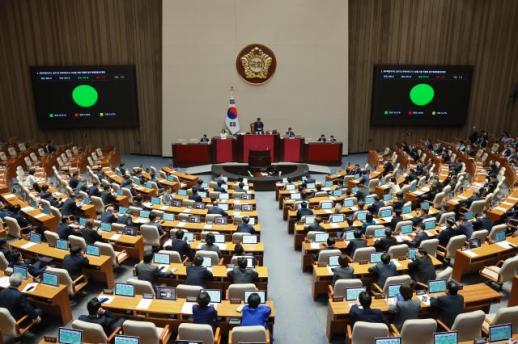 Forced share cancellations redraw control map across Korea Inc. SEOUL, April 21 (AJP) - Mandatory treasury share retirements are rapidly reshaping ownership structures across South Korea’s conglomerates, with cancellations surging past $30 billion in the first quarter alone under a tougher Commercial Act of South Korea. According to a study of 73 conglomerates and 339 affiliates by corporate tracker CEO Score, listed firms canceled shares worth 42.52 trillion won ($30 billion) in the January–March period—more than triple the 13.29 trillion won recorded for all of last year. “Share cancellations are no longer a matter of choice but are required by law, particularly for large conglomerates,” said Shin Hyun-han, a finance professor at Yonsei University’s School of Business. Under the revised rules, newly acquired treasury shares must be canceled within one year, while previously held shares must be retired within 18 months. Exceptions are tightly limited—such as for employee stock compensation—and require shareholder approval. The bulk of cancellations was concentrated among market heavyweights. Samsung Electronics led with 14.9 trillion won, followed by SK hynix at 12.24 trillion won. Together, the two accounted for 63.8 percent of total cancellations in the first quarter. In terms of treasury share holdings prior to retirement, SK Group topped the list at 24.8 percent of common shares, followed by Taekwang Industrial at 24.41 percent, Lotte Corp. at 23.69 percent and Mirae Asset Life Insurance at 21.83 percent. As cancellations accelerate, founding families are seeing their controlling stakes diluted—a structural shift long debated in Korea’s corporate governance landscape. Taekwang Industrial recorded the steepest decline, with controlling ownership falling from 78.94 percent to 54.53 percent. At SK Group, the stake dropped from 50.21 percent to 31.87 percent. At Samsung Electronics, Chairman Lee Jae-yong and related parties saw their combined stake slip below the symbolic 20 percent threshold to 19.95 percent following the cancellations. Still, experts caution against equating lower ownership with weaker control. “Corporate leadership should not be interpreted in a limited way,” Shin said, noting that governance in large conglomerates often rests on a broader mix of cross-shareholding structures, board influence and managerial control rather than simple equity percentages alone. 2026-04-21 16:31:43
-
 KOSPI hits fresh record as chip rally lifts market ahead of looming US-Iran talks SEOUL, April 21 (AJP) - Asian markets mostly opened higher on Tuesday amid growing expectations ahead of looming talks between the United States and Iran to end the prolonged conflict in the Middle East. In Seoul, the benchmark KOSPI hit an all-time high of 6,355.39 during morning trading, breaking the previous intraday record set on Feb. 27, while the junior KOSDAQ edged down 0.03 percent to 1,174.52. Shareholder returns are gaining momentum. Total cash dividends by KOSPI-listed firms reached a record high of 35.1 trillion won ($24 billion) in 2025, up 15.5 percent from 2024, with payout ratios rising to a five-year high of 39.83 percent. Firms participating in the government's value-up program — an initiative aimed at enhancing corporate value and shareholder returns — accounted for 87.7 percent of total dividends, while companies that pay higher dividends made up nearly two-thirds of the total. Large-cap stocks mostly traded higher. Among semiconductor-related shares, Samsung Electronics rose 1.98 percent to 218,750 won, and SK hynix jumped 4.80 percent to 1,222,000 won, as brokerages raised target prices on expectations of stronger second-quarter earnings. Hyundai Motor climbed 1.90 percent to 537,000 won and Kia added 1.08 percent to 159,100 won. Battery and energy stocks posted strong gains, with LG Energy Solution surging 8.86 percent to 467,000 won, Samsung SDI advancing 9.12 percent to 742,000 won and Doosan Enerbility rising 2.61 percent to 113,900 won. However, Samsung Biologics fell 1.00 percent to 1,589,000 won and Hanwha Aerospace slipped 0.49 percent to 1,418,000 won. Financial shares were mixed, with KB Financial edging down 0.37 percent to 160,300 won, while Samsung Life Insurance rose 0.49 percent to 254,750 won and Samsung C&T added 1.17 percent to 303,500 won. Among the KOSDAQ stocks, EcoPro rose 3.98 percent to 161,800 won and EcoPro BM gained 3.81 percent to 218,000 won. Samchundang Pharm also edged up 0.52 percent to 480,000 won, and HLB added 1.27 percent to 64,000 won. On the downside, Alteogen slipped 0.27 percent to 370,500 won and Rainbow Robotics fell 1.15 percent to 601,000 won. L&F edged down 0.26 percent to 116,300 won, and ABELBIO declined 1.25 percent to 158,200 won. Cosmo Advanced Materials dropped 5.47 percent to 102,000 won, and Ligachem Biosciences lost 2.15 percent to 195,700 won. Elsewhere in Asia, Japan's Nikkei 225 rose 1.06 percent to 59,445.90, extending recent gains. The boost also came from expectations that the Bank of Japan may delay further rate hikes. The central bank is likely to pause additional tightening at its upcoming meeting in Tokyo next week. Hong Kong's Hang Seng Index also edged up 0.17 percent to 26,406.89, while China's Shanghai Composite Index the only major index to slip, edging down 0.25 percent to 4,071.95 in early trading. 2026-04-21 11:38:55
-
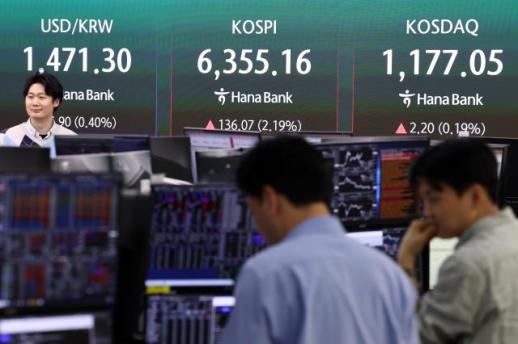 KOSPI sets fresh record, powered by chip stocks SEOUL, April 21 (AJP) - South Korea’s benchmark KOSPI touched new heights in early Tuesday session with its new bullish momentum undisturbed by the uncertainties in the Middle East ahead of the expiration of truce between the U.S. and Iran as it prices in record first-quarter reports from SK hynix scheduled for Thursday. As of 9:50 a.m., the main index stood at 6,341.94, up 1.94 percent, after topping 6,350 earlier in the session on heavy foreign buying from the open. The level marks the highest since a 6,307.27 close on Feb. 26, before the Gulf war erupted. The KOSDAQ slipped 0.11 percent to 1,173.55. Gains were led by semiconductor stocks. SK hynix jumped 4.7 percent to 1,221,000 won, while Samsung Electronics rose 1.98 percent to 218,750 won, as brokerages rushed to raise target prices on expectations that second-quarter earnings will outpace their already strong first-quarter performance. Automakers also edged higher ahead of earnings this week. Hyundai Motor gained 1.71 percent to 536,000 won, while Kia added 0.57 percent to 158,300 won. Battery and energy shares rallied, with LG Energy Solution surging 9.09 percent to 468,000 won, Doosan Enerbility climbing 3.24 percent to 114,600 won and SK Square rising 3 percent to 722,000 won. In industrials, HD Hyundai Heavy Industries advanced 2.67 percent to 538,000 won after signing a memorandum of understanding in India for a joint-venture shipyard project. Samsung Biologics fell 0.62 percent to 1,595,000 won, while Hanwha Aerospace slipped 0.21 percent to 1,422,000 won. The U.S. dollar gained 0.90 won from overnight to 1,473.20 won amid a renewed rise in oil prices. 2026-04-21 10:06:03
-
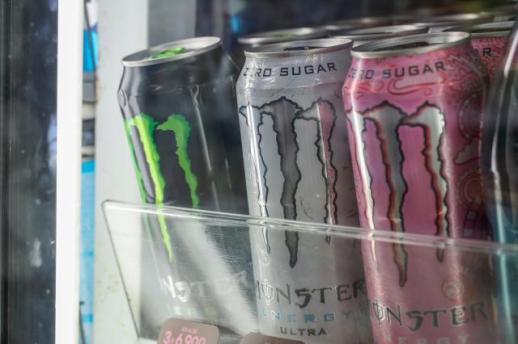 In Korean classrooms, caffeine is the new nicotine SEOUL, April 20 (AJP) - South Korea’s notoriously competitive school system is nothing new. What is more unsettling is this: for many teenagers, caffeine may now pose a greater risk than nicotine. High school senior Yoo Seung-ho drinks two cans of Monster Energy a day — which he considers moderate. “Some of my classmates drink up to five,” he said. Among Korean teenagers, energy drinks have become almost synonymous with studying. “My nephew drinks one or two energy drinks a day,” said Kim S.Y., in her 50s, as she waited outside a library on a rainy afternoon. “These days, kids seem to consume more energy drinks than coffee. They say they’re stronger.” The surge is also visible in the market. Energy drinks generated roughly $2 billion in sales last year — approaching one-third the size of South Korea’s carbonated soft drink market, estimated at $5 billion to $5.5 billion. Yet caffeine dependence may be only the visible layer of a deeper problem. Experts warn that reliance on high-caffeine drinks is increasingly overlapping with the non-medical use of prescription drugs — particularly attention-deficit/hyperactivity disorder (ADHD) medication — to boost concentration. “Strengthening insurance coverage rules or restricting prescriptions can be effective,” said Han Euna, a professor of health economics and pharmaceutical health services research at Yonsei University. She compared the situation to phentermine, an appetite-suppressant drug, where misuse declined significantly after tighter guidelines were introduced. Data suggest the scale of caffeine consumption is already widespread. A 2026 report by the National Youth Policy Institute found that 61.2 percent of teenagers consume high-caffeine beverages at least once a month, with more than half citing the need to stay awake while studying. The pattern becomes more concerning among frequent users. According to the Korea Disease Control and Prevention Agency’s 2025 Youth Health Behavior Survey, 21.9 percent of male students and 21.2 percent of female students reported consuming such drinks at least three times a week. Health authorities recommend a maximum daily caffeine intake of 2.5 milligrams per kilogram of body weight for adolescents — roughly 150 milligrams for a 60-kilogram individual. A single can of an energy drink typically contains 60 to 100 milligrams, meaning that multiple cans can quickly exceed safe limits. “Caffeine can provide a temporary boost in alertness, but over time the body builds tolerance, requiring higher doses to achieve the same effect,” said Yu Yun-mi, a professor in the Department of Pharmacy at Yonsei University. “It disrupts REM sleep and lowers overall sleep quality.” Excessive intake may also trigger gastrointestinal issues such as gastritis and acid reflux at an early age, raising the risk of ulcers later in life. In more severe cases, it can lead to anxiety and cardiac arrhythmias. The concern deepens when looking beyond caffeine. An National Youth Policy Institute survey of 3,384 middle and high school students found that 5.2 percent had used substances — including ADHD medication, appetite suppressants, sleeping pills and anti-anxiety drugs — for non-medical purposes. That exceeds the 4.2 percent who reported ever smoking. Among those, 24.4 percent said they had used ADHD medication in the past six months, followed by appetite suppressants (20 percent) and both sleeping pills and anti-anxiety drugs (13.3 percent each). For some, use is not occasional. Among students who had taken ADHD medication in the past six months, 23.1 percent reported using it more than 20 times a month. A commonly prescribed ADHD drug, Methylphenidate, stimulates the central nervous system but can cause side effects including insomnia, irritability, appetite loss and abdominal pain. As perceptions spread that such drugs enhance concentration, usage appears to be shifting from experimentation to deliberate academic performance enhancement — a trend experts link directly to the pressures of South Korea’s college entrance system. Yu warned that using ADHD medication without proper diagnosis is particularly dangerous. “Such drugs are intended for patients with clinically diagnosed conditions and carry significant side effects,” she said. “When used by individuals without ADHD, the risks are even greater.” Prolonged use may suppress growth and increase blood pressure and heart rate. Combined with high caffeine intake, the risks can intensify further. Amid rising concerns, the Ministry of Food and Drug Safety said in May 2025 that it would expand a system requiring doctors to check a patient’s prescription history before prescribing certain medications. The measure was extended to include methylphenidate from June 27, 2025. 2026-04-20 18:04:23
-
 Asian markets open the week on positive note despite Hormuz uncertainties SEOUL, April 20 (AJP) - Most Asian markets opened the week higher Monday despite conflicting developments in the Middle East ahead of the Tuesday expiration of the truce between the United States and Iran. Hopes had risen last week that the conflict might ease and that the Strait of Hormuz would reopen, but Iran said over the weekend that the strait remained closed. Reports that two Indian-flagged vessels were forced to turn back added to concerns over the security of shipping through the critical waterway. U.S. President Donald Trump said on Truth Social that Iran’s actions in the strait amounted to a “total violation” of the ceasefire and warned that Washington could take further action if Tehran rejected what he described as a “fair and reasonable deal.” A new round of negotiations is expected this week in Pakistan, led by Vice President JD Vance, in a renewed push to end the conflict. However, significant gaps remain, and Iran has signaled it may not attend the talks, calling U.S. demands excessive. Pakistan previously brokered the two-week ceasefire, which is set to expire Tuesday. Despite the geopolitical overhang, regional equities advanced. Japan’s Nikkei 225 rose 1 percent to 59,075.49, holding above the 59,000 level after reaching a record high last week. China’s Shanghai Composite Index edged up 0.45 percent to 4,052.13, while Hong Kong’s Hang Seng Index gained 0.34 percent to 26,228.18. China kept its benchmark lending rates unchanged for an 11th straight month, as policymakers weighed the economic impact of the Middle East conflict against resilient domestic growth and easing deflationary pressures. The People’s Bank of China held the one-year loan prime rate at 3.0 percent and the five-year rate at 3.5 percent. South Korean equities also traded higher, with the KOSPI rising 1.21 percent to 6,266.65 and the KOSDAQ gaining 0.86 percent. Among gainers, Doosan Enerbility climbed more than 5 percent, supported by expectations that heightened geopolitical risks could accelerate nuclear energy projects, particularly in the United States. Chipmakers were also firm. Samsung Electronics reversed early losses to rise 0.69 percent, while SK hynix gained 3.06 percent. Battery stocks rallied, with LG Energy Solution advancing 3.95 percent, while SK Square climbed 3.96 percent to a record high, supported by improving earnings expectations for SK hynix. In contrast, automakers were under pressure, with Hyundai Motor falling 0.74 percent and Kia edging down 0.03 percent. Financial stocks were largely steady, with KB Financial Group rising slightly, while Samsung Life Insurance slipped marginally. On the secondary board, battery materials and biotech shares led gains. EcoPro and EcoPro BM moved higher, while Alteogen and HLB also advanced. In the currency market, the Korean won strengthened modestly, with the dollar trading at 1,474.30 won, compared with the previous close of 1,483.5 won. 2026-04-20 11:32:11
-
 AI 'hunter' sparks alarm in Korea amid regulatory vacuum SEOUL, April 17 (AJP) — Claude Mythos, an artificial intelligence model developed by Anthropic to autonomously detect and potentially exploit critical software vulnerabilities, is another new import challenging South Korea’s lagging regulatory response to rapid technology advances. Experts in Korea are already raising concerns over the lack of legal and ethical accountability. “If such technology is misused, the developer must bear responsibility,” said Kwon Hun-yeong, a professor at the School of Cybersecurity at Korea University, warning that the exploitation of software vulnerabilities could carry serious legal consequences. South Korea’s Ministry of Science and ICT convened a meeting with major cybersecurity firms on Wednesday morning to assess the impact of global AI-driven security projects and explore ways to safeguard local industry. On Tuesday, the government separately held an emergency review with the country’s three major telecom operators and leading platform companies, including Naver and Kakao. Mythos is a tightly controlled preview system, available only to a limited number of partners through Anthropic’s “Project Glasswing” program, which provides early access to advanced AI models for cybersecurity research. It is reported to autonomously detect software weaknesses at an advanced level, a capability that can also be misused for malicious attacks and potentially pose risks to the global financial system. In just two days, using around $20,000 in computing power, it uncovered a previously unknown flaw in OpenBSD, a highly secure open-source operating system, that had gone undetected for 27 years. Park Choon-sik, a professor of information security at Ajou University, said such tools could help identify and fix weaknesses but could also provide attackers with a clearer map of system vulnerabilities. “If these capabilities fall into the wrong hands, hacking could become faster, easier and far cheaper,” he said. “This kind of capability should not be allowed to evolve into a weapon.” Beyond detecting vulnerabilities, Mythos is believed to map attack paths and minimize traces after execution, compressing tasks that once took years into hours. Such speed makes it difficult for traditional security systems to keep up. South Korea’s ICT sector is stepping up its defenses. Following Tuesday’s emergency meeting, companies scrambled to strengthen internal security protocols and expand AI-based threat monitoring. Naver is closely tracking global security developments linked to Mythos, stepping up real-time monitoring and analyzing AI-driven attack patterns while deepening cooperation with government authorities. Kakao is also reinforcing its security posture, reviewing internal information protection systems and expanding monitoring to prepare for potential risks. Toss is strengthening core security practices, including asset management, vulnerability scanning and access control, while enhancing intrusion detection, log management and backup systems. The telecom sector is tightening defenses, with SK Telecom, KT and LG Uplus expanding vulnerability analysis and continuous monitoring, strengthening anomaly detection and upgrading AI-based threat response capabilities. Park noted that organizations are already capable of identifying vulnerabilities with precision, but the core issue lies in how quickly they respond. “Organizations will need to eliminate weaknesses through patches before they are exploited,” he said. “In many cases, the problem is not detection but the failure to respond once weaknesses are identified.” Despite stepped-up defenses, some experts point to the need for broader governance. Kwon said the focus should not be limited to restricting the technology, but also on how it can be used to strengthen defenses, noting that developers could build systems to counter the very threats their models create. “Rather than treating all uses as inherently illegal, there needs to be a framework that allows responsible use while preventing abuse,” he said, warning that the issue could have significant legal and societal repercussions if left unaddressed. In the cybersecurity industry, such risks have traditionally been managed through coordinated vulnerability disclosure, where vulnerabilities are reported privately and disclosed publicly only after patches are developed. The speed and scale of AI-driven discovery, however, are outpacing existing frameworks, compressing the window between discovery and exploitation. Kwon stressed that rather than imposing legal prohibitions on the exchange of vulnerability information, “we need to focus on how it can be used constructively,” emphasizing that the discussion must be translated into action quickly. 2026-04-17 18:03:44
-
 Asian shares edge lower ahead of U.S.-Iran talks; Samsung Electro-Mechanics hits record SEOUL, April 17 (AJP) - Asian markets traded lower Friday as recent rally momentum faded, with investors weighing mixed signals from the Gulf over whether the conflict may begin to wind down through renewed U.S.-Iran talks and separate negotiations between Israel and Lebanon. Japan’s Nikkei 225 fell 0.98 percent to 58,937.04, Hong Kong’s Hang Seng Index lost 0.81 percent to 26,180.23 and China’s Shanghai Composite slipped 0.18 percent to 4,048.38. South Korea’s benchmark KOSPI opened higher and moved in a narrow range around the 6,200 level in early trading before turning lower, shedding 0.42 percent to 6,199.97. Despite the broader weakness, Samsung Electro-Mechanics climbed to a fresh record high. As of 10:30 a.m., the stock had surged 6.26 percent from the previous session to 679,000 won, extending gains for an eighth straight session since April 8. The rally reflected growing expectations of an industry upturn, with improving earnings prospects in multilayer ceramic capacitors (MLCCs) and flip-chip ball grid array (FC-BGA) products underpinning investor sentiment. The company’s market capitalization rose to 50.79 trillion won, lifting it to 12th on the KOSPI from 21st at the start of the month. Among chipmakers, Samsung Electronics slipped 0.23 percent to 217,000 won, while SK hynix fell 0.95 percent to 1,144,000 won. Samsung Biologics also declined 0.80 percent to 1,603,000 won. In the industrial sector, Hanwha Aerospace dropped 5.27 percent to 1,439,000 won, while Doosan Enerbility lost 1.90 percent to 108,700 won. Automakers were mixed. Hyundai Motor traded flat at 534,000 won, while Kia edged down 0.25 percent to 157,500 won. Financial stocks posted limited gains, with KB Financial Group rising 0.25 percent to 162,700 won. Elsewhere, LG Energy Solution added 0.36 percent to 417,500 won, while SK Square rose 0.14 percent to 691,000 won. The KOSDAQ swung between gains and losses before edging up 0.05 percent to 1,163.56 as of 10:59 a.m. Among biotech names, Alteogen fell 0.54 percent to 367,500 won, Samchundang Pharm dropped 3.66 percent to 486,500 won, HLB declined 3.61 percent to 61,400 won and LigaChem Biosciences slid 2.42 percent to 193,200 won. Among gainers, Ecopro rose 1.94 percent to 152,100 won, Ecopro BM gained 1.46 percent to 208,000 won and Koh Young Technology advanced 2.12 percent to 111,000 won. The Korean won also weakened slightly against the dollar, with the greenback trading at 1,478.30 won, compared with the previous close of 1,474.60 won. Overnight on Wall Street, major indexes ended higher on expectations for a potential second round of U.S.-Iran ceasefire talks this weekend, along with news that Israel and Lebanon had agreed to a 10-day truce, lifting investor sentiment. The S&P 500 and the Nasdaq Composite rose 0.26 percent and 0.36 percent, respectively, both extending record highs for a second straight session. The Dow Jones Industrial Average also added 0.24 percent. The Nasdaq has now risen for 12 consecutive sessions, marking its longest winning streak since 2009. 2026-04-17 11:34:09