
Journalist

Lee Hugh
=
-
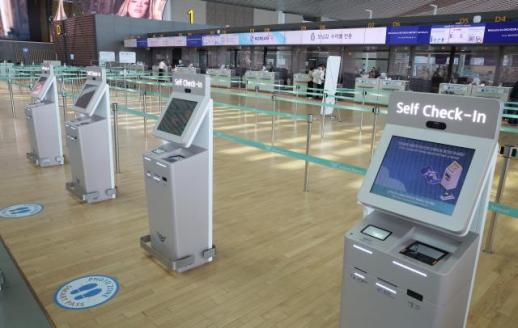 Soaring fuel surcharges push up overseas travel costs amid Iran war SEOUL, May 02 (AJP) - International airfare costs are set to rise sharply this month as higher oil prices driven by the U.S.-Iran war push fuel surcharges to a record level, adding pressure on travelers and forcing airlines to cut more flights. Tickets issued from May 1 are subject to the highest fuel surcharge level of 33, which applies when jet fuel prices exceed 470 cents per gallon, according to the airline industry. The benchmark Singapore jet fuel price, known as MOPS, reached 511.21 cents per gallon, marking the first time the top level has been applied since the current system was introduced in 2016. The surcharge jumped 15 levels from April. Fuel surcharges are additional fees airlines impose on top of fares to offset losses from rising oil prices. Airlines set their own surcharge amounts based on the monthly surcharge level. Korean Air set its May international fuel surcharge at 150,000 won to 1.128 million won ($765) for round-trip tickets, depending on distance. For the longest routes, the surcharge is nearly five times higher than the 231,000 won charged in January and about double last month’s level. Asiana Airlines will charge between 170,800 won and 952,400 won for round-trip international tickets. Jeju Air, the country’s largest low-cost carrier, will impose fuel surcharges of $52 to $126 for one-way tickets. The sharp increase is expected to weigh heavily on consumers already facing higher travel costs. Airlines are also struggling to offset rising expenses through fuel surcharges alone, prompting some carriers to reduce flights. Asiana Airlines had initially planned to cut eight flights on three international routes this month but later expanded the reduction to 13 flights. Jin Air, which suspended eight routes last month, will halt operations on 14 routes this month. Air Premia plans to cancel 22 flights in July. Korean Air has not yet decided whether to suspend flights but is closely monitoring the situation, according to industry officials. In some countries, including Vietnam, airlines are reportedly facing difficulties securing jet fuel supplies. “There are growing concerns that overseas travel demand, which had been recovering, could weaken again,” an airline industry official said. The surge in international fuel surcharges is also shifting travel demand toward domestic destinations. According to travel and accommodation platform Yeogi Eottae, overseas accommodation bookings from April 1 to 23 fell to 75 percent of the level recorded in February, before the Middle East war began. Domestic accommodation bookings, by contrast, rose to 107 percent of the February level. The trend suggests that more travelers are turning to domestic trips as overseas travel becomes more expensive. Domestic hotels and resorts are also seeing stronger demand. Hanwha Resorts said its average occupancy rate in April rose by 8 percentage points from a year earlier. Reservations for major locations, including Haeundae and Gyeongju, have already topped 80 percent this month, surpassing last year’s actual occupancy rates. 2026-05-02 12:10:04
 -
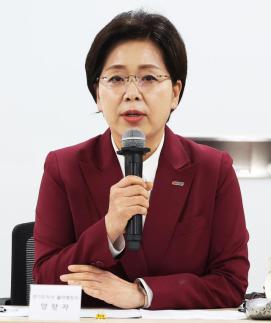 Yang Hyang-ja Picked as People Power Party’s Gyeonggi Governor Candidate Yang Hyang-ja, a top official of the People Power Party, has been selected as the party’s candidate for Gyeonggi governor in the June 3 local elections. According to Yonhap News Agency and the party’s central nomination committee on Friday, Yang secured the nomination based on a combined tally of a two-day vote by party members (50%) and a public opinion poll of the general electorate (50%). In a news conference immediately after the primary result was announced, Yang said she would “end the era of outdated ideology and open an era of future high-tech industries,” adding that she would take on a “bold challenge” toward “a new conservative party and a future Gyeonggi.” She said she would focus “only on the economy and people’s livelihoods, beyond ideology and camps,” and pledged to work with “reasonable residents” rather than “extreme supporters” of the two major parties to turn the race into an “economic election,” shifting it from “an election that asks about the past” to one that “discusses the future.” Yang emphasized that she would run on boosting income for Gyeonggi’s 14 million residents, fostering advanced industries tailored to each of the province’s 31 cities and counties, and expanding high-paying youth jobs with annual salaries of 100 million won. Yang will face Democratic Party candidate Choo Mi-ae in the election. Yang entered politics in 2016 after being recruited as outside talent when Moon Jae-in was serving as leader of the Democratic Party. She drew attention for her background as a high school graduate who became a managing director at Samsung Electronics. That year, she became an ex officio member of the party’s top leadership after defeating Yoo Eun-hye in a race for chair of the party’s national women’s committee. From 2018 to July 2019, she served as head of the National Human Resources Development Institute, a government official post. At Samsung Electronics, she joined in 1985 as a research assistant in a semiconductor memory design lab and was promoted to managing director in 2014, setting a record as the first female executive from a high school graduate background. In politics, she has been active as a semiconductor industry expert. With Yang’s nomination in Gyeonggi, the People Power Party has completed nominations for the 16 provincial and metropolitan governor races, the party said.* This article has been translated by AI. 2026-05-02 11:18:17
 -
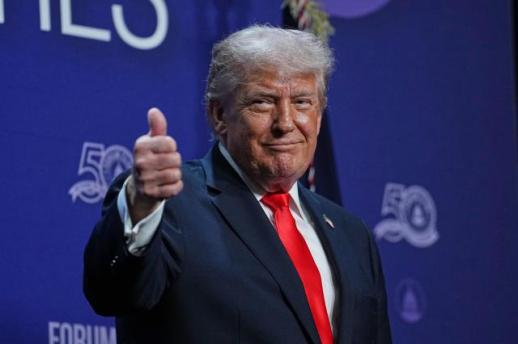 Trump's Germany troop cut, EU tariff hike fuel concerns in Seoul SEOUL, May 02 (AJP) - U.S. President Donald Trump’s decision to withdraw thousands of troops from Germany and raise tariffs on EU vehicles starting next week is raising concerns in Seoul over whether Washington could use similar pressure against South Korea. The moves come amid growing tensions between the U.S. and its allies over their response to the Iran war. The Pentagon said Friday that Defense Secretary Pete Hegseth had ordered the withdrawal of about 5,000 U.S. troops from Germany, with the drawdown expected to be completed over the next six to 12 months. Germany hosts around 35,000 U.S. troops, the second-largest overseas U.S. military presence after Japan. It is also home to the headquarters of U.S. European Command and U.S. Africa Command, making it a key pillar of European security since the end of World War II. The Pentagon’s announcement came four days after Trump said on Truth Social that his administration was “studying and reviewing the possible reduction of troops in Germany," and would make a decision soon. The move is widely seen as having been triggered by German Chancellor Friedrich Merz’s remarks on April 27 that the United States had been "humiliated" by Iran and that the war was unlikely to end easily. Trump also said on Truth Social, “Based on the fact the European Union is not complying with our fully agreed to Trade Deal, next week I will be increasing tariffs charged to the European Union for Cars and Trucks coming into the United States.” Under last year’s U.S.-EU trade agreement, Washington agreed to lower tariffs on EU-made passenger cars and trucks from 25 percent to 15 percent. Trump’s latest announcement would restore the rate to its previous level. The sudden tariff move is being interpreted as another sign of Trump’s frustration with key NATO allies, many of which have effectively rejected Washington’s requests for military support in the Iran war. Trump has repeatedly complained that European allies are not doing enough, particularly in relation to efforts to secure the Strait of Hormuz. Trump has also voiced frustration with Indo-Pacific partners, including South Korea, Japan and Australia, which have been reluctant to send forces to the Strait of Hormuz. About 28,500 U.S. troops are stationed in South Korea. Since Trump returned to office, Seoul and Washington have been holding talks on what they call “alliance modernization,” which centers on readjusting the role and responsibilities of U.S. Forces Korea. After Trump floated the possibility of reducing U.S. troops in Germany, South Korea’s defense ministry sought to draw a line, saying there had been “no discussions at all” between Seoul and Washington on a reduction of USFK. Still, concerns remain as several major agreements reached at last year’s South Korea-U.S. summit have been slow to move forward. At the center of the issue is Seoul’s $350 billion investment pledge in the U.S., which was linked to Washington’s agreement to lower tariffs on Korean goods and support key security-related initiatives, including South Korea’s pursuit of nuclear-powered submarines for peaceful purposes. The Trump administration’s focus on the Iran war has limited Washington’s bandwidth for detailed consultations with Seoul. But diplomatic sources say the bigger reason behind delays in follow-up security talks appears to be Washington’s dissatisfaction with the pace of South Korea’s promised investment package. The U.S. has repeatedly urged Seoul to move faster in selecting and implementing investment projects. Japan’s announcement of its first and second U.S. investment projects in February and March has added pressure on the South Korean government. South Korea has moved to speed up preparations since Trump threatened in January to restore tariffs on Korean automobiles and other goods to 25 percent over delays in the investment agreement. The National Assembly passed a special law to support the package, and the government has continued talks with Washington over potential projects. But Seoul has yet to announce its first investment plan, taking a cautious approach given the size of the commitment and the need to ensure commercial viability. Trump’s latest moves against Germany and the EU have heightened concerns in Seoul that Washington may use trade and security leverage more aggressively in dealing with allies. Even if a reduction of U.S. troops in South Korea is not currently under discussion, Seoul may find it difficult to rule out renewed pressure if investment commitments continue to lag. 2026-05-02 11:00:28
 -
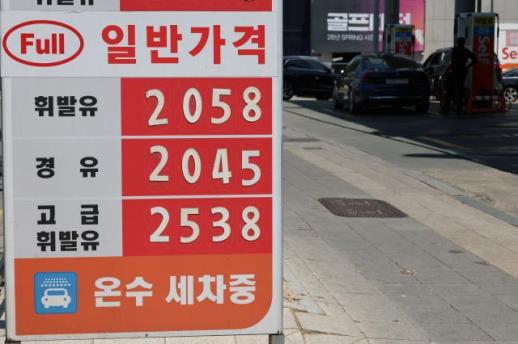 South Korea Gasoline, Diesel Prices Stay Above 2,000 Won a Liter; Seoul at 2,048 South Korean gasoline and diesel prices at gas stations continued to hover in the 2,000-won range on a weekly basis. Data from Yonhap News Agency and the Korea National Oil Corp.’s Opinet system showed that in the fifth week of April (April 26-30), the nationwide average retail price of gasoline rose 4.8 won from the previous week to 2,008.6 won per liter. By region, Seoul posted the highest price at 2,048 won per liter, up 8.7 won from a week earlier. Daegu was the lowest at 1,993.6 won, up 4.7 won. The recent rise in international oil prices was attributed to stalled ceasefire talks between the U.S. Donald Trump administration and Iran. A persistently weak won has added to upward pressure on domestic fuel prices. Domestic fuel prices are influenced not only by global crude prices but also by the exchange rate. In March, Dubai crude jumped 87.9% from the previous month, while the won-dollar exchange rate rose 2.6%, pushing import prices up 16.1% from a month earlier — the highest level in about 28 years since January 1998. A higher exchange rate raises the won-denominated cost of crude, which is traded in dollars. Over the same period, the won-based crude price hit a record since data collection began, while jet fuel and naphtha prices rose 67.1% and 46.1%, respectively. Analysts have warned that the combined rise in oil prices and the exchange rate could spread across broader inflation. With the consumer inflation rate in April 2026 in the mid-to-high 2% range, some forecasts say it could climb to around 3% in May if the high exchange-rate trend persists, potentially weakening households’ real purchasing power and adding to living-cost burdens. 2026-05-02 10:27:16
 -
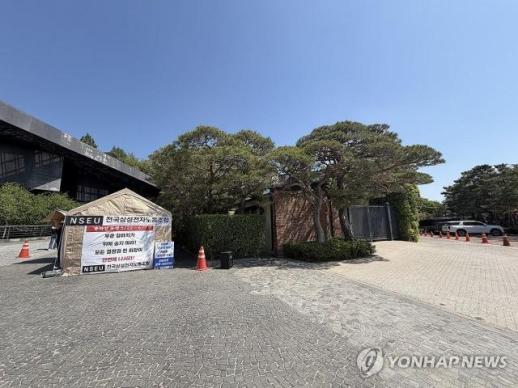 Debate Over Samsung Electronics’ Projected 300 Trillion Won Profit Revives Questions About Shareholder Capitalism ■ Summary of the veteran commentator’s original remarks With forecasts that Samsung Electronics’ operating profit could reach 300 trillion won, a sharper debate has emerged over who should receive any outsized gains. Labor unions are calling for bigger performance bonuses, markets are looking for greater shareholder returns, and politicians are stressing corporate social responsibility. The core issue, the article argues, is not emotion or morality but capital structure — specifically, the “residual claim.” A company is a bundle of contracts in which different stakeholders provide resources in exchange for terms agreed in advance. Creditors accept fixed interest and give up any claim on extra profits. Workers receive wages and do not hold a direct claim on the remaining surplus. Suppliers secure profits within contract terms such as delivery prices. After those claims are settled, the party entitled to what remains is the shareholder. The reason is straightforward, the article says: when the residual turns negative, shareholders absorb losses first. Creditors and workers are protected, while shareholders stand last in line. That symmetry makes shareholders the residual claimants — not as a privilege, but as a contractual outcome. The structure is visible in practice. When Samsung Electronics’ results slumped in 2023, workers’ wages did not fall and payments to suppliers were maintained. The stock price, however, dropped sharply, and shareholders bore the loss. The residual claim, the article argues, becomes clearest not in boom times but in downturns. It also points to insider behavior: many employees avoid holding their company’s shares, and those with stock options often sell soon after exercising them. The article says that reflects how well insiders understand the volatility and risk embedded in the residual claim. Choosing stable wages while avoiding residual risk is a rational decision, it adds. The same logic, the article argues, applies to the state. Government provides social capital — education, infrastructure and the rule of law — and receives payment through taxes. Corporate and income taxes are the state’s agreed share. Demanding an additional residual claim would be akin to a creditor seeking extra profit after collecting interest. If the state wants a residual claim, it can buy shares through a sovereign wealth fund. The National Pension Service already participates in that way, the article says. Europe’s experience offers a cautionary lesson, it argues. Europe, which has emphasized stakeholder capitalism, has lagged in investment and innovation over recent decades and has fallen behind in global competition among technology companies. The United States, despite flaws, secured technological leadership through more efficient capital allocation. In the end, the article says, theories are tested by outcomes. The conclusion: shareholder capitalism is not perfect, but alternatives are not fully proven either. The practical answer is not overturning the theory but refining institutions — adjusting taxes, dividends and labor distribution to restore balance. Capitalism depends on incentives, it argues, and weakening the link between risk and reward can destabilize the system. ■ A conversation between a veteran commentator and an AI analyst Veteran commentator: “It's a bit long, but read it. It’s a strong piece on the Samsung Electronics bonus dispute. Even an AI like you should see what really matters.” AI analyst: “I’ve read it. It goes beyond a simple bonus fight and lays out capitalism’s structure in textbook fashion — especially by tying the idea of the ‘residual claim’ to real-world examples.” Veteran commentator: “This isn’t just about how big bonuses should be. Beneath it is the question of who has the right to the surplus.” AI analyst: “The answer comes from structure, not emotion. Creditors lend money and receive interest. Workers provide labor and receive wages. Suppliers deliver goods and services and receive payment. The state provides laws, education and infrastructure and receives taxes. After those claims are met, what remains is the residual — and shareholders receive it.” Veteran commentator: “People think shareholders take it because they’re powerful. No — shareholders are the ones who absorb losses first. That’s why they get what’s left when there’s a surplus.” AI analyst: “That’s the point. If the residual is positive, shareholders benefit; if it’s negative, they bear it. In a major loss, creditors seek repayment, workers’ wage claims are protected, and suppliers can demand contract payments. Shareholders are last. If nothing remains, they get nothing — which is why they are residual claimants.” Veteran commentator: “So it’s a contract issue, not a moral one.” AI analyst: “Yes. In moral terms, ‘they earned a lot, so share it’ can sound persuasive. In contractual terms, the question is different: Who took which risks? Who accepted volatility, and who chose safety?” Veteran commentator: “Then how should we view unions demanding bigger bonuses?” AI analyst: “Bonus demands are part of bargaining. Workers contribute to productivity, so compensation design can be negotiated. But bonuses and residual claims should not be confused. Bonuses are about costs and pay systems; residual claims are about capital structure. Mixing them turns the debate into a fight over feelings.” AI analyst: “When Samsung Electronics’ operating profit fell sharply in 2023, wages were not automatically cut and suppliers did not return payments. But the stock price moved, and shareholders absorbed the loss. The residual claim is clearer in losses than in gains.” Veteran commentator: “Another interesting point is insiders. People who know the company best often don’t buy its stock. Why?” AI analyst: “Because they understand the risk. They know how cyclical the semiconductor business is and how sharply operating profit can swing. They may choose stable wages and avoid taking on residual-claim volatility.” AI analyst: “The market is open: anyone can buy shares and become a shareholder. Workers can be both employees and shareholders. The state can participate through pension funds or a sovereign wealth fund. The National Pension Service already does so by holding Samsung Electronics shares.” AI analyst: “Social adjustment is still needed — taxes, welfare, labor policy, supplier protections and fair-trade rules. But that is institutional design, not a denial of the residual-claim principle.” Veteran commentator: “Some argue that because the state provides education, roads, power, public safety and the legal system, excess profits should belong to society.” AI analyst: “The state already receives payment through taxes — corporate tax, value-added tax, earned-income tax, dividend tax and capital gains tax. After collecting taxes, claiming the residual as well resembles a creditor demanding extra profit after receiving interest. If the state wants a residual claim, it can hold shares.” Veteran commentator: “The piece also highlighted KT&G.” AI analyst: “It said KT&G had stable cash flow but shareholder value was not fully reflected for a long time. While employees and domestic investors did not actively accumulate shares, foreign activist funds entered and pushed for higher dividends, share buybacks, clearer subsidiary value and greater efficiency. The example is used to show how the question of who receives the residual plays out in practice.” AI analyst: “The article adds that activist funds have downsides, including short-termism, but can also check management practices that tie up capital inefficiently or treat shareholders’ money as their own. It cites U.S. activist investor Carl Icahn as an example in that context.” AI analyst: “Europe’s stakeholder-capitalism tools — such as Germany’s co-determination system, France’s state-led industrial policy and strong worker-protection rules in the European Union — supported stability and labor protections, but also slowed decisions and weakened risk-taking, the article argues. It points to Germany’s auto industry, which it says fell behind Tesla and BYD during the shift to electric vehicles.” AI analyst: “The United States has flaws — short-termism, heavy buybacks, inequality and pressure from financial capital — but maintained a system in which capital moves quickly. The article lists Apple, Microsoft, Amazon, Alphabet, Meta, Tesla and Nvidia as examples of companies that grew under that structure, calling Nvidia a key firm in the AI era.” AI analyst: “It argues shareholder capitalism has serious weaknesses and needs fixes, but says the answer is to refine institutions rather than overturn the framework. It points to tools such as tax policy, more precise R&D tax credits, dividend-tax changes to encourage long-term investment, rules to protect suppliers, and compensation systems — including bonuses, employee stock ownership and long-term incentives — that better align risk and reward.” ■ Closing The article concludes that the “300 trillion won” debate is not mainly about the number, but about how far society is willing to accept capitalism’s basic rules. It argues that shareholders’ claim on what remains is not a privilege but a contract — and not power, but responsibility. The party that takes the residual when it is positive is also the first to absorb it when it turns negative. If that principle is blurred, the article warns, capital will pull back, companies will become arenas for conflict, and the costs will ultimately be borne by society as a whole. It ends with a blunt line: There is no reward without risk, and rights without responsibility do not last. Justice, it says, does not begin with redistribution; it begins with keeping promises.* This article has been translated by AI. 2026-05-02 10:24:21
 -
 South Korea’s Next-Gen Medium Satellite 2 to Launch on SpaceX Falcon 9 After War Delay South Korea’s Next-Generation Medium Satellite 2 is set to head to space from Vandenberg Space Force Base in California aboard SpaceX’s Falcon 9 on May 2 local time. The Korea Aerospace Administration said the satellite is scheduled for launch at 3:59 p.m. May 3 in South Korea (tentative). According to the launch sequence, the Falcon 9 will shut down its first-stage engine 135 seconds after liftoff and ignite the second-stage engine 146 seconds after liftoff. The payload fairing is to separate at 182 seconds. Final separation of the satellite is planned at 3,625 seconds after launch, about 60 minutes 25 seconds. After launch, the satellite is expected to settle into an orbit of about 498 kilometers (309 miles). It will undergo about four months of initial operations before beginning full mission work in the second half of 2026. The Korea Aerospace Research Institute (KARI) will conduct initial after-launch checks (IAC) and in-orbit tests (IOT). Ground stations for early operations will include King Sejong Station in Antarctica, Troll Station, Svalbard in Norway and a station in Daejeon. Next-Generation Medium Satellite 2 is the first mid-size satellite independently developed under the lead of a South Korean industrial company. Korea Aerospace Industries (KAI) joined the design team for Next-Generation Medium Satellite 1 starting in 2015 and received transfers of key technologies, then led development of the second satellite. The project began in January 2018 and proceeded in stages. It passed a system assembly test readiness review meeting (IRR) in June 2020 and completed a pre-shipment review (PSR) in December 2021. The satellite was originally to be launched from Russia, but the launch was halted after the Russia-Ukraine war began in February 2022. In November 2023, South Korea ended the launch contract with the Russian side and selected SpaceX as the replacement provider, signing a new contract. With the schedule delayed, the satellite underwent state-of-health (SOH) tests every six months while stored on the ground. It completed a final integration test in December and finished a second PSR in March. In April, it was transported to the launch site for final preparations. The aerospace administration said the project is significant because the satellite bus and some core payloads were developed with domestic technology. “It verified Korea’s independent space development capabilities and laid the groundwork for follow-on satellites and international competitiveness,” the agency said. The satellite’s mission is to support public needs such as land and resource management and disaster response. It will provide high-resolution imagery used for ground observation, change detection, mapmaking and urban planning, and can support damage assessment and response during disasters such as typhoons, floods and wildfires. Separately, Next-Generation Medium Satellite 3 was launched on Nov. 27 from the Naro Space Center in Goheung, South Jeolla Province, on the fourth flight of South Korea’s Nuri rocket. That launch was the first produced under private-sector leadership and the first nighttime launch, successfully separating one primary payload and 12 secondary satellites. Next-Generation Medium Satellite 3 observes auroras and airglow in high-latitude regions and precisely measures the space magnetic field and plasma environment. Full mission operations began in February. 2026-05-02 10:12:19
 -
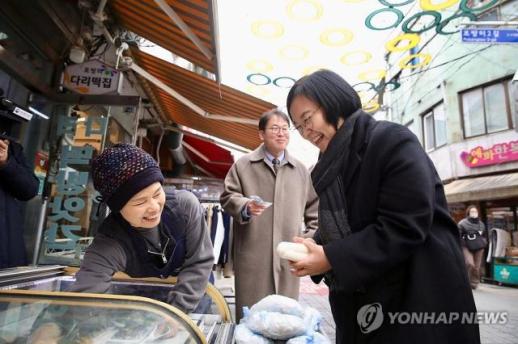 Minister Han Seong-sook urges Donghaeng Festival to drive lasting growth for small merchants SME and Startups Minister Han Seong-sook visited the Donghaeng Festival and stressed the need to boost spending at small businesses. The co-marketing sales event linking major retailers with small merchants is a meaningful attempt. Policies that energize struggling neighborhood commercial districts and encourage consumer participation are needed in the current economic climate. The question is whether the effort stops there. The success of the policy will hinge on whether it moves beyond a one-off spending push and builds a structure in which small merchants can survive on their own. For years, policy for small merchants has largely stayed in “support” mode: when sales fall, try to spur consumption; when hardship grows, inject public funds. That approach is not a fundamental solution. Consumption is an outcome, not a cause. Without product competitiveness and workable distribution channels, any consumption-boosting campaign will be temporary. The Donghaeng Festival can be a starting point, but it will not become a solution without structural change. First, policymakers need to distinguish among the people they are trying to help. Treating all small merchants as one group has clear limits. Subsistence self-employed operators and small businesses with growth potential require different approaches. The former need stability and protection; the latter need expanded sales channels and stronger competitiveness. Past policy has leaned toward uniform support without that distinction, leaving both protection and growth unclear. Han’s task is to design this two-track structure more clearly. Sales-channel policy also needs a reset. Ties with major retailers are necessary, but forcing or allocating shelf space is not desirable because it can distort competition. Instead, policy should lower barriers to entry. Major retailers and platforms should be able to test small-merchant products for a set period, with decisions on placement made naturally based on consumer response. Government should focus on supporting logistics, data and marketing in that process. The goal is not to hand out sales channels, but to create conditions that allow small merchants to enter them. Approaches to “industrializing” small merchants should also differ. It is unrealistic to assume every small business can adopt digital transformation and data-driven management. Still, some growth-oriented merchants can. Policy should identify them and concentrate support. Businesses with online sales capability, brand-building capacity and potential for overseas expansion should receive bold investment. At the same time, stability measures should continue for subsistence operators without imposing excessive burdens. The role of event-driven policies like the Donghaeng Festival should be defined as well. Such events may be necessary, but they are not sufficient. They can stimulate short-term spending, but they do not create a sustainable revenue structure. Events should be treated as a supporting tool, while structural reform should be the core policy. The strategy should pair consumer exposure through the festival with improvements in distribution systems and product competitiveness so demand can continue. Government’s role should be equally clear. The answer lies in the market, but the market needs rules and design to function properly. Government should not replace the market; it should build a framework for fair competition. That includes preventing unfair trade, improving access to platforms, and building data and logistics infrastructure. Competition should then be left to the market. Han’s message is meaningful as a starting point. The intent to revive consumption and help small merchants is clear. But policy is not completed by intent. It is completed by structure. The Donghaeng Festival is now being tested: whether it ends as an event or becomes the start of structural reform. Han’s task is to move beyond policies that merely spark spending and build a market structure in which small merchants can grow on their own. That is the lasting solution.* This article has been translated by AI. 2026-05-02 09:24:00
 -
 Korea’s National Museums Roll Out Family Programs for May Holiday Break May, widely marked in South Korea as Family Month, is bringing a slate of programs at major museums nationwide, with hands-on activities, performances and education designed to make cultural heritage easier and more engaging for visitors. The National Museum of Korea said Thursday it will host a family-focused event, “Gukjungbak Outing,” from May 2-5 across its outdoor plaza, Mirror Pond Square and the permanent exhibition halls. Outdoor photo zones will feature character-themed installations tied to Kakao Friends, including “Bangara Chunsang” and a “white porcelain spring jar” display near the Mirror Pond. The large sculptures reimagine the famed pensive bodhisattva statue and a white porcelain moon jar as the characters Ryan and Chun-sik, respectively. Performances are scheduled in the outdoor plaza, including a fusion Korean traditional music show by Akdan Gwangchil at 3 p.m. on May 2. On May 6, the museum plans balloon art and a bubble magic show by a stilt-walking clown, a Miracle Boyz ensemble performance, and a K-pop dance stage by YouTuber Sumail. Visitors can also join participatory programs such as “My Own National Museum Treasure Exhibit” and “Make a National Museum Treasure Postcard.” In the permanent galleries, events include a “QR stamp tour” and a Children’s Day mission to find treasure stickers. Around the Mirror Pond, 13 independent bookstores will run children’s book sales booths, and Pulmuone Food & Culture will operate food trucks. Regional national museums are also preparing family programs. The National Museum of Cheongju will offer a children’s musical, “The Sun and the Moon,” along with a magic and laser show, fusion Korean traditional music performances and a family sports day. The National Museum of Gongju will run a free children’s concert, “Kongkong Classic,” and a participatory play, “The Giant’s Desk.” The National Museum of Buyeo will hold an interactive education program, “Today I’m an Oaksa,” and the 41st cultural heritage drawing contest. The National Museum of Iksan will stage participatory events around the Mireuksaji site, combining traditional folk games, craft activities, a treasure hunt, a magic show and photo zones. Some museums will highlight local themes. The National Museum of Jeonju will host a children’s pottery festival, while the National Museum of Naju will offer mask-making. The National Museum of Gyeongju will stage a percussion performance near the bell pavilion of the Divine Bell of King Seongdeok, one of the museum’s signature cultural assets, allowing visitors to experience the heritage site alongside live music. Each national museum operates its own website. A museum official said most Family Month events will be free, but some programs require advance reservations, and visitors should check each museum’s site for schedules and participation details.* This article has been translated by AI. 2026-05-02 09:03:18
 -
 Pentagon Orders Withdrawal of About 5,000 U.S. Troops From Germany Within a Year The United States has decided to withdraw about 5,000 U.S. troops stationed in Germany, a move expected to be carried out over the next year as part of a broader review of force posture in Europe. According to Yonhap News Agency and other reports on May 2, the Donald Trump administration made the decision on May 1 local time to pull 5,000 troops from Germany. Sean Parnell, the Pentagon’s chief spokesperson, told Yonhap that Defense Secretary Pete Hegseth ordered the withdrawal of about 5,000 troops from Germany. Parnell said the decision followed a review of overall U.S. force posture in Europe and took into account theater requirements and local conditions. The withdrawal is expected to be completed within six to 12 months. About 36,436 U.S. troops are currently stationed in Germany; if the plan proceeds, the total would fall to about 31,000, a reduction of roughly 14%. Germany is the second-largest host of U.S. forces overseas after Japan. Yonhap reported that Germany is a key hub that hosts the headquarters of U.S. European Command and U.S. Africa Command and has played a central role in European security since World War II. About 28,500 U.S. troops are stationed in South Korea, the third-largest overseas presence after Germany and Japan. They are deployed around Camp Humphreys in Pyeongtaek and in Daegu, Gunsan and Osan. The U.S. Forces Korea presence is assessed as a core capability for deterring North Korea and as part of an Indo-Pacific strategy that includes countering China and Russia. The Pentagon told Yonhap it could not comment on any impact the Germany drawdown might have on U.S. forces in South Korea, citing potential posture adjustments. It added that U.S. Forces Korea remains focused on deterrence and readiness and that the U.S. commitment to South Korea’s defense is unchanged. * This article has been translated by AI. 2026-05-02 08:45:17
 -
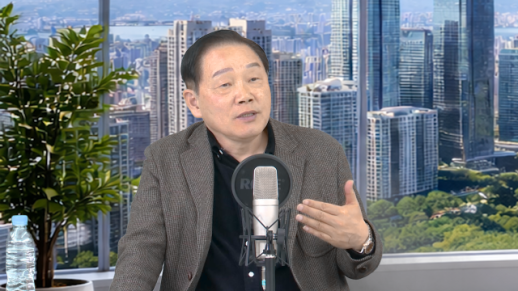 Seoul Tourism Chief Gil Gi-yeon Pitches ‘Post-Hallyu’ Push for Arts Travel Seoul tourism is rebounding after the COVID-19 pandemic shut down international travel and hit airlines, travel agencies, hotels, duty-free shops, restaurants and performance venues. The disruption also accelerated a shift away from low-cost, shopping-focused group tours toward travel that blends hiking, Korean pop culture, arts, hands-on experiences, festivals and city lifestyle. At the center of that shift is Gil Gi-yeon, CEO of the Seoul Tourism Organization, who took office during the pandemic and became the first to win a second term. Under his leadership, the Seoul Lantern Festival, the Seoul Downtown Hiking Tourism Center, Gwanghwamun Seoul Summer Beach, Yeouido Seoul Dal and the Seoul Culture Lounge have become signature offerings. He described the organization’s role as “to get tourists from around the world to come to Seoul, spend a lot of money, and help Seoul’s economy prosper.” Gil’s stated goal is to lift Seoul into the world’s top five tourism cities. In 2023, he unveiled the “Seoul Tourism Future Vision 3377 Strategy,” calling for 30 million foreign visitors, 3 million won in spending per visitor, an average stay of seven days and a 70% repeat-visit rate. Some indicators are nearing those targets. “Spending of 3 million won has risen to about 2.7 million won, the length of stay is close to six days, and the repeat-visit rate is nearing 50%,” he said. Gil said Seoul’s next edge will come from content, not just totals. While K-pop, Korean food and beauty trends are driving visits, he said the “post-Hallyu” strategy should be arts tourism, building a structure in which performances, museums and galleries support city tourism, as in New York, London and Paris. The following are excerpts from a Q&A with Gil. “COVID wasn’t a collapse of tourism. It was a chance to pivot.” - You took office when tourism had effectively stopped. What was your first judgment? “Tourism is an industry where people feel satisfaction through face-to-face activities. During COVID, movement itself became impossible, and in-person contact was difficult. So we thought about what could be done without direct contact. We held MICE meetings online, and because infection risk is relatively lower outdoors, we planned hiking tourism as well. The travel industry was in serious trouble. After discussing it with Mayor Oh Se-hoon, we provided about 30 billion won in support to the travel sector. I believed the crisis would pass. There was MERS and SARS, and they were overcome. So I thought we had to prepare for what comes next.” Gil said the core of crisis response was “calm preparation,” using the pause to identify weaknesses and develop new content. - You said it was a chance to pivot, not collapse. Why? “Before COVID, Seoul tourism depended heavily on shopping. When Chinese group tourists came, tours often took them to shopping centers. There were many cut-rate tours, and Chinese tourists also had complaints. When COVID hit, that structure disappeared. Cut-rate tours couldn’t survive. I think it became a turning point to return to higher-quality tourism.” “From a contract operator to a content producer” - What drove the results that led to your second term? “I keep thinking and value creativity. Rather than copying what others have done, I try to do something new. In the past, the Seoul Tourism Organization largely carried out work commissioned by the Seoul city government’s tourism bureau and earned some fees. After I arrived, we launched many independent projects. I believed we needed our own ability to survive. Examples include the Seoul Downtown Hiking Tourism Center, the Seoul Lantern Festival, Gwanghwamun Seoul Summer Beach, Yeouido Seoul Dal and the Seoul Culture Lounge. We launched new content every year.” “Foreigners are amazed by Seoul’s mountains” - Foreign hiking tourism that began in 2022 drew attention. Where did the idea come from? “I know a German woman who said she loves Seoul every time she visits because the mountains are close. She lived in Munich and said it takes six hours to reach mountains there. In Seoul, mountains are nearby, and there are temples on the trails. She said the temples are beautiful. That inspired me. We surveyed about 3,000 foreign followers. When we asked whether they wanted to visit Seoul’s beautiful mountains, 85% said yes. When we asked whether it would be good if we lent hiking gear and shoes for free, more than 95% said it would be great. That gave us confidence, and we opened the first center at Bugaksan. Mayor Oh liked it, so we created a second and third. Even now, users are increasing by more than 50% each year.” Gil listed Seoul’s strengths as cleanliness, the Han River, mountains, 600-year-old palaces, dynamism, friendliness and safety. “A beautiful major city surrounded by mountains is rare globally,” he said. “‘Living like a Seoulite’ can be a tourism product” - Tourism is shifting from landmarks to experiences. How far will it go? “Experiential tourism will be the main trend. People have already seen landmarks like the Statue of Liberty or the Eiffel Tower. Now they come to Seoul and wonder what to eat, what to wear, and how Seoulites live. Seoul’s streets and citizens have appeared a lot in broadcasts, dramas and Netflix films. Foreign visitors want to try living like Seoulites. That’s why we make products like ‘living like a Seoulite.’ What Seoulites eat on the way to work, how they spend lunch, what they do after work — all of that can become tourism products.” - Is the Seoul Culture Lounge an example of experiential tourism? “Yes. There was an empty 250-pyeong space on the 11th floor of the Seoul Tourism Organization’s Samil Building. It was a waste to use it only for events. With Hallyu rising, we decided to create a Hallyu experience center, the Seoul Culture Lounge. We teach Hangul there. King Sejong created Hangul so ordinary people could learn it easily. These days, foreigners also want to learn it. They practice Hangul and take home items like fans or desk clocks with phrases such as ‘I love Seoul’ written neatly. They also paint folk art and make business card holders with mother-of-pearl. About 20,000 people come a year, and 100% are foreigners. They really enjoy it.” “K-pop is powerful, but it can fade — post-Hallyu is arts tourism” - How will you sustain the Hallyu-driven tourism boom? “K-pop, Korean food and beauty are booming, and many foreigners are coming. We should capitalize while the momentum is here. The government and Seoul should invest more boldly and keep drawing tourists to Seoul using K-pop. But I think Hallyu can fade out someday. Japan’s J-pop was popular in the 2000s but isn’t what it used to be. Hong Kong films swept the world in the 1980s, but fewer people seek them out now. So we are positioning arts tourism as post-Hallyu.” - Why make arts tourism a core future strategy? “Tourism cities like New York, London and Paris have not only landmarks but also strong musicals, theater, ballet, symphonies and fine arts. People go to see them. I visited the Prado Museum in Madrid. I went to see Picasso’s ‘Guernica,’ and the line was about 2 kilometers long. One museum attracts 3.5 million visitors a year. New York’s Metropolitan Museum of Art attracts 6 million. If something like the Lee Kun-hee Museum is fully realized, I think the cultural impact will be significant.” “The Seoul Arts Tourism Alliance links culture institutions and tourism” - You also launched the Seoul Arts Tourism Alliance. What is the plan? “Last year we formed an alliance with about 100 institutions, including musical theaters, the Sejong Center for the Performing Arts, the Seoul Arts Center, the Leeum Museum of Art and the Kansong Art Museum, so tourists can access those places more easily. The Seoul Tourism Organization, the Sejong Center, the Seoul Philharmonic Orchestra, DDP and the Seoul Business Agency, among others, meet as well. We post their programs on our website and channels seen by tourists worldwide. Foreign visitors see them and go to the programs. It’s creating synergy.” Gil said the organization will also hold an arts tourism product contest this year and work with travel agencies to sell arts tourism courses. “3377 is a numeric goal for Seoul tourism” - What is the status of the 3377 strategy? “3377 means bringing in 30 million foreign tourists, having each spend 3 million won, having them stay an average of seven days, and raising the repeat-visit rate to 70%. Right now, foreign tourist numbers are close to 20 million, so 30 million may take some time. Spending per person has nearly reached 2.7 million won, the seven-day stay is close to six days, and the 70% repeat-visit rate is also improving, with the current level nearing 50%.” Gil said reaching 30 million visitors could take longer than planned but could be achieved within three to four years. He cited Japan as a comparison, saying Japan now leads in foreign visitor numbers though the two countries were once similar, and added that Korea also has diverse attractions. “Tourism is a core national industry — bigger job impact than manufacturing” - Many argue tourism should be treated as a high value-added industry. Do you agree? “Tourism is an extremely high value-added industry. During COVID, when tourists didn’t come, city shops closed and struggled. When tourists come, they eat, sleep, shop and move around. All of that connects to money. There are statistics saying tourism has four to five times the job-creation effect of manufacturing. We shouldn’t view tourism as just leisure and entertainment. It should be seen as a core national industry.” He also said tourism demand will persist in an era of AI and robots because it is an experience industry that cannot be replaced digitally. He said tourism’s share of Korea’s economy remains under 3% and the tourism balance runs deficits each year, adding that 30 million visitors and 3 million won in spending per person could make a surplus possible. “Seoul’s strengths are cleanliness, safety, friendliness, the Han River and mountains” - What do you see as Seoul’s key advantages? “Seoul is very clean. If you look at subways in London, Paris or New York, some places are dirty. Seoul is clean, and it has the Han River. Being a city surrounded by mountains is also a major advantage. Most major cities are on plains, and cities as beautiful as Seoul, surrounded by mountains, are rare. There are 600-year-old palaces, and the city is lively and dynamic after rapid industrial development. People are friendly to foreigners, prices are relatively reasonable, and public safety is strong. Seoul is competitive because it meets many of the elements tourism needs.” “Influencers, BTS and Jennie help introduce Seoul to the world” - How are you using travel influencers? “We run a program called Global Seoul Mate. Once a year we select foreign students enrolled at universities in Seoul. We give them missions once a month — for example, to cover and post about Yeouido’s cherry blossoms or the Han River — so people around the world can see Seoul’s appeal.” Gil said BTS served as Seoul’s promotional ambassadors for five years, producing content filmed at locations including Dongdaemun, DDP and Sebitseom that generated major exposure. He said a promotional video made last year with Blackpink’s Jennie was shown to more than 600 million people. “Overtourism: Bukchon already needs management” - Some major destinations face backlash over overtourism. What about Seoul? “In Seoul, Bukchon is a representative case suffering from overtourism. Now large buses cannot enter Bukchon between 10 a.m. and 5 p.m. It’s a measure to protect residents’ daily lives. In areas where tourists concentrate, we should consider entrance fees or mechanisms like tourism taxes or city taxes so residents also benefit. Places like Las Vegas collect city taxes and keep building convention centers. Japan also collects hotel lodging taxes. These systems are needed for tourism to grow rapidly.” “Seoul needs more hotels — both midrange and luxury” - What must Seoul improve to become a top-five global tourism city? “First, there must be more flights into Seoul. And if more than 30 million tourists are to stay, we need hotels. More world-class luxury chain hotels should come in. It’s difficult because land is limited, but it’s necessary. At the same time, more midrange hotels, around three-star level, should be built. Many midrange hotels have opened in areas like Mugyo-dong and Jonggak by remodeling existing buildings, and we need more of those. Rooms will continue to be in short supply. We should offer more generous floor-area ratios so more businesses can enter the hotel sector.” Gil said Seoul would need accommodation infrastructure to look beyond 30 million visitors and even toward 50 million. He added that Seoul’s overall city competitiveness is already high, but its tourism ranking still needs to rise, and that top-five status would be difficult even with 30 million visitors, requiring a level closer to 50 million. “Over the next 10 years, I want to make Seoul a city where anything is possible” - What should Seoul become over the next decade? “Seoul should become a city where anything is possible. Our catchphrase is ‘Absolutely in Seoul.’ That is our goal. It should be comfortable, with hotels always available, and strong taxi, bus and subway service. Interpretation should be good, and it should be convenient to go anywhere. A well-built information and communications network is also a major advantage. If we provide information properly and keep strengthening city competitiveness, I’m confident Seoul will naturally rise in the rankings even without anyone’s recognition.” - As CEO, what do you most want to achieve? “I have many ambitions. I don’t think we’re even halfway there. My ideal is to make Seoul a place where people from around the world come and feel very happy — a fun Seoul, a delicious Seoul, a Seoul with many things to see, a Seoul they want to return to. I think we’re gradually getting there.” Gil Gi-yeon, CEO of the Seoul Tourism Organization, is a field-oriented tourism leader credited with guiding Seoul’s recovery and pivot during the COVID-19 crisis. He became the first head of the organization to win a second term and rolled out Seoul-focused tourism content including the Seoul Lantern Festival, the Seoul Downtown Hiking Tourism Center, Gwanghwamun Seoul Summer Beach, Yeouido Seoul Dal and the Seoul Culture Lounge. During the pandemic shutdown, he pursued support for the travel industry, noncontact tourism and hiking tourism. His “3377 strategy” calls for 30 million foreign visitors, 3 million won in spending per person, a seven-day average stay and a 70% repeat-visit rate. As a post-Hallyu strategy, he has emphasized arts tourism. He argues tourism should be treated not as a simple service sector but as a core industry that strengthens the city economy, jobs and national brand.* This article has been translated by AI. 2026-05-02 08:27:15