
Journalist

Lee Hugh
=
-
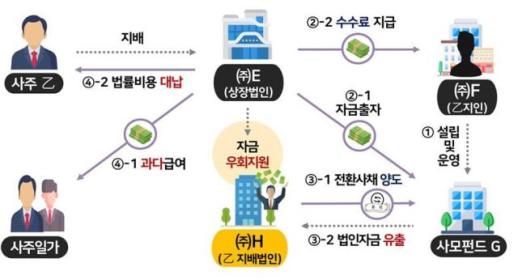 South Korea Tax Agency Probes 31 Firms for Stock Manipulation, Tunneling and Tax Evasion The National Tax Service has launched tax audits of 31 companies accused of unfair, tax-evasive practices in the stock market, including stock price manipulation and “tunneling,” a method of siphoning off assets and profits. The move marks a second round of audits following an investigation of 27 companies announced in July last year. The agency said it aims to curb unfair trading and help establish a “Korea premium.” The NTS said the targets include 11 companies that profited through stock manipulation and accounting fraud; 15 owner families accused of tunneling profits and assets out of companies; and five illegal “stock tip rooms” accused of swindling money from financially vulnerable investors. In the stock manipulation cases, the NTS said companies boosted share prices with false information and inflated performance, then offloaded their holdings onto small shareholders. Some also used accounting fraud, including issuing and receiving fake tax invoices to inflate sales and booking fictitious costs. The agency also cited cases in which listed-company funds were diverted for private use, including transferring corporate assets to a CEO for free or siphoning off tens of billions of won disguised as loans. More than half of the listed firms under audit have had trading suspended after external auditors refused to issue audit opinions, the NTS said. In some cases, share prices plunged to as little as one-tenth of prior levels, it said, deepening investor losses. In tunneling cases, the NTS said the methods have grown more sophisticated. It cited repeated instances of steering business to owner-controlled or related companies, or inserting them into supply chains to collect what it described as “toll” profits. Some companies allegedly paid personal legal fees and luxury purchases for controlling shareholders. Others invested hundreds of billions of won in funds managed by acquaintances with no investment experience, then routed the money to troubled companies controlled by the owners, the NTS said. The agency also said it found cases in which business opportunities or key assets were transferred to companies owned by controlling families, stripping future growth engines and leaving losses to small shareholders. The illegal tip-room operators allegedly lured investors with false or exaggerated ads such as “guaranteed high returns in a short period,” then dumped shares they had accumulated onto members to pocket trading gains. The NTS said they earned profits of tens of billions of won and evaded taxes by booking fake expenses. The NTS said such practices distort the allocation of corporate resources and erode investor trust, contributing to falling share prices and market disruption. It said it will closely verify those involved and the full scope of transactions through the audits. If it finds criminal conduct such as destruction of evidence or concealment of assets, the agency said it will file complaints with investigative authorities and seek criminal punishment. An NTS official said the agency will “firmly establish the understanding that not a single won can be gained from unfair trading in the stock market,” adding it will respond strictly so a “Korea premium” can take hold based on transparency and trust.* This article has been translated by AI. 2026-05-06 12:03:44
 -
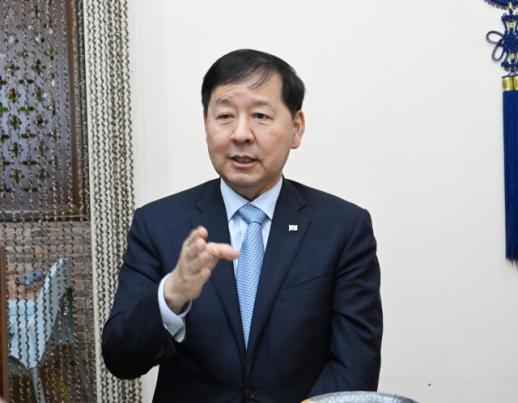 South Korea’s Koo Pyo-cheol vows to meet 2% growth target despite Middle East war risks Deputy Prime Minister and Minister of Economy and Finance Koo Pyo-cheol said South Korea will hold to its 2% economic growth target this year despite the prolonged Middle East war, which he said is adding uncertainty and inflation pressure. Koo made the remarks May 5 (local time) after attending the Asian Development Bank annual meeting in Samarkand, Uzbekistan, along with the ASEAN+3 finance ministers and central bank governors meeting. “Because the Middle East situation is changing a lot, it is practically difficult to forecast growth, and the impact is large,” Koo said. “But I want to say we will achieve the 2% (growth) we originally promised.” He added that investment banks’ forecasts are “much higher than 2%,” and said he told counterparts he would work closely with a new governor on policy cooperation to meet the goal. On inflation measures drawing attention amid high oil prices, including a “maximum oil price system,” Koo said decisions on whether to maintain or end the policy depend on how quickly the Middle East war situation changes. “The best policy is for the Middle East to move to a peace system,” he said. But with uncertainty and oil prices above $100, he said the government would need to respond with a combination of measures if prices stay elevated. Koo said the government would watch inflation closely, citing the risk of broader price increases stemming from higher fuel taxes and rising diesel and gasoline prices. He also said South Korea’s fiscal management and policy response are earning trust from international organizations. Koo said he met with the International Monetary Fund’s deputy managing director, who assessed South Korea as “doing very exemplary work.” Koo said the IMF official spoke highly of South Korea repaying 1 trillion won without issuing government bonds because tax revenue conditions were favorable. He also said the official noted that even as oil prices surged 50% in the United States, South Korea has managed the situation steadily through policy coordination. Asked about the possibility of a second supplementary budget, Koo was cautious. “Right now, we need to focus on executing the first supplementary budget,” he said, noting the government has already approved a 26.2 trillion won package and is prioritizing rapid implementation. He added that with the main budget near 730 trillion won, the focus is also on executing that spending. On exchange-rate volatility, Koo said it is not appropriate to comment on specific levels because the market sets the rate. Still, he said the key factor for the exchange rate, inflation and growth is how quickly the Middle East war stabilizes. If volatility persists, Koo said the government would respond actively with a policy mix and work closely with the Bank of Korea, the Financial Services Commission and the Office of Planning and Budget to prevent economic instability. On the possibility of a currency swap with the United States, Koo said external changes, including a change in the Federal Reserve chair, mean the issue should be reviewed comprehensively, signaling a cautious stance. 2026-05-06 12:03:21
 -
 South Korea Seeks Proposals to Expand Open Quantum Testbed for Next-Gen Networks The Ministry of Science and ICT said Tuesday it will seek proposals for an “open quantum testbed upgrade and expansion project” to strengthen next-generation communications infrastructure for the AI and quantum era and accelerate the spread of quantum communications technology. The open quantum testbed is a core demonstration platform aimed at commercializing quantum cryptography communications and expanding related industries. Since 2024, the government has built and operated a quantum cryptography communications network and measurement equipment used to issue test reports along the Seoul-Pangyo-Daejeon corridor. The call for proposals follows the “First Comprehensive Plan to Foster Quantum Science and Technology and the Quantum Industry,” announced in January. The ministry said it aims to expand the testbed from the Seoul-to-Daejeon route to a nationwide scale, while also building infrastructure that includes overseas connections and efforts to secure next-generation technologies. Eligible applicants are consortia that include major telecommunications operators. The support period runs through 2028, for a total of three years. The ministry began a preliminary notice Tuesday and said full project work is expected to start in July. The project will be pursued across three segments: commercial hubs, overseas hubs and future hubs. Commercial hubs will focus on demonstrating quantum cryptography communications services in real network environments and verifying commercialization using low-cost, compact QKD equipment. Overseas hubs will build international links connected to foreign quantum testbeds to verify interoperability of quantum communications technologies between countries and lay the groundwork for global technical cooperation. Future hubs will focus on building test environments for next-generation communications technologies, including satellite and wireless QKD and quantum entanglement. Kim Seong-su, director general for research and development policy at the ministry, said the project will upgrade the demonstration base for quantum cryptography communications and expand its use across a range of industries. He said the ministry will work to ensure quantum technology becomes core infrastructure supporting future industrial innovation. In January, the government said it would move beyond research and development to produce industrialization results under the comprehensive plan. The plan calls for training 10,000 quantum specialists and fostering 2,000 related companies by 2035, and for achieving the world’s No. 1 position in quantum chip manufacturing. To that end, the government is pursuing work centered on three areas — quantum computing, communications and sensors — including development of a full-stack quantum computer, construction of a nationwide quantum cryptography communications network, and commercialization of quantum biosensors. It is also moving ahead with establishing a joint research center in cooperation with U.S. company IonQ. * This article has been translated by AI. 2026-05-06 12:03:00
 -
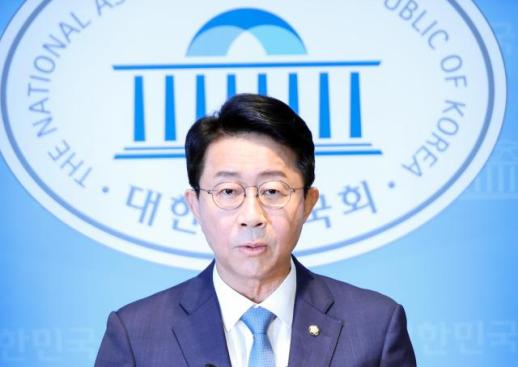 Rep. Cho Jung-sik Enters Democratic Party Race for National Assembly Speaker Democratic Party lawmaker Cho Jung-sik on May 4 announced his bid to become speaker in the second half of the National Assembly term. Cho has highlighted his recent work as a special adviser for political affairs in President Lee Jae-myung’s government, aiming to consolidate support among pro-Lee lawmakers and distinguish himself from rival lawmakers Kim Tae-nyeon and Park Jie-won. Some analysts say Cho could gain an edge in the party’s internal contest, often treated as the decisive race. However, a newly proposed special counsel bill on alleged “fabricated indictments” could become a variable. ■ Strengths(강점) Political circles say Cho’s ability to communicate smoothly with the government is a key strength. In his candidacy statement, he said, “As a National Assembly speaker from the ruling party with blue blood, I will help ensure the success of the people’s sovereignty government and lay a bridgehead for victory in the 23rd general election and the recapture of power.” After Cho resigned as special adviser on May 3, President Lee wrote on Facebook, “You worked hard. I sincerely thank you for always being with us.” Some interpreted the message as support for Cho’s speaker bid. Cho is now the Democratic Party’s only six-term lawmaker after Choo Mi-ae, a Gyeonggi governor candidate, resigned her seat to run. That gives Cho seniority over five-term rivals Kim and Park. Given past practice in which the most senior lawmaker often became speaker, some say Cho has a strong claim. Born in 1963, Cho is also younger than Park, who was born in 1942, a 21-year gap. Supporters say that could matter for a physically demanding post that can include marathon sessions such as filibusters. ■ Weaknesses(약점) Cho’s lower name recognition compared with Park is cited as a weakness. Park has ranked first in multiple opinion polls. This election will also be the first Democratic Party speaker race in which votes by dues-paying party members count for 20%. The rule was introduced after some hard-line supporters protested when Choo, seen as having the party leader’s backing in the 22nd first-half speaker race, lost to Speaker Woo Won-shik. If the party-member vote tracks opinion polls, it could work against Cho. ■ Opportunities(기회) Cho, known as a policy specialist in Seoul politics and a former chair of the party’s policy committee, can stress efficiency in core speaker duties such as coordinating floor schedules and putting bills on the agenda. He also served as party secretary-general during the first leadership under Lee, when Lee led the party, and played a role in nominations for the 22nd general election. Observers say that could help him secure support from many pro-Lee first-term lawmakers. Cho has framed the race as his third attempt — after the second half of the 21st Assembly and the first half of the 22nd — and as his final bid before ending his Yeouido political career. Some say that could build sentiment among colleagues to give him a chance this time. Often described as a moderate, Cho has also raised expectations for bipartisan cooperation. He has said he would be “a livelihood-focused speaker who respects cooperation between the ruling and opposition parties while making firm decisions on people’s lives.” ■ Threats(위협) The special counsel bill on alleged “fabricated indictments,” which has drawn controversy, could also affect Cho’s prospects. Shin Yul, a professor of political science and diplomacy at Myongji University, told Aju Business in a phone interview that “if the president’s approval rating falls due to the special counsel bill, it could affect Cho.” Cho has said of the controversy, “It must be properly clarified through a special counsel.” The Democratic Party proposed the bill after wrapping up work on April 30 by a special committee for a parliamentary investigation into the allegations. Disagreements emerged within the party over a provision that would have the special counsel maintain prosecutions in cases transferred to it. There has also been uncertainty over timing. President Lee said on May 4 he would leave the decision to the party, while party leader Jung Cheong-rae said May 5 he would consult with the presidential office. As the People Power Party attacks the measure as a “special counsel to erase the president’s crimes,” observers say it cannot be ruled out that President Lee’s approval rating could swing. 2026-05-06 11:57:18
 -
 HMM’s NAMU Ship to Reach Dubai as Soon as May 7; Fire Probe to Begin HMM’s heavy-lift vessel NAMU, which was disabled by an explosion and fire near the Strait of Hormuz, is expected to be towed to Dubai in the United Arab Emirates as soon as May 7, where investigators will begin examining the cause and the ship will undergo repairs. Shipping industry officials said May 6 that HMM has secured tugboats for the operation and will start full-scale towing late in the afternoon. If the tow proceeds without problems, the ship is expected to reach Dubai port late May 7 or early May 8. HMM has already dispatched an investigation team to the area and plans to send additional personnel timed to the ship’s arrival. A company official said that once the vessel is berthed in Dubai, a government investigation team and outside experts will be brought in to determine the exact cause and assess the extent of damage. The fire broke out at about 8:40 p.m. on May 4 (Korea time) on the port side of the engine room while the Panama-flagged ship, operated by HMM, was anchored north of Sharjah in UAE waters inside the Strait of Hormuz. There were 24 crew members aboard — six South Koreans and 18 foreign nationals — and no injuries were reported. Five HMM-operated vessels are currently stuck inside the Persian Gulf, within the Strait of Hormuz: two crude oil and petroleum product carriers, two bulk carriers and one container ship. The NAMU is a bulk carrier.* This article has been translated by AI. 2026-05-06 11:54:15
 -
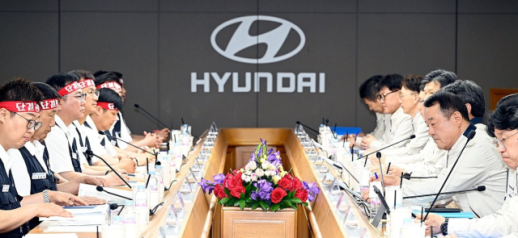 Hyundai Motor union seeks bonus equal to 30% of net profit as wage talks begin Hyundai Motor Co. labor and management opened this year’s wage negotiations with an initial meeting at the company’s Ulsan plant. Yonhap reported on the 6th that about 60 people attended, including Hyundai Motor CEO Choi Young-il, Korean Metal Workers’ Union Chairman Park Sang-man and Lee Jong-cheol, head of the union’s Hyundai Motor branch. The two sides exchanged greetings and discussed the direction and schedule for this year’s talks. The union has already sent management its demands, including a 149,600 won increase in monthly base pay (excluding seniority-based step increases) and a performance bonus equal to 30% of last year’s net profit. It also called for guarantees on jobs and working conditions related to artificial intelligence. Other demands include adopting a full monthly salary system, raising bonuses from 750% to 800%, shortening working hours without increasing work intensity, extending the retirement age in line with the start of National Pension benefits (up to 65), and hiring additional workers. A tough bargaining process is expected again this year. Last year’s talks ended after the union staged three partial strikes. The agreement included a 100,000 won increase in monthly base pay (including step increases), a performance bonus of 450% plus 15.8 million won, 30 shares of stock and 200,000 won in traditional market gift certificates. * This article has been translated by AI. 2026-05-06 11:43:46
 -
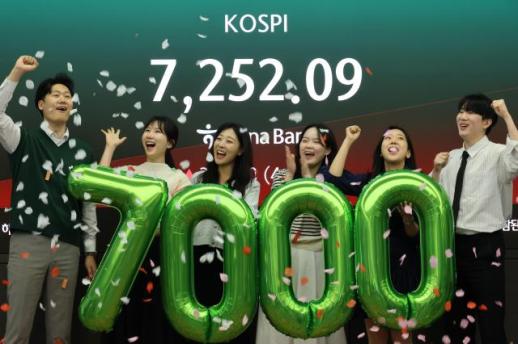 KOSPI Breaks 7,000 for First Time as Rally Broadens Beyond Semiconductors South Korea’s stock market has entered the “7,000 KOSPI” era. The benchmark KOSPI’s first-ever move above 7,000 is more than a round-number milestone, signaling a shift from the long-running “box market” that had weighed on sentiment. The advance comes despite concerns over foreign outflows, geopolitical risks and low-growth worries, suggesting investors are reassessing the market. Semiconductors have led the rally. Surging demand for AI chips, centered on Samsung Electronics and SK hynix, has lifted the broader market. A global tech-stock run and record highs in U.S. equities have also boosted expectations for Korean chipmakers’ earnings. Some market analysts say that even at current levels, the stocks still look undervalued given the pace of profit growth expected at Samsung Electronics and SK hynix. Still, framing the move as only a “semiconductor market” misses a key point: gains have spread to defense, shipbuilding, power, machinery and securities firms. Rather than a spike confined to one sector, the market is increasingly reflecting expectations of broader profit improvement. Market participants also point to the KOSPI’s market capitalization topping 6,000 trillion won for the first time and to a sharp rise in its global market-cap ranking. A major change is the debate over the “Korea discount.” South Korean equities have long been marked down for geopolitical risk, limited shareholder returns and opaque governance. Recently, the government and political circles have pushed capital-market revitalization and “value-up” policies, helping shift sentiment. The Lee Jae-myung government has also promoted capital-market advancement as a key economic task beyond the “KOSPI 5,000” goal. Many analysts say the recent surge reflects a mix of policy expectations and expanding global liquidity. But a higher index does not automatically mean a stronger economy. If the gap between the real economy and stock prices widens too far, markets can quickly become vulnerable to sharp swings. A recent jump in international oil prices, Middle East risks and fears of a slowdown remain ongoing. Some analyses also say economic sentiment indicators are falling and that conditions felt by households and businesses have not clearly improved. South Korean stocks have repeatedly surged and then fallen. Excessive margin trading by retail investors and short-term momentum buying have often amplified shocks. The rapid increase in market-side funds and margin loans is another warning sign. The longer the rally lasts, the more discipline investors need. Markets do not rise forever on expectations alone; sustained gains require corporate earnings and industrial competitiveness. The government, too, should avoid complacency. It can be risky to present a market rise solely as a policy achievement, because markets can reverse quickly. The priority is not short-term index management but structural reforms that strengthen corporate competitiveness and raise trust in capital markets: improving regulatory predictability, reducing outdated practices that undermine shareholder value, and building conditions in which global investors can invest with confidence. Crossing 7,000 is a beginning, not an end. For South Korea to move toward a truly advanced capital market, the celebration of numbers must translate into structural change. A market that relies only on an AI-and-semiconductor boom may not last. Only with stronger industrial competitiveness, capital-market reform and better corporate governance can the “Korea discount” fade into history. 2026-05-06 11:36:21
 -
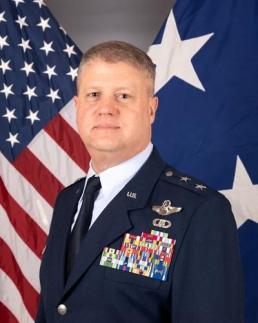 Pentagon Nominates Maj. Gen. David G. Shoemaker as USFK Deputy Commander The U.S. Defense Department has nominated Air Force Maj. Gen. David G. Shoemaker to serve as deputy commander of U.S. Forces Korea. In an announcement made May 5 local time, the Pentagon said Shoemaker would be promoted to lieutenant general and, if confirmed, would also take on the air component command roles for the U.N. Command and the South Korea-U.S. Combined Forces Command, as well as command of the 7th Air Force. Shoemaker is currently deputy commander of the 9th Air Force (Air Forces Central). According to his official Air Force biography, he oversees command and control of air operations and the development and execution of contingency plans in the U.S. Central Command area of responsibility. He has previously served in South Korea. From 2005 to 2006, Shoemaker was responsible for standardization and evaluation at the 8th Operations Group at Kunsan Air Base. From 2017 to 2018, he commanded the 8th Fighter Wing at Kunsan. The post is currently held by Lt. Gen. David R. Iverson, who concurrently serves as USFK deputy commander, air component commander for the U.N. Command and the Combined Forces Command, and commander of the 7th Air Force. The nomination has been announced, but Senate confirmation is still required.* This article has been translated by AI. 2026-05-06 11:29:19
 -
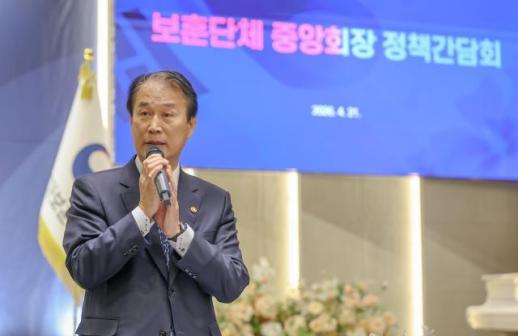 South Korea to Expand Compensation to Independence Activists’ Descendants “This revision reflects a strong commitment for the state to take responsibility to the end for the descendants of independence patriots who, because of the system’s limits over the past 53 years, have been left outside the scope of proper recognition,” said Kwon O-eul, minister of Patriots and Veterans Affairs. Kwon made the remarks as he explained the significance of a revision to the Act on the Honorable Treatment of Independence Patriots, approved Tuesday at a Cabinet meeting, that expands compensation eligibility for descendants of independence patriots. The revision is expected to be promulgated in May and take effect Jan. 1, 2027. About 2,300 additional descendants are expected to newly receive compensation payments. Under the system in place since 1973, compensation has been paid to a patriot’s spouse and children. If the patriot died before Korea’s liberation, compensation could also be paid to one grandchild. As a result, grandchildren of patriots who died after liberation were excluded, creating unequal eligibility based on the date of death. Under the revised law, that difference will be eliminated, and grandchildren will be eligible for compensation regardless of when the patriot died. Separately, when a patriot’s child dies without receiving compensation, payments have been made to one closest direct descendant. But for patriots recognized in recent years, compensation has often ended with a single generation of survivors, prompting criticism that the state was not meeting its responsibility. The revision also expands the definition of eligible survivors so that even when the first recipient is a direct descendant at the grandchild level or below, one child of that recipient will also be included, ensuring at least two generations can receive compensation. “The government will continue to do its utmost so that the descendants of independence patriots who sacrificed and devoted themselves for the nation’s independence can live with pride and honor,” Kwon said. The ministry also said it is cooperating on efforts to re-enact a Justice Ministry law, the Special Act on the State Vesting of Property of Pro-Japanese Collaborators, to expand honor and support programs for independence patriots and their descendants through active recovery and sale of pro-Japanese assets. * This article has been translated by AI. 2026-05-06 11:28:21
 -
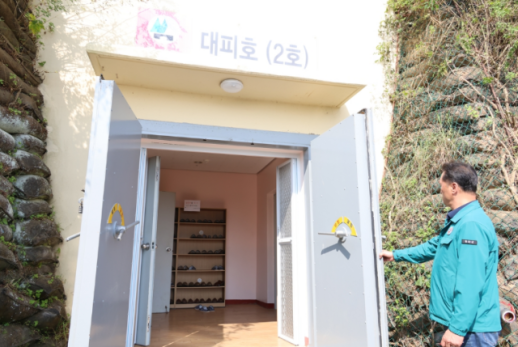 Special Counsel Team Inspects Yeonpyeong Island Military Sites Cited in Noh Sang-won Notebook A second comprehensive special counsel team investigating allegations of prior planning for the Dec. 3 martial law declaration began an on-site inspection of military facilities on Yeonpyeong Island to verify locations tied to alleged roundup and detention plans written in the so-called “Noh Sang-won notebook.” The special counsel team said it was conducting the inspection Tuesday at military sites on Yeonpyeong Island. Investigators are focusing on whether notes in the notebook referring to a “collection point” match actual facilities. They are also examining whether the sites have structures that could be used as detention facilities, according to reports. Assistant Special Counsel Kim Chi-heon told reporters Monday that the team had obtained and would execute a warrant to verify locations linked to the notebook. “The special counsel, the assistant special counsel and the investigative team will go together,” he said. Kim said the team first sought and received warrants from a judge in connection with what was written in the notebook. He declined to identify the inspection targets, citing security, but said there are existing facilities that could be seen as having enough space to be used for detention. The inspection is part of the special counsel’s broader effort to corroborate the notebook’s authenticity and how it was written. The team is also reviewing indications that the Defense Counterintelligence Command prepared for martial law from the first half of 2024, including site visits to military facilities and plans for troop operations. The notebook, kept by former Defense Intelligence Command chief Noh Sang-won, is reported to list prominent politicians, judges and civil society figures as “targets for roundup,” and to include terms such as “collection point,” “follow-up measures” and “discarded after use.” Some media outlets have reported suspicions that facilities on Yeonpyeong Island and in the Hwacheon area of Gangwon Province are connected to the locations described in the notebook. Aju Economy previously reported, citing a tip, that Noh also considered ways to eliminate agents deployed in a martial law operation, along with allegations tied to the “discarded after use” memo and the use of special operatives. The special counsel team has also reportedly secured statements during recent questioning that, shortly before martial law, a military intelligence unit checked the Yeonpyeong Island facility in advance. However, in February, the first-trial court in former President Yoon Suk Yeol’s case on charges of being the ringleader of an insurrection said it was difficult to determine when the notebook was written and that some parts do not match actual facts, limiting its evidentiary value. The special counsel team said it will continue to determine whether the notebook is connected to actual martial law preparations through the on-site inspection and additional witness statements.* This article has been translated by AI. 2026-05-06 11:27:06