
Journalist

Lee Hugh
=
-
 South Korea’s Content Industry Revenue Hits 161 Trillion Won in 2025, Up 2.6% South Korea’s content industry posted 161 trillion won in revenue last year, with growth led by music, knowledge information, comics and animation. According to the “2025 Q4 and Annual Content Industry Trends Analysis Report” published on the 30th by the Korea Creative Content Agency, 2025 annual revenue for the domestic content industry rose 2.6% from a year earlier to 161.4839 trillion won. By genre, music grew 15.8%, knowledge information 7.8%, comics 7.4% and animation 6.8%, the report said. The report analyzed 11 content genres, combining business surveys, management data from listed companies and basic industry statistics to outline changes in revenue, exports and employment. Exports in 2025 climbed 5.9% from the previous year to $14.90582 billion. Music (32.4%), film (19.9%) and character content (12.8%) led the increase. The music sector recorded strong growth on expanded overseas performances and wider global activity by K-pop artists. Film exports benefited from strong results for highly anticipated releases, while character content gained from rising overseas demand for Korean characters. By contrast, content solutions (down 10.3%), animation (down 7.6%) and publishing (down 3.1%) declined amid slower conditions in some overseas markets. Content companies also reported broad use of generative artificial intelligence. In the fourth quarter of 2025, the adoption rate was 32.1%, meaning about one in three companies used the technology. Among 810 adopters, 66.2% introduced it in some departments, while 33.8% deployed it companywide. By sector, adoption was highest in games (70.0%), followed by animation (51.6%), advertising (40.9%), knowledge information (33.7%), and broadcasting and video (31.9%). The most common use was content production (62.7%), followed by business planning (43.7%) and content creation (32.8%). Among companies that had not adopted generative AI, 16.6% said they plan to do so, suggesting further expansion. The report also covers genre-by-genre trends, listed-company performance, business sentiment among content firms and the broader macroeconomic environment. It is available on the agency’s website. * This article has been translated by AI. 2026-04-30 09:41:07
 -
 Doosan Robotics shares jump 14% on expectations of Nvidia collaboration Doosan Robotics surged more than 14% in early trading on Thursday as investors bet on potential cooperation with Nvidia. According to the Korea Exchange, shares of Doosan Robotics were trading at 116,600 won as of 9:15 a.m., up 14,400 won, or 14.09%, from the previous session. The rally appeared to be driven by news that Madison Huang, senior director of product marketing for Omniverse · Robotics and the eldest daughter of Nvidia CEO Jensen Huang, visited Doosan Robotics’ Innovation Center in Seongnam, Gyeonggi Province, the previous day. The two sides discussed technology cooperation in so-called physical artificial intelligence. Madison Huang met with Doosan Robotics CEO Kim Min-pyo to explore ways to integrate Nvidia’s AI and robotics ecosystem into intelligent robot solutions and the development of industrial humanoids. They also discussed linking Doosan Robotics’ robot execution software under development, the ‘agentic robot operating system,’ with Nvidia’s AI and robotics simulation and training infrastructure. The companies said they plan to pursue a robot execution platform that can be deployed at industrial sites. Doosan Robotics said its agentic robot operating system is designed to let AI recognize work environments, optimize movement paths and support precise tasks. The company is working to advance the system by building robot-AI interfaces, developing standard robot-control protocols, connecting specialized task models and applying technical guardrails for safety control. The company plans to roll out intelligent robot solutions using the agentic robot operating system in 2027, followed by an industrial humanoid product in 2028. It is also considering unveiling collaboration results with Nvidia at major exhibitions, including CES in 2027. * This article has been translated by AI. 2026-04-30 09:37:42
 -
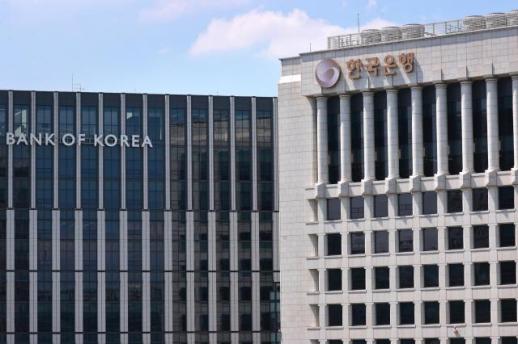 Bank of Korea Warns of Rising Uncertainty in Fed Policy Path, Vows Timely Response The Bank of Korea said uncertainty over the U.S. Federal Reserve’s monetary policy path has increased, prompting closer monitoring of financial markets. The central bank held a “market situation review meeting” on Thursday morning chaired by Senior Deputy Gov. Yoo Sang-dae to assess the latest Federal Open Market Committee outcome and developments tied to the Middle East war. “After last night’s FOMC meeting, views within the Fed were sharply divided, and inflation driven by higher oil prices was emphasized, further increasing uncertainty over the U.S. monetary policy path after the next Fed chair takes office,” Yoo said. He added that concerns are growing the Middle East war could be prolonged as U.S.-Iran talks face difficulties. “We will closely monitor how domestic and external risk factors develop and their impact on finance and the economy, and respond in a timely manner if necessary,” he said. The Fed said in a statement on April 29 (local time) that it decided, as markets expected, to keep its benchmark interest rate unchanged at 3.50% to 3.75%. Eight members supported the decision and four dissented, the statement said. The Fed raised its assessment of inflation and said uncertainty around the economic outlook had increased due to the Middle East situation. Chair Jerome Powell said at a news conference that signs of labor-market stabilization are spreading, but warned that inflation pressures have risen in the near term due to higher energy prices. In international financial markets, oil prices surged on concerns about the possibility of a prolonged U.S. blockade at sea against Iran. With the FOMC outcome viewed as hawkish, U.S. Treasury yields rose sharply and the dollar strengthened.* This article has been translated by AI. 2026-04-30 09:36:47
 -
 Actor Kim Jeong-tae Says He Had Liver Cancer Surgery, With 30% of Liver Removed Actor Kim Jeong-tae has disclosed that he underwent surgery for liver cancer. On a TV Chosun episode of "Dad and Me" that aired on the 29th, Kim was shown visiting a university hospital. "Liver problems run in my family, so I had liver cancer surgery," Kim said. He said the illness developed around October 2018 and that he had surgery in November. He said he was filming a drama at the time but felt something was wrong and took a blood test. "Normal liver numbers are between 30 and 40, but mine were over 900," he said, adding that he turned pale. Kim said the operation was difficult. He said it was expected to take three hours but lasted nearly eight, and that family members outside were distraught, recalling that his mother-in-law lay down on the floor in shock. Kim's wife said he appeared to have had about 30% of his liver removed. She said the tumor's location was "too bad," and that he stopped all work to focus on recovery. She also said he is a hepatitis B carrier through his mother's side of the family and that there is no cure. "He always has the virus that can cause liver cancer, so it's not an illness that can be completely cured," she said, adding that he is being monitored to prevent it from worsening. The attending doctor also urged regular follow-up, saying there is no way to prevent it and that it is best not to go more than six months between tests.* This article has been translated by AI. 2026-04-30 09:35:58
 -
 South Korea’s Kospi Extends Gains, Briefly Tops 6,750 Ahead of Holiday South Korea’s Kospi extended its advance on April 30, briefly topping the 6,750 level ahead of a holiday. As of 9:05 a.m., the Kospi was up 51.16 points, or 0.76%, at 6,742.06, according to the Korea Exchange. It opened up 48.49 points, or 0.72%, at 6,739.39 and climbed as high as 6,750 during early trading. Overnight, U.S. stocks finished mixed. The Dow Jones Industrial Average fell 0.57% and the S&P 500 slipped 0.04%, while the Nasdaq composite rose 0.04%. Oil prices jumped. ICE June Brent crude rose 6.1% to $118.03 a barrel and touched $119.76 intraday, the highest since June 2022. NYMEX June WTI surged 6.95% to $106.88 a barrel. Seo Sang-young, an analyst at Kiwoom Securities, said U.S. stocks opened lower after oil spiked, with WTI moving above $107 a barrel, following comments by President Donald Trump that he would not lift a maritime blockade against Iran. He said semiconductor companies showed resilience after earnings reports, but the impact was limited as investors waited for results from major technology firms. In the Kospi market, foreigners were net buyers of 379.6 billion won, while individuals and institutions sold a net 184.1 billion won and 191.4 billion won, respectively. Among heavyweight shares, Samsung Electronics rose 1.55%, SK hynix gained 2.09%, Hyundai Motor added 0.27%, SK Square climbed 3.01%, Hanwha Aerospace rose 0.21% and Samsung Biologics advanced 0.41%. LG Energy Solution fell 1.48%, Doosan Enerbility slipped 0.77% and HD Hyundai Heavy Industries lost 0.43%. The Kosdaq was down 0.54 point, or 0.04%, at 1,219.72. It opened at 1,224.75 but gave up gains and turned lower. On the Kosdaq, individuals bought a net 266.6 billion won, while foreigners and institutions sold a net 178.3 billion won and 57.2 billion won, respectively. Rainbow Robotics rose 3.16% and Lino Industrial gained 4.01%. EcoPro fell 1.19%, EcoPro BM slipped 0.47%, Alteogen lost 1.18%, Samchundang Pharm dropped 3.16%, Kolon TissueGene fell 2.51%, HLB slipped 0.63%, ABL Bio lost 2.23% and LigaChem Biosciences fell 2.11%. Han Ji-young, an analyst at Kiwoom Securities, said local stocks were likely to see a split market between semiconductors and other sectors as investors weigh mixed factors, including the burden of higher oil prices, an April Federal Open Market Committee decision that held rates steady with a hawkish tone, after-hours strength in hyperscaler shares and a roughly 16% after-hours jump in Qualcomm.* This article has been translated by AI. 2026-04-30 09:34:34
 -
 Rep. Kwak Sang-eon says he won’t be defined only as Roh Moo-hyun’s son-in-law Rep. Kwak Sang-eon of the Democratic Party has long been known by a single label: the son-in-law of late President Roh Moo-hyun. In an interview, he did not dodge the weight of that association. “I lived as Kwak Sang-eon, but the world often saw me as President Roh’s son-in-law,” he said. Kwak said that experience taught him, firsthand, what political power owes the public and left him with compassion for other people’s lives. But in the interview, Kwak presented himself as more than “Roh’s family.” A first-term lawmaker representing Seoul’s Jongno district, he spoke at length about balancing growth and distribution, the roles of markets and the state, industrial strategy in the age of artificial intelligence, the outflow of talent and political conduct. His tone was measured, emphasizing institutions and trust over slogans. The word he returned to most was “institutions.” Asked what matters most for national competitiveness in the AI era, he said: “If I have to pick one, it’s institutions.” Technology and talent matter, he said, but without fair and transparent rules, technology will not be used well and people will leave. For him, institutions are the foundation of trust that lets companies invest, young people work and researchers take risks. Kwak called AI a foundational industry that could shape South Korea’s next 10 years — and even the next 100. Still, he warned against treating AI as an all-purpose solution. AI, he said, is not a stand-alone sector but a base technology that supports other industries and matters only if it strengthens the conditions of everyday life. He also said the country should not tolerate monopolies, information distortion or other market failures as AI expands. Asked about his political ambitions, he said he would “turn possibility into the present.” He added: “Not with loose and provocative actions or language, but with restrained language,” and said he would make political choices with an undistorted view rather than a one-sided perspective. The following are excerpts from a Q&A with Kwak. - South Korea faces overlapping crises in politics, the economy and diplomacy. What kind of leadership is needed? “South Korea’s crises are countless — economic, diplomatic and social — and they are intertwined,” he said, citing slowing growth, rising prices and exchange rates, real estate and household debt, as well as trade, supply chains and technology competition. He also pointed to low birthrates and an aging population. He said leaders must set direction by listening to experts, judging what serves the national interest and protects people’s lives, and explaining what can and cannot be compromised before making decisions. “That’s how trust builds,” he said, adding that speed alone does not make a decision good or bad; what matters is a process the public can accept. - How do you view the balance between growth and distribution? “Growth and distribution are not contradictory or a choice,” he said. “There is no country with only distribution, and no country with only growth. Distribution without growth cannot be sustained, and growth without distribution collapses a country, so it cannot be sustained.” He said the issue is whether the gains from growth concentrate among a few and how those gains are shared — through social investment and safety nets such as education, housing and health care, or through simple transfers. “I see growth as distribution in practice, and distribution as driving growth,” he said, arguing that the method of distribution can raise or slow growth. “Less regulation is better, but necessary regulation must be done” - Where do you stand on government intervention in markets? Kwak said the answer depends on the industry and the degree of public interest. Government cannot do everything, he said, and its basic role is to create conditions for companies to compete and individuals to be protected — a free and fair market with rational regulation. “Basically, less regulation is better,” he said, but added that does not mean regulation should be avoided. He said the state should intervene when markets fail or when actions undermine community order, warning that leaving markets alone can entrench the strong. In areas where market failure is expected or severe, or where public interest is high, he said, government involvement should be greater. - Should the state take a leading role in AI industrial policy? He said some fields require national decisions despite uncertainty, and that South Korea is at a point where it must decide whether its industrial future will be reorganized around AI or remain centered on existing industries. In that moment, he said, the state should lead by building an industrial base and training talent. If South Korea’s investment share lags other countries, he said, it should be adjusted, including the amount invested. He cautioned that public spending must be scrutinized in advance and verified afterward, stressing the need for trust in budget execution. But he warned that in the AI era, falling behind by a day can become a month, and a month can become years. “The state should not be a spectator,” he said. - Of technology, institutions and talent, what comes first? “If I have to choose one, I choose institutions,” he said. Fair institutions create opportunity and transparent institutions enable investment, he said, while trusted institutions allow companies to invest and researchers to keep working. If institutions collapse, he said, technology will concentrate among a few and talent will lose the ability and motivation to continue. He also rejected a narrow definition of talent as a handful of elites. National competitiveness, he said, is the capacity of society as a whole, cultivated through education — a view he said is closely tied to institutions. - Some say thousands of KAIST-trained people work in Silicon Valley. Is that also an institutional issue? He said people move their lives for reasons tied to different systems. Whether they can use their abilities, gather the rewards and use those rewards for themselves and their communities depends on the institutional foundation, he said. - What strategic industry must South Korea choose for the next decade? Kwak said politics must create conditions for people to survive and improve those conditions through institutions. To identify a core industry, he said, policymakers should consider which sector can expand jobs broadly, raise productivity and secure technological sovereignty. He said modern society is driven by technological innovation and talent development, and that South Korea should choose an industry with broad spillover effects that spreads technology and knowledge widely. “At present, that industry has to be AI,” he said, calling it a foundation that can drive growth across other sectors. He said the country must train AI talent and find ways to integrate AI across industry. He again warned against technological determinism, saying AI is a means, not an end. If there were no other industries, he said, AI would be useless. He said he hopes AI helps strengthen the basics of life — clothing, food and shelter — so that it serves people. - The United States and China are investing heavily in AI, but South Korea is criticized for weaker investment. What should be done? He said the state should lead more in areas with high public interest because building foundations is required. If South Korea lags other countries in investment share or volume, he said, it should adjust both. But he said AI’s rise will also bring market failures such as monopolies. Even now, he said, while many AI programs exist, public use is concentrated in a few, creating risks of information distortion and unfair trade. In such cases, he said, the state should intervene strongly to correct the market. “We must not leave market failure unattended,” he said. - What do you see as your strengths and weaknesses as a politician? He called it a difficult question and said others could judge better. Still, he said his strength is that he has learned through experience what political power should do for the state and the public. Though new to the National Assembly, he said he has been in political news coverage for more than 20 years because of his relationship to Roh. He said he shared both praise and criticism directed at Roh, and said he was subjected to long-term surveillance by the National Intelligence Service. Through that, he said, he came to understand how power treats people and developed compassion for others. “A 10-year electricity-rate lawsuit — I didn’t avoid the work given to me” Kwak said he worked as a lawyer for about 20 years before entering politics and pursued public-interest cases for long periods. He said he handled an electricity-rate case for nearly 10 years without compensation, paying out of pocket. He said he tends not to avoid work assigned to him and tries to put the community’s interest ahead of his own, even if it brings criticism or misunderstanding. - You are being watched as a next-generation leader. What path do you want to take? He called the description excessive but said he would try to become such a leader by turning possibility into reality. He said he would do so with restrained language and an undistorted perspective, and that he would serve the public. Recalling something he wrote years ago, he said people may think the world belongs to them at birth, but in fact nothing is truly theirs; roles and authority are entrusted. He said politicians must recognize that authority is delegated responsibility, not personal property, and that leaders should give people hope and act in line with it. Kwak is a 22nd National Assembly lawmaker representing Seoul’s Jongno district. A member of the Democratic Party, he serves on the Special Committee on Budget and Accounts and the Climate, Energy, Environment and Labor Committee. Born in Seoul in 1971, he graduated from Seoul National University with a degree in international economics, passed the bar exam and worked as a lawyer. Before entering politics, he became known for long-running public-interest litigation, including a lawsuit over the progressive household electricity-rate system. In the interview, he described Roh’s name not as a political halo but as a responsibility and burden. He said his core political language now centers on institutions and trust: balancing growth and distribution, respecting markets while preventing monopolies and market failures, and treating AI as a strategic foundation while demanding credible oversight of public spending. 2026-04-30 09:28:31
 -
 Hyundai Motor, Catch! Teenieping to Launch Youth Adventure 2026 Nexo Exhibit Hyundai Motor Co. said Wednesday it will hold its “Youth Adventure 2026” exhibition with the children’s franchise “Catch! Teenieping” as part of its marketing program aimed at young audiences. The exhibition will run from May 1 to Aug. 2 at Hyundai Motorstudio Goyang and Hyundai Motorstudio Busan. Built around Hyundai’s Nexo hydrogen fuel-cell vehicle, the program uses a Hyundai x Teenieping storyline and hands-on activities designed to help children learn about future energy and vehicles in an accessible way. A screening room will exclusively show a roughly 10-minute spin-off film, “Hachuping’s Hair-Raising Hydrogen Car Rescue Mission,” in which a Nexo created by Hyundai researcher character Sappunping is stolen and later recovered by racer Hachuping and friends. Hyundai released a trailer for the spin-off film on April 27 ahead of the exhibition’s opening. The company will also operate a “Hyundai x Teenieping Experience Zone,” offering edutainment content that follows the Teenieping story to explain how the Nexo works and includes a camping-themed activity. A separate merchandise area will offer 11 children’s items, including toys and car accessories. Hyundai said it also plans to display award-winning works from the 10th Hyundai Kids Motor Show, with six top-prize entries to be exhibited on the third floor of Hyundai Motorstudio Goyang. For Children’s Day, Hyundai will stage a “Catch! Teenieping Sing-Along Show” at Hyundai Motorstudio Goyang on May 5, featuring Teenieping characters performing songs and dance for children and families. “We will work to strengthen brand affinity with children, who are future potential customers, and to secure inspiration for next-generation innovation,” said Ji Seong-won, vice president and head of Hyundai’s Brand Marketing Division.* This article has been translated by AI. 2026-04-30 09:27:18
 -
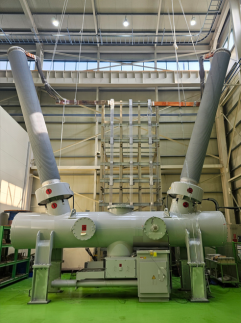 Hyosung Heavy Industries to Showcase AI Data Center Grid Solutions at IEEE PES T&D 2026 Hyosung Heavy Industries will present what it calls a “total solution” for power grids serving artificial intelligence data centers at the largest U.S. transmission and distribution exhibition. The company said Wednesday it will take part in IEEE PES T&D 2026, to be held May 4-7 (local time) in Chicago. The event will be held under the theme “Powering Reliability, Engineering Resilience.” Hyosung Heavy said it will showcase solutions linking today’s grid needs with future demand. Products highlighted include the world’s largest-capacity 800kV 7,000A GCB (gas-insulated circuit breaker); an SST (solid-state transformer) positioned as a core power solution for next-generation data centers; a voltage-source HVDC (high-voltage direct current transmission system) developed with what it said is the first domestically owned technology of its kind; and a STATCOM (static synchronous compensator) aimed at strengthening power stability for data centers and renewable energy. The 800kV 7,000A GCB to be displayed is a U.S. export-focused model developed in March. Hyosung Heavy said design optimization kept it the same size as its existing 5,000A product while enabling stable handling of 7,000A current. The company will also exhibit a submodule of its 22.9kV SST, which it said it developed first in the world and which is designed to significantly improve data center power efficiency. Hyosung Heavy said it plans to maximize competitiveness in established equipment such as extra-high-voltage transformers and circuit breakers as local power demand is expected to surge, while also promoting next-generation technologies including SST and HVDC to reinforce its position as a total-solution provider. “Through this exhibition, we will demonstrate to power-industry stakeholders that Hyosung Heavy Industries is the most reliable partner for building AI power grids,” a company official said. “We will combine the power-infrastructure technology we have accumulated with future-oriented solutions to lead a paradigm shift in the U.S. market.” Meanwhile, IEEE PES T&D is a global exhibition and conference hosted by the Institute of Electrical and Electronics Engineers and held every two years. More than 800 companies from around the world participate to share power-industry trends and solutions. * This article has been translated by AI. 2026-04-30 09:24:19
 -
 GM Korea bets on small SUVs while dismissing withdrawal rumors SEOUL, April 30 (AJP) - GM Korea has pledged to reinforce its Changwon plant as a global export hub, dismissing persistent rumors of a possible withdrawal from the South Korean market. The automaker has invested heavily in the plant, which has an annual capacity of up to 280,000 vehicles, betting on small SUVs as a core business to cement its position within GM and sustain its Korean operations over the long term. Vice president Asif Khatri, who oversees manufacturing across GM's global operations, said at a press briefing at the plant earlier this week that the automaker will continue improving its facilities to "keep up with strong demand," adding that combined cumulative production of its Trax and Trailblazer small SUVs has recently surpassed 2 million units. Both models were fully developed and produced in South Korea from initial design through manufacturing. The Trax has been built at the Changwon plant since 2023, while the Trailblazer has been produced at its Bupyeong plant in Incheon since 2020. When asked about speculation that GM could leave the South Korean market amid weak domestic sales, Khatri said he would respond with actions rather than words, saying that the plant is running "at full capacity to maximize output." GM Korea currently operates three production plants along with several facilities for engines, transmissions, and other components. Vice President Lee Dong-woo, who is in charge of the South Korean manufacturing operation, said, "Small SUVs could be among the last internal-combustion segments to remain in demand," keeping its plants busy to "keep up with demand." 2026-04-30 09:24:18
 -
 UPDATE: Samsung Electronics retains memory leadership amid AI boom in bumper Q1 * Updated with additional information SEOUL, April 30 (AJP) - Samsung Electronics retained its memory leadership in a bumper first quarter, generating its strongest three-month performance to beat expectations and local rival SK hynix, as the AI-driven gold rush fueled demand for both premium DRAM and flash memory, its final earnings report showed Thursday. The Device Solutions (DS) division set quarterly records for both top and bottom lines, earning 53.7 trillion won ($39.2 billion) in operating profit on revenue of 81.7 trillion won, translating into a stunning operating margin of 65.7 percent, albeit still short of SK hynix’s 71.5 percent. “The Memory Business surpassed its quarterly sales record by addressing high-value-added AI demand despite limited supply availability, with industry-wide memory price increases also a contributing factor,” the company said in a statement. The memory giant maintained an upbeat outlook for the second quarter and the rest of the year, citing continued enterprise adoption of AI, the expansion of agentic AI and its AI-centric sales strategy. The company, whose business spans chipmaking to smartphones and appliances, confirmed consolidated revenue of 133.9 trillion won, an all-time quarterly high, marking a 43 percent increase from the previous quarter. Operating profit also reached a record 57.2 trillion won, in line with its earlier guidance. To solidify its market dominance, Samsung stated it has begun the industry's first simultaneous mass production of HBM4 and next-generation low-power memory modules, dubbed SOCAMM2. It also plans to supply its first samples of HBM4E in the second quarter. The foundry business successfully secured orders from a major optical communication module provider, building a foundation for its silicon photonics operations. While semiconductors drove the bulk of the profits, the Device eXperience (DX) division, which oversees smartphones and home appliances, reported an operating profit of 3 trillion won on sales of 52.7 trillion won. The mobile business saw steady growth driven by robust sales of its flagship Galaxy S26 Ultra. Elsewhere, the display panel business posted an operating profit of 400 billion won, while Harman, Samsung's automotive electronics subsidiary, reported 200 billion won in profit amid an off-season for the audio market. The company invested a record 11.3 trillion won in research and development during the first quarter. A strong U.S. dollar against the Korean won also resulted in a positive impact of approximately 1.8 trillion won on the company's overall operating profit compared to the previous quarter. Looking ahead to the second quarter and the second half of the year, Samsung expects further earnings momentum in its semiconductor business. This will be driven by sustained AI infrastructure investments and an ongoing upward trend in memory prices. The company stated it will actively address the robust demand for server DRAM and enterprise SSDs while expanding its proportion of high-value AI memory products. Meanwhile, the DX division will focus on improving profitability by expanding sales of premium smartphones and AI-enabled home appliances, navigating potential headwinds from rising component costs and ongoing macroeconomic uncertainties. Shares of Samsung Electronics were trading flat at 226,000 won as of 9:50 a.m. in Seoul. The stock briefly touched an intraday high of 230,000 won in early morning trade following the record earnings report, but gave up its earlier gains as investors locked in profits ahead of the conference call. 2026-04-30 09:22:53