
Journalist

Lee Hugh
=
-
 Chinese Hot Pot, Malatang and Milk Tea Chains Rush Into South Korea Chinese-language food and beverage franchises are rapidly expanding their presence in South Korea’s dining market, with once-budget Chinese fare increasingly repositioned as trendy, premium spending through malatang, hot pot and milk tea. According to industry officials on April 29, Chinese milk tea brand Chagee plans to open stores simultaneously on April 30 in Gangnam, Sinchon and Yongsan. Chagee, which reinterprets traditional tea in a modern style, opened its first store in China’s Yunnan province in 2017 and has expanded quickly. It now operates about 7,000 stores across Greater China and in Malaysia, Thailand, Singapore, Indonesia, the Philippines, Vietnam and the United States. Other tea brands have already entered South Korea. Chinese milk tea brand Chabaidao entered in 2024 and is preparing to open its 28th store. Heytea, which arrived around the same time, has expanded from Apgujeong to major retail districts including Hongdae, Myeongdong and Garosu-gil. Milk tea brand Misher, which entered in 2022, operates 16 stores centered on university areas in Seoul. Meal-focused brands are also growing. Hot pot chain Haidilao, which entered South Korea in 2014 with its first store in Myeongdong, has expanded to locations including Jeju and Daegu and now directly operates 11 stores nationwide. Despite a per-person check of about 40,000 to 60,000 won, it has drawn strong interest among younger consumers, with waits of more than three hours reported. Its sales rose 50.9% to 117.7 billion won last year from 78.1 billion won a year earlier, topping 100 billion won. Operating profit nearly doubled to 20.2 billion won from 11.0 billion won. Malatang franchise Tanghua Kungfu, which arrived in 2013, had 560 stores as of March, becoming the first malatang brand in South Korea to surpass 500 outlets. Sales rose 14.6% last year to 25.4 billion won, and operating profit increased to 11.0 billion won from 10.5 billion won. Its operating margin was 43.5%. Analysts link the overseas push to slowing growth at home. China’s National Bureau of Statistics said 2024 restaurant revenue rose 5.3% from a year earlier to 5.5718 trillion yuan, a sharp slowdown from growth above 20% in 2023. With competition intensifying in the domestic market, brands that already run thousands of stores are increasingly looking abroad. South Korea is seen as an attractive target because of strong consumer purchasing power and the speed at which trends spread on social media, helping new brands gain traction. Industry officials also point to the deep penetration of Chinese e-commerce platforms such as AliExpress, Temu and Shein, which they say makes it easier to gauge Korean consumer preferences and data. “South Korea is a market with strong cultural influence,” a representative of a Chinese-language dining brand said. “Success in Korea is seen as a signal that a brand can work in global markets, so it is viewed as an important test bed.” Some warn the trend could add pressure to South Korea’s dining industry as competition intensifies amid weak domestic demand. The number of franchised food-service outlets in South Korea rose 1.5% last year to 183,714, while the franchise closure rate hit a record 15.8%. “Chinese franchises enter the Korean market with experience operating large-scale stores and strong cost competitiveness,” a South Korean dining franchise official said. “For domestic brands and self-employed owners, the competitive environment is bound to become even tougher.”* This article has been translated by AI. 2026-04-29 17:35:17
 -
 Nexen Tire Q1 Operating Profit Rises 33.1% to 54.2 Billion Won on Record Sales Nexen Tire said it posted record quarterly revenue despite slowing global demand, helped by stronger sales in Europe and the United States and a higher share of higher-margin products. In an earnings filing on April 29, the company said first-quarter operating profit rose 33.1% from a year earlier to 54.2 billion won. Revenue increased 8.7% to 838.3 billion won, the highest quarterly figure on record, it said. Net profit was estimated at 61.9 billion won, up 55.3% from a year earlier. Nexen Tire said solid sales in major markets including Europe and the U.S. lifted both revenue and operating profit. It said the sales mix shifted further toward higher-value products, including premium original equipment tires and tires for SUVs and electric vehicles. Tires of 18 inches and larger accounted for 40% of revenue, it said. The company also cited management efficiency efforts as improving overall profitability. During the first quarter, Nexen Tire launched its high-performance N'Fera Sport and all-weather N'Blue 4Season 2 in the domestic market after rolling them out in Europe and the U.S., targeting premium demand. In Latin America and the Asia-Pacific region, it introduced the N'Blue S, a high-efficiency summer tire, and said it is working with local distributors to strengthen retail competitiveness. It said it is seeing strong growth in key strategic markets such as Australia and Japan as it seeks to diversify its global sales structure. With external uncertainty expected to persist in the second quarter, Nexen Tire said it plans to continue efforts to strengthen its mid- to long-term growth foundation. "Despite an uncertain business environment, we delivered solid results," a company official said. "We will respond flexibly to market changes while continuing to strengthen product competitiveness and operational efficiency to sustain sound growth."* This article has been translated by AI. 2026-04-29 17:34:11
 -
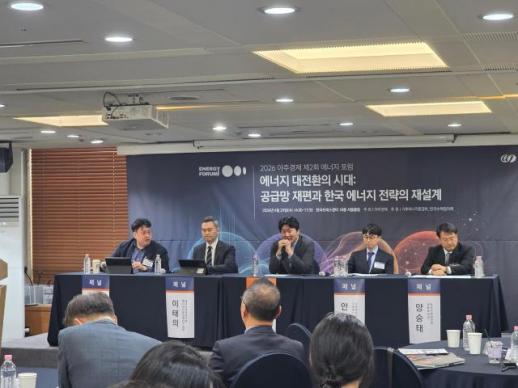 Experts urge balanced renewables-nuclear energy mix as supply chain risks grow Global geopolitical shifts and rising supply-chain risks are reshaping energy supply lines, prompting experts to call for a clear energy-mix strategy to secure South Korea’s stable power supply. Ajou Economy held the “2026 Ajou Economy Energy Forum” at the Press Center on the 29th and hosted a panel discussion on “Energy Mix Strategy for South Korea in the Era of Energy Security.” The session was moderated by Kim Hyeong-jun, a professor at KAIST’s Moon Soul Graduate School of Future Strategy. Panelists were Andre, a senior official in the Climate and Energy Policy Division at the Ministry of Climate, Energy and Environment; Lee Tae-ui, head of the Energy Security Policy Research Office at the Korea Energy Economics Institute; Yang Seung-tae, head of the Fuel Department at Korea Hydro & Nuclear Power; and Choi Deok-hwan, head of external cooperation at the Korea Wind Industry Association. Yang said nuclear power does not conflict with renewable energy, describing it as baseload generation that supports the national grid as renewables expand. He also said nuclear power’s cost advantages should be reflected in energy-mix policy. “Nuclear power produced about 31% to 32% of the nation’s electricity with an investment of 1.2 trillion won last year, and it is economical and highly resilient even if uranium prices rise,” Yang said. “We should make good use of nuclear power’s strengths to address issues such as renewables and transmission networks and move forward.” Andre pointed to expanding global supply-chain risks and urged policies that incorporate on-the-ground input to strengthen energy security. “After announcing the 2040 NDC last November, the recent Middle East war has brought a new perspective and many concerns about energy security,” he said. “To change the existing energy system, we need to consider not only production, consumption and distribution, but also the market tariff structure.” He added that the forum’s detailed discussions underscored the need for complex, multi-track solutions. Lee said countries must move quickly, warning that greenhouse gases already in the atmosphere will linger for centuries even if emissions are reduced. “The greenhouse gases on Earth have been here since 100 years ago,” Lee said. “Even if we cut emissions starting now, it could take hundreds of years for the greenhouse gases themselves to decline.” He added that cutting carbon emissions is difficult and requires major effort and time, and said countries should work aggressively to meet their Nationally Determined Contributions. Choi said economic hurdles must be overcome to maximize renewable energy use, warning that when regulatory deposits shrink, discussion of practical issues such as emissions permits and carbon reductions can fade. “When economic problems arise, the reality is that tools to respond to climate change, such as carbon reduction, are weakened,” Choi said. “Scope 3 greenhouse gases are not even being tracked in the current situation.” Choi also called for incentives for companies investing in renewables. “Right now, only state-run power generation companies are investing in renewables to score well in management evaluations,” he said. “We need to think about how to manage and revitalize this. Strengthening tax credits for companies that purchase renewable energy could also be an alternative.”* This article has been translated by AI. 2026-04-29 17:32:45
 -
 LG Electronics warns of further PC price hikes if memory prices keep surging Park Sang-ho, an executive director in charge of management planning at LG Electronics’ MS division, said on April 29 during an earnings conference call that a shortage of memory semiconductors and rising prices are pushing up costs across the PC industry. “For PC products, which have a high share of memory components, the entire industry is facing a heavy burden from sharply higher costs,” Park said. “We have already applied price increases of about 15% to 20%, but if memory prices continue to surge, additional increases appear unavoidable.” He said the impact remains limited for other product lines such as TVs and monitors. “Compared with PCs, TVs have a relatively lower share of memory, so the effects of supply shortages and price increases are limited,” Park said, adding that “aside from some smart monitor products, the impact of memory-driven price increases is minimal.” Park said the company is also pursuing a supply-chain stabilization strategy, citing what he described as an unexpected “super cycle” in the semiconductor market and the likelihood that supply constraints will persist for an extended period. He said LG Electronics is working closely with major memory makers to secure needed volumes and is taking steps including supply MOUs with key partners, diversifying suppliers, dual-sourcing parts and building advance inventory through close coordination with vendors. * This article has been translated by AI. 2026-04-29 17:26:41
 -
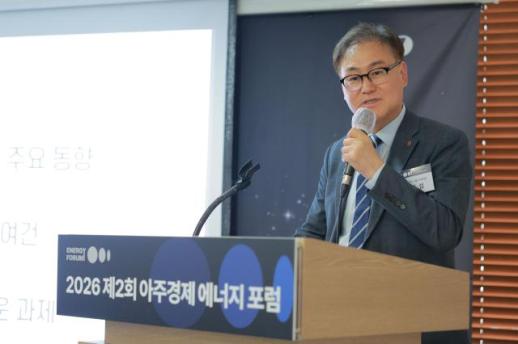 KEPCO official urges proactive grid buildout as AI power demand surges "To support the spread of artificial intelligence and the expansion of renewable energy, we need a paradigm shift so that a proactively built power grid leads demand and generation," Kwak Eun-seop, head of system planning at Korea Electric Power Corp., said Tuesday. Kwak made the remarks at the “2026 Ajunews Second Energy Forum,” held at the Korea Press Center in central Seoul and hosted by Ajunews. He said surging electricity demand from data centers is turning the grid from basic supply infrastructure into a key factor in national competitiveness. “The power grid is the critical link between carbon neutrality and energy security,” he said, adding that it should be treated as a power-system stability issue, not simply a connection problem. Kwak said power density at AI data centers is rising fast. He cited Nvidia GPU racks, saying their power use increased from about 13 kilowatts in 2020 to 130 kilowatts in 2025 and could expand to about 600 kilowatts. “The day is not far off when a single data center uses gigawatt-level power, comparable to one nuclear power plant unit,” he said. He also pointed to the burden of concentration in the Seoul metropolitan area. As of March, 598 of 853 new power-connection applications — 70% — were in the capital region. Yet the region’s recent energy self-sufficiency rate stands at just 0.61, meaning it must draw electricity from outside areas. Kwak said grid expansion is not keeping pace with demand. KEPCO estimates that building a 345-kilovolt transmission line typically takes 13 years. Data centers and renewable energy facilities can be built in two to three years, but transmission projects take far longer due to site selection, local acceptance, permits and construction. “Delays in building transmission networks are not unique to Korea; they are common overseas as well,” he said. “If we wait only for perfect transmission expansion, it will be difficult to keep up with the pace of rising AI and renewable-energy demand.” He said another major variable is how electricity is used. Unlike traditional industrial facilities, AI data centers can see power use swing sharply in milliseconds. “If loads of several hundred megawatts change abruptly, they can trigger voltage and frequency fluctuations and even system oscillations,” he said, warning it could strain equipment across the grid, including shorter transformer life and malfunctions in protective relays. Kwak said South Korea may be more vulnerable because its grid is an isolated system not connected to overseas networks. “Europe and North America can disperse some shocks through cross-border interconnections, but in Korea internal system stability is even more important,” he said. As responses, KEPCO proposed establishing grid-code standards for connecting large data centers, expanding flexible connections using energy storage systems, and introducing a virtual power line, or VPL. “Stronger technical standards are not regulation; they are to stably accommodate more data centers,” Kwak said. “We will work to make sure the expansion of AI and renewable energy is not blocked by making the most of the existing transmission network.” 2026-04-29 17:25:25
 -
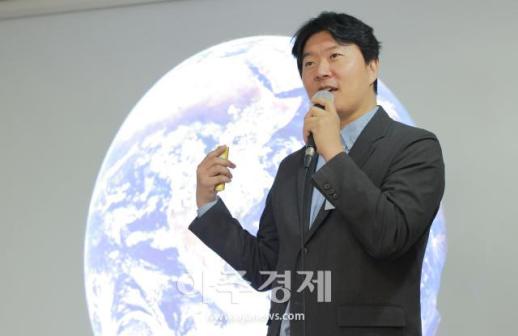 KAIST’s Kim Hyeongjun says energy sector is central driver of climate change “Because humanity has produced energy while developing society and the economy — and inevitably emitted greenhouse gases — the core cause of climate change lies in the energy sector. To solve it, we have to break one of the links in the chain somewhere along the way.” Kim Hyeongjun, a chair professor at KAIST’s Moon Soul Graduate School of Future Strategy and Department of AI Futures Studies, made the remarks Tuesday while delivering a lecture titled “The Climate Crisis, Energy Security and South Korea” at the 2026 Aju Economic Daily 2nd Energy Forum, held at the Korea Press Center in central Seoul. Kim divided climate response strategies into “mitigation” and “adaptation.” He described mitigation as cutting carbon dioxide and other greenhouse gas emissions through measures such as carbon neutrality, and adaptation as reducing damage as climate change progresses. In energy policy, he said, mitigation is the central pillar, including lowering emissions by improving energy efficiency. He said climate change is also expanding the ways it shocks the energy industry, pointing to the interdependence of energy and water. About 10% of the world’s water use, he said, goes to cooling during energy production. “When heat waves hit, cooling becomes less efficient and more water is needed. When droughts occur, it means not only hydropower but also nuclear and thermal plants that require cooling are affected,” Kim said, adding that Europe has already seen cases where droughts forced power plants to halt operations. “With climate risk now directly tied to the stability of energy supply, energy and water are a structure that cannot be viewed separately,” he said. Kim also highlighted the growing link between energy and carbon. Of the roughly 50 gigawatts of carbon humanity emits each year, he said, about 37 to 40 gigawatts come from the energy sector — one factor behind compound disasters driven by climate change. He said renewable energy also interacts with climate. As an example, he said solar power panels, because they are dark, absorb heat and can raise local temperatures; that can create updrafts that form clouds and bring rain, promoting plant growth. On the demand side, Kim said pressure is rising as electricity use increases, driven by higher cooling demand during heat waves. He said that trend is being compounded by data centers, shifts in industrial structure tied to artificial intelligence, and electrification policies, pushing power demand higher each year. At the same time, he said, climate change is increasing uncertainty on the supply side and threatening the stability of the overall energy system. In South Korea, he noted, thermal power plants are concentrated along the west coast, where rising seawater temperatures could reduce cooling efficiency — a case in which climate change driven by energy use feeds back into energy production. “Energy is no longer a problem of a single industry but a complex systems problem, and if we do not respond from an integrated perspective, the crisis will grow,” Kim said. “Climate action is not a cost but an investment. If we curb warming, we can reduce massive economic damage.” Citing the case of the ozone hole over Antarctica being closed, he added that “the energy transition is not a burden but a new opportunity,” and called for an active response strategy. 2026-04-29 17:24:18
 -
 US Targets Iran’s ‘Shadow Banking’ Network With Sanctions on 35 People, Firms The United States is stepping up economic pressure on Iran by expanding sanctions aimed at what it calls a “shadow banking” network that Washington says serves as a funding lifeline for Iran’s military, as talks on ending the war remain stalled. Reuters reported that the Treasury Department’s Office of Foreign Assets Control said Monday it had designated 35 individuals and companies for their alleged involvement in sanctions evasion and terrorism financing. OFAC said the targets helped Iran’s military — including the Islamic Revolutionary Guard Corps — gain access to the international financial system to collect proceeds from illicit oil sales, procure sensitive components needed for missiles and other weapons systems, and transfer funds to regional proxy forces. Those designated include private companies known as “Ravar” that worked with banks including Sina Bank, which the report said is controlled by Iran’s supreme leader; the military-linked Sepah Bank; and Shahr Bank, which was involved in oil sales. Iran’s banks, cut off from Western financial networks, have used such private networks to run thousands of shell companies abroad to process payments, the report said. Treasury Secretary Scott Bessent said in a statement that Iran’s shadow financial system is “a critical financial lifeline” for the military and enables activities that disrupt global trade and fuel violence across the Middle East. He said illicit funds moving through the network support Iran’s “ongoing terrorist operations” and pose a direct threat to the United States, regional allies and the global economy. The Treasury Department also warned that financial institutions dealing with China’s small independent “teapot” refineries could face sanctions, citing concerns that the refineries pay Iran transit fees to pass through the Strait of Hormuz. Bessent wrote on social media platform X earlier Monday that the Treasury Department, through an “Economic Fury” operation, targeted Iran’s international shadow financial infrastructure and access routes to cryptocurrency, the so-called “shadow fleet,” weapons procurement networks, funding channels for regional proxy forces, and China’s independent “teapot” refineries that support Iran’s oil trade. He said the measures blocked “tens of billions of dollars” in revenue that could be used for terrorism, and added that under the president’s “maximum pressure” policy, prices in Tehran have doubled and the currency has sharply weakened. Bessent also said Iran’s main crude export terminal on Kharg Island is expected to near its storage capacity limit, forcing Iran to cut oil production. He said that could lead to additional revenue losses of about $170 million a day and cause permanent damage to Iran’s oil infrastructure. He said the Treasury Department would continue maximum pressure and warned that individuals, ships and institutions that help illicit funds flow to Tehran risk U.S. sanctions. Bessent had also warned the previous day that sanctions could be imposed on individuals or companies that do business with an Iranian airline already under U.S. sanctions.* This article has been translated by AI. 2026-04-29 17:22:33
 -
 South Korea Trains 10 UAE Presidential Guard Officers in Four-Week Protection Course The Presidential Security Service said it provided four weeks of commissioned training for 10 protection officers from the UAE Presidential Guard Command, running from late last month through April 24. The service said on April 29 the program was held at its Security and Safety Training Institute in Seoul’s Gangseo District and other sites. It said the curriculum was tailored to UAE requests while incorporating the agency’s protection capabilities. Weeks 1 and 2 covered protection theory and core skills, while weeks 3 and 4 focused on advanced training and response drills. The Presidential Security Service and the UAE Presidential Guard Command have conducted commissioned training 14 times since 2010, the service said, building a close cooperation framework. Including those sessions, the institute has provided 55 commissioned training programs since 2006 for overseas protection agencies, including those from Uzbekistan, Cambodia, Qatar, Kuwait, Vietnam, Indonesia, Jordan, Russia and Mongolia, it said. A UAE Presidential Guard Command official said, “We express our deep gratitude to the Presidential Security Service for providing an excellent course through systematic planning and high-quality operation.” The official added, “Based on the cooperation and exchanges of experience built so far, we hope the scope of cooperation between the two countries’ protection agencies will further expand and develop.” PSS Chief Hwang In-kwon said the UAE is a key partner that has a “special strategic partnership” with South Korea, and he hoped the training would further strengthen security cooperation. He said the service would continue “protection diplomacy” by sharing “K-security” capabilities to help build trust between countries. * This article has been translated by AI. 2026-04-29 17:21:39
 -
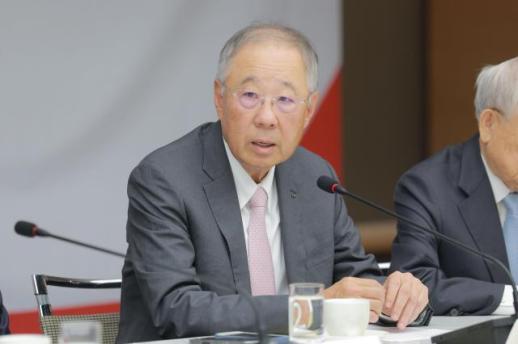 FKI Chairman Ryu Jin Says Two-Thirds of Top 10 Groups’ New Hires Will Be Entry-Level Ryu Jin, chairman of the Federation of Korean Industries, said on the 29th that he would help address youth employment as young people struggle to find jobs. Speaking at the 2026 Korea Shared Growth Job Fair, Ryu said the country’s 10 largest business groups plan to hire a total of 52,000 people this year, up 2,500 from last year. He said about two-thirds of those hires will be entry-level young workers. In congratulatory remarks, Ryu said it is time for the government and companies to act as “one team” to craft solutions for youth employment. “The global job market is being shaken by the AI revolution and industrial restructuring,” he said, adding that new hiring has already fallen sharply in some fields. He said conditions at home are also difficult. “Recent employment indicators show total employment increased, but youth employment fell by about 140,000,” he said, adding that young people’s perceived job conditions remain worsening. Ryu called the joint response by the government and the business community an appropriate step. He said the job fair is the largest ever, with seven business groups, seven government agencies, 15 conglomerate groups and 700 companies taking part, calling it a venue that offers young people practical opportunities. He also pointed to shifting corporate views, saying a survey of the top 500 companies found more than 70% said hiring should be expanded regardless of economic conditions. “The business community will work with the government to build a foundation where young people can pursue their dreams,” Ryu said. “We will keep working to the end for a Korea where young people can smile.”* This article has been translated by AI. 2026-04-29 17:21:00
 -
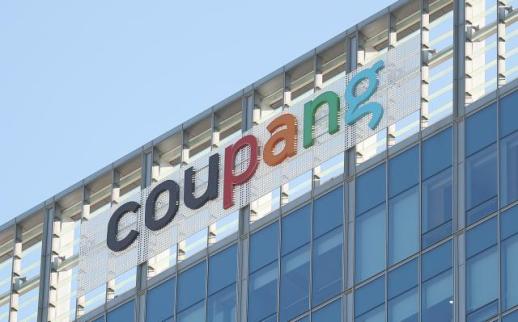 South Korea names Coupang founder Bom Kim as controlling shareholder for antitrust rules South Korea’s antitrust regulator has designated Coupang Inc. Chairman Bom Kim as the company’s “same person,” a status used to identify the controlling figure of a large business group. The Fair Trade Commission said it concluded Kim’s brother, Coupang Vice President Youseok Kim, effectively participated in management and exercised influence, triggering disclosure and other obligations under the Fair Trade Act. The commission said Tuesday it will change Coupang’s designation from the “Coupang corporation” to Chairman Kim. Since Coupang was classified as a large business group in 2021, Kim had avoided being named the “same person,” citing his U.S. citizenship and the absence of relatives in management. However, after it became known last year that his brother was serving as a Coupang vice president, critics said Kim should be designated. Ahead of this year’s decision, the FTC conducted an on-site inspection of Coupang. The FTC said it determined Coupang did not meet the enforcement decree’s exception conditions for “same person” designation. It said the vice president’s position was at the top tier within Coupang, comparable to the level of chief executive officers at major affiliates. Choi Jang-gwan, director general of the FTC’s Corporate Group Supervision Bureau, said at a briefing that the vice president’s annual pay was in line with the average for registered executives at the same level and that he received treatment comparable to registered executives, including an assigned secretary. Choi said the vice president hosted “hundreds” of regular and ad hoc meetings on logistics and delivery policy and “in effect” influenced specific directions for executing work on major businesses. With Kim designated, Coupang must disclose overseas affiliates in which relatives and other related parties hold stakes above a certain level. The designation also brings a ban on unfairly providing benefits to related parties. If an overseas affiliate directly or indirectly holds shares in a domestic affiliate, Coupang must disclose the “same person’s” shareholding status in the overseas affiliate. Some have argued the FTC’s standards for making such designations have shifted from the past. Choi said large business group designations are based on materials submitted by companies, with after-the-fact accountability when problems such as false submissions are found. He said issues were raised during a Coupang hearing and a report was filed on the vice president’s management participation, leading the FTC to identify matters it had not previously found. The FTC also said the “same person” designation changed for Jungheung Construction, from Chairman Chang-sun Jung to his eldest son, Vice Chairman Won-ju Jung, following the chairman’s death. Dunamu remained designated as a “corporation” because it met exception conditions under the enforcement decree. The FTC said it designated 102 business groups with total assets of 5 trillion won or more — comprising 3,538 affiliated companies — as large business groups. It said the number of large business groups increased from last year’s 92. Newly designated groups include Line, the Korea Teachers’ Credit Union, Woongjin, Shieldus, Daemyung Chemical, Toss, Kolmar Korea, Heesung, Orion, QCP Group and Iljin Global, the FTC said. Youngone was excluded after its total assets fell. Among large business groups, 47 with total assets of 12 trillion won or more — equal to 0.5% of the latest confirmed nominal gross domestic product figure of 2,408.7 trillion won — were designated as cross-shareholding-restricted groups, up one from last year. Kyobo Life Insurance and Daou Kiwoom were upgraded to that category, while E-Land was downgraded to a large business group.* This article has been translated by AI. 2026-04-29 17:20:08