
Journalist

Lee Hugh
=
-
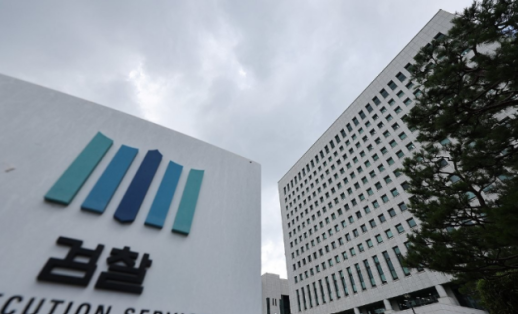 Major Crimes Investigation Agency Task Force to Start Work April 30; HQ Lease Considered A governmentwide team set up to prepare for the launch of the Major Crimes Investigation Agency, due to open in October, will begin full operations at the end of this month. The government said on April 28 that the preparatory team will open an office on April 30 at the Changseong-dong annex of the Government Complex Seoul in Jongno District and start work. The 64-member team will be built around the Ministry of the Interior and Safety and the prosecution service. Vice Interior Minister Kim Min-jae will lead it, and a sitting prosecutor will serve as deputy chief. While Kim oversees Interior Ministry work including planning, organization, AI government, local autonomy and local finance, the deputy chief is expected to manage the team’s day-to-day operations, including preparations for the new agency. Fifteen officials, including staff from the Government Buildings Management Office, will be seconded from the Interior Ministry. The prosecution service will send more than 30 people, including prosecutors and investigators, and the National Police Agency will provide seven. Officials from the Ministry of Personnel Management and the budget office will also join. Through the agency’s opening on Oct. 2, the team plans to handle broad preparations, including office space, hiring, investigative procedures and internal operating systems. Because the new agency will effectively take on the prosecution service’s investigative role, some had expected it to use existing prosecutors’ office buildings. That option is not being considered, the report said. The agency’s headquarters is said to have a policy of not using buildings now occupied by the Supreme Prosecutors' Office, the Seoul High Prosecutors' Office or the Seoul Central District Prosecutors' Office. Officials are reviewing a plan to lease a building first and later move into a newly built facility. For a temporary office, they are checking conditions at two buildings in the Euljiro area of Seoul. * This article has been translated by AI. 2026-04-28 14:49:46
 -
 RDA to Expand New Apple Variety Production Sites to 59 Hectares, Target 35% Adoption by 2030 The Rural Development Administration said on the 28th it will expand production sites for new apple varieties to 59 hectares this year, up from 22 hectares last year. It also plans to raise the adoption rate of domestically developed apple varieties from about 24% to at least 35% by 2030. About 69% of South Korea’s apple cultivation is concentrated in the Yeongnam region. With climate change pushing suitable growing areas northward, the agency said there is a growing need to spread production across regions and diversify varieties. New varieties, however, face hurdles because consumer awareness is low and many farms lack cultivation know-how, the agency noted. To address that, the RDA is working with local governments and distributors to build specialized regional production complexes, including in Gunwi (the variety Golden Ball) and in Chungju and Pohang (the variety “Easyple”). The plan is to link production with distribution and sales to broaden the use of Korean-bred apple varieties. Gunwi County is cultivating the yellow-skinned Golden Ball variety on 20 hectares, citing easier peel-color management. Chungju and Pohang have introduced Easyple on 15 hectares and 10 hectares, respectively, and are working to stabilize quality, the agency said. The regional complexes are a joint framework involving growers, distributors and local governments. Growers can improve competitiveness by producing varieties suited to local conditions, while distributors can secure steady volumes and strengthen market response through joint shipments. Local governments expect higher farm income and greater regional recognition through specialized varieties. The RDA said it expanded the complexes from 9 hectares in 2023 to 22 hectares last year and is targeting 59 hectares this year. It plans to tie the effort to its smart orchard initiative, which includes flat canopy training, mechanization and information and communications technology-based disaster response. Based on that, the agency aims to lift the adoption rate of domestically developed apple varieties from 23.8% in 2025 to at least 35% in 2030. Lee Dong-hyeok, head of the Apple Research Center at the RDA’s National Institute of Horticultural and Herbal Science, said the complexes are “a system that links production and distribution based on a growing environment that can maximize the traits of new varieties.” He added that they are expected to serve as hubs to expand the use of Korean varieties and strengthen the competitiveness of the apple industry. * This article has been translated by AI. 2026-04-28 14:49:01
 -
 USTR Steps Up Pressure on South Korea Over Network Fees, Data Access and AI Concerns The Office of the U.S. Trade Representative has publicly criticized South Korea’s network usage fee policy, raising pressure in digital trade. Industry officials and experts in South Korea warn the dispute could expand beyond telecom policy into demands for broader data access, a key resource in the AI era. According to the industry on April 28, the USTR posted on X on April 27 (local time) that “no country in the world imposes network usage fees for traffic transmission by its internet service providers (ISPs). Korea is the only exception.” The post escalated what had previously been raised mainly in reports, framing South Korea’s policy as a major non-tariff trade barrier. The issue emerged in earnest in the 2023 National Trade Estimate (NTE) report. In 2024, it broadened into wider digital regulation and became a trade issue, and in 2025 it was cited as a core non-tariff barrier. In 2026, the USTR has widened its focus further, also raising concerns that U.S. cloud service providers (CSPs) were excluded from AI infrastructure projects. The United States argues the policy imposes discriminatory costs on foreign companies and restricts market access. South Korea’s telecom industry counters that the structure is unfair because global platforms that generate massive traffic do not share the cost of network investment. Ahn Jeong-sang, an adjunct professor of communication at Chung-Ang University, said network usage fees reflect a basic cost-sharing principle given rising data use and potential network overload. He said a system in which big tech “effectively uses networks for free” and then uses its financial strength to expand dominance in AI technology could weigh on the growth of South Korea’s AI industry. Some also caution that trade pressure could lead to demands for broader data opening. Because data is central to AI model training and industrial competitiveness, expanded access could weaken the competitive edge of domestic companies, they say. Bong Kang-ho, a researcher at the Software Policy & Research Institute, said sharing data with big tech can improve connectivity with global services. But he warned that opening data could weaken domestic AI firms’ competitive advantage based on proprietary data and reduce differentiating factors in South Korea’s AI industry. The European Union previously considered introducing network usage fees but effectively withdrew the idea after concluding it was not feasible. Still, disputes over cost-sharing between telecom companies and big tech have continued. In January, the EU moved to pursue a system under the “Digital Networks Act (DNA)” in which regulators would mediate. Experts said South Korea needs an institutional response, not just a policy debate. Kim Yong-hee, a professor of business administration at Sun Moon University, said South Korea was not sufficiently prepared for the era of global services and has struggled to respond effectively to USTR pressure. He said the National Assembly should hear from stakeholders and elevate practical improvement measures as an agenda item. Ahn said a phased approach is needed: prioritize voluntary negotiations between companies, but apply limited regulation only if no agreement is reached within a set period or if one side refuses unilaterally. 2026-04-28 14:48:06
 -
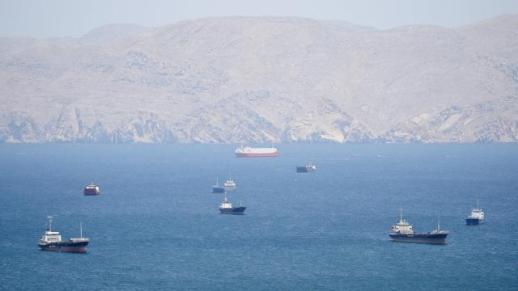 If the Strait of Hormuz Becomes the New Normal, the Global Economy Loses Its Exit May 1 is approaching, the first major test of the 60-day limit for a U.S. president to continue a war without congressional approval. The deadline is near, but the outcome remains unclear. A stalemate that is neither war nor peace, delays that are neither talks nor breakdown, and pressure that is neither blockade nor all-out conflict are squeezing the Middle East and the global economy. At the core is a deadlock. The United States is pressing Iran to halt its nuclear program first, while Iran is demanding the lifting of restrictions on the Strait of Hormuz as a precondition. Both sides appear to believe time is on their side. But as time passes, the party paying the price is not the combatants — it is the world economy. The Strait of Hormuz is more than a shipping lane. It is a main artery for crude oil, liquefied natural gas, petrochemical feedstocks and metal raw materials. If disruption there drags on, higher oil prices spread through freight costs, electricity bills, food prices and factory costs, hitting the real economy broadly. Inflation that had begun to cool can flare again, central banks may be forced to shelve rate-cut plans, and emerging economies can face a double squeeze of fiscal stress and foreign-exchange pressure. That is why Reuters and other foreign media have reported that, just two months into the war, developing countries’ inflation and trade indicators have moved into “red alert.” The United States is the world’s largest oil producer and has a service-heavy economic structure. For countries such as South Korea, Japan and India — more dependent on imported energy and more manufacturing-driven — an oil shock is not a wave but a tsunami. The paradox is that those who must endure the war can fall first, not those who started it. If disruption around Hormuz becomes a “new normal” rather than a temporary shock, it stops being distant foreign-policy news and becomes a kitchen-table issue. South Korea’s core industries — semiconductors, autos, shipbuilding and steel — all rest on energy and logistics. Even if exports hold up, if import costs rise faster, the national economy’s resilience can be drained quickly. Assigning blame to only one side misses the point. Iran’s attempt to control the strait is a risky gamble that shakes international maritime order. Prolonged U.S. military pressure can also end up holding the global economy hostage. Security requires principles, but those principles must be matched with restraint. Force is a tool; it cannot be an exit by itself. The May 1 deadline carries symbolism beyond procedure. The U.S. War Powers Act limits military operations without congressional approval to 60 days. If that process is bypassed or hollowed out, the situation can spiral — with the purpose of the war and the conditions for ending it left undefined, and a cycle of restrictions and retaliation turning into a war of attrition. The tragedy of a game of chicken is not only two drivers refusing to turn the wheel. It is the bystanders on the road who are smashed first. That is the position of the global economy now: oil, shipping, food and exchange rates are all tied to a single narrow strait. South Korea needs a clear-eyed response. It should review energy stockpiles and diversify import sources, secure alternative logistics routes, and test industry-by-industry scenarios for cost shocks. Diplomatically, it should work within the alliance framework while clearly stating to the international community the scale of the economic damage. The principle is freedom of navigation; the practical goal is a swift end to the war. The fighting may not stop after May 1. The deeper risk is that the world becomes accustomed to an abnormal situation. Stock markets in Seoul, New York and Tokyo are already showing signs of that, continuing an unusual rally. But the moment disruption in Hormuz becomes a constant rather than an exception, the global economy will not be passing through a crisis — it will be living on top of one. The first countries to buckle will not be those with energy, but those that built growth on energy they must import. South Korea would not be an exception. 2026-04-28 14:42:31
 -
 Appellate court upholds two-year sentence for former PPP leader SEOUL, April 28 (AJP) - Kweon Seong-dong, the former leader of the main opposition People Power Party (PPP), was again sentenced on appeal to two years in prison for bribery charges on Tuesday. The Seoul High Court upheld the earlier sentence in the first trial and ordered Kweon to forfeit 100 million won ($68,000) for accepting illegal political funds from the Unification Church, better known as the Moonies. Earlier in January, Kweon was found guilty of receiving 100 million won from Yoon Young-ho, a senior official at the church in 2022 in return for political favors for the powerful religious sect. The appellate court said that colluding with a religious group in state affairs undermines core democratic values including the principle of separation of church and state, making the offense particularly serious. The court also said a strict punishment was unavoidable, given his failure to uphold his constitutional duties as a five-term lawmaker, but concluded that the lower court’s two-year sentence fell within a reasonable range and let it stand, citing his three decades of public service and no prior criminal record. Kweon denied the allegations, saying he only had meals but never received any money. He also argued that his case fell outside the scope of investigations by independent prosecutors, but the appeals court dismissed his claims. Kweon's ruling came just a day after Yoon was sentenced to 18 months in prison in the same case. 2026-04-28 14:41:46
 -
 PPP floor leader condemns ruling party over bid to let Jeong Dong-young dismissal motion lapse Song Eon-seok, floor leader of the People Power Party, on April 28 criticized National Assembly Speaker Woo Won-shik and the Democratic Party over a recommendation to dismiss Unification Minister Jeong Dong-young that was reported to the plenary session. In a Facebook post, Song said that because April’s extraordinary session was holding its final plenary meeting that day, the motion was expected to be discarded without a vote, calling it a “procedural trick.” Citing the National Assembly Act, Song said a minister dismissal recommendation is discarded if it is not put to a vote within 72 hours after 24 hours have passed from the time it is reported. He said the PPP had strongly demanded that a plenary session be held on April 27 to report the motion and that it be voted on at the April 28 session. “What is a 60-seat ruling party afraid of that it cannot even vote on it?” Song wrote, adding that the party could simply vote it down rather than let it lapse. Song also argued that even if the motion were to pass, it has no binding force and President Lee Jae-myung could refuse to dismiss Jeong. He said it was hard to understand why the Democratic Party would still avoid a vote, and claimed that the presidential office’s national security chief had officially acknowledged that Jeong’s remarks were one factor contributing to friction between South Korea and the United States. Song said the National Assembly should hold Cabinet members accountable when they harm the national interest, and he condemned Woo and the Democratic Party for blocking a vote. He added that while they would not accept a vote on a motion proposed by a minority opposition party, they were pressing ahead with what he called a rushed, election-driven constitutional revision opposed by the minority opposition. * This article has been translated by AI. 2026-04-28 14:41:16
 -
 National Railway Authority, Korea Defense Diplomacy Association sign MOU on overseas projects The National Railway Authority said April 28 it signed a memorandum of understanding with the Korea Defense Diplomacy Association to expand overseas business and strengthen cooperation in defense diplomacy. The authority said the agreement is aimed at building a broader foundation for South Korean companies to enter overseas markets by combining the authority’s capacity to carry out international rail projects with the association’s experience and expertise in defense diplomacy. Under the MOU, the two organizations will cooperate on sharing information related to overseas projects, providing technical advice and linking global networks. They also said they will work to produce tangible results by leveraging their respective strengths. Lee An-ho, acting chair of the National Railway Authority, said combining rail expertise with defense diplomacy know-how could create greater synergy on the international stage. “We will continue to strengthen the basis for cooperation to expand our companies’ global reach,” he said. * This article has been translated by AI. 2026-04-28 14:36:53
 -
 Dr. Soom Launches Family Month 'Thank You' Gift Package Promotion Dentist-developed oral care brand Dr. Soom said it will run a “Thank You Package” gift promotion for May, widely observed in South Korea as Family Month. The promotion will run on the company’s online store from April 28 to May 31. The packages feature a carnation illustration and a “Thank You” message, designed to be given as-is without additional wrapping. The company said the set is intended for a range of recipients, including parents, teachers and co-workers. Pricing is structured to lower the per-set cost as customers buy more. One set costs 17,400 won; two sets, 29,900 won; and four sets, 52,900 won. Based on those prices, the per-set cost falls to 17,400 won, about 14,950 won and about 13,225 won, respectively. Dr. Soom highlighted functional features of its “Dr. Soom Dentish Delight Mouth Candy,” saying it uses an alpha-cyclodextrin structure to physically capture and remove volatile sulfur compounds, or VSC, a major cause of bad breath, rather than masking odor with fragrance. The company also said the product is sugar-free, making it easier for consumers managing blood sugar and for children to take. The company will also expand offline marketing with a pop-up event from April 30 to May 5 at the basement level 1 of Lotte Department Store in Jamsil, offering visitors a chance to try the products and see the packaging in person. Dr. Soom said the campaign combines seasonal gift packaging, volume-based pricing and online-to-offline operations to broaden product experience and attract new customers, while aiming to boost short-term sales. 2026-04-28 14:36:07
 -
 PIC Guam Partners With Yohemity to Target Active Travelers South Pacific all-inclusive resort PIC Guam is launching a brand collaboration with premium sports nutrition brand Yohemity to strengthen its wellness- and sports-focused lifestyle offerings. Yohemity is known among active lifestyle consumers for energy gels and protein-based sports nutrition products used in running, outdoor activities and other performance settings. PIC Guam’s Korea PR office said it pursued the partnership because Yohemity’s brand direction is expected to align closely with the “active travel experience” promoted by the resort’s all-inclusive sports trip, “Explore PIC Guam & Beyond.” The adults-only program, known as “Expi Guam,” includes about 70 activities and sports programs, all meals and entertainment through a Gold Pass, and guided tours of southern Guam and the city with “clubmates.” The resort said the program has been viewed as expanding a standard vacation into an “experience-based sports lifestyle.” The joint promotion runs through May 27 to coincide with the launch of Yohemity’s new “Crunch Cacao” protein shake. Customers who buy the product and post a photo review will be entered in a drawing for a three-night Expi Guam stay for two adults at PIC Guam. The two companies said they expect the collaboration to link product use with real travel experiences and to create synergy by sharing a target customer base. PIC Guam said it plans to use the campaign to raise awareness of its wellness- and sports-centered travel offerings and broaden new customer touchpoints. A PIC Guam Korea PR office official said the collaboration was designed to naturally connect travel and sports nutrition experiences for active lifestyle consumers, adding that it is meaningful for expanding lifestyle engagement centered on wellness and sports. More information is available through Yohemity’s official sales channels and PIC Guam’s official channels.* This article has been translated by AI. 2026-04-28 14:34:59
 -
 Japan's PM Takaichi to Visit Vietnam, Australia to Boost Economic Security Cooperation Japan’s government said April 28 that Prime Minister Sanae Takaichi will visit Vietnam and Australia from May 1 to 5. According to the Asahi Shimbun and other reports, Takaichi will travel to Vietnam starting May 1 and hold talks May 2 with To Lam, the Vietnamese Communist Party’s general secretary and state president, and Prime Minister Le Minh Hung. The two sides plan to reaffirm efforts to strengthen their “comprehensive strategic partnership,” including cooperation on energy, critical minerals and economic security. Takaichi is also scheduled to deliver a speech on a revised version of Japan’s “Free and Open Indo-Pacific” strategy. Takaichi will then visit Australia from May 3 and meet Prime Minister Anthony Albanese on May 4. Japan’s Foreign Ministry said that with this year marking the 50th anniversary of the Japan-Australia Basic Treaty of Friendship and Cooperation, the two countries plan to deepen cooperation across a wide range of areas — security, the economy, economic security and people-to-people exchanges — and elevate ties to a “special strategic partnership.” Chief Cabinet Secretary Minoru Kihara, the government’s top spokesman, told a news conference that strengthening relations with Vietnam, “which is showing notable growth in Southeast Asia,” and with Australia, “a key partner in allied cooperation,” is “very important.” Separately, former Prime Minister Fumio Kishida is expected to visit the Philippines on April 30 to deliver a letter from Takaichi to President Ferdinand Marcos. The Philippines is this year’s chair of ASEAN, the Association of Southeast Asian Nations. Kishida is reported to be traveling as the senior adviser to a parliamentary group for the Asia Zero Emission Community initiative on energy resilience.* This article has been translated by AI. 2026-04-28 14:34:04