
Journalist

Lee Hugh
=
-
 Industry Minister Urges Mature Talks as Samsung Electronics Union Plans Strike Kim Jeong-gwan the minister of trade, industry and energy, on April 27 urged labor and management at Samsung Electronics to reach a “mature” decision as the company’s union has warned it may strike. “The semiconductor industry is the only industry in our country that is still maintaining competitiveness, and the gap is steadily narrowing,” Kim told reporters at the Government Complex Sejong. “Since workers clearly have a share, I urge both sides to fully consider the various conditions and come to a mature conclusion.” Kim said he still could not imagine a strike. He said the company should weigh how to balance sharing current profits with maintaining future competitiveness. Samsung Electronics’ union is demanding the abolition of a cap on performance bonuses set at 50% of annual salary and wants 15% of total operating profit distributed as performance pay. The union has said it will launch a general strike from May 21 to June 7 if no agreement is reached. Kim said Samsung’s performance should not be viewed as the result only of executives and workers. He pointed to the broader semiconductor ecosystem, including many partner companies, infrastructure, shareholders and the National Pension Service, saying local and national communities are also tied to it. He added that with large-scale investment unavoidable, both sides should consider how much profit can be enjoyed and recognize how big an impact a strike could have across the industry. On the maximum price system for oil products in effect since last month, Kim called it an unsatisfying policy but an unavoidable step in an emergency. He said the government plans to end it as early as possible once the war ends or international oil prices stabilize. Kim compared the situation to closing windows in summer heat or opening them and letting mosquitoes in, saying government action on prices is not desirable but was unavoidable due to the unprecedented Middle East war. On when the system could end, he said the government would consider the course of the Middle East war, conditions around the Strait of Hormuz, and discussions on a post-settlement system and exclusive supply contracts. He said differing interests between refiners and gas stations would also be weighed. On delayed restructuring of the petrochemical sector in Ulsan amid the Middle East war and other factors, Kim said he believes it can proceed autonomously even without government intervention. He said talks have slowed due to supply-chain issues but are expected to pick up soon. On a first project for investment in the United States, Kim said discussions are ongoing and it is difficult to predict the timing.* This article has been translated by AI. 2026-04-27 17:03:11
 -
 South Korea Finance Ministry Awards 30 Million Won in Special Bonuses to 24 Officials The government awarded special bonuses totaling 30 million won to Ministry of Finance and Economy officials credited with key achievements, including responses to the Middle East war and efforts to secure inclusion in the World Government Bond Index, or WGBI. The ministry said it held its first special performance awards ceremony on the 27th during an expanded senior staff meeting chaired by Deputy Prime Minister and Finance Minister Koo Yun-cheol. It selected 24 employees for raising the ministry’s standing and contributing to the national interest. The top honor, the “Public Impact Grand Prize,” went to six people including Choi Bong-seok, a senior official in the Comprehensive Policy Division. They received 10 million won for building an emergency response system after the Middle East war broke out in February, including round-the-clock monitoring of the macroeconomy and prices through a standing joint emergency task force with related agencies. The “Value Creation Award” went to three people including Park Se-woong, an official in the Foreign Exchange System Division. The ministry said they were recognized for persuading overseas investors and relevant authorities and preparing a won temporary borrowing (OD) plan, leading to confirmation of South Korea’s WGBI inclusion despite opposition from some investors. Winners received 6 million won. The “Future Growth Award” went to two teams, each receiving 4 million won. One team, including Jang Woo-jin of the Foreign Exchange System Division, was cited for resolving financial settlement difficulties during the import process for Russian crude oil and petroleum products, helping stabilize companies’ raw material supplies. Another team, including Jeong Yeo-jin, a director in the Strategic Economy Coordination Division, was recognized for supporting swift legislation of the “Korea-U.S. Strategic Investment Special Act” to help ease external uncertainty. The “Diligence and Advancement Award” went to three teams, each receiving 2 million won. The ministry said one team, including Kim Ji-eun, a supply chain response officer, created a 1.5 trillion won “Special Support for Middle East Damage Response” program. Another team, including Cho Jung-yeon, a team leader in the Treasury General Division, pushed a pilot project for blockchain-based treasury disbursements. Cho Seong-a, an official in the Tax Policy Office, was also included after developing an AI chatbot to help interpret rules for exchanging information on crypto assets. The ministry said 20% of the bonuses were paid in Onnuri gift certificates, describing it as a way to share rewards with small merchants and local commercial districts. Koo said the ministry plans to provide clear incentives to employees who deliver exceptional results to foster a more performance-driven workplace.* This article has been translated by AI. 2026-04-27 17:00:14
 -
 Korean Retail Investors Sell Overseas Stocks as RIA Accounts Draw Money Back Home Korean retail investors have been selling across major overseas stock markets at the same time, and attention is turning to whether that money will flow back into domestic shares. Data from the Korea Securities Depository’s Seibro portal show that from April 1 to 24, Korean individual investors were net sellers of U.S. stocks worth $1.28555 billion (about 1.8915 trillion won). Over the same period, they were net sellers of Japanese stocks worth $9.48 million (about 14 billion won), Hong Kong stocks worth $9.48 million, and Chinese stocks worth $18.26 million (about 27 billion won). With that trend in view, market participants are also watching the government’s new domestic market return account, known as an RIA. The program offers a capital gains tax break if proceeds from selling overseas stocks are invested in domestic stocks for a set period of at least one year, aiming to encourage overseas investment funds to return home. The RIA has grown quickly since its launch. The Korea Financial Investment Association said that as of April 23, cumulative RIA sign-ups totaled 168,347 accounts, with balances of 1.1051 trillion won. That compares with 17,965 accounts on the first day, meaning the number of accounts rose more than ninefold and balances surpassed 1 trillion won within about a month. Market experts have said the tax incentive could reduce the burden on gains from overseas investing and lift investors’ effective returns. Some also see the capital gains tax reduction as a buffer that can encourage reinvestment after short-term profit-taking. Analysts also say the RIA could help stabilize supply and demand and expand liquidity by drawing retail money into the local market, while serving as a policy signal that could bolster confidence and strengthen the base for mid- to long-term investing. Still, they caution that while the RIA may bring short-term inflows, longer-term results will depend on the competitiveness of Korea’s stock market. Without improved corporate earnings and a recovery in market trust, they say tax benefits alone may not sustain the shift. As the RIA spreads rapidly, some in the brokerage industry say investor interest is rising, but concerns are also being raised about the potential for distorted investment strategies.* This article has been translated by AI. 2026-04-27 16:58:21
 -
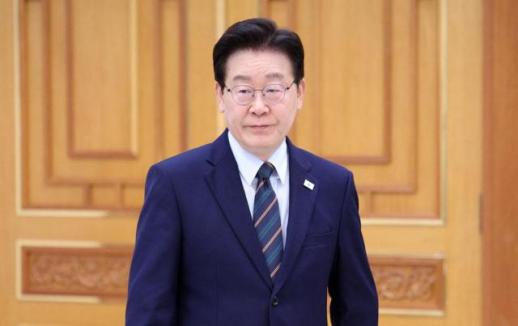 Lee reaffirms his rapprochement policy toward North Korea, urging Pyongyang to respond SEOUL, April 27 (AJP) - President Lee Jae Myung on Monday again reaffirmed his rapprochement toward North Korea for the peace and security of the Korean Peninsula. Lee said South Korea will "steadily push ahead with efforts toward peaceful coexistence on the Korean Peninsula," in a statement read by Hong Ik-pyo, senior presidential secretary for political affairs, at an event marking the eighth anniversary of an agreement signed during a historic meeting between the two Koreas at the border town of Panmunjom in April 2018. "We will proactively take steps to restore inter-Korean trust and achieve peace on the Korean Peninsula," the statement said, urging Pyongyang to respond. Lee added that building lasting peace on the peninsula for shared prosperity was the "core spirit" of the agreement and the future the two Koreas should pursue, stressing that peaceful coexistence has been his top priority since taking office in June last year and that he has taken steps to rebuild trust with the North. He also stressed that his administration has made clear its stance of recognizing and respecting North Korea's system, ruling out any scenario of forced absorption into the South and refraining from any hostile actions toward Pyongyang. "Even if winter is long, spring will come in the end," Lee said, expressing his belief that peace would eventually prevail. Meanwhile, former President Moon Jae-in urged North Korean leader Kim Jong-un to take a bolder approach and engage in talks with the U.S. The remarks were made at an event marking the anniversary at the National Assembly in Seoul later in the day. Moon, who made the trip to Seoul from his retirement home in Yangsan, South Gyeongsang Province, said, "True security cannot be guaranteed by military buildup, which would only deepen isolation and sever ties," adding that dialogue is "the fastest and safest way" to end hostility and bring peace to the peninsula. He also expressed hope for improved inter-Korean relations that could serve as a bridge for talks between Pyongyang and Washington, as they did eight years ago, and urged Trump to leverage his "unique decisiveness and wisdom" to bring the North back to the negotiating table. On April 27, 2018, Moon and Kim pledged to improve inter-Korean relations at their historic summit in Panmunjom, the border truce village within the demilitarized zone that has long symbolized the division of the peninsula. 2026-04-27 16:54:58
 -
 Yoon Suk Yeol’s Appeal Trial Opens; Court Says Constitutional Challenge Won’t Halt Proceedings Yoon Suk Yeol, who was sentenced to life in prison in a first trial on charges of leading an insurrection after declaring the Dec. 3 martial law, began his appeal in earnest along with other key defendants tied to the decree. On Monday at 2 p.m., the Seoul High Court’s Criminal Division 12-1, with Judges Lee Seung-cheol, Cho Jin-gu and Kim Min-a, held the first pretrial hearing in the second trial for Yoon and seven senior military and police officials involved at the time of the martial law declaration. A pretrial hearing is held ahead of a formal trial to organize positions and discuss plans for presenting evidence, and defendants are not required to attend. Yoon and other main defendants did not appear. Only Yoon Seung-young, former head of planning and coordination at the National Police Agency’s investigation bureau, and Mok Hyun-tae, former chief of the National Assembly security unit, attended in person. The hearing featured a clash over defense requests for a constitutional review and the special prosecutor’s bid to add evidence. At the outset, attorney Lee Ha-sang, who represents former Minister Kim, disclosed that the defense had filed a request for constitutional review and asked the court to suspend proceedings. Lee argued that “the current composition of the court itself is unconstitutional and unfair,” and said the trial should be paused until the Constitutional Court rules. The panel said the request was submitted only on the 20th and it could not reach an immediate conclusion, but made clear it would not stop the proceedings on that basis. It said it would decide the constitutional issue “as soon as possible,” while proceeding with the scheduled pretrial hearing and denying Yoon’s request to change the date. The special prosecutor’s team, including Assistant Special Prosecutor Lee Chang-gyu, appeared in force and laid out its plan for the appeal. The team said it would focus on clarifying alleged advance planning that was less clear in the first trial. It said it would use a notebook attributed to Noh Sang-won that was examined by the Supreme Prosecutors’ Office appraisal unit, along with testimony from appraisers, to argue the martial law declaration was a carefully planned insurrection. The special prosecutor said the defense had broadly refused to consent to evidence in the first trial, citing legal misunderstandings, calling that a sign of “misunderstanding” of appellate procedure. It added it would submit additional video evidence and filings related to impeachment evidence. Seeking to prevent delays, it asked the court to move quickly, saying questioning of defendants should, if possible, be completed in a single session. Yoon’s lawyers, however, argued the first ruling misread the facts. They said police and military movements during the deployment to the National Assembly were not aimed at insurrection, and sought to call presidential office aides as witnesses, including former senior secretary for civil affairs Kim Joo-hyun, former spokesperson Lee Do-woon and former policy chief Sung Tae-yoon, to explain the situation in detail. On the alleged blockade of the National Assembly, the defense said it would call a series of witnesses to dispute whether there was collusion with former National Police Agency Commissioner Cho Ji-ho, including Interior and Safety Minister Lee Sang-min, Deputy Prime Minister and Economy Minister Choi Sang-mok, former Defense Security Command chief Yeo In-hyung and former third deputy director of the National Intelligence Service Baek Jong-wook. Lawyers for former Minister Kim Yong-hyun also strongly objected, arguing the indictment should be dismissed because the entity responsible for investigation and prosecution was unclear, raising possible violations of the Prosecutors’ Office Act. The special prosecutor asked the court to reject the defense witness requests, saying the figures had already been sufficiently examined in the first trial or related impeachment proceedings and that the purpose was clearly to delay the case. The defense countered that the first ruling relied on speculation unfavorable to the defendants and that cross-examination was essential. With the sides at odds, the panel said witness examinations on appeal are limited under criminal procedure rules to matters omitted from the first trial without gross negligence or to testimony that is indispensable. It ordered both sides to submit written explanations by next week’s morning detailing the purpose and necessity of their evidence requests. After hearing both sides, the court said it would coordinate plans for examining evidence involving defendants including Cho and Yoon, and decide whether to admit impeachment-related evidence after reviewing filings. It then set May 7 as the first formal appellate hearing date. 2026-04-27 16:54:21
 -
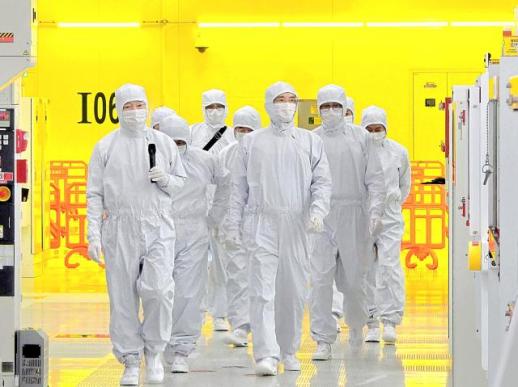 Samsung, SK hynix morph into AI foundries as Big Tech reshapes chipmaking SEOUL, April 27 (AJP) - The traditional line between memory makers and foundries is rapidly blurring as Samsung Electronics and SK hynix pivot toward customized chip production to meet surging artificial intelligence demand. As AI workloads grow more specialized, Big Tech clients are no longer buying standardized memory at scale but demanding tightly integrated, tailor-made solutions such as High Bandwidth Memory (HBM) co-designed with their own architectures — forcing Korea’s two largest chipmakers to rethink their traditional mass-production model. Companies like Nvidia and Tesla are driving this shift, pushing suppliers to align memory, logic and packaging into unified, customized stacks. In response, SK hynix and Samsung are increasingly operating less like commodity fabs and more like contract foundries for a handful of deep-pocketed clients. SK hynix has effectively become a dedicated memory partner to Nvidia, dominating supply of HBM3 and HBM3E used in the latter’s AI accelerators. To extend that lead into next-generation HBM4, SK hynix has forged closer ties with TSMC, outsourcing logic foundry work for base dies to leverage TSMC’s 12-nanometer and upcoming 3-nanometer processes. The strategy marks a departure from traditional vertically integrated expansion. Instead of pouring capital into logic fabrication, SK hynix is channeling its estimated 40 trillion won ($29 billion) 2026 capital expenditure into advanced packaging and custom HBM design — prioritizing speed, yield stability and alignment with Nvidia’s roadmap. Samsung, by contrast, is leaning into its identity as a full-stack Integrated Device Manufacturer (IDM), combining memory, foundry and advanced packaging under one roof. It is pitching a “turnkey” model to clients seeking to bypass Nvidia’s ecosystem and build proprietary AI chips. Alongside supplying HBM and foundry services to AMD, Samsung is expanding cooperation with Tesla on next-generation self-driving chips (HW 5.0) and custom memory, while working with AI chip startups such as Tenstorrent and Naver. To support the shift, Samsung plans to invest about 40.9 trillion won in its Device Solutions division this year, aiming to more than triple its custom HBM capacity. Industry experts say the transition from standardized memory production to client-specific design will define the next phase of the AI supercycle. “The market so far has been dictated by the Nvidia–TSMC–SK hynix axis because Nvidia required specific memory components for its GPUs,” said Kim Duk-ki, a professor of semiconductor engineering at Sejong University. “But as other Big Tech players like Tesla and Intel demand entirely new AI architectures, foundry demand is surging.” Kim added that while the current AI boom could run for another two years before facing structural constraints such as data center energy limits, Samsung’s breadth offers a strategic hedge. “Samsung is crucial because it has everything — from memory to foundry,” he said. “Its ability to shift capacity across DRAM, NAND and custom foundry services positions it to adapt to a future where Big Tech dictates increasingly diverse, bespoke chip designs.” 2026-04-27 16:51:42
 -
 South Korea, Google DeepMind Expand K-Moonshot AI Partnership, Plan Gangnam AI Hub South Korea’s Ministry of Science and ICT said it will expand cooperation with Google DeepMind as it pushes the “K-Moonshot” project, a national strategy to apply artificial intelligence across research and development to tackle major science and technology challenges. The ministry said it signed a memorandum of understanding with Google DeepMind on April 27 at the Four Seasons Hotel in central Seoul. The agreement focuses on joint AI research, talent development and the spread of responsible AI. The hotel is the site of the 2016 match in which AlphaGo defeated top South Korean Go player Lee Sedol, an event widely seen as a milestone for modern AI. Bae Kyung-hoon, deputy prime minister and minister of science and ICT, said AlphaFold’s results have helped drive innovation in medicine and biotechnology. “The science field can definitely create innovation with AI,” he said. Bae added that AI has already penetrated areas including science and security, and said the government will work to ensure more people can use AI. DeepMind CEO Demis Hassabis said the AlphaGo-Lee match “was a signal flare that marked the beginning of modern AI.” He said the era of artificial general intelligence has moved up by five years and that the scale and speed of progress will be 10 times that of past industrial revolutions. Hassabis said South Korea has a strong position “as an AI powerhouse, from semiconductors,” and said he would expand partnerships during his visit with Samsung Electronics, SK hynix, Hyundai Motor, and LG Electronics. The visit is his first to South Korea in 10 years since the 2016 match, according to the article. Hassabis co-founded Google DeepMind and has been a leading researcher in applying AI to scientific work. DeepMind developed AlphaFold, an AI system for predicting protein structures. Hassabis said he shared the 2024 Nobel Prize in chemistry with John Jumper and David Baker for AlphaFold-related research. The ministry said it will use the MOU to build broader cooperation across technology, infrastructure and researcher exchanges. Hassabis said the partnership will rest on three pillars — model research, talent development and safety cooperation — and said DeepMind will share models with leading research institutions to advance scientific progress. The ministry said the cooperation will be linked to the K-Moonshot project. Under the plan, the ministry aims to double research productivity by 2030 and, by 2035, achieve 12 national missions across eight areas including advanced biotechnology, future energy, space, quantum, semiconductors and humanoids. On talent development, the ministry said it will seek internship opportunities so South Korean AI talent can experience DeepMind’s research environment. DeepMind also plans to overhaul the Google Startup Campus in Seoul’s Gangnam district into an AI-focused collaboration base. The campus will serve as an “AI for Science” hub tied to K-Moonshot, supporting researcher exchanges and joint research. Programs are to include joint projects with domestic researchers and startups, as well as hackathons and technical workshops. The two sides said they will pursue AI-based joint research in areas including life sciences and weather and climate. They also plan to expand researcher exchanges centered on the National Science AI Research Center, which is scheduled to launch in May. Other cooperation tasks include developing and validating AI models and tools, using scientific data, and building a bio-innovation research base. They also said they will cooperate on AI safety and governance, including joint research on frameworks and safeguards to secure model safety. The ministry and DeepMind said they will work with AI safety research institutes to develop testing methodologies and standards. 2026-04-27 16:51:40
 -
 Korea Construction Association Holds Policy Meeting With Chungcheong Members The Korea Construction Association said it held a policy meeting on the 27th at its Sejong office for member companies in Daejeon and North and South Chungcheong provinces. Attendees included association President Han Seung-gu; Choi Gil-hak, head of the Chungnam-Sejong chapter; Choi Tae-jin, head of the Seoul chapter; Jeong Hyeong-yeol, head of the Busan chapter; So Jae-cheol, head of the Jeonbuk chapter; Hwang Geun-sun, head of the Gyeonggi chapter; Choi Mun-gyu, head of the Daejeon chapter; Jang Hong-su, head of the Ulsan chapter; Yoo Jeong-seon, head of the Chungbuk chapter; Hwang In-il, head of the Gwangju chapter; Choi Sang-sun, head of the Gangwon chapter; and Kang Dong-guk, head of the Gyeongnam chapter, along with about 40 representatives from member companies in Daejeon, Chungbuk and Chungnam. Park Seong-yong, an attorney at law firm Bae, Kim & Lee, gave a presentation on key considerations and advance preparations for family business succession at small and midsize construction firms. The association also briefed participants on major initiatives and heard concerns and key issues raised by the regional construction industry. Han said the association plans to visit member companies nationwide through regional meetings this year, starting with the Chungcheong area, following last year’s nationwide meetings. He said that with worsening conditions at home and abroad, regional members are facing particularly severe difficulties, and the association will strengthen its response to help address them. * This article has been translated by AI. 2026-04-27 16:50:51
 -
 China’s DeepSeek Cuts Prices Up to 75% After Launching V4 AI Models China’s AI startup DeepSeek is moving quickly to win customers, rolling out steep price cuts immediately after unveiling its latest model, “DeepSeek V4.” DeepSeek introduced two preview versions on April 24: the high-performance, higher-priced “V4 Pro” and the lighter, lower-cost “V4 Flash.” According to China’s National Business Daily and other outlets, the company said April 25 it would offer V4 Pro at a 75% discount through May 5. On April 26, it also said it would cut the cost of “input cache hits” — when the same input is reused — across its product lineup to about one-tenth of the previous level. After the change, V4 Pro’s input cache-hit fee fell to 0.025 yuan per 1 million tokens (about 5.39 won), about one-fortieth of the earlier price. Even before the discount, the pricing was lower than OpenAI’s ChatGPT 5.5 and Anthropic’s Claude Opus 4.7, the report said. The cuts had an immediate impact. Traffic surged after launch, and on April 25 alone, calls to V4 Pro totaled 13.6 billion tokens, about four times the previous day. V4 Flash reached 50.2 billion tokens, up about 86%. It remains unclear whether the momentum will last. V4 has not yet appeared in the weekly rankings of OpenRouter, a global AI model platform. Still, DeepSeek’s ultra-low pricing is widely seen as putting pressure on rivals. After news of the V4 discounts, shares of Chinese AI firm MiniMax fell as much as 10% intraday in Hong Kong on April 27 local time, while Zhipu AI dropped more than 3.5%. Hu Yanping, a professor at Shanghai University of Finance and Economics, told National Business Daily that the sharp reduction in token fees was aimed at attracting large numbers of corporate and developer customers. He said it would likely pull down price expectations for competing China-based models such as Kimi, MiniMax and Qwen. DeepSeek also upgraded performance. Both V4 Pro and V4 Flash support context windows of up to 1 million tokens, with improvements in code generation, reasoning and long-form processing. Some benchmarks have rated them as competitive with top global models. The models are described as well-suited for AI agent tasks beyond simple chatbots, though they are also known to require substantial computing resources. Unlike earlier DeepSeek models that relied on U.S. chipmaker Nvidia, V4 was designed to run on infrastructure based on Huawei’s in-house Ascend chips. Hong Kong’s South China Morning Post reported that the model’s release was delayed more than expected due to the shift to Huawei semiconductors, reflecting China’s push to strengthen AI self-reliance. On April 26, the social media account “Yuyuantantian,” affiliated with China Central Television, said “domestic computing power supported V4,” highlighting cooperation between DeepSeek and Huawei’s Ascend chip systems.* This article has been translated by AI. 2026-04-27 16:49:55
 -
 Japan’s Hokkaido Hit by Magnitude 6.2 Quake as Aftershock Advisory Nears End Seismic activity off Japan’s northeast coast is again drawing attention after a magnitude 6.2 earthquake struck Hokkaido early on the day an “aftershock advisory” issued following last week’s major quake was set to end. The Japan Meteorological Agency said the quake occurred at about 5:23 a.m. on April 27, centered in southern Tokachi in Hokkaido. It registered a maximum intensity of “upper 5” on Japan’s seismic intensity scale in Urahoro. The intensity scale reflects how strongly shaking is felt in a given area, unlike magnitude, which measures the energy released. An upper-5 reading can disrupt most people’s actions and topple unsecured furniture. The quake’s depth was about 83 kilometers (52 miles). No major damage had been confirmed as of the agency’s report, and Hokkaido Electric Power Co. said it had found no abnormalities at the Tomari nuclear power plant. The tremor came exactly one week after a magnitude 7.7 earthquake struck off Sanriku on April 20. After that quake, the Japanese government and the meteorological agency said the likelihood of another strong quake was higher than usual and issued an “aftershock advisory” for 182 municipalities across seven prefectures from Hokkaido to Chiba. The advisory is maintained for about a week, and the Hokkaido quake coincided with its scheduled end. The meteorological agency said the two quakes did not appear to be directly linked. “This earthquake does not appear to have a direct relationship with the April 20 earthquake,” it said at a news conference, adding that it was “not covered by the aftershock advisory.” The agency also warned that “for about the next week, caution is needed for earthquakes of a similar magnitude.” Japan introduced the aftershock advisory system after the 2011 Great East Japan Earthquake, when a magnitude 7.3 quake struck two days earlier. The system has been in operation since December 2022. It is issued when a magnitude 7-class or larger quake occurs in designated offshore areas such as the Japan Trench and the Kuril Trench, based on statistics showing the probability of a major quake within seven days rises from about 0.1% to about 1%. It is a probabilistic warning aimed at strengthening preparedness while maintaining daily life. Nikkei reported the latest advisory was the second, following one in December 2025, and said 182 areas expected to face shaking of at least “lower 6” intensity or a tsunami of 3 meters (about 10 feet) or higher were designated for disaster-response measures. The Pacific coast from Sanriku to Hokkaido sits on an active boundary where the Pacific Plate subducts beneath the landward plate, allowing stress to build until it is released in earthquakes. The Asahi Shimbun, citing a briefing by Tohoku University’s International Research Institute of Disaster Science, reported that earthquake swarms began around November last year off Sanriku and that a “slow slip” — gradual movement along the plate boundary — continued until just before the April 20 quake. Slow slip can ease deformation but can also add pressure to nearby faults. Tohoku University professor Fumiaki Tomita said the slow slip may have helped trigger the magnitude 7.7 quake, according to the report. Asahi also cited an analysis by a team led by Shizuoka Prefectural University specially appointed professor Kazuyoshi Nanjo, saying the “b-value,” a metric used to quantify earthquake patterns, has been particularly low offshore near Hokkaido. A low b-value is seen as a sign of stress accumulation and was reported to overlap with a decades-long “gap” zone where large quakes have not occurred. A similar tendency was observed off Sanriku before the 2011 disaster, the paper said. Asahi reported that Japan’s Headquarters for Earthquake Research Promotion said in December 2017 that it was “highly urgent” that a magnitude 8.8 or larger megaquake could occur in the region. The assessment was based on analyses of past tsunami deposits indicating such events recur on average every 340 to 380 years, and nearly 400 years have passed since the last one in the early 17th century. Asahi said two papers published in February supported that “urgency” with modern observational data, and that recent abstracts from universities and research institutions have included phrases such as “a state requiring caution continues” and “a recurrence may be imminent.” The newspaper said researchers refer to this centuries-long repetition of megaquakes as a “supercycle.” Asahi also cited a Tohoku University team’s five-year seafloor observations off Nemuro, saying the Pacific Plate and the upper plate were moving at nearly the same speed and direction and were strongly locked. The team said deformation accumulated since the early 17th-century megaquake may already have reached a level capable of producing a quake of similar size, concluding it should be considered “not strange no matter when it happens.” The report noted this is different in character from the “Nankai Trough megaquake,” a separate type of potential megaquake expected off Japan’s southeast coast. Even as warnings persist, public response remains a concern. Asahi said a Cabinet Office survey of 3,500 residents in advisory areas after the first advisory in December found 80% had seen the information, but only 8% said they had prepared to evacuate immediately. More than half took no action despite hearing the advisory, the paper said. Tohoku University professor Shosuke Sato, noting the start of the Golden Week holiday period, said there was no need to change travel plans but urged people to confirm evacuation sites at their destinations in advance. Misinformation also spread on social media, Asahi reported. It said that after the April 20 quake, videos filmed during the 2024 Noto Peninsula earthquake circulated on X, formerly Twitter, with captions claiming they showed “the moment the quake hit,” and tsunami footage from the 2011 disaster was also shared as if it were current. Posts also circulated an image that appeared to be generated by AI alongside an unfounded claim that “the likelihood of an aftershock is highest around 3 p.m. on the 21st.” Asahi said accounts posting the videos were based not only in Japan but also in South Asia, Europe and China, and many posts appeared to be automatic translations of foreign languages. The Yomiuri Shimbun reported that the Internal Affairs and Communications Ministry asked five major social media operators, including Google, Meta and X, on the day of the quake to take steps to prevent the spread of false information. Experts caution against treating any single quake as proof that a catastrophe is imminent, noting that earthquakes are inherently difficult to predict precisely in timing and size. Still, they say observational data indicate energy is building underground, and they urge people to begin preparedness now even without forecasting a specific date. * This article has been translated by AI. 2026-04-27 16:48:19