
Journalist

Lee Hugh
=
-
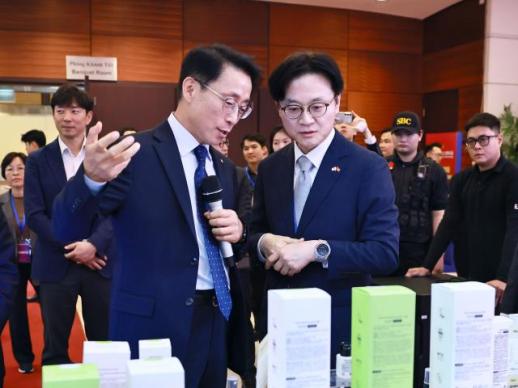 South Korea-Vietnam Forum Spurs Deals on Nuclear Power, AI and Energy Infrastructure South Korean and Vietnamese business leaders gathered in Hanoi to expand economic cooperation, with talks and agreements spanning artificial intelligence, energy and other future industries. The Korea Chamber of Commerce and Industry said it sent an economic delegation to Vietnam and held a South Korea-Vietnam business forum on April 23 (local time), timed to President Lee Jae-myung’s state visit. About 500 government and business figures from both countries attended. Lee and Vietnamese Prime Minister Le Minh Hung appeared together, underscoring their commitment to closer economic ties. Attendees included Chey Tae-won, chairman of SK Group and the chamber; Samsung Electronics Chairman Lee Jae-yong; LG Group Chairman Koo Kwang-mo; Lotte Group Chairman Shin Dong-bin; POSCO Holdings Chairman Chang In-hwa; HD Hyundai Group Vice Chairman Chung Ki-sun; GS Group Chairman Huh Tae-soo; Doosan Enerbility Chairman Park Jie-won; Hyosung Group Chairman Cho Hyun-joon; Daewoo Engineering & Construction Chairman Jung Won-ju; Hyundai Motor President Sung Kim; and Naver CEO Choi Soo-yeon, along with other business group leaders. The delegation, involving 109 companies, sought to move beyond manufacturing-centered cooperation toward AI, advanced technology and energy, the chamber said. In welcoming remarks, Chey called Vietnam “Korean companies’ most important global partner,” and said cooperation should go beyond expanding trade to higher value-added areas such as advanced manufacturing, services and digital industries. “Through cooperation in AI and advanced technology, Korea’s technology and Vietnam’s young, dynamic talent can create tremendous synergy,” Chey said, adding that Vietnam is “no longer just a land of opportunity,” but a partner in building the future. The forum, held under the theme of advancing industrial, investment and science-and-technology partnerships, discussed concrete tasks in four areas: training advanced talent, energy, AI transformation and science and technology. Na Ki-hong, head of Samsung Electronics’ Vietnam strategic cooperation office, introduced manufacturing innovation consulting and smart factory support cases and outlined plans to expand “youth future technology education” to develop next-generation talent. SK Innovation CEO Choo Hyung-wook highlighted the importance of power infrastructure for building an AI ecosystem and shared a roadmap for ongoing cooperation projects, including the Quynh Lap LNG power project. KIST President Oh Sang-rok presented a vision linking talent, technology and industry and proposed a cooperation strategy combining Korea’s maturity with Vietnam’s dynamism. Vietnamese presenter Nguyen Trung Chinh, chairman of CMC, shared strategies for advanced-industry innovation based on AI and science and technology, calling for stronger technology partnerships. The chamber said the forum produced about 70 MOUs and contracts. Key areas included AI data centers and digital infrastructure; energy projects such as nuclear power and power-grid construction; production bases for secondary batteries and advanced materials; smart cities and infrastructure development; and finance and investment. SK Innovation and SK Telecom signed MOUs with Vietnam’s National Innovation Center on building AI data centers and an ecosystem, and with Nghe An province on AI infrastructure, expanding cooperation on future infrastructure, the chamber said. Daewoo Engineering & Construction signed an MOU with Vietnam’s SaigonTel to jointly develop a data center business and participate in construction. POSCO Future M said it completed approval procedures with Thai Nguyen province to build a plant for artificial graphite anode materials, a key secondary-battery material, and began building a supply chain for battery materials. Doosan Enerbility signed MOUs with Vietnamese companies PTSC and PETROCONs on cooperation including Vietnam’s new nuclear power projects. Taihan Cable & Solution signed an MOU with Vietnam’s Newtecons on power-grid upgrades and extra-high-voltage cable business cooperation, moving to expand technology partnerships for local energy infrastructure.* This article has been translated by AI. 2026-04-23 22:30:15
 -
 Samsung’s Lee, LG’s Koo urge results, higher-quality growth at Korea-Vietnam forum President Lee Jae-myung’s state visit to Vietnam brought a large contingent of South Korean business leaders to a Korea-Vietnam business forum, underscoring efforts to deepen economic cooperation. The forum, hosted by Lee and Vietnamese Prime Minister Le Minh Hung, was held April 23 (local time) at a hotel in Hanoi. It drew key officials from both governments, an economic delegation of 109 South Korean companies, and about 500 participants from public institutions and the private sector. Attendees included Samsung Electronics Executive Chairman Lee Jae-yong; SK Group Chairman Chey Tae-won, who also heads the Korea Chamber of Commerce and Industry; LG Group Chairman Koo Kwang-mo; Lotte Group Chairman Shin Dong-bin; POSCO Holdings Chairman Chang In-hwa; HD Hyundai Vice Chairman Chung Ki-sun; GS Chairman Huh Tae-soo; Hyosung Chairman Cho Hyun-joon; Doosan Enerbility Chairman Park Ji-won; Daewoo Engineering & Construction Vice Chairman Jung Won-ju; Hyundai Motor Group President Sung Kim; and Naver CEO Choi Soo-yeon. Leaders of major business groups also attended, including Yoon Jin-sik of the Korea International Trade Association and Kim Ki-moon of the Korea Federation of SMEs. Before a closed-door session, Lee Jae-yong told reporters that “businesspeople should speak through results.” Koo said LG has operations in India and expressed hope that the trip would help business move forward. He noted that exchanges and corporate activity between South Korea and Vietnam are already extensive, adding that he hoped cooperation would advance “not only in quantity but also in quality.” Park of Doosan Enerbility said Vietnam is seeking to build nuclear power plants and that he came prepared to introduce his company. He said he planned to focus on the company’s track record during the forum. At the forum, Samsung Electronics, SK Innovation, the Korea Institute of Science and Technology and the Korea Institute for International Economic Policy discussed ways to upgrade an “industry, investment and science-and-technology partnership.” The talks focused on four areas: nurturing advanced talent, energy, AI transformation and science and technology. On talent development, Na Ki-hong, head of Samsung Vietnam’s strategic cooperation office, introduced cases of manufacturing-innovation consulting and smart-factory support. He also outlined plans to expand “future technology education for youth” to cultivate next-generation talent. Cooperation in AI transformation and energy infrastructure was also discussed. SK Innovation CEO Choo Hyung-wook stressed the importance of power infrastructure for building an AI ecosystem and shared a roadmap for ongoing cooperation projects, including the Quynh Lap LNG power project. Science-and-technology cooperation to support future industries also drew attention. KIST President Oh Sang-rok presented a vision linking talent, technology and industry and proposed a strategy combining South Korea’s maturity with Vietnam’s dynamism. Vietnamese presenter Nguyen Trung Chinh, chairman of CMC, also shared strategies for innovation in advanced industries based on AI and science and technology, calling for stronger technology partnerships. In opening remarks at a prior meeting, President Lee said economic cooperation between South Korea and Vietnam was increasingly important amid rising global uncertainty. He highlighted the need to strengthen supply-chain links in energy-related areas, including rare earths and urea solution, which are essential for advanced industries. Lee said Vietnam needs efficient power distribution networks, including LNG power plants and nuclear power, to support a stable industrial environment. He urged the business leaders gathered to serve as a cornerstone for opening new horizons of cooperation. In a speech, Lee again emphasized the need for closer economic ties, laying out visions for future advanced industries, supply-chain and energy cooperation, and science-and-technology collaboration. “Because we have firm trust and friendship, South Korea and Vietnam can grow together without wavering in the face of any crisis and design the future,” Lee said. “Just as Vietnam’s leap was South Korea’s growth, Vietnam’s future will now be South Korea’s future.” Citing a saying by Vietnam’s late leader Ho Chi Minh — “respond to all changes with what does not change” — Lee said the unchanging friendship built over more than 30 years is the surest answer to complex changes ahead. He pledged that the South Korean government would serve as a “reliable compass and support” so companies in both countries can navigate challenges and write a new era of prosperity. The Korea Chamber of Commerce and Industry said 74 memorandums of understanding were signed at the forum between companies from the two countries in areas including advanced technology, consumer goods, infrastructure, energy and finance. Key areas included AI data centers and digital infrastructure; energy such as nuclear power and power-grid construction; production bases for secondary batteries and advanced materials; smart cities and infrastructure development; and finance and investment. SK Innovation and SK Telecom signed MOUs with Vietnam’s National Innovation Center on building an “AI data center and ecosystem,” and separately with Nghe An province on “AI infrastructure,” expanding cooperation on future infrastructure. Daewoo Engineering & Construction also signed an MOU with Vietnam’s SaigonTel to jointly develop a data center project and participate in construction. Cooperation on secondary batteries and advanced materials also advanced. POSCO Future M said it completed approval procedures with Thai Nguyen province to build a plant for artificial graphite anode material, a key secondary-battery material, and moved to build a supply chain. In energy, cooperation drew on South Korea’s nuclear technology and experience building power grids. Doosan Enerbility signed agreements with Vietnamese companies PTSC and PETROCONs on cooperation related to new nuclear power plants in Vietnam. Taihan Cable & Solution signed an MOU with Vietnam’s Newtecons on upgrading power grids and cooperating on extra-high-voltage cable projects, aiming to expand technical partnerships for local energy infrastructure. 2026-04-23 22:27:19
 -
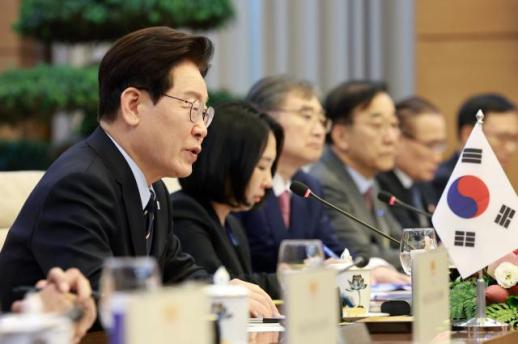 South Korea Bets on Vietnam as Hub for Nuclear, Infrastructure and Energy Deals President Lee Jae-myung’s state visit to Vietnam, joined by a business delegation led by heads of major conglomerates, is expected to accelerate South Korean corporate cooperation and investment in nuclear power, transport infrastructure and energy in Vietnam, a key “Global South” emerging economy. Business officials said a Korea-Vietnam business forum was held in Hanoi on April 23 (local time) with Lee and leading executives from both countries in attendance. On the South Korean side, about 250 people attended, including SK Group and Korea Chamber of Commerce and Industry Chairman Chey Tae-won, Samsung Electronics Chairman Lee Jae-yong, LG Group Chairman Koo Kwang-mo, Lotte Group Chairman Shin Dong-bin, POSCO Group Chairman Chang In-hwa, HD Hyundai Vice Chairman Chung Ki-sun, GS Group Chairman Huh Tae-soo and Doosan Enerbility Chairman Park Ji-won. About 250 Vietnamese business leaders also participated, including PVN Chairman Le Ngoc Son, EVN Chairman Dang Hoang An, Sun Group Chairman Dang Minh Truong, THACO Group Chairman Tran Ba Duong and FPT Group Chairman Truong Gia Binh, underscoring interest in expanding bilateral economic ties. More than 70 memorandums of understanding were signed across sectors including advanced technology, consumer goods, infrastructure, energy and finance. Nuclear power drew particular attention. Doosan Enerbility signed MOUs with PTSC and PETROCONs, subsidiaries of Vietnam’s PVN, on cooperation for new nuclear power projects and supply-chain development. PVN plans to build two nuclear reactors in Ninh Thuan province in central Vietnam, and the agreements were described as laying groundwork for participation in the No. 2 reactor project. In infrastructure, Hyundai Rotem signed a contract with THACO Group to supply rolling stock and signaling systems for Ho Chi Minh City’s Metro Line 2, marking its first order in Vietnam’s rail market. The deal is worth about 491 billion won. The contract is significant because Japanese and Chinese companies have dominated the market. With THACO pursuing an urban rail project in Da Nang valued at about 14 trillion won, Hyundai Rotem could win additional orders in vehicles and signaling, the business community said. GS Engineering & Construction is reported to be moving ahead with partners including FPT Group on artificial intelligence data centers and smart-city construction in Vietnam. Huh is also expected to discuss broader cooperation with local companies and institutions, including convenience stores and energy businesses. SK Innovation E&S, under Chey’s leadership, said it will focus on ensuring the success of a large-scale liquefied natural gas power project in Nghe An province in north-central Vietnam, targeted for completion in 2030 and valued at about 3.3 trillion won. The project includes a 1,500-megawatt combined-cycle gas power plant, a 250,000-cubic-meter LNG terminal and a dedicated port.* This article has been translated by AI. 2026-04-23 22:16:51
 -
 Doosan Enerbility Seeks Foothold for Vietnam Nuclear Project, Led by Chairman Park Ji-won Doosan Enerbility said it is expanding its global push by securing a foothold to take part in Vietnam’s planned new nuclear power projects, led by Chairman Park Ji-won. The company said Thursday that Park and other top executives joined President Lee Jae-myung’s business delegation during his visit to Vietnam and discussed cooperation on new nuclear power plants with Vietnamese government officials and key figures in the energy industry. Park attended a business roundtable and business forum in person, the company said. Vietnam plans to build Ninh Thuan nuclear power plant units 1 and 2 by 2035. Russia has won the contract for Unit 1, while bidding for Unit 2 is still underway. The combined project is valued at about 30 trillion won. Vietnam also plans to secure an additional 8 gigawatts of nuclear capacity by 2050. The company said “Team Korea” — made up of the Ministry of Trade, Industry and Energy, Korea Electric Power Corp. and Doosan Enerbility — is widely seen as a strong contender for Ninh Thuan Unit 2. South Korea and Vietnam signed a memorandum of understanding on nuclear cooperation following the summit, it said. Yoon Yo-han, head of Doosan Enerbility’s marketing division, attended a business forum in Hanoi and signed separate agreements with local firms PTSC and PETROCONs on cooperation for new nuclear projects and supply chain development, the company said. Both firms are subsidiaries of Vietnam National Oil and Gas Group, or PVN, which is leading the Ninh Thuan project. Doosan said the agreements help lay the groundwork for a local supply chain in nuclear equipment and construction, strengthening its position for participation in the Ninh Thuan Unit 2 project. “Cooperation between the two countries, expanded through joint public-private efforts to participate in Vietnam’s new nuclear power projects, will lead to meaningful results,” Park said. “Doosan Enerbility will do its utmost in its role so that Team Korea, which has already proven its competitiveness in the UAE and the Czech Republic, can achieve results in Vietnam as well,” he said.* This article has been translated by AI. 2026-04-23 22:16:00
 -
 OCI Holdings Q1 Operating Profit Falls 77.7% to 10.8 Billion Won OCI Holdings said in a regulatory filing on the 23rd that it posted first-quarter consolidated revenue of 892.4 billion won, operating profit of 10.8 billion won and net profit of 8.8 billion won. Revenue fell about 77% from a year earlier. The company said it has continued a recovery trend after returning to the black in the fourth quarter of last year. The company said higher sales at key units helped drive the profit, excluding Malaysia-based OCI TerraSus, which underwent legal restructuring in the first quarter. The units cited were OCI Enterprises, a U.S. solar holding company; OCI SE, which operates the Saemangeum combined heat and power plant; and operating company OCI. OCI Energy, a unit of OCI Enterprises, contributed to the operating profit increase as remaining proceeds from the sale of the Sun Roper project last year were recognized as revenue, the company said. OCI Energy is pursuing the sale of a large-scale 500-megawatt project. If related procedures are completed within the second quarter, the company said, it expects to recognize new revenue and profit. Chairman Lee Woo-hyun said silicon-based technology is increasingly seen as extending beyond terrestrial and space applications into next-generation semiconductors and data infrastructure. “OCI Holdings will take this trend as an opportunity for future new businesses and will continue to enhance product competitiveness so we can meet customers’ next-generation technology shifts, including silicon photonics,” he said. In the fourth quarter of last year, OCI Holdings reported revenue of 810.6 billion won, operating profit of 27.3 billion won and net profit of 26.6 billion won.* This article has been translated by AI. 2026-04-23 22:15:17
 -
 Nikkei briefly tops 60,000 for first time, then falls on profit-taking and oil worries Japan’s Nikkei stock average briefly crossed 60,000 for the first time on April 23 but reversed to finish lower, as profit-taking after a sharp run-up combined with renewed worries over Middle East-driven oil volatility. The Nikkei fell for the first time in four sessions, closing down 445 points, or 0.75%, at 59,140.23 in Tokyo. It climbed as high as 60,013.98 intraday to set a record, then selling intensified and losses at one point neared 900 points. Nikkei reported the market opened higher on overseas short-term investors’ futures buying and strength in major semiconductor-related shares, helped by continued gains in U.S. tech stocks the previous session. Risk appetite also carried over after the Nasdaq and S&P 500 hit record highs on expectations of an extended cease-fire following U.S. and Israeli strikes on Iran. The Nikkei quickly cleared 60,000 early in the session. Analysts said money was increasingly concentrated in artificial intelligence and semiconductor names, while only about 20% of stocks on the Tokyo Stock Exchange’s Prime Market rose. The rally did not hold. Concerns about an overheated market and the burden of the recent surge triggered broad selling. Higher crude prices tied to Middle East tensions also weighed on sentiment. Reports that the U.S. Defense Department assessed it could take up to six months to clear mines in the Strait of Hormuz helped keep oil prices elevated, raising worries about pressure on corporate earnings. Losses narrowed late in the day after the Nikkei slipped below 59,000, prompting bargain hunting by overseas short-term funds and individual investors. The broader Topix index, which tracks all Tokyo Stock Exchange issues, fell 28.61 points, or 0.76%, to 3,716.38 for a third straight decline. Investors are increasingly viewing Japanese stocks as overheated in the short term, with the risk of bigger swings tied to oil and geopolitical factors.* This article has been translated by AI. 2026-04-23 21:52:38
 -
 Lee Jae-myung Calls Vietnam Key Partner, Urges Stronger Rare Earths and Urea Supply Chains President Lee Jae-myung: Vietnam is an ideal partner; strengthen rare earths and urea supply chains President Lee Jae-myung, on a state visit to Vietnam, met with business leaders on April 23 (local time) and called for expanded economic cooperation. Speaking at the Korea-Vietnam Business Forum at a hotel in Hanoi, Lee said economic cooperation between South Korea and Vietnam was more important than ever as uncertainty in the global economy grows. He said he was confident the two countries are "ideal partners" in leading global value chains, and that expanding trade and investment could make it possible to reach a new goal of $150 billion in bilateral trade by 2030. Lee also urged stronger manufacturing cooperation and a broader partnership in advanced industries such as semiconductors and electric vehicles. He said it was also important to strengthen supply-chain links in energy-related items essential to high-tech industries, including rare earths and urea solution. Third U.S. aircraft carrier moves closer to Middle East as truce extended With a ceasefire between the United States and Iran extended, a third U.S. aircraft carrier has moved closer to the Middle East. The United States is working to hold a second round of talks on ending the war while also reinforcing forces in case fighting resumes. CNN reported on April 23 (local time), citing photos posted on the Pentagon website, that the aircraft carrier George H.W. Bush has been in the Indian Ocean since April 21. The move would soon give the U.S. Navy access to dozens more military aircraft that could be used if the ceasefire ends or if Iran’s ports are blockaded. The Pentagon did not disclose the carrier’s exact location in the Indian Ocean. Seoul apartment prices rise 0.15% as outer districts lead gains Apartment sale prices in Seoul rose 0.15%, led by continued strength in midpriced areas including Seongbuk, Dongdaemun, Gangbuk and Gangseo districts. According to the Korea Real Estate Board’s weekly apartment price trend report released April 23, Seoul apartment sale prices for the third week of April (as of April 20) rose 0.15% from the previous week, accelerating from a 0.10% increase a week earlier. Outlying districts with large concentrations of midpriced apartments drove the gains. Seongbuk rose 0.27%, centered on Gireum and Hawolgok; Dongdaemun gained 0.25%, led by Dapsimni and Hwigyeong; Gangbuk climbed 0.24% on large complexes in Mia and Beon; Gwangjin rose 0.22% around Guui and Gwangjang; and Nowon increased 0.22% near stations in Wolgye and Junggye. Outside the capital, apartment prices fell. The five major metropolitan cities, flat the previous week, slipped 0.01% in the third week. Sejong fell 0.07%, reversing from a 0.02% rise a week earlier. Large oil bet spotted before Trump announced truce extension A large trade betting on falling oil prices was detected shortly before U.S. President Donald Trump abruptly announced an extension of the ceasefire with Iran. Reuters reported April 22 (local time) that traders sold 4,260 Brent crude futures contracts about 15 minutes before Trump announced the extension on April 21. At the time, the trade was worth about $430 million (about 630 billion won) and amounted to a major directional bet on lower prices. Reuters noted the trade occurred during the typically thinly traded period after settlement, given that the Brent market settles at 18:30 GMT. Because similar trades have repeatedly appeared just ahead of major policy announcements, some have raised the possibility of leaked inside information. The U.S. Commodity Futures Trading Commission has opened an investigation into a series of unusual oil futures trades, including transactions on March 23 and April 7. Korea gasoline prices among OECD’s lowest at 1,894 won per liter As geopolitical risks from the Middle East push up global oil prices and gasoline costs worldwide, South Korea’s gasoline prices have remained low compared with other advanced economies, according to industry data. The assessment cited government price-stabilization measures and refiners’ competitiveness and supply capacity. Industry officials said April 23 that Korea National Oil Corp.’s Opinet data for the first week of April showed South Korea had the second-lowest gasoline price among 23 OECD countries, at 1,894 won per liter, behind Japan. Only three countries, including third-ranked Canada, were below 2,000 won per liter. Prices were far higher in major European countries, including the Netherlands (4,045 won), Denmark (3,868 won), Germany (3,698 won) and France (3,482 won). The industry pointed to large-scale refining facilities and investment in advanced processing as key factors. The combined refining capacity of South Korea’s four major refiners totals 3.36 million barrels per day, ranked fifth in the world. The companies also operate multiple plants considered among the world’s top facilities on a single-site basis, enabling cost reductions through economies of scale. Government price-stabilization policies also played a role. The data said that after the Middle East war, refiners cooperated with market stabilization by holding back supply-price increases and minimizing margins alongside the introduction of a maximum price system. Company-run gas stations also joined price cuts, helping ease the burden on consumers.* This article has been translated by AI. 2026-04-23 21:51:25
 -
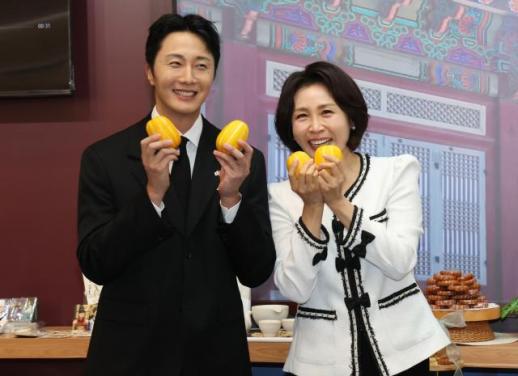 First lady Kim Hye-kyung promotes K-culture during Vietnam state visit Kim Hye-kyung, the wife of President Lee Jae-myung, on April 23 (local time) cast herself as a “K-culture ambassador” during the couple’s state visit to Vietnam. At the K-Culture Tourism Expo at Lotte Mall West Lake in Hanoi, Kim said culture, including film, is “the warmest link that connects people beyond language and borders,” adding that such exchanges will deepen understanding and friendship between the two countries. According to a written briefing by presidential deputy spokesperson Ahn Gwi-ryeong, the expo was organized by the Korea Tourism Organization and others to let visitors experience the K-culture wave spreading in Vietnam across areas including content such as dramas, food, beauty products, heritage and travel. The event runs from April 23 to 26. Lotte Mall West Lake Hanoi is Vietnam’s largest shopping and entertainment complex and is often described as “Korea in Vietnam” and a hub for K-lifestyle. Since opening in September 2023, it has logged more than 25 million cumulative visitors. Wearing a hanbok, Kim toured indoor pop-up zones with actor Jung Il-woo, who appeared in the Korea-Vietnam co-produced film “I’m Going to Abandon My Mom” and is nicknamed “Vietnam’s son-in-law” locally. Kim visited a K-content and K-food pop-up zone themed around the drama “The Tyrant’s Chef,” viewing costumes and props associated with a royal chef from the Joseon era. Guided by chef Ji Jun-hyeok, the first Korean to be listed in the Vietnam Michelin Guide in 2023, she joined a hands-on session making dishes featured in the drama. “I'm looking forward to what new flavors might come out when Vietnamese ingredients are added,” Kim said as she made bibimbap with visitors, mixing rice with water spinach and other vegetables, gochujang and butter. She also finished macarons using Korean black sesame and Vietnamese condensed milk, then handed them out to Vietnamese attendees. At a traditional K-food zone, she heard explanations of persimmon leaf tea, ginseng and yakgwa, and sampled yakgwa. After tasting fruit punch made with Korean melons and strawberries and Vietnamese mango, Kim said, “With all the delicious fruit, it’s even more balanced, and the Korean melon is especially fresh and cool.” She added that she could feel the local popularity of Korean melons, now in their second year of exports to Vietnam. At the K-beauty zone, Kim looked over Korean cosmetics and tried products with visitors. She also visited K-heritage and K-travel zones, along with outdoor K-webtoon and K-game pop-ups. Earlier in the day, Kim drew attention by wearing a pink ao dai. At the Vietnam Museum of Ethnology in Hanoi, she met Ngo Phuong Ly, the wife of Vietnam’s Communist Party general secretary, for a spouse-to-spouse cultural event. Ly told Kim she had seen photos posted on social media and said the ao dai suited her, “like a Vietnamese girl.” Kim replied that Ly looked “even more beautiful” when she wore a hanbok last year. With guidance from the museum director, the two viewed artifacts, models, photos and videos depicting the traditional culture and daily life of Vietnam’s 54 ethnic groups. When Ly asked for explanations, Kim described spaces one by one, including a hanok’s sarangbang and an apartment kitchen. Seeing a traditional gat hat in the sarangbang, Kim noted that the “Saja Boys” wore gat hats in the Netflix animated film “K-pop Demon Hunters.” They also watched a water puppet show, a representative Vietnamese intangible cultural heritage. At the end, puppets in an ao dai and a hanbok danced together, symbolically showing harmony between the two countries. Ahn said the two discussed shared interests including cultural cooperation and people-to-people exchanges, and greeted foreign tourists at the museum. Kim said she hoped efforts to respect and share each other’s traditions — like the hanbok and ao dai — would help bring the two peoples closer. Separately, President Lee’s social media carried thanks for the ao dai gift. The presidential office’s second annex posted on Instagram a message from Kim saying, “Madam Ly, thank you sincerely for sending such a precious gift,” adding that the “beautiful pink ao dai” conveyed Vietnam’s distinctive beauty and that she would cherish the warm sentiment. * This article has been translated by AI. 2026-04-23 21:49:42
 -
 Lee Calls Vietnam Key Partner, Urges Stronger Rare Earths and Urea Supply Chains President Lee Jae-myung, on a state visit to Vietnam, met with business leaders on April 23 (local time) and called for expanded economic cooperation. Speaking at the Korea-Vietnam Business Forum at a hotel in Hanoi, Lee said that with global economic uncertainty rising, cooperation between South Korea and Vietnam — which he called “the best partners” — is more important than ever. From South Korea, attendees included Samsung Electronics Chairman Lee Jae-yong, LG Group Chairman Koo Kwang-mo, SK Group Chairman Chey Tae-won and Doosan Enerbility Chairman Park Ji-won, among other executives. Vietnamese participants included Le Ngoc Son, chairman of the oil and gas corporation; Dang Hoang An, chairman of the power corporation; Dang Ngoc Hoa, chairman of Vietnam Airlines; and Phung Quang Hiep, chairman of the chemical corporation, who discussed potential cooperation with South Korea. Lee said he was confident the two countries are “the best partners” in leading global value chains, adding that expanding trade and investment could make it possible to meet a new goal of $150 billion in bilateral trade by 2030. He urged stronger manufacturing cooperation and a broader partnership in advanced industries such as semiconductors and electric vehicles. He also stressed the need to strengthen supply-chain links in energy-related items essential to high-tech industries, including rare earths and urea solution. Lee said building high-efficiency power distribution networks — including LNG power plants and nuclear power plants — is needed to support Vietnam’s stable industrial environment. He added that the business leaders gathered at the forum should serve as a cornerstone for opening a new chapter of cooperation. In welcoming remarks, Vietnamese Prime Minister Le Minh Hung called for stronger practical ties between companies to achieve shared growth, and asked South Korea to expand higher-quality investment in Vietnam. He also urged more investment and stronger technology transfer in high value-added fields such as advanced technology, semiconductors, artificial intelligence and clean energy. Business leaders also pledged to step up cooperation. Asked about accompanying Lee on his India-Vietnam trip, Samsung Electronics Chairman Lee Jae-yong replied briefly, “Businesspeople should speak with results.” LG Group Chairman Koo Kwang-mo said he hoped cooperation with India and Vietnam would advance in quality as well as scale. Doosan Enerbility Chairman Park Ji-won said, “We are trying to build a nuclear power plant in Vietnam. At today’s forum, I will explain Doosan Enerbility’s performance well.”* This article has been translated by AI. 2026-04-23 21:36:22
 -
 Third U.S. Aircraft Carrier Moves Closer to Middle East as Ceasefire With Iran Is Extended The U.S. military’s third aircraft carrier has moved closer to the Middle East as a ceasefire between the United States and Iran has been extended. Washington is pushing to hold a second round of talks on ending the war while reinforcing forces in case fighting resumes. CNN, citing photos posted on the Pentagon’s website, reported Thursday local time that the aircraft carrier George H.W. Bush has been in the Indian Ocean since April 21. With the Bush arriving, the U.S. Navy will soon have dozens more military aircraft available for use if the ceasefire ends or if Iran’s ports are blockaded. The Pentagon did not disclose the carrier’s exact location in the Indian Ocean. Some Pentagon website photos of the Bush include captions saying it was in the Indian Ocean on April 17. The carrier departed March 31 from Naval Station Norfolk in Virginia and was reported to have passed near South Africa’s Cape of Good Hope on April 17. Two U.S. carriers are already operating in the region: the Abraham Lincoln in the Indian Ocean and the Gerald R. Ford in the Red Sea. CNN said the U.S. military has 11 aircraft carriers but is currently operating only four because of maintenance and training. With the Bush joining, three of the four active carriers would be committed to the war with Iran.* This article has been translated by AI. 2026-04-23 21:03:18