
Journalist

Lee Hugh
=
-
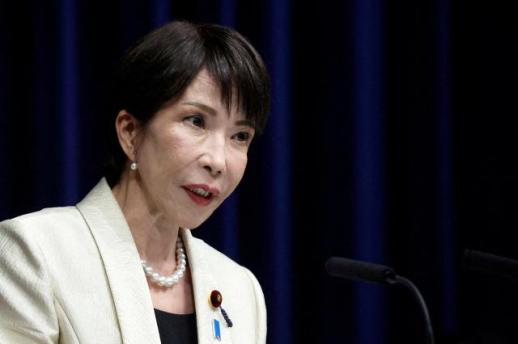 South Korea Voices Regret Over Japanese Prime Minister’s Yasukuni Shrine Offering South Korea’s Foreign Ministry on 21 expressed deep regret after Japanese Prime Minister Sanae Takaichi sent an offering to the Yasukuni Shrine’s autumn festival in Tokyo, where Class-A war criminals from the Pacific War are enshrined. In a spokesperson’s statement, the ministry said the South Korean government was “deeply disappointed and regretful” that “responsible Japanese leaders” again made offerings or visited the shrine, which it said glorifies Japan’s past wars of aggression and enshrines war criminals. The ministry urged Japan’s leaders to “face history” and to show “humble reflection and sincere remorse” over the past through their actions, adding that this is an important foundation for building a future-oriented South Korea-Japan relationship based on mutual trust. Takaichi made the offering to the shrine on 21. Other Cabinet ministers and key politicians from the ruling coalition also made offerings or visited, the ministry said.* This article has been translated by AI. 2026-04-21 15:05:14
 -
 Korea’s SME Tech Market Expands as AI Bridge Between Public and Private Sectors To speed artificial intelligence adoption in both the public and private sectors and strengthen cooperation, South Korea’s finance authorities on April 21 brought together public agencies and small and midsize companies for direct consultations. The Ministry of Finance and Economy held the “2026 SME Technology Market AI Forum” at the Sejong Convention Center. About 200 companies took part, including public institutions, firms certified by the technology market and AI suppliers. Vice Minister Heo Jang said the SME Technology Market has been “a leading cooperation platform” linking capable smaller firms with the public procurement market. With AI now central to national competitiveness in an era of “AI transformation,” he said, the platform should expand into AI and “take the next step forward.” The event also highlighted the launch of an expanded “Public Institutions AI Utilization Council,” bringing together participating agencies by five key fields, centered on previously selected AI-leading institutions. Organizers said the move underscored the public sector’s intent to lead in adopting AI while sharing and spreading innovation cases. The AI companion forum was held in three parts. Outside the opening ceremony in the second part, the morning and afternoon sessions ran one-on-one matching between AI suppliers and public institutions and certified firms, totaling about 400 consultations to connect on-the-ground demand with needed technologies. In an AI seminar that followed, invited experts delivered a trend briefing on AI’s past, present and future; introduced public-sector AI support programs; presented strong growth cases from small businesses that adopted AI; and staged a live showcase of physical AI being used by public institutions. The ministry said the forum helped link public-sector AI demand with private-sector capabilities and would support wider public use of AI, accelerating AI transition among small and midsize companies. Heo said the newly launched council should help build an AI ecosystem where the public and private sectors grow together. He also called for developing a “Technology Market AI dedicated section” into a practical venue that identifies strong AI technologies and leads to real-world application, adding that the ministry would provide policy and institutional support. 2026-04-21 15:04:12
 -
 Seoul to Redevelop Jeongneung Public Bus Depot Into Sports and Transit Complex Seoul said it will redevelop the Jeongneung public bus depot in Seongbuk-gu into a mixed-use complex combining transit functions with neighborhood sports and convenience facilities, including a swimming pool, a multipurpose gym and a fitness center. The city said Tuesday it has prepared a basic plan to use the space above the Jeongneung bus depot at 771-7, Jeongneung-dong, and will move ahead with the project. Seoul plans to request a central investment review from the Ministry of the Interior and Safety in June and, depending on the outcome, proceed with follow-up steps including design and construction. Mayor Oh Se-hoon visited the site Tuesday afternoon to check conditions and urged progress on the long-delayed project. He also called for measures to ensure resident safety and reduce inconvenience during implementation. The basic plan reflects the results of a planning study launched in September. Seoul said it kept the main uses and overall building scale from the earlier proposal, but reorganized space to cut costs by 10% and secured a temporary depot nearby to improve feasibility. The project, fully funded by the city at about 40 billion won, requires the ministry review because it involves construction of sports facilities costing more than 30 billion won. Seoul said it had finalized the development’s uses after gathering resident input and in April last year submitted a plan centered on sports facilities for review, but was told to reconsider and has since adjusted the basic concept. Under the plan, the Jeongneung bus depot will be rebuilt as a complex from two basement levels to three stories above ground, with a total floor area of 7,338 square meters. The ground floor will house bus parking, the first basement level will include a swimming pool, and the second and third floors will contain a multipurpose gym and a fitness center. Seoul said it placed bus parking at ground level to fundamentally reduce safety risks such as fire, and separated circulation routes for the transport company’s offices and resident-use facilities to improve operations. In February, the city held a briefing at the Jeongneung 4-dong community center attended by about 100 people, including Seoul’s political affairs vice mayor, a local lawmaker, the Seongbuk district mayor, city and district council members, and residents. Residents welcomed the plan but asked for quick, visible progress, saying it has been long sought by the community.* This article has been translated by AI. 2026-04-21 15:03:17
 -
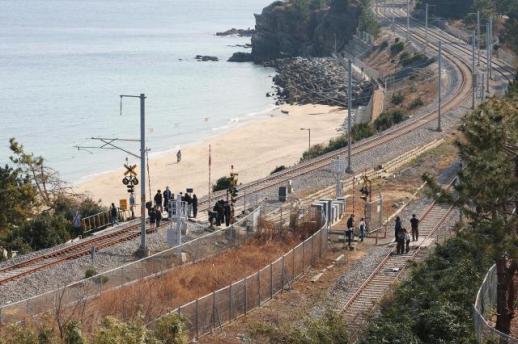 Rep. Lee Cheol-gyu Brokers Reopening of Donghae Rail Crossing; Canada Talks Cover Supply Chains, Energy Rep. Lee Cheol-gyu of the ruling People Power Party said he helped secure the reopening of the Hapyeong rail crossing in Donghae, which had been restricted over safety concerns as tourist crowds surged. Lee said that at a countermeasures meeting on the 20th at the National Assembly with the Korea National Railway, Korail and Donghae city officials, the parties reached a final agreement to resume access on the condition that safety staff be deployed no later than May 1. The Hapyeong crossing, a Category 1 unmanned crossing in Donghae, recently became known as a popular photo spot, driving a sharp rise in visitors. Korail imposed access limits starting Feb. 9 after repeated concerns about crowding inside the crossing and trespassing onto the tracks, Lee said. Residents in the Cheongok-dong area, who had used the crossing as part of their daily route, reported major inconvenience. A petition calling for restored access, signed by 5,419 residents, was submitted, the lawmaker said. Lee said he had continued talks with relevant agencies, including discussions with Korail’s facilities headquarters on April 7, and that the latest meeting produced a plan aimed at both safety and residents’ right of passage. Lee Cheol-gyu said, “Relieving residents’ inconvenience is a natural duty of a local lawmaker,” adding that repeated consultations produced an outcome balancing safety concerns and public access. He said he would continue to work on local issues, including mobility rights. Lee Cheol-gyu, industry committee chair, meets Canadian ambassador to discuss supply chains, energy and defense cooperation Lee, as chair of the National Assembly’s Industry, Trade, Energy, SMEs and Startups Committee, met Canadian Ambassador to South Korea Philip LaFortune on the afternoon of the 20th and discussed ways to expand cooperation on key issues including supply chains, energy and the defense industry. The two sides noted that South Korea and Canada have maintained cooperation as key partners, citing historical ties including the work of Dr. Frank William Schofield and Canada’s participation in the Korean War. With exchanges continuing in multilateral settings, the meeting was expected to further broaden bilateral cooperation. Lee said that amid global supply-chain instability and energy security challenges, securing critical resources and stabilizing supply chains are important. He said Canada’s mineral and energy resources should be combined with South Korea’s manufacturing capabilities to create high value-added outcomes across industries. LaFortune said South Korea is a key partner with competitiveness not only in defense but also in advanced fields such as artificial intelligence and semiconductors. He added that Prime Minister Mark Carney also trusts South Korea as one of Canada’s closest allies and an especially important partner for cooperation. The meeting also addressed Canada’s Canadian Patrol Submarine Project (CPSP), with an announcement of a preferred bidder expected in late June. Lee said competition between South Korea and Germany would broaden Canada’s options and help produce an outcome aligned with Canada’s national interest, adding that he hopes South Korea can serve as an optimal strategic partner. Both sides agreed on the need to expand cooperation centered on supply chains and advanced industries. LaFortune expressed strong interest in the Samcheok area, where infrastructure for future energy industries such as hydrogen has been established, and said he intends to visit related facilities in the future. * This article has been translated by AI. 2026-04-21 14:57:58
 -
 How Gen Z Turned Horror Film 'Salmokji' Into a Popcorn-and-Heart-Rate Challenge "Salmokji review: Spilled my popcorn." Since the horror film 'Salmokji' opened, short reactions and proof photos have flooded online. Posts saying viewers spilled popcorn — along with screenshots of heart rates captured right after the movie — quickly turned 'Salmokji' reviews into a kind of game. The trend has become another clue to the film’s box-office run, as personal experiences are reposted and recirculated online, extending the buzz beyond simple word-of-mouth that it is "scary." According to the Korean Film Council’s integrated ticketing network on the 21st, 'Salmokji' added 46,984 admissions the previous day, bringing its cumulative total to 1,508,824. That is well above its break-even point of 800,000. The film also ranked No. 1 at the weekend box office for two straight weeks and has held the top spot for 12 consecutive days. For April — typically considered an off-season for theaters — the sustained performance of a horror title has stood out. The reactions that spread fastest among Gen Z audiences were not detailed reviews. They were brief posts such as "First time I’ve ever thrown popcorn because I got startled," "The person next to me spilled all their popcorn," and "Salmokji review: spilled popcorn." Many were paired with screenshots from smartwatches or phone apps showing elevated heart rates. In other words, the reaction — photos and numbers — was consumed before the appraisal. Showbox said it views "popcorn proof" and "heart-rate proof" as part of a moviegoing verification culture. "It’s not just watching the film and being done — leaving reactions afterward and sharing them is helping secondary word-of-mouth," the company said. Showbox added that while popcorn and heart-rate reactions are not unheard of for horror films, sharing them in a more deliberate way after viewing can have a positive effect on box-office performance. If the early buzz resembled a challenge-style trend, repeat viewings were driven by audiences trying to reread the story and its hidden meanings. Online, viewers traded differing interpretations of the open ending and debated the relationship between Suin and Gitae. Others dug into the characters’ psychology and dynamics in detail, extending the experience from fear to analysis. Showbox said that since the COVID-19 pandemic, audiences have seemed eager to expand offline experiences or find ways to enjoy content after watching a film. The company said the broader trend has included pop-ups and other in-person experiences that extend beyond the screen, adding that films with more to talk about and engage with tend to generate attention that feeds back into theater attendance. As ending theories and relationship debates continued, 'Salmokji' kept generating conversation well after its release. Startled reactions created the first wave of attention; interpretation and character-focused discussion helped sustain it. The film’s scares did not end in the theater — they were revived online. That is why 'Salmokji’s' 1.5 million admissions are not captured by a single number. Fear experienced in the cinema moved into online proof posts, which then became a new source of buzz. With ending interpretations and relationship debates added on, the film was consumed again — offering a snapshot of how younger audiences are changing the way they watch and share horror movies.* This article has been translated by AI. 2026-04-21 14:56:58
 -
 Iran Signals It Will Send Negotiators to Pakistan for Second Round of U.S. Talks Iran has indicated it may attend a second round of peace talks with the United States expected to be held in Pakistan. The Wall Street Journal reported Sunday, citing multiple sources, that Iran told mediators it intends to send a negotiating team to Pakistan on April 21. Iran has not officially confirmed whether it will dispatch a delegation. Foreign Ministry spokesman Esmail Baghaei said, "For now, there are no plans for the next talks," adding that Iran "will not accept deadlines or ultimatums" to protect its national interests. Iranian President Masoud Pezeshkian has also voiced deep distrust of the United States, stressing that "Iran will not yield to force." As Iran sends mixed signals, attention has turned to U.S. moves that could affect whether talks go ahead. Axios reported that Vice President JD Vance planned to depart for Pakistan by the morning of April 21, accompanied by Middle East envoy Steve Witkoff and Jared Kushner. Some reports suggested he could travel late on April 20. Axios said Vance had remained in the United States until an Iranian response emerged, but would leave after receiving a "green light" from Iran's supreme leader, Mojtaba Khamenei. The developments come after President Trump extended a ceasefire deadline by one day, from April 21 to the evening of April 22, fueling expectations of a deal. Reflecting that sentiment, international oil prices, which surged the previous day, fell about 1% to 2% in Asian trading. Separately, the United States is set to host a second ambassador-level meeting between Israel and Lebanon at the State Department on April 23. The session would be the first follow-up talks since a U.S.-mediated ceasefire was reached after weeks of clashes between Israel and Iran-backed Hezbollah. In their first meeting, the two sides agreed to begin direct negotiations toward a comprehensive peace agreement. 2026-04-21 14:56:09
 -
 HD Construction Equipment Hits Intraday Record on Europe Generator Engine Deal Hopes HD Construction Equipment climbed more than 7% intraday and set a record high after news of a supply contract for generator engines in Europe. According to the Korea Exchange, shares were up 12,600 won, or 7.58%, at 177,500 won as of 2:30 p.m. The stock touched 178,000 won during the session, its highest level on record. The gains were widely attributed to expectations the company will expand its push into the European market. The company said the previous day it signed a contract to supply 264 units of its G2 engine for generators to Portuguese generator maker Grupel. The deal is aimed at meeting rising demand for mobile generators in Europe and replacement demand driven by tighter emissions rules. The G2 is a small engine that meets Europe’s Stage V emissions standards and features a high-pressure fuel injection system and fuel-efficiency improvements designed to boost performance and durability. HD Construction Equipment said it plans to pursue additional orders for mid-sized engines such as the DX05 and DX08. It aims to lift European power-generation engine sales from 40 billion won to 67 billion won by 2030, and to expand total power-generation engine sales to about 770 billion won from 370 billion won in 2025. Market watchers also point to growth in Europe’s generator market. Research firm Mordor Intelligence forecasts the European diesel generator market will grow from $3.87 billion in 2026 to $4.74 billion in 2031, an average annual increase of 4.18%. Brokerage analysts have also maintained a positive outlook on the stock as industry conditions improve. Samsung Securities analyst Han Young-soo said, “As the global construction equipment market enters a rebound phase, HD Construction Equipment, which has a large base effect, is expected to grow faster,” adding that demand tied to U.S. dealer inventory buildup, stabilization in Europe, firm raw material prices and the industry cycle point to a continued recovery. 2026-04-21 14:55:23
 -
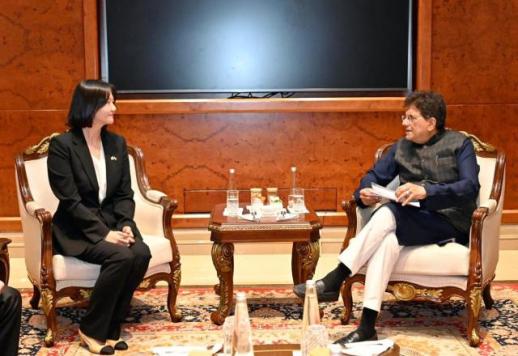 Naver, Krafton and Mirae Asset Seek Up to 1 Trillion Won for India Tech Fund Naver, Krafton and Mirae Asset are moving to make a large-scale technology investment push in India, aiming to identify promising information technology companies through a “Unicorn Growth Fund (UGF)” that could reach up to 1 trillion won. Naver said it introduced the UGF to local companies and venture capital firms at a briefing held April 21 in New Delhi. The event was arranged in connection with President Lee Jae-myung’s trip to India. Attendees included Industry and Trade Minister Kim Jung-kwan; Naver CEO Choi Soo-yeon; Krafton CEO Kim Chang-han; Krafton India head Son Hyun-il; Mirae Asset India Vice Chairman Swarup Mohanty; and Punit Kumar, CEO of Mirae Asset Venture Investment India. “India is rapidly expanding its AI industry on the back of abundant IT talent and a dynamic startup ecosystem, growing into a center of global digital innovation,” Choi said. She said the UGF will invest in high-growth technology companies in areas including AI, fintech and content, and serve as a platform to create strategic synergies by combining the three firms’ capabilities. Kim said India is emerging as the world’s fastest-growing gaming market and a hub for technological innovation. He said Krafton will be a mid- to long-term partner that supports promising companies’ global expansion through the UGF. Choi met April 20 with Commerce and Industry Minister Piyush Goyal to explain the fund’s vision and plans, and the two sides were reported to have formed a positive consensus. The UGF was formed early this year after Krafton committed 200 billion won, and began operations at more than 500 billion won including contributions from Naver, Mirae Asset and outside investors. The fund could later expand to as much as 1 trillion won, the companies said. The fund follows the Asia Growth Fund (AGF), jointly created by Naver and Mirae Asset. The AGF invested in major unicorns including India’s food delivery platform Zomato and Southeast Asia’s largest mobility company, Grab. Separately, Naver said it signed a memorandum of understanding the same day with Tata Consultancy Services, the IT arm of India’s Tata Group, to expand cooperation in AI, cloud and B2C services as it steps up its India strategy.* This article has been translated by AI. 2026-04-21 14:54:27
 -
 TWICE Nayeon sports new identity in "Wear Yourself" campaign with GROVE SEOUL, April 21 (AJP) - Nayeon of South Korean girl group TWICE under JYP Entertainment joined fashion brand GROVE in its third campaign. The “Wear Yourself” campaign is built around the idea of dressing in a way that reflects one’s true self, offering a message of personal expression through fashion. The brand presented styles completed in individual ways by combining timeless basics with statement pieces. Nayeon, who serves as Grove’s ambassador for Korea and China, visited the newly renovated GROVE Apgujeong Store to mark the opening of the refreshed space and the launch of the third season. Visitors can also see Nayeon’s own interpretation of the “Wear Yourself” style at the store. 2026-04-21 14:53:15
 -
 Korea Finance Union Seeks 8% Pay Raise, 4.5-Day Workweek Ahead of Local Elections The Korea Finance Union has launched this year’s industrywide bargaining, raising its demands for higher pay and shorter working hours. With June local elections approaching and politicians courting labor support, analysts say the union’s voice is growing louder. According to the financial sector on April 21, the union recently held its “2026 first delegation bargaining session” and began full talks with the Financial Industry Employers Association. Its key demands include an 8.0% increase in total wages, adoption of a 4.5-day workweek, raising the retirement age to 65 while scrapping the wage-peak system, and blocking relocation of headquarters outside the capital area. The two sides plan to hold main bargaining talks on May 27. For its 2026 wage proposal, the union is seeking an 8.0% increase in total wages — about 2.5 times last year’s agreed raise of 3.1%. The union said the figure reflects projected economic growth of 2.0% and consumer inflation of 2.2%, as well as a 3.8% decline in real wages over the past five years. A 4.5-day workweek without pay cuts is also a central issue. The union says it will not accept reductions tied to shorter hours, while management argues some adjustment is needed, leaving the issue unresolved. Yoon Seok-gu, the union’s chairman, said, “It’s time for workers to receive fair compensation,” adding, “Just as spring does not come on its own, our rights must be won through a fierce struggle.” In and outside the industry, some see the election calendar as strengthening the union’s bargaining position. The union has about 100,000 members, including workers at major commercial and state-run banks, and has drawn political attention during election seasons. The article noted that the union formed a policy alliance with the Democratic Party during last year’s presidential election, fueling expectations that the ruling camp will find it difficult to ignore labor demands. The union’s standing has also been bolstered by recent political messages urging labor to take a more active role. President Lee Jae-myung told a labor event to “fight hard for workers’ rights,” and Democratic Party leader Jung Cheong-rae said, “Make more noise at worksites,” according to the article. Still, the union’s demands may struggle to win broad public support. Average annual pay for employees at the four major banks — KB Kookmin, Shinhan, Hana and Woori — was 122.75 million won last year, up 4.03% or 4.75 million won from 118.00 million won a year earlier. By contrast, the average total pay for regular workers last year was 50.61 million won, less than half the level for bank employees. A financial industry official said the union has in recent years proposed high wage increases and shorter hours and, if management refuses, moved toward strikes. “This year as well, the domestic and external business environment is not good, so difficult labor-management talks are expected,” the official said.* This article has been translated by AI. 2026-04-21 14:50:16