
Journalist

Lee Hugh
=
-
 Woljeongsa abbot urges new path in AI era through Odaesan Buddhist masters "We're in an era where established religions are bound to weaken, with people leaving religion and spirituality becoming secular and commercialized," Venerable Jeongnyeom said. "But if we reflect carefully on what came before, we can always open a new path." Jeongnyeom, 70, abbot of Woljeongsa Temple on Mount Odaesan in Gangwon Province, made the remarks at a press briefing on April 14 at the National Museum of Modern and Contemporary Art in Seoul for the publication of <Great Monks of Odaesan>. Saying most established religions are losing influence, he urged closer attention to the legacy of eminent monks. He said the public should be able to understand the monks' practice, ideas and the broad Buddhist culture of Odaesan. He described the series as a biographical project planned to prepare for the artificial intelligence era and to produce new cultural content that future generations can use easily. <Great Monks of Odaesan> compiles the lives and teachings of eight eminent monks who passed through Mount Odaesan over about 1,400 years, from the Silla period to modern times. The project totals 10 volumes: eight on individual monks, one general history volume and one reference volume. Three volumes have been released first, with the remaining seven to be published sequentially within the year. The series highlights figures including Jijang Yulsa, Beomil Guksa, Naong Seonsa, Tanheo Seonsa and Manhwa Seonsa, presenting continuity in the Korean Buddhist lineage centered on Odaesan. The project began with Jeongnyeom's idea. He has led efforts to systematically organize the monks' practice, thought and cultural legacy, but much of the work had accumulated mainly in academic papers, limiting access for general readers. Determined to finish his term as abbot well, Jeongnyeom approached publisher Minjoksa. He said he sought an unconventional format written in modern language so readers could engage with it more easily. The books are based on documented research but add about 20% fictional elements. Minjoksa asked writers to produce a format that even middle and high school students could understand, without leaning too heavily toward a novel or a conventional biography. Participating authors revised and supplemented drafts repeatedly before completing the volumes. Throughout the briefing, Jeongnyeom stressed what he called an "AI transformation," voicing concern about "a situation where machines become humanlike and humans become machine-like." He said society is facing a civilizational shift marked by a loss of meaning and confusion over values, and urged Korean Buddhism to renew its sense of purpose and serve as a source of wisdom in a time of transition. He also described the monks featured in the series as people who illuminated Odaesan and did their best to overcome turmoil in Korean society. Citing a sense of crisis over an approaching "AI tsunami," he said Buddhism, too, must move forward with new hope. Asked about reporters' questions related to the Buddhist order's election for its chief administrator, he emphasized leadership, calling for change, hope and unity. "In an uncertain era where change never stops, the most important quality of leadership today is to see the future and set direction," he said. "Many parts of the order's culture fall short in building the public's affection for Buddhism. A forward-looking design is important." 2026-04-16 14:45:18
 -
 South Korea's AI startups post strong growth under science ministry program SEOUL, April 16 (AJP) - South Korea's Ministry of Science and ICT announced that AI and digital companies backed by its K-Global Project program posted broad gains in revenue, investment and employment last year, as the initiative celebrated a decade of nurturing the country's startup ecosystem. According to its press release on Thursday, the ministry surveyed 397 firms that participated in the program, drawing responses from 290 companies. Combined headcount at the end of 2025 reached 10,221 employees, up 450 from the prior year, with about 65 percent of respondents reporting increase in hiring. Total revenue of the firms rose about 8.1 percent year on year to 1.86 trillion won($1.26 billion), outpacing the 6.7 percent average growth rate recorded by KOSDAQ-listed companies over the same period. Investment raised by participating firms surged 53.9 percent to 875.1 billion won, while patent applications climbed 12.8 percent to 4,106 filings. The K-Global Project, launched as an umbrella brand for the ministry's AI and digital support programs, has produced several high-profile success stories. Chipmakers Rebellions and Furiosa AI, both alumni of the program, have since reached unicorn status, while AI medical-imaging firm Vuno and AI compression specialist Nota AI have completed KOSDAQ listings. "AI and digital startups are emerging as the central drivers of industrial innovation, and the companies introduced today are prime examples of that," said Park Tae-wan, Director General of the ICT Industry Policy at the ministry. Park added that the government would refine the program based on industry feedback and work to ensure Korean firms can compete in global markets. 2026-04-16 14:39:28
 -
 Why Shinhwa’s Kim Dong-wan Keeps Trying to Say the “Right” Thing Shinhwa member Kim Dong-wan weighed in on comedian Lee Su-ji’s parody video about a kindergarten teacher, saying it "simply exposed the contradiction of expecting good education without respecting educators." He said he was concerned that discipline is being discouraged and that children are losing social experience. Many found the point understandable. But the public increasingly hears his comments not as a single opinion, but as part of a familiar pattern of "Kim Dong-wan-style" speaking out. Kim is someone who chooses to speak rather than stay silent. People like that often treat public commentary as part of their identity, driven by a strong inner belief that "someone has to say it." Public moral arguments can also become tied to self-validation or status, and at times can deepen conflict. That does not mean his remarks should be dismissed as showmanship or hypocrisy. Still, his repeated interventions in social controversies can be read as an urge to "correct" the world and an inability to hold back what he believes is right — a posture that can look more like certainty than self-restraint. His critical perspective has often stayed within reasonable bounds and at times has served as a warning bell. The problem, the article argues, is that audiences judge the messenger as much as the message. Even when his words sound rational, past controversies and allegations can prompt a different question: Does he have the standing to say it? This year alone, Kim drew criticism in February for a post that mentioned the need to legalize prostitution. Last month, he was criticized for a supportive message to MC Dingdong, who was embroiled in allegations involving assaulting a female BJ and drunk driving. Then a person claiming to be Kim’s former manager made allegations about his character. Kim called them "false claims" and said he would take legal action. He later apologized, saying, "I deeply apologize to those who may have felt uncomfortable because of recent events." People tend to react more strongly to perceived hypocrisy than to mistakes. A 2017 study by psychologist Jillian J. Jordan and others said people dislike hypocrites in part because condemning others can send a "false signaling" message about one’s own morality. Related research suggests that when someone who preaches morality fails to meet that standard, others may see the person as self-righteous and respond with stronger resentment and distrust. The article says the harsher view of Kim is not because he is saying the wrong things, but because he tries too often — too clearly and too easily — to occupy the position of being right. As the weight of his comments grows, earlier carelessness, incomplete explanations and even his conduct after apologizing are pulled back into view. In that moment, conviction can be mistaken for habit, and courage can be read as superiority. Speaking up when something seems wrong can be brave and can help move society in a better direction. But the article argues that what the public wants now is not another correct answer, but self-reflection from the person delivering it — words that come after confronting one’s own contradictions. 2026-04-16 14:27:19
 -
 Shinhwa’s Kim Dong-wan Weighs In on Lee Soo-ji’s Kindergarten Teacher Parody Shinhwa member Kim Dong-wan has shared his views on comedian Lee Soo-ji’s content parodying a kindergarten teacher. In a post on social media on the 15th, Kim wrote, “Comedian Lee Soo-ji’s kindergarten teacher content. It may simply have laid bare the contradiction of expecting good education without respecting educators.” He added that it appeared to have “rubbed more people the wrong way than expected,” saying the word “discipline” itself has become increasingly sensitive and schools have grown more constrained. As events such as sports days, picnics and school trips disappear or are scaled back, he said, children are instead pushed to face relationships and conflict outside school. “What they should experience with fewer injuries within the fence of education, they end up confronting defenseless in a harsher society,” he wrote, adding that children bear the greatest harm. “Unless the authority of educators is protected, the education we need — and the educators themselves — may gradually disappear,” he said. Lee drew widespread attention on April 7 with a video titled “Kindergarten Teacher Lee Min-ji’s Never-Ending 24 Hours — Human Documentary: A Real Extreme Job,” parodying the reality of a kindergarten teacher burdened by excessive work and complaints from parents. The video logged 4.93 million views in eight days after its release. 2026-04-16 14:18:14
 -
 Daewoong Pharmaceutical Hosts Nabota Master Class, Highlights Safety Daewoong Pharmaceutical said Wednesday it held a global academic program for medical professionals, the “Nabota Master Class (NMC) Spring in Korea.” The 2-night, 3-day event ran from April 13-15 for 74 medical professionals from 13 countries, including Thailand, Brazil and Chile. Sessions were held at Mercure Seoul Magok, COEX Magok, Ewha Womans University Seoul Hospital and Daewoong Pharmaceutical’s Hyangnam plant. The NMC program is designed to strengthen clinicians’ capabilities and promote academic exchange as the global botulinum toxin market expands. The first day’s lectures covered trends in botulinum toxin procedures and safety, differences in diffusion and duration by product, and examples of combination treatments. An anatomy session, a key feature of the program, was designed to improve accuracy and safety in botulinum toxin injections. Using cadaver-based training and face painting, instructors explained facial anatomy and injection points, followed by a live demonstration via two-way broadcast and one-on-one hands-on training. Daewoong said sessions sharing know-how and experience with Nabota’s signature techniques, including Nabolift and Naboglow, drew strong interest. Participants also toured the Hyangnam plant, where the company introduced its aseptic processes, production facilities and automated logistics system, highlighting Nabota’s manufacturing capabilities. “Daewoong Pharmaceutical will continue to strengthen brand competitiveness through a global academic platform that expands Nabota’s proprietary techniques and clinical experience,” said Yoon Jun-su, head of the company’s Nabota Business Division.* This article has been translated by AI. 2026-04-16 14:06:00
 -
 Kim Won Wins Grand Prize at 59th Yuhan Medical Award Yuhan Corp. said Wednesday it held the 59th Yuhan Medical Award ceremony with the Seoul Medical Association on April 15 at the Westin Josun Hotel in Seoul’s Sogong-dong neighborhood. Attendees included Hwang Gyu-seok, president of the Seoul Medical Association, and Kim Yeol-hong, CEO of Yuhan Corp. The grand prize went to Kim Won, a professor in the Department of Internal Medicine at Seoul National University Boramae Medical Center. The Young Medical Scientist Award was presented to Yoo Seung-chan, an associate professor at Yonsei University College of Medicine, and Ahn Yu-ra, an assistant professor at the University of Ulsan College of Medicine’s Asan Medical Center. Kim was recognized for analyzing genetic regulatory patterns in patients with metabolic dysfunction-associated steatotic liver disease, or MASLD, laying groundwork for personalized diagnosis and the development of treatment targets. Organizers said the selection process considered research achievements across internal medicine, surgery, basic medicine and other supporting fields. The grand prize carries 50 million won, and each Young Medical Scientist Award carries 15 million won. “We are grateful for the dedication of medical staff, and we hope these research achievements will lead to advances in medicine,” Kim Yeol-hong said. 2026-04-16 14:03:08
 -
 Hugel Launches China Medical Aesthetics Symposium Tour With Beijing Event Hugel said Thursday it will step up academic exchanges with local medical professionals by holding regional symposiums in major medical aesthetics hubs across China. Starting in Beijing, the company plans events this year in six cities: Shanghai, Guangzhou, Hangzhou, Chengdu and Wuhan. Hugel held its first event, the “Letybo Regional Symposium and Hands-on Training,” in Beijing on April 15. Kim Jeong-hwan, director of Dr. Evers Myeongdong, was invited as a speaker, and about 30 local medical professionals attended. The symposium was organized to raise awareness and trust in Hugel’s botulinum toxin product, Letybo. Participants discussed combined treatment cases using Letybo, their effects and potential future applications. “We will build a medical aesthetics exchange network based on academic events linking China’s key hub cities,” Hugel Vice President Ji Seung-uk said. He added the company aims to expand practical exchanges with local medical professionals and strengthen Hugel’s brand presence and credibility.* This article has been translated by AI. 2026-04-16 13:57:00
 -
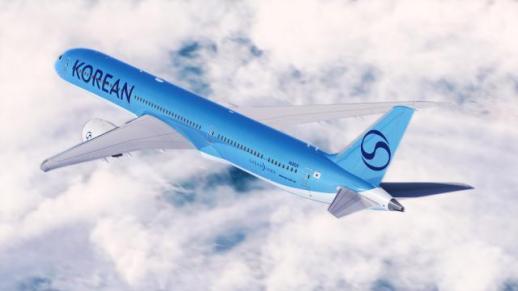 Record-high fuel surcharges to push up airfares ahead of peak summer travel season SEOUL, April 16 (AJP) - Fuel surcharges on international flights will rise to record-high levels next month as oil prices remain high, even as there are some hopes for an end to the prolonged conflict in the Middle East. Both international and domestic flight routes are subject to these surcharges, which airlines adjust based on changes in the average price of fuel traded on Singapore's spot market. According to aviation industry data released on Thursday, the average price of Singapore jet fuel, known as MOPS, soared to 511.21 cents per gallon for the period from March 16 to last Wednesday, which is used to set surcharges for May. The persistently high price will push fuel surcharges for May to the highest level on the 33-tier scale, a jump of 15 levels from this month's level of 18, the biggest jump since the scale was first implemented in 2016. Flagship carrier Korean Air will impose fuel surcharges ranging from 75,000 won to 564,000 won depending on routes, while Asiana Airlines, acquired by Korean Air in December 2024 and set to be fully integrated by early 2027, will charge between 85,400 won and 476,200 won. Low-cost carriers including Jeju Air and T'way Air have yet to release their respective surcharges for the coming month, but similar levels are expected. Accordingly, round-trip fares on long-haul routes such as those from Incheon to Europe or the U.S. are expected to rise by more than 1 million won compared with the previous month. "Hikes in fuel surcharges are unavoidable as airlines seek to recover losses caused by high oil prices," an industry insider said. "However, higher surcharges will inevitably lead to higher ticket prices, raising concerns that travel demand could weaken ahead of the peak summer vacation season." 2026-04-16 13:52:50
 -
 When K-fandom meets baseball, it's no longer just a game Fans cheer during the LG Twins–SSG Landers game at Jamsil Baseball Stadium in Seoul on April 11, 20 SEOUL, April 16 (AJP) - Fanchant, glow sticks, choreographed dancing and a brisk run on merchandise stands — the ritual of K-pop no longer ends at the arena gates. In South Korea, it now spills into the ballpark. Spring, for a growing legion of fans, is no longer about cherry blossoms. It’s about the first flash of team colors under stadium lights, the hum of a crowd finding its rhythm again. Baseball season, like a long-awaited comeback tour, has its own opening night energy. “Ballparks aren’t old men’s turf anymore,” one fan said with a grin, half-shouting to be heard over the music blaring between innings. And she’s right. The Korea Baseball Organization (KBO), founded 45 years ago, is in the middle of a transformation that veteran observers say they’ve never quite seen before. Last year, the league drew a record 12.31 million fans and generated more than 1 trillion won ($740 million) in economic impact. This season, the KBO League is already rewriting its own playbook. It surpassed 1 million spectators in just 55 games over 14 days — the fastest and fewest games on record — breaking last year’s pace only one year later. With 440,000 fans pouring into preseason games, the league is now swinging for 13 million. At this trajectory, another record year no longer looks like a stretch. “It’s not just a game anymore” On a mild weekend afternoon around Jamsil Sports Complex, the air carries a familiar refrain: “Seoul LG, run toward your dreams!” The chant rolls out of the subway exits before fans even glimpse the field. Streams of supporters in red jerseys move like a tide toward the stadium, phones already out, voices already warming up. Among them, the new face of Korean baseball is impossible to miss — women in their 20s and 30s, many in character —collaboration uniforms, some clutching light sticks, others filming snippets for social media before first pitch. “It’s not just about watching the game anymore,” said 23-year-old LG Twins fan Yoo Eun-seo, pausing between takes of a cheer she was recording with friends. “It feels like a full day out — like a festival.” That shift — from spectator sport to immersive experience — is reshaping everything. A fan in her 20s or 30s wearing a Hello Kitty collaboration uniform watches the LG Twins–SSG Landers game at Jamsil Baseball Stadium in Seoul on April 11, 2026. AJP Yoo Na-hyun The new economy of fandom Start with the concessions. Gone are the days when boiled silkworm pupae and draft beer defined the ballpark palate. In their place: mala skewers, fruit ades, designer desserts — food that looks as good on camera as it tastes. Then there’s the merchandise. At team stores, jerseys no longer dominate alone. Key rings, photo cards, and character collaborations fill the shelves. At kiosks, lines stretch long for collectible cards — fans chasing their favorite players like rare pulls in a trading pack. “I keep buying until I get the player I want,” said 26-year-old LG Twins fan Park si-hyun, laughing as she flipped through a fresh stack. “There’s just so much variety now — it makes you want more.” The numbers back it up. According to ticketing platforms, women in their 20s and 30s accounted for 36.6 percent of ticket purchases last year — surpassing their male counterparts in the same age group. The stadium naturally has to change to meet the new demand. “The KBO League is no longer just about watching games. It has evolved into an experience-driven leisure culture that combines food, entertainment and social engagement,” a KBO spokesman said. “Regardless of the outcome, there are now far more elements that encourage fans to stay longer and spend.” The spokesman added that improvements in facilities — including restroom cleanliness and nursing rooms — are helping create an environment tailored to women and family audiences. Efforts are also focused on ensuring a safe viewing experience, expanding amenities, and strengthening merchandise and content offerings. “Under a ‘fan-first’ approach, clubs are enhancing fan services, which has significantly narrowed the distance between players and supporters,” he added. Fans line up at a kiosk to print custom photo cards at the LG Twins goods shop inside Jamsil Baseball Stadium in Seoul on April 11, 2026. A stadium that sings Inside a packed 23,000-seat stadium, the noise is constant — not just cheers, but synchronized singing, a rolling chorus that rises and falls with each at-bat. Phones are always up. Moments are captured in real time — a home run swing, a pitcher’s stare, a perfectly timed dance break between innings. And when the final out is recorded, no one rushes for the exits. Fans linger. They pose with slogans, trade photos, relive the game in curated snapshots for their feeds. The experience doesn’t end with the scoreboard; it extends into the afterglow. Baseball here is no longer just watched. It’s performed, shared, and archived. Fans receive autographs from players after the LG Twins–SSG Landers game at Jamsil Baseball Stadium in Seoul on April 11, 2026. AJP Yoo Na-hyun From players to personas The way fans connect with players is evolving, too. Performance still matters — but so do personality, storytelling, and fan service. Players are no longer just athletes; they’re characters in an unfolding narrative, each with their own following. Clusters of fans wait after games along the players’ exit routes, hoping for a glimpse, a signature, a fleeting interaction. “Once you see a game live, you start to have a favorite player,” Yoo said. “Then you keep coming back.” It’s the logic of fandom — familiar to K-pop, now fully embedded in baseball. Fans take photos with team merchandise during the LG Twins–SSG Landers game at Jamsil Baseball Stadium in Seoul on April 11, 2026. AJP Yoo Na-hyun A customer looks at KBO League collaboration merchandise at a Starbucks store on March 30, 2026. AJP Yoo Na-hyun Beyond the Diamond The ripple effects are spreading far beyond the stadium walls. Major brands — from coffee chains to convenience stores — are rolling out collaborations with teams, extending the fan experience into everyday life. According to the Hyundai Research Institute, professional baseball now generates more than 1.1 trillion won in annual consumption spending, while combined ticket revenues for the league’s 10 clubs have topped 200 billion won for the first time. A spectator watches the LG Twins–SSG Landers game at Jamsil Baseball Stadium in Seoul on April 11, 2026. AJP Yoo Na-hyun On game days, nearby businesses report sales surging by over 90 percent. This is no longer just a sport. It’s an ecosystem. What’s unfolding in Korean baseball isn’t a fleeting trend. It’s a structural shift — driven by a new audience that consumes differently, participates actively and expects more than just nine innings. Fans wait for players after the LG Twins–SSG Landers game at Jamsil Baseball Stadium in Seoul on April 11, 2026. AJP Yoo Na-hyun Like any great season, the game builds inning by inning. And if the early crowds are any indication, this one is headed for a record finish — with a soundtrack, a light show and a fan base that knows every word by heart. Park Eun-seo (30, left) and Lee Na-young (30, right) pose for a photo after the LG Twins–SSG Landers game at Jamsil Baseball Stadium in Seoul on April 11, 2026. AJP Yoo Na-hyun 2026-04-16 13:34:28
 -
 BTS and K-culture boom lift tourist arrivals in Korea to record high Q1 SEOUL, April 16 (AJP) - Foreign tourist arrivals to South Korea rose to a record high in the first quarter, as global demand for Korean cultural content from highly anticipated K-pop supergroup BTS' return to digital hits like K-pop Demon Hunters continued to drive travel interest, Ministry of Culture, Sports and Tourism said Wednesday. Inbound visitors reached 4.76 million in the January–March period, up 23 percent from a year earlier, with March alone setting a monthly record of 2.06 million, according to the Ministry of Culture, Sports and Tourism. The growth was broad-based across key markets. Chinese tourists led with 1.45 million arrivals, followed by Japan at 940,000 and Taiwan at 540,000, the latter posting the fastest growth rate at 37.7 percent. Long-haul travel also gained traction, with visitors from the United States and Europe reaching a combined 690,000, signaling continued diversification of inbound demand. Beyond volume, indicators pointed to improving tourism quality. Cruise traffic rose 52.9 percent on-year to 338 port calls, while arrivals through regional airports surged 49.7 percent, reflecting increased travel beyond major gateways. Spending by foreign visitors climbed 23 percent to 3.21 trillion won, while overall travel satisfaction reached 90.8 points, suggesting stronger consumption and visitor experience. The ministry attributed the growth to the global appeal of K-culture and coordinated efforts between public and private sectors. Kang Jung-won, director general for tourism policy, said Korea is solidifying its position as a global tourism destination, but warned of potential headwinds from rising airfares linked to higher oil prices and geopolitical uncertainty. "We will proactively respond to external risks to sustain the growth of inbound tourism," Kang said. 2026-04-16 11:39:18