

Journalist

Ryu Yuna
Julia37@ajunews.com
-
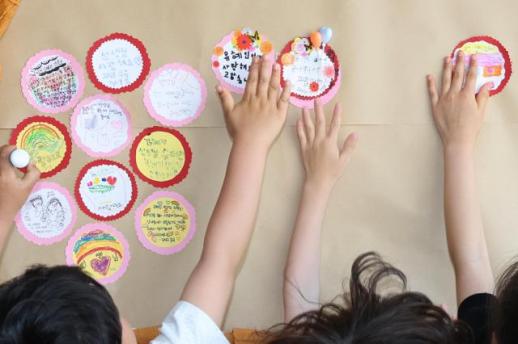 Teachers Face Restrictions on Celebrating Teacher's Day in South Korea "The grace of a teacher is like the sky, the more I look up, the higher it seems. The true teacher who teaches us to be righteous is like a parent in our hearts. Oh, thank you for the love of a teacher, oh, I will repay the grace of a teacher." This song, traditionally sung on Teacher's Day, has become increasingly rare to hear. Small classroom celebrations have also come under scrutiny. The Gyeongsangbuk-do Office of Education announced through an internal bulletin that under the Anti-Corruption Act, teachers, students, and parents are considered "direct stakeholders." They advised against giving or sharing cakes with teachers on Teacher's Day. "While making Teacher's Day cards, the children were asking, 'Can we give a gift to the teacher, or not?' I overheard some students saying, 'Even giving a carnation or a drink could get the teacher in trouble,'" said Yoon Mi-sook, a sixth-grade teacher at S Elementary School in Busan, expressing her disappointment. "The children likely had no ill intentions, but I felt a sense of shame in a classroom where it has become normal to discuss that 'even a drink could get the teacher in trouble' before Teacher's Day," she reflected. She questioned, "Is this situation really normal?" On a day meant to honor teachers, they now find themselves weighing the legal risks of accepting a piece of cake or a single carnation from students. This situation is particularly ironic in South Korea, where the term "teacher" has historically symbolized respect and moral authority. In Confucian culture, teachers are seen not just as knowledge bearers but as figures who impart character and order, and the tradition of singing "The Grace of a Teacher" and writing thank-you letters continues in schools today. Teacher's Day originated in 1958 when members of the Youth Red Cross visited sick teachers. The date was established as May 15, the birthday of King Sejong, in 1965, becoming a national holiday. However, with declining teacher authority, malicious complaints, and various legal burdens, many teachers now express that "the day has become just a name." Pride in the teaching profession has long been in decline. According to a survey released by the Teacher Labor Union Federation on May 14, more than half of teachers have considered resigning in the past year. Only about 5% of teachers feel respected by society, and only about 30% report feeling fulfilled in their teaching careers. Feelings of helplessness regarding violations of teacher rights and a breakdown of trust are also evident. A survey conducted by the Korean Federation of Teachers' Associations (KFTA) ahead of the 45th Teacher's Day, involving 8,900 teachers from various educational levels, revealed that 49.2% of respondents felt their professional pride had decreased in the past one to two years. The most significant moment of helplessness for teachers was identified as "when they are not trusted by students and parents and when their rights are violated" (67.9%). The atmosphere in local schools mirrors these sentiments. A recent survey by the Busan Teacher Labor Union, which included 7,180 teachers nationwide (383 from Busan), found that 69.2% of Busan teachers would not choose the teaching profession if they could start over. Additionally, 80.9% expressed concern about being reported for child abuse even during legitimate educational activities, and 85.1% felt that the emotional abuse clause in child abuse laws stifles educational activities. Teachers report that the school environment is increasingly becoming a "defensive classroom culture." There are also concerns that the rise of AI and smartphones is altering teachers' authority. Yoon noted, "What used to be part of student guidance is now approached with manuals and the possibility of complaints in mind. Many teachers record counseling sessions to prepare for any potential complaints or reports." She added, "I try to maintain a certain distance from students, using formal language during class and teaching them not to approach too casually," reflecting a fear that familiarity could lead to misunderstandings or disputes. A teacher named Baek from an elementary school in Gangnam remarked, "Teachers are no longer seen as the ones who know all the answers. The authority of teachers is changing in the digital environment." In recent years, South Korea has seen repeated incidents of teacher deaths and controversies over violations of teacher rights. Following the death of a teacher at Seoi Elementary School in 2023, thousands of teachers gathered in Yeouido, Seoul, demanding protection for teacher rights, yet many teachers feel that "nothing has practically changed." Violence against teachers is no longer considered rare. Last month, a student attacked a teacher with a weapon in Gyeryong, South Chungcheong Province. A survey conducted by the Teacher Labor Union Federation among 7,307 teachers revealed that 67% had experienced physical threats from students, and 32% had been physically assaulted. Experts analyze that while South Korean society still speaks of a Confucian culture of "respect for teachers," the necessary trust and discretion for teachers are not adequately supported in practice. They continue to demand guidance and emotional support for students while the authority and protection needed to uphold these responsibilities have weakened. The status of the teaching profession, once a symbol of stability and social respect, is also in decline. The decrease in the school-age population, combined with the burden of complaints and legal risks, has led to a decline in the attractiveness of teaching as a career. According to the admissions industry, the cutoff scores for major teacher training colleges for the 2025 academic year have dropped compared to the previous year. The cutoff scores for five teacher training colleges, including Seoul National University of Education, Chuncheon National University of Education, Korea National University of Education, Gwangju National University of Education, and Cheongju National University of Education, fell from 3.22 to 3.61. The gender imbalance in elementary education continues. According to the Seoul Metropolitan Office of Education, among the 210 final successful candidates for the 2026 public elementary school teacher appointment exam, only 30 were male, accounting for 14.3%. Among the total of 295 successful candidates for kindergarten, elementary, and special education schools, only 32 were male (10.9%). Among the 48 successful kindergarten teachers, only one was male, and all seven successful special education kindergarten teachers were female. In this context of gender imbalance, male teachers report feeling overwhelmed by their workloads. A male teacher in his 30s from Daejeon, named Yeon, said, "With so few male teachers, physically demanding tasks or difficult situations often fall to the few male teachers. It's not easy to express that I'm struggling in this atmosphere." Teachers emphasize that what is needed in the educational field is not just laws and systems, but trust and a sense of community. "What teachers desire is not the authority of the past, where we wouldn't dare step on the shadow of a teacher." Yoon stated, "Just as my child is precious, so is every other child. We need a basic consideration and sense of community that prevents harm to others as we protect our own children." She added, "Consideration and compromise are not losses; they are opportunities to expand a child's capacity for empathy. Education cannot be completed solely through laws and systems. When respect and consideration fill the gaps, both teachers and students, as well as parents, can feel more at ease." As another Teacher's Day approaches, what teachers hope for is not grand respect or songs of gratitude, but a classroom where they can teach without fear.* This article has been translated by AI. 2026-05-15 15:21:00
 -
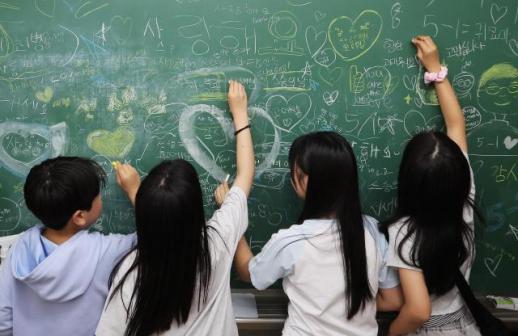 Teachers' Day in Korea without pride, gratitude and... cake SEOUL, May 15 (AJP) -South Koreans, whose Confucian roots instill deep reverence for educators, have observed Teachers' Day for more than six decades. Yet the tradition endures largely in name, as schoolteachers' authority and morale languish under the weight of compounding regulations and increasingly assertive parenting. The interference extends to the absurd: provincial education offices have issued specific directives on how cakes may be shared on Teachers' Day, lest schools and classroom teachers find themselves entangled in legal disputes. "Students casually joke that they could have a teacher arrested simply for accepting a drink or even a small bunch of flowers," said Yun Misook, a teacher at S Elementary School in Geumjeong District, Busan with 21 years in the profession. "To hear that in the days before Teachers' Day makes one question the whole profession." The remark followed a notice posted on an internal portal by the Gyeongsangbuk-do Office of Education, a provincial education authority, advising that teachers and students refrain from sharing cake together under the country's anti-graft legislation — a directive that ignited immediate debate. What was once a day of gratitude has, for many educators, curdled into bitterness and cynicism. Only three in ten teachers reported satisfaction with their work, while more than half said they had considered leaving the profession within their first year, according to a survey released Thursday by the Korean Federation of Teachers' Unions. Half reported feeling wrongfully treated by parents and students; a mere five in one hundred felt their profession commanded genuine respect in society. A separate survey by the Korean Federation of Teachers' Associations (KFTA) yielded parallel findings. Nearly half — 49.2 percent — said their sense of professional pride had eroded over the past one to two years. The most commonly cited source of disillusionment, noted by 67.9 percent of respondents, was a sense of being distrusted by students and parents, or experiencing direct violations of their professional rights. Regional data echo the national picture. In Busan, the country's second-largest city, 69.2 percent of surveyed teachers said they would not choose teaching again given the opportunity, according to a 2026 perception survey conducted by the Busan Teachers' Union. Some 80.9 percent said they lived in fear of being accused of child abuse — even in the course of legitimate educational activities. Under current regulations, teachers are formally classified as having a direct conflict-of-interest relationship with students and parents, rendering even nominal tokens such as carnations, coffee, or cake largely impermissible. Teachers' Day has been observed each May 15 since 1965, the date chosen to coincide with the birthday of King Sejong, the sovereign who devised the Korean alphabet, hangeul, to broaden access to literacy and learning. In Confucian tradition, teachers are held in high esteem as moral guides as much as instructors — which is why students still compose handwritten letters of gratitude to their teachers. Yet many educators say the reality inside classrooms has transformed beyond recognition. "In the past, much was socially accepted as part of student guidance," Yun said. "Now everything is governed by manuals, procedures and the ever-present threat of complaints." She recalled organizing monthly class events and occasionally treating students to snacks as a reward. Today, concerns over safety liability, administrative paperwork and accusations of favoritism have made such gestures increasingly untenable. Classrooms, teachers say, have grown defensive and legally guarded. "These days, I record most counseling sessions with students," Yun said. "It feels necessary as a safeguard in case a complaint or child-abuse allegation surfaces later." The shift reflects a pervasive anxiety that has spread through South Korea's education system in the wake of several high-profile teacher deaths, sustained campaigns of parent complaints, and protracted disputes over classroom discipline. The crisis came to national attention following the 2023 death of an elementary school teacher at Seoul's Seoyi Elementary School, who died after reportedly enduring relentless parent complaints and classroom confrontations. The case galvanized mass nationwide protests, with teachers demanding meaningful legislative protection. Yet many educators say the situation inside schools has remained substantively unchanged. Teachers also point to the proliferation of artificial intelligence and smartphones as forces reshaping both classroom dynamics and students' dispositions toward their teachers. Baek Y.K., an elementary school teacher in Seoul's Gangnam district, observed that the digital environment had fundamentally altered how students perceived teachers' authority. "Teachers are no longer regarded as the primary source of knowledge, and that has changed classroom dynamics in profound ways," she said. A recent survey by the Seoul Education Research and Information Institute found that more than half of Seoul's teachers believed disruptions to classroom order — and encroachments on teachers' authority by emotionally distressed students — had worsened appreciably in recent years. Experts describe the situation as a cultural collision between entrenched Confucian expectations and a contemporary, consumer-oriented approach to education. Society, teachers say, still expects them to steward students' behavior and emotional development — while stripping them of the authority and trust that once underwrote that role. The profession itself has borne the consequences. Teaching was once among South Korea's most coveted and respected careers. But years of declining school-age enrollment, incessant parental pressure, and mounting fear of legal exposure have steadily eroded its appeal. Average admission scores at several of the country's elite teachers' universities fell in the 2025 academic year, according to local admissions analysts, signaling a measurable retreat in the profession's allure. Elementary teaching has also remained heavily female-dominated. In Seoul's 2026 public elementary school teacher hiring examination, only 30 of 210 successful candidates — roughly 14.3 percent — were men, according to the Seoul Metropolitan Office of Education. "Because there are so few male teachers, physically demanding tasks or difficult situations tend to fall to us by default," said Yeon, a teacher in his thirties based in Daejeon. "And if you try to raise concerns, there's an unspoken expectation that a man shouldn't complain — so you end up absorbing the pressure in silence." He added that workplace culture could be difficult to navigate, marked by frequent gossip and diffuse social pressures among colleagues. The teacher crisis in South Korea cannot be attributed to demographic decline alone, educators insist. Even as student populations shrink, many teachers say their workload has grown substantially more demanding — emotionally, administratively and legally — owing to behavioral challenges, persistent parental complaints and heightened legal scrutiny. "What is needed is mutual respect, consideration and a genuine sense of community," Yun said. "Education cannot be sustained by laws and systems alone." As South Korea marks another Teachers' Day, many educators say words of appreciation, however warmly offered, are no longer sufficient. What they want, they say, is far simpler: to teach without fear. 2026-05-15 13:01:49
 -
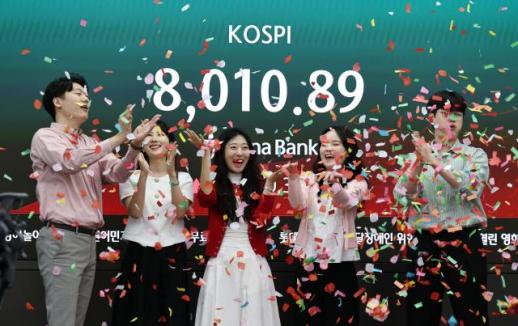 KOSPI hits 8,000-point mark as Trump-Xi summit further fuels AI rally SEOUL, May 15 (AJP) - South Korea's benchmark KOSPI rose above the 8,000-point mark for the first time on Friday, extending a powerful artificial intelligence (AI)-driven rally. Investor sentiment was further lifted by an ongoing summit between U.S. President Donald Trump and Chinese leader Xi Jinping in Beijing, while overnight gains on Wall Street, led by technology stocks, also boosted momentum. As of 9:25 a.m., the KOSPI was trading at 8,032.67, up 0.64 percent, while the junior KOSDAQ slipped 0.40 percent to 1,186.30. It took just a week to climb from the 7,000 level to the 8,000 mark, one of the fastest rallies on record. Samsung Electronics and SK hynix have been at the center of South Korea's AI-driven market rally, increasingly dominating the country's equity market amid explosive global demand for AI chips and memory semiconductors. Both stocks hit fresh intraday record highs in the previous session and remained near those levels in early Friday trading. Samsung Electronics edged down 0.17 percent to 295,500 won, while SK hynix rose 0.96 percent to 1,989,000 won. Among other major stocks, Hyundai Motor Company jumped 5.48 percent to 751,000 won, while Hyundai Mobis gained 4.31 percent to 678,000 won. Kia Corporation also rose 1.63 percent to 181,000 won. In the battery sector, LG Energy Solution climbed 3.51 percent to 457,500 won, while Samsung Electro-Mechanics surged 8.30 percent to 1,109,000 won. Industrial and shipbuilding shares traded mixed, with HD Hyundai Heavy Industries edging up 0.15 percent to 672,000 won, while Doosan Enerbility slipped 0.60 percent to 116,400 won. Defense shares weakened, with Hanwha Aerospace falling 3.45 percent to 1,261,000 won. The South Korean won remained broadly weak, trading at 1,497.50 per dollar compared with the previous close of 1,491.0 won. The momentum in Seoul followed another strong session on Wall Street overnight, where investors continued pouring into AI and semiconductor-related shares. Nvidia rose 4.39 percent after expectations grew that the company could expand sales of its H200 AI chips in China following its CEO Jensen Huang's participation in the Beijing delegation. The Dow Jones Industrial Average rose 0.75 percent to 50,063.46, reclaiming the 50,000 level for the first time since February. The S&P 500 and Nasdaq Composite gained 0.77 percent and 0.88 percent, respectively, both setting new record highs. Overall investor sentiment improved after Trump and Xi signaled that both sides would seek to stabilize relations despite continuing disagreements over Taiwan and Iran. During a state banquet, Xi said China's "great rejuvenation" and Trump's "Make America Great Again" vision could "go hand in hand," while Trump described the meetings as "very positive and productive." Markets interpreted the summit more as a sign that tensions between the world's two largest economies were unlikely to escalate immediately. 2026-05-15 09:54:45
 -
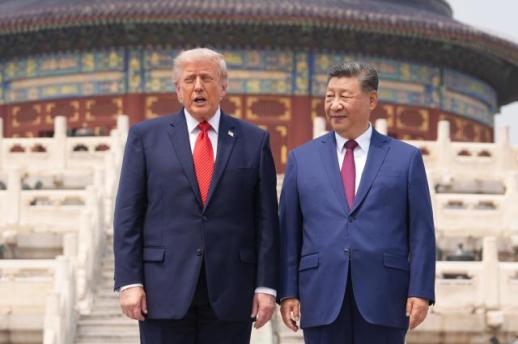 Xi warns Trump on Taiwan at Beijing summit SEOUL, May 14 (AJP) - Chinese President Xi Jinping warned U.S. President Donald Trump on Thursday that the Taiwan issue could trigger a direct clash if handled improperly, in one of Beijing's strongest warnings yet over its most sensitive geopolitical red line. The remarks came during a summit between the two leaders at the Great Hall of the People in Beijing on Thursday, where Xi and Trump held talks on trade, AI, Iran and broader regional security issues. "The Taiwan question is the most important issue in China-U.S. relations," Xi told Trump, according to Chinese state media. "If mishandled, the two nations could collide or even come into conflict," he said, warning it could push bilateral ties into "a highly perilous situation." Xi also said "'Taiwan independence' and peace in the Taiwan Strait are like water and fire," adding that maintaining stability in the Taiwan Strait represented "the greatest common denominator" between Washington and Beijing. The warning came at the opening of a two-day summit that both sides had framed as a critical attempt to stabilize relations amid mounting geopolitical tensions and the ongoing Iran conflict. Trump described the gathering as potentially the "biggest summit ever," while Xi urged both countries to avoid the so-called "Thucydides Trap" of great-power confrontation. Ahead of the meeting, Beijing reiterated four major "red lines" in relations with Washington — Taiwan, democracy and human rights, China's political system and China's development rights — with Taiwan listed first. Trump had previously said he intended to raise U.S. arms sales to Taiwan during the Beijing talks, though neither side disclosed how he responded directly to Xi's warning. 2026-05-14 17:10:18
 -
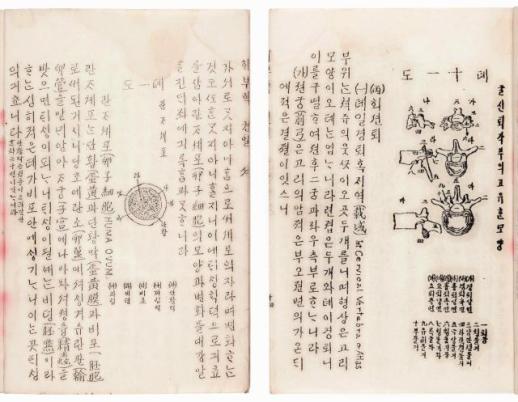 Early Korean anatomy textbook to be registered as cultural heritage SEOUL, May 14 (AJP) - South Korea is set to designate the country's first Korean-language anatomy textbook as a state-registered cultural heritage item, highlighting the early spread of modern medicine on the Korean Peninsula more than a century ago. The Korea Heritage Service announced Thursday that Anatomy - a three-volume medical textbook published in the early 20th century at Chejungwon, Korea's first modern medical institution established by American missionaries - will be added to the national registry of cultural heritage. The book offers a glimpse into how Western scientific knowledge was translated and introduced to Koreans during the country's early modernization period. It was widely used at medical schools and missionary hospitals in the early 1900s, when Western medicine was still unfamiliar to Korean society. The work was translated into Korean by physician and later independence activist Kim Pil-soon and edited by Canadian missionary doctor Oliver Avison, who played a key role in introducing modern medicine to Korea. The three-volume series was published in 1906. Heritage officials said the book demonstrates how Western medicine was first taught in Korea and marks the beginning of the country's modern medical education system. The volumes explain the human body step by step, covering bones and muscles as well as major organs such as the heart and lungs, along with the nervous system and sensory organs. The format was designed to help Korean students better understand anatomy and modern medicine. The book is also valued for showing how modern medical terminology was adapted into everyday Korean. Rather than relying solely on Chinese characters or foreign terminology, the translators used accessible Korean expressions to make anatomy easier to understand. Heritage authorities said the work also illustrates how scientific terminology, spelling and pronunciation evolved in the early 1900s as modern ideas entered the Korean language. The designation will be finalized following a 30-day public review period and a final evaluation by the Korea Heritage Service. 2026-05-14 16:56:04
 -
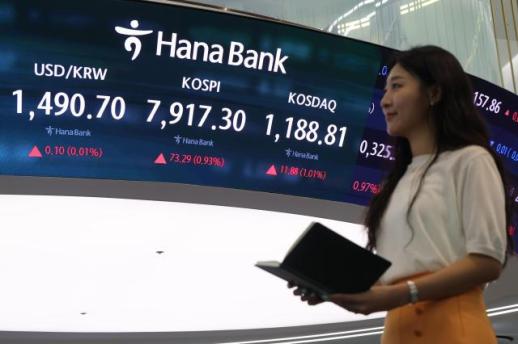 KOSPI nears 8,000 as AI frenzy shrugs off U.S. inflation shock SEOUL, May 14 (AJP) - South Korean stocks marched closer to the 8,000-point milestone on Thursday as investors brushed aside renewed U.S. inflation concerns and instead piled into artificial intelligence and semiconductor shares through the U.S.-China summit momentum. As of 10:34 a.m., the benchmark KOSPI was trading at 7,973.67, up 1.65 percent, while the tech-heavy KOSDAQ slipped 0.66 percent to 1,169.16. The rally closely followed another record-setting session on Wall Street, where the S&P 500 rose 0.58 percent to 7,444.25 and the NASDAQ Composite jumped 1.20 percent to 26,402.34, with both benchmarks closing at fresh all-time highs despite unexpectedly strong U.S. inflation data. The U.S. Department of Labor said producer prices in April climbed 1.4 percent from the previous month and 6.0 percent from a year earlier, marking the sharpest annual increase since December 2022 and reinforcing signs that inflationary pressures were broadening across the economy. Rising costs in energy, intermediate goods, wholesale margins and gasoline sales suggested inflation was spreading beyond isolated sectors, following a similarly hotter-than-expected consumer inflation report earlier this week. Yet investors largely shrugged off the inflation shock, betting that the global AI boom would continue powering earnings growth and risk appetite. Technology shares tied to AI and optimism surrounding the U.S.-China summit that opened Thursday in Beijing drove much of the advance. NVIDIA gained 2.3 percent overnight, while Micron Technology surged 4.8 percent and Tesla climbed 2.7 percent. Alphabet jumped 3.9 percent, while Meta Platforms and Amazon rose 2.26 percent and 1.62 percent, respectively. Only Microsoft finished lower among the so-called “Magnificent Seven,” slipping 0.63 percent. Mixed sector rotation emerged in Seoul trading. Among heavyweight shares, Samsung Electronics jumped 4.23 percent to 296,000 won, extending its AI-driven rally, while SK Hynix edged down 0.15 percent to 1,973,000 won. LG Energy Solution and Samsung C&T also gained more than 1 percent. Meanwhile, shipbuilding, defense and power equipment shares retreated as investors locked in profits after weeks of sharp gains linked to the Middle East conflict and global infrastructure demand. HD Hyundai Heavy Industries plunged 8.05 percent, while Doosan Enerbility fell 3.08 percent to 116,300 won and HD Hyundai Electric slipped 1.87 percent to 1,256,000 won. On the KOSDAQ, AI- and biotech-related momentum remained strong. Alteogen surged more than 5 percent to become the market’s largest stock by capitalization, while Seojin System also rose more than 5 percent. Retail investors continued to dominate trading flows, purchasing a net 1.36 trillion won worth of local equities. Foreign and institutional investors, meanwhile, sold a net 1.18 trillion won and 226 billion won, respectively. The Korean won remained broadly weak, trading at 1,491.00 per dollar compared with the previous close of 1,490.60 won. Elsewhere in Asia, Japan’s Nikkei 225 rose 0.77 percent to 63,757.71, supported by continued strength in semiconductor and technology shares, China’s Shanghai Composite Index however, edged down 0.14 percent to 4,236.45 as investors turned cautious ahead of the Trump-Xi summit, with markets awaiting signals on trade relations and U.S. semiconductor export restrictions. Hong Kong’s Hang Seng Index, gained 1.11 percent to 26,681.43. 2026-05-14 10:51:31
 -
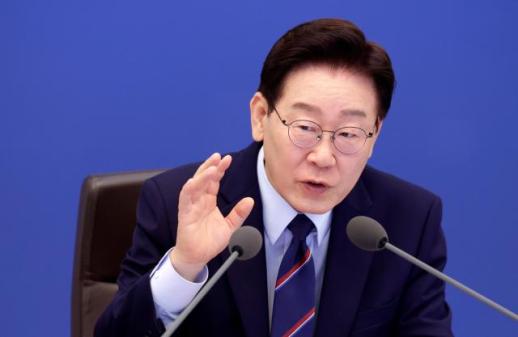 KOSPI flies to new highs after Lee clarifies controversial 'AI dividend' slip SEOUL, May 13 (AJP) - South Korea’s benchmark KOSPI returned to record-setting climb Wednesday after President Lee Jae Myung moved to calm investor concerns over controversial remarks by his top policy aide suggesting that gains from the country’s AI boom could be redistributed more broadly to the public. In a post on X on Wednesday, Lee accused some media outlets of distorting comments made by presidential policy chief Kim Yong-beom regarding a proposed “national dividend” linked to the artificial intelligence boom. Lee said Kim’s remarks referred to the possible redistribution of excess tax revenue generated from extraordinary profits in the AI sector — not the direct redistribution of corporate profits themselves. “What Kim Yong-beom referred to was a review of ways to distribute to the public part of the government’s excess tax revenue generated from extraordinary profits in the AI sector,” Lee wrote. Lee added that Kim had already clarified the proposal concerned excess tax revenue rather than corporate earnings, but “misleading reports” continued circulating despite follow-up explanations. “Political criticism and attacks that are not based on facts ultimately harm democracy,” Lee said. The clarification helped ease fears of possible government intervention in corporate earnings tied to South Korea’s booming semiconductor and AI sectors, which have driven much of the market’s recent rally. The KOSPI erased earlier losses and gained 2.63 percent to a new closing high 7,844.01. Chipmakers also renewed bull march, with Samsung Electronics rising 1.79 percent to 284,000 won and SK hynix surging 7.68 percent to 1,976,000 won. 2026-05-13 17:14:46
 -
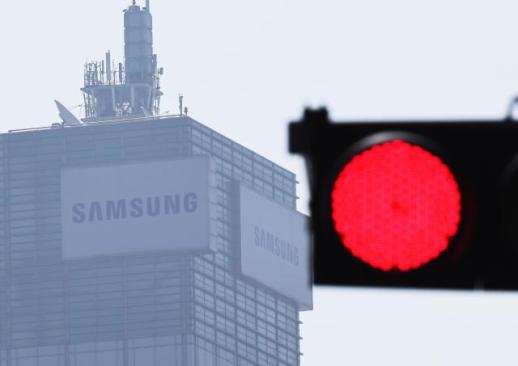 Samsung strike threat sparks debate over South Korea's emergency labor powers SEOUL, May 13 (AJP) - Chips are responsible for fueling the South Korean economy against the Middle East headwinds and historic stock rally, which explains why policy chiefs from the president to cabinet ministers are going all-out to prevent full-fledged walkouts by chipmakers and even flag the option of a rarely used emergency power to disallow a strike. The debate intensified after mediation talks between Samsung Electronics and its labor unions collapsed Wednesday dawn, pushing the National Samsung Electronics Union (NSEU) toward an 18-day strike scheduled to begin May 21. The presidential office sought to cool speculation over immediate intervention, saying there was still time before the planned strike date and that the government would continue supporting dialogue between labor and management. Under South Korean labor law, the labor minister can invoke emergency arbitration when a strike is deemed to threaten public welfare or cause “serious harm” to the broader economy. If the measure is invoked, unions must immediately suspend all strike activity for 30 days while the National Labor Relations Commission oversees mediation and possible compulsory arbitration. The measure has rarely been invoked and is generally reserved for disputes authorities believe could seriously disrupt the economy or public life. Concerns are growing over Samsung’s labor dispute because of the semiconductor industry’s outsized role in the South Korean economy. Chips account for roughly 35 percent of the country’s exports, while Samsung Electronics alone represents about 25.7 percent of the benchmark KOSPI’s total market capitalization. The union estimated that a prolonged strike running from May 21 to June 7 could trigger economic losses exceeding 40 trillion won, while also risking supply chain disruptions and customer defections during a global semiconductor boom. According to the Korea Development Institute, a 10 percent decline in semiconductor exports could reduce South Korea’s gross domestic product by approximately 0.78 percent, underscoring the economy’s heavy dependence on the chip industry. The standoff has also spilled into court. A hearing over Samsung Electronics’ request for an injunction against what it described as illegal strike actions concluded Wednesday at Suwon District Court, with the court expected to decide before the planned walkout whether to grant the injunction. Union officials argued during the hearing that the planned strike would remain within legal boundaries and would not involve violence or occupation of production facilities. “We emphasized to the court that there would be no illegal labor action, intimidation, violence or occupation of production facilities,” NSEU leader Choi Seung-ho told reporters after the hearing. The union also rejected Samsung’s warning that work stoppages could damage wafers in semiconductor production lines, saying there are multiple technical measures available to prevent contamination and losses during a strike. Union lawyers additionally accused Samsung management of unfair compensation practices. Attorney Hong Ji-na, representing the union, claimed workers accepted zero bonuses in 2024 after management cited weak semiconductor market conditions, only to later discover executives had shared roughly 388 billion won in bonuses among themselves. She also warned that Samsung’s competitiveness could weaken if high turnover and declining recruitment continue in the semiconductor division, where retaining skilled engineers is increasingly critical. Still, some economists oppose direct government intervention despite the scale of the potential fallout. “This is not an issue tied to the survival of the country,” said Kim Jin-young, an economics professor at Korea University. “Government intervention would only increase uncertainty for both labor and management and distort their decision-making process.” Kim argued wage disputes should ultimately be resolved through negotiations between companies and workers rather than state intervention, warning that repeated government involvement could weaken incentives for compromise and innovation over the long term. The risks are heightened by the nature of semiconductor manufacturing itself. Chip fabrication plants operate continuously in ultra-clean environments with tightly controlled temperature and humidity conditions, unlike traditional industries such as automobiles or home appliances that rely on segmented production lines. Industry experts say restarting halted semiconductor production can cause disproportionately larger losses than in conventional manufacturing. The structure of the industry has also fueled debate over whether traditional labor union models fit semiconductor manufacturing. Major global chipmakers such as Intel and TSMC do not house powerful unions, while Samsung itself remained effectively union-free until 2020. 2026-05-13 16:46:53
 -
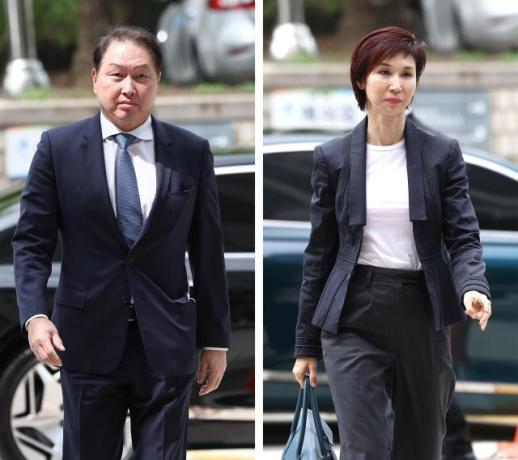 Ex-SK couple enters court-led mediation over billion-dollar asset split SEOUL, May 13 (AJP) - SK Group chairman Chey Tae-won and his estranged wife Roh Soh-yeong entered a court-led mediation process on Wednesday in South Korea's closely watched "divorce of the century" battle over one-billion-dollar property split. The Seoul High Court's family division held the first hearing in the remand trial at 10 a.m. Wednesday and wrapped up the session about an hour later after hearing positions from both sides. The court said it would hold another mediation session at the earliest possible date when both parties can attend. Roh dressed in black appeared in person alongside her legal team, while Chey was represented only by attorneys. Speaking briefly to reporters before entering the courthouse, Roh declined to answer questions on whether the recent surge in SK Group shares should be reflected in the property division or whether negotiations had made progress. The mediation follows a Supreme Court ruling last year partially overturning an appellate court decision that ordered Chey to pay Roh about 1.38 trillion won ($1 billion) in property division, one of the largest divorce settlements ever seen in South Korea. In October last year, the Supreme Court upheld the couple's divorce and a separate 2 billion won ($1.4 million) alimony award, while sending the property division portion of the case back to the Seoul High Court for reconsideration. The remand trial is now focused solely on recalculating how much of Chey's assets should be shared with Roh. If mediation fails, the court is expected to issue a new ruling based on the Supreme Court’s guidance regarding the valuation of Chey's holdings and Roh's contribution to the accumulation of family wealth. The case has drawn intense public attention not only because of the massive scale of wealth involved, but also because it could set a major legal precedent for how South Korean courts recognize a spouse's indirect contribution to the rise of family-controlled conglomerates and inherited corporate wealth. Roh is the daughter of late former President Roh Tae-woo, who governed South Korea from 1988 to 1993 during a key period of the country's industrial expansion. She married Chey in 1988, before SK Group transformed into one of Asia's largest semiconductor and telecommunications conglomerates. Their marriage publicly unraveled in 2015 after Chey disclosed he had fathered a child outside the marriage and sought a divorce. Formal legal proceedings began in 2017 after earlier mediation attempts collapsed. In the first trial in 2022, a family court ordered Chey to pay Roh 66.5 billion won in property division and 100 million won in alimony, ruling that much of Chey's SK holdings could not broadly be considered jointly accumulated marital assets. But an appellate court sharply increased the amount in 2024, awarding Roh roughly 1.38 trillion won and 2 billion won in alimony after determining that Roh had contributed to the growth of SK Group and the appreciation in value of Chey's shares. The appellate court also acknowledged Roh's role in child-rearing, household management and public-facing responsibilities as the spouse of a chaebol chairman. However, the Supreme Court later ruled that 30 billion won in funds linked to former President Roh Tae-woo constituted illegal slush funds and therefore could not be counted as Roh's contribution to the formation of SK Group's wealth, sending the case back for another review. 2026-05-13 16:00:51
 -
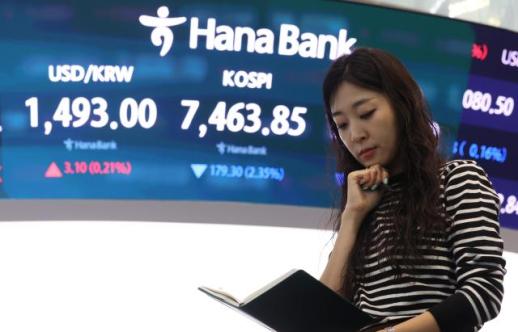 KOSPI briefly sinks to 7,400 level amid AI dividend shock and Samsung labor unrest SEOUL, May 13 (AJP) - South Korean shares extended losses for a second straight session Wednesday as fears of a monthlong strike at Samsung Electronics rattled investor sentiment after marathon government-mediated labor talks collapsed overnight. As of 10:20 a.m., the benchmark KOSPI was down 0.4 percent at 7,613.11 after briefly falling as low as 7,402. The junior KOSDAQ slipped 0.9 percent to 1,169.16. The decline followed an exceptionally volatile session Tuesday, when the KOSPI briefly surged to 7,999.67 before reversing sharply to close more than 5 percent lower after remarks by presidential policy chief Kim Yong-beom on a possible national “AI dividend” unsettled investors in South Korea’s semiconductor-heavy market. Kim suggested that part of the massive tax revenues and profits generated from the AI boom should be redistributed more broadly to the public. The sharp swings underscored how heavily South Korea’s equity rally has become concentrated in a handful of AI-linked semiconductor stocks. As investor funds increasingly pile into a small group of beneficiaries, market volatility in Seoul has outpaced that of U.S. equities. While the U.S. VIX index — often referred to as Wall Street’s fear gauge — has remained in the low 20s near historical norms, Korea’s VKOSPI has surged above 70, its highest level since market turmoil triggered by the U.S.-Iran conflict. Aggressive momentum trading and growing fear-of-missing-out buying have further amplified volatility in Seoul. According to corporate tracker CEO Score, the combined market capitalization of companies listed on the KOSPI, KOSDAQ and KONEX exchanges has surged 172.9 percent since President Lee Jae Myung took office 11 months ago, climbing from 2,597 trillion won ($1.9 trillion) in June 2025 to 7,088 trillion won as of Monday. Much of the gain has been driven by Samsung Electronics and SK hynix, which together accounted for more than 56 percent of the total increase in market value. The two chipmakers now represent roughly 42.4 percent of South Korea’s total stock market capitalization, highlighting the market’s growing dependence on AI-related semiconductor demand. That concentration intensified Wednesday’s selloff. Samsung Electronics fell 5.02 percent to 265,000 won in morning trading, while SK hynix slipped 1.63 percent to 1,805,000 won. The South Korean government and Samsung Electronics management simultaneously ratcheted up pressure on the labor union ahead of next week’s planned monthlong strike after negotiations over a profit-linked bonus system broke down early Wednesday. “A strike must never happen under any circumstances,” Deputy Prime Minister and Finance Minister Koo Yun-cheol wrote on X on Wednesday, pledging to continue mediation efforts to keep negotiations alive. Samsung Electronics, which had largely remained restrained in public comments over union activity, issued its strongest statement yet expressing “deep regret” over the union’s decision to declare negotiations deadlocked after a 17-hour mediation session at the National Labor Relations Commission in Sejong ended around 3 a.m. Among other major stocks, Hyundai Motor rose 2.32 percent to 661,000 won, while Hyundai Mobis jumped 5.66 percent to 579,000 won. HD Hyundai Heavy Industries gained 1.70 percent to 719,000 won. Battery shares also weakened. LG Energy Solution fell 0.79 percent to 439,500 won, while Samsung SDI dropped 2.38 percent to 614,000 won. Defense and industrial shares traded mixed, with Hanwha Aerospace edging down 0.47 percent to 1,278,000 won and Doosan Enerbility sliding 3.42 percent to 121,300 won. Financial stocks were mostly lower, with Samsung Life Insurance falling 1.0 percent to 296,500 won and KB Financial Group slipping 0.13 percent to 153,400 won. The Korean won weakened slightly to 1,493.80 per dollar from the previous session’s close of 1,489.90 won. Overnight on Wall Street, major U.S. indexes closed mixed as stronger-than-expected inflation data pushed Treasury yields higher and triggered profit-taking in technology shares. The Dow Jones Industrial Average rose 0.11 percent, while the Nasdaq Composite fell 0.71 percent and the S&P 500 slipped 0.16 percent. U.S. consumer prices in April came in slightly above expectations, with headline inflation at 3.8 percent and core inflation at 2.8 percent. The data pushed the benchmark 10-year Treasury yield above 4.46 percent, increasing pressure on richly valued AI and semiconductor stocks. Oil prices also climbed after hopes for a breakthrough in U.S.-Iran negotiations weakened, with U.S. crude futures settling above $102 a barrel and adding to broader inflation concerns. Elsewhere in Asia, major stock markets traded lower as investors turned cautious ahead of the summit between U.S. President Donald Trump and Chinese President Xi Jinping set to open in Beijing on Thursday, while also monitoring geopolitical tensions in the Middle East. Japan’s Nikkei 225 was trading at 62,600.17, down 0.23 percent, while China’s Shanghai Composite Index fell 0.48 percent to 4,194.29. Hong Kong’s Hang Seng Index was also trading lower at 26,322.38, down 0.097 percent. 2026-05-13 10:45:17